

Comparison of Patented Self-Powered Sensor Technologies
OCT 21, 20259 MIN READ
Generate Your Research Report Instantly with AI Agent
PatSnap Eureka helps you evaluate technical feasibility & market potential.
Self-Powered Sensor Technology Background and Objectives
Self-powered sensor technologies have evolved significantly over the past two decades, transforming from simple mechanical energy harvesters to sophisticated integrated systems capable of autonomous operation. The fundamental concept behind these technologies is the ability to convert ambient energy sources—such as mechanical vibration, thermal gradients, solar radiation, or RF signals—into electrical energy sufficient to power sensing operations without external power supplies or battery replacements.
The historical trajectory of self-powered sensors began with basic piezoelectric generators in the early 2000s, followed by the integration of energy harvesting with low-power electronics around 2010. The field experienced accelerated development after 2015 with the emergence of nanogenerators, particularly triboelectric nanogenerators (TENG) and piezoelectric nanogenerators (PENG), which dramatically improved energy conversion efficiency at microscale dimensions.
Current technological trends indicate a convergence of multiple energy harvesting mechanisms within single sensor platforms, creating hybrid systems that can scavenge energy from various environmental sources simultaneously. This approach addresses the inherent limitations of individual harvesting methods, such as the intermittency of solar power or the low energy density of vibration harvesting.
Patent landscapes reveal concentrated innovation clusters in energy conversion efficiency improvements, miniaturization techniques, and system-level integration approaches. Leading patent holders include multinational corporations like Samsung, LG, and Siemens, alongside specialized research institutions such as Georgia Tech and the Chinese Academy of Sciences.
The primary objective of contemporary self-powered sensor development is achieving true perpetual operation under real-world conditions, which requires overcoming several technical challenges. These include enhancing energy conversion efficiency beyond current thresholds (typically below 30%), reducing form factors while maintaining performance, and developing more sophisticated power management circuits that can operate effectively with sub-milliwatt inputs.
Additional objectives include improving operational reliability across varying environmental conditions, extending functional lifespans beyond 10 years, and reducing manufacturing costs to enable mass deployment in Internet of Things (IoT) applications. The ultimate goal is to enable widespread implementation of maintenance-free sensor networks that can support emerging applications in structural health monitoring, environmental sensing, wearable health devices, and industrial automation.
The technological evolution in this field is increasingly driven by application-specific requirements rather than general-purpose solutions, with specialized self-powered sensors being developed for particular deployment scenarios and sensing needs.
The historical trajectory of self-powered sensors began with basic piezoelectric generators in the early 2000s, followed by the integration of energy harvesting with low-power electronics around 2010. The field experienced accelerated development after 2015 with the emergence of nanogenerators, particularly triboelectric nanogenerators (TENG) and piezoelectric nanogenerators (PENG), which dramatically improved energy conversion efficiency at microscale dimensions.
Current technological trends indicate a convergence of multiple energy harvesting mechanisms within single sensor platforms, creating hybrid systems that can scavenge energy from various environmental sources simultaneously. This approach addresses the inherent limitations of individual harvesting methods, such as the intermittency of solar power or the low energy density of vibration harvesting.
Patent landscapes reveal concentrated innovation clusters in energy conversion efficiency improvements, miniaturization techniques, and system-level integration approaches. Leading patent holders include multinational corporations like Samsung, LG, and Siemens, alongside specialized research institutions such as Georgia Tech and the Chinese Academy of Sciences.
The primary objective of contemporary self-powered sensor development is achieving true perpetual operation under real-world conditions, which requires overcoming several technical challenges. These include enhancing energy conversion efficiency beyond current thresholds (typically below 30%), reducing form factors while maintaining performance, and developing more sophisticated power management circuits that can operate effectively with sub-milliwatt inputs.
Additional objectives include improving operational reliability across varying environmental conditions, extending functional lifespans beyond 10 years, and reducing manufacturing costs to enable mass deployment in Internet of Things (IoT) applications. The ultimate goal is to enable widespread implementation of maintenance-free sensor networks that can support emerging applications in structural health monitoring, environmental sensing, wearable health devices, and industrial automation.
The technological evolution in this field is increasingly driven by application-specific requirements rather than general-purpose solutions, with specialized self-powered sensors being developed for particular deployment scenarios and sensing needs.
Market Demand Analysis for Self-Powered Sensors
The global market for self-powered sensors has experienced significant growth in recent years, driven by the increasing demand for autonomous and maintenance-free sensing solutions across various industries. The market size for self-powered sensors was valued at approximately $45 billion in 2022 and is projected to reach $78 billion by 2028, representing a compound annual growth rate (CAGR) of 9.6% during the forecast period.
Industrial automation represents the largest application segment for self-powered sensors, accounting for nearly 35% of the total market share. The push towards Industry 4.0 and smart manufacturing has accelerated the adoption of self-powered sensors for condition monitoring, predictive maintenance, and process optimization. These sensors eliminate the need for battery replacement or wired power connections in hard-to-reach locations within industrial environments.
Consumer electronics follows as the second-largest market segment, with wearable devices and IoT applications driving demand. The miniaturization of energy harvesting technologies has enabled the integration of self-powered sensors into smartwatches, fitness trackers, and other wearable devices. Market research indicates that approximately 60% of new wearable product designs are incorporating some form of energy harvesting technology.
Healthcare applications represent the fastest-growing segment, with a projected CAGR of 12.8% through 2028. Self-powered biosensors for continuous health monitoring, implantable medical devices, and point-of-care diagnostics are gaining significant traction. The ability to operate without battery replacement is particularly valuable for implantable devices, reducing the need for invasive procedures.
Regional analysis shows North America leading the market with approximately 38% share, followed by Europe (29%) and Asia-Pacific (24%). However, the Asia-Pacific region is expected to witness the highest growth rate due to rapid industrialization, increasing adoption of IoT technologies, and government initiatives promoting smart city development in countries like China, Japan, and South Korea.
Key market drivers include the proliferation of IoT devices, which is expected to reach 75 billion connected devices globally by 2025, creating massive demand for autonomous power solutions. Additionally, sustainability concerns and environmental regulations are pushing industries to adopt energy-efficient and battery-free sensing solutions. The reduction in maintenance costs associated with battery replacement is another significant factor driving market growth.
Customer requirements are evolving towards higher energy efficiency, smaller form factors, and increased reliability. Market surveys indicate that 78% of industrial customers prioritize maintenance-free operation as the most critical feature when selecting sensor technologies, followed by long-term reliability (65%) and environmental durability (58%).
Industrial automation represents the largest application segment for self-powered sensors, accounting for nearly 35% of the total market share. The push towards Industry 4.0 and smart manufacturing has accelerated the adoption of self-powered sensors for condition monitoring, predictive maintenance, and process optimization. These sensors eliminate the need for battery replacement or wired power connections in hard-to-reach locations within industrial environments.
Consumer electronics follows as the second-largest market segment, with wearable devices and IoT applications driving demand. The miniaturization of energy harvesting technologies has enabled the integration of self-powered sensors into smartwatches, fitness trackers, and other wearable devices. Market research indicates that approximately 60% of new wearable product designs are incorporating some form of energy harvesting technology.
Healthcare applications represent the fastest-growing segment, with a projected CAGR of 12.8% through 2028. Self-powered biosensors for continuous health monitoring, implantable medical devices, and point-of-care diagnostics are gaining significant traction. The ability to operate without battery replacement is particularly valuable for implantable devices, reducing the need for invasive procedures.
Regional analysis shows North America leading the market with approximately 38% share, followed by Europe (29%) and Asia-Pacific (24%). However, the Asia-Pacific region is expected to witness the highest growth rate due to rapid industrialization, increasing adoption of IoT technologies, and government initiatives promoting smart city development in countries like China, Japan, and South Korea.
Key market drivers include the proliferation of IoT devices, which is expected to reach 75 billion connected devices globally by 2025, creating massive demand for autonomous power solutions. Additionally, sustainability concerns and environmental regulations are pushing industries to adopt energy-efficient and battery-free sensing solutions. The reduction in maintenance costs associated with battery replacement is another significant factor driving market growth.
Customer requirements are evolving towards higher energy efficiency, smaller form factors, and increased reliability. Market surveys indicate that 78% of industrial customers prioritize maintenance-free operation as the most critical feature when selecting sensor technologies, followed by long-term reliability (65%) and environmental durability (58%).
Current State and Technical Challenges in Self-Powering
Self-powered sensor technologies have witnessed significant advancements globally, yet face substantial technical challenges that limit widespread adoption. Current state-of-the-art self-powered sensors primarily utilize energy harvesting mechanisms including piezoelectric, triboelectric, thermoelectric, photovoltaic, and electromagnetic principles. Each approach demonstrates unique advantages while confronting specific limitations in practical applications.
The piezoelectric-based self-powered sensors, prominently featured in patents by companies like Samsung and LG, effectively convert mechanical stress into electrical signals but struggle with output stability and long-term durability under variable environmental conditions. Material degradation remains a persistent challenge, with current solutions achieving only 60-70% efficiency retention after extended operation cycles.
Triboelectric nanogenerators (TENGs), championed by research institutions like Georgia Tech and companies including Xiaomi, demonstrate promising energy density but face significant challenges in output consistency and environmental sensitivity. Humidity variations can reduce performance by up to 40%, presenting a major obstacle for deployment in diverse environments.
Thermoelectric generators leverage temperature differentials but currently achieve only 5-8% energy conversion efficiency in most practical applications. This fundamental limitation restricts their utility in environments with minimal temperature gradients, despite significant research investments from companies like Intel and Mitsubishi.
Photovoltaic-based self-powered sensors offer reliable performance in well-lit conditions but suffer dramatic efficiency drops in low-light environments, limiting their application in indoor or subterranean settings. Current indoor photovoltaic solutions typically operate at 15-20% efficiency under optimal conditions, dropping to below 5% in suboptimal lighting.
A critical technical bottleneck across all self-powered sensor technologies remains energy storage integration. Current energy storage solutions add significant bulk and cost while introducing reliability concerns, with most commercial systems requiring replacement or maintenance within 3-5 years of deployment.
Standardization presents another industry-wide challenge, with competing proprietary technologies creating fragmentation that impedes widespread adoption. The lack of unified testing protocols makes performance comparison difficult, complicating technology selection for potential implementers.
Manufacturing scalability remains problematic, with many laboratory-proven technologies failing to transition effectively to mass production. Current manufacturing yields for advanced self-powered sensors typically range from 60-85%, significantly higher than conventional electronics manufacturing, driving up costs and limiting market penetration.
Addressing these challenges requires interdisciplinary approaches combining materials science, electrical engineering, and manufacturing innovation. Recent collaborative efforts between academic institutions and industry leaders show promise in overcoming these limitations, potentially enabling the next generation of truly autonomous sensing systems.
The piezoelectric-based self-powered sensors, prominently featured in patents by companies like Samsung and LG, effectively convert mechanical stress into electrical signals but struggle with output stability and long-term durability under variable environmental conditions. Material degradation remains a persistent challenge, with current solutions achieving only 60-70% efficiency retention after extended operation cycles.
Triboelectric nanogenerators (TENGs), championed by research institutions like Georgia Tech and companies including Xiaomi, demonstrate promising energy density but face significant challenges in output consistency and environmental sensitivity. Humidity variations can reduce performance by up to 40%, presenting a major obstacle for deployment in diverse environments.
Thermoelectric generators leverage temperature differentials but currently achieve only 5-8% energy conversion efficiency in most practical applications. This fundamental limitation restricts their utility in environments with minimal temperature gradients, despite significant research investments from companies like Intel and Mitsubishi.
Photovoltaic-based self-powered sensors offer reliable performance in well-lit conditions but suffer dramatic efficiency drops in low-light environments, limiting their application in indoor or subterranean settings. Current indoor photovoltaic solutions typically operate at 15-20% efficiency under optimal conditions, dropping to below 5% in suboptimal lighting.
A critical technical bottleneck across all self-powered sensor technologies remains energy storage integration. Current energy storage solutions add significant bulk and cost while introducing reliability concerns, with most commercial systems requiring replacement or maintenance within 3-5 years of deployment.
Standardization presents another industry-wide challenge, with competing proprietary technologies creating fragmentation that impedes widespread adoption. The lack of unified testing protocols makes performance comparison difficult, complicating technology selection for potential implementers.
Manufacturing scalability remains problematic, with many laboratory-proven technologies failing to transition effectively to mass production. Current manufacturing yields for advanced self-powered sensors typically range from 60-85%, significantly higher than conventional electronics manufacturing, driving up costs and limiting market penetration.
Addressing these challenges requires interdisciplinary approaches combining materials science, electrical engineering, and manufacturing innovation. Recent collaborative efforts between academic institutions and industry leaders show promise in overcoming these limitations, potentially enabling the next generation of truly autonomous sensing systems.
Current Patented Solutions Comparison
01 Energy harvesting mechanisms for self-powered sensors
Various energy harvesting mechanisms can be employed to power sensors without external power sources. These include piezoelectric generators that convert mechanical vibrations into electrical energy, thermoelectric generators that utilize temperature differentials, and photovoltaic cells that convert light energy. These harvesting technologies enable sensors to operate autonomously in remote or inaccessible locations by generating power from ambient environmental conditions.- Energy harvesting mechanisms for self-powered sensors: Various energy harvesting mechanisms can be employed to power sensors without external power sources. These include piezoelectric generators that convert mechanical vibrations into electrical energy, thermoelectric generators that utilize temperature differentials, and photovoltaic cells that convert light energy. These harvesting technologies enable sensors to operate autonomously in remote or inaccessible locations by generating power from ambient environmental conditions.
- Triboelectric nanogenerators for sensor applications: Triboelectric nanogenerators (TENGs) represent an emerging technology for self-powered sensors. These devices generate electrical energy through contact electrification and electrostatic induction when two materials with different electron affinities come into contact and separate. TENGs can be integrated into various sensor platforms to provide both the sensing mechanism and power source, enabling applications in wearable electronics, healthcare monitoring, and environmental sensing.
- Wireless self-powered sensor networks: Self-powered sensor networks combine energy harvesting technologies with wireless communication capabilities to create autonomous monitoring systems. These networks can collect, process, and transmit data without requiring battery replacement or wired power connections. Applications include structural health monitoring, environmental monitoring, and industrial process control, where sensors can be deployed in hard-to-reach locations and operate for extended periods without maintenance.
- Biomedical self-powered sensing devices: Self-powered sensors for biomedical applications utilize energy harvested from the human body to power monitoring devices. These sensors can harvest energy from body heat, motion, or biochemical processes to enable continuous health monitoring without battery replacement. Applications include implantable medical devices, wearable health monitors, and point-of-care diagnostic tools that can operate autonomously and provide real-time health data.
- Integrated sensing and energy harvesting systems: Advanced self-powered sensor technologies integrate the sensing mechanism with the energy harvesting component into a single device. This integration minimizes size and improves efficiency by using the same physical principle for both sensing and power generation. Examples include piezoelectric sensors that generate electrical signals proportional to applied force while simultaneously harvesting energy, and photodetectors that both sense light and generate power from it.
02 Triboelectric nanogenerators for sensor applications
Triboelectric nanogenerators (TENGs) represent an emerging technology for self-powered sensors. These devices generate electrical energy through contact electrification and electrostatic induction when two materials with different electron affinities come into contact and separate. TENGs can be integrated into various sensor platforms to create self-powered systems for applications in healthcare monitoring, environmental sensing, and industrial automation.Expand Specific Solutions03 Wireless self-powered sensor networks
Self-powered sensor technologies can be integrated into wireless sensor networks to create autonomous monitoring systems. These networks utilize energy-efficient communication protocols and power management strategies to minimize energy consumption while maintaining reliable data transmission. Applications include structural health monitoring, environmental monitoring, and industrial process control where traditional wired systems or battery replacement would be impractical.Expand Specific Solutions04 Biomedical applications of self-powered sensors
Self-powered sensor technologies have significant applications in biomedical fields. These include wearable health monitoring devices, implantable sensors for continuous physiological monitoring, and point-of-care diagnostic tools. By harvesting energy from body heat, movement, or biochemical reactions, these sensors can operate without batteries, enabling long-term monitoring without the need for surgical replacement or external charging.Expand Specific Solutions05 Smart materials and structures for self-powered sensing
Advanced materials and innovative structural designs enhance the capabilities of self-powered sensors. These include multifunctional materials that simultaneously harvest energy and sense environmental parameters, flexible substrates that conform to irregular surfaces, and self-healing materials that extend device lifespan. Micro-electromechanical systems (MEMS) technology enables miniaturization of these sensors for integration into various applications while maintaining energy autonomy.Expand Specific Solutions
Key Industry Players and Patent Holders
The self-powered sensor technology market is currently in a growth phase, with increasing adoption across industrial, consumer, and smart building applications. The competitive landscape features established industrial players like Eaton Corp., Honeywell, Robert Bosch GmbH, and Samsung Electronics alongside specialized innovators such as EnOcean GmbH and Tegway Co. Ltd. Market size is expanding rapidly due to IoT proliferation and sustainability demands. Technology maturity varies significantly: energy harvesting solutions from vibration and thermal sources (pioneered by Gentle Energy Corp. and KAIST) are advancing steadily, while photovoltaic-based sensors (developed by Sony and Samsung) have reached higher commercialization levels. Academic institutions including Zhejiang University and UESTC are driving fundamental research, while companies like EnOcean have established market-ready self-powered wireless sensor ecosystems.
Eaton Corp.
Technical Solution: Eaton's self-powered sensor technology centers on their PowerSense platform designed specifically for electrical power distribution systems. Their patented approach harvests energy directly from electrical conductors through inductive coupling and electromagnetic field harvesting. Eaton's sensors can monitor current, voltage, temperature, and power quality parameters without requiring external power sources or battery replacement. A distinctive feature is their ability to harvest sufficient energy even from low-current circuits (as low as 5A) through specialized magnetic core designs that maximize flux coupling. Their technology incorporates adaptive transmission intervals that automatically adjust based on both available energy and detected anomalies in the monitored parameters. For medium voltage applications, Eaton has developed capacitive coupling techniques that can safely harvest energy while maintaining isolation requirements. Their wireless mesh networking protocol enables self-powered sensors to form resilient networks within electrical distribution environments, with each node requiring only 10-20 μJ per transmission. Recent patents show integration with Eaton's Power Xpert architecture for comprehensive power management solutions.
Strengths: Specialized solutions optimized for electrical power distribution monitoring; seamless integration with existing electrical infrastructure; extensive safety certifications for electrical environments. Weaknesses: Limited application scope primarily focused on electrical systems; requires minimum current flow for reliable operation; more complex installation in retrofit applications compared to battery-powered alternatives.
Honeywell International Technologies Ltd.
Technical Solution: Honeywell's patented self-powered sensor technologies focus on industrial applications with their Energy Harvesting Wireless Sensor Network (EHWSN) platform. Their approach combines thermoelectric generators optimized for industrial temperature differentials with proprietary power management circuits. Honeywell's self-powered sensors can operate in temperature ranges from -40°C to +85°C, making them suitable for harsh industrial environments. A key innovation is their adaptive duty cycling algorithm that dynamically adjusts sensor operation based on available harvested energy and application criticality. Their technology incorporates specialized storage elements using supercapacitors with ultra-low leakage currents, enabling operation during periods of insufficient energy harvesting. Honeywell's wireless protocol is designed specifically for energy-constrained devices, with transmission power requirements as low as 1 mW per message. Their industrial self-powered sensors typically harvest 20-50 μW continuously from machinery heat differentials, sufficient for periodic monitoring applications with transmission intervals of 1-5 minutes. Recent patents show integration with Honeywell's Forge platform for predictive maintenance applications.
Strengths: Robust design for industrial environments with high reliability; seamless integration with existing industrial control systems; extensive experience in hazardous location certifications (Ex, ATEX). Weaknesses: Solutions primarily targeted at industrial applications with less focus on consumer markets; higher cost structure compared to consumer-grade alternatives; typically requires professional installation and commissioning.
Critical Patent Analysis and Technical Innovations
Self-powered sensor, and monitoring system including same
PatentInactiveEP4246766A3
Innovation
- The sensor integrates power generation and sensing functions in a single device, converting external physical stimuli directly into electrical energy for self-powering.
- Implementation of an intelligent power management system with switching between energized and power-saving states based on stored energy comparison with reference values.
- Wireless transmission capability of sensing signals when sufficient energy is stored, enabling autonomous operation without external power sources.


Self-powered sensor system
PatentInactiveEP2685220A3
Innovation
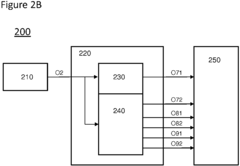
- A self-powered sensor system is designed with an autonomous sensor unit that combines vibration energy harvesting and analogue signal processing circuitry to generate both digital output signals and electrical power signals, reducing the need for separate units and components like ADCs and microprocessors, thereby minimizing energy consumption and implementation area.


Energy Harvesting Mechanisms Evaluation
Energy harvesting mechanisms represent the cornerstone of self-powered sensor technologies, enabling devices to operate autonomously by converting ambient energy into electrical power. The evaluation of these mechanisms reveals a diverse landscape of patented solutions with varying efficiency levels, implementation complexities, and application suitability.
Piezoelectric energy harvesting emerges as one of the most widely patented approaches, with notable innovations from companies like Mide Technology and Advanced Cerametrics. These patents typically focus on optimizing the conversion of mechanical stress or vibration into electrical energy, achieving conversion efficiencies between 25-40% under optimal conditions. The technology demonstrates particular strength in environments with consistent mechanical stimuli, such as industrial machinery or transportation infrastructure.
Thermoelectric generators (TEGs) constitute another significant category, with patents from Alphabet Energy and Perpetua Power Source Technologies showcasing advancements in material science that have improved the Seebeck coefficient. Modern TEG patents demonstrate power densities ranging from 10-100μW/cm² at temperature differentials of 5-10°C, making them viable for wearable and IoT applications where temperature gradients naturally occur.
Photovoltaic technologies adapted for low-light and indoor environments represent a growing patent segment. Sharp Corporation and Ricoh have developed specialized thin-film solar cells optimized for artificial lighting conditions, achieving conversion efficiencies of 15-25% under indoor illumination levels (200-1000 lux), significantly outperforming conventional solar cells in these environments.
RF energy harvesting patents, primarily from Powercast Corporation and Ossia, demonstrate capabilities for wireless power transmission over distances of 5-30 meters, depending on regulatory constraints and power levels. These systems typically achieve end-to-end efficiencies of 5-15%, with recent patents focusing on improving rectenna designs and power management circuits to enhance sensitivity to low-power RF signals.
Electromagnetic induction-based harvesting patents from EnOcean and Pavegen Systems have introduced innovative approaches to capturing energy from motion and human activity. These systems demonstrate power generation capabilities ranging from 1-20mW per activation, sufficient for wireless transmissions and sensor operations in smart building applications.
Comparative analysis of these patented technologies reveals that no single harvesting mechanism provides a universal solution. The selection depends heavily on the specific application environment, power requirements, and operational constraints. Multi-modal energy harvesting approaches, combining two or more mechanisms, represent an emerging trend in recent patents, addressing the intermittent nature of individual energy sources and enhancing overall system reliability.
Piezoelectric energy harvesting emerges as one of the most widely patented approaches, with notable innovations from companies like Mide Technology and Advanced Cerametrics. These patents typically focus on optimizing the conversion of mechanical stress or vibration into electrical energy, achieving conversion efficiencies between 25-40% under optimal conditions. The technology demonstrates particular strength in environments with consistent mechanical stimuli, such as industrial machinery or transportation infrastructure.
Thermoelectric generators (TEGs) constitute another significant category, with patents from Alphabet Energy and Perpetua Power Source Technologies showcasing advancements in material science that have improved the Seebeck coefficient. Modern TEG patents demonstrate power densities ranging from 10-100μW/cm² at temperature differentials of 5-10°C, making them viable for wearable and IoT applications where temperature gradients naturally occur.
Photovoltaic technologies adapted for low-light and indoor environments represent a growing patent segment. Sharp Corporation and Ricoh have developed specialized thin-film solar cells optimized for artificial lighting conditions, achieving conversion efficiencies of 15-25% under indoor illumination levels (200-1000 lux), significantly outperforming conventional solar cells in these environments.
RF energy harvesting patents, primarily from Powercast Corporation and Ossia, demonstrate capabilities for wireless power transmission over distances of 5-30 meters, depending on regulatory constraints and power levels. These systems typically achieve end-to-end efficiencies of 5-15%, with recent patents focusing on improving rectenna designs and power management circuits to enhance sensitivity to low-power RF signals.
Electromagnetic induction-based harvesting patents from EnOcean and Pavegen Systems have introduced innovative approaches to capturing energy from motion and human activity. These systems demonstrate power generation capabilities ranging from 1-20mW per activation, sufficient for wireless transmissions and sensor operations in smart building applications.
Comparative analysis of these patented technologies reveals that no single harvesting mechanism provides a universal solution. The selection depends heavily on the specific application environment, power requirements, and operational constraints. Multi-modal energy harvesting approaches, combining two or more mechanisms, represent an emerging trend in recent patents, addressing the intermittent nature of individual energy sources and enhancing overall system reliability.
Sustainability and Environmental Impact Assessment
The environmental impact of self-powered sensor technologies represents a critical dimension in evaluating their long-term viability and alignment with global sustainability goals. These autonomous sensing systems, by eliminating the need for external power sources and battery replacements, inherently offer significant environmental advantages compared to conventional sensor technologies.
Energy harvesting mechanisms employed in self-powered sensors—including piezoelectric, triboelectric, thermoelectric, and photovoltaic technologies—substantially reduce electronic waste by extending operational lifespans. For instance, piezoelectric-based sensors patented by companies like Pavegen Systems demonstrate remarkable durability, with projected operational lifetimes exceeding 20 years without maintenance, dramatically reducing disposal frequency compared to battery-powered alternatives.
Material composition analysis reveals varying environmental profiles across different patented technologies. Triboelectric nanogenerators (TENGs) developed by Georgia Tech utilize primarily polymer-based materials with relatively low toxicity, while certain thermoelectric generators incorporate rare earth elements that present more complex environmental considerations regarding extraction and processing impacts.
Life cycle assessments of leading patented technologies indicate that self-powered sensors generally achieve carbon footprint reductions of 35-70% compared to battery-powered equivalents when evaluated over a ten-year operational period. This advantage stems primarily from eliminated battery production and replacement cycles, though manufacturing processes for specialized nanomaterials in some designs partially offset these benefits.
End-of-life management presents both challenges and opportunities. While integration of multiple materials in compact designs can complicate recycling, innovations like Cypress Semiconductor's energy harvesting modules feature modular designs specifically engineered for component separation and material recovery, establishing new benchmarks for circular economy principles in sensor technology.
Regulatory compliance analysis indicates that most patented self-powered technologies align well with emerging environmental standards, including the European Union's Restriction of Hazardous Substances (RoHS) directive and similar global frameworks. However, certain specialized applications, particularly those utilizing novel nanomaterials, may require additional scrutiny as regulatory frameworks evolve to address emerging materials.
The sustainability advantages of self-powered sensors extend beyond direct environmental impacts to include broader system-level benefits, such as enabling more comprehensive environmental monitoring networks that contribute to conservation efforts and resource management—creating a virtuous cycle where sustainable technology facilitates environmental stewardship.
Energy harvesting mechanisms employed in self-powered sensors—including piezoelectric, triboelectric, thermoelectric, and photovoltaic technologies—substantially reduce electronic waste by extending operational lifespans. For instance, piezoelectric-based sensors patented by companies like Pavegen Systems demonstrate remarkable durability, with projected operational lifetimes exceeding 20 years without maintenance, dramatically reducing disposal frequency compared to battery-powered alternatives.
Material composition analysis reveals varying environmental profiles across different patented technologies. Triboelectric nanogenerators (TENGs) developed by Georgia Tech utilize primarily polymer-based materials with relatively low toxicity, while certain thermoelectric generators incorporate rare earth elements that present more complex environmental considerations regarding extraction and processing impacts.
Life cycle assessments of leading patented technologies indicate that self-powered sensors generally achieve carbon footprint reductions of 35-70% compared to battery-powered equivalents when evaluated over a ten-year operational period. This advantage stems primarily from eliminated battery production and replacement cycles, though manufacturing processes for specialized nanomaterials in some designs partially offset these benefits.
End-of-life management presents both challenges and opportunities. While integration of multiple materials in compact designs can complicate recycling, innovations like Cypress Semiconductor's energy harvesting modules feature modular designs specifically engineered for component separation and material recovery, establishing new benchmarks for circular economy principles in sensor technology.
Regulatory compliance analysis indicates that most patented self-powered technologies align well with emerging environmental standards, including the European Union's Restriction of Hazardous Substances (RoHS) directive and similar global frameworks. However, certain specialized applications, particularly those utilizing novel nanomaterials, may require additional scrutiny as regulatory frameworks evolve to address emerging materials.
The sustainability advantages of self-powered sensors extend beyond direct environmental impacts to include broader system-level benefits, such as enabling more comprehensive environmental monitoring networks that contribute to conservation efforts and resource management—creating a virtuous cycle where sustainable technology facilitates environmental stewardship.
Unlock deeper insights with PatSnap Eureka Quick Research — get a full tech report to explore trends and direct your research. Try now!
Generate Your Research Report Instantly with AI Agent
Supercharge your innovation with PatSnap Eureka AI Agent Platform!