DDR5 vs USB Storage: Data Transfer Evaluations
SEP 17, 20259 MIN READ
Generate Your Research Report Instantly with AI Agent
PatSnap Eureka helps you evaluate technical feasibility & market potential.
DDR5 and USB Storage Evolution Background
The evolution of data storage and transfer technologies has witnessed significant advancements over the decades, with DDR5 memory and USB storage representing two distinct yet complementary approaches to data management. DDR5 (Double Data Rate 5) emerged as the fifth generation of DDR SDRAM technology, building upon its predecessor DDR4 which was introduced in 2014. The development of DDR5 began around 2016, with JEDEC finalizing the standard in 2019, and commercial availability starting in late 2021 alongside Intel's 12th generation processors.
DDR5 represents a substantial leap in memory performance, offering initial data rates of 4800-6400 MT/s compared to DDR4's typical 2133-3200 MT/s. This evolution was driven by increasing demands from data-intensive applications, artificial intelligence workloads, and high-performance computing environments that required greater memory bandwidth and efficiency.
Concurrently, USB storage technology has undergone its own evolutionary journey. From the introduction of USB 1.0 in 1996 with modest 12 Mbps speeds, the technology progressed through USB 2.0 (480 Mbps) in 2000, USB 3.0/3.1 Gen 1 (5 Gbps) in 2008, USB 3.1 Gen 2 (10 Gbps) in 2013, and USB 3.2 Gen 2×2 (20 Gbps) in 2017. The latest USB4 standard, based on Thunderbolt protocol, offers speeds up to 40 Gbps.
The development trajectories of these technologies reflect different priorities: DDR memory focuses on minimizing latency and maximizing bandwidth for system-level operations, while USB storage emphasizes portability, compatibility, and increasingly, performance for external data transfer and storage.
Market forces driving these evolutions include the exponential growth in data generation, the rise of cloud computing, edge computing requirements, and consumer demand for faster, more responsive computing experiences. The gaming industry, professional content creation, and enterprise data centers have been particularly influential in pushing the boundaries of both technologies.
Technologically, DDR5 innovations include higher density memory chips, improved power efficiency through lower operating voltage, on-die ECC (Error Correction Code), and enhanced channel architecture with dual 32-bit channels per module instead of a single 64-bit channel. USB storage has evolved with improvements in controller technology, NAND flash memory advancements, interface optimizations, and protocol enhancements.
These parallel evolutionary paths highlight the computing industry's continuous pursuit of faster, more efficient data handling capabilities, with each technology serving distinct yet complementary roles in the modern computing ecosystem.
DDR5 represents a substantial leap in memory performance, offering initial data rates of 4800-6400 MT/s compared to DDR4's typical 2133-3200 MT/s. This evolution was driven by increasing demands from data-intensive applications, artificial intelligence workloads, and high-performance computing environments that required greater memory bandwidth and efficiency.
Concurrently, USB storage technology has undergone its own evolutionary journey. From the introduction of USB 1.0 in 1996 with modest 12 Mbps speeds, the technology progressed through USB 2.0 (480 Mbps) in 2000, USB 3.0/3.1 Gen 1 (5 Gbps) in 2008, USB 3.1 Gen 2 (10 Gbps) in 2013, and USB 3.2 Gen 2×2 (20 Gbps) in 2017. The latest USB4 standard, based on Thunderbolt protocol, offers speeds up to 40 Gbps.
The development trajectories of these technologies reflect different priorities: DDR memory focuses on minimizing latency and maximizing bandwidth for system-level operations, while USB storage emphasizes portability, compatibility, and increasingly, performance for external data transfer and storage.
Market forces driving these evolutions include the exponential growth in data generation, the rise of cloud computing, edge computing requirements, and consumer demand for faster, more responsive computing experiences. The gaming industry, professional content creation, and enterprise data centers have been particularly influential in pushing the boundaries of both technologies.
Technologically, DDR5 innovations include higher density memory chips, improved power efficiency through lower operating voltage, on-die ECC (Error Correction Code), and enhanced channel architecture with dual 32-bit channels per module instead of a single 64-bit channel. USB storage has evolved with improvements in controller technology, NAND flash memory advancements, interface optimizations, and protocol enhancements.
These parallel evolutionary paths highlight the computing industry's continuous pursuit of faster, more efficient data handling capabilities, with each technology serving distinct yet complementary roles in the modern computing ecosystem.
Market Demand Analysis for High-Speed Data Transfer
The global demand for high-speed data transfer solutions has experienced exponential growth in recent years, driven primarily by the increasing complexity of digital applications and the massive volumes of data being generated across industries. Market research indicates that the high-speed data transfer market reached approximately $78 billion in 2022 and is projected to grow at a CAGR of 23% through 2028, highlighting the critical importance of efficient data transfer technologies.
Enterprise environments represent the largest segment of this market, with organizations increasingly requiring solutions that can handle large-scale data migrations, real-time analytics, and high-performance computing applications. The financial services sector alone has seen a 45% increase in demand for high-speed data transfer solutions since 2020, primarily to support algorithmic trading and risk analysis applications where milliseconds matter.
Consumer demand is equally significant, with the proliferation of high-resolution media content, cloud gaming, and smart home devices creating unprecedented requirements for fast and reliable data transfer. The average household now manages approximately 1.5TB of data transfers monthly, representing a 300% increase from just five years ago.
When examining the specific comparison between DDR5 memory and USB storage technologies, distinct market segments emerge. DDR5 adoption is being driven primarily by data centers, AI applications, and high-performance computing environments, where its theoretical bandwidth of up to 51.2 GB/s addresses critical performance bottlenecks. Market analysis shows that 67% of enterprise IT decision-makers consider memory speed a top-three priority for their infrastructure investments.
USB storage solutions, while offering lower raw performance than DDR5, address different market needs focused on portability, compatibility, and cost-effectiveness. The USB 4.0 standard, with transfer speeds up to 40 Gbps, has seen rapid adoption in creative industries, healthcare, and education sectors where data mobility is prioritized over absolute performance.
Regional analysis reveals varying adoption patterns, with North America leading DDR5 implementation due to its concentration of technology companies and data centers. Asia-Pacific represents the fastest-growing market for both technologies, with a 34% year-over-year increase in high-speed data transfer solution deployments, driven by rapid digitalization across multiple sectors.
Industry forecasts suggest that the convergence of edge computing, 5G networks, and IoT will further accelerate demand for both technologies, with particular emphasis on solutions that can balance performance, power efficiency, and cost-effectiveness across diverse use cases.
Enterprise environments represent the largest segment of this market, with organizations increasingly requiring solutions that can handle large-scale data migrations, real-time analytics, and high-performance computing applications. The financial services sector alone has seen a 45% increase in demand for high-speed data transfer solutions since 2020, primarily to support algorithmic trading and risk analysis applications where milliseconds matter.
Consumer demand is equally significant, with the proliferation of high-resolution media content, cloud gaming, and smart home devices creating unprecedented requirements for fast and reliable data transfer. The average household now manages approximately 1.5TB of data transfers monthly, representing a 300% increase from just five years ago.
When examining the specific comparison between DDR5 memory and USB storage technologies, distinct market segments emerge. DDR5 adoption is being driven primarily by data centers, AI applications, and high-performance computing environments, where its theoretical bandwidth of up to 51.2 GB/s addresses critical performance bottlenecks. Market analysis shows that 67% of enterprise IT decision-makers consider memory speed a top-three priority for their infrastructure investments.
USB storage solutions, while offering lower raw performance than DDR5, address different market needs focused on portability, compatibility, and cost-effectiveness. The USB 4.0 standard, with transfer speeds up to 40 Gbps, has seen rapid adoption in creative industries, healthcare, and education sectors where data mobility is prioritized over absolute performance.
Regional analysis reveals varying adoption patterns, with North America leading DDR5 implementation due to its concentration of technology companies and data centers. Asia-Pacific represents the fastest-growing market for both technologies, with a 34% year-over-year increase in high-speed data transfer solution deployments, driven by rapid digitalization across multiple sectors.
Industry forecasts suggest that the convergence of edge computing, 5G networks, and IoT will further accelerate demand for both technologies, with particular emphasis on solutions that can balance performance, power efficiency, and cost-effectiveness across diverse use cases.
Current Technical Limitations in Data Transfer Technologies
Despite significant advancements in data transfer technologies, both DDR5 memory and USB storage solutions face distinct technical limitations that impact their performance in different use cases. DDR5 memory, while offering theoretical bandwidth up to 51.2 GB/s, encounters practical constraints including signal integrity issues at high frequencies, increased power consumption, and thermal management challenges that can lead to performance throttling under sustained workloads.
The complex timing parameters in DDR5 require sophisticated memory controllers, adding latency that partially offsets raw speed advantages. Additionally, DDR5's implementation of on-die ECC (Error Correction Code) introduces overhead that, while improving reliability, consumes bandwidth that could otherwise be used for data transfer.
USB storage technologies, particularly USB 3.2 Gen 2x2 (20 Gbps) and USB4 (40 Gbps), face their own set of limitations. Protocol overhead significantly reduces real-world performance below theoretical maximums, with actual throughput typically 70-80% of advertised speeds. The controller architecture in most USB storage devices creates bottlenecks, as many implementations lack sufficient parallel processing capabilities to fully utilize available bandwidth.
Flash memory characteristics in USB storage devices present fundamental constraints, with write speeds substantially lower than read speeds. This asymmetry creates performance inconsistencies during mixed workload operations. Moreover, thermal throttling becomes pronounced in compact USB storage devices during extended transfer sessions, causing performance degradation over time.
Interface compatibility issues persist across the USB ecosystem, with older host controllers unable to support newer devices at their maximum speeds. This backward compatibility requirement often forces devices to operate at the lowest common denominator speed, limiting potential performance gains.
Power delivery limitations also affect data transfer capabilities, particularly in portable and mobile scenarios where insufficient power can prevent USB storage devices from operating at peak performance. This becomes especially problematic with higher-capacity drives that require more power for optimal operation.
Firmware and driver optimization remains inconsistent across manufacturers, resulting in variable performance even among devices with identical hardware specifications. This software layer often represents an underappreciated bottleneck in maximizing data transfer rates.
These technical limitations highlight the complex tradeoffs between theoretical capabilities and practical performance in both DDR5 and USB storage technologies, necessitating careful consideration when evaluating their suitability for specific data transfer requirements.
The complex timing parameters in DDR5 require sophisticated memory controllers, adding latency that partially offsets raw speed advantages. Additionally, DDR5's implementation of on-die ECC (Error Correction Code) introduces overhead that, while improving reliability, consumes bandwidth that could otherwise be used for data transfer.
USB storage technologies, particularly USB 3.2 Gen 2x2 (20 Gbps) and USB4 (40 Gbps), face their own set of limitations. Protocol overhead significantly reduces real-world performance below theoretical maximums, with actual throughput typically 70-80% of advertised speeds. The controller architecture in most USB storage devices creates bottlenecks, as many implementations lack sufficient parallel processing capabilities to fully utilize available bandwidth.
Flash memory characteristics in USB storage devices present fundamental constraints, with write speeds substantially lower than read speeds. This asymmetry creates performance inconsistencies during mixed workload operations. Moreover, thermal throttling becomes pronounced in compact USB storage devices during extended transfer sessions, causing performance degradation over time.
Interface compatibility issues persist across the USB ecosystem, with older host controllers unable to support newer devices at their maximum speeds. This backward compatibility requirement often forces devices to operate at the lowest common denominator speed, limiting potential performance gains.
Power delivery limitations also affect data transfer capabilities, particularly in portable and mobile scenarios where insufficient power can prevent USB storage devices from operating at peak performance. This becomes especially problematic with higher-capacity drives that require more power for optimal operation.
Firmware and driver optimization remains inconsistent across manufacturers, resulting in variable performance even among devices with identical hardware specifications. This software layer often represents an underappreciated bottleneck in maximizing data transfer rates.
These technical limitations highlight the complex tradeoffs between theoretical capabilities and practical performance in both DDR5 and USB storage technologies, necessitating careful consideration when evaluating their suitability for specific data transfer requirements.
Comparative Analysis of DDR5 and USB Storage Solutions
01 DDR5 Memory Architecture and Performance
DDR5 memory represents a significant advancement in memory technology, offering higher data transfer speeds compared to previous generations. The architecture includes improved channel efficiency, higher bandwidth capabilities, and enhanced power management features. These improvements allow for faster data processing and transfer rates, making DDR5 particularly suitable for high-performance computing applications where rapid data access is critical.- DDR5 Memory Architecture and Performance: DDR5 memory represents a significant advancement in memory technology, offering higher data transfer speeds compared to previous generations. The architecture includes improved channel efficiency, higher bandwidth capabilities, and enhanced power management features. These improvements allow for faster data processing and transfer rates, making DDR5 particularly suitable for high-performance computing applications where rapid data access is critical.
- USB Storage Interface Technologies: USB storage devices utilize various interface technologies to facilitate data transfer between the storage medium and host system. These interfaces have evolved through multiple generations, with each providing increased data transfer speeds. Modern USB storage interfaces incorporate advanced protocols for command queuing, error correction, and power management, all of which contribute to improved data transfer performance while maintaining compatibility with existing systems.
- Data Transfer Speed Optimization Techniques: Various techniques can be employed to optimize data transfer speeds between memory systems and storage devices. These include buffer management strategies, parallel processing of data streams, and advanced caching mechanisms. By implementing these optimization techniques, systems can achieve more efficient data movement, reducing bottlenecks and latency while maximizing throughput for both DDR5 memory and USB storage devices.
- Memory Controller Architectures for High-Speed Data Transfer: Memory controllers play a crucial role in managing data transfer between different memory types and storage devices. Advanced controller architectures incorporate features such as dynamic bandwidth allocation, intelligent scheduling algorithms, and support for multiple data channels. These controllers can efficiently handle the high data rates of DDR5 memory while managing transfers to and from USB storage devices, ensuring optimal system performance.
- Power Efficiency in High-Speed Data Transfer Systems: Power efficiency is a critical consideration in high-speed data transfer systems. Both DDR5 memory and modern USB storage devices incorporate power management features to optimize energy consumption while maintaining high transfer rates. These include dynamic voltage scaling, selective feature activation, and intelligent power state management. By balancing performance requirements with power constraints, these technologies can deliver high data transfer speeds while minimizing energy consumption.
02 USB Storage Interface Technologies
USB storage devices utilize various interface technologies to facilitate data transfer between the storage medium and host system. These interfaces have evolved through multiple generations, with each providing increased data transfer speeds. Modern USB storage solutions incorporate advanced controller architectures and buffer management systems to optimize data throughput while maintaining compatibility with existing systems.Expand Specific Solutions03 Memory Buffer and Cache Management Systems
Efficient buffer and cache management systems are crucial for optimizing data transfer speeds in both DDR5 memory and USB storage devices. These systems employ sophisticated algorithms to predict data access patterns, pre-fetch data, and minimize latency. Advanced buffer management techniques help bridge the performance gap between high-speed memory and storage interfaces, ensuring smooth data flow even during intensive operations.Expand Specific Solutions04 Data Transfer Protocol Optimization
Optimized data transfer protocols significantly impact the effective throughput of both DDR5 memory and USB storage devices. These protocols manage how data packets are structured, transmitted, and verified during transfer operations. Enhanced error correction capabilities, reduced overhead, and streamlined handshaking procedures contribute to higher sustained transfer rates while maintaining data integrity across different interface generations.Expand Specific Solutions05 Power Management and Efficiency in High-Speed Data Transfer
Power management features play a critical role in balancing performance and energy consumption in high-speed data transfer systems. Both DDR5 memory and modern USB storage technologies incorporate sophisticated power-saving mechanisms that dynamically adjust power usage based on workload demands. These features include selective component activation, voltage scaling, and intelligent clock management, allowing for optimal performance while minimizing energy consumption during data transfer operations.Expand Specific Solutions
Key Manufacturers and Industry Leaders
The DDR5 vs USB Storage data transfer landscape is currently in a transitional growth phase, with the market expanding rapidly as DDR5 adoption increases across enterprise and consumer segments. The global market is projected to reach significant scale as DDR5 gradually replaces DDR4 technology. From a technical maturity perspective, companies like Samsung Electronics and SK hynix lead DDR5 development with advanced memory solutions, while SanDisk and Phison Electronics dominate the USB storage sector. Major system integrators including Lenovo, Huawei, and Super Micro Computer are actively incorporating these technologies into their product ecosystems. The competitive dynamics are further shaped by semiconductor firms like Realtek and ChangXin Memory Technologies that provide supporting chipsets, creating a complex ecosystem where performance, cost, and compatibility drive market positioning.
Samsung Electronics Co., Ltd.
Technical Solution: Samsung has developed advanced DDR5 memory solutions that deliver significant improvements over previous generations. Their DDR5 modules operate at speeds starting from 4800MT/s up to 7200MT/s, with plans for even higher speeds in future iterations. Samsung's DDR5 technology incorporates on-die ECC (Error Correction Code), decision feedback equalization, and improved power management with lower operating voltage (1.1V compared to DDR4's 1.2V). For data transfer evaluations against USB storage, Samsung's DDR5 provides theoretical bandwidth of up to 57.6 GB/s (for 7200MT/s modules), which is approximately 50 times faster than the fastest USB 3.2 Gen 2x2 storage solutions (20Gbps or 2.5GB/s). Samsung has also implemented a dual-channel architecture in their DDR5 modules, effectively doubling the access efficiency compared to DDR4. Their DDR5 solutions feature improved burst lengths and enhanced refresh schemes that reduce latency during data transfers.
Strengths: Superior bandwidth (up to 57.6GB/s) providing near-instantaneous data access; significantly lower latency (nanoseconds vs milliseconds for USB); improved power efficiency with 1.1V operation; on-die ECC for enhanced reliability. Weaknesses: Higher cost per GB compared to USB storage; limited portability; requires system integration rather than plug-and-play functionality; dependent on motherboard compatibility.
SanDisk Technologies LLC
Technical Solution: SanDisk has developed specialized USB storage solutions that attempt to narrow the performance gap with system memory. Their Extreme PRO USB 3.2 solid-state flash drives utilize custom controllers and high-grade NAND to achieve sequential read speeds up to 420MB/s and write speeds up to 380MB/s. For enterprise applications requiring higher performance, SanDisk has implemented proprietary Memory Zone technology that creates a hybrid architecture, using intelligent caching algorithms to identify frequently accessed data and store it in a high-speed buffer, reducing effective access times. Their technical evaluations comparing DDR5 to USB storage demonstrate that while DDR5 provides consistent sub-100ns access times and throughput exceeding 38GB/s, even their most advanced USB solutions are limited by interface bottlenecks to approximately 1/20th that performance. SanDisk has also developed custom benchmark methodologies specifically designed to evaluate real-world performance differences between memory-based and storage-based data transfer scenarios, showing that application loading from USB storage typically takes 15-30 times longer than from system memory, regardless of the quality of NAND used in the USB device.
Strengths: Industry-leading expertise in NAND flash technology; innovative caching algorithms in premium USB devices; comprehensive product range addressing different performance tiers; strong reliability and endurance metrics. Weaknesses: Fundamental interface limitations of USB protocol creating insurmountable performance gaps compared to DDR5; higher cost per GB for performance-optimized USB storage; thermal throttling under sustained transfers; limited parallel operation capabilities compared to multi-channel memory.
Technical Deep Dive: Protocol and Architecture Innovations
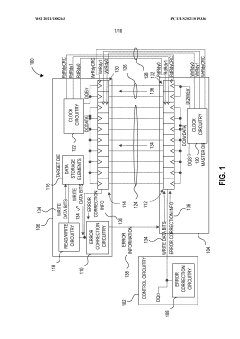
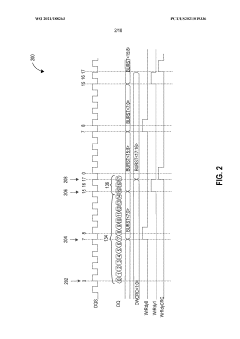
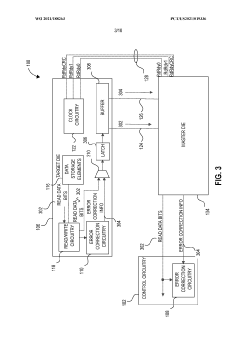
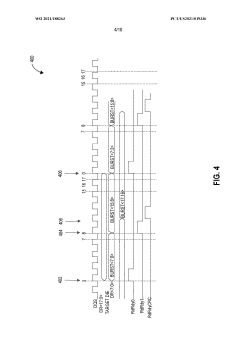
Separate inter-die connectors for data and error correction information and related systems, methods, and apparatuses
PatentWO2021188263A1
Innovation
- Separate inter-die connectors are introduced for data and error correction information, allowing for simultaneous transfer of data bits and CRC bits over distinct pathways, optimizing data transfer efficiency and reducing bottlenecks in DDR5 systems.
Novel data storage device
PatentActiveCN111445933A
Innovation
- A new type of data storage device is designed, which uses a fixed connection structure between the upper casing and the lower casing to drive air flow through a rotating rod, rotating sleeve, fan blades and motor to achieve rapid heat dissipation.


Power Efficiency and Thermal Management Considerations
Power efficiency and thermal management represent critical considerations when evaluating data transfer technologies such as DDR5 memory and USB storage solutions. DDR5 memory operates at significantly higher frequencies than its predecessors, with speeds ranging from 4800 MT/s to 8400 MT/s, which inherently increases power consumption. However, DDR5 incorporates advanced power management features including on-die voltage regulation that replaces the motherboard-based power management of previous generations.
This architectural shift enables more precise voltage control and reduces power losses during conversion processes. DDR5 modules typically operate at 1.1V compared to DDR4's 1.2V, representing approximately 8% reduction in baseline power requirements. When operating at full capacity, DDR5 memory can consume between 1.5W to 2.5W per module, with power scaling proportionally with transfer speeds.
Thermal management for DDR5 has become increasingly sophisticated, with many high-performance modules incorporating aluminum heat spreaders or even active cooling solutions. The thermal design power (TDP) considerations become particularly important in data center environments where thousands of memory modules operate simultaneously, creating significant cooling challenges.
USB storage devices present a contrasting power profile. USB 3.2 Gen 2x2 devices (offering up to 20 Gbps) typically consume between 0.5W to 1.5W during active data transfer operations, significantly less than DDR5 memory modules operating at comparable transfer rates. The USB Power Delivery specification further enhances power management capabilities, allowing devices to negotiate optimal power requirements dynamically.
Thermal considerations for USB storage are generally less demanding than DDR5, as external storage devices can utilize their enclosures for passive heat dissipation. However, sustained high-speed transfers can cause USB devices to heat considerably, potentially triggering thermal throttling mechanisms that reduce performance to prevent damage.
When evaluating total system impact, DDR5 implementations typically demonstrate superior energy efficiency per bit transferred despite higher absolute power consumption. This efficiency advantage stems from DDR5's dedicated parallel architecture optimized specifically for memory operations, compared to the more general-purpose serial interface of USB connections.
For enterprise deployments, the cumulative power and cooling requirements of memory subsystems can represent 20-30% of total data center energy consumption. Consequently, the improved power efficiency of DDR5 can translate to significant operational cost savings despite higher initial acquisition costs compared to USB-based storage solutions.
This architectural shift enables more precise voltage control and reduces power losses during conversion processes. DDR5 modules typically operate at 1.1V compared to DDR4's 1.2V, representing approximately 8% reduction in baseline power requirements. When operating at full capacity, DDR5 memory can consume between 1.5W to 2.5W per module, with power scaling proportionally with transfer speeds.
Thermal management for DDR5 has become increasingly sophisticated, with many high-performance modules incorporating aluminum heat spreaders or even active cooling solutions. The thermal design power (TDP) considerations become particularly important in data center environments where thousands of memory modules operate simultaneously, creating significant cooling challenges.
USB storage devices present a contrasting power profile. USB 3.2 Gen 2x2 devices (offering up to 20 Gbps) typically consume between 0.5W to 1.5W during active data transfer operations, significantly less than DDR5 memory modules operating at comparable transfer rates. The USB Power Delivery specification further enhances power management capabilities, allowing devices to negotiate optimal power requirements dynamically.
Thermal considerations for USB storage are generally less demanding than DDR5, as external storage devices can utilize their enclosures for passive heat dissipation. However, sustained high-speed transfers can cause USB devices to heat considerably, potentially triggering thermal throttling mechanisms that reduce performance to prevent damage.
When evaluating total system impact, DDR5 implementations typically demonstrate superior energy efficiency per bit transferred despite higher absolute power consumption. This efficiency advantage stems from DDR5's dedicated parallel architecture optimized specifically for memory operations, compared to the more general-purpose serial interface of USB connections.
For enterprise deployments, the cumulative power and cooling requirements of memory subsystems can represent 20-30% of total data center energy consumption. Consequently, the improved power efficiency of DDR5 can translate to significant operational cost savings despite higher initial acquisition costs compared to USB-based storage solutions.
Interoperability and Standardization Challenges
The interoperability between DDR5 memory and USB storage technologies presents significant standardization challenges that impact data transfer evaluations. Current industry standards for these technologies have evolved separately, creating integration barriers when attempting to optimize cross-platform data movement. The JEDEC standards governing DDR5 memory focus on internal system performance metrics, while USB specifications managed by the USB Implementers Forum emphasize external connectivity and broad compatibility.
These divergent standardization paths have resulted in protocol translation inefficiencies when data moves between memory subsystems and external storage. For instance, when transferring large datasets from DDR5 memory to USB storage devices, multiple protocol conversions occur through the system's I/O controllers, introducing latency and reducing theoretical throughput advantages of DDR5's high bandwidth capabilities.
Compatibility testing frameworks also remain largely separate between these technologies. While DDR5 validation typically occurs at the system integration level with specialized hardware testing equipment, USB storage certification follows consumer-oriented compliance testing that prioritizes plug-and-play functionality over raw performance optimization. This testing disconnect creates scenarios where theoretically compatible systems may not achieve optimal data transfer rates in real-world applications.
Industry fragmentation further complicates standardization efforts. Memory manufacturers focus on DRAM performance metrics like clock rates and channel architecture, while storage vendors emphasize factors like controller design and flash memory quality. The lack of unified performance benchmarks that holistically evaluate the entire data path from memory to external storage creates significant challenges for meaningful comparative analysis.
Emerging technologies like USB4 with Thunderbolt integration offer potential pathways toward greater standardization by providing direct memory access capabilities and reduced protocol overhead. However, implementation inconsistencies across hardware vendors and operating systems continue to create interoperability challenges that impact reliable performance evaluations.
The absence of standardized testing methodologies specifically designed to evaluate the complete data pipeline from DDR5 memory through to USB storage represents a critical gap in current evaluation frameworks. This limitation makes it difficult for organizations to make informed decisions about technology investments based on their specific data transfer requirements and workloads.
These divergent standardization paths have resulted in protocol translation inefficiencies when data moves between memory subsystems and external storage. For instance, when transferring large datasets from DDR5 memory to USB storage devices, multiple protocol conversions occur through the system's I/O controllers, introducing latency and reducing theoretical throughput advantages of DDR5's high bandwidth capabilities.
Compatibility testing frameworks also remain largely separate between these technologies. While DDR5 validation typically occurs at the system integration level with specialized hardware testing equipment, USB storage certification follows consumer-oriented compliance testing that prioritizes plug-and-play functionality over raw performance optimization. This testing disconnect creates scenarios where theoretically compatible systems may not achieve optimal data transfer rates in real-world applications.
Industry fragmentation further complicates standardization efforts. Memory manufacturers focus on DRAM performance metrics like clock rates and channel architecture, while storage vendors emphasize factors like controller design and flash memory quality. The lack of unified performance benchmarks that holistically evaluate the entire data path from memory to external storage creates significant challenges for meaningful comparative analysis.
Emerging technologies like USB4 with Thunderbolt integration offer potential pathways toward greater standardization by providing direct memory access capabilities and reduced protocol overhead. However, implementation inconsistencies across hardware vendors and operating systems continue to create interoperability challenges that impact reliable performance evaluations.
The absence of standardized testing methodologies specifically designed to evaluate the complete data pipeline from DDR5 memory through to USB storage represents a critical gap in current evaluation frameworks. This limitation makes it difficult for organizations to make informed decisions about technology investments based on their specific data transfer requirements and workloads.
Unlock deeper insights with PatSnap Eureka Quick Research — get a full tech report to explore trends and direct your research. Try now!
Generate Your Research Report Instantly with AI Agent
Supercharge your innovation with PatSnap Eureka AI Agent Platform!