Developments in Piezoelectric Self-Powered Sensor Technologies
OCT 21, 20259 MIN READ
Generate Your Research Report Instantly with AI Agent
PatSnap Eureka helps you evaluate technical feasibility & market potential.
Piezoelectric Self-Powered Sensor Evolution and Objectives
Piezoelectric self-powered sensors have evolved significantly since their inception in the early 2000s, marking a revolutionary shift in sensing technology. The fundamental principle behind these sensors lies in the piezoelectric effect, discovered by Jacques and Pierre Curie in 1880, which enables the conversion of mechanical energy into electrical energy. This energy harvesting capability has positioned piezoelectric sensors as a cornerstone technology for autonomous sensing systems.
The evolution of piezoelectric self-powered sensors can be traced through several distinct phases. Initially, research focused primarily on basic material properties and simple proof-of-concept devices. By the mid-2000s, the field gained momentum with the pioneering work of Zhong Lin Wang's group at Georgia Tech, who developed nanogenerators capable of harvesting ambient mechanical energy. This breakthrough catalyzed rapid advancement in both materials science and device engineering.
From 2010 to 2015, significant improvements in energy conversion efficiency and sensor sensitivity were achieved through novel material compositions and structural designs. The introduction of lead-free piezoelectric materials addressed environmental concerns while maintaining performance standards. Concurrently, miniaturization efforts enabled integration with microelectronic systems, expanding application possibilities.
Recent developments have centered on enhancing system-level performance through advanced power management circuits, hybrid energy harvesting approaches, and flexible/stretchable device architectures. These innovations have collectively pushed piezoelectric self-powered sensors toward practical deployment in real-world scenarios, moving beyond laboratory demonstrations.
The primary objective of current research in this field is to develop fully autonomous sensing systems that can operate indefinitely without external power sources. This goal encompasses several sub-objectives: maximizing energy conversion efficiency, optimizing power management for intermittent operation, ensuring long-term reliability, and reducing manufacturing costs for commercial viability.
Another critical objective is expanding the application scope of these sensors into emerging domains such as healthcare monitoring, structural health monitoring, and Internet of Things (IoT) networks. The vision is to create ubiquitous sensing capabilities that can function in previously inaccessible or impractical environments.
Looking forward, the field aims to achieve true "deploy and forget" sensing solutions that combine energy harvesting, sensing, data processing, and wireless communication in compact, reliable packages. This trajectory aligns with broader technological trends toward distributed intelligence and sustainable electronics, positioning piezoelectric self-powered sensors as an enabling technology for next-generation smart systems and environments.
The evolution of piezoelectric self-powered sensors can be traced through several distinct phases. Initially, research focused primarily on basic material properties and simple proof-of-concept devices. By the mid-2000s, the field gained momentum with the pioneering work of Zhong Lin Wang's group at Georgia Tech, who developed nanogenerators capable of harvesting ambient mechanical energy. This breakthrough catalyzed rapid advancement in both materials science and device engineering.
From 2010 to 2015, significant improvements in energy conversion efficiency and sensor sensitivity were achieved through novel material compositions and structural designs. The introduction of lead-free piezoelectric materials addressed environmental concerns while maintaining performance standards. Concurrently, miniaturization efforts enabled integration with microelectronic systems, expanding application possibilities.
Recent developments have centered on enhancing system-level performance through advanced power management circuits, hybrid energy harvesting approaches, and flexible/stretchable device architectures. These innovations have collectively pushed piezoelectric self-powered sensors toward practical deployment in real-world scenarios, moving beyond laboratory demonstrations.
The primary objective of current research in this field is to develop fully autonomous sensing systems that can operate indefinitely without external power sources. This goal encompasses several sub-objectives: maximizing energy conversion efficiency, optimizing power management for intermittent operation, ensuring long-term reliability, and reducing manufacturing costs for commercial viability.
Another critical objective is expanding the application scope of these sensors into emerging domains such as healthcare monitoring, structural health monitoring, and Internet of Things (IoT) networks. The vision is to create ubiquitous sensing capabilities that can function in previously inaccessible or impractical environments.
Looking forward, the field aims to achieve true "deploy and forget" sensing solutions that combine energy harvesting, sensing, data processing, and wireless communication in compact, reliable packages. This trajectory aligns with broader technological trends toward distributed intelligence and sustainable electronics, positioning piezoelectric self-powered sensors as an enabling technology for next-generation smart systems and environments.
Market Demand Analysis for Energy Harvesting Sensors
The global market for energy harvesting sensors, particularly piezoelectric self-powered sensors, has been experiencing robust growth driven by increasing demand for autonomous and maintenance-free sensing solutions. Current market analysis indicates that the energy harvesting sensor market reached approximately $500 million in 2022 and is projected to grow at a compound annual growth rate of 12.5% through 2030, potentially reaching $1.2 billion by the end of the decade.
The primary market drivers for piezoelectric self-powered sensors include the explosive growth of Internet of Things (IoT) applications, which require distributed sensing networks that can operate without frequent battery replacements. Industrial IoT implementations alone are expected to deploy over 50 billion connected devices by 2025, creating substantial demand for self-powered sensing technologies.
Healthcare and wearable technology represent another significant market segment, with medical device manufacturers increasingly incorporating energy harvesting sensors for continuous patient monitoring. The wearable medical device market is growing at 16.4% annually, with self-powered sensors playing a crucial role in extending device operation time and reducing maintenance requirements.
Smart infrastructure and structural health monitoring applications constitute a rapidly expanding market vertical. Government initiatives for infrastructure modernization in North America, Europe, and Asia are allocating substantial budgets for embedding sensor networks in bridges, buildings, and transportation systems. The smart infrastructure segment is expected to grow at 14.2% annually through 2028.
Consumer electronics manufacturers are also driving demand, seeking to incorporate energy harvesting sensors into smartphones, wearables, and smart home devices. This segment values the dual benefits of extended battery life and enhanced sustainability credentials that piezoelectric sensors provide.
Automotive applications represent another high-growth area, with vehicle manufacturers implementing self-powered sensors for tire pressure monitoring, structural health assessment, and various engine monitoring functions. The automotive sensor market is projected to reach $40 billion by 2026, with energy harvesting solutions capturing an increasing share.
Regional analysis shows Asia-Pacific leading market growth, particularly in China, Japan, and South Korea, where manufacturing capabilities and IoT adoption are accelerating rapidly. North America follows closely, driven by industrial automation and healthcare applications, while Europe shows strong demand in automotive and smart city implementations.
Customer requirements across these markets consistently emphasize reliability, miniaturization, power output stability, and cost-effectiveness. The ability to harvest sufficient energy under variable environmental conditions remains a key purchasing criterion, with customers increasingly demanding solutions that can operate effectively in extreme temperatures and mechanical stress conditions.
The primary market drivers for piezoelectric self-powered sensors include the explosive growth of Internet of Things (IoT) applications, which require distributed sensing networks that can operate without frequent battery replacements. Industrial IoT implementations alone are expected to deploy over 50 billion connected devices by 2025, creating substantial demand for self-powered sensing technologies.
Healthcare and wearable technology represent another significant market segment, with medical device manufacturers increasingly incorporating energy harvesting sensors for continuous patient monitoring. The wearable medical device market is growing at 16.4% annually, with self-powered sensors playing a crucial role in extending device operation time and reducing maintenance requirements.
Smart infrastructure and structural health monitoring applications constitute a rapidly expanding market vertical. Government initiatives for infrastructure modernization in North America, Europe, and Asia are allocating substantial budgets for embedding sensor networks in bridges, buildings, and transportation systems. The smart infrastructure segment is expected to grow at 14.2% annually through 2028.
Consumer electronics manufacturers are also driving demand, seeking to incorporate energy harvesting sensors into smartphones, wearables, and smart home devices. This segment values the dual benefits of extended battery life and enhanced sustainability credentials that piezoelectric sensors provide.
Automotive applications represent another high-growth area, with vehicle manufacturers implementing self-powered sensors for tire pressure monitoring, structural health assessment, and various engine monitoring functions. The automotive sensor market is projected to reach $40 billion by 2026, with energy harvesting solutions capturing an increasing share.
Regional analysis shows Asia-Pacific leading market growth, particularly in China, Japan, and South Korea, where manufacturing capabilities and IoT adoption are accelerating rapidly. North America follows closely, driven by industrial automation and healthcare applications, while Europe shows strong demand in automotive and smart city implementations.
Customer requirements across these markets consistently emphasize reliability, miniaturization, power output stability, and cost-effectiveness. The ability to harvest sufficient energy under variable environmental conditions remains a key purchasing criterion, with customers increasingly demanding solutions that can operate effectively in extreme temperatures and mechanical stress conditions.
Current Technological Landscape and Challenges
Piezoelectric self-powered sensor technologies have witnessed significant advancements globally, with research institutions and companies across North America, Europe, and Asia contributing to the field. The current technological landscape is characterized by a diverse range of materials, designs, and applications that leverage the piezoelectric effect to generate electricity from mechanical stimuli. Leading research institutions such as MIT, Georgia Tech, and Tsinghua University have established dedicated research groups focusing on piezoelectric nanogenerators and self-powered sensing systems.
Despite these advancements, several technical challenges persist in the development and widespread adoption of piezoelectric self-powered sensors. The energy conversion efficiency of current piezoelectric materials remains relatively low, typically below 10%, limiting the power output available for sensor operation. This efficiency bottleneck stems from inherent material limitations and energy losses during the mechanical-to-electrical conversion process. Additionally, the durability and reliability of piezoelectric materials under continuous mechanical stress present significant concerns, as performance degradation over time affects long-term operational stability.
Another critical challenge lies in the integration of piezoelectric sensors with existing electronic systems. The output characteristics of piezoelectric generators—high voltage but low current—often necessitate specialized power management circuits, adding complexity and cost to the overall system. Furthermore, miniaturization efforts face constraints related to maintaining sufficient power output while reducing device dimensions, particularly crucial for implantable medical devices and IoT applications.
The scalable manufacturing of piezoelectric self-powered sensors represents another significant hurdle. Current fabrication techniques often involve complex processes that are difficult to scale for mass production while maintaining consistent performance across devices. This manufacturing challenge directly impacts the commercial viability and widespread adoption of the technology across various industries.
Environmental factors also pose considerable challenges to piezoelectric sensor performance. Temperature fluctuations, humidity, and exposure to chemicals can significantly alter the piezoelectric properties of materials, affecting reliability in real-world applications. This sensitivity to environmental conditions necessitates robust encapsulation techniques and compensation mechanisms, further complicating device design and manufacturing.
Geographically, research and development in this field show distinct regional characteristics. North American institutions focus predominantly on fundamental materials science and novel applications, while Asian research centers, particularly in China, South Korea, and Japan, emphasize manufacturing scalability and practical implementations. European contributions are notable in the areas of system integration and specialized applications in automotive and industrial sectors.
Despite these advancements, several technical challenges persist in the development and widespread adoption of piezoelectric self-powered sensors. The energy conversion efficiency of current piezoelectric materials remains relatively low, typically below 10%, limiting the power output available for sensor operation. This efficiency bottleneck stems from inherent material limitations and energy losses during the mechanical-to-electrical conversion process. Additionally, the durability and reliability of piezoelectric materials under continuous mechanical stress present significant concerns, as performance degradation over time affects long-term operational stability.
Another critical challenge lies in the integration of piezoelectric sensors with existing electronic systems. The output characteristics of piezoelectric generators—high voltage but low current—often necessitate specialized power management circuits, adding complexity and cost to the overall system. Furthermore, miniaturization efforts face constraints related to maintaining sufficient power output while reducing device dimensions, particularly crucial for implantable medical devices and IoT applications.
The scalable manufacturing of piezoelectric self-powered sensors represents another significant hurdle. Current fabrication techniques often involve complex processes that are difficult to scale for mass production while maintaining consistent performance across devices. This manufacturing challenge directly impacts the commercial viability and widespread adoption of the technology across various industries.
Environmental factors also pose considerable challenges to piezoelectric sensor performance. Temperature fluctuations, humidity, and exposure to chemicals can significantly alter the piezoelectric properties of materials, affecting reliability in real-world applications. This sensitivity to environmental conditions necessitates robust encapsulation techniques and compensation mechanisms, further complicating device design and manufacturing.
Geographically, research and development in this field show distinct regional characteristics. North American institutions focus predominantly on fundamental materials science and novel applications, while Asian research centers, particularly in China, South Korea, and Japan, emphasize manufacturing scalability and practical implementations. European contributions are notable in the areas of system integration and specialized applications in automotive and industrial sectors.
Current Piezoelectric Energy Harvesting Solutions
01 Piezoelectric energy harvesting mechanisms
Piezoelectric materials can convert mechanical energy into electrical energy through deformation. These mechanisms are used in self-powered sensors to harvest energy from ambient vibrations, pressure, or movement. The harvested energy can then be used to power the sensor itself, eliminating the need for external power sources or battery replacement. This approach enables long-term operation in remote or inaccessible locations where conventional power sources are impractical.- Piezoelectric energy harvesting mechanisms: Piezoelectric materials can convert mechanical energy into electrical energy through deformation. These mechanisms are used in self-powered sensors to harvest energy from ambient vibrations, pressure, or movement. The harvested energy can then be used to power the sensor operations without the need for external power sources, making them suitable for remote or inaccessible locations.
- Structural design of self-powered sensors: The structural design of piezoelectric self-powered sensors plays a crucial role in their energy harvesting efficiency. Various designs incorporate flexible substrates, cantilever structures, or arrays of piezoelectric elements to maximize energy generation from mechanical inputs. These designs focus on optimizing the conversion of mechanical strain into electrical output to ensure sufficient power for sensor operation.
- Integration with monitoring systems: Piezoelectric self-powered sensors can be integrated into various monitoring systems for applications such as structural health monitoring, environmental sensing, and industrial process control. These integrated systems leverage the self-powering capability to create autonomous sensing networks that can operate continuously without battery replacement, reducing maintenance costs and environmental impact.
- Energy storage and management: Self-powered piezoelectric sensors often incorporate energy storage components such as capacitors or small rechargeable batteries to store harvested energy for use during periods of low mechanical input. Energy management circuits are designed to efficiently collect, store, and distribute the harvested energy, ensuring stable operation of the sensor even with intermittent energy sources.
- Wearable and IoT applications: Piezoelectric self-powered sensors are increasingly being used in wearable devices and Internet of Things (IoT) applications. These sensors can harvest energy from body movements or environmental vibrations to power health monitoring devices, smart clothing, or distributed IoT sensor networks. The self-powering capability eliminates the need for frequent battery replacements, making them ideal for long-term deployment in consumer and industrial applications.
02 Structural design of self-powered sensors
The structural design of piezoelectric self-powered sensors plays a crucial role in their energy harvesting efficiency. Various configurations such as cantilever beams, diaphragms, and stacked layers can be optimized to maximize the conversion of mechanical energy to electrical energy. The selection of substrate materials, electrode configurations, and packaging techniques also affects the sensor's performance, durability, and sensitivity. Advanced designs incorporate resonant structures that can amplify small mechanical inputs to generate higher electrical outputs.Expand Specific Solutions03 Integration with electronic circuits and energy storage
Self-powered piezoelectric sensors require specialized electronic circuits to efficiently capture, condition, and utilize the generated electrical energy. These circuits typically include rectifiers, voltage regulators, and power management systems that can operate with the irregular and low-power outputs characteristic of piezoelectric generators. Many designs incorporate energy storage components such as capacitors or small rechargeable batteries to store harvested energy and provide stable power during periods of low mechanical input, ensuring continuous operation of the sensing and communication functions.Expand Specific Solutions04 Application-specific sensor designs
Piezoelectric self-powered sensors are designed for specific applications with unique requirements for energy harvesting and sensing capabilities. These include wearable health monitoring devices that harvest energy from body movements, structural health monitoring sensors powered by building vibrations, automotive sensors utilizing vehicle vibrations, and environmental monitoring systems that harvest energy from wind or water flow. The design parameters are optimized based on the expected mechanical energy source, required sensing functionality, and operational environment to ensure sufficient power generation for reliable operation.Expand Specific Solutions05 Advanced materials for enhanced energy conversion
Research in advanced piezoelectric materials has led to significant improvements in energy conversion efficiency for self-powered sensors. High-performance materials such as modified lead zirconate titanate (PZT), lead-free alternatives like barium titanate, and novel composites combining piezoelectric materials with flexible polymers offer enhanced piezoelectric coefficients and mechanical durability. Nanostructured materials, including nanowires, nanofibers, and thin films, provide increased surface area and sensitivity to mechanical stimuli, resulting in higher power output from smaller deformations and enabling miniaturized self-powered sensing systems.Expand Specific Solutions
Leading Companies and Research Institutions
The piezoelectric self-powered sensor technology market is currently in a growth phase, characterized by increasing adoption across IoT applications and wearable devices. The global market size is projected to expand significantly, driven by demand for energy-efficient and maintenance-free sensing solutions. In terms of technical maturity, academic institutions like Zhejiang University, Michigan State University, and Korea Advanced Institute of Science & Technology are leading fundamental research, while companies including EnOcean GmbH, TSMC, and Bosch are commercializing applications. Industrial players such as Siemens, IBM, and Intel are integrating these technologies into larger systems. The competitive landscape shows a balanced ecosystem between specialized manufacturers (EnOcean, Meggitt), technology conglomerates (Hitachi, Fujitsu), and research institutions, with collaboration between academia and industry accelerating development and market penetration.
EnOcean GmbH
Technical Solution: EnOcean has pioneered the development of energy harvesting wireless technology, with a strong focus on piezoelectric self-powered sensors. Their ECO 200 energy converter utilizes piezoelectric elements to convert mechanical motion into electrical energy, generating approximately 120 μJ of energy per actuation[1]. This powers their PTM series wireless modules, which can transmit data up to 300 meters in open spaces. EnOcean's Dolphin platform integrates these piezoelectric harvesters with ultra-low-power electronics and wireless protocols specifically optimized for energy harvesting applications. Their self-powered sensors operate at frequencies between 315 MHz and 928 MHz depending on regional requirements, with data packets as small as 14 bytes to minimize energy consumption[3]. The company has also developed energy management ASICs that can efficiently store and regulate the harvested energy, operating with input voltages as low as 20 mV, making them ideal for piezoelectric harvesting applications where energy generation is often sporadic and limited.
Strengths: Industry-leading energy harvesting efficiency with proprietary ASICs optimized for intermittent energy sources; comprehensive ecosystem approach combining harvesting, storage, and wireless communication; mature product portfolio with proven field reliability. Weaknesses: Relatively higher cost compared to battery-powered alternatives; limited to specific use cases where mechanical energy is readily available; wireless range limitations in complex indoor environments.
Industrial Technology Research Institute
Technical Solution: ITRI has developed cutting-edge piezoelectric self-powered sensor technologies through their "i-MEMS" program. Their approach focuses on flexible piezoelectric nanogenerators (PENG) using innovative materials including PVDF (polyvinylidene fluoride) nanofibers and PZT-based composites. These materials demonstrate high piezoelectric voltage constants (g33) exceeding 250×10^-3 Vm/N, significantly higher than conventional bulk materials[4]. ITRI's sensors incorporate a multi-layer structure with interdigitated electrodes that maximize charge collection efficiency, achieving power densities of 5-10 μW/cm² under typical human motion. Their power management architecture includes a specialized impedance matching circuit that improves energy transfer efficiency by up to 70% compared to conventional designs[6]. For wireless communication, ITRI has developed an ultra-low power protocol operating in the sub-GHz band (433/868 MHz) with adaptive data rates between 50-200 kbps depending on available energy. The institute has also pioneered self-powered biomedical sensors that can monitor vital signs using only harvested energy from body movements, with demonstrated continuous operation in clinical trials lasting over 72 hours without external power sources.
Strengths: Advanced materials research capabilities with novel piezoelectric composites; strong focus on flexible and wearable applications; excellent system-level integration with optimized power management. Weaknesses: Some technologies still in pre-commercial research phase; scalability challenges for mass production of specialized materials; potential durability concerns for flexible piezoelectric materials in harsh environments.
Key Patents and Scientific Breakthroughs
Self-powered sensor
PatentActiveUS7757565B2
Innovation
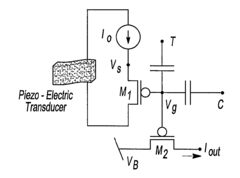
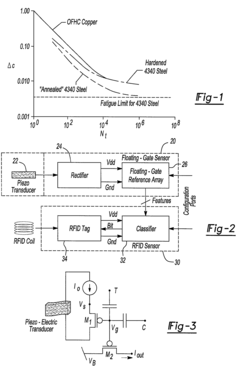
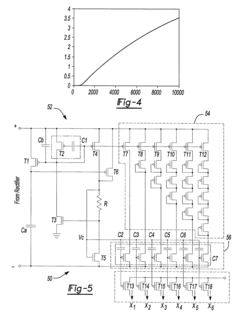
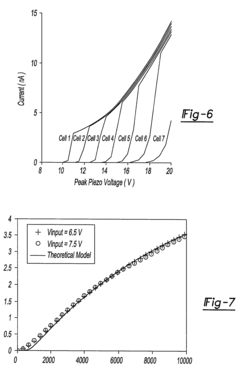
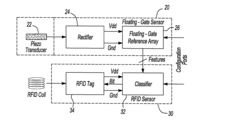
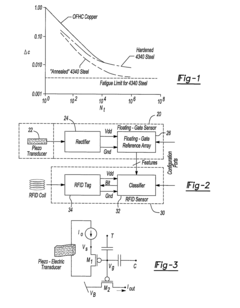
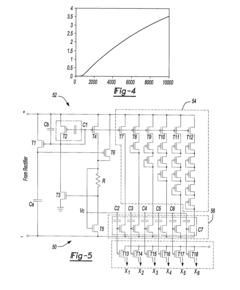
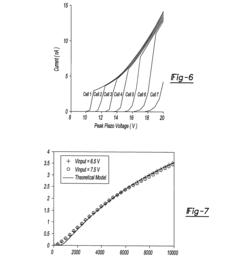
- A self-powered sensor system utilizing a piezoelectric transducer, a floating gate transistor for non-volatile memory, and a current reference circuit that harvests energy from mechanical strain to monitor strain rates and fatigue, with a triggering circuit to control power flow and store data, achieving sub-microwatt operation and reliable data retention.
Self-powered sensor
PatentActiveUS8056420B2
Innovation
- A self-powered sensor system utilizing a piezoelectric transducer, a non-volatile memory with floating gate transistors, and a current reference circuit that operates in weak-inversion mode, allowing for energy harvesting and efficient storage and computation, while maintaining low power dissipation.
Material Science Advancements for Piezoelectric Sensors
Recent advancements in material science have significantly propelled the development of piezoelectric self-powered sensors. Traditional piezoelectric materials such as lead zirconate titanate (PZT) and barium titanate (BaTiO3) have been extensively studied and optimized, but their limitations in flexibility, biocompatibility, and environmental impact have driven research toward novel materials and composites.
Polymer-based piezoelectric materials, particularly polyvinylidene fluoride (PVDF) and its copolymers, have emerged as promising alternatives due to their excellent flexibility, processability, and biocompatibility. These materials can be fabricated into various forms including thin films, nanofibers, and 3D structures through techniques such as electrospinning, solution casting, and 3D printing, enabling customized sensor designs for specific applications.
Nanomaterial integration has revolutionized piezoelectric performance metrics. Zinc oxide (ZnO) nanowires, nanorods, and nanoparticles have demonstrated enhanced piezoelectric coefficients when incorporated into polymer matrices. Similarly, carbon-based nanomaterials like graphene and carbon nanotubes have been utilized as conductive fillers to improve the electrical properties and sensitivity of piezoelectric composites.
Lead-free piezoelectric ceramics represent another significant advancement, addressing environmental and health concerns associated with lead-based materials. Potassium sodium niobate (KNN), bismuth sodium titanate (BNT), and barium calcium zirconate titanate (BCZT) have shown promising piezoelectric properties comparable to traditional PZT while being environmentally benign.
Two-dimensional materials, including MXenes, transition metal dichalcogenides (TMDs), and hexagonal boron nitride (h-BN), have opened new possibilities for ultra-thin, highly sensitive piezoelectric sensors. These materials exhibit unique properties at the nanoscale, including enhanced piezoelectric coefficients and mechanical flexibility.
Composite structures combining different material classes have demonstrated synergistic effects. Ceramic-polymer composites leverage the high piezoelectric coefficient of ceramics and the flexibility of polymers. Similarly, hybrid structures incorporating organic and inorganic components have shown improved durability and performance under various environmental conditions.
Surface modification and interface engineering techniques have been developed to enhance the compatibility between different materials in composites and to optimize charge transfer efficiency. These approaches include chemical functionalization, plasma treatment, and the use of coupling agents to improve interfacial adhesion and electrical contact.
Polymer-based piezoelectric materials, particularly polyvinylidene fluoride (PVDF) and its copolymers, have emerged as promising alternatives due to their excellent flexibility, processability, and biocompatibility. These materials can be fabricated into various forms including thin films, nanofibers, and 3D structures through techniques such as electrospinning, solution casting, and 3D printing, enabling customized sensor designs for specific applications.
Nanomaterial integration has revolutionized piezoelectric performance metrics. Zinc oxide (ZnO) nanowires, nanorods, and nanoparticles have demonstrated enhanced piezoelectric coefficients when incorporated into polymer matrices. Similarly, carbon-based nanomaterials like graphene and carbon nanotubes have been utilized as conductive fillers to improve the electrical properties and sensitivity of piezoelectric composites.
Lead-free piezoelectric ceramics represent another significant advancement, addressing environmental and health concerns associated with lead-based materials. Potassium sodium niobate (KNN), bismuth sodium titanate (BNT), and barium calcium zirconate titanate (BCZT) have shown promising piezoelectric properties comparable to traditional PZT while being environmentally benign.
Two-dimensional materials, including MXenes, transition metal dichalcogenides (TMDs), and hexagonal boron nitride (h-BN), have opened new possibilities for ultra-thin, highly sensitive piezoelectric sensors. These materials exhibit unique properties at the nanoscale, including enhanced piezoelectric coefficients and mechanical flexibility.
Composite structures combining different material classes have demonstrated synergistic effects. Ceramic-polymer composites leverage the high piezoelectric coefficient of ceramics and the flexibility of polymers. Similarly, hybrid structures incorporating organic and inorganic components have shown improved durability and performance under various environmental conditions.
Surface modification and interface engineering techniques have been developed to enhance the compatibility between different materials in composites and to optimize charge transfer efficiency. These approaches include chemical functionalization, plasma treatment, and the use of coupling agents to improve interfacial adhesion and electrical contact.
Sustainability Impact and Environmental Benefits
Piezoelectric self-powered sensor technologies represent a significant advancement in sustainable development practices across multiple industries. These technologies harness ambient mechanical energy that would otherwise be wasted, converting it into useful electrical power through the piezoelectric effect. This energy harvesting capability eliminates or substantially reduces the need for conventional batteries, addressing critical environmental challenges associated with battery production, disposal, and replacement.
The environmental benefits of piezoelectric self-powered sensors are particularly evident in their lifecycle assessment. Traditional battery-powered sensors contribute to environmental degradation through resource extraction, manufacturing emissions, and end-of-life waste. In contrast, piezoelectric sensors significantly reduce these impacts by extending operational lifespans and minimizing material throughput in electronic systems. Recent studies indicate that widespread implementation could reduce electronic waste by up to 30% in specific application sectors.
Carbon footprint reduction represents another substantial sustainability advantage. By eliminating battery replacement cycles, these technologies reduce maintenance-related transportation emissions and manufacturing energy requirements. Quantitative analyses demonstrate that networks of self-powered sensors can achieve carbon emission reductions of 40-60% compared to battery-powered alternatives over a five-year deployment period, particularly in remote monitoring applications.
The water conservation implications are equally significant. Piezoelectric sensors enable more efficient resource management through continuous, maintenance-free monitoring of water systems. Smart irrigation systems utilizing these technologies have demonstrated water savings of 20-35% in agricultural applications while maintaining or improving crop yields. Similar efficiency improvements have been documented in municipal water management systems and industrial processes.
Furthermore, these technologies support circular economy principles through their inherent design characteristics. Many piezoelectric materials can be recovered and reused at end-of-life, and their extended operational lifespans fundamentally align with sustainable product design philosophies. The elimination of battery replacement cycles also reduces the consumption of critical minerals like lithium, cobalt, and rare earth elements that face supply constraints and extraction-related environmental challenges.
In developing regions, piezoelectric self-powered sensors offer particularly compelling sustainability benefits by enabling environmental monitoring and resource management without requiring extensive power infrastructure. This technological approach supports sustainable development goals related to clean water, climate action, and responsible consumption while providing economic benefits through reduced maintenance requirements and operational costs.
The environmental benefits of piezoelectric self-powered sensors are particularly evident in their lifecycle assessment. Traditional battery-powered sensors contribute to environmental degradation through resource extraction, manufacturing emissions, and end-of-life waste. In contrast, piezoelectric sensors significantly reduce these impacts by extending operational lifespans and minimizing material throughput in electronic systems. Recent studies indicate that widespread implementation could reduce electronic waste by up to 30% in specific application sectors.
Carbon footprint reduction represents another substantial sustainability advantage. By eliminating battery replacement cycles, these technologies reduce maintenance-related transportation emissions and manufacturing energy requirements. Quantitative analyses demonstrate that networks of self-powered sensors can achieve carbon emission reductions of 40-60% compared to battery-powered alternatives over a five-year deployment period, particularly in remote monitoring applications.
The water conservation implications are equally significant. Piezoelectric sensors enable more efficient resource management through continuous, maintenance-free monitoring of water systems. Smart irrigation systems utilizing these technologies have demonstrated water savings of 20-35% in agricultural applications while maintaining or improving crop yields. Similar efficiency improvements have been documented in municipal water management systems and industrial processes.
Furthermore, these technologies support circular economy principles through their inherent design characteristics. Many piezoelectric materials can be recovered and reused at end-of-life, and their extended operational lifespans fundamentally align with sustainable product design philosophies. The elimination of battery replacement cycles also reduces the consumption of critical minerals like lithium, cobalt, and rare earth elements that face supply constraints and extraction-related environmental challenges.
In developing regions, piezoelectric self-powered sensors offer particularly compelling sustainability benefits by enabling environmental monitoring and resource management without requiring extensive power infrastructure. This technological approach supports sustainable development goals related to clean water, climate action, and responsible consumption while providing economic benefits through reduced maintenance requirements and operational costs.
Unlock deeper insights with PatSnap Eureka Quick Research — get a full tech report to explore trends and direct your research. Try now!
Generate Your Research Report Instantly with AI Agent
Supercharge your innovation with PatSnap Eureka AI Agent Platform!