

EREV drivetrain sensor technology advancements
AUG 14, 20259 MIN READ
Generate Your Research Report Instantly with AI Agent
PatSnap Eureka helps you evaluate technical feasibility & market potential.
EREV Sensor Tech Evolution
The evolution of EREV (Extended Range Electric Vehicle) drivetrain sensor technology has been marked by significant advancements over the past decade. Initially, these systems relied on basic sensors for monitoring battery charge levels and motor performance. However, as the demand for more efficient and reliable EREVs grew, sensor technology rapidly progressed to meet these challenges.
In the early stages, EREV drivetrains utilized simple voltage and current sensors to monitor battery status and power flow. Temperature sensors were also employed to prevent overheating of critical components. These basic sensor arrays provided essential data but lacked the sophistication needed for optimal energy management and performance.
As EREV technology matured, more advanced sensor systems were introduced. High-precision Hall effect sensors became standard for accurate motor position sensing, enabling better control of electric motor torque and efficiency. Improved battery management systems incorporated sophisticated voltage, current, and temperature sensors at the cell level, allowing for more precise monitoring of battery health and performance.
The integration of advanced inertial measurement units (IMUs) marked a significant leap forward. These sensors, combining accelerometers and gyroscopes, provided real-time data on vehicle dynamics, enabling more responsive and efficient power distribution between the electric motor and range extender.
Another crucial development was the adoption of smart sensor networks. These interconnected systems allowed for real-time data fusion from multiple sensors, providing a comprehensive view of the drivetrain's performance. This holistic approach significantly enhanced energy management strategies and overall vehicle efficiency.
Recent years have seen the introduction of AI-enhanced sensor systems. Machine learning algorithms now process sensor data to predict component wear, optimize energy usage, and adapt to driving conditions. This predictive capability has greatly improved the reliability and efficiency of EREV drivetrains.
The latest frontier in EREV sensor technology is the development of quantum sensors. These cutting-edge devices promise unprecedented accuracy in measuring magnetic fields, temperatures, and other critical parameters. While still in the experimental stage, quantum sensors have the potential to revolutionize drivetrain monitoring and control.
Looking ahead, the trend is towards more integrated and intelligent sensor systems. The focus is on developing sensors that are not only more accurate and reliable but also smaller, more energy-efficient, and capable of self-calibration. This evolution is crucial for the next generation of EREVs, which will demand even greater efficiency and performance from their drivetrains.
In the early stages, EREV drivetrains utilized simple voltage and current sensors to monitor battery status and power flow. Temperature sensors were also employed to prevent overheating of critical components. These basic sensor arrays provided essential data but lacked the sophistication needed for optimal energy management and performance.
As EREV technology matured, more advanced sensor systems were introduced. High-precision Hall effect sensors became standard for accurate motor position sensing, enabling better control of electric motor torque and efficiency. Improved battery management systems incorporated sophisticated voltage, current, and temperature sensors at the cell level, allowing for more precise monitoring of battery health and performance.
The integration of advanced inertial measurement units (IMUs) marked a significant leap forward. These sensors, combining accelerometers and gyroscopes, provided real-time data on vehicle dynamics, enabling more responsive and efficient power distribution between the electric motor and range extender.
Another crucial development was the adoption of smart sensor networks. These interconnected systems allowed for real-time data fusion from multiple sensors, providing a comprehensive view of the drivetrain's performance. This holistic approach significantly enhanced energy management strategies and overall vehicle efficiency.
Recent years have seen the introduction of AI-enhanced sensor systems. Machine learning algorithms now process sensor data to predict component wear, optimize energy usage, and adapt to driving conditions. This predictive capability has greatly improved the reliability and efficiency of EREV drivetrains.
The latest frontier in EREV sensor technology is the development of quantum sensors. These cutting-edge devices promise unprecedented accuracy in measuring magnetic fields, temperatures, and other critical parameters. While still in the experimental stage, quantum sensors have the potential to revolutionize drivetrain monitoring and control.
Looking ahead, the trend is towards more integrated and intelligent sensor systems. The focus is on developing sensors that are not only more accurate and reliable but also smaller, more energy-efficient, and capable of self-calibration. This evolution is crucial for the next generation of EREVs, which will demand even greater efficiency and performance from their drivetrains.
EREV Market Demand Analysis
The market demand for Extended Range Electric Vehicle (EREV) drivetrain sensor technology has been experiencing significant growth in recent years, driven by the increasing adoption of electric vehicles and the need for more efficient and reliable powertrains. As governments worldwide implement stricter emissions regulations and consumers become more environmentally conscious, the demand for EREVs has surged, consequently boosting the market for advanced drivetrain sensor technologies.
The EREV drivetrain sensor market is primarily fueled by the automotive industry's shift towards electrification. Major automakers are investing heavily in EREV technology as a bridge between conventional internal combustion engines and fully electric vehicles. This transition has created a substantial demand for sophisticated sensor systems that can optimize the performance, efficiency, and reliability of EREV drivetrains.
One of the key drivers of market demand is the need for improved energy management in EREVs. Advanced sensor technologies play a crucial role in monitoring and controlling the complex interactions between the electric motor, battery, and range extender. This has led to increased demand for sensors capable of precise measurements of temperature, pressure, position, and current flow within the drivetrain system.
Another factor contributing to market growth is the emphasis on vehicle safety and reliability. EREV drivetrain sensors are essential for detecting potential issues and ensuring the smooth operation of the powertrain components. As a result, there is a growing demand for sensors with enhanced durability, accuracy, and real-time monitoring capabilities.
The market for EREV drivetrain sensor technology is also being driven by the push for increased vehicle range and performance. Consumers are demanding EVs with longer driving ranges, and EREVs offer a solution by combining electric propulsion with a range-extending generator. This has created a need for advanced sensor technologies that can optimize the interplay between electric and combustion power sources, leading to improved overall efficiency and extended range.
Furthermore, the integration of connectivity and autonomous driving features in EREVs is creating new opportunities for sensor technology advancements. There is a growing demand for sensors that can provide real-time data for predictive maintenance, over-the-air updates, and advanced driver assistance systems.
The EREV drivetrain sensor market is expected to continue its growth trajectory in the coming years. As the technology matures and production scales up, the cost of these advanced sensor systems is likely to decrease, further driving adoption across various vehicle segments. Additionally, ongoing research and development efforts are focused on developing next-generation sensors with improved accuracy, reliability, and integration capabilities, which will further expand the market potential for EREV drivetrain sensor technologies.
The EREV drivetrain sensor market is primarily fueled by the automotive industry's shift towards electrification. Major automakers are investing heavily in EREV technology as a bridge between conventional internal combustion engines and fully electric vehicles. This transition has created a substantial demand for sophisticated sensor systems that can optimize the performance, efficiency, and reliability of EREV drivetrains.
One of the key drivers of market demand is the need for improved energy management in EREVs. Advanced sensor technologies play a crucial role in monitoring and controlling the complex interactions between the electric motor, battery, and range extender. This has led to increased demand for sensors capable of precise measurements of temperature, pressure, position, and current flow within the drivetrain system.
Another factor contributing to market growth is the emphasis on vehicle safety and reliability. EREV drivetrain sensors are essential for detecting potential issues and ensuring the smooth operation of the powertrain components. As a result, there is a growing demand for sensors with enhanced durability, accuracy, and real-time monitoring capabilities.
The market for EREV drivetrain sensor technology is also being driven by the push for increased vehicle range and performance. Consumers are demanding EVs with longer driving ranges, and EREVs offer a solution by combining electric propulsion with a range-extending generator. This has created a need for advanced sensor technologies that can optimize the interplay between electric and combustion power sources, leading to improved overall efficiency and extended range.
Furthermore, the integration of connectivity and autonomous driving features in EREVs is creating new opportunities for sensor technology advancements. There is a growing demand for sensors that can provide real-time data for predictive maintenance, over-the-air updates, and advanced driver assistance systems.
The EREV drivetrain sensor market is expected to continue its growth trajectory in the coming years. As the technology matures and production scales up, the cost of these advanced sensor systems is likely to decrease, further driving adoption across various vehicle segments. Additionally, ongoing research and development efforts are focused on developing next-generation sensors with improved accuracy, reliability, and integration capabilities, which will further expand the market potential for EREV drivetrain sensor technologies.
EREV Sensor Challenges
Extended Range Electric Vehicles (EREVs) represent a significant advancement in automotive technology, combining the benefits of electric and conventional powertrains. However, the complex nature of EREV drivetrains presents unique challenges for sensor technology. These challenges stem from the need to accurately monitor and control multiple systems simultaneously, ensuring optimal performance, efficiency, and safety.
One of the primary challenges in EREV sensor technology is the integration of diverse sensor types across different powertrain components. The drivetrain must seamlessly transition between electric and combustion power sources, requiring sensors that can accurately detect and communicate the status of both systems. This includes monitoring battery charge levels, electric motor performance, engine operation, and power distribution between the two sources. The complexity of these interactions demands highly sophisticated sensor networks capable of real-time data processing and communication.
Thermal management presents another significant challenge for EREV sensor technology. The combination of electric and combustion systems generates varying heat profiles that must be carefully monitored and controlled. Sensors need to accurately measure temperatures across multiple components, including batteries, electric motors, power electronics, and the internal combustion engine. These sensors must operate reliably across a wide temperature range and in diverse environmental conditions, from extreme cold to high heat and humidity.
Electromagnetic interference (EMI) poses a unique challenge in EREV drivetrains. The high-voltage electrical systems used in electric powertrains can generate significant electromagnetic fields, potentially disrupting the operation of sensitive sensor equipment. Developing sensors that can function accurately in this electromagnetically noisy environment, while also meeting stringent automotive reliability standards, is a critical challenge for EREV technology advancement.
Durability and longevity of sensors in the harsh automotive environment represent another key challenge. EREV sensors must withstand vibration, shock, temperature extremes, and exposure to various fluids and contaminants over the vehicle's lifetime. This requires innovative materials and design approaches to ensure sensor reliability without compromising performance or adding excessive cost or weight to the vehicle.
Lastly, the challenge of sensor miniaturization and integration is particularly acute in EREV applications. As vehicle designs strive for greater efficiency and space utilization, sensors must become smaller and more integrated into vehicle components. This miniaturization must be achieved without sacrificing accuracy or reliability, often requiring advancements in microelectromechanical systems (MEMS) technology and novel sensor packaging techniques.
One of the primary challenges in EREV sensor technology is the integration of diverse sensor types across different powertrain components. The drivetrain must seamlessly transition between electric and combustion power sources, requiring sensors that can accurately detect and communicate the status of both systems. This includes monitoring battery charge levels, electric motor performance, engine operation, and power distribution between the two sources. The complexity of these interactions demands highly sophisticated sensor networks capable of real-time data processing and communication.
Thermal management presents another significant challenge for EREV sensor technology. The combination of electric and combustion systems generates varying heat profiles that must be carefully monitored and controlled. Sensors need to accurately measure temperatures across multiple components, including batteries, electric motors, power electronics, and the internal combustion engine. These sensors must operate reliably across a wide temperature range and in diverse environmental conditions, from extreme cold to high heat and humidity.
Electromagnetic interference (EMI) poses a unique challenge in EREV drivetrains. The high-voltage electrical systems used in electric powertrains can generate significant electromagnetic fields, potentially disrupting the operation of sensitive sensor equipment. Developing sensors that can function accurately in this electromagnetically noisy environment, while also meeting stringent automotive reliability standards, is a critical challenge for EREV technology advancement.
Durability and longevity of sensors in the harsh automotive environment represent another key challenge. EREV sensors must withstand vibration, shock, temperature extremes, and exposure to various fluids and contaminants over the vehicle's lifetime. This requires innovative materials and design approaches to ensure sensor reliability without compromising performance or adding excessive cost or weight to the vehicle.
Lastly, the challenge of sensor miniaturization and integration is particularly acute in EREV applications. As vehicle designs strive for greater efficiency and space utilization, sensors must become smaller and more integrated into vehicle components. This miniaturization must be achieved without sacrificing accuracy or reliability, often requiring advancements in microelectromechanical systems (MEMS) technology and novel sensor packaging techniques.
Current EREV Sensor Solutions
01 Sensor systems for EREV drivetrain monitoring
Extended Range Electric Vehicles (EREVs) utilize various sensors to monitor and control the drivetrain components. These sensors provide real-time data on battery status, motor performance, and overall system efficiency. Advanced sensor systems can integrate multiple data points to optimize power distribution and enhance vehicle performance.- Sensor systems for EREV drivetrain monitoring: Extended Range Electric Vehicles (EREVs) utilize various sensors to monitor and control the drivetrain components. These sensors provide crucial data on temperature, pressure, speed, and position of different parts within the drivetrain system. The information gathered helps optimize the vehicle's performance, efficiency, and safety.
- Integration of sensors with EREV control systems: Sensors in EREV drivetrains are integrated with sophisticated control systems to manage power distribution between electric motors and internal combustion engines. These systems use sensor data to make real-time decisions on when to switch between power sources, optimizing energy usage and extending the vehicle's range.
- Advanced sensor technologies for EREV applications: EREV drivetrains incorporate advanced sensor technologies such as Hall effect sensors, optical encoders, and MEMS-based sensors. These high-precision sensors enable accurate measurement of various drivetrain parameters, contributing to improved vehicle performance and reliability.
- Sensor-based diagnostics and predictive maintenance: EREV drivetrain sensors play a crucial role in vehicle diagnostics and predictive maintenance. By continuously monitoring drivetrain components, these sensors can detect early signs of wear or potential failures, allowing for timely maintenance and reducing the risk of unexpected breakdowns.
- Energy management and regenerative braking sensors: Sensors in EREV drivetrains are essential for effective energy management and regenerative braking systems. These sensors monitor battery state, wheel speed, and brake pressure to optimize energy recovery during deceleration and improve overall vehicle efficiency.
02 Regenerative braking sensors in EREV drivetrains
Regenerative braking systems in EREVs employ sensors to capture and convert kinetic energy into electrical energy during deceleration. These sensors detect vehicle speed, brake pedal position, and wheel rotation to maximize energy recovery. The data from these sensors helps in optimizing the balance between conventional and regenerative braking for improved efficiency.Expand Specific Solutions03 Temperature and thermal management sensors
EREV drivetrains incorporate temperature sensors to monitor critical components such as batteries, electric motors, and power electronics. These sensors help maintain optimal operating temperatures, prevent overheating, and ensure longevity of drivetrain components. Thermal management systems use this data to adjust cooling mechanisms and protect sensitive electronics.Expand Specific Solutions04 Power distribution and management sensors
Sensors in EREV drivetrains monitor power flow between various components, including the battery, electric motor, and range extender. These sensors help optimize power distribution, manage battery charge levels, and control the engagement of the range extender. Advanced algorithms use sensor data to maximize overall system efficiency and extend the vehicle's electric range.Expand Specific Solutions05 Diagnostic and predictive maintenance sensors
EREV drivetrains incorporate diagnostic sensors to monitor component health and performance. These sensors collect data on wear patterns, electrical anomalies, and mechanical stress. Advanced systems use this information for predictive maintenance, allowing for early detection of potential issues and scheduling of preventive servicing to ensure optimal drivetrain performance and longevity.Expand Specific Solutions
EREV Sensor Industry Players
The EREV drivetrain sensor technology market is in a growth phase, driven by increasing demand for efficient and environmentally friendly vehicles. The market size is expanding rapidly, with major automotive players investing heavily in research and development. Technologically, the field is advancing quickly, with companies like GM Global Technology Operations, Valeo Powertrain, and Robert Bosch GmbH leading the way in sensor innovations. These firms are developing more sophisticated and integrated sensor systems for improved drivetrain performance and efficiency. Other key players such as Ford Motor Co., Toyota Motor Corp., and Hyundai Motor Co. are also making significant strides in this area, indicating a highly competitive and dynamic market landscape.
GM Global Technology Operations LLC
Technical Solution: GM has made significant advancements in EREV drivetrain sensor technology, focusing on improving efficiency and performance. Their latest system utilizes a combination of high-precision Hall effect sensors and advanced magnetoresistive sensors for accurate rotor position detection in the electric motors[1]. This allows for more precise control of the motor, enhancing overall drivetrain efficiency. GM has also implemented a sophisticated battery management system with integrated temperature and voltage sensors, enabling real-time monitoring and optimization of battery performance[3]. Additionally, they have developed an intelligent power distribution unit that uses current sensors to dynamically allocate power between the electric motors and the range extender engine, maximizing energy efficiency across various driving conditions[5].
Strengths: Highly integrated sensor system for precise motor control and battery management. Intelligent power distribution for optimized energy usage. Weaknesses: Potential complexity in system integration and higher initial costs compared to conventional drivetrains.
Robert Bosch GmbH
Technical Solution: Bosch has developed cutting-edge sensor technologies for EREV drivetrains, focusing on reliability and efficiency. Their system incorporates advanced inductive sensors for precise rotor position sensing in electric motors, offering improved accuracy and robustness compared to traditional optical encoders[2]. Bosch has also introduced a new generation of current sensors using Hall effect technology, capable of measuring high currents with exceptional accuracy and low power consumption[4]. For battery management, they have developed a smart cell monitoring IC that integrates voltage, current, and temperature sensing capabilities, allowing for more accurate state-of-charge estimation and enhanced battery life[6]. Furthermore, Bosch's innovative torque sensors for the drivetrain enable better control of power delivery and regenerative braking, improving overall vehicle efficiency and driving dynamics[8].
Strengths: High-precision sensors for motor control and battery management. Integrated solutions for improved efficiency and reliability. Weaknesses: May require specialized expertise for integration and maintenance.
Key EREV Sensor Innovations
Low content extended-range electric vehicle powertrain
PatentInactiveUS20110297466A1
Innovation
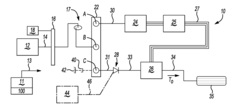
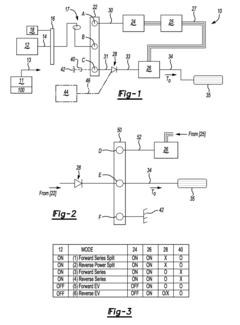
- The EREV design incorporates a direct mechanical path between the engine and drive wheels through a series mode, utilizing two electric machines, a one-way clutch, and an auxiliary starter motor, allowing for efficient operation in various modes including electric-only, power-split, and series modes, with a planetary gear set and controller algorithm to manage these modes.
Flux switching permanent magnet motor suitable for extended range electric vehicle
PatentActiveCN104506011A
Innovation
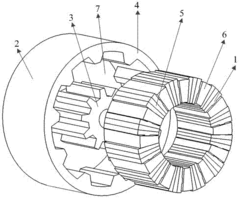
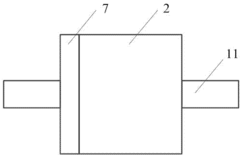
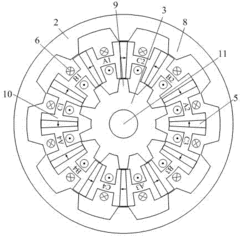
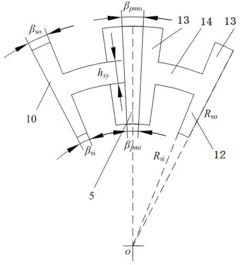
- Adopting a composite rotor structure and H-shaped modular stator core design, an independent magnetic field is formed through an inner and outer two-layer air gap structure and alternating tangentially magnetized permanent magnets, and a three-phase annular winding is used to improve the torque output capability. and heat dissipation performance to reduce the pulsation of positioning torque.
EREV Sensor Integration
The integration of sensors in Extended Range Electric Vehicles (EREVs) has become increasingly sophisticated, driven by the need for enhanced performance, safety, and efficiency. EREV sensor integration focuses on seamlessly incorporating various sensor technologies into the drivetrain system to optimize vehicle operation and energy management.
One of the key advancements in EREV sensor integration is the development of high-precision battery management systems (BMS). These systems utilize advanced temperature, voltage, and current sensors to monitor battery health and performance in real-time. By integrating these sensors with intelligent algorithms, EREVs can accurately predict remaining range, optimize charging cycles, and extend battery life.
Another significant area of progress is the integration of torque sensors in the electric motor and transmission systems. These sensors provide precise measurements of power delivery, enabling more efficient control of the electric drivetrain. By continuously monitoring torque output, the vehicle's control unit can adjust power distribution between the electric motor and range extender, maximizing overall efficiency and performance.
Advancements in wheel speed sensors have also played a crucial role in EREV sensor integration. High-resolution wheel speed sensors, often utilizing Hall effect technology, provide accurate data for traction control, regenerative braking, and energy recovery systems. This integration allows for more precise control of vehicle dynamics and improved energy recuperation during deceleration.
The integration of advanced position sensors in the range extender engine has further enhanced EREV performance. These sensors, including crankshaft and camshaft position sensors, enable precise control of engine timing and fuel injection. This integration ensures optimal operation of the range extender, minimizing fuel consumption and emissions while maximizing power generation efficiency.
Environmental sensors have also been integrated into EREV drivetrains to optimize vehicle performance based on external conditions. Temperature and humidity sensors help adjust battery thermal management systems, while barometric pressure sensors assist in fine-tuning engine performance at varying altitudes. This holistic approach to sensor integration allows EREVs to adapt to diverse driving conditions, maintaining efficiency across a wide range of environments.
The integration of these sensor technologies is facilitated by advanced communication protocols and high-speed data networks within the vehicle. CAN (Controller Area Network) and FlexRay systems enable seamless data exchange between various sensors and control units, allowing for real-time decision-making and system optimization. This interconnected sensor ecosystem forms the foundation for increasingly intelligent and efficient EREV drivetrains.
One of the key advancements in EREV sensor integration is the development of high-precision battery management systems (BMS). These systems utilize advanced temperature, voltage, and current sensors to monitor battery health and performance in real-time. By integrating these sensors with intelligent algorithms, EREVs can accurately predict remaining range, optimize charging cycles, and extend battery life.
Another significant area of progress is the integration of torque sensors in the electric motor and transmission systems. These sensors provide precise measurements of power delivery, enabling more efficient control of the electric drivetrain. By continuously monitoring torque output, the vehicle's control unit can adjust power distribution between the electric motor and range extender, maximizing overall efficiency and performance.
Advancements in wheel speed sensors have also played a crucial role in EREV sensor integration. High-resolution wheel speed sensors, often utilizing Hall effect technology, provide accurate data for traction control, regenerative braking, and energy recovery systems. This integration allows for more precise control of vehicle dynamics and improved energy recuperation during deceleration.
The integration of advanced position sensors in the range extender engine has further enhanced EREV performance. These sensors, including crankshaft and camshaft position sensors, enable precise control of engine timing and fuel injection. This integration ensures optimal operation of the range extender, minimizing fuel consumption and emissions while maximizing power generation efficiency.
Environmental sensors have also been integrated into EREV drivetrains to optimize vehicle performance based on external conditions. Temperature and humidity sensors help adjust battery thermal management systems, while barometric pressure sensors assist in fine-tuning engine performance at varying altitudes. This holistic approach to sensor integration allows EREVs to adapt to diverse driving conditions, maintaining efficiency across a wide range of environments.
The integration of these sensor technologies is facilitated by advanced communication protocols and high-speed data networks within the vehicle. CAN (Controller Area Network) and FlexRay systems enable seamless data exchange between various sensors and control units, allowing for real-time decision-making and system optimization. This interconnected sensor ecosystem forms the foundation for increasingly intelligent and efficient EREV drivetrains.
EREV Sensor Data Management
The management of sensor data in Extended Range Electric Vehicles (EREVs) has become increasingly critical as the complexity and volume of data generated by these vehicles continue to grow. EREV sensor data management encompasses the collection, processing, storage, and analysis of data from various sensors throughout the drivetrain system.
One of the primary challenges in EREV sensor data management is the sheer volume of data generated by multiple sensors in real-time. These sensors monitor various aspects of the vehicle's performance, including battery state, electric motor efficiency, generator output, and overall drivetrain health. To address this challenge, advanced data compression techniques and edge computing solutions are being implemented to reduce data transmission loads and enable more efficient processing.
Real-time data analysis is another crucial aspect of EREV sensor data management. Machine learning algorithms and artificial intelligence are being employed to process sensor data on-the-fly, providing immediate insights into vehicle performance and potential issues. This allows for proactive maintenance and optimization of the drivetrain system, ultimately improving vehicle reliability and efficiency.
Data security and privacy have also become paramount concerns in EREV sensor data management. As vehicles become more connected, protecting sensitive information from cyber threats is essential. Encryption methods and secure communication protocols are being developed and implemented to safeguard sensor data both in transit and at rest.
The integration of sensor data from multiple sources within the EREV drivetrain presents another challenge. Sensor fusion techniques are being refined to combine data from various sensors, providing a more comprehensive and accurate picture of the vehicle's performance. This integrated approach allows for more precise control of the drivetrain components and better overall system optimization.
Cloud-based solutions are increasingly being utilized for EREV sensor data management, offering scalable storage and processing capabilities. These platforms enable manufacturers to collect and analyze data from entire fleets of vehicles, facilitating long-term performance tracking, trend analysis, and continuous improvement of EREV technology.
As sensor technology continues to advance, the quality and granularity of data collected from EREV drivetrains are improving. High-precision sensors with enhanced durability and reliability are being developed, providing more accurate and consistent data over the vehicle's lifetime. This improved data quality is essential for refining control algorithms and optimizing drivetrain performance.
One of the primary challenges in EREV sensor data management is the sheer volume of data generated by multiple sensors in real-time. These sensors monitor various aspects of the vehicle's performance, including battery state, electric motor efficiency, generator output, and overall drivetrain health. To address this challenge, advanced data compression techniques and edge computing solutions are being implemented to reduce data transmission loads and enable more efficient processing.
Real-time data analysis is another crucial aspect of EREV sensor data management. Machine learning algorithms and artificial intelligence are being employed to process sensor data on-the-fly, providing immediate insights into vehicle performance and potential issues. This allows for proactive maintenance and optimization of the drivetrain system, ultimately improving vehicle reliability and efficiency.
Data security and privacy have also become paramount concerns in EREV sensor data management. As vehicles become more connected, protecting sensitive information from cyber threats is essential. Encryption methods and secure communication protocols are being developed and implemented to safeguard sensor data both in transit and at rest.
The integration of sensor data from multiple sources within the EREV drivetrain presents another challenge. Sensor fusion techniques are being refined to combine data from various sensors, providing a more comprehensive and accurate picture of the vehicle's performance. This integrated approach allows for more precise control of the drivetrain components and better overall system optimization.
Cloud-based solutions are increasingly being utilized for EREV sensor data management, offering scalable storage and processing capabilities. These platforms enable manufacturers to collect and analyze data from entire fleets of vehicles, facilitating long-term performance tracking, trend analysis, and continuous improvement of EREV technology.
As sensor technology continues to advance, the quality and granularity of data collected from EREV drivetrains are improving. High-precision sensors with enhanced durability and reliability are being developed, providing more accurate and consistent data over the vehicle's lifetime. This improved data quality is essential for refining control algorithms and optimizing drivetrain performance.
Unlock deeper insights with PatSnap Eureka Quick Research — get a full tech report to explore trends and direct your research. Try now!
Generate Your Research Report Instantly with AI Agent
Supercharge your innovation with PatSnap Eureka AI Agent Platform!