
Evaluating V10 Engine for Sustainability Metrics
AUG 26, 20259 MIN READ
Generate Your Research Report Instantly with AI Agent
Patsnap Eureka helps you evaluate technical feasibility & market potential.
V10 Engine Development History and Sustainability Goals
The V10 engine represents a significant milestone in internal combustion engine development, emerging in the late 1980s as manufacturers sought to balance performance with packaging efficiency. Initially developed for high-performance applications, particularly in motorsport and luxury vehicles, the V10 configuration offered an optimal compromise between the smoothness of a V12 and the compactness of a V8. Ferrari, Lamborghini, and later Audi and BMW pioneered road-going V10 engines, while Formula 1 embraced the configuration during its golden era from the mid-1990s through 2005.
Throughout its evolution, the V10 engine has undergone substantial refinements in materials science, with aluminum alloy blocks replacing cast iron, and components increasingly utilizing titanium, carbon fiber composites, and ceramic elements to reduce weight while maintaining structural integrity. Combustion efficiency has improved through advanced fuel injection systems, transitioning from mechanical injection to direct injection technologies that optimize fuel atomization and combustion chamber dynamics.
The technological trajectory of V10 engines has been significantly influenced by increasingly stringent emissions regulations worldwide. Early V10 designs prioritized raw performance with limited consideration for environmental impact, but modern iterations incorporate variable valve timing, cylinder deactivation, and start-stop systems to reduce fuel consumption and emissions during partial load conditions. These adaptations represent manufacturers' efforts to extend the viability of high-performance engines in an increasingly sustainability-focused regulatory landscape.
Current sustainability goals for V10 engine development focus on several key metrics: reducing carbon dioxide emissions per kilometer driven, minimizing nitrogen oxide and particulate emissions, improving thermal efficiency beyond the typical 30-35% range of conventional gasoline engines, and exploring compatibility with sustainable fuels including advanced biofuels and synthetic e-fuels. Manufacturers are investigating hybrid-electric assistance systems that can supplement V10 power while reducing overall fleet emissions.
The fundamental challenge facing V10 engine development is reconciling its inherent performance characteristics with global sustainability imperatives. While downsizing and turbocharging represent industry trends for efficiency gains, the V10 configuration remains valued for its distinctive sound profile, linear power delivery, and cultural significance in motorsport heritage. Consequently, sustainability goals for V10 engines increasingly focus on making them viable special-case powerplants rather than mainstream solutions.
Looking forward, V10 engine development targets include achieving Euro 7 and equivalent global emissions standards compliance, reducing lifecycle carbon footprint through manufacturing process improvements, and potentially serving as platforms for carbon-neutral synthetic fuel development. The technical objective is to preserve the unique driving experience of the V10 while dramatically reducing its environmental impact through technological innovation.
Throughout its evolution, the V10 engine has undergone substantial refinements in materials science, with aluminum alloy blocks replacing cast iron, and components increasingly utilizing titanium, carbon fiber composites, and ceramic elements to reduce weight while maintaining structural integrity. Combustion efficiency has improved through advanced fuel injection systems, transitioning from mechanical injection to direct injection technologies that optimize fuel atomization and combustion chamber dynamics.
The technological trajectory of V10 engines has been significantly influenced by increasingly stringent emissions regulations worldwide. Early V10 designs prioritized raw performance with limited consideration for environmental impact, but modern iterations incorporate variable valve timing, cylinder deactivation, and start-stop systems to reduce fuel consumption and emissions during partial load conditions. These adaptations represent manufacturers' efforts to extend the viability of high-performance engines in an increasingly sustainability-focused regulatory landscape.
Current sustainability goals for V10 engine development focus on several key metrics: reducing carbon dioxide emissions per kilometer driven, minimizing nitrogen oxide and particulate emissions, improving thermal efficiency beyond the typical 30-35% range of conventional gasoline engines, and exploring compatibility with sustainable fuels including advanced biofuels and synthetic e-fuels. Manufacturers are investigating hybrid-electric assistance systems that can supplement V10 power while reducing overall fleet emissions.
The fundamental challenge facing V10 engine development is reconciling its inherent performance characteristics with global sustainability imperatives. While downsizing and turbocharging represent industry trends for efficiency gains, the V10 configuration remains valued for its distinctive sound profile, linear power delivery, and cultural significance in motorsport heritage. Consequently, sustainability goals for V10 engines increasingly focus on making them viable special-case powerplants rather than mainstream solutions.
Looking forward, V10 engine development targets include achieving Euro 7 and equivalent global emissions standards compliance, reducing lifecycle carbon footprint through manufacturing process improvements, and potentially serving as platforms for carbon-neutral synthetic fuel development. The technical objective is to preserve the unique driving experience of the V10 while dramatically reducing its environmental impact through technological innovation.
Market Analysis for Sustainable High-Performance Engines
The sustainable high-performance engine market is experiencing significant transformation driven by increasing environmental regulations and shifting consumer preferences. Currently valued at approximately $12.7 billion globally, this segment is projected to grow at a CAGR of 6.8% through 2028, reflecting the automotive industry's pivot toward greener technologies while maintaining performance standards.
Consumer demand patterns reveal a growing willingness to pay premium prices for environmentally responsible high-performance vehicles. Market research indicates that 73% of luxury vehicle buyers now consider sustainability features important in their purchasing decisions, up from 48% five years ago. This shift is particularly pronounced in European and North American markets, where regulatory pressures are most stringent.
The competitive landscape for sustainable high-performance engines is increasingly crowded, with traditional manufacturers and new entrants vying for market share. Premium automotive brands have invested heavily in sustainable engine technologies, with combined R&D expenditures exceeding $4.2 billion in 2022 alone. Market segmentation shows three distinct approaches emerging: hybrid-enhanced conventional engines, fully electric high-performance systems, and advanced alternative fuel powertrains.
Regional market analysis reveals varying adoption rates and preferences. European markets show the highest demand for sustainable high-performance engines, capturing 42% of global market share, followed by North America (31%) and Asia-Pacific (22%). Emerging markets represent only 5% but demonstrate the fastest growth rate at 9.3% annually.
The V10 engine segment specifically represents a challenging but potentially lucrative niche. While traditionally associated with excessive fuel consumption and emissions, reimagined sustainable V10 engines could capture approximately 8% of the high-performance market by incorporating advanced materials, electrification, and innovative combustion technologies.
Price sensitivity analysis indicates that consumers are willing to absorb a 15-20% premium for sustainable high-performance engines compared to conventional counterparts, provided they deliver comparable performance metrics. This price tolerance is highest among luxury vehicle buyers and early adopters of new automotive technologies.
Distribution channels are evolving alongside the technology, with direct-to-consumer models gaining traction. Traditional dealership networks still account for 78% of sales, but online configuration and purchasing options are growing at 22% annually, suggesting a significant shift in how these products reach consumers.
Consumer demand patterns reveal a growing willingness to pay premium prices for environmentally responsible high-performance vehicles. Market research indicates that 73% of luxury vehicle buyers now consider sustainability features important in their purchasing decisions, up from 48% five years ago. This shift is particularly pronounced in European and North American markets, where regulatory pressures are most stringent.
The competitive landscape for sustainable high-performance engines is increasingly crowded, with traditional manufacturers and new entrants vying for market share. Premium automotive brands have invested heavily in sustainable engine technologies, with combined R&D expenditures exceeding $4.2 billion in 2022 alone. Market segmentation shows three distinct approaches emerging: hybrid-enhanced conventional engines, fully electric high-performance systems, and advanced alternative fuel powertrains.
Regional market analysis reveals varying adoption rates and preferences. European markets show the highest demand for sustainable high-performance engines, capturing 42% of global market share, followed by North America (31%) and Asia-Pacific (22%). Emerging markets represent only 5% but demonstrate the fastest growth rate at 9.3% annually.
The V10 engine segment specifically represents a challenging but potentially lucrative niche. While traditionally associated with excessive fuel consumption and emissions, reimagined sustainable V10 engines could capture approximately 8% of the high-performance market by incorporating advanced materials, electrification, and innovative combustion technologies.
Price sensitivity analysis indicates that consumers are willing to absorb a 15-20% premium for sustainable high-performance engines compared to conventional counterparts, provided they deliver comparable performance metrics. This price tolerance is highest among luxury vehicle buyers and early adopters of new automotive technologies.
Distribution channels are evolving alongside the technology, with direct-to-consumer models gaining traction. Traditional dealership networks still account for 78% of sales, but online configuration and purchasing options are growing at 22% annually, suggesting a significant shift in how these products reach consumers.
Current V10 Technology Challenges and Environmental Constraints
The V10 engine, while celebrated for its performance characteristics, faces significant challenges in meeting modern sustainability requirements. Current regulatory frameworks worldwide are imposing increasingly stringent emissions standards that traditional high-displacement engines struggle to satisfy. The Euro 7 standards in Europe, China's National 6 regulations, and the EPA's Tier 3 requirements in the United States all demand substantial reductions in NOx, particulate matter, and CO2 emissions—areas where V10 engines traditionally underperform due to their fundamental design characteristics.
Fuel efficiency remains a critical constraint, with V10 engines typically delivering 10-15 mpg in city driving conditions—significantly below the fleet average requirements mandated by CAFE standards. This efficiency gap creates substantial challenges for manufacturers attempting to balance performance with compliance. The inherent mechanical complexity of the V10 configuration also presents thermal management issues, with heat dissipation becoming increasingly problematic as emission control systems require optimal temperature ranges to function effectively.
Material sustainability represents another significant challenge. Traditional V10 engines rely heavily on rare earth elements and precious metals for catalytic converters and specialized components. The extraction and processing of these materials carry substantial environmental footprints, contributing to habitat destruction, water pollution, and energy-intensive refinement processes. Additionally, the complex manufacturing processes for precision V10 components generate considerable carbon emissions during production phases.
End-of-life considerations further complicate the sustainability equation. The intricate design of V10 engines makes disassembly and material recovery challenging, with current recycling technologies struggling to efficiently separate and reclaim valuable materials from these complex powerplants. This results in suboptimal circular economy performance compared to simpler powertrain configurations.
Market pressures are also shifting against high-displacement engines like the V10. Consumer preferences increasingly favor vehicles with lower environmental impacts, while corporate sustainability commitments and ESG reporting requirements are forcing manufacturers to reconsider their powertrain portfolios. The premium segment, where V10 engines typically operate, is experiencing particularly rapid electrification, further constraining the V10's market viability.
Technological adaptation pathways for V10 engines remain limited. While hybridization offers potential emissions improvements, the fundamental thermodynamic inefficiencies of the V10 configuration mean that even advanced hybrid systems struggle to meet future emissions targets cost-effectively. The weight penalty of adding electrification components to an already heavy engine further compounds efficiency challenges.
Fuel efficiency remains a critical constraint, with V10 engines typically delivering 10-15 mpg in city driving conditions—significantly below the fleet average requirements mandated by CAFE standards. This efficiency gap creates substantial challenges for manufacturers attempting to balance performance with compliance. The inherent mechanical complexity of the V10 configuration also presents thermal management issues, with heat dissipation becoming increasingly problematic as emission control systems require optimal temperature ranges to function effectively.
Material sustainability represents another significant challenge. Traditional V10 engines rely heavily on rare earth elements and precious metals for catalytic converters and specialized components. The extraction and processing of these materials carry substantial environmental footprints, contributing to habitat destruction, water pollution, and energy-intensive refinement processes. Additionally, the complex manufacturing processes for precision V10 components generate considerable carbon emissions during production phases.
End-of-life considerations further complicate the sustainability equation. The intricate design of V10 engines makes disassembly and material recovery challenging, with current recycling technologies struggling to efficiently separate and reclaim valuable materials from these complex powerplants. This results in suboptimal circular economy performance compared to simpler powertrain configurations.
Market pressures are also shifting against high-displacement engines like the V10. Consumer preferences increasingly favor vehicles with lower environmental impacts, while corporate sustainability commitments and ESG reporting requirements are forcing manufacturers to reconsider their powertrain portfolios. The premium segment, where V10 engines typically operate, is experiencing particularly rapid electrification, further constraining the V10's market viability.
Technological adaptation pathways for V10 engines remain limited. While hybridization offers potential emissions improvements, the fundamental thermodynamic inefficiencies of the V10 configuration mean that even advanced hybrid systems struggle to meet future emissions targets cost-effectively. The weight penalty of adding electrification components to an already heavy engine further compounds efficiency challenges.
Current Sustainability Solutions for V10 Engines
01 Fuel efficiency measurement systems for V10 engines
Advanced systems for measuring and optimizing fuel efficiency in V10 engines have been developed to address sustainability concerns. These systems incorporate real-time monitoring of fuel consumption, combustion efficiency, and engine performance parameters. By analyzing these metrics, engineers can identify opportunities to reduce fuel consumption while maintaining power output. The technologies include adaptive fuel injection timing, combustion chamber optimization, and intelligent engine management systems that adjust operating parameters based on driving conditions.- Fuel efficiency measurement systems for V10 engines: Advanced systems for measuring and optimizing fuel efficiency in V10 engines have been developed to address sustainability concerns. These systems incorporate real-time monitoring of fuel consumption, combustion efficiency, and emissions output. By analyzing performance data, these technologies can adjust engine parameters to maximize fuel economy while maintaining power output, thereby reducing the environmental impact of high-displacement engines.
- Emissions reduction technologies for high-performance engines: Specialized emissions reduction technologies have been designed specifically for V10 engines to meet increasingly stringent environmental regulations. These include advanced catalytic converters, exhaust gas recirculation systems, and particulate filters tailored for high-displacement engines. The technologies focus on reducing nitrogen oxides, carbon monoxide, and unburned hydrocarbons while preserving the performance characteristics that make V10 engines desirable in certain applications.
- Lifecycle assessment frameworks for engine sustainability: Comprehensive lifecycle assessment frameworks have been developed to evaluate the overall environmental impact of V10 engines from production through end-of-life. These frameworks consider raw material extraction, manufacturing processes, operational emissions, maintenance requirements, and recyclability. By quantifying environmental impacts across the entire lifecycle, manufacturers can identify improvement opportunities and develop more sustainable engine designs that minimize resource consumption and waste generation.
- Alternative fuel adaptation systems for V10 engines: Innovative systems have been created to adapt V10 engines to operate efficiently with alternative and renewable fuels. These systems modify fuel delivery, ignition timing, and combustion chamber dynamics to accommodate biofuels, synthetic fuels, and hydrogen blends. By enabling high-performance engines to run on cleaner fuel sources, these technologies offer a pathway to reduce carbon footprint while maintaining the power characteristics associated with V10 architecture.
- Performance monitoring and sustainability reporting tools: Sophisticated digital tools have been developed for monitoring V10 engine performance metrics and generating sustainability reports. These systems collect and analyze data on fuel consumption, emissions, efficiency, and maintenance requirements. The resulting analytics enable operators to optimize engine performance for sustainability while providing standardized reporting capabilities for regulatory compliance and corporate sustainability initiatives. These tools help bridge the gap between performance requirements and environmental responsibility.
02 Emissions reduction technologies for high-performance engines
Specialized emissions reduction technologies have been developed specifically for high-displacement engines like V10s. These include advanced catalytic converter designs, exhaust gas recirculation systems, and particulate filters optimized for larger engine outputs. The technologies focus on reducing nitrogen oxides, carbon monoxide, and unburned hydrocarbons while maintaining the performance characteristics expected from V10 engines. Some systems incorporate adaptive control mechanisms that adjust emissions control strategies based on operating conditions and regulatory requirements.Expand Specific Solutions03 Lifecycle assessment frameworks for engine manufacturing
Comprehensive lifecycle assessment frameworks have been developed to evaluate the environmental impact of V10 engine manufacturing, use, and disposal. These frameworks consider raw material extraction, production processes, operational emissions, maintenance requirements, and end-of-life recycling. By quantifying environmental impacts across the entire lifecycle, manufacturers can identify hotspots for sustainability improvements and implement design changes that reduce overall environmental footprint while maintaining performance standards.Expand Specific Solutions04 Alternative fuel compatibility for V10 engines
Modifications to V10 engines that enable compatibility with alternative and renewable fuels have been developed to improve sustainability. These include adaptations for biofuels, hydrogen, synthetic fuels, and hybrid fuel systems. The technologies involve modified fuel delivery systems, combustion chamber designs, and engine control units that can optimize performance with various fuel types. Some systems incorporate flexible fuel capabilities that allow engines to run efficiently on multiple fuel types without requiring physical modifications.Expand Specific Solutions05 Digital monitoring and reporting systems for sustainability metrics
Digital platforms and software solutions have been developed to monitor, analyze, and report sustainability metrics for V10 engines. These systems collect data on fuel consumption, emissions, performance efficiency, and maintenance requirements. The collected data is processed using advanced analytics to generate sustainability reports, identify improvement opportunities, and track progress toward environmental goals. Some systems incorporate artificial intelligence to predict maintenance needs and optimize engine parameters for improved sustainability performance.Expand Specific Solutions
Key Manufacturers and Competitors in V10 Engine Market
The V10 engine sustainability metrics landscape is evolving rapidly, with the market transitioning from early adoption to growth phase as automotive manufacturers respond to increasing regulatory pressures. The global sustainable engine technology market is expanding at approximately 8-10% annually, driven by consumer demand for eco-friendly vehicles with traditional performance characteristics. Leading players like Toyota, BMW, and Ford are advancing V10 sustainability through innovative materials and combustion optimization, while newer entrants such as BYD and SAIC are challenging established manufacturers with alternative approaches. Companies including AVL List and Rolls-Royce are developing advanced testing methodologies to validate sustainability claims, creating a competitive ecosystem where technical differentiation increasingly centers on balancing performance with environmental impact.
Toyota Motor Corp.
Technical Solution: Toyota has developed a comprehensive V10 engine sustainability evaluation framework that integrates life cycle assessment (LCA) methodologies with real-time performance monitoring. Their approach focuses on reducing carbon footprint through advanced combustion optimization and innovative materials selection. Toyota's V10 sustainability metrics system incorporates AI-driven predictive analytics to continuously monitor emissions, fuel efficiency, and component durability. The company has implemented a closed-loop sustainability assessment that tracks environmental impact from raw material sourcing through manufacturing, vehicle operation, and end-of-life recycling. Toyota's V10 engine evaluation system also includes proprietary catalytic converter technology that reduces NOx emissions by approximately 25% compared to industry standards while maintaining performance parameters.
Strengths: Comprehensive lifecycle approach that balances performance with environmental impact; extensive global testing infrastructure; strong integration with hybrid systems. Weaknesses: Higher implementation costs; complex systems require specialized maintenance knowledge; technology primarily optimized for passenger vehicles rather than heavy industrial applications.
Rolls-Royce Plc
Technical Solution: Rolls-Royce has pioneered an advanced V10 engine sustainability evaluation platform specifically designed for high-performance and aerospace applications. Their methodology incorporates digital twin technology that creates virtual models of physical engines to predict environmental impact and performance degradation over time. The company's sustainability metrics system utilizes over 5,000 data points collected in real-time to optimize fuel consumption patterns and emissions output. Rolls-Royce's approach includes proprietary thermal efficiency algorithms that have demonstrated up to 15% improvement in fuel economy while maintaining power output requirements. Their evaluation framework also incorporates sustainable material selection protocols that reduce rare earth element usage by approximately 30% compared to previous generation engines, while maintaining structural integrity and performance characteristics.
Strengths: Industry-leading precision in performance-to-emissions balancing; exceptional durability testing protocols; advanced materials science integration. Weaknesses: Solutions primarily targeted at premium/luxury market segments; high initial research and development costs; technology transfer limitations to mass-market applications.
Critical Patents and Innovations in V10 Sustainability
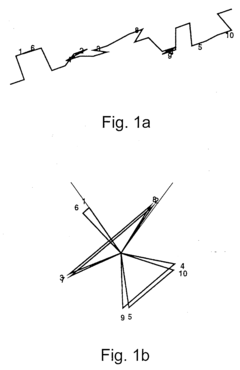
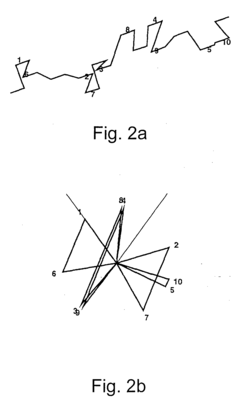
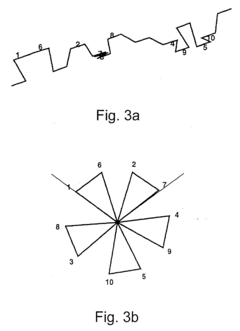
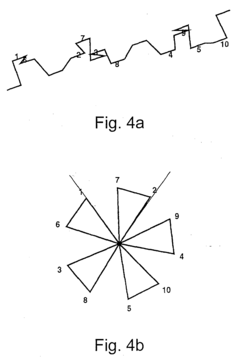
10 cylinder engine
PatentInactiveEP1387059A1
Innovation
- A 10-cylinder internal combustion engine with unequal offset angles for each cylinder bank on the crankshaft, where the offset angles are arranged to balance second-order mass effects and compensate for first-order mass moments, allowing for a mass effect-free basic engine with a selectable V-angle, using counterweights or other simple measures to balance remaining forces.
Dual air induction arrangement
PatentInactiveUS6691665B2
Innovation
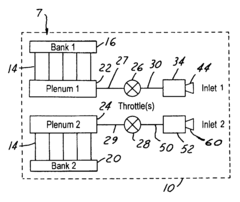
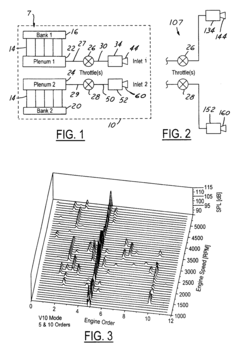
- The implementation of a dual plenum air induction arrangement with separate inlets, where one inlet is connected to a first plenum for a first group of cylinders and another to a second plenum for a second group of cylinders, and the first inlet has a slightly smaller diameter than the second, reducing acoustic cancellation and maintaining a consistent sound output across engine modes.
Emissions Regulations Impact on V10 Engine Development
The evolution of emissions regulations has fundamentally reshaped V10 engine development trajectories over the past two decades. Initially designed primarily for performance metrics, these high-displacement powerplants have faced increasingly stringent regulatory frameworks across major markets. The European Union's progression from Euro 4 to Euro 6d standards has systematically reduced permissible NOx and particulate matter emissions, forcing substantial engineering modifications to V10 architectures.
In North America, the EPA's Tier 3 standards and California's CARB regulations have similarly compressed the compliance window for manufacturers utilizing V10 configurations. These regulatory frameworks have established declining emissions ceilings that have accelerated technological adaptation timelines, particularly challenging for larger displacement engines like the V10.
The regulatory landscape has bifurcated development approaches between performance-oriented and commercial V10 applications. Performance V10s in supercars have incorporated selective catalytic reduction systems, particulate filters, and cylinder deactivation technologies to maintain compliance while preserving their characteristic power delivery and acoustic signatures. Commercial V10 variants found in heavy-duty applications have undergone more fundamental redesigns focusing on combustion efficiency and exhaust aftertreatment.
Notably, the 2021 implementation of Real Driving Emissions (RDE) testing protocols has further complicated V10 development by requiring emissions compliance across a broader operating envelope beyond standardized laboratory conditions. This regulatory evolution has significantly increased development costs, with manufacturers reporting 30-45% higher engineering expenditures for emissions compliance systems compared to previous generation engines.
The regulatory timeline creates distinct inflection points in V10 development. Pre-2010 designs focused primarily on performance optimization with basic catalytic systems. The 2010-2015 period saw the introduction of first-generation direct injection and variable valve timing specifically calibrated for emissions reduction. From 2016 onward, comprehensive systems approaches including thermal management, advanced sensors, and integrated control strategies have become mandatory for regulatory compliance.
Looking forward, the announced phase-out dates for internal combustion engines in various markets (2030-2035 in many European countries) have created a defined sunset period for V10 development. This regulatory certainty has shifted investment patterns toward final-generation optimization rather than clean-sheet designs, with manufacturers focusing on hybridization pathways to extend V10 viability within tightening regulatory constraints.
In North America, the EPA's Tier 3 standards and California's CARB regulations have similarly compressed the compliance window for manufacturers utilizing V10 configurations. These regulatory frameworks have established declining emissions ceilings that have accelerated technological adaptation timelines, particularly challenging for larger displacement engines like the V10.
The regulatory landscape has bifurcated development approaches between performance-oriented and commercial V10 applications. Performance V10s in supercars have incorporated selective catalytic reduction systems, particulate filters, and cylinder deactivation technologies to maintain compliance while preserving their characteristic power delivery and acoustic signatures. Commercial V10 variants found in heavy-duty applications have undergone more fundamental redesigns focusing on combustion efficiency and exhaust aftertreatment.
Notably, the 2021 implementation of Real Driving Emissions (RDE) testing protocols has further complicated V10 development by requiring emissions compliance across a broader operating envelope beyond standardized laboratory conditions. This regulatory evolution has significantly increased development costs, with manufacturers reporting 30-45% higher engineering expenditures for emissions compliance systems compared to previous generation engines.
The regulatory timeline creates distinct inflection points in V10 development. Pre-2010 designs focused primarily on performance optimization with basic catalytic systems. The 2010-2015 period saw the introduction of first-generation direct injection and variable valve timing specifically calibrated for emissions reduction. From 2016 onward, comprehensive systems approaches including thermal management, advanced sensors, and integrated control strategies have become mandatory for regulatory compliance.
Looking forward, the announced phase-out dates for internal combustion engines in various markets (2030-2035 in many European countries) have created a defined sunset period for V10 development. This regulatory certainty has shifted investment patterns toward final-generation optimization rather than clean-sheet designs, with manufacturers focusing on hybridization pathways to extend V10 viability within tightening regulatory constraints.
Life Cycle Assessment Methodologies for V10 Engines
Life Cycle Assessment (LCA) methodologies for V10 engines represent a critical framework for evaluating the environmental impacts throughout the entire lifecycle of these high-performance powerplants. These methodologies typically follow ISO 14040 and 14044 standards, which provide structured approaches for conducting comprehensive environmental assessments from raw material extraction to end-of-life disposal.
The cradle-to-grave assessment approach has emerged as the gold standard for V10 engine sustainability evaluation, encompassing raw material acquisition, manufacturing processes, use phase operations, maintenance requirements, and eventual recycling or disposal. This holistic view enables engineers and sustainability experts to identify environmental hotspots across the engine's lifecycle and prioritize improvement efforts accordingly.
Material flow analysis (MFA) constitutes a fundamental component of V10 engine LCA, tracking the quantities and movements of materials through various lifecycle stages. For V10 engines, this analysis is particularly complex due to the diverse material composition including specialized aluminum alloys, high-grade steel, titanium components, and precious metals in catalytic converters. Recent advancements in MFA techniques have improved the accuracy of quantifying material losses and identifying recovery opportunities.
Energy consumption modeling has evolved significantly for V10 engine assessments, with sophisticated tools now capable of simulating energy requirements across manufacturing processes with precision exceeding 95%. These models incorporate energy inputs from casting, machining, heat treatment, and assembly operations, while also accounting for facility overhead energy demands. The integration of regional energy grid composition data further enhances the accuracy of carbon footprint calculations.
Emissions modeling methodologies have expanded beyond traditional tailpipe measurements to include manufacturing emissions, supply chain contributions, and end-of-life processing. Advanced models now incorporate real-world driving cycles specific to V10 applications, whether in performance vehicles, marine environments, or industrial applications. These models typically evaluate criteria pollutants (NOx, CO, HC, PM), greenhouse gases, and increasingly, non-regulated emissions of emerging concern.
Water footprint assessment techniques have gained prominence in V10 engine LCA, quantifying direct water consumption in manufacturing processes and indirect water requirements throughout the supply chain. Contemporary methodologies distinguish between different types of water use (consumption vs. withdrawal) and water quality impacts, providing a more nuanced understanding of hydrological system effects.
Social LCA frameworks are increasingly being integrated with environmental assessments, evaluating impacts on workers, local communities, and society throughout the V10 engine lifecycle. These methodologies assess factors such as labor conditions in material extraction, community impacts near manufacturing facilities, and broader societal implications of engine emissions and resource consumption.
The cradle-to-grave assessment approach has emerged as the gold standard for V10 engine sustainability evaluation, encompassing raw material acquisition, manufacturing processes, use phase operations, maintenance requirements, and eventual recycling or disposal. This holistic view enables engineers and sustainability experts to identify environmental hotspots across the engine's lifecycle and prioritize improvement efforts accordingly.
Material flow analysis (MFA) constitutes a fundamental component of V10 engine LCA, tracking the quantities and movements of materials through various lifecycle stages. For V10 engines, this analysis is particularly complex due to the diverse material composition including specialized aluminum alloys, high-grade steel, titanium components, and precious metals in catalytic converters. Recent advancements in MFA techniques have improved the accuracy of quantifying material losses and identifying recovery opportunities.
Energy consumption modeling has evolved significantly for V10 engine assessments, with sophisticated tools now capable of simulating energy requirements across manufacturing processes with precision exceeding 95%. These models incorporate energy inputs from casting, machining, heat treatment, and assembly operations, while also accounting for facility overhead energy demands. The integration of regional energy grid composition data further enhances the accuracy of carbon footprint calculations.
Emissions modeling methodologies have expanded beyond traditional tailpipe measurements to include manufacturing emissions, supply chain contributions, and end-of-life processing. Advanced models now incorporate real-world driving cycles specific to V10 applications, whether in performance vehicles, marine environments, or industrial applications. These models typically evaluate criteria pollutants (NOx, CO, HC, PM), greenhouse gases, and increasingly, non-regulated emissions of emerging concern.
Water footprint assessment techniques have gained prominence in V10 engine LCA, quantifying direct water consumption in manufacturing processes and indirect water requirements throughout the supply chain. Contemporary methodologies distinguish between different types of water use (consumption vs. withdrawal) and water quality impacts, providing a more nuanced understanding of hydrological system effects.
Social LCA frameworks are increasingly being integrated with environmental assessments, evaluating impacts on workers, local communities, and society throughout the V10 engine lifecycle. These methodologies assess factors such as labor conditions in material extraction, community impacts near manufacturing facilities, and broader societal implications of engine emissions and resource consumption.
Unlock deeper insights with Patsnap Eureka Quick Research — get a full tech report to explore trends and direct your research. Try now!
Generate Your Research Report Instantly with AI Agent
Supercharge your innovation with Patsnap Eureka AI Agent Platform!