

Exploring Alkyls in Pharmaceuticals: A Comprehensive Guide
JUL 15, 20259 MIN READ
Generate Your Research Report Instantly with AI Agent
Patsnap Eureka helps you evaluate technical feasibility & market potential.
Alkyl Groups in Pharma: Background and Objectives
Alkyl groups have played a pivotal role in pharmaceutical development since the inception of modern medicinal chemistry. These hydrocarbon chains, characterized by their single bonds between carbon atoms, have been instrumental in modifying drug properties and enhancing therapeutic efficacy. The evolution of alkyl group utilization in pharmaceuticals can be traced back to the early 20th century, with significant advancements occurring in the post-World War II era.
The primary objective of exploring alkyls in pharmaceuticals is to optimize drug performance across various parameters. These include improving bioavailability, enhancing lipophilicity, modulating pharmacokinetics, and fine-tuning receptor interactions. As the pharmaceutical industry has progressed, the strategic incorporation of alkyl groups has become increasingly sophisticated, driven by advances in medicinal chemistry, computational modeling, and structure-activity relationship studies.
In recent years, the focus has shifted towards rational drug design, where alkyl groups are precisely engineered to achieve specific molecular properties. This approach has led to the development of more effective and safer drugs, with reduced side effects and improved patient outcomes. The advent of high-throughput screening and combinatorial chemistry has further accelerated the exploration of alkyl modifications in drug discovery processes.
The current technological landscape in pharmaceutical alkyl research is characterized by a convergence of traditional medicinal chemistry with cutting-edge computational tools. Machine learning algorithms and artificial intelligence are now being employed to predict optimal alkyl modifications for target compounds, significantly streamlining the drug discovery pipeline. Additionally, advancements in synthetic methodologies have expanded the repertoire of alkyl groups that can be efficiently incorporated into drug molecules.
Looking ahead, the field of alkyl groups in pharmaceuticals is poised for further innovation. Emerging trends include the development of novel alkyl-based prodrugs, the exploration of fluoroalkyl groups for enhanced metabolic stability, and the investigation of branched alkyl structures for improved target specificity. The integration of alkyl modifications with other drug design strategies, such as fragment-based drug discovery and structure-based drug design, promises to yield more potent and selective pharmaceutical agents.
As we delve deeper into the realm of personalized medicine, the role of alkyl groups in tailoring drugs to individual patient profiles is expected to gain prominence. This personalized approach may lead to the development of alkyl-modified drugs that exhibit optimal efficacy and minimal side effects for specific patient subgroups, revolutionizing the concept of precision medicine in the pharmaceutical industry.
The primary objective of exploring alkyls in pharmaceuticals is to optimize drug performance across various parameters. These include improving bioavailability, enhancing lipophilicity, modulating pharmacokinetics, and fine-tuning receptor interactions. As the pharmaceutical industry has progressed, the strategic incorporation of alkyl groups has become increasingly sophisticated, driven by advances in medicinal chemistry, computational modeling, and structure-activity relationship studies.
In recent years, the focus has shifted towards rational drug design, where alkyl groups are precisely engineered to achieve specific molecular properties. This approach has led to the development of more effective and safer drugs, with reduced side effects and improved patient outcomes. The advent of high-throughput screening and combinatorial chemistry has further accelerated the exploration of alkyl modifications in drug discovery processes.
The current technological landscape in pharmaceutical alkyl research is characterized by a convergence of traditional medicinal chemistry with cutting-edge computational tools. Machine learning algorithms and artificial intelligence are now being employed to predict optimal alkyl modifications for target compounds, significantly streamlining the drug discovery pipeline. Additionally, advancements in synthetic methodologies have expanded the repertoire of alkyl groups that can be efficiently incorporated into drug molecules.
Looking ahead, the field of alkyl groups in pharmaceuticals is poised for further innovation. Emerging trends include the development of novel alkyl-based prodrugs, the exploration of fluoroalkyl groups for enhanced metabolic stability, and the investigation of branched alkyl structures for improved target specificity. The integration of alkyl modifications with other drug design strategies, such as fragment-based drug discovery and structure-based drug design, promises to yield more potent and selective pharmaceutical agents.
As we delve deeper into the realm of personalized medicine, the role of alkyl groups in tailoring drugs to individual patient profiles is expected to gain prominence. This personalized approach may lead to the development of alkyl-modified drugs that exhibit optimal efficacy and minimal side effects for specific patient subgroups, revolutionizing the concept of precision medicine in the pharmaceutical industry.
Market Demand for Alkyl-Containing Drugs
The pharmaceutical industry has witnessed a growing demand for alkyl-containing drugs, driven by their diverse applications and therapeutic potential. Alkyl groups, characterized by their hydrocarbon chains, play a crucial role in modifying drug properties, enhancing efficacy, and improving pharmacokinetics. This market segment has experienced significant growth in recent years, with projections indicating continued expansion.
The demand for alkyl-containing drugs spans various therapeutic areas, including oncology, cardiovascular diseases, and central nervous system disorders. In oncology, alkylating agents remain a cornerstone of chemotherapy, with ongoing research focusing on developing more targeted and less toxic alternatives. The cardiovascular market has seen increased interest in alkyl-modified drugs for their potential to improve lipid profiles and reduce cardiovascular risks.
Market analysis reveals a shift towards personalized medicine, where alkyl-containing drugs offer opportunities for tailored treatments based on individual patient profiles. This trend is particularly evident in the field of precision oncology, where alkyl-modified drugs are being developed to target specific genetic mutations.
The global market for alkyl-containing pharmaceuticals has shown robust growth, with key players investing heavily in research and development. Emerging markets, particularly in Asia-Pacific and Latin America, are expected to drive future growth due to increasing healthcare expenditure and rising prevalence of chronic diseases.
Regulatory landscapes play a significant role in shaping market demand. Stringent approval processes for novel alkyl-containing drugs have led to increased focus on demonstrating superior efficacy and safety profiles compared to existing treatments. This has resulted in a trend towards developing alkyl-modified versions of established drugs, aiming to improve their therapeutic index.
Patent expirations of several blockbuster alkyl-containing drugs have opened opportunities for generic manufacturers, potentially expanding market access and affordability. However, innovator companies are countering this trend by developing next-generation alkyl-modified drugs with improved properties and novel mechanisms of action.
The COVID-19 pandemic has also influenced market dynamics, with increased interest in alkyl-containing antiviral drugs and a renewed focus on developing broad-spectrum antiviral agents. This has led to accelerated research and development efforts in this area, potentially opening new market segments.
In conclusion, the market demand for alkyl-containing drugs remains strong, driven by their versatility, therapeutic potential, and ongoing innovations in drug design. As the pharmaceutical industry continues to evolve, alkyl-containing drugs are expected to play a pivotal role in addressing unmet medical needs and shaping the future of healthcare.
The demand for alkyl-containing drugs spans various therapeutic areas, including oncology, cardiovascular diseases, and central nervous system disorders. In oncology, alkylating agents remain a cornerstone of chemotherapy, with ongoing research focusing on developing more targeted and less toxic alternatives. The cardiovascular market has seen increased interest in alkyl-modified drugs for their potential to improve lipid profiles and reduce cardiovascular risks.
Market analysis reveals a shift towards personalized medicine, where alkyl-containing drugs offer opportunities for tailored treatments based on individual patient profiles. This trend is particularly evident in the field of precision oncology, where alkyl-modified drugs are being developed to target specific genetic mutations.
The global market for alkyl-containing pharmaceuticals has shown robust growth, with key players investing heavily in research and development. Emerging markets, particularly in Asia-Pacific and Latin America, are expected to drive future growth due to increasing healthcare expenditure and rising prevalence of chronic diseases.
Regulatory landscapes play a significant role in shaping market demand. Stringent approval processes for novel alkyl-containing drugs have led to increased focus on demonstrating superior efficacy and safety profiles compared to existing treatments. This has resulted in a trend towards developing alkyl-modified versions of established drugs, aiming to improve their therapeutic index.
Patent expirations of several blockbuster alkyl-containing drugs have opened opportunities for generic manufacturers, potentially expanding market access and affordability. However, innovator companies are countering this trend by developing next-generation alkyl-modified drugs with improved properties and novel mechanisms of action.
The COVID-19 pandemic has also influenced market dynamics, with increased interest in alkyl-containing antiviral drugs and a renewed focus on developing broad-spectrum antiviral agents. This has led to accelerated research and development efforts in this area, potentially opening new market segments.
In conclusion, the market demand for alkyl-containing drugs remains strong, driven by their versatility, therapeutic potential, and ongoing innovations in drug design. As the pharmaceutical industry continues to evolve, alkyl-containing drugs are expected to play a pivotal role in addressing unmet medical needs and shaping the future of healthcare.
Current Challenges in Alkyl Incorporation
The incorporation of alkyl groups into pharmaceutical compounds presents several significant challenges that researchers and industry professionals must address. One of the primary obstacles is the selective functionalization of complex molecules. Achieving site-specific alkylation in the presence of multiple reactive functional groups remains a formidable task, often requiring elaborate protection and deprotection strategies.
Another major challenge lies in the development of mild and efficient alkylation methods. Traditional alkylation reactions often involve harsh conditions, such as strong bases or electrophilic alkylating agents, which can lead to undesired side reactions or degradation of sensitive substrates. This is particularly problematic when dealing with late-stage functionalization of complex drug candidates.
The control of stereochemistry during alkylation processes poses yet another hurdle. Many pharmaceuticals require specific stereochemical configurations to maintain their biological activity. Ensuring stereospecific alkylation, especially in asymmetric synthesis, demands sophisticated catalytic systems and reaction conditions that are not always easily scalable or economically viable for industrial production.
Environmental concerns and sustainability issues also present challenges in alkyl incorporation. Many conventional alkylation methods rely on toxic reagents or generate significant amounts of waste. The pharmaceutical industry is under increasing pressure to adopt greener processes, necessitating the development of more environmentally friendly alkylation techniques that align with the principles of green chemistry.
Scale-up and process safety considerations pose additional difficulties when translating laboratory-scale alkylation procedures to industrial production. Alkylating agents are often highly reactive and potentially hazardous, requiring careful handling and specialized equipment. Ensuring consistent quality and yield while maintaining safety standards at larger scales can be technically challenging and costly.
Furthermore, regulatory compliance adds another layer of complexity to alkyl incorporation in pharmaceuticals. Stringent guidelines govern the use of alkylating agents and the presence of alkyl groups in drug substances, particularly concerning genotoxicity and carcinogenicity. Meeting these regulatory requirements while maintaining the desired pharmacological properties of the drug compounds demands extensive testing and documentation.
Lastly, the optimization of alkylation reactions for specific targets remains a time-consuming and resource-intensive process. Each pharmaceutical compound may require a tailored approach, considering factors such as substrate compatibility, reaction kinetics, and product stability. This necessitates continuous research and development efforts to expand the toolkit of alkylation methodologies available to medicinal chemists and process engineers.
Another major challenge lies in the development of mild and efficient alkylation methods. Traditional alkylation reactions often involve harsh conditions, such as strong bases or electrophilic alkylating agents, which can lead to undesired side reactions or degradation of sensitive substrates. This is particularly problematic when dealing with late-stage functionalization of complex drug candidates.
The control of stereochemistry during alkylation processes poses yet another hurdle. Many pharmaceuticals require specific stereochemical configurations to maintain their biological activity. Ensuring stereospecific alkylation, especially in asymmetric synthesis, demands sophisticated catalytic systems and reaction conditions that are not always easily scalable or economically viable for industrial production.
Environmental concerns and sustainability issues also present challenges in alkyl incorporation. Many conventional alkylation methods rely on toxic reagents or generate significant amounts of waste. The pharmaceutical industry is under increasing pressure to adopt greener processes, necessitating the development of more environmentally friendly alkylation techniques that align with the principles of green chemistry.
Scale-up and process safety considerations pose additional difficulties when translating laboratory-scale alkylation procedures to industrial production. Alkylating agents are often highly reactive and potentially hazardous, requiring careful handling and specialized equipment. Ensuring consistent quality and yield while maintaining safety standards at larger scales can be technically challenging and costly.
Furthermore, regulatory compliance adds another layer of complexity to alkyl incorporation in pharmaceuticals. Stringent guidelines govern the use of alkylating agents and the presence of alkyl groups in drug substances, particularly concerning genotoxicity and carcinogenicity. Meeting these regulatory requirements while maintaining the desired pharmacological properties of the drug compounds demands extensive testing and documentation.
Lastly, the optimization of alkylation reactions for specific targets remains a time-consuming and resource-intensive process. Each pharmaceutical compound may require a tailored approach, considering factors such as substrate compatibility, reaction kinetics, and product stability. This necessitates continuous research and development efforts to expand the toolkit of alkylation methodologies available to medicinal chemists and process engineers.
Existing Alkylation Strategies in Drug Design
01 Synthesis of alkyl compounds
Various methods for synthesizing alkyl compounds are described, including reactions involving alkyl halides, alcohols, and other precursors. These processes often involve catalysts and specific reaction conditions to produce desired alkyl derivatives.- Synthesis of alkyl compounds: Various methods for synthesizing alkyl compounds are described, including reactions involving alkyl halides, alcohols, and other precursors. These processes often involve catalysts and specific reaction conditions to produce desired alkyl derivatives.
- Alkyl-based catalysts: Alkyl compounds are used as catalysts or components of catalytic systems in various chemical processes. These catalysts can facilitate reactions such as polymerization, hydrogenation, and other organic transformations.
- Alkyl derivatives in petroleum industry: Alkyl compounds and their derivatives play important roles in the petroleum industry, including use as additives in fuels and lubricants, as well as in oil recovery processes. These compounds can improve the performance and efficiency of various petroleum products.
- Alkyl-based polymers and materials: Alkyl groups are incorporated into various polymers and materials to modify their properties. This includes the development of alkyl-based resins, plastics, and other synthetic materials with specific characteristics such as improved durability or chemical resistance.
- Environmental and safety considerations of alkyls: Research and development efforts focus on addressing environmental and safety concerns related to alkyl compounds. This includes studies on biodegradability, toxicity, and the development of more environmentally friendly alternatives to traditional alkyl-based products.
02 Alkyl-based catalysts
Alkyl compounds are utilized as catalysts or components of catalytic systems in various chemical processes. These catalysts can enhance reaction rates, improve selectivity, and enable specific transformations in organic synthesis and industrial applications.Expand Specific Solutions03 Alkyl derivatives in polymer chemistry
Alkyl groups and their derivatives play a significant role in polymer chemistry. They are used in the synthesis of various polymers, copolymers, and as modifying agents to alter the properties of polymeric materials.Expand Specific Solutions04 Alkyl compounds in pharmaceutical applications
Alkyl groups are important structural components in many pharmaceutical compounds. They can influence drug properties such as solubility, bioavailability, and receptor binding, making them crucial in drug design and development.Expand Specific Solutions05 Industrial applications of alkyl compounds
Alkyl compounds find extensive use in various industrial applications, including as solvents, lubricants, surfactants, and intermediates in the production of plastics, detergents, and other consumer products. Their diverse properties make them versatile components in many industrial processes.Expand Specific Solutions
Key Players in Pharmaceutical Alkyl Research
The exploration of alkyls in pharmaceuticals is currently in a mature stage of development, with a significant market size and established technological foundations. The competitive landscape is characterized by a mix of large pharmaceutical companies and specialized research institutions. Key players like Novartis AG, Janssen Pharmaceutica NV, and Pfizer Inc. have made substantial investments in alkyl-related drug development, leveraging their extensive R&D capabilities. Emerging companies such as Betta Pharmaceuticals Co., Ltd. and PTC Therapeutics, Inc. are also making notable contributions, focusing on innovative applications of alkyl compounds in targeted therapies. The market is driven by increasing demand for more effective and personalized treatments, particularly in oncology and neurology. As the technology matures, we can expect to see more collaborative efforts between industry leaders and research institutions to further advance alkyl-based pharmaceutical solutions.
Novartis AG
Technical Solution: Novartis AG has been at the forefront of exploring alkyls in pharmaceuticals, particularly in the development of targeted cancer therapies. Their approach involves the use of alkyl groups to enhance drug lipophilicity and improve cellular penetration[1]. One of their notable achievements is the development of nilotinib, a tyrosine kinase inhibitor with strategically placed alkyl groups to optimize its pharmacokinetic profile[2]. Novartis has also pioneered the use of alkylating agents in combination therapies, demonstrating improved efficacy in treating various hematological malignancies[3]. Their research extends to the exploration of novel alkyl-based linkers in antibody-drug conjugates, potentially revolutionizing the delivery of cytotoxic payloads to cancer cells[4].
Strengths: Strong R&D capabilities, diverse pipeline of alkyl-containing drugs, and established expertise in oncology. Weaknesses: High development costs and potential for regulatory hurdles in bringing novel alkyl-based therapies to market.
F. Hoffmann-La Roche Ltd.
Technical Solution: F. Hoffmann-La Roche Ltd. has made significant strides in the application of alkyls in pharmaceuticals, particularly in the realm of small molecule inhibitors. Their research focuses on the strategic incorporation of alkyl groups to modulate drug-target interactions and improve pharmacological properties[5]. Roche's innovative approach includes the development of alkyl-substituted pyrimidine derivatives as potent kinase inhibitors, demonstrating enhanced selectivity and reduced off-target effects[6]. The company has also explored the use of alkyl linkers in the design of proteolysis targeting chimeras (PROTACs), a novel class of therapeutics that induce targeted protein degradation[7]. Additionally, Roche has invested in the development of alkylating agents with improved safety profiles, addressing the longstanding challenges associated with traditional chemotherapeutics[8].
Strengths: Cutting-edge research in targeted therapies, strong patent portfolio in alkyl-based drug design. Weaknesses: High R&D costs and potential for long development timelines for novel alkyl-containing compounds.
Innovative Alkyl-Based Drug Delivery Systems
N-1 branched alkyl ether substituted imidazo[4,5-c]quinoline compounds, compositions, and methods
PatentWO2020109898A1
Innovation
- Development of N-l branched alkyl ether substituted imidazo[4,5-c]quinoline compounds and their salts, which can induce cytokine biosynthesis and modulate the immune response by stimulating specific cytokine production, such as IFN-alpha, IFN-gamma, and TNF-alpha, and can be used as vaccine adjuvants.
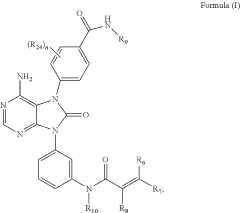
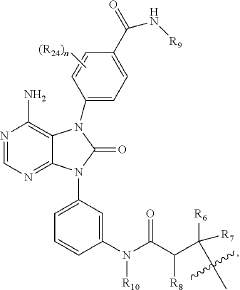
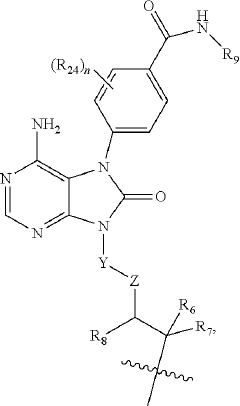
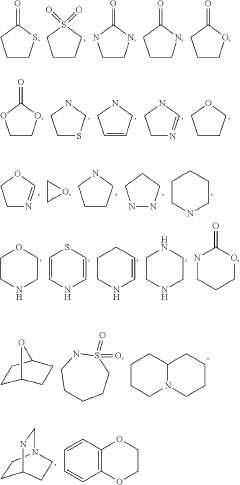
Purinone compounds as kinase inhibitors
PatentInactiveUS20190144451A1
Innovation
- Development of compounds, including reversible and irreversible inhibitors that target Btk, forming covalent bonds with cysteine residues, specifically designed to inhibit Btk activity and potentially other tyrosine kinases sharing homology, for therapeutic use in treating autoimmune diseases, cancers, and inflammatory conditions.
Regulatory Considerations for Alkyl-Containing Drugs
The regulatory landscape for alkyl-containing drugs is complex and multifaceted, requiring careful consideration throughout the drug development process. Regulatory bodies, such as the FDA in the United States and the EMA in Europe, have established stringent guidelines for the approval and marketing of pharmaceutical products containing alkyl groups.
One of the primary regulatory concerns for alkyl-containing drugs is their potential toxicity and safety profile. Regulatory agencies require extensive preclinical and clinical studies to assess the safety and efficacy of these compounds. This includes thorough evaluations of pharmacokinetics, pharmacodynamics, and potential metabolic pathways that may lead to the formation of toxic byproducts.
Impurity profiling is another critical aspect of regulatory compliance for alkyl-containing drugs. Manufacturers must demonstrate that their products meet strict purity standards and that any alkyl-related impurities are within acceptable limits. This often involves developing and validating sensitive analytical methods for detecting and quantifying these impurities.
Environmental impact assessments are increasingly important in the regulatory process for alkyl-containing drugs. Regulatory agencies may require data on the environmental fate and effects of these compounds, particularly for those that may persist in the environment or bioaccumulate in organisms.
Good Manufacturing Practices (GMP) are essential for the production of alkyl-containing drugs. Regulatory bodies mandate strict adherence to GMP guidelines to ensure consistent quality and safety of the final product. This includes maintaining detailed documentation of manufacturing processes, quality control procedures, and stability testing.
Labeling and packaging requirements for alkyl-containing drugs are subject to specific regulatory scrutiny. Clear and accurate information about the presence of alkyl groups, potential side effects, and proper usage must be provided to healthcare professionals and patients.
Post-market surveillance is a crucial regulatory consideration for alkyl-containing drugs. Manufacturers are required to monitor and report any adverse events or safety concerns that arise after the drug has been approved and marketed. This ongoing process helps regulatory agencies assess the long-term safety profile of these compounds.
As the pharmaceutical landscape evolves, regulatory bodies continue to refine their approaches to alkyl-containing drugs. This may include the development of new guidelines for emerging technologies, such as nanotechnology-based drug delivery systems incorporating alkyl groups, or the reassessment of existing regulations based on new scientific evidence.
One of the primary regulatory concerns for alkyl-containing drugs is their potential toxicity and safety profile. Regulatory agencies require extensive preclinical and clinical studies to assess the safety and efficacy of these compounds. This includes thorough evaluations of pharmacokinetics, pharmacodynamics, and potential metabolic pathways that may lead to the formation of toxic byproducts.
Impurity profiling is another critical aspect of regulatory compliance for alkyl-containing drugs. Manufacturers must demonstrate that their products meet strict purity standards and that any alkyl-related impurities are within acceptable limits. This often involves developing and validating sensitive analytical methods for detecting and quantifying these impurities.
Environmental impact assessments are increasingly important in the regulatory process for alkyl-containing drugs. Regulatory agencies may require data on the environmental fate and effects of these compounds, particularly for those that may persist in the environment or bioaccumulate in organisms.
Good Manufacturing Practices (GMP) are essential for the production of alkyl-containing drugs. Regulatory bodies mandate strict adherence to GMP guidelines to ensure consistent quality and safety of the final product. This includes maintaining detailed documentation of manufacturing processes, quality control procedures, and stability testing.
Labeling and packaging requirements for alkyl-containing drugs are subject to specific regulatory scrutiny. Clear and accurate information about the presence of alkyl groups, potential side effects, and proper usage must be provided to healthcare professionals and patients.
Post-market surveillance is a crucial regulatory consideration for alkyl-containing drugs. Manufacturers are required to monitor and report any adverse events or safety concerns that arise after the drug has been approved and marketed. This ongoing process helps regulatory agencies assess the long-term safety profile of these compounds.
As the pharmaceutical landscape evolves, regulatory bodies continue to refine their approaches to alkyl-containing drugs. This may include the development of new guidelines for emerging technologies, such as nanotechnology-based drug delivery systems incorporating alkyl groups, or the reassessment of existing regulations based on new scientific evidence.
Environmental Impact of Alkyl-Based Pharmaceuticals
The environmental impact of alkyl-based pharmaceuticals is a growing concern in the pharmaceutical industry. These compounds, widely used in drug formulations, can have significant effects on ecosystems when released into the environment. The primary pathways for environmental contamination include excretion by patients, improper disposal of unused medications, and industrial waste from pharmaceutical manufacturing processes.
Alkyl groups, being hydrophobic, tend to accumulate in aquatic environments, particularly in sediments and aquatic organisms. This bioaccumulation can lead to long-term ecological consequences, affecting the health and reproductive capabilities of various species. Studies have shown that certain alkyl-based pharmaceuticals can disrupt endocrine systems in fish and other aquatic life, potentially leading to population-level effects.
The persistence of these compounds in the environment is another critical factor. Many alkyl-based pharmaceuticals are resistant to natural degradation processes, resulting in prolonged exposure periods for ecosystems. This persistence can lead to chronic low-level exposure for non-target organisms, potentially causing subtle but significant changes in ecosystem dynamics over time.
Water treatment facilities face challenges in effectively removing these compounds from wastewater. Conventional treatment methods are often inadequate for completely eliminating alkyl-based pharmaceuticals, leading to their presence in treated water released back into the environment. This inadequacy highlights the need for advanced treatment technologies and more stringent regulations regarding pharmaceutical waste management.
The impact extends beyond aquatic environments. Soil contamination through the use of biosolids in agriculture or through leaching from landfills can introduce these compounds into terrestrial ecosystems. This contamination can affect soil microorganisms, potentially altering nutrient cycles and soil fertility.
Efforts to mitigate these environmental impacts are multifaceted. They include developing more environmentally friendly drug formulations, improving waste management practices in healthcare facilities, and enhancing public awareness about proper medication disposal. Research into green chemistry approaches for pharmaceutical synthesis is also gaining traction, aiming to reduce the environmental footprint of drug production processes.
Regulatory bodies are increasingly recognizing the need for environmental risk assessments of pharmaceuticals. The European Medicines Agency, for instance, now requires environmental impact assessments for new drug applications. Such regulatory measures are crucial in driving the pharmaceutical industry towards more sustainable practices and environmentally conscious drug design.
Alkyl groups, being hydrophobic, tend to accumulate in aquatic environments, particularly in sediments and aquatic organisms. This bioaccumulation can lead to long-term ecological consequences, affecting the health and reproductive capabilities of various species. Studies have shown that certain alkyl-based pharmaceuticals can disrupt endocrine systems in fish and other aquatic life, potentially leading to population-level effects.
The persistence of these compounds in the environment is another critical factor. Many alkyl-based pharmaceuticals are resistant to natural degradation processes, resulting in prolonged exposure periods for ecosystems. This persistence can lead to chronic low-level exposure for non-target organisms, potentially causing subtle but significant changes in ecosystem dynamics over time.
Water treatment facilities face challenges in effectively removing these compounds from wastewater. Conventional treatment methods are often inadequate for completely eliminating alkyl-based pharmaceuticals, leading to their presence in treated water released back into the environment. This inadequacy highlights the need for advanced treatment technologies and more stringent regulations regarding pharmaceutical waste management.
The impact extends beyond aquatic environments. Soil contamination through the use of biosolids in agriculture or through leaching from landfills can introduce these compounds into terrestrial ecosystems. This contamination can affect soil microorganisms, potentially altering nutrient cycles and soil fertility.
Efforts to mitigate these environmental impacts are multifaceted. They include developing more environmentally friendly drug formulations, improving waste management practices in healthcare facilities, and enhancing public awareness about proper medication disposal. Research into green chemistry approaches for pharmaceutical synthesis is also gaining traction, aiming to reduce the environmental footprint of drug production processes.
Regulatory bodies are increasingly recognizing the need for environmental risk assessments of pharmaceuticals. The European Medicines Agency, for instance, now requires environmental impact assessments for new drug applications. Such regulatory measures are crucial in driving the pharmaceutical industry towards more sustainable practices and environmentally conscious drug design.
Unlock deeper insights with Patsnap Eureka Quick Research — get a full tech report to explore trends and direct your research. Try now!
Generate Your Research Report Instantly with AI Agent
Supercharge your innovation with Patsnap Eureka AI Agent Platform!