

Exploring Quantum Computing's Role in Soils and Environmental Science
JUL 17, 202510 MIN READ
Generate Your Research Report Instantly with AI Agent
PatSnap Eureka helps you evaluate technical feasibility & market potential.
Quantum Computing in Environmental Science: Background and Objectives
Quantum computing represents a revolutionary paradigm in computational science, leveraging the principles of quantum mechanics to perform complex calculations at unprecedented speeds. In the context of environmental science and soil studies, this emerging technology holds immense potential to address some of the most pressing challenges facing our planet.
The field of environmental science has evolved significantly over the past decades, with increasing emphasis on understanding and mitigating the impacts of climate change, pollution, and resource depletion. Traditional computational methods have often struggled to model the intricate interactions within ecosystems and soil systems due to their inherent complexity and multifaceted nature.
Quantum computing offers a promising solution to these limitations by harnessing the power of quantum superposition and entanglement. These fundamental quantum properties allow for the simultaneous processing of vast amounts of data and the exploration of multiple scenarios concurrently, making it particularly well-suited for tackling the complex, interconnected problems prevalent in environmental science.
The primary objective of exploring quantum computing's role in soils and environmental science is to develop more accurate and comprehensive models of environmental systems. This includes enhancing our ability to predict climate patterns, simulate ecosystem dynamics, and optimize resource management strategies. By leveraging quantum algorithms, researchers aim to uncover hidden patterns and relationships within environmental data that may have eluded classical computing approaches.
In the realm of soil science, quantum computing has the potential to revolutionize our understanding of soil-plant interactions, nutrient cycling, and microbial ecology. These areas are characterized by intricate quantum-level processes that traditional computing struggles to model effectively. Quantum simulations could provide unprecedented insights into soil chemistry, enabling more precise agricultural practices and improved land management techniques.
Furthermore, the integration of quantum computing with other cutting-edge technologies, such as artificial intelligence and remote sensing, promises to create powerful new tools for environmental monitoring and decision-making. This synergy could lead to more effective conservation strategies, enhanced pollution control measures, and optimized approaches to sustainable resource utilization.
As we delve deeper into the potential applications of quantum computing in environmental science, it is crucial to recognize both the opportunities and challenges that lie ahead. While the technology is still in its early stages, the rapid pace of development in quantum hardware and algorithms suggests that significant breakthroughs may be on the horizon. The ultimate goal is to harness the unique capabilities of quantum computing to address global environmental challenges more effectively, paving the way for a more sustainable and resilient future.
The field of environmental science has evolved significantly over the past decades, with increasing emphasis on understanding and mitigating the impacts of climate change, pollution, and resource depletion. Traditional computational methods have often struggled to model the intricate interactions within ecosystems and soil systems due to their inherent complexity and multifaceted nature.
Quantum computing offers a promising solution to these limitations by harnessing the power of quantum superposition and entanglement. These fundamental quantum properties allow for the simultaneous processing of vast amounts of data and the exploration of multiple scenarios concurrently, making it particularly well-suited for tackling the complex, interconnected problems prevalent in environmental science.
The primary objective of exploring quantum computing's role in soils and environmental science is to develop more accurate and comprehensive models of environmental systems. This includes enhancing our ability to predict climate patterns, simulate ecosystem dynamics, and optimize resource management strategies. By leveraging quantum algorithms, researchers aim to uncover hidden patterns and relationships within environmental data that may have eluded classical computing approaches.
In the realm of soil science, quantum computing has the potential to revolutionize our understanding of soil-plant interactions, nutrient cycling, and microbial ecology. These areas are characterized by intricate quantum-level processes that traditional computing struggles to model effectively. Quantum simulations could provide unprecedented insights into soil chemistry, enabling more precise agricultural practices and improved land management techniques.
Furthermore, the integration of quantum computing with other cutting-edge technologies, such as artificial intelligence and remote sensing, promises to create powerful new tools for environmental monitoring and decision-making. This synergy could lead to more effective conservation strategies, enhanced pollution control measures, and optimized approaches to sustainable resource utilization.
As we delve deeper into the potential applications of quantum computing in environmental science, it is crucial to recognize both the opportunities and challenges that lie ahead. While the technology is still in its early stages, the rapid pace of development in quantum hardware and algorithms suggests that significant breakthroughs may be on the horizon. The ultimate goal is to harness the unique capabilities of quantum computing to address global environmental challenges more effectively, paving the way for a more sustainable and resilient future.
Market Demand for Quantum-Enhanced Soil Analysis
The market demand for quantum-enhanced soil analysis is rapidly growing as the agricultural and environmental sectors recognize the potential of quantum computing to revolutionize soil science and management practices. This emerging field combines the power of quantum algorithms with traditional soil analysis techniques to provide unprecedented insights into soil composition, health, and dynamics.
The global soil testing market, which forms the foundation for quantum-enhanced soil analysis, is projected to expand significantly in the coming years. Factors driving this growth include increasing awareness of soil health's importance in sustainable agriculture, rising concerns about soil pollution, and the need for more efficient land management practices. As quantum computing technologies mature, they are expected to capture an increasing share of this market.
Quantum-enhanced soil analysis offers several key advantages over conventional methods. It promises to deliver more accurate and comprehensive soil data, enabling farmers and environmental scientists to make better-informed decisions. This technology can potentially analyze complex soil ecosystems at a molecular level, providing insights into nutrient cycles, microbial communities, and soil-plant interactions that were previously unattainable.
The agricultural sector, in particular, shows strong interest in quantum-enhanced soil analysis. Precision agriculture, which relies heavily on detailed soil data, stands to benefit greatly from this technology. Farmers and agribusinesses are seeking ways to optimize crop yields, reduce fertilizer use, and mitigate environmental impacts. Quantum computing's ability to process vast amounts of soil data and generate predictive models aligns perfectly with these goals.
Environmental agencies and research institutions are another significant market segment for quantum-enhanced soil analysis. As climate change and land degradation become increasingly pressing issues, there is a growing need for advanced tools to monitor and manage soil health on a large scale. Quantum computing can potentially provide more accurate carbon sequestration measurements, assess soil biodiversity, and predict soil responses to environmental changes.
The market for quantum-enhanced soil analysis is also driven by the broader trend towards digital agriculture and smart farming. As farms become more technologically advanced, integrating quantum computing into existing precision agriculture systems represents a natural progression. This integration could lead to the development of new products and services, such as quantum-powered soil sensors and AI-driven soil management platforms.
While the market potential is significant, it's important to note that quantum-enhanced soil analysis is still in its early stages. The full realization of its market potential depends on ongoing advancements in quantum computing hardware and software, as well as the development of practical applications specific to soil science. As these technologies mature, we can expect to see a surge in demand from various sectors, including agriculture, environmental management, urban planning, and natural resource conservation.
The global soil testing market, which forms the foundation for quantum-enhanced soil analysis, is projected to expand significantly in the coming years. Factors driving this growth include increasing awareness of soil health's importance in sustainable agriculture, rising concerns about soil pollution, and the need for more efficient land management practices. As quantum computing technologies mature, they are expected to capture an increasing share of this market.
Quantum-enhanced soil analysis offers several key advantages over conventional methods. It promises to deliver more accurate and comprehensive soil data, enabling farmers and environmental scientists to make better-informed decisions. This technology can potentially analyze complex soil ecosystems at a molecular level, providing insights into nutrient cycles, microbial communities, and soil-plant interactions that were previously unattainable.
The agricultural sector, in particular, shows strong interest in quantum-enhanced soil analysis. Precision agriculture, which relies heavily on detailed soil data, stands to benefit greatly from this technology. Farmers and agribusinesses are seeking ways to optimize crop yields, reduce fertilizer use, and mitigate environmental impacts. Quantum computing's ability to process vast amounts of soil data and generate predictive models aligns perfectly with these goals.
Environmental agencies and research institutions are another significant market segment for quantum-enhanced soil analysis. As climate change and land degradation become increasingly pressing issues, there is a growing need for advanced tools to monitor and manage soil health on a large scale. Quantum computing can potentially provide more accurate carbon sequestration measurements, assess soil biodiversity, and predict soil responses to environmental changes.
The market for quantum-enhanced soil analysis is also driven by the broader trend towards digital agriculture and smart farming. As farms become more technologically advanced, integrating quantum computing into existing precision agriculture systems represents a natural progression. This integration could lead to the development of new products and services, such as quantum-powered soil sensors and AI-driven soil management platforms.
While the market potential is significant, it's important to note that quantum-enhanced soil analysis is still in its early stages. The full realization of its market potential depends on ongoing advancements in quantum computing hardware and software, as well as the development of practical applications specific to soil science. As these technologies mature, we can expect to see a surge in demand from various sectors, including agriculture, environmental management, urban planning, and natural resource conservation.
Current State and Challenges in Quantum Environmental Applications
Quantum computing's application in environmental science and soil studies is still in its nascent stages, with significant potential for groundbreaking advancements. Currently, the field faces several challenges that hinder widespread adoption and practical implementation.
One of the primary obstacles is the limited availability of quantum hardware suitable for environmental applications. Most existing quantum computers are still experimental and lack the necessary stability and scalability required for complex environmental simulations. The quantum systems currently in use are prone to errors and decoherence, which can significantly impact the accuracy of results in environmental modeling.
Another challenge lies in developing quantum algorithms specifically tailored for environmental and soil science problems. While quantum algorithms have shown promise in certain areas, such as optimization and machine learning, their adaptation to environmental applications remains limited. Researchers are working on quantum-inspired algorithms that can leverage the power of quantum computing to solve complex environmental problems, but progress is gradual.
The integration of quantum computing with classical environmental models and data processing systems presents another hurdle. Environmental science relies heavily on large datasets and complex models, which are primarily designed for classical computing architectures. Bridging the gap between quantum and classical systems requires significant effort in developing hybrid quantum-classical algorithms and data processing techniques.
Furthermore, the lack of quantum software tools and frameworks specifically designed for environmental applications hampers progress in this field. While general-purpose quantum computing platforms exist, there is a need for specialized software that can address the unique requirements of environmental modeling and soil analysis.
The scarcity of expertise in both quantum computing and environmental science is another significant challenge. Interdisciplinary collaboration between quantum physicists, computer scientists, and environmental researchers is crucial for advancing the field, but such collaborations are still relatively rare.
Despite these challenges, there are promising developments in quantum environmental applications. Researchers are exploring quantum-enhanced machine learning techniques for improved climate modeling and prediction. Quantum algorithms are being developed for optimizing resource allocation in environmental management and for simulating complex molecular interactions in soil ecosystems.
As quantum hardware continues to improve and quantum error correction techniques advance, the potential for quantum computing in environmental science is expected to grow. Ongoing research focuses on developing more robust quantum algorithms for environmental applications and creating quantum-inspired classical algorithms that can provide near-term benefits.
In conclusion, while quantum computing shows great promise for revolutionizing environmental and soil science, significant challenges must be overcome before its full potential can be realized. Continued investment in research, interdisciplinary collaboration, and technological advancements will be crucial in addressing these challenges and unlocking the transformative power of quantum computing in environmental applications.
One of the primary obstacles is the limited availability of quantum hardware suitable for environmental applications. Most existing quantum computers are still experimental and lack the necessary stability and scalability required for complex environmental simulations. The quantum systems currently in use are prone to errors and decoherence, which can significantly impact the accuracy of results in environmental modeling.
Another challenge lies in developing quantum algorithms specifically tailored for environmental and soil science problems. While quantum algorithms have shown promise in certain areas, such as optimization and machine learning, their adaptation to environmental applications remains limited. Researchers are working on quantum-inspired algorithms that can leverage the power of quantum computing to solve complex environmental problems, but progress is gradual.
The integration of quantum computing with classical environmental models and data processing systems presents another hurdle. Environmental science relies heavily on large datasets and complex models, which are primarily designed for classical computing architectures. Bridging the gap between quantum and classical systems requires significant effort in developing hybrid quantum-classical algorithms and data processing techniques.
Furthermore, the lack of quantum software tools and frameworks specifically designed for environmental applications hampers progress in this field. While general-purpose quantum computing platforms exist, there is a need for specialized software that can address the unique requirements of environmental modeling and soil analysis.
The scarcity of expertise in both quantum computing and environmental science is another significant challenge. Interdisciplinary collaboration between quantum physicists, computer scientists, and environmental researchers is crucial for advancing the field, but such collaborations are still relatively rare.
Despite these challenges, there are promising developments in quantum environmental applications. Researchers are exploring quantum-enhanced machine learning techniques for improved climate modeling and prediction. Quantum algorithms are being developed for optimizing resource allocation in environmental management and for simulating complex molecular interactions in soil ecosystems.
As quantum hardware continues to improve and quantum error correction techniques advance, the potential for quantum computing in environmental science is expected to grow. Ongoing research focuses on developing more robust quantum algorithms for environmental applications and creating quantum-inspired classical algorithms that can provide near-term benefits.
In conclusion, while quantum computing shows great promise for revolutionizing environmental and soil science, significant challenges must be overcome before its full potential can be realized. Continued investment in research, interdisciplinary collaboration, and technological advancements will be crucial in addressing these challenges and unlocking the transformative power of quantum computing in environmental applications.
Existing Quantum Solutions for Soil and Environmental Analysis
01 Quantum Circuit Design and Optimization
This area focuses on developing and optimizing quantum circuits for various applications. It involves creating efficient quantum gate sequences, reducing circuit depth, and improving qubit connectivity. Techniques include circuit compilation, gate decomposition, and noise mitigation strategies to enhance the performance of quantum algorithms on real quantum hardware.- Quantum computing architectures and systems: This category focuses on the design and implementation of quantum computing architectures and systems. It includes innovations in qubit arrangements, quantum circuit designs, and overall system architectures to improve the performance and scalability of quantum computers.
- Error correction and fault tolerance in quantum computing: This area addresses the challenges of maintaining quantum coherence and mitigating errors in quantum computations. It involves developing error correction codes, fault-tolerant quantum gates, and techniques to improve the reliability and stability of quantum systems.
- Quantum algorithms and applications: This category covers the development of quantum algorithms for various applications, including optimization, machine learning, cryptography, and simulation of quantum systems. It also includes methods for mapping classical problems to quantum circuits and optimizing quantum algorithm performance.
- Quantum-classical hybrid computing: This area focuses on integrating quantum and classical computing systems to leverage the strengths of both paradigms. It includes techniques for interfacing quantum and classical processors, optimizing workload distribution, and developing hybrid algorithms for practical applications.
- Quantum hardware and control systems: This category encompasses innovations in quantum hardware components, such as qubits, quantum gates, and readout systems. It also includes advancements in control systems for manipulating and measuring quantum states, as well as techniques for improving coherence times and reducing noise in quantum devices.
02 Error Correction and Fault Tolerance
Error correction is crucial for maintaining the integrity of quantum computations. This field involves developing quantum error correction codes, fault-tolerant quantum gates, and protocols to mitigate the effects of decoherence and noise in quantum systems. Techniques include surface codes, topological quantum computing, and logical qubit encoding.Expand Specific Solutions03 Quantum-Classical Hybrid Algorithms
This area explores the integration of quantum and classical computing resources to solve complex problems. It includes developing variational quantum algorithms, quantum-inspired classical algorithms, and hybrid optimization techniques. These approaches aim to leverage the strengths of both quantum and classical systems to address practical challenges in various domains.Expand Specific Solutions04 Quantum Machine Learning and AI
Quantum machine learning combines quantum computing with artificial intelligence techniques. This field explores quantum versions of classical machine learning algorithms, quantum neural networks, and quantum-enhanced data processing. It aims to achieve quantum speedups in tasks such as classification, clustering, and pattern recognition.Expand Specific Solutions05 Quantum Hardware and Qubit Technologies
This area focuses on the development of physical quantum computing hardware and qubit technologies. It includes research on superconducting qubits, trapped ions, topological qubits, and other quantum systems. The field also explores scalable qubit architectures, quantum memory, and quantum interconnects for building large-scale quantum computers.Expand Specific Solutions
Key Players in Quantum Computing for Environmental Research
The quantum computing landscape in soils and environmental science is in its early stages, with significant potential for growth. The market size is expanding as more companies and research institutions recognize the technology's applications in environmental modeling and soil analysis. While still emerging, the technology's maturity is advancing rapidly, with key players like Zapata Computing, Google, and Microsoft driving innovation. Universities such as the University of Chicago and Zhejiang University are contributing to research advancements. Companies like BASF and Terramera are exploring quantum computing's potential in agriculture and soil science. The competitive landscape is diverse, with tech giants, specialized quantum companies, and academic institutions all vying for leadership in this promising field.
Zapata Computing, Inc.
Technical Solution: Zapata Computing specializes in quantum software and algorithms, with a focus on near-term quantum applications. In the context of environmental science, they are developing quantum machine learning techniques for analyzing large-scale environmental datasets, including soil composition and climate data[6]. Their Orquestra platform enables the integration of quantum and classical algorithms for hybrid quantum-classical solutions in environmental modeling. Zapata is working on quantum-enhanced optimization algorithms for resource allocation in sustainable agriculture and land management[7]. They are also exploring quantum approaches to improve the accuracy of climate models, which have direct implications for soil science and agriculture.
Strengths: Strong focus on near-term quantum applications, expertise in quantum software development. Weaknesses: Dependent on hardware developments from other companies, limited direct experience in environmental science applications.
Amazon Technologies, Inc.
Technical Solution: Amazon's quantum computing efforts, through Amazon Braket, provide a platform for researchers to explore quantum applications in environmental science. They are developing quantum algorithms for simulating complex environmental systems, including soil-atmosphere interactions and carbon cycle modeling[8]. Amazon is collaborating with academic institutions to apply quantum computing to optimize water resource management and predict soil moisture dynamics. Their quantum random circuit sampling (RCS) benchmarks are being adapted to simulate stochastic processes in soil ecosystems[9]. Additionally, Amazon is investing in hybrid quantum-classical approaches to enhance climate and weather prediction models, which have significant implications for soil science and agriculture.
Strengths: Robust cloud infrastructure, partnerships with multiple quantum hardware providers. Weaknesses: Less direct involvement in environmental science applications compared to some competitors.
Core Quantum Innovations in Soil Science
End-substituted (hetero)acenes with pairwise coupling in crystalline form for pure spin polarization and optical readout
PatentWO2024039917A2
Innovation
- Development of crystalline paired compounds with specific molecular structures, such as end-substituted (hetero)acenes, which enable high spin polarization and efficient optical readout through controlled molecular orientation and intermolecular interactions, facilitating the formation of spin-polarized triplet pairs.


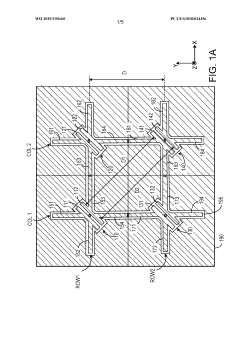
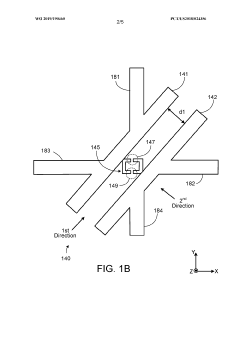
Reducing parasitic capacitance in a qubit system
PatentWO2019190460A1
Innovation
- The qubits are arranged in a symmetric configuration where each qubit is positioned relative to its next nearest neighbor such that a charge on one qubit induces the same charge on both nodes of the other qubit, effectively nulling parasitic capacitive coupling, without altering coupling strengths between desired neighboring qubits.


Environmental Policy Implications of Quantum Computing
The integration of quantum computing into environmental policy-making processes has the potential to revolutionize our approach to addressing complex ecological challenges. As quantum technologies advance, they offer unprecedented computational power that can be harnessed to model and analyze intricate environmental systems with greater accuracy and efficiency. This capability could significantly enhance the development and implementation of evidence-based environmental policies.
Quantum computing's ability to process vast amounts of data and simulate complex scenarios can provide policymakers with more comprehensive insights into the potential outcomes of various environmental interventions. For instance, quantum algorithms could be employed to optimize resource allocation in conservation efforts, predict the long-term impacts of climate change mitigation strategies, or assess the effectiveness of pollution control measures across diverse ecosystems.
Furthermore, quantum-enhanced machine learning techniques could dramatically improve our ability to analyze satellite imagery and remote sensing data, enabling more precise monitoring of deforestation, land use changes, and biodiversity loss. This enhanced monitoring capability could inform more targeted and effective conservation policies, as well as improve enforcement mechanisms for environmental regulations.
The application of quantum computing in environmental policy could also lead to more sophisticated risk assessment models for natural disasters and extreme weather events. By processing complex climate data more efficiently, quantum computers could help policymakers develop more robust disaster preparedness and response strategies, potentially saving lives and reducing economic losses.
However, the integration of quantum computing into environmental policy-making also raises important considerations. Policymakers and environmental agencies will need to develop the necessary expertise to interpret and utilize quantum-derived insights effectively. Additionally, there may be concerns about the energy consumption of quantum computers themselves, which will need to be balanced against their potential benefits for environmental protection.
As quantum computing technology matures, it will be crucial for environmental policymakers to collaborate closely with quantum scientists and technologists to ensure that these powerful tools are leveraged responsibly and effectively in service of environmental goals. This collaboration could lead to the development of new policy frameworks that are more adaptive and responsive to the complex, interconnected nature of environmental challenges in the 21st century.
Quantum computing's ability to process vast amounts of data and simulate complex scenarios can provide policymakers with more comprehensive insights into the potential outcomes of various environmental interventions. For instance, quantum algorithms could be employed to optimize resource allocation in conservation efforts, predict the long-term impacts of climate change mitigation strategies, or assess the effectiveness of pollution control measures across diverse ecosystems.
Furthermore, quantum-enhanced machine learning techniques could dramatically improve our ability to analyze satellite imagery and remote sensing data, enabling more precise monitoring of deforestation, land use changes, and biodiversity loss. This enhanced monitoring capability could inform more targeted and effective conservation policies, as well as improve enforcement mechanisms for environmental regulations.
The application of quantum computing in environmental policy could also lead to more sophisticated risk assessment models for natural disasters and extreme weather events. By processing complex climate data more efficiently, quantum computers could help policymakers develop more robust disaster preparedness and response strategies, potentially saving lives and reducing economic losses.
However, the integration of quantum computing into environmental policy-making also raises important considerations. Policymakers and environmental agencies will need to develop the necessary expertise to interpret and utilize quantum-derived insights effectively. Additionally, there may be concerns about the energy consumption of quantum computers themselves, which will need to be balanced against their potential benefits for environmental protection.
As quantum computing technology matures, it will be crucial for environmental policymakers to collaborate closely with quantum scientists and technologists to ensure that these powerful tools are leveraged responsibly and effectively in service of environmental goals. This collaboration could lead to the development of new policy frameworks that are more adaptive and responsive to the complex, interconnected nature of environmental challenges in the 21st century.
Quantum Computing's Impact on Sustainable Agriculture
Quantum computing's potential impact on sustainable agriculture represents a significant frontier in the intersection of advanced technology and environmental science. As quantum systems continue to evolve, their application in agricultural practices could revolutionize our approach to sustainable farming and environmental management. The unique capabilities of quantum computers, such as solving complex optimization problems and simulating molecular interactions, offer promising avenues for addressing critical challenges in agriculture.
One of the primary areas where quantum computing could make a substantial difference is in soil management and crop optimization. Quantum algorithms could potentially model intricate soil ecosystems with unprecedented accuracy, taking into account countless variables such as nutrient levels, microbial activity, and water retention. This level of detailed simulation could lead to more precise and efficient use of resources, reducing the environmental impact of agricultural practices while maximizing crop yields.
Furthermore, quantum computing could enhance our understanding of plant genetics and accelerate the development of more resilient and sustainable crop varieties. By simulating complex genetic interactions and predicting phenotypic outcomes, quantum computers could significantly speed up the process of developing crops that are better adapted to changing climate conditions, more resistant to pests and diseases, and more efficient in their use of water and nutrients.
In the realm of pest and disease management, quantum computing could enable more targeted and environmentally friendly approaches. By modeling the spread of pests and diseases with greater precision, farmers could implement more effective and less chemically intensive control measures. This could lead to a reduction in the use of pesticides and herbicides, contributing to healthier ecosystems and more sustainable agricultural practices.
Water management is another critical area where quantum computing could drive sustainable innovations. Through advanced modeling of hydrological systems, quantum algorithms could optimize irrigation strategies, predict drought patterns, and improve water conservation efforts. This could be particularly impactful in regions facing water scarcity, helping to ensure food security while minimizing water waste.
Lastly, quantum computing could play a crucial role in optimizing supply chains and reducing food waste in the agricultural sector. By solving complex logistical problems more efficiently, quantum algorithms could help streamline the distribution of agricultural products, reducing spoilage and minimizing the carbon footprint associated with food transportation and storage.
As quantum computing technology matures, its integration into agricultural research and practices holds the promise of a more sustainable, efficient, and environmentally friendly approach to feeding the world's growing population. While many of these applications are still theoretical, ongoing research and development in this field suggest that quantum computing could be a key driver in the future of sustainable agriculture.
One of the primary areas where quantum computing could make a substantial difference is in soil management and crop optimization. Quantum algorithms could potentially model intricate soil ecosystems with unprecedented accuracy, taking into account countless variables such as nutrient levels, microbial activity, and water retention. This level of detailed simulation could lead to more precise and efficient use of resources, reducing the environmental impact of agricultural practices while maximizing crop yields.
Furthermore, quantum computing could enhance our understanding of plant genetics and accelerate the development of more resilient and sustainable crop varieties. By simulating complex genetic interactions and predicting phenotypic outcomes, quantum computers could significantly speed up the process of developing crops that are better adapted to changing climate conditions, more resistant to pests and diseases, and more efficient in their use of water and nutrients.
In the realm of pest and disease management, quantum computing could enable more targeted and environmentally friendly approaches. By modeling the spread of pests and diseases with greater precision, farmers could implement more effective and less chemically intensive control measures. This could lead to a reduction in the use of pesticides and herbicides, contributing to healthier ecosystems and more sustainable agricultural practices.
Water management is another critical area where quantum computing could drive sustainable innovations. Through advanced modeling of hydrological systems, quantum algorithms could optimize irrigation strategies, predict drought patterns, and improve water conservation efforts. This could be particularly impactful in regions facing water scarcity, helping to ensure food security while minimizing water waste.
Lastly, quantum computing could play a crucial role in optimizing supply chains and reducing food waste in the agricultural sector. By solving complex logistical problems more efficiently, quantum algorithms could help streamline the distribution of agricultural products, reducing spoilage and minimizing the carbon footprint associated with food transportation and storage.
As quantum computing technology matures, its integration into agricultural research and practices holds the promise of a more sustainable, efficient, and environmentally friendly approach to feeding the world's growing population. While many of these applications are still theoretical, ongoing research and development in this field suggest that quantum computing could be a key driver in the future of sustainable agriculture.
Unlock deeper insights with PatSnap Eureka Quick Research — get a full tech report to explore trends and direct your research. Try now!
Generate Your Research Report Instantly with AI Agent
Supercharge your innovation with PatSnap Eureka AI Agent Platform!