

Quantum Computing Techniques for Real-Time Traffic Management
JUL 17, 20259 MIN READ
Generate Your Research Report Instantly with AI Agent
PatSnap Eureka helps you evaluate technical feasibility & market potential.
Quantum Computing in Traffic Management: Background and Objectives
Quantum computing has emerged as a revolutionary technology with the potential to transform various industries, including traffic management. The field of quantum computing has its roots in the early 20th century, with the development of quantum mechanics. However, it wasn't until the 1980s that the concept of quantum computing began to take shape, thanks to pioneering work by physicists such as Richard Feynman and David Deutsch.
The evolution of quantum computing has been marked by significant milestones, including the development of quantum algorithms, the creation of the first quantum bits (qubits), and the construction of increasingly powerful quantum processors. In recent years, major tech companies and research institutions have made substantial investments in quantum computing, accelerating its progress and bringing it closer to practical applications.
In the context of traffic management, quantum computing offers unprecedented computational power to tackle complex optimization problems that are currently intractable for classical computers. The ability to process vast amounts of data and perform complex calculations in real-time could revolutionize traffic flow optimization, route planning, and predictive modeling of traffic patterns.
The primary objective of applying quantum computing techniques to real-time traffic management is to develop more efficient, responsive, and adaptive transportation systems. This involves leveraging quantum algorithms to analyze and optimize traffic flow across entire urban networks, considering multiple variables simultaneously and in real-time.
Key goals include reducing traffic congestion, minimizing travel times, improving fuel efficiency, and enhancing overall urban mobility. Quantum computing could enable the creation of dynamic traffic management systems that can instantly adjust to changing conditions, such as accidents, weather events, or sudden influxes of vehicles.
Furthermore, quantum computing techniques aim to enhance the accuracy and speed of traffic prediction models. By processing historical and real-time data more efficiently, these systems could provide more precise forecasts of traffic patterns, allowing for proactive management strategies rather than reactive responses.
Another important objective is to integrate quantum computing with emerging technologies in the transportation sector, such as autonomous vehicles and smart city infrastructure. This integration could lead to highly synchronized and optimized transportation networks that adapt in real-time to the needs of individual vehicles and pedestrians.
As quantum computing continues to advance, its application in traffic management is expected to evolve from theoretical concepts to practical implementations. The ultimate goal is to create a new paradigm in urban transportation, where quantum-powered systems can manage traffic with unprecedented efficiency and intelligence, leading to safer, more sustainable, and more livable cities.
The evolution of quantum computing has been marked by significant milestones, including the development of quantum algorithms, the creation of the first quantum bits (qubits), and the construction of increasingly powerful quantum processors. In recent years, major tech companies and research institutions have made substantial investments in quantum computing, accelerating its progress and bringing it closer to practical applications.
In the context of traffic management, quantum computing offers unprecedented computational power to tackle complex optimization problems that are currently intractable for classical computers. The ability to process vast amounts of data and perform complex calculations in real-time could revolutionize traffic flow optimization, route planning, and predictive modeling of traffic patterns.
The primary objective of applying quantum computing techniques to real-time traffic management is to develop more efficient, responsive, and adaptive transportation systems. This involves leveraging quantum algorithms to analyze and optimize traffic flow across entire urban networks, considering multiple variables simultaneously and in real-time.
Key goals include reducing traffic congestion, minimizing travel times, improving fuel efficiency, and enhancing overall urban mobility. Quantum computing could enable the creation of dynamic traffic management systems that can instantly adjust to changing conditions, such as accidents, weather events, or sudden influxes of vehicles.
Furthermore, quantum computing techniques aim to enhance the accuracy and speed of traffic prediction models. By processing historical and real-time data more efficiently, these systems could provide more precise forecasts of traffic patterns, allowing for proactive management strategies rather than reactive responses.
Another important objective is to integrate quantum computing with emerging technologies in the transportation sector, such as autonomous vehicles and smart city infrastructure. This integration could lead to highly synchronized and optimized transportation networks that adapt in real-time to the needs of individual vehicles and pedestrians.
As quantum computing continues to advance, its application in traffic management is expected to evolve from theoretical concepts to practical implementations. The ultimate goal is to create a new paradigm in urban transportation, where quantum-powered systems can manage traffic with unprecedented efficiency and intelligence, leading to safer, more sustainable, and more livable cities.
Market Analysis for Quantum-Enabled Traffic Solutions
The market for quantum-enabled traffic solutions is poised for significant growth as urban centers worldwide grapple with increasing congestion and the need for more efficient transportation systems. The integration of quantum computing techniques in real-time traffic management offers a revolutionary approach to optimizing traffic flow, reducing travel times, and minimizing environmental impact.
Current estimates suggest that the global smart traffic management market, which includes quantum-enabled solutions, is expected to expand rapidly in the coming years. This growth is driven by the increasing adoption of smart city initiatives and the pressing need to address urban mobility challenges. Major metropolitan areas in North America, Europe, and Asia-Pacific are likely to be early adopters of quantum-enabled traffic management systems.
The potential market for these solutions extends beyond traditional traffic control systems. It encompasses a wide range of applications, including public transportation optimization, emergency vehicle routing, and intelligent parking systems. As quantum computing becomes more accessible and cost-effective, its integration into traffic management is expected to accelerate, creating new opportunities for technology providers and urban planners alike.
Key market drivers include the growing urbanization trend, increasing vehicle ownership, and the rising economic costs associated with traffic congestion. Government initiatives aimed at reducing carbon emissions and improving air quality in cities are also fueling interest in advanced traffic management solutions. The ability of quantum computing to process vast amounts of data in real-time and optimize complex systems makes it particularly attractive for addressing these challenges.
However, the market for quantum-enabled traffic solutions also faces several challenges. The high initial investment required for quantum computing infrastructure and the need for specialized expertise may limit adoption in the short term. Additionally, concerns about data privacy and security in quantum systems need to be addressed to gain public trust and regulatory approval.
Despite these challenges, the long-term market outlook remains promising. As quantum computing technology matures and becomes more accessible, its application in traffic management is expected to expand. This could lead to the development of new business models, such as Quantum-as-a-Service for traffic optimization, creating opportunities for both established tech giants and innovative startups in the transportation and technology sectors.
Current estimates suggest that the global smart traffic management market, which includes quantum-enabled solutions, is expected to expand rapidly in the coming years. This growth is driven by the increasing adoption of smart city initiatives and the pressing need to address urban mobility challenges. Major metropolitan areas in North America, Europe, and Asia-Pacific are likely to be early adopters of quantum-enabled traffic management systems.
The potential market for these solutions extends beyond traditional traffic control systems. It encompasses a wide range of applications, including public transportation optimization, emergency vehicle routing, and intelligent parking systems. As quantum computing becomes more accessible and cost-effective, its integration into traffic management is expected to accelerate, creating new opportunities for technology providers and urban planners alike.
Key market drivers include the growing urbanization trend, increasing vehicle ownership, and the rising economic costs associated with traffic congestion. Government initiatives aimed at reducing carbon emissions and improving air quality in cities are also fueling interest in advanced traffic management solutions. The ability of quantum computing to process vast amounts of data in real-time and optimize complex systems makes it particularly attractive for addressing these challenges.
However, the market for quantum-enabled traffic solutions also faces several challenges. The high initial investment required for quantum computing infrastructure and the need for specialized expertise may limit adoption in the short term. Additionally, concerns about data privacy and security in quantum systems need to be addressed to gain public trust and regulatory approval.
Despite these challenges, the long-term market outlook remains promising. As quantum computing technology matures and becomes more accessible, its application in traffic management is expected to expand. This could lead to the development of new business models, such as Quantum-as-a-Service for traffic optimization, creating opportunities for both established tech giants and innovative startups in the transportation and technology sectors.
Current Challenges in Quantum Computing for Traffic Systems
The integration of quantum computing techniques into real-time traffic management systems presents several significant challenges. One of the primary obstacles is the current limitation in quantum hardware scalability. While quantum computers have shown promise in solving complex optimization problems, the number of qubits available in existing systems is insufficient to handle the vast amount of data involved in large-scale traffic networks.
Another major challenge lies in the development of quantum algorithms specifically tailored for traffic management applications. Traditional traffic optimization algorithms need to be adapted or entirely reimagined to leverage the unique properties of quantum systems, such as superposition and entanglement. This requires a deep understanding of both quantum mechanics and traffic flow dynamics, a combination of expertise that is currently scarce in the industry.
The issue of quantum decoherence poses a significant hurdle in implementing quantum computing solutions for real-time traffic management. Quantum states are extremely fragile and can be disrupted by environmental factors, leading to errors in computation. Developing error correction techniques that can maintain quantum coherence long enough to complete complex traffic optimization calculations remains a critical challenge.
Furthermore, the integration of quantum computing systems with existing classical traffic management infrastructure presents both technical and logistical challenges. Quantum-classical hybrid systems need to be designed to effectively bridge the gap between quantum processors and classical data collection and control systems. This integration requires the development of new interfaces and protocols to ensure seamless communication and data transfer between quantum and classical components.
The high cost and complexity of quantum computing systems also pose significant barriers to widespread adoption in traffic management. Current quantum computers require specialized infrastructure, including extreme cooling systems and precise control mechanisms, making them impractical for deployment in diverse urban environments. Developing more robust and cost-effective quantum computing solutions that can operate in real-world traffic management scenarios is crucial for practical implementation.
Lastly, there is a considerable knowledge gap in the traffic management industry regarding quantum computing technologies. Training traffic engineers and managers to understand and effectively utilize quantum computing tools for traffic optimization is a substantial challenge that needs to be addressed. This requires the development of specialized educational programs and user-friendly interfaces that can bridge the gap between quantum complexity and practical traffic management applications.
Another major challenge lies in the development of quantum algorithms specifically tailored for traffic management applications. Traditional traffic optimization algorithms need to be adapted or entirely reimagined to leverage the unique properties of quantum systems, such as superposition and entanglement. This requires a deep understanding of both quantum mechanics and traffic flow dynamics, a combination of expertise that is currently scarce in the industry.
The issue of quantum decoherence poses a significant hurdle in implementing quantum computing solutions for real-time traffic management. Quantum states are extremely fragile and can be disrupted by environmental factors, leading to errors in computation. Developing error correction techniques that can maintain quantum coherence long enough to complete complex traffic optimization calculations remains a critical challenge.
Furthermore, the integration of quantum computing systems with existing classical traffic management infrastructure presents both technical and logistical challenges. Quantum-classical hybrid systems need to be designed to effectively bridge the gap between quantum processors and classical data collection and control systems. This integration requires the development of new interfaces and protocols to ensure seamless communication and data transfer between quantum and classical components.
The high cost and complexity of quantum computing systems also pose significant barriers to widespread adoption in traffic management. Current quantum computers require specialized infrastructure, including extreme cooling systems and precise control mechanisms, making them impractical for deployment in diverse urban environments. Developing more robust and cost-effective quantum computing solutions that can operate in real-world traffic management scenarios is crucial for practical implementation.
Lastly, there is a considerable knowledge gap in the traffic management industry regarding quantum computing technologies. Training traffic engineers and managers to understand and effectively utilize quantum computing tools for traffic optimization is a substantial challenge that needs to be addressed. This requires the development of specialized educational programs and user-friendly interfaces that can bridge the gap between quantum complexity and practical traffic management applications.
Existing Quantum Approaches for Traffic Optimization
01 Real-time quantum error correction
This technique involves continuously monitoring and correcting errors in quantum systems during computation. It uses advanced algorithms to detect and mitigate decoherence and other quantum noise sources, ensuring the stability and reliability of quantum computations in real-time.- Real-time quantum error correction: This technique involves implementing error correction algorithms in real-time to mitigate the effects of quantum decoherence and improve the stability of quantum computations. It includes methods for detecting and correcting errors in quantum states, allowing for longer coherence times and more reliable quantum operations.
- Quantum-classical hybrid algorithms: These algorithms combine classical and quantum computing techniques to solve complex problems more efficiently. They leverage the strengths of both classical and quantum systems, allowing for real-time optimization and processing of quantum data using classical resources.
- Quantum machine learning for real-time data processing: This approach applies quantum computing techniques to machine learning tasks, enabling real-time processing and analysis of large datasets. It includes quantum-enhanced neural networks and quantum support vector machines for faster and more accurate data classification and pattern recognition.
- Quantum-inspired algorithms for classical systems: These algorithms adapt quantum computing principles to classical computing systems, enabling real-time optimization and problem-solving. They leverage quantum-inspired techniques such as quantum annealing and adiabatic quantum computation to enhance the performance of classical algorithms.
- Real-time quantum state tomography: This technique involves the measurement and reconstruction of quantum states in real-time, allowing for continuous monitoring and control of quantum systems. It includes methods for efficient state estimation and adaptive measurement strategies to optimize the accuracy of quantum state reconstruction.
02 Quantum-classical hybrid algorithms for real-time processing
These algorithms combine the strengths of both quantum and classical computing to achieve real-time processing capabilities. They leverage quantum systems for specific computationally intensive tasks while using classical systems for control and data management, enabling efficient real-time data analysis and decision-making.Expand Specific Solutions03 Quantum-enhanced machine learning for real-time applications
This approach integrates quantum computing techniques with machine learning algorithms to enhance real-time data processing and pattern recognition. It utilizes quantum superposition and entanglement to accelerate certain machine learning tasks, enabling faster and more accurate real-time predictions and classifications.Expand Specific Solutions04 Quantum communication protocols for secure real-time data transfer
These protocols leverage quantum entanglement and superposition to enable secure, high-speed data transfer in real-time applications. They provide enhanced encryption and intrusion detection capabilities, ensuring the integrity and confidentiality of sensitive information during transmission.Expand Specific Solutions05 Quantum-inspired algorithms for real-time optimization
These algorithms draw inspiration from quantum computing principles to solve complex optimization problems in real-time. While not requiring actual quantum hardware, they utilize quantum-inspired techniques to efficiently explore large solution spaces and find near-optimal solutions quickly, making them suitable for real-time decision-making in various applications.Expand Specific Solutions
Key Players in Quantum Computing and Traffic Management
The quantum computing techniques for real-time traffic management market is in its early developmental stage, characterized by significant research and limited commercial applications. The market size is relatively small but growing rapidly as governments and companies invest in smart city initiatives. Technologically, it's still emerging, with varying levels of maturity across different players. Universities like Tsinghua, Wuhan, and USC are conducting foundational research, while tech giants such as Huawei and Siemens are developing practical applications. Automotive companies like Volkswagen and Audi are exploring integration into intelligent transportation systems. Startups and specialized firms like HERE Technologies are also contributing to the ecosystem, focusing on niche areas within quantum computing and traffic management.
Volkswagen AG
Technical Solution: Volkswagen AG is developing quantum computing techniques for real-time traffic management through its "Quantum Machine Learning" project. The company is collaborating with D-Wave Systems to utilize quantum annealing for optimizing traffic flow[1]. Their approach involves creating quantum algorithms that can process vast amounts of traffic data in real-time, considering factors such as vehicle density, speed, and traffic light timing. The system aims to reduce congestion by dynamically adjusting traffic signals and suggesting optimal routes to drivers[2]. Volkswagen has successfully tested this technology in Beijing, demonstrating the potential to reduce travel times by up to 20% for thousands of vehicles[3].
Strengths: Access to extensive automotive data, partnerships with quantum computing experts, and real-world testing capabilities. Weaknesses: Limited quantum hardware availability and high implementation costs.
Siemens Corp.
Technical Solution: Siemens is leveraging quantum computing for real-time traffic management through its "Quantum-Assisted Traffic Flow Optimization" initiative. The company is developing hybrid quantum-classical algorithms that can handle the complexity of urban traffic networks[4]. Their approach combines quantum approximate optimization algorithms (QAOA) with classical machine learning techniques to predict and optimize traffic flow. Siemens' system utilizes real-time data from traffic sensors, GPS devices, and connected vehicles to create a dynamic traffic model. The quantum algorithms then solve complex optimization problems to determine the most efficient traffic light timings and vehicle routing strategies[5]. In a pilot project, Siemens demonstrated a potential reduction in average wait times at intersections by up to 35%[6].
Strengths: Strong expertise in urban infrastructure and IoT integration, advanced quantum algorithm development. Weaknesses: Dependence on widespread adoption of connected vehicle technology.
Breakthrough Quantum Techniques for Real-Time Traffic Control
Traffic flow optimization for a multi-class vehicle network using quantum computing
PatentPendingUS20250104559A1
Innovation
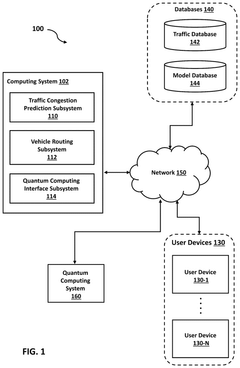
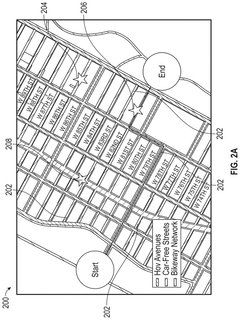
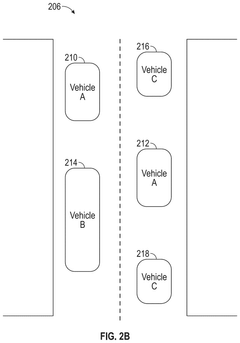
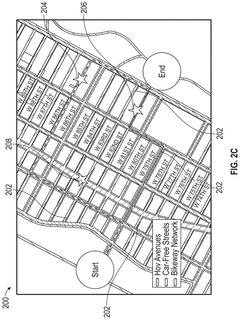
- A method that uses a combination of classical computing for predicting traffic congestion and quantum computing to optimize routes, by determining segments of traffic congestion, identifying vehicles occupying those segments, selecting alternative routes, and providing quantum optimization data to minimize congestion, utilizing a quantum unconstrained binary optimization (QUBO) problem to update vehicle routes.
Method for controlling a traffic system, device, computer program, and computer-readable storage medium
PatentWO2021089367A1
Innovation
- A method utilizing a quantum concept processor to detect traffic utilization, determine local and global stress functions, and optimize traffic light switching times to minimize congestion, incorporating vehicle density and environmental pollution metrics, enabling smooth traffic flow by simultaneously modulating switching times for multiple traffic lights.


Quantum-Classical Hybrid Systems for Traffic Applications
Quantum-classical hybrid systems represent a promising approach for integrating quantum computing capabilities into real-time traffic management applications. These systems leverage the strengths of both quantum and classical computing paradigms to address the complex challenges of urban traffic optimization.
In a quantum-classical hybrid system for traffic applications, the quantum component typically focuses on solving specific optimization problems that are computationally intensive for classical computers. For instance, quantum algorithms can be employed to find optimal routes or traffic signal timings in large-scale urban networks. The classical component, on the other hand, handles data preprocessing, result interpretation, and integration with existing traffic management infrastructure.
One key advantage of this hybrid approach is the ability to tackle large-scale optimization problems that are intractable for purely classical systems. Quantum algorithms, such as the Quantum Approximate Optimization Algorithm (QAOA) or Quantum Annealing, can explore vast solution spaces more efficiently than classical algorithms. This capability is particularly valuable in dynamic traffic scenarios where real-time decision-making is crucial.
The integration of quantum and classical systems also allows for incremental adoption of quantum technologies in the traffic management domain. Existing classical infrastructure can be gradually enhanced with quantum components, enabling a smooth transition and minimizing disruption to current operations. This hybrid approach also mitigates the limitations of current quantum hardware, such as limited qubit counts and high error rates, by offloading less quantum-amenable tasks to classical systems.
Several research initiatives are exploring the potential of quantum-classical hybrid systems for traffic applications. For example, researchers are investigating the use of quantum-inspired algorithms running on classical hardware to optimize traffic flow in urban areas. These algorithms mimic certain quantum behaviors and can provide significant performance improvements over traditional classical algorithms.
Looking ahead, as quantum hardware continues to advance, the balance between quantum and classical components in these hybrid systems is likely to shift. Future iterations may see an increased role for quantum processors in handling more complex aspects of traffic management, such as real-time multi-objective optimization across entire city networks.
However, challenges remain in fully realizing the potential of quantum-classical hybrid systems for traffic applications. These include developing robust interfaces between quantum and classical components, ensuring the reliability and accuracy of quantum computations in noisy environments, and scaling quantum algorithms to handle the complexity of real-world traffic scenarios.
In a quantum-classical hybrid system for traffic applications, the quantum component typically focuses on solving specific optimization problems that are computationally intensive for classical computers. For instance, quantum algorithms can be employed to find optimal routes or traffic signal timings in large-scale urban networks. The classical component, on the other hand, handles data preprocessing, result interpretation, and integration with existing traffic management infrastructure.
One key advantage of this hybrid approach is the ability to tackle large-scale optimization problems that are intractable for purely classical systems. Quantum algorithms, such as the Quantum Approximate Optimization Algorithm (QAOA) or Quantum Annealing, can explore vast solution spaces more efficiently than classical algorithms. This capability is particularly valuable in dynamic traffic scenarios where real-time decision-making is crucial.
The integration of quantum and classical systems also allows for incremental adoption of quantum technologies in the traffic management domain. Existing classical infrastructure can be gradually enhanced with quantum components, enabling a smooth transition and minimizing disruption to current operations. This hybrid approach also mitigates the limitations of current quantum hardware, such as limited qubit counts and high error rates, by offloading less quantum-amenable tasks to classical systems.
Several research initiatives are exploring the potential of quantum-classical hybrid systems for traffic applications. For example, researchers are investigating the use of quantum-inspired algorithms running on classical hardware to optimize traffic flow in urban areas. These algorithms mimic certain quantum behaviors and can provide significant performance improvements over traditional classical algorithms.
Looking ahead, as quantum hardware continues to advance, the balance between quantum and classical components in these hybrid systems is likely to shift. Future iterations may see an increased role for quantum processors in handling more complex aspects of traffic management, such as real-time multi-objective optimization across entire city networks.
However, challenges remain in fully realizing the potential of quantum-classical hybrid systems for traffic applications. These include developing robust interfaces between quantum and classical components, ensuring the reliability and accuracy of quantum computations in noisy environments, and scaling quantum algorithms to handle the complexity of real-world traffic scenarios.
Scalability and Implementation Roadmap
The scalability and implementation roadmap for quantum computing techniques in real-time traffic management presents a multi-phase approach to address the growing complexity of urban transportation systems. Initially, the focus will be on developing small-scale quantum algorithms capable of optimizing traffic flow in limited urban areas. These algorithms will be designed to handle intersections and short road segments, demonstrating the potential of quantum computing in traffic management.
As quantum hardware capabilities improve, the second phase will involve expanding the scope to cover larger urban areas and more complex traffic scenarios. This phase will require the integration of quantum algorithms with classical computing systems to create hybrid solutions that can process real-time data from various sources, including traffic sensors, GPS devices, and weather information.
The third phase will concentrate on enhancing the quantum algorithms to handle dynamic traffic conditions and predict future traffic patterns. This will involve developing more sophisticated quantum machine learning models that can analyze historical data and real-time information to make accurate predictions and suggest proactive traffic management strategies.
In the fourth phase, the focus will shift towards creating a scalable quantum computing infrastructure capable of managing traffic across entire metropolitan areas. This will require significant advancements in quantum hardware, including increased qubit counts and improved error correction techniques. Additionally, the development of specialized quantum processors optimized for traffic management applications will be crucial.
The final phase of the implementation roadmap will involve the full integration of quantum-powered traffic management systems with smart city infrastructure. This will enable real-time optimization of not only vehicular traffic but also public transportation, pedestrian flow, and emergency response systems. The quantum algorithms will be designed to work in conjunction with other smart city technologies, such as IoT devices and 5G networks, to create a comprehensive and efficient urban mobility ecosystem.
Throughout the implementation process, it will be essential to address challenges related to data privacy, security, and the ethical use of quantum computing in traffic management. Developing robust encryption methods and establishing clear guidelines for data handling will be crucial to ensure public trust and compliance with regulatory requirements.
As quantum hardware capabilities improve, the second phase will involve expanding the scope to cover larger urban areas and more complex traffic scenarios. This phase will require the integration of quantum algorithms with classical computing systems to create hybrid solutions that can process real-time data from various sources, including traffic sensors, GPS devices, and weather information.
The third phase will concentrate on enhancing the quantum algorithms to handle dynamic traffic conditions and predict future traffic patterns. This will involve developing more sophisticated quantum machine learning models that can analyze historical data and real-time information to make accurate predictions and suggest proactive traffic management strategies.
In the fourth phase, the focus will shift towards creating a scalable quantum computing infrastructure capable of managing traffic across entire metropolitan areas. This will require significant advancements in quantum hardware, including increased qubit counts and improved error correction techniques. Additionally, the development of specialized quantum processors optimized for traffic management applications will be crucial.
The final phase of the implementation roadmap will involve the full integration of quantum-powered traffic management systems with smart city infrastructure. This will enable real-time optimization of not only vehicular traffic but also public transportation, pedestrian flow, and emergency response systems. The quantum algorithms will be designed to work in conjunction with other smart city technologies, such as IoT devices and 5G networks, to create a comprehensive and efficient urban mobility ecosystem.
Throughout the implementation process, it will be essential to address challenges related to data privacy, security, and the ethical use of quantum computing in traffic management. Developing robust encryption methods and establishing clear guidelines for data handling will be crucial to ensure public trust and compliance with regulatory requirements.
Unlock deeper insights with PatSnap Eureka Quick Research — get a full tech report to explore trends and direct your research. Try now!
Generate Your Research Report Instantly with AI Agent
Supercharge your innovation with PatSnap Eureka AI Agent Platform!