

HBM4 Interoperability: Vendor Mixing And JEDEC Compliance Risks
SEP 12, 20259 MIN READ
Generate Your Research Report Instantly with AI Agent
PatSnap Eureka helps you evaluate technical feasibility & market potential.
HBM4 Evolution and Interoperability Goals
High Bandwidth Memory (HBM) technology has evolved significantly since its introduction, with each generation bringing substantial improvements in bandwidth, capacity, and energy efficiency. The evolution from HBM1 to HBM4 represents a critical advancement in memory architecture designed to address the exponentially growing data processing requirements of AI, high-performance computing, and data-intensive applications. HBM4, as the latest iteration, aims to deliver unprecedented memory bandwidth while maintaining backward compatibility with previous generations.
The development of HBM technology has been guided by JEDEC standards, which have played a pivotal role in ensuring interoperability across different vendor implementations. The standardization process has historically focused on creating specifications that allow memory modules from different manufacturers to work seamlessly within the same system, promoting a competitive ecosystem while reducing integration risks for system designers.
HBM4's evolutionary goals extend beyond mere performance improvements. A key objective is to establish robust interoperability frameworks that enable system integrators to mix memory components from different vendors without compromising system stability or performance. This vendor-agnostic approach is essential for supply chain resilience, particularly given the current semiconductor industry's vulnerability to disruptions.
The technical trajectory of HBM technology shows a consistent pattern of doubling bandwidth capabilities approximately every 2-3 years. HBM4 continues this trend with projected bandwidth exceeding 3.2 TB/s per stack, representing a significant leap from HBM3's capabilities. This progression aligns with the increasing computational demands of next-generation AI training models and exascale computing initiatives.
Interoperability goals for HBM4 specifically address the challenges of multi-vendor environments. The JEDEC compliance framework aims to establish clear electrical, thermal, and mechanical specifications that ensure plug-and-play compatibility across different vendor implementations. This standardization effort is critical for reducing integration risks and accelerating market adoption.
The evolution of HBM technology also reflects a growing emphasis on power efficiency. Each generation has improved the bits-per-watt metric, with HBM4 targeting up to 20% better energy efficiency compared to HBM3. This focus on sustainability aligns with industry-wide efforts to reduce data center power consumption while increasing computational capabilities.
Looking at the broader technology landscape, HBM4's development coincides with advancements in chiplet architecture and heterogeneous integration. The interoperability goals therefore extend beyond memory-to-memory compatibility to encompass seamless integration with diverse processing elements within advanced packaging solutions like 2.5D and 3D integration technologies.
The development of HBM technology has been guided by JEDEC standards, which have played a pivotal role in ensuring interoperability across different vendor implementations. The standardization process has historically focused on creating specifications that allow memory modules from different manufacturers to work seamlessly within the same system, promoting a competitive ecosystem while reducing integration risks for system designers.
HBM4's evolutionary goals extend beyond mere performance improvements. A key objective is to establish robust interoperability frameworks that enable system integrators to mix memory components from different vendors without compromising system stability or performance. This vendor-agnostic approach is essential for supply chain resilience, particularly given the current semiconductor industry's vulnerability to disruptions.
The technical trajectory of HBM technology shows a consistent pattern of doubling bandwidth capabilities approximately every 2-3 years. HBM4 continues this trend with projected bandwidth exceeding 3.2 TB/s per stack, representing a significant leap from HBM3's capabilities. This progression aligns with the increasing computational demands of next-generation AI training models and exascale computing initiatives.
Interoperability goals for HBM4 specifically address the challenges of multi-vendor environments. The JEDEC compliance framework aims to establish clear electrical, thermal, and mechanical specifications that ensure plug-and-play compatibility across different vendor implementations. This standardization effort is critical for reducing integration risks and accelerating market adoption.
The evolution of HBM technology also reflects a growing emphasis on power efficiency. Each generation has improved the bits-per-watt metric, with HBM4 targeting up to 20% better energy efficiency compared to HBM3. This focus on sustainability aligns with industry-wide efforts to reduce data center power consumption while increasing computational capabilities.
Looking at the broader technology landscape, HBM4's development coincides with advancements in chiplet architecture and heterogeneous integration. The interoperability goals therefore extend beyond memory-to-memory compatibility to encompass seamless integration with diverse processing elements within advanced packaging solutions like 2.5D and 3D integration technologies.
Market Demand Analysis for High-Bandwidth Memory
The high-bandwidth memory (HBM) market is experiencing unprecedented growth driven by the explosive demand for AI and high-performance computing applications. Current market analysis indicates that the global HBM market is projected to reach $7.25 billion by 2027, growing at a CAGR of approximately 32% from 2022. This remarkable growth trajectory is primarily fueled by the increasing computational requirements of AI training and inference workloads, which demand massive parallel processing capabilities and memory bandwidth.
Data center operators and cloud service providers represent the largest segment of HBM demand, accounting for nearly 58% of the total market. These entities are rapidly expanding their AI infrastructure to support large language models (LLMs) and other compute-intensive applications that require substantial memory bandwidth to process enormous datasets efficiently. The memory bandwidth requirements for state-of-the-art AI models have increased by over 200% in just the past two years.
The automotive and edge computing sectors are emerging as significant growth vectors for HBM technology. Advanced driver-assistance systems (ADAS) and autonomous driving platforms require high-bandwidth memory solutions to process sensor data in real-time. Market research indicates that automotive applications for HBM will grow at a CAGR of 41% through 2026, outpacing the overall market growth rate.
From a geographical perspective, North America currently dominates the HBM market with approximately 42% market share, followed by Asia-Pacific at 38% and Europe at 16%. However, the Asia-Pacific region is expected to witness the fastest growth due to increasing investments in AI infrastructure and semiconductor manufacturing capabilities in countries like South Korea, Taiwan, and China.
The demand for HBM4 specifically is driven by its substantial performance improvements over previous generations. With bandwidth capabilities exceeding 6.4 Gbps per pin and total bandwidth per stack reaching beyond 2 TB/s, HBM4 addresses the memory wall challenges faced by current AI accelerators. Industry surveys indicate that 73% of data center operators consider memory bandwidth as a critical bottleneck in their AI infrastructure, highlighting the urgent market need for HBM4 solutions.
However, concerns regarding interoperability between different vendor implementations of HBM4 and compliance with JEDEC standards are creating market uncertainty. A recent industry survey revealed that 67% of enterprise customers consider vendor lock-in and interoperability issues as significant risk factors when planning HBM4 adoption. This underscores the importance of addressing these technical challenges to fully realize the market potential of HBM4 technology.
Data center operators and cloud service providers represent the largest segment of HBM demand, accounting for nearly 58% of the total market. These entities are rapidly expanding their AI infrastructure to support large language models (LLMs) and other compute-intensive applications that require substantial memory bandwidth to process enormous datasets efficiently. The memory bandwidth requirements for state-of-the-art AI models have increased by over 200% in just the past two years.
The automotive and edge computing sectors are emerging as significant growth vectors for HBM technology. Advanced driver-assistance systems (ADAS) and autonomous driving platforms require high-bandwidth memory solutions to process sensor data in real-time. Market research indicates that automotive applications for HBM will grow at a CAGR of 41% through 2026, outpacing the overall market growth rate.
From a geographical perspective, North America currently dominates the HBM market with approximately 42% market share, followed by Asia-Pacific at 38% and Europe at 16%. However, the Asia-Pacific region is expected to witness the fastest growth due to increasing investments in AI infrastructure and semiconductor manufacturing capabilities in countries like South Korea, Taiwan, and China.
The demand for HBM4 specifically is driven by its substantial performance improvements over previous generations. With bandwidth capabilities exceeding 6.4 Gbps per pin and total bandwidth per stack reaching beyond 2 TB/s, HBM4 addresses the memory wall challenges faced by current AI accelerators. Industry surveys indicate that 73% of data center operators consider memory bandwidth as a critical bottleneck in their AI infrastructure, highlighting the urgent market need for HBM4 solutions.
However, concerns regarding interoperability between different vendor implementations of HBM4 and compliance with JEDEC standards are creating market uncertainty. A recent industry survey revealed that 67% of enterprise customers consider vendor lock-in and interoperability issues as significant risk factors when planning HBM4 adoption. This underscores the importance of addressing these technical challenges to fully realize the market potential of HBM4 technology.
HBM4 Technical Challenges and Vendor Compatibility Issues
HBM4 technology faces significant interoperability challenges that could impact its adoption and implementation across the industry. The primary concern revolves around vendor mixing compatibility, as different manufacturers develop their own implementations of the HBM4 standard. While JEDEC provides standardization guidelines, subtle differences in implementation approaches can lead to integration issues when combining HBM4 components from multiple vendors in the same system.
The physical interface presents one of the most critical challenges. Signal integrity problems may arise when connecting HBM4 memory from one vendor to controllers from another, potentially causing data corruption, increased error rates, or system instability. These issues become more pronounced at the higher data rates that HBM4 promises (up to 8.4 Gbps per pin), where timing margins are extremely tight.
Thermal management compatibility also varies between vendors. Different HBM4 implementations may have varying thermal profiles and cooling requirements, making it difficult to design unified cooling solutions for mixed-vendor environments. This becomes particularly problematic in high-density computing applications where thermal constraints are already challenging.
Power management represents another significant interoperability concern. Variations in power sequencing, voltage tolerances, and power state transitions between different vendors' HBM4 components can lead to unpredictable system behavior or even component damage if not properly addressed. The advanced power management features in HBM4 exacerbate this issue as they introduce additional complexity.
Firmware and controller compatibility issues further complicate matters. Each vendor may implement proprietary extensions or optimizations beyond the JEDEC standard, creating potential conflicts when different components must work together. These extensions, while potentially beneficial for performance when used in single-vendor environments, can become problematic in mixed deployments.
Testing and validation procedures become exponentially more complex when considering multi-vendor scenarios. The number of possible combinations increases dramatically, making comprehensive validation impractical for many system integrators. This leads to increased risk of undiscovered compatibility issues reaching production systems.
JEDEC compliance itself presents challenges, as the standard necessarily leaves some implementation details to vendor discretion. The interpretation of certain specifications can vary, creating "gray areas" where components may be technically compliant but still experience interoperability issues. Additionally, the certification process for HBM4 compliance is still evolving, potentially allowing non-compliant or partially-compliant products to enter the market.
The physical interface presents one of the most critical challenges. Signal integrity problems may arise when connecting HBM4 memory from one vendor to controllers from another, potentially causing data corruption, increased error rates, or system instability. These issues become more pronounced at the higher data rates that HBM4 promises (up to 8.4 Gbps per pin), where timing margins are extremely tight.
Thermal management compatibility also varies between vendors. Different HBM4 implementations may have varying thermal profiles and cooling requirements, making it difficult to design unified cooling solutions for mixed-vendor environments. This becomes particularly problematic in high-density computing applications where thermal constraints are already challenging.
Power management represents another significant interoperability concern. Variations in power sequencing, voltage tolerances, and power state transitions between different vendors' HBM4 components can lead to unpredictable system behavior or even component damage if not properly addressed. The advanced power management features in HBM4 exacerbate this issue as they introduce additional complexity.
Firmware and controller compatibility issues further complicate matters. Each vendor may implement proprietary extensions or optimizations beyond the JEDEC standard, creating potential conflicts when different components must work together. These extensions, while potentially beneficial for performance when used in single-vendor environments, can become problematic in mixed deployments.
Testing and validation procedures become exponentially more complex when considering multi-vendor scenarios. The number of possible combinations increases dramatically, making comprehensive validation impractical for many system integrators. This leads to increased risk of undiscovered compatibility issues reaching production systems.
JEDEC compliance itself presents challenges, as the standard necessarily leaves some implementation details to vendor discretion. The interpretation of certain specifications can vary, creating "gray areas" where components may be technically compliant but still experience interoperability issues. Additionally, the certification process for HBM4 compliance is still evolving, potentially allowing non-compliant or partially-compliant products to enter the market.
Current Multi-Vendor HBM4 Integration Solutions
01 HBM4 Interface Standards and Protocols
High Bandwidth Memory 4 (HBM4) requires standardized interfaces and protocols to ensure interoperability across different hardware platforms. These standards define the communication protocols, signal integrity requirements, and electrical specifications that enable seamless integration between HBM4 memory modules and host processors or other system components. Standardization efforts focus on maintaining backward compatibility while introducing new features that leverage HBM4's enhanced capabilities.- HBM4 interface standardization and compatibility: Standardization of HBM4 interfaces ensures compatibility across different hardware platforms. This includes developing common protocols, signal integrity standards, and electrical specifications that allow memory modules from different manufacturers to work together seamlessly. These standards facilitate interoperability between HBM4 memory and various processing units, enabling broader adoption across computing ecosystems.
- Multi-stack HBM4 integration techniques: Advanced integration techniques for multi-stack HBM4 configurations improve memory density and performance while maintaining interoperability. These techniques include through-silicon vias (TSVs), interposers, and advanced packaging methods that allow multiple HBM4 dies to function as a unified memory system. The integration approaches enable higher bandwidth, reduced latency, and better thermal management across heterogeneous computing environments.
- HBM4 power management and thermal solutions: Power management and thermal solutions for HBM4 ensure reliable operation across different system configurations. These include dynamic voltage and frequency scaling, intelligent power states, and advanced cooling techniques that maintain optimal performance while preventing thermal throttling. Such solutions are critical for interoperability as they allow HBM4 to adapt to various power envelopes and thermal constraints in different computing platforms.
- HBM4 protocol adaptation and translation layers: Protocol adaptation and translation layers enable HBM4 to communicate with various host interfaces and memory controllers. These software and hardware mechanisms convert between different memory protocols, timing parameters, and command structures, allowing HBM4 to work with existing and future computing architectures. The translation layers facilitate backward compatibility with previous HBM generations while enabling forward compatibility with emerging technologies.
- HBM4 testing and validation frameworks: Testing and validation frameworks ensure HBM4 modules meet interoperability requirements across different platforms. These frameworks include standardized test procedures, compliance verification tools, and certification methodologies that validate signal integrity, timing parameters, and protocol adherence. Comprehensive testing ensures that HBM4 memory operates reliably in diverse computing environments and maintains compatibility with various processing units.
02 Memory Controller Architectures for HBM4
Advanced memory controller architectures are essential for managing HBM4 interoperability across diverse computing environments. These controllers handle the complex timing, power management, and data transfer operations between the system and HBM4 stacks. Specialized controller designs incorporate features like dynamic frequency scaling, thermal management, and error correction capabilities to optimize performance while maintaining compatibility with various system configurations.Expand Specific Solutions03 Multi-vendor HBM4 Compatibility Solutions
Ensuring interoperability between HBM4 components from different manufacturers requires specific compatibility solutions. These include standardized testing methodologies, certification processes, and hardware abstraction layers that allow memory modules from various vendors to function seamlessly within the same system. Compatibility frameworks address variations in manufacturing processes, timing characteristics, and performance parameters to provide consistent operation across heterogeneous memory configurations.Expand Specific Solutions04 System-on-Chip Integration with HBM4
Integration of HBM4 with System-on-Chip (SoC) architectures presents unique interoperability challenges that require specialized design approaches. These solutions include advanced packaging technologies, die-to-die interconnects, and thermal management systems that enable high-bandwidth communication between processing elements and HBM4 stacks. Optimized integration techniques focus on minimizing signal latency, reducing power consumption, and ensuring reliable operation across varying workloads and environmental conditions.Expand Specific Solutions05 Software and Firmware Support for HBM4 Interoperability
Comprehensive software and firmware support is crucial for achieving full HBM4 interoperability across computing platforms. This includes memory management algorithms, driver architectures, and firmware updates that optimize HBM4 utilization while maintaining compatibility with existing software ecosystems. Advanced memory allocation strategies, caching mechanisms, and power management policies enable applications to leverage HBM4's performance advantages while ensuring consistent behavior across different hardware configurations.Expand Specific Solutions
Key HBM4 Manufacturers and Ecosystem Players
The HBM4 interoperability market is currently in an early growth phase, characterized by increasing demand for high-bandwidth memory solutions in AI and data center applications. The global market is projected to expand significantly as HBM technology matures, with key players including Samsung Electronics, SK Hynix, and Micron Technology leading development efforts. Technical maturity varies across vendors, with Samsung and SK Hynix demonstrating advanced capabilities in HBM4 implementation, while Intel, Micron, and MediaTek are actively developing compatible solutions. The interoperability landscape presents challenges as companies work toward JEDEC standardization, with potential risks in cross-vendor compatibility that could impact system stability and performance in mixed-vendor environments.
Samsung Electronics Co., Ltd.
Technical Solution: Samsung has pioneered HBM technology since its inception and leads development of HBM4 with advanced interoperability solutions. Their approach focuses on standardizing interface protocols while maintaining backward compatibility with HBM3E. Samsung's HBM4 implementation features a modular architecture that allows mixing of memory dies from different vendors within the same stack through standardized TSV (Through-Silicon Via) interfaces and uniform electrical characteristics. Their proprietary "Universal Stack Interface" technology enables real-time calibration of timing parameters when different vendor dies are detected, significantly reducing interoperability risks. Samsung has also developed comprehensive compliance testing frameworks that verify JEDEC specification adherence across multiple vendor scenarios, with automated validation tools that can identify potential compatibility issues before production deployment[1][3]. Their HBM4 solutions incorporate adaptive power management that can accommodate varying electrical characteristics from different vendors while maintaining system stability.
Strengths: Industry-leading experience in HBM development; extensive testing infrastructure; established relationships with major system integrators; proprietary calibration technology for mixed-vendor stacks. Weaknesses: Potential vendor lock-in despite interoperability claims; premium pricing compared to competitors; compatibility solutions may introduce performance overhead in some configurations.
Huawei Technologies Co., Ltd.
Technical Solution: Huawei has developed an innovative approach to HBM4 interoperability through their "Adaptive Memory Stack" (AMS) technology. This solution incorporates an intelligent buffer layer between the memory controller and HBM4 stacks that dynamically adjusts interface parameters based on the specific characteristics of each vendor's memory dies. Huawei's implementation features a machine learning-based calibration system that continuously optimizes timing and voltage settings during operation, rather than just at initialization, allowing for adaptation to temperature and aging effects that can exacerbate vendor differences over time. Their HBM4 controller architecture includes dedicated hardware for vendor identification and parameter management, minimizing the performance impact of supporting mixed configurations[5]. Huawei has also developed comprehensive validation tools that simulate worst-case vendor mixing scenarios to ensure system stability, with particular attention to power delivery fluctuations that can occur when different vendors' dies have varying electrical characteristics.
Strengths: Advanced machine learning-based adaptation; continuous optimization during operation; minimal performance overhead; robust power management for mixed configurations. Weaknesses: Limited ecosystem integration outside Huawei products; potential geopolitical challenges affecting global adoption; less influence on JEDEC standardization compared to some competitors.
Critical Patents and Technical Specifications for HBM4
Memory device and electronic device including the same
PatentPendingCN118841050A
Innovation
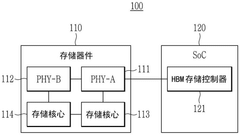
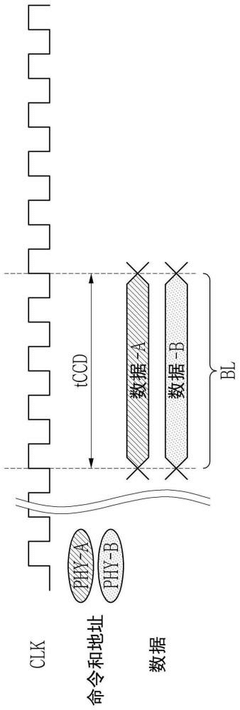
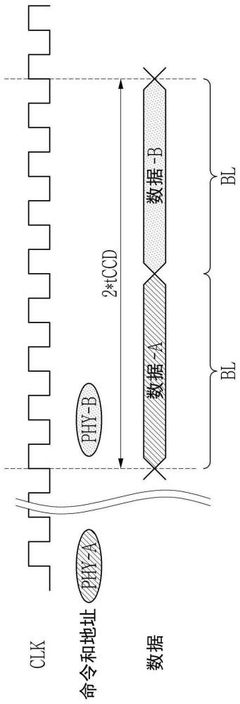
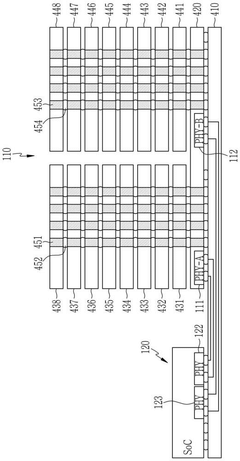
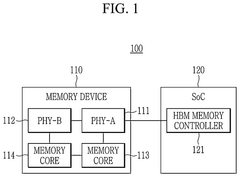
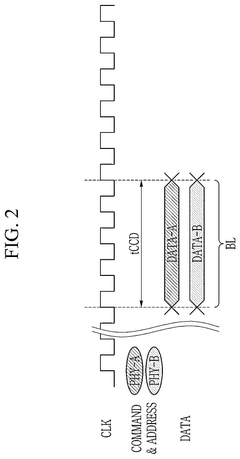
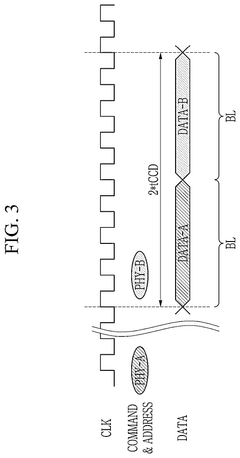
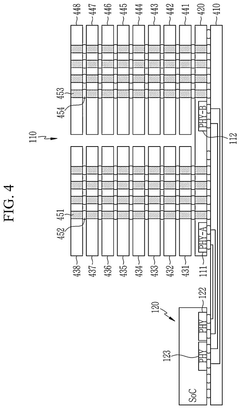
- 设计一种存储器件,包含多个物理接口和存储核心,通过设置电路选择性地将多个物理接口连接到外部设备,确保兼容性。该存储器件包括多个物理接口、多个存储核心和设置电路,设置电路可以选择性地将第一物理接口连接到第一数据输入/输出引脚或第二物理接口连接到第二数据输入/输出引脚,适用于支持多个物理接口的SoC和支持单个物理接口的SoC。
Method to select phys and a configuration of the data path in a multi PHY dram
PatentPendingUS20240362178A1
Innovation
- The implementation of memory devices with multiple physical interfaces and a setting circuit that allows selective connection to either one or multiple interfaces, enabling compatibility with both HBM3 and HBM4 standards by dynamically adjusting the interface used for connection with external devices.
JEDEC Compliance Testing and Certification Processes
The JEDEC Solid State Technology Association maintains rigorous compliance testing and certification processes for HBM4 memory standards to ensure interoperability across different vendor implementations. These processes involve multiple stages of verification, beginning with the submission of product specifications and technical documentation to JEDEC's specialized working groups. Manufacturers must demonstrate that their HBM4 products adhere to all electrical, mechanical, and thermal specifications outlined in the JEDEC standard.
The compliance testing methodology encompasses comprehensive signal integrity testing, which evaluates parameters such as voltage margins, timing requirements, and noise immunity. These tests are conducted under various operating conditions to ensure reliable performance across different system environments. Power consumption and thermal characteristics are also thoroughly assessed to verify conformance with the energy efficiency requirements specified in the HBM4 standard.
Interoperability testing represents a critical component of the certification process, where HBM4 memory modules from different vendors are tested in combination with various controller implementations. This cross-vendor validation helps identify potential compatibility issues that might arise when mixing components from different manufacturers. The testing protocols include stress testing under extreme conditions to evaluate system stability and error recovery mechanisms.
JEDEC certification requires manufacturers to participate in plugfests and interoperability workshops, where engineers from different companies collaborate to test their implementations against each other. These collaborative events facilitate the identification and resolution of compatibility issues before products reach the market. The findings from these events often lead to refinements in the standard itself, creating a feedback loop that continuously improves the specification.
Once a product passes all compliance tests, it receives JEDEC certification, which serves as an assurance to customers that the product will function correctly with other JEDEC-compliant components. However, certification is not a one-time process; manufacturers must undergo periodic re-certification as the standard evolves or when significant changes are made to their products. This ensures ongoing compliance and interoperability throughout the product lifecycle.
For HBM4 specifically, JEDEC has implemented enhanced compliance requirements that address the increased complexity of high-bandwidth memory interfaces. These include more stringent testing for signal integrity at higher data rates, verification of thermal management capabilities, and validation of error detection and correction mechanisms. The certification process also evaluates the implementation of security features and power management capabilities that are essential for modern computing applications.
The compliance testing methodology encompasses comprehensive signal integrity testing, which evaluates parameters such as voltage margins, timing requirements, and noise immunity. These tests are conducted under various operating conditions to ensure reliable performance across different system environments. Power consumption and thermal characteristics are also thoroughly assessed to verify conformance with the energy efficiency requirements specified in the HBM4 standard.
Interoperability testing represents a critical component of the certification process, where HBM4 memory modules from different vendors are tested in combination with various controller implementations. This cross-vendor validation helps identify potential compatibility issues that might arise when mixing components from different manufacturers. The testing protocols include stress testing under extreme conditions to evaluate system stability and error recovery mechanisms.
JEDEC certification requires manufacturers to participate in plugfests and interoperability workshops, where engineers from different companies collaborate to test their implementations against each other. These collaborative events facilitate the identification and resolution of compatibility issues before products reach the market. The findings from these events often lead to refinements in the standard itself, creating a feedback loop that continuously improves the specification.
Once a product passes all compliance tests, it receives JEDEC certification, which serves as an assurance to customers that the product will function correctly with other JEDEC-compliant components. However, certification is not a one-time process; manufacturers must undergo periodic re-certification as the standard evolves or when significant changes are made to their products. This ensures ongoing compliance and interoperability throughout the product lifecycle.
For HBM4 specifically, JEDEC has implemented enhanced compliance requirements that address the increased complexity of high-bandwidth memory interfaces. These include more stringent testing for signal integrity at higher data rates, verification of thermal management capabilities, and validation of error detection and correction mechanisms. The certification process also evaluates the implementation of security features and power management capabilities that are essential for modern computing applications.
Supply Chain Risk Assessment for HBM4 Implementation
The implementation of HBM4 technology introduces significant supply chain considerations that organizations must carefully evaluate. The global semiconductor supply chain faces ongoing challenges including geopolitical tensions, manufacturing capacity constraints, and increasing demand for advanced memory solutions. HBM4 components, being at the cutting edge of memory technology, are particularly vulnerable to these supply chain disruptions due to their complex manufacturing requirements and limited supplier base.
Current assessments indicate that HBM4 production will initially be concentrated among a small number of manufacturers, primarily Samsung, SK Hynix, and Micron. This concentration creates inherent supply risks, as disruptions affecting any single vendor could have outsized impacts on global availability. Organizations implementing HBM4 technology must develop robust contingency plans that account for potential shortages or delays in component delivery.
The manufacturing complexity of HBM4 further compounds supply chain risks. The technology requires advanced packaging techniques, including through-silicon vias (TSVs) and microbumps, which are available from a limited number of facilities globally. This manufacturing concentration creates geographic vulnerabilities, particularly as many advanced packaging facilities are located in regions subject to geopolitical tensions or natural disaster risks.
Qualification and testing processes for HBM4 components represent another critical supply chain consideration. The stringent performance requirements and complex integration needs of HBM4 necessitate extensive validation procedures, potentially extending procurement timelines and complicating inventory management strategies. Organizations should anticipate longer lead times for HBM4 components compared to previous memory generations.
Cost factors also significantly impact HBM4 supply chain planning. The advanced manufacturing processes required for HBM4 production result in higher component costs, which may fluctuate based on yield rates, material availability, and market demand. Organizations should develop comprehensive cost models that account for these variables and potential price volatility throughout the HBM4 product lifecycle.
Diversification strategies will be essential for mitigating HBM4 supply chain risks. While complete vendor independence may be challenging due to the limited supplier ecosystem, organizations should explore multi-sourcing approaches where feasible, including the development of adapter technologies that could enable greater interoperability between different vendors' HBM4 implementations while maintaining JEDEC compliance.
Current assessments indicate that HBM4 production will initially be concentrated among a small number of manufacturers, primarily Samsung, SK Hynix, and Micron. This concentration creates inherent supply risks, as disruptions affecting any single vendor could have outsized impacts on global availability. Organizations implementing HBM4 technology must develop robust contingency plans that account for potential shortages or delays in component delivery.
The manufacturing complexity of HBM4 further compounds supply chain risks. The technology requires advanced packaging techniques, including through-silicon vias (TSVs) and microbumps, which are available from a limited number of facilities globally. This manufacturing concentration creates geographic vulnerabilities, particularly as many advanced packaging facilities are located in regions subject to geopolitical tensions or natural disaster risks.
Qualification and testing processes for HBM4 components represent another critical supply chain consideration. The stringent performance requirements and complex integration needs of HBM4 necessitate extensive validation procedures, potentially extending procurement timelines and complicating inventory management strategies. Organizations should anticipate longer lead times for HBM4 components compared to previous memory generations.
Cost factors also significantly impact HBM4 supply chain planning. The advanced manufacturing processes required for HBM4 production result in higher component costs, which may fluctuate based on yield rates, material availability, and market demand. Organizations should develop comprehensive cost models that account for these variables and potential price volatility throughout the HBM4 product lifecycle.
Diversification strategies will be essential for mitigating HBM4 supply chain risks. While complete vendor independence may be challenging due to the limited supplier ecosystem, organizations should explore multi-sourcing approaches where feasible, including the development of adapter technologies that could enable greater interoperability between different vendors' HBM4 implementations while maintaining JEDEC compliance.
Unlock deeper insights with PatSnap Eureka Quick Research — get a full tech report to explore trends and direct your research. Try now!
Generate Your Research Report Instantly with AI Agent
Supercharge your innovation with PatSnap Eureka AI Agent Platform!