

HBM4 Thermal Cycling Simulation For Reliability Qualification
SEP 12, 20259 MIN READ
Generate Your Research Report Instantly with AI Agent
PatSnap Eureka helps you evaluate technical feasibility & market potential.
HBM4 Thermal Reliability Background and Objectives
High Bandwidth Memory (HBM) technology has evolved significantly since its introduction, with HBM4 representing the latest advancement in this domain. The thermal reliability of HBM4 has become increasingly critical as computing demands continue to escalate, particularly in data centers, artificial intelligence applications, and high-performance computing environments. The historical progression from HBM1 through HBM4 has been marked by increasing memory density, bandwidth, and consequently, thermal challenges that directly impact system reliability.
The thermal cycling phenomenon in HBM4 refers to the repeated expansion and contraction of materials due to temperature fluctuations during operation. These thermal cycles create mechanical stresses at material interfaces, particularly at solder joints, microbumps, and through-silicon vias (TSVs), which can lead to fatigue failures over time. As HBM4 stacks incorporate more memory dies with finer interconnect pitches, the reliability concerns associated with thermal cycling have become more pronounced.
Current industry standards for reliability qualification typically require components to withstand between 500 to 1000 thermal cycles without failure. However, the unique architecture of HBM4, with its vertically stacked dies and complex interposer design, presents unprecedented challenges for traditional qualification methodologies. The thermal gradients within the stack are non-uniform, creating localized stress concentrations that are difficult to predict without advanced simulation techniques.
The primary objective of HBM4 thermal cycling simulation is to develop accurate predictive models that can evaluate the long-term reliability of these memory systems under various operational conditions. These simulations aim to identify potential failure modes before physical prototyping, thereby reducing development costs and time-to-market. Additionally, they seek to establish new qualification standards specifically tailored to the unique characteristics of HBM4 technology.
Another critical goal is to optimize the material selection and structural design of HBM4 packages to enhance thermal reliability. This includes investigating alternative underfill materials, solder compositions, and die-attach technologies that can better accommodate thermal expansion mismatches between different components of the HBM4 stack.
Furthermore, these simulations aim to establish correlations between accelerated testing conditions and real-world operational environments, enabling more accurate lifetime predictions. By understanding the relationship between simulation parameters and actual field performance, manufacturers can develop more effective qualification protocols that ensure HBM4 modules meet the increasingly demanding reliability requirements of next-generation computing systems.
The thermal cycling phenomenon in HBM4 refers to the repeated expansion and contraction of materials due to temperature fluctuations during operation. These thermal cycles create mechanical stresses at material interfaces, particularly at solder joints, microbumps, and through-silicon vias (TSVs), which can lead to fatigue failures over time. As HBM4 stacks incorporate more memory dies with finer interconnect pitches, the reliability concerns associated with thermal cycling have become more pronounced.
Current industry standards for reliability qualification typically require components to withstand between 500 to 1000 thermal cycles without failure. However, the unique architecture of HBM4, with its vertically stacked dies and complex interposer design, presents unprecedented challenges for traditional qualification methodologies. The thermal gradients within the stack are non-uniform, creating localized stress concentrations that are difficult to predict without advanced simulation techniques.
The primary objective of HBM4 thermal cycling simulation is to develop accurate predictive models that can evaluate the long-term reliability of these memory systems under various operational conditions. These simulations aim to identify potential failure modes before physical prototyping, thereby reducing development costs and time-to-market. Additionally, they seek to establish new qualification standards specifically tailored to the unique characteristics of HBM4 technology.
Another critical goal is to optimize the material selection and structural design of HBM4 packages to enhance thermal reliability. This includes investigating alternative underfill materials, solder compositions, and die-attach technologies that can better accommodate thermal expansion mismatches between different components of the HBM4 stack.
Furthermore, these simulations aim to establish correlations between accelerated testing conditions and real-world operational environments, enabling more accurate lifetime predictions. By understanding the relationship between simulation parameters and actual field performance, manufacturers can develop more effective qualification protocols that ensure HBM4 modules meet the increasingly demanding reliability requirements of next-generation computing systems.
Market Demand Analysis for HBM4 Memory Solutions
The High Bandwidth Memory (HBM) market is experiencing unprecedented growth driven by the explosive demand for high-performance computing applications. HBM4, as the next generation of this technology, is positioned to address critical bandwidth and capacity requirements across multiple sectors. Current market analysis indicates that the global HBM market is projected to grow at a compound annual growth rate of over 30% through 2028, with HBM4 expected to capture a significant portion of this expansion upon its introduction.
The primary market driver for HBM4 memory solutions stems from the artificial intelligence and machine learning sector. As AI model complexity continues to increase exponentially, with models like GPT-4 requiring over 1.8 trillion parameters, the memory bandwidth requirements have grown beyond what current HBM3E solutions can efficiently provide. Data centers and cloud service providers are actively seeking memory solutions that can handle these computational demands while maintaining energy efficiency.
High-performance computing and supercomputing applications represent another substantial market segment for HBM4. The push toward exascale computing has intensified memory bandwidth requirements, with next-generation supercomputers demanding memory solutions that can process vast amounts of scientific data simultaneously. HBM4's projected specifications align perfectly with these advanced computing needs.
The automotive industry, particularly in autonomous driving systems, has emerged as a rapidly growing market for high-bandwidth memory solutions. Advanced driver-assistance systems (ADAS) and fully autonomous vehicles require real-time processing of sensor data from multiple sources, creating demand for memory solutions with both high bandwidth and reliability under varying thermal conditions.
Telecommunications infrastructure, especially with the ongoing deployment of 5G and development of 6G technologies, represents another significant market opportunity. Network equipment manufacturers are seeking memory solutions that can handle the increased data processing requirements while maintaining reliability in diverse operating environments.
Consumer electronics, particularly high-end gaming consoles and graphics cards, continue to drive demand for advanced memory solutions. The gaming industry's push toward 8K resolution gaming and real-time ray tracing has created substantial bandwidth requirements that HBM4 is positioned to address.
Market research indicates that customers across these segments are particularly concerned with reliability under thermal stress conditions. As devices become more compact and processing demands increase, thermal management has become a critical factor in memory selection. This explains the growing interest in thermal cycling simulation for reliability qualification of HBM4, as manufacturers and end-users seek assurance that these memory solutions can maintain performance and longevity under variable thermal conditions.
The primary market driver for HBM4 memory solutions stems from the artificial intelligence and machine learning sector. As AI model complexity continues to increase exponentially, with models like GPT-4 requiring over 1.8 trillion parameters, the memory bandwidth requirements have grown beyond what current HBM3E solutions can efficiently provide. Data centers and cloud service providers are actively seeking memory solutions that can handle these computational demands while maintaining energy efficiency.
High-performance computing and supercomputing applications represent another substantial market segment for HBM4. The push toward exascale computing has intensified memory bandwidth requirements, with next-generation supercomputers demanding memory solutions that can process vast amounts of scientific data simultaneously. HBM4's projected specifications align perfectly with these advanced computing needs.
The automotive industry, particularly in autonomous driving systems, has emerged as a rapidly growing market for high-bandwidth memory solutions. Advanced driver-assistance systems (ADAS) and fully autonomous vehicles require real-time processing of sensor data from multiple sources, creating demand for memory solutions with both high bandwidth and reliability under varying thermal conditions.
Telecommunications infrastructure, especially with the ongoing deployment of 5G and development of 6G technologies, represents another significant market opportunity. Network equipment manufacturers are seeking memory solutions that can handle the increased data processing requirements while maintaining reliability in diverse operating environments.
Consumer electronics, particularly high-end gaming consoles and graphics cards, continue to drive demand for advanced memory solutions. The gaming industry's push toward 8K resolution gaming and real-time ray tracing has created substantial bandwidth requirements that HBM4 is positioned to address.
Market research indicates that customers across these segments are particularly concerned with reliability under thermal stress conditions. As devices become more compact and processing demands increase, thermal management has become a critical factor in memory selection. This explains the growing interest in thermal cycling simulation for reliability qualification of HBM4, as manufacturers and end-users seek assurance that these memory solutions can maintain performance and longevity under variable thermal conditions.
Current Challenges in HBM4 Thermal Cycling Simulation
The thermal cycling simulation for HBM4 (High Bandwidth Memory 4) reliability qualification faces several significant challenges that impede accurate prediction and assessment of device reliability. Current simulation methodologies struggle to accurately model the complex thermal behavior that occurs during operational and environmental cycling conditions, particularly given the increased density and complexity of HBM4 architecture compared to previous generations.
One of the primary challenges is the multi-physics nature of the problem, which requires simultaneous consideration of thermal, mechanical, and electrical behaviors. The interaction between these physical domains creates coupling effects that are difficult to capture in conventional simulation frameworks. Most existing tools excel in one domain but lack the integrated capability to model cross-domain effects accurately, leading to potential blind spots in reliability assessment.
The increased stack height and layer count in HBM4 designs introduce significant thermal gradients both vertically and horizontally across the structure. These gradients create differential expansion and contraction during thermal cycling, resulting in complex stress patterns that are challenging to model accurately. Current simulation tools often employ simplifications that may not capture the full complexity of these stress distributions, particularly at critical interfaces such as microbumps and through-silicon vias (TSVs).
Material characterization presents another substantial challenge. HBM4 incorporates various materials with different coefficients of thermal expansion (CTE), elastic moduli, and thermal conductivities. Accurate material models, especially for newer materials and their interfaces, are often lacking or incomplete. This deficiency is particularly problematic for predicting fatigue behavior under repeated thermal cycling conditions, where material properties may evolve over time due to aging effects.
Computational efficiency remains a significant bottleneck. High-fidelity models that capture the necessary geometric details of HBM4 structures require enormous computational resources, making full-device simulations prohibitively expensive. This forces engineers to make trade-offs between model accuracy and simulation time, potentially missing critical failure mechanisms.
Validation methodology is another area of concern. The correlation between simulation results and actual field reliability is difficult to establish due to the accelerated nature of qualification testing and the challenge of instrumenting actual devices with sufficient sensors without altering their thermal behavior. This creates uncertainty in the predictive power of current simulation approaches.
Finally, there is a lack of standardized approaches for thermal cycling simulation specifically tailored to HBM4 structures. Different organizations employ varying methodologies, making it difficult to compare results across the industry and establish reliable qualification standards that all manufacturers can follow with confidence.
One of the primary challenges is the multi-physics nature of the problem, which requires simultaneous consideration of thermal, mechanical, and electrical behaviors. The interaction between these physical domains creates coupling effects that are difficult to capture in conventional simulation frameworks. Most existing tools excel in one domain but lack the integrated capability to model cross-domain effects accurately, leading to potential blind spots in reliability assessment.
The increased stack height and layer count in HBM4 designs introduce significant thermal gradients both vertically and horizontally across the structure. These gradients create differential expansion and contraction during thermal cycling, resulting in complex stress patterns that are challenging to model accurately. Current simulation tools often employ simplifications that may not capture the full complexity of these stress distributions, particularly at critical interfaces such as microbumps and through-silicon vias (TSVs).
Material characterization presents another substantial challenge. HBM4 incorporates various materials with different coefficients of thermal expansion (CTE), elastic moduli, and thermal conductivities. Accurate material models, especially for newer materials and their interfaces, are often lacking or incomplete. This deficiency is particularly problematic for predicting fatigue behavior under repeated thermal cycling conditions, where material properties may evolve over time due to aging effects.
Computational efficiency remains a significant bottleneck. High-fidelity models that capture the necessary geometric details of HBM4 structures require enormous computational resources, making full-device simulations prohibitively expensive. This forces engineers to make trade-offs between model accuracy and simulation time, potentially missing critical failure mechanisms.
Validation methodology is another area of concern. The correlation between simulation results and actual field reliability is difficult to establish due to the accelerated nature of qualification testing and the challenge of instrumenting actual devices with sufficient sensors without altering their thermal behavior. This creates uncertainty in the predictive power of current simulation approaches.
Finally, there is a lack of standardized approaches for thermal cycling simulation specifically tailored to HBM4 structures. Different organizations employ varying methodologies, making it difficult to compare results across the industry and establish reliable qualification standards that all manufacturers can follow with confidence.
Current Thermal Simulation Approaches for HBM4
01 Thermal management solutions for HBM4
Various thermal management solutions are implemented to address heat dissipation challenges in High Bandwidth Memory 4 (HBM4) systems. These include advanced cooling mechanisms, heat spreaders, and thermal interface materials specifically designed to maintain optimal operating temperatures during thermal cycling. These solutions help prevent thermal-related failures and ensure reliable performance of HBM4 memory stacks under varying thermal conditions.- Thermal management solutions for HBM4 memory: Various thermal management solutions are employed to address heat dissipation challenges in High Bandwidth Memory 4 (HBM4) systems. These include advanced cooling systems, heat sinks, and thermal interface materials specifically designed for the high-density memory stacks. Effective thermal management is crucial for maintaining optimal performance and reliability of HBM4 memory during thermal cycling conditions, preventing thermal-induced failures in the stacked die architecture.
- Testing methodologies for HBM4 thermal cycling reliability: Specialized testing methodologies are developed to evaluate the reliability of HBM4 memory under thermal cycling conditions. These include accelerated stress tests, temperature cycling protocols, and thermal shock testing to simulate real-world operating conditions. The testing procedures help identify potential failure modes related to thermal expansion and contraction in the stacked memory architecture, ensuring long-term reliability of HBM4 memory systems in various applications.
- Thermal interface materials for HBM4 applications: Advanced thermal interface materials are specifically formulated for use with HBM4 memory stacks to improve heat transfer efficiency. These materials bridge the thermal gap between the memory dies and heat dissipation components, reducing thermal resistance and improving overall cooling performance. The specialized interface materials accommodate the unique requirements of HBM4's stacked architecture while maintaining resilience during thermal cycling events.
- Power management techniques for thermal optimization: Sophisticated power management techniques are implemented to optimize thermal performance in HBM4 memory systems. These include dynamic voltage and frequency scaling, intelligent power distribution, and adaptive thermal management algorithms that respond to changing thermal conditions. By efficiently managing power consumption, these techniques help minimize heat generation during operation, reducing thermal stress during cycling and extending the operational lifespan of HBM4 memory components.
- Structural design innovations for thermal cycling resilience: Innovative structural designs are developed to enhance the resilience of HBM4 memory against thermal cycling stresses. These include advanced packaging technologies, reinforced interconnects, and stress-relieving structures that accommodate thermal expansion and contraction. The structural innovations focus on minimizing mechanical stress at critical interfaces within the memory stack, particularly at through-silicon vias (TSVs) and microbumps, which are vulnerable to thermal cycling fatigue.
02 Testing methodologies for thermal cycling reliability
Specialized testing methodologies are developed to evaluate the reliability of HBM4 memory during thermal cycling. These include accelerated stress tests, temperature cycling protocols, and thermal shock testing to simulate real-world operating conditions. The testing procedures help identify potential failure modes related to thermal expansion and contraction, ensuring that HBM4 memory maintains data integrity and performance across temperature fluctuations.Expand Specific Solutions03 Structural design improvements for thermal resilience
Innovative structural designs are implemented in HBM4 memory to enhance thermal resilience. These include optimized through-silicon via (TSV) arrangements, reinforced interposer connections, and specialized substrate materials that can withstand repeated thermal cycling. The structural improvements help minimize thermal stress on solder joints and interconnects, reducing the risk of mechanical failures in the stacked memory architecture.Expand Specific Solutions04 Power management techniques during thermal cycling
Advanced power management techniques are employed to optimize HBM4 performance during thermal cycling. These include dynamic voltage and frequency scaling, intelligent power distribution, and thermal-aware memory access scheduling. These techniques help maintain stable operation while minimizing heat generation, extending the operational lifespan of HBM4 memory under varying thermal conditions.Expand Specific Solutions05 Materials innovation for thermal cycling durability
Novel materials are developed to enhance the durability of HBM4 memory during thermal cycling. These include advanced underfill compounds, thermally conductive adhesives, and specialized solder materials with improved thermal expansion characteristics. These material innovations help maintain the structural integrity of memory stacks and interconnects during repeated heating and cooling cycles, ensuring long-term reliability in high-performance computing applications.Expand Specific Solutions
Key Industry Players in HBM4 Development and Testing
The HBM4 Thermal Cycling Simulation market is currently in an early growth phase, with increasing demand driven by advanced semiconductor packaging requirements. Market size is expanding as high-performance computing applications proliferate, though still relatively niche compared to broader semiconductor testing markets. From a technical maturity perspective, the field is evolving rapidly with key players demonstrating varying capabilities. GLOBALFOUNDRIES, AMD, and Cadence Design Systems lead with advanced simulation methodologies, while SMIC and ASE Group focus on implementation aspects. ITRI and Semiconductor Manufacturing International contribute significant research advancements. The competitive landscape features collaboration between design tool providers and foundries, with specialized thermal simulation expertise becoming a critical differentiator as HBM4 reliability requirements intensify.
Semiconductor Manufacturing International (Shanghai) Corp.
Technical Solution: SMIC has developed a sophisticated thermal cycling simulation platform specifically for HBM4 reliability qualification that addresses the unique challenges of advanced memory integration. Their approach combines detailed material characterization with hierarchical modeling techniques to efficiently simulate thermal-mechanical behavior across multiple scales. SMIC's methodology incorporates precise modeling of critical interfaces within the HBM4 stack, including microbumps, through-silicon vias (TSVs), and redistribution layers, which are particularly vulnerable to thermal cycling failures. Their simulation framework accounts for the increased thermal challenges of HBM4's higher bandwidth and greater stack density compared to previous generations. SMIC has implemented advanced constitutive models that capture the complex viscoelastic and viscoplastic behavior of various materials in the HBM4 stack during thermal cycling. Their qualification process includes correlation between simulation results and accelerated testing data to validate model accuracy and establish acceleration factors for lifetime predictions under various operating conditions.
Strengths: Strong manufacturing capabilities provide direct access to process data for simulation validation. Integrated approach combining simulation with physical testing enables robust qualification methodologies. Weaknesses: Relatively newer entrant to advanced packaging compared to some competitors, potentially with less historical data for long-term reliability correlation.
Cadence Design Systems, Inc.
Technical Solution: Cadence has developed a specialized thermal cycling simulation platform for HBM4 reliability qualification that integrates with their broader electronic design automation ecosystem. Their solution employs a multi-scale modeling approach that addresses the complex thermal challenges of HBM4's increased density and performance requirements. The platform incorporates detailed models of through-silicon vias (TSVs), microbumps, and redistribution layers to accurately simulate thermal stress propagation throughout the memory stack. Cadence's simulation technology utilizes adaptive mesh refinement techniques to focus computational resources on critical interface regions where thermal cycling failures typically originate. Their methodology includes transient thermal analysis capabilities that can simulate power-on/off cycles, rapid workload changes, and environmental temperature variations that HBM4 devices would experience in real-world applications. The platform also integrates with Cadence's signal and power integrity tools to correlate electrical performance degradation with thermal cycling effects.
Strengths: Comprehensive integration with other design and verification tools allows for holistic reliability assessment. Advanced numerical methods provide high-accuracy simulations with reasonable computational requirements. Weaknesses: Requires extensive material property data and boundary condition specifications that may not be readily available for new HBM4 implementations, potentially necessitating significant characterization work.
Critical Technologies in HBM4 Thermal Reliability Testing
Storage system
PatentPendingCN117234835A
Innovation
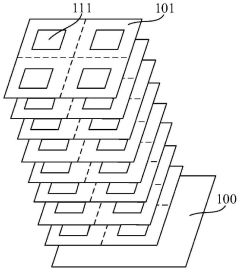
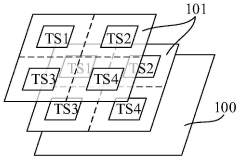
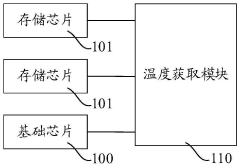
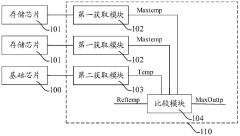
- Design a storage system, including a basic chip and multiple stacked memory chips. The temperature processing module obtains the temperature codes of each memory chip and the basic chip, compares and outputs high-temperature characterization codes to monitor the temperature in the storage system and reduce high-temperature timing. Risk of conflict. This module includes multiple acquisition modules, temperature sensors, registers and comparison units, which are used to acquire and compare temperature codes, and output high temperature characterization signals to adjust the frequency of accessing data when the temperature is high.
Semiconductor package structure and manufacturing method therefor
PatentPendingUS20240055420A1
Innovation
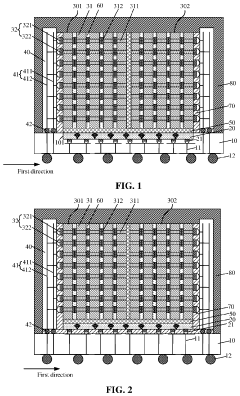
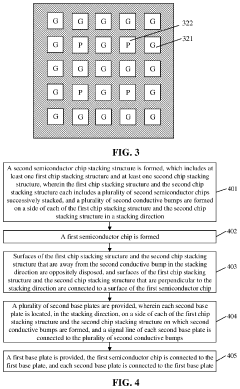
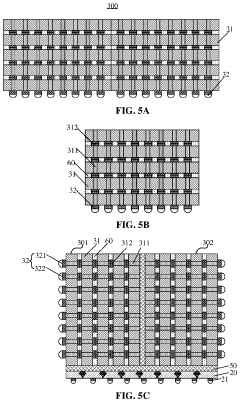
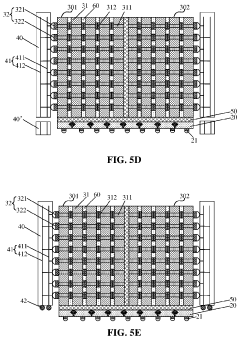
- A semiconductor package structure is designed with a first base plate connected to both a first semiconductor chip and a second semiconductor chip stacking structure, where the second chip stacking structure is powered through a two-stage base plate configuration, reducing voltage drop and enhancing communication efficiency by using conductive bumps and signal lines.
Industry Standards and Certification Requirements
The reliability qualification of HBM4 (High Bandwidth Memory 4) requires adherence to stringent industry standards and certification requirements that govern thermal cycling simulation protocols. JEDEC standards, particularly JESD22-A104 and JESD47, serve as the primary frameworks for thermal cycling reliability testing in semiconductor devices. These standards specify temperature ranges, cycle counts, and ramp rates that HBM4 must withstand to achieve certification. Typically, qualification requires devices to endure between 500-1000 thermal cycles with temperature extremes ranging from -40°C to 125°C.
IPC standards, including IPC-9701 for surface mount solder joint reliability assessment, provide complementary guidelines specifically addressing the interconnect reliability concerns in high-density packages like HBM4. These standards outline methodologies for evaluating solder joint integrity under thermal stress conditions that simulate real-world operational environments.
The Automotive Electronics Council's AEC-Q100 standard imposes even more rigorous requirements for HBM4 components destined for automotive applications. Grade 1 qualification demands thermal cycling capability from -40°C to 125°C for 1000 cycles, while Grade 0 extends the temperature range to -40°C to 150°C, reflecting the harsh operating conditions in automotive environments.
Military and aerospace applications follow MIL-STD-883 Method 1010.9, which prescribes specific thermal cycling parameters including extended dwell times at temperature extremes to thoroughly stress test the package integrity. These standards are particularly relevant for HBM4 implementations in high-reliability computing systems for defense and space applications.
SEMI standards provide guidelines specific to wafer-level reliability testing that are applicable during the early manufacturing stages of HBM4. These standards help identify potential thermal cycling vulnerabilities before final package assembly, reducing costly failures in completed modules.
Certification bodies like UL (Underwriters Laboratories) and TÜV require documented evidence of thermal cycling simulation results as part of their product safety certification process. For HBM4 memory integrated into consumer electronics, these certifications are often mandatory for market access in various regions.
The International Electrotechnical Commission (IEC) standards, particularly IEC 60749-25, provide globally recognized test methods for temperature cycling that must be incorporated into HBM4 qualification plans to ensure international market acceptance. These standards emphasize the importance of standardized testing protocols to enable meaningful comparison of reliability data across different manufacturers and technologies.
IPC standards, including IPC-9701 for surface mount solder joint reliability assessment, provide complementary guidelines specifically addressing the interconnect reliability concerns in high-density packages like HBM4. These standards outline methodologies for evaluating solder joint integrity under thermal stress conditions that simulate real-world operational environments.
The Automotive Electronics Council's AEC-Q100 standard imposes even more rigorous requirements for HBM4 components destined for automotive applications. Grade 1 qualification demands thermal cycling capability from -40°C to 125°C for 1000 cycles, while Grade 0 extends the temperature range to -40°C to 150°C, reflecting the harsh operating conditions in automotive environments.
Military and aerospace applications follow MIL-STD-883 Method 1010.9, which prescribes specific thermal cycling parameters including extended dwell times at temperature extremes to thoroughly stress test the package integrity. These standards are particularly relevant for HBM4 implementations in high-reliability computing systems for defense and space applications.
SEMI standards provide guidelines specific to wafer-level reliability testing that are applicable during the early manufacturing stages of HBM4. These standards help identify potential thermal cycling vulnerabilities before final package assembly, reducing costly failures in completed modules.
Certification bodies like UL (Underwriters Laboratories) and TÜV require documented evidence of thermal cycling simulation results as part of their product safety certification process. For HBM4 memory integrated into consumer electronics, these certifications are often mandatory for market access in various regions.
The International Electrotechnical Commission (IEC) standards, particularly IEC 60749-25, provide globally recognized test methods for temperature cycling that must be incorporated into HBM4 qualification plans to ensure international market acceptance. These standards emphasize the importance of standardized testing protocols to enable meaningful comparison of reliability data across different manufacturers and technologies.
Cost-Benefit Analysis of Advanced Simulation Methods
The implementation of advanced thermal cycling simulation methods for HBM4 reliability qualification presents significant financial implications that must be carefully evaluated. Initial investment costs for sophisticated simulation software packages range from $50,000 to $200,000, with additional expenses for specialized hardware configurations optimized for computational fluid dynamics and finite element analysis, potentially adding $30,000-$100,000 to the implementation budget.
Annual maintenance costs, including software licenses, updates, and technical support, typically account for 15-20% of the initial software investment. Organizations must also consider the substantial human resource investment required, as specialized engineers commanding salaries of $120,000-$180,000 annually are essential for effective implementation and operation of these advanced simulation tools.
Despite these considerable costs, the financial benefits of implementing advanced thermal cycling simulation for HBM4 qualification are compelling. Traditional physical testing approaches for HBM4 reliability qualification can cost between $300,000-$500,000 per development cycle, with each iteration requiring 3-6 months of testing time. Advanced simulation methods can reduce physical testing requirements by 40-60%, translating to direct cost savings of $120,000-$300,000 per development cycle.
Time-to-market advantages represent perhaps the most significant economic benefit. By enabling parallel virtual testing of multiple design iterations, advanced simulation methods can accelerate product development cycles by 30-50%. For HBM4 memory products with typical market windows of 18-24 months, this acceleration can translate to $5-15 million in additional revenue through earlier market entry.
Risk mitigation benefits further enhance the value proposition. Advanced simulation methods can identify potential thermal reliability issues earlier in the development cycle, reducing costly late-stage redesigns that typically cost $1-3 million per occurrence and delay market entry by 3-6 months.
Return on investment analysis indicates that organizations implementing advanced thermal cycling simulation for HBM4 qualification typically achieve breakeven within 12-18 months, with three-year ROI figures ranging from 200-400% depending on development volume and complexity. These compelling economics make advanced simulation methods increasingly essential for maintaining competitive advantage in the high-performance memory market.
Annual maintenance costs, including software licenses, updates, and technical support, typically account for 15-20% of the initial software investment. Organizations must also consider the substantial human resource investment required, as specialized engineers commanding salaries of $120,000-$180,000 annually are essential for effective implementation and operation of these advanced simulation tools.
Despite these considerable costs, the financial benefits of implementing advanced thermal cycling simulation for HBM4 qualification are compelling. Traditional physical testing approaches for HBM4 reliability qualification can cost between $300,000-$500,000 per development cycle, with each iteration requiring 3-6 months of testing time. Advanced simulation methods can reduce physical testing requirements by 40-60%, translating to direct cost savings of $120,000-$300,000 per development cycle.
Time-to-market advantages represent perhaps the most significant economic benefit. By enabling parallel virtual testing of multiple design iterations, advanced simulation methods can accelerate product development cycles by 30-50%. For HBM4 memory products with typical market windows of 18-24 months, this acceleration can translate to $5-15 million in additional revenue through earlier market entry.
Risk mitigation benefits further enhance the value proposition. Advanced simulation methods can identify potential thermal reliability issues earlier in the development cycle, reducing costly late-stage redesigns that typically cost $1-3 million per occurrence and delay market entry by 3-6 months.
Return on investment analysis indicates that organizations implementing advanced thermal cycling simulation for HBM4 qualification typically achieve breakeven within 12-18 months, with three-year ROI figures ranging from 200-400% depending on development volume and complexity. These compelling economics make advanced simulation methods increasingly essential for maintaining competitive advantage in the high-performance memory market.
Unlock deeper insights with PatSnap Eureka Quick Research — get a full tech report to explore trends and direct your research. Try now!
Generate Your Research Report Instantly with AI Agent
Supercharge your innovation with PatSnap Eureka AI Agent Platform!