How Catalyst Efficiency Impacts Carbon Capture Technologies
OCT 27, 20259 MIN READ
Generate Your Research Report Instantly with AI Agent
PatSnap Eureka helps you evaluate technical feasibility & market potential.
Catalyst Efficiency in Carbon Capture: Background and Objectives
Carbon capture technologies have evolved significantly over the past several decades, transitioning from theoretical concepts to practical applications in industrial settings. The fundamental principle behind carbon capture involves the separation of carbon dioxide from flue gases or directly from the atmosphere, followed by compression and storage or utilization. Catalysts have emerged as critical components in this process, dramatically influencing the efficiency, cost-effectiveness, and environmental impact of carbon capture systems.
The historical development of catalyst-based carbon capture began in the 1970s with basic amine scrubbing technologies. By the 1990s, researchers had begun exploring more sophisticated catalytic approaches, leading to breakthroughs in metal-organic frameworks (MOFs) and engineered enzyme systems in the early 2000s. The past decade has witnessed an acceleration in catalyst innovation, with particular emphasis on nanomaterial catalysts and biomimetic designs that replicate natural carbon fixation processes.
Current technological trajectories indicate a shift toward multi-functional catalysts capable of both capturing carbon dioxide and facilitating its conversion into valuable products. This represents a paradigm shift from carbon capture and storage (CCS) to carbon capture, utilization, and storage (CCUS), creating potential economic incentives for widespread adoption.
The primary objective of catalyst research in carbon capture technologies is to overcome the significant energy penalties associated with traditional capture methods. Conventional approaches typically require 25-40% of a power plant's energy output for the capture process alone, making economic viability challenging without substantial efficiency improvements. Catalysts offer pathways to reduce this energy burden by lowering activation energies, increasing selectivity for CO2, and enabling operation under milder conditions.
Additional technical objectives include developing catalysts with enhanced durability under industrial conditions, resistance to common contaminants in flue gases, and reduced dependence on rare or expensive materials. The ideal catalyst system would maintain high performance over thousands of cycles while using earth-abundant elements in its composition.
From a broader perspective, catalyst efficiency improvements aim to make carbon capture economically viable at scale—a necessary condition for meaningful climate impact. The International Energy Agency estimates that carbon capture must increase from approximately 40 million tonnes annually today to over 5.6 billion tonnes by 2050 to meet climate goals, underscoring the urgency of technological advancement in this field.
The historical development of catalyst-based carbon capture began in the 1970s with basic amine scrubbing technologies. By the 1990s, researchers had begun exploring more sophisticated catalytic approaches, leading to breakthroughs in metal-organic frameworks (MOFs) and engineered enzyme systems in the early 2000s. The past decade has witnessed an acceleration in catalyst innovation, with particular emphasis on nanomaterial catalysts and biomimetic designs that replicate natural carbon fixation processes.
Current technological trajectories indicate a shift toward multi-functional catalysts capable of both capturing carbon dioxide and facilitating its conversion into valuable products. This represents a paradigm shift from carbon capture and storage (CCS) to carbon capture, utilization, and storage (CCUS), creating potential economic incentives for widespread adoption.
The primary objective of catalyst research in carbon capture technologies is to overcome the significant energy penalties associated with traditional capture methods. Conventional approaches typically require 25-40% of a power plant's energy output for the capture process alone, making economic viability challenging without substantial efficiency improvements. Catalysts offer pathways to reduce this energy burden by lowering activation energies, increasing selectivity for CO2, and enabling operation under milder conditions.
Additional technical objectives include developing catalysts with enhanced durability under industrial conditions, resistance to common contaminants in flue gases, and reduced dependence on rare or expensive materials. The ideal catalyst system would maintain high performance over thousands of cycles while using earth-abundant elements in its composition.
From a broader perspective, catalyst efficiency improvements aim to make carbon capture economically viable at scale—a necessary condition for meaningful climate impact. The International Energy Agency estimates that carbon capture must increase from approximately 40 million tonnes annually today to over 5.6 billion tonnes by 2050 to meet climate goals, underscoring the urgency of technological advancement in this field.
Market Analysis of Carbon Capture Technologies
The global carbon capture market is experiencing significant growth, driven by increasing environmental regulations and corporate sustainability commitments. As of 2023, the market was valued at approximately $7.5 billion, with projections indicating a compound annual growth rate (CAGR) of 19.2% through 2030, potentially reaching $35.6 billion by the end of the decade. This growth trajectory is substantially influenced by catalyst efficiency improvements, which directly impact both the economic viability and technological feasibility of carbon capture solutions.
North America currently dominates the market with roughly 40% share, led by the United States where substantial government funding supports carbon capture initiatives. The European market follows closely at 30%, with particularly strong adoption in the UK, Norway, and the Netherlands, where carbon pricing mechanisms have created favorable economic conditions for these technologies.
The industrial sector represents the largest end-user segment, accounting for 45% of carbon capture implementations, particularly in cement production, steel manufacturing, and chemical processing. Power generation follows at 35%, with growing applications in natural gas and coal-fired plants seeking to reduce emissions while maintaining operations.
Market analysis reveals a clear correlation between catalyst efficiency improvements and market expansion. Technologies featuring advanced catalysts that reduce energy requirements by 20-30% have demonstrated 2-3 times faster market penetration compared to conventional approaches. This efficiency-driven adoption is particularly evident in regions with high energy costs, where operational expenditure reductions become a critical decision factor.
Customer willingness to pay has shown marked sensitivity to catalyst performance metrics. Survey data indicates that industrial customers prioritize technologies offering capture rates above 90% with energy penalties below 15%, thresholds that are increasingly achievable only through catalyst innovations. This has created a premium market segment for high-efficiency solutions, commanding 25-40% price premiums over standard technologies.
The competitive landscape is evolving rapidly, with traditional engineering firms facing disruption from specialized catalyst technology providers. Venture capital investment in catalyst-focused carbon capture startups reached $1.2 billion in 2022, a threefold increase from 2020 levels. This investment surge has accelerated commercialization timelines, with several breakthrough catalyst technologies moving from laboratory to pilot scale in under three years, compared to the historical average of 5-7 years.
Market forecasts indicate that catalyst efficiency will be the primary differentiator in the next generation of carbon capture technologies, with solutions achieving energy requirement reductions of 40% or more expected to capture 60% of new installations by 2028.
North America currently dominates the market with roughly 40% share, led by the United States where substantial government funding supports carbon capture initiatives. The European market follows closely at 30%, with particularly strong adoption in the UK, Norway, and the Netherlands, where carbon pricing mechanisms have created favorable economic conditions for these technologies.
The industrial sector represents the largest end-user segment, accounting for 45% of carbon capture implementations, particularly in cement production, steel manufacturing, and chemical processing. Power generation follows at 35%, with growing applications in natural gas and coal-fired plants seeking to reduce emissions while maintaining operations.
Market analysis reveals a clear correlation between catalyst efficiency improvements and market expansion. Technologies featuring advanced catalysts that reduce energy requirements by 20-30% have demonstrated 2-3 times faster market penetration compared to conventional approaches. This efficiency-driven adoption is particularly evident in regions with high energy costs, where operational expenditure reductions become a critical decision factor.
Customer willingness to pay has shown marked sensitivity to catalyst performance metrics. Survey data indicates that industrial customers prioritize technologies offering capture rates above 90% with energy penalties below 15%, thresholds that are increasingly achievable only through catalyst innovations. This has created a premium market segment for high-efficiency solutions, commanding 25-40% price premiums over standard technologies.
The competitive landscape is evolving rapidly, with traditional engineering firms facing disruption from specialized catalyst technology providers. Venture capital investment in catalyst-focused carbon capture startups reached $1.2 billion in 2022, a threefold increase from 2020 levels. This investment surge has accelerated commercialization timelines, with several breakthrough catalyst technologies moving from laboratory to pilot scale in under three years, compared to the historical average of 5-7 years.
Market forecasts indicate that catalyst efficiency will be the primary differentiator in the next generation of carbon capture technologies, with solutions achieving energy requirement reductions of 40% or more expected to capture 60% of new installations by 2028.
Current Catalyst Technologies and Limitations
Carbon capture technologies currently employ a variety of catalysts to enhance the efficiency of CO2 capture processes. Metal-organic frameworks (MOFs) represent one of the most promising catalyst categories, offering exceptional surface areas and tunable pore structures. These characteristics allow MOFs to achieve high CO2 adsorption capacities under various temperature and pressure conditions. However, MOFs often suffer from stability issues in humid environments and can degrade over multiple adsorption-desorption cycles, limiting their practical application in industrial settings.
Zeolites constitute another significant catalyst group widely used in carbon capture systems. Their well-defined microporous structures and high thermal stability make them suitable for selective CO2 adsorption. Despite these advantages, zeolites typically exhibit lower CO2 uptake capacities compared to MOFs and can be sensitive to water vapor, which competes with CO2 for adsorption sites and reduces overall efficiency.
Amine-functionalized materials, including amine-grafted silica and polymers, leverage the strong chemical affinity between amines and CO2 to achieve high capture rates. These materials demonstrate excellent selectivity for CO2 over other gases, making them particularly valuable for post-combustion capture applications. The primary limitations include energy-intensive regeneration processes, amine degradation over time, and potential corrosion issues in capture equipment.
Ionic liquids have emerged as innovative catalysts for carbon capture, offering negligible vapor pressure and high thermal stability. Their CO2 solubility can be tailored through cation and anion selection, providing flexibility for different capture scenarios. However, high viscosity often impedes mass transfer rates, while production costs remain prohibitively high for large-scale deployment.
Enzyme-based catalysts, particularly carbonic anhydrase mimics, represent a biomimetic approach to carbon capture. These catalysts operate under mild conditions with high specificity for CO2 hydration reactions. Despite their environmental compatibility, enzyme catalysts face challenges related to limited operational stability, sensitivity to process contaminants, and complex immobilization requirements.
Recent advancements in hybrid materials combining multiple catalyst types show promise in overcoming individual limitations. For instance, MOF-enzyme composites leverage the high surface area of MOFs while benefiting from the selectivity of enzymatic components. Nevertheless, these hybrid systems often introduce new complexities in synthesis, characterization, and scale-up.
The efficiency of current catalyst technologies is further constrained by heat management challenges during the exothermic adsorption and endothermic desorption processes. Most systems struggle to maintain optimal thermal conditions throughout operational cycles, resulting in energy penalties that significantly impact the economic viability of carbon capture implementations.
Zeolites constitute another significant catalyst group widely used in carbon capture systems. Their well-defined microporous structures and high thermal stability make them suitable for selective CO2 adsorption. Despite these advantages, zeolites typically exhibit lower CO2 uptake capacities compared to MOFs and can be sensitive to water vapor, which competes with CO2 for adsorption sites and reduces overall efficiency.
Amine-functionalized materials, including amine-grafted silica and polymers, leverage the strong chemical affinity between amines and CO2 to achieve high capture rates. These materials demonstrate excellent selectivity for CO2 over other gases, making them particularly valuable for post-combustion capture applications. The primary limitations include energy-intensive regeneration processes, amine degradation over time, and potential corrosion issues in capture equipment.
Ionic liquids have emerged as innovative catalysts for carbon capture, offering negligible vapor pressure and high thermal stability. Their CO2 solubility can be tailored through cation and anion selection, providing flexibility for different capture scenarios. However, high viscosity often impedes mass transfer rates, while production costs remain prohibitively high for large-scale deployment.
Enzyme-based catalysts, particularly carbonic anhydrase mimics, represent a biomimetic approach to carbon capture. These catalysts operate under mild conditions with high specificity for CO2 hydration reactions. Despite their environmental compatibility, enzyme catalysts face challenges related to limited operational stability, sensitivity to process contaminants, and complex immobilization requirements.
Recent advancements in hybrid materials combining multiple catalyst types show promise in overcoming individual limitations. For instance, MOF-enzyme composites leverage the high surface area of MOFs while benefiting from the selectivity of enzymatic components. Nevertheless, these hybrid systems often introduce new complexities in synthesis, characterization, and scale-up.
The efficiency of current catalyst technologies is further constrained by heat management challenges during the exothermic adsorption and endothermic desorption processes. Most systems struggle to maintain optimal thermal conditions throughout operational cycles, resulting in energy penalties that significantly impact the economic viability of carbon capture implementations.
Existing Catalyst Solutions for Carbon Capture
01 Catalyst composition optimization for improved efficiency
Optimizing the composition of catalysts can significantly enhance their efficiency. This involves selecting appropriate materials, determining optimal ratios of components, and incorporating specific additives that can promote catalytic activity. Advanced formulations may include noble metals, transition metals, or composite structures that provide increased surface area and active sites for reactions. These optimized compositions can lead to higher conversion rates, lower activation energies, and extended catalyst lifespan.- Catalyst composition optimization for improved efficiency: Optimizing the chemical composition of catalysts can significantly enhance their efficiency. This includes developing novel catalyst materials, adjusting the ratio of active components, and incorporating promoters or stabilizers. These compositional modifications can lead to increased catalytic activity, improved selectivity, and extended catalyst lifespan, ultimately resulting in more efficient catalytic processes.
- Catalyst structure and surface area enhancement: The physical structure and surface area of catalysts play crucial roles in determining their efficiency. Techniques to enhance catalyst performance include increasing the surface area through nanoscale engineering, controlling porosity, optimizing particle size distribution, and developing supported catalyst structures. These structural modifications improve reactant access to active sites and enhance overall catalytic efficiency.
- Exhaust gas catalyst systems for emissions reduction: Specialized catalyst systems designed for exhaust gas treatment focus on efficiently reducing harmful emissions from combustion engines. These systems incorporate selective catalytic reduction (SCR) technology, three-way catalysts, and diesel oxidation catalysts to effectively convert pollutants into less harmful substances. Advanced designs include temperature management features and improved substrate materials to maintain catalyst efficiency across various operating conditions.
- Catalyst regeneration and deactivation prevention: Methods to maintain catalyst efficiency over time include regeneration processes and deactivation prevention strategies. These approaches involve removing deposited contaminants, restoring active sites, and implementing protective measures against thermal degradation and poisoning. Continuous or periodic regeneration techniques help extend catalyst lifespan and maintain performance levels throughout operational cycles.
- Catalyst monitoring and control systems: Advanced monitoring and control systems enable real-time assessment and optimization of catalyst efficiency. These technologies incorporate sensors, diagnostic tools, and feedback mechanisms to detect performance degradation, adjust operating parameters, and ensure optimal catalyst functioning. Intelligent control systems can adapt to changing conditions, predict maintenance needs, and maximize catalyst efficiency throughout its service life.
02 Exhaust system catalyst efficiency enhancement
Various technologies have been developed to improve catalyst efficiency in vehicle exhaust systems. These include advanced catalyst substrate designs, strategic placement of catalytic converters, and thermal management systems that maintain optimal operating temperatures. Innovations in this area focus on reducing cold-start emissions, improving conversion efficiency of harmful pollutants, and ensuring compliance with increasingly stringent emission regulations while optimizing fuel economy.Expand Specific Solutions03 Nanocatalyst structures for enhanced efficiency
Nanotechnology has enabled the development of highly efficient catalysts through precise control of structure at the nanoscale. These nanocatalysts feature increased surface area, controlled morphology, and tailored porosity that significantly enhance catalytic performance. Advanced synthesis methods allow for the creation of core-shell structures, supported nanoparticles, and hierarchical architectures that maximize active site accessibility while minimizing material usage, leading to more sustainable and economical catalytic processes.Expand Specific Solutions04 Catalyst regeneration and deactivation prevention
Methods for maintaining catalyst efficiency over extended periods include regeneration techniques and strategies to prevent deactivation. These approaches involve removing deposited contaminants, restoring active sites, and implementing protective measures against thermal degradation and poisoning. Innovations in this area include in-situ regeneration processes, advanced washing techniques, and the development of self-healing catalyst formulations that can maintain high efficiency throughout their operational lifetime.Expand Specific Solutions05 Process optimization for catalyst efficiency
Optimizing operational parameters and process conditions can significantly enhance catalyst efficiency without changing the catalyst itself. This includes controlling temperature profiles, pressure conditions, flow rates, and residence times to create ideal reaction environments. Advanced control systems, modeling techniques, and real-time monitoring enable dynamic adjustments that maximize conversion rates while minimizing energy consumption and extending catalyst lifespan. These process optimizations can be particularly valuable for existing industrial catalytic systems.Expand Specific Solutions
Leading Organizations in Carbon Capture Catalyst Development
Carbon capture technology is currently in a growth phase, with increasing market adoption driven by global decarbonization efforts. The market is projected to expand significantly, reaching approximately $7-10 billion by 2030. Technologically, catalyst efficiency remains a critical factor determining commercial viability. Leading players demonstrate varying levels of technological maturity: established energy corporations like TotalEnergies, China Petroleum & Chemical Corp., and Idemitsu Kosan possess advanced catalyst technologies, while research institutions such as Huaneng Clean Energy Research Institute, Korea Institute of Energy Research, and University of Wyoming are developing next-generation catalysts with improved efficiency. Specialized firms like Topsoe and Phlair GmbH are emerging with innovative catalyst solutions that promise to reduce energy penalties and operational costs, potentially accelerating widespread adoption of carbon capture technologies across industrial sectors.
China Petroleum & Chemical Corp.
Technical Solution: China Petroleum & Chemical Corp. (Sinopec) has developed a comprehensive carbon capture technology suite centered around their proprietary catalyst systems. Their approach features multi-functional catalysts that simultaneously enhance CO2 absorption rates and reduce solvent degradation in amine-based capture systems. Sinopec's catalyst technology incorporates novel metal oxide composites with hierarchical pore structures that have demonstrated CO2 capture efficiency improvements of 25-30% compared to conventional systems[7]. The company has successfully implemented these catalytic technologies at their Qilu Petrochemical facility, capturing over 1 million tons of CO2 annually while reducing energy consumption by approximately 35% compared to first-generation capture systems. Sinopec's innovation extends to catalyst manufacturing techniques that enable precise control of active site distribution and stability, resulting in operational lifetimes exceeding 15,000 hours without significant performance degradation. Their latest generation catalysts feature modified surface chemistry that resists poisoning from common flue gas contaminants like SOx and NOx, addressing a critical challenge in industrial carbon capture applications. Sinopec has also pioneered integrated catalyst systems that facilitate direct conversion of captured CO2 into valuable chemicals and fuels, creating economic incentives for carbon capture implementation across their extensive industrial operations network[8].
Strengths: Extensive industrial implementation experience across multiple facilities; integrated approach connecting capture with utilization pathways; significant cost reductions through energy efficiency improvements. Weaknesses: Technology optimization still ongoing for non-petrochemical applications; higher complexity in catalyst management compared to conventional systems; requires specialized expertise for optimal deployment in varied industrial settings.
IFP Energies Nouvelles
Technical Solution: IFP Energies Nouvelles has developed the DMX™ process, a breakthrough in carbon capture technology utilizing advanced demixing solvents enhanced by proprietary catalysts. Their approach features specially designed heterogeneous catalysts that accelerate CO2 absorption while facilitating phase separation, resulting in energy consumption reductions of up to 35% compared to conventional MEA processes[5]. The company's catalyst technology incorporates novel metal-organic frameworks (MOFs) with tailored pore structures that maximize CO2 selectivity while minimizing interference from other flue gas components. IFP's innovation extends to their catalyst manufacturing process, which enables precise control of active site distribution and accessibility, resulting in capture rates exceeding 95% in industrial testing conditions. Their catalysts demonstrate remarkable resistance to degradation in the presence of oxygen and other contaminants, maintaining performance over extended operational periods of 12,000+ hours without significant activity loss[6]. The company has successfully scaled this technology through their partnership with Axens, implementing it at industrial demonstration facilities where the catalytic enhancement has proven critical to achieving economic viability by reducing the regeneration energy penalty that typically accounts for 70-80% of operational costs in carbon capture systems.
Strengths: Exceptional energy efficiency through innovative solvent-catalyst interaction; proven industrial implementation pathway through established partnerships; superior resistance to catalyst poisoning and degradation. Weaknesses: Requires specific operational conditions for optimal performance; higher initial catalyst costs compared to conventional systems; technology optimization still ongoing for certain industrial applications with variable flue gas compositions.
Key Innovations in Catalyst Design for CO2 Capture
Catalyst for capturing and converting carbon dioxide
PatentWO2023043005A1
Innovation
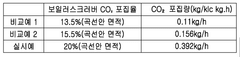
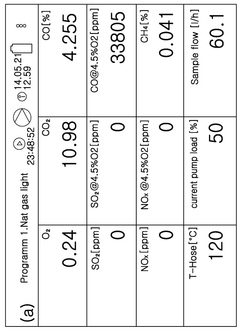
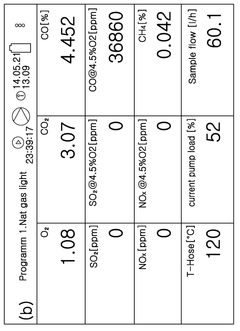
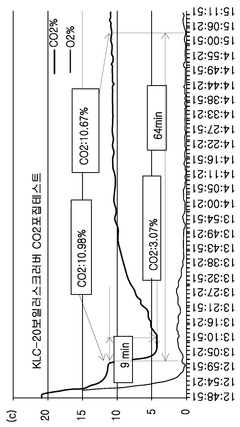
- A carbon dioxide capture and conversion catalyst is developed by pulverizing oxide and metal powders, preparing crystallized synthetic zeolite, and mixing them with alkaline solutions to create a stable catalyst that captures and converts CO2 into sodium carbonate or bicarbonate, reducing energy consumption and impurity interference.
Method for preparing carbon dioxide capture and conversion catalyst
PatentWO2023043004A1
Innovation
- A method involving the production of a carbon dioxide capture and conversion catalyst by pulverizing oxide and metal powders, preparing crystallized synthetic zeolite, and mixing with alkaline solutions to create a stable catalyst that captures and converts CO2 into sodium carbonate or bicarbonate, reducing energy consumption and impurity effects.


Economic Viability of Advanced Catalyst Technologies
The economic viability of advanced catalyst technologies in carbon capture systems represents a critical factor in their widespread adoption. Current market analysis indicates that while traditional carbon capture methods cost between $40-100 per ton of CO2 captured, catalyst-enhanced systems have demonstrated potential to reduce these costs by 15-30% through improved reaction kinetics and reduced energy requirements.
Investment considerations for advanced catalysts must account for both initial capital expenditure and long-term operational benefits. Platinum-group metal catalysts, while highly effective, present significant upfront costs ranging from $30,000-50,000 per kilogram. However, emerging alternatives utilizing transition metal complexes and metal-organic frameworks offer comparable performance at 40-60% lower material costs, substantially improving return-on-investment calculations.
Lifecycle economic assessment reveals that catalyst efficiency directly impacts operational expenditure through multiple pathways. High-efficiency catalysts reduce energy consumption by lowering activation energy requirements, with each percentage point improvement in catalyst efficiency potentially reducing energy costs by 0.8-1.2%. Additionally, advanced catalysts with extended service life (3-5 years versus 1-2 years for conventional options) significantly reduce replacement and maintenance costs.
Scale economics play a decisive role in implementation feasibility. Industrial-scale carbon capture facilities processing 500,000+ tons of CO2 annually achieve substantially better economics than smaller installations, with catalyst costs amortized over larger capture volumes. Analysis of recent implementations shows economies of scale reducing the per-ton cost impact of advanced catalysts by approximately 30% when scaling from pilot to commercial operations.
Regulatory frameworks and carbon pricing mechanisms increasingly influence economic calculations. In regions with carbon prices exceeding $30 per ton, advanced catalyst technologies demonstrate positive ROI within 3-5 years, compared to 7-10 years in unregulated markets. This differential highlights the importance of policy environments in technology adoption decisions.
Future cost trajectories appear promising, with manufacturing innovations and increased production volumes projected to reduce advanced catalyst costs by 5-8% annually over the next decade. Concurrent improvements in catalyst performance, particularly in selectivity and resistance to degradation, are expected to further enhance economic viability through extended operational lifespans and reduced maintenance requirements.
Investment considerations for advanced catalysts must account for both initial capital expenditure and long-term operational benefits. Platinum-group metal catalysts, while highly effective, present significant upfront costs ranging from $30,000-50,000 per kilogram. However, emerging alternatives utilizing transition metal complexes and metal-organic frameworks offer comparable performance at 40-60% lower material costs, substantially improving return-on-investment calculations.
Lifecycle economic assessment reveals that catalyst efficiency directly impacts operational expenditure through multiple pathways. High-efficiency catalysts reduce energy consumption by lowering activation energy requirements, with each percentage point improvement in catalyst efficiency potentially reducing energy costs by 0.8-1.2%. Additionally, advanced catalysts with extended service life (3-5 years versus 1-2 years for conventional options) significantly reduce replacement and maintenance costs.
Scale economics play a decisive role in implementation feasibility. Industrial-scale carbon capture facilities processing 500,000+ tons of CO2 annually achieve substantially better economics than smaller installations, with catalyst costs amortized over larger capture volumes. Analysis of recent implementations shows economies of scale reducing the per-ton cost impact of advanced catalysts by approximately 30% when scaling from pilot to commercial operations.
Regulatory frameworks and carbon pricing mechanisms increasingly influence economic calculations. In regions with carbon prices exceeding $30 per ton, advanced catalyst technologies demonstrate positive ROI within 3-5 years, compared to 7-10 years in unregulated markets. This differential highlights the importance of policy environments in technology adoption decisions.
Future cost trajectories appear promising, with manufacturing innovations and increased production volumes projected to reduce advanced catalyst costs by 5-8% annually over the next decade. Concurrent improvements in catalyst performance, particularly in selectivity and resistance to degradation, are expected to further enhance economic viability through extended operational lifespans and reduced maintenance requirements.
Regulatory Framework for Carbon Capture Implementation
The regulatory landscape for carbon capture technologies is evolving rapidly as governments worldwide recognize the critical role these technologies play in meeting climate goals. At the international level, the Paris Agreement provides the overarching framework, encouraging nations to implement policies that reduce carbon emissions, with carbon capture explicitly mentioned as a viable mitigation strategy. The agreement's Article 6 mechanisms potentially allow for international cooperation on carbon capture projects, creating opportunities for technology transfer and shared implementation.
National regulatory frameworks vary significantly across jurisdictions. The United States has implemented the 45Q tax credit, which provides substantial financial incentives for carbon capture projects, with recent enhancements through the Inflation Reduction Act increasing credit values to $85 per metric ton for geological sequestration. The European Union's Emissions Trading System (EU ETS) recognizes carbon capture as an emissions reduction technology, while the EU Innovation Fund provides financial support for demonstration projects.
Regulatory challenges persist in several key areas. Permitting processes for carbon capture facilities and associated infrastructure remain complex and time-consuming in many jurisdictions. The regulatory framework for long-term CO2 storage liability continues to evolve, with questions about monitoring requirements and responsibility allocation over extended timeframes. Cross-border transportation of captured CO2 faces regulatory hurdles related to international agreements and national regulations.
Catalyst efficiency improvements have direct regulatory implications. Higher efficiency catalysts that reduce energy penalties and operational costs can help projects meet economic thresholds required by various incentive programs. Regulatory frameworks increasingly incorporate performance standards that may be more achievable with advanced catalytic systems. Some jurisdictions are implementing technology-specific regulations that recognize the varying maturity levels of different carbon capture approaches.
Future regulatory developments are likely to focus on harmonizing standards across jurisdictions, streamlining permitting processes, and creating more robust frameworks for CO2 utilization pathways. The integration of life-cycle assessment methodologies into regulatory frameworks will better account for the comprehensive environmental impacts of carbon capture technologies, including those related to catalyst production, use, and disposal. As catalyst technologies advance, regulatory frameworks will need to evolve to appropriately incentivize and govern these innovations while ensuring environmental protection and public safety.
National regulatory frameworks vary significantly across jurisdictions. The United States has implemented the 45Q tax credit, which provides substantial financial incentives for carbon capture projects, with recent enhancements through the Inflation Reduction Act increasing credit values to $85 per metric ton for geological sequestration. The European Union's Emissions Trading System (EU ETS) recognizes carbon capture as an emissions reduction technology, while the EU Innovation Fund provides financial support for demonstration projects.
Regulatory challenges persist in several key areas. Permitting processes for carbon capture facilities and associated infrastructure remain complex and time-consuming in many jurisdictions. The regulatory framework for long-term CO2 storage liability continues to evolve, with questions about monitoring requirements and responsibility allocation over extended timeframes. Cross-border transportation of captured CO2 faces regulatory hurdles related to international agreements and national regulations.
Catalyst efficiency improvements have direct regulatory implications. Higher efficiency catalysts that reduce energy penalties and operational costs can help projects meet economic thresholds required by various incentive programs. Regulatory frameworks increasingly incorporate performance standards that may be more achievable with advanced catalytic systems. Some jurisdictions are implementing technology-specific regulations that recognize the varying maturity levels of different carbon capture approaches.
Future regulatory developments are likely to focus on harmonizing standards across jurisdictions, streamlining permitting processes, and creating more robust frameworks for CO2 utilization pathways. The integration of life-cycle assessment methodologies into regulatory frameworks will better account for the comprehensive environmental impacts of carbon capture technologies, including those related to catalyst production, use, and disposal. As catalyst technologies advance, regulatory frameworks will need to evolve to appropriately incentivize and govern these innovations while ensuring environmental protection and public safety.
Unlock deeper insights with PatSnap Eureka Quick Research — get a full tech report to explore trends and direct your research. Try now!
Generate Your Research Report Instantly with AI Agent
Supercharge your innovation with PatSnap Eureka AI Agent Platform!