How Environmental Factors Influence Self-Powered Sensor Outputs
OCT 21, 20259 MIN READ
Generate Your Research Report Instantly with AI Agent
Patsnap Eureka helps you evaluate technical feasibility & market potential.
Self-Powered Sensor Technology Background and Objectives
Self-powered sensor technology has evolved significantly over the past two decades, transitioning from laboratory curiosities to practical implementations across various industries. These sensors generate their own operating power by harvesting energy from their surrounding environment, eliminating the need for external power sources or battery replacements. The evolution began with simple piezoelectric and thermoelectric generators, and has now expanded to include triboelectric nanogenerators, photovoltaic cells, and hybrid energy harvesting systems that can simultaneously capture multiple forms of ambient energy.
The technological trajectory has been shaped by advancements in nanomaterials, flexible electronics, and low-power microelectronics. Early self-powered sensors were limited by low energy conversion efficiencies and restricted to specific environmental conditions. Modern iterations have overcome many of these limitations through innovative material engineering and circuit design, enabling operation across diverse environmental scenarios.
Environmental factors play a crucial role in the performance of self-powered sensors, directly affecting their energy harvesting capabilities and output reliability. Temperature fluctuations, humidity levels, light intensity, mechanical vibration patterns, and electromagnetic interference all influence sensor outputs in complex ways. Understanding these environmental dependencies is essential for designing robust self-powered sensing systems that can maintain consistent performance across varying conditions.
The primary objective of current research in this field is to develop comprehensive models that accurately predict how environmental factors affect sensor outputs, enabling the creation of more resilient and adaptable self-powered sensing systems. This includes characterizing the response curves of different energy harvesting mechanisms under various environmental conditions and developing compensation algorithms that can adjust for environmental variations.
Another key goal is to enhance the energy conversion efficiency of harvesting mechanisms while minimizing their susceptibility to environmental fluctuations. This involves exploring novel materials with superior properties, optimizing device architectures, and implementing intelligent power management strategies that can adapt to changing environmental conditions.
The ultimate aim is to create self-powered sensors that maintain consistent performance regardless of environmental variations, or even leverage these variations as additional sources of information. Such sensors would enable truly autonomous monitoring systems for applications ranging from structural health monitoring and environmental sensing to wearable health devices and industrial Internet of Things implementations, where reliability under diverse environmental conditions is paramount.
The technological trajectory has been shaped by advancements in nanomaterials, flexible electronics, and low-power microelectronics. Early self-powered sensors were limited by low energy conversion efficiencies and restricted to specific environmental conditions. Modern iterations have overcome many of these limitations through innovative material engineering and circuit design, enabling operation across diverse environmental scenarios.
Environmental factors play a crucial role in the performance of self-powered sensors, directly affecting their energy harvesting capabilities and output reliability. Temperature fluctuations, humidity levels, light intensity, mechanical vibration patterns, and electromagnetic interference all influence sensor outputs in complex ways. Understanding these environmental dependencies is essential for designing robust self-powered sensing systems that can maintain consistent performance across varying conditions.
The primary objective of current research in this field is to develop comprehensive models that accurately predict how environmental factors affect sensor outputs, enabling the creation of more resilient and adaptable self-powered sensing systems. This includes characterizing the response curves of different energy harvesting mechanisms under various environmental conditions and developing compensation algorithms that can adjust for environmental variations.
Another key goal is to enhance the energy conversion efficiency of harvesting mechanisms while minimizing their susceptibility to environmental fluctuations. This involves exploring novel materials with superior properties, optimizing device architectures, and implementing intelligent power management strategies that can adapt to changing environmental conditions.
The ultimate aim is to create self-powered sensors that maintain consistent performance regardless of environmental variations, or even leverage these variations as additional sources of information. Such sensors would enable truly autonomous monitoring systems for applications ranging from structural health monitoring and environmental sensing to wearable health devices and industrial Internet of Things implementations, where reliability under diverse environmental conditions is paramount.
Market Analysis for Environmental-Resistant Self-Powered Sensors
The self-powered sensor market is experiencing significant growth driven by increasing demand for autonomous sensing solutions across various industries. The global market for self-powered sensors was valued at approximately $45 billion in 2022 and is projected to reach $78 billion by 2028, representing a compound annual growth rate (CAGR) of 9.6%. Environmental-resistant variants are emerging as a particularly high-growth segment within this market.
Industrial automation represents the largest application segment, accounting for roughly 32% of the market share. These environments often present harsh conditions including extreme temperatures, vibrations, and exposure to chemicals, driving demand for robust sensing solutions that can operate reliably without external power sources. The oil and gas industry alone is expected to increase its investment in environmental-resistant self-powered sensors by 15% annually through 2027.
Smart infrastructure applications constitute the fastest-growing segment with a projected CAGR of 12.3%. This includes structural health monitoring of bridges, buildings, and other critical infrastructure where sensors must withstand diverse weather conditions while maintaining consistent output quality. Government initiatives for infrastructure modernization in North America, Europe, and parts of Asia are significantly boosting this segment.
Consumer electronics applications are also expanding rapidly, particularly in wearable technology and IoT devices. These applications require sensors that can function reliably in varying humidity levels and temperature conditions while maintaining energy harvesting efficiency. This segment is expected to grow at 11.8% CAGR over the next five years.
Geographically, North America currently leads the market with approximately 35% share, followed by Europe (28%) and Asia-Pacific (25%). However, the Asia-Pacific region is expected to witness the highest growth rate at 13.2% annually, driven by rapid industrialization in China, India, and Southeast Asian countries.
Key customer requirements identified through market surveys include extended operational lifetime (cited by 87% of potential customers), consistent performance across temperature ranges of -40°C to +85°C (76%), resistance to humidity variations (72%), and vibration tolerance (68%). Price sensitivity varies significantly by application, with industrial customers willing to pay premium prices for proven reliability, while consumer applications remain highly cost-conscious.
Market penetration barriers include the higher initial cost compared to conventional powered sensors, technical challenges in maintaining consistent output under variable environmental conditions, and lack of standardization across different environmental resistance parameters. Despite these challenges, the market shows strong growth potential as technological advancements continue to address these limitations.
Industrial automation represents the largest application segment, accounting for roughly 32% of the market share. These environments often present harsh conditions including extreme temperatures, vibrations, and exposure to chemicals, driving demand for robust sensing solutions that can operate reliably without external power sources. The oil and gas industry alone is expected to increase its investment in environmental-resistant self-powered sensors by 15% annually through 2027.
Smart infrastructure applications constitute the fastest-growing segment with a projected CAGR of 12.3%. This includes structural health monitoring of bridges, buildings, and other critical infrastructure where sensors must withstand diverse weather conditions while maintaining consistent output quality. Government initiatives for infrastructure modernization in North America, Europe, and parts of Asia are significantly boosting this segment.
Consumer electronics applications are also expanding rapidly, particularly in wearable technology and IoT devices. These applications require sensors that can function reliably in varying humidity levels and temperature conditions while maintaining energy harvesting efficiency. This segment is expected to grow at 11.8% CAGR over the next five years.
Geographically, North America currently leads the market with approximately 35% share, followed by Europe (28%) and Asia-Pacific (25%). However, the Asia-Pacific region is expected to witness the highest growth rate at 13.2% annually, driven by rapid industrialization in China, India, and Southeast Asian countries.
Key customer requirements identified through market surveys include extended operational lifetime (cited by 87% of potential customers), consistent performance across temperature ranges of -40°C to +85°C (76%), resistance to humidity variations (72%), and vibration tolerance (68%). Price sensitivity varies significantly by application, with industrial customers willing to pay premium prices for proven reliability, while consumer applications remain highly cost-conscious.
Market penetration barriers include the higher initial cost compared to conventional powered sensors, technical challenges in maintaining consistent output under variable environmental conditions, and lack of standardization across different environmental resistance parameters. Despite these challenges, the market shows strong growth potential as technological advancements continue to address these limitations.
Current Challenges in Environmental Adaptation of Self-Powered Sensors
Self-powered sensors face significant challenges when adapting to diverse environmental conditions, which directly impact their energy harvesting capabilities and output reliability. Temperature fluctuations represent one of the most critical challenges, as they affect the efficiency of energy harvesting mechanisms across different technologies. For instance, thermoelectric generators experience reduced efficiency at extreme temperatures, while piezoelectric materials may become brittle in cold environments or lose their mechanical properties in high heat.
Humidity and moisture present another substantial obstacle, particularly for triboelectric nanogenerators (TENGs) and other friction-based energy harvesting systems. High humidity environments can dramatically reduce the surface charge density and consequently diminish power output by up to 70% compared to optimal conditions. Additionally, prolonged exposure to moisture can lead to material degradation and permanent performance deterioration.
Light intensity variations pose significant challenges for photovoltaic-based self-powered sensors. Indoor environments typically provide only 0.1-1% of the light intensity available outdoors, resulting in drastically reduced energy harvesting capabilities. This limitation necessitates specialized low-light photovoltaic materials or alternative energy sources for indoor applications.
Mechanical vibration inconsistency affects vibration-based energy harvesters, which are typically optimized for specific frequency ranges. Environmental vibrations often occur at unpredictable frequencies and amplitudes, causing these harvesters to operate outside their resonant frequency and experience efficiency drops of up to 90%.
Atmospheric pressure changes impact the performance of pressure-sensitive energy harvesters, particularly in aerospace or underwater applications. These variations can alter the mechanical properties of harvesting materials and affect their response characteristics.
Electromagnetic interference from industrial environments or electronic devices can disrupt the operation of electromagnetic energy harvesters and interfere with sensor signal processing, leading to inaccurate readings or complete system failure.
Chemical exposure represents another significant challenge, as corrosive substances or pollutants can degrade harvesting materials and sensing elements. This is particularly problematic in industrial monitoring applications where sensors may be exposed to harsh chemicals.
The combined effect of multiple environmental factors creates complex interdependencies that are difficult to model and compensate for in real-world deployments. Current sensor designs often address individual environmental factors in isolation rather than adopting a holistic approach to environmental adaptation, limiting their practical utility in variable conditions.
Humidity and moisture present another substantial obstacle, particularly for triboelectric nanogenerators (TENGs) and other friction-based energy harvesting systems. High humidity environments can dramatically reduce the surface charge density and consequently diminish power output by up to 70% compared to optimal conditions. Additionally, prolonged exposure to moisture can lead to material degradation and permanent performance deterioration.
Light intensity variations pose significant challenges for photovoltaic-based self-powered sensors. Indoor environments typically provide only 0.1-1% of the light intensity available outdoors, resulting in drastically reduced energy harvesting capabilities. This limitation necessitates specialized low-light photovoltaic materials or alternative energy sources for indoor applications.
Mechanical vibration inconsistency affects vibration-based energy harvesters, which are typically optimized for specific frequency ranges. Environmental vibrations often occur at unpredictable frequencies and amplitudes, causing these harvesters to operate outside their resonant frequency and experience efficiency drops of up to 90%.
Atmospheric pressure changes impact the performance of pressure-sensitive energy harvesters, particularly in aerospace or underwater applications. These variations can alter the mechanical properties of harvesting materials and affect their response characteristics.
Electromagnetic interference from industrial environments or electronic devices can disrupt the operation of electromagnetic energy harvesters and interfere with sensor signal processing, leading to inaccurate readings or complete system failure.
Chemical exposure represents another significant challenge, as corrosive substances or pollutants can degrade harvesting materials and sensing elements. This is particularly problematic in industrial monitoring applications where sensors may be exposed to harsh chemicals.
The combined effect of multiple environmental factors creates complex interdependencies that are difficult to model and compensate for in real-world deployments. Current sensor designs often address individual environmental factors in isolation rather than adopting a holistic approach to environmental adaptation, limiting their practical utility in variable conditions.
Current Environmental Compensation Techniques for Sensor Outputs
01 Energy harvesting mechanisms for self-powered sensors
Various energy harvesting mechanisms can be employed to power sensors autonomously. These include piezoelectric elements that convert mechanical vibrations into electrical energy, photovoltaic cells that harvest solar energy, and thermoelectric generators that utilize temperature differentials. These self-powering technologies eliminate the need for external power sources or battery replacements, making sensors more sustainable and suitable for remote or inaccessible locations.- Energy harvesting mechanisms for self-powered sensors: Self-powered sensors can utilize various energy harvesting mechanisms to generate power for operation. These mechanisms convert ambient energy sources such as vibration, motion, light, or thermal gradients into electrical energy. The harvested energy eliminates the need for external power sources or battery replacements, making these sensors suitable for remote or inaccessible locations. Energy harvesting technologies enable long-term autonomous operation of sensors in various applications.
- Signal processing and output formatting in self-powered sensors: Self-powered sensors incorporate signal processing circuits that condition, amplify, and format the raw sensor outputs into usable data formats. These circuits optimize the sensor output for transmission or display while minimizing power consumption. Advanced signal processing techniques can include filtering, analog-to-digital conversion, and data compression to enhance the quality and reliability of sensor readings. The output formatting ensures compatibility with various communication protocols and interfaces used in monitoring systems.
- Wireless communication capabilities for sensor data transmission: Self-powered sensors often integrate wireless communication modules to transmit sensor data to receiving stations or networks. These wireless capabilities enable remote monitoring without physical connections, making them suitable for distributed sensing applications. Low-power communication protocols are implemented to maximize energy efficiency while maintaining reliable data transmission. The wireless functionality allows for real-time data collection and analysis from multiple sensor nodes across various locations.
- Power management systems for optimizing sensor operation: Efficient power management systems are crucial for self-powered sensors to optimize energy usage and extend operational lifetime. These systems include power conditioning circuits, energy storage elements, and intelligent control algorithms that regulate power consumption based on sensing requirements. Advanced power management techniques may include duty cycling, adaptive sampling rates, and sleep modes to conserve energy during periods of inactivity. The integration of these systems ensures reliable sensor operation even with limited energy harvesting capabilities.
- Application-specific sensor output configurations: Self-powered sensors can be designed with output configurations tailored to specific applications or environments. These configurations may include specialized interfaces, output formats, or triggering mechanisms that optimize the sensor's functionality for particular use cases. Application-specific outputs can enhance the sensor's utility in fields such as environmental monitoring, structural health assessment, medical devices, or industrial automation. The customized output configurations improve the integration of self-powered sensors into existing systems and workflows.
02 Signal processing and output formatting in self-powered sensors
Self-powered sensors incorporate specialized signal processing circuits to condition, amplify, and format the raw sensor outputs. These circuits optimize the signal-to-noise ratio and prepare data for transmission or display. Advanced signal processing techniques enable accurate measurements even with the limited power available from energy harvesting sources, and can include analog-to-digital conversion, filtering, and data compression to maximize information transfer while minimizing energy consumption.Expand Specific Solutions03 Wireless communication for self-powered sensor outputs
Self-powered sensors often utilize low-power wireless communication protocols to transmit their output data to receiving stations or networks. These communication systems are designed to operate efficiently with minimal energy consumption, employing techniques such as duty cycling, data aggregation, and short-range transmission. Wireless technologies like Bluetooth Low Energy, ZigBee, or proprietary RF protocols enable these sensors to function in distributed networks without physical connections.Expand Specific Solutions04 Power management systems for optimizing sensor operation
Sophisticated power management systems are crucial for self-powered sensors to balance energy harvesting, storage, and consumption. These systems include ultra-low-power microcontrollers that control sensor duty cycles, adaptive sampling rates based on available energy, and sleep modes to conserve power. Energy storage elements like supercapacitors or thin-film batteries buffer harvested energy, ensuring reliable operation even when energy harvesting conditions are suboptimal.Expand Specific Solutions05 Application-specific sensor output configurations
Self-powered sensors are designed with output configurations tailored to specific applications, such as environmental monitoring, structural health assessment, or industrial process control. These configurations may include local displays for immediate readings, threshold-based alerts, or data logging capabilities. The output format and frequency are optimized based on the application requirements and available energy, with some designs prioritizing long-term reliability over high-frequency data collection.Expand Specific Solutions
Key Industry Players in Self-Powered Sensor Development
The environmental factors influencing self-powered sensor outputs market is currently in a growth phase, with increasing adoption across IoT applications. The market is expanding rapidly, projected to reach significant scale as energy harvesting technologies mature. Academic institutions like Chongqing University and University of Electronic Science & Technology of China are conducting foundational research, while commercial players demonstrate varying levels of technological maturity. EnOcean GmbH leads with established energy harvesting solutions, while SolarEdge and Gentle Energy Corp. focus on specialized applications. Large corporations including Siemens Energy, Robert Bosch, and State Grid Corp. of China are integrating these technologies into broader energy management systems. The competitive landscape shows a mix of specialized startups and established players adapting to this emerging field, with innovation focused on improving sensor reliability under variable environmental conditions.
EnOcean GmbH
Technical Solution: EnOcean has pioneered energy harvesting wireless technology for self-powered sensors that operate without batteries. Their technology converts ambient energy (kinetic, light, temperature differentials) into electrical energy to power wireless sensors. Their patented approach includes specialized microcontrollers that operate on ultra-low power and proprietary radio protocols optimized for energy-harvested transmissions. EnOcean's sensors incorporate sophisticated environmental compensation algorithms that adjust sensor outputs based on temperature, humidity, and pressure variations. Their Dolphin platform features self-calibration mechanisms that continuously adapt to changing environmental conditions, ensuring consistent measurement accuracy across diverse settings. EnOcean's sensors can detect and filter out environmental noise and interference, maintaining signal integrity even in challenging industrial environments[1][2]. Their technology includes adaptive sampling rates that respond to environmental changes, increasing sampling frequency during rapid environmental fluctuations and reducing it during stable periods to optimize energy usage.
Strengths: Industry-leading energy harvesting efficiency with conversion rates up to 90% for certain energy sources; proven reliability with over 1 million installations worldwide; ultra-low power consumption (as low as 50μW in operation). Weaknesses: Higher initial cost compared to battery-powered alternatives; performance limitations in environments with minimal energy harvesting opportunities; requires careful installation planning to maximize energy capture.
Robert Bosch GmbH
Technical Solution: Bosch has developed advanced self-powered sensor systems that incorporate sophisticated environmental compensation technologies. Their MEMS (Micro-Electro-Mechanical Systems) sensors feature integrated temperature, humidity, and pressure compensation circuits that dynamically adjust sensor outputs in real-time. Bosch's self-powered sensors utilize a multi-source energy harvesting approach, combining photovoltaic, thermoelectric, and vibrational energy capture to ensure reliable operation across diverse environmental conditions. Their proprietary BME680 environmental sensor platform incorporates machine learning algorithms that continuously adapt to changing environmental factors, improving measurement accuracy over time through pattern recognition of environmental influences[3]. Bosch's sensors employ advanced signal processing techniques including digital filtering and adaptive gain control to minimize environmental noise impacts. Their Cross Domain Computing Solutions division has developed specialized firmware that enables sensors to recognize and compensate for specific environmental interference patterns, particularly in automotive and industrial applications where environmental variability is significant[4].
Strengths: Exceptional measurement stability across wide temperature ranges (-40°C to +85°C); industry-leading sensor miniaturization while maintaining environmental resilience; comprehensive environmental compensation algorithms backed by extensive field testing data. Weaknesses: Higher power requirements for full environmental compensation features may limit deployment in extremely energy-constrained applications; complex calibration procedures required during manufacturing; premium pricing compared to simpler sensor solutions.
Critical Patents in Environmental-Adaptive Self-Powered Sensing
Self-powered environmental sensor with wake-up circuitry
PatentInactiveUS8309942B2
Innovation
- The development of zero-power sensors using radioisotope-powered humidity and temperature sensors with self-powered capacitors and mechanical amplifiers, employing Nickel-63 as a safe radioisotope source, which modulates conductance in MOSFETs for energy-efficient operation and high sensitivity detection.
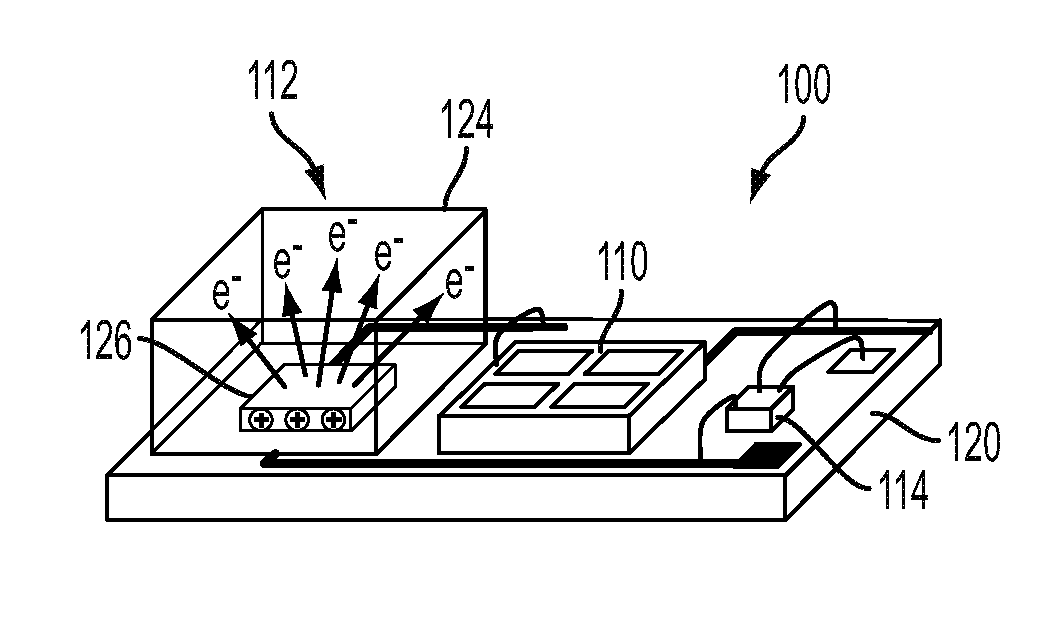
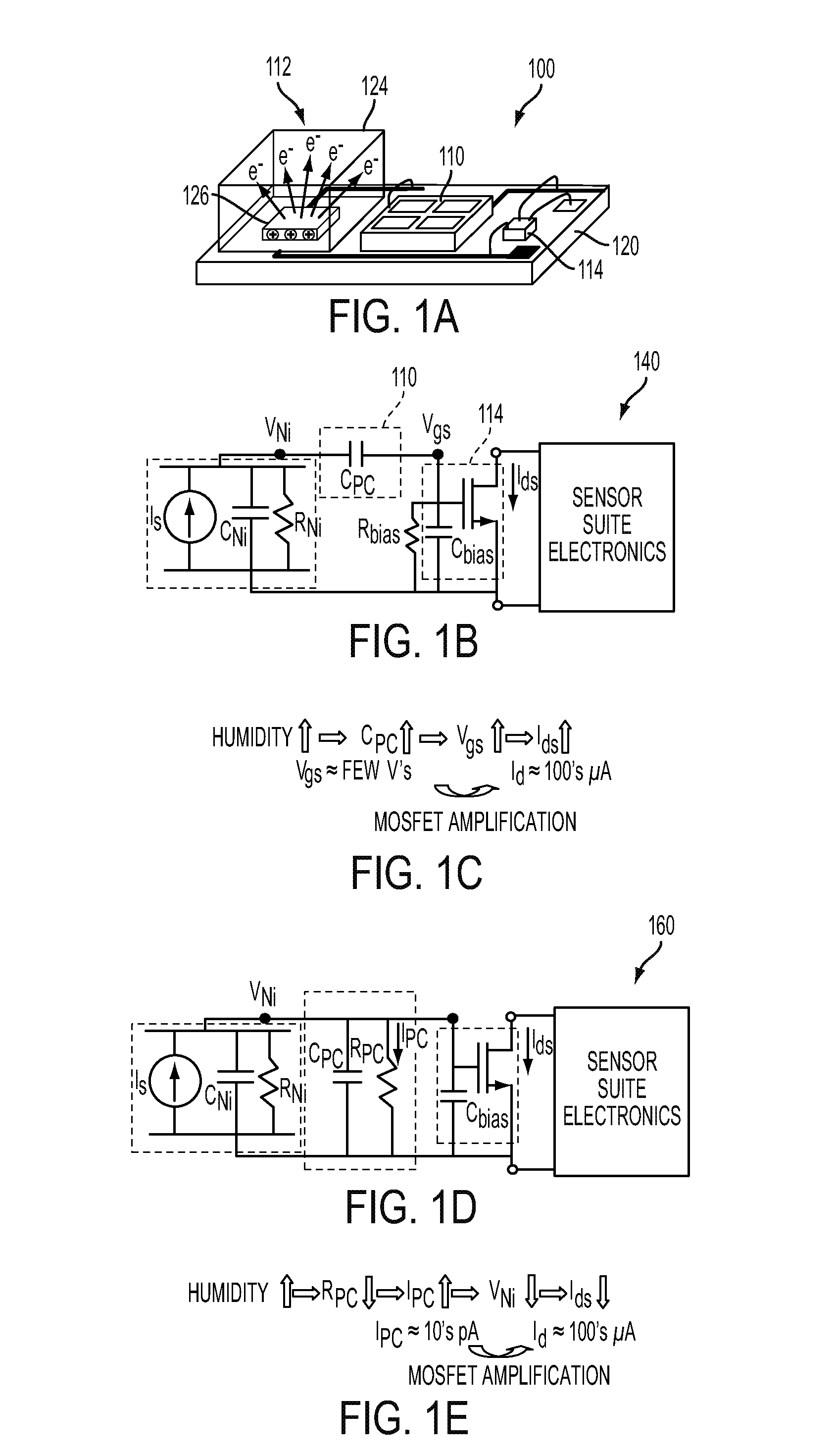
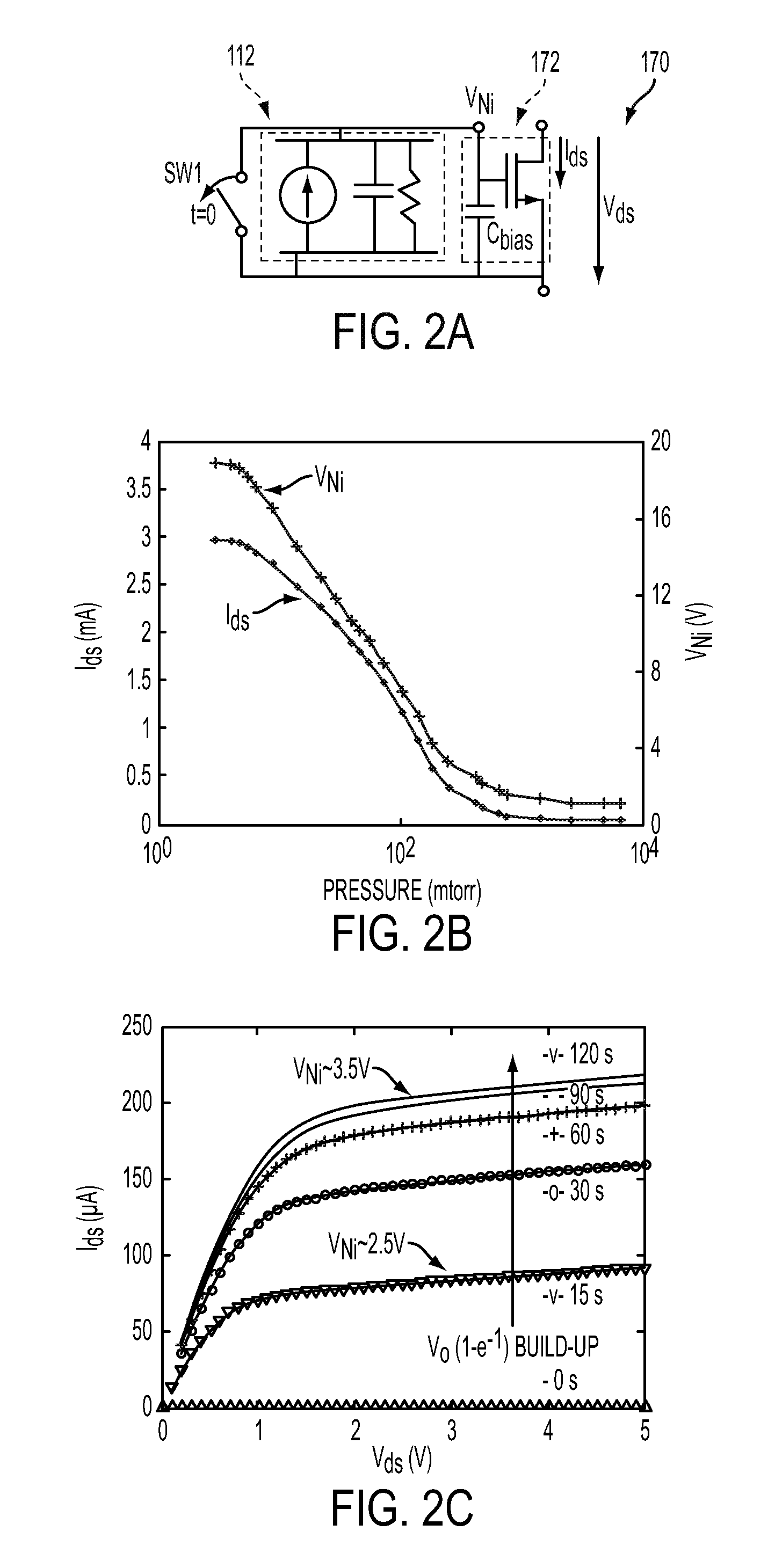
Sensing devices, sensors, and methods for monitoring environmental conditions
PatentActiveUS20190172657A1
Innovation
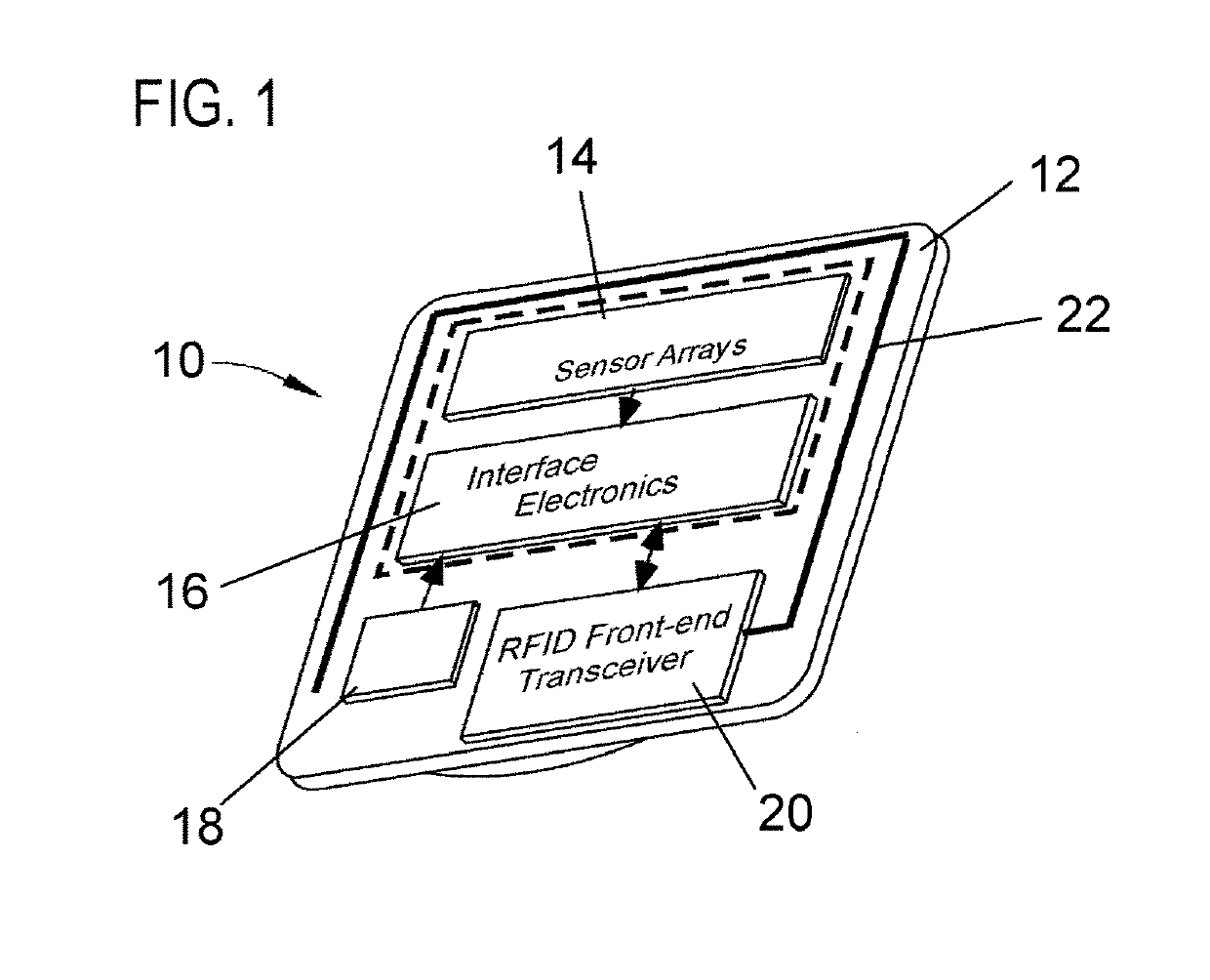
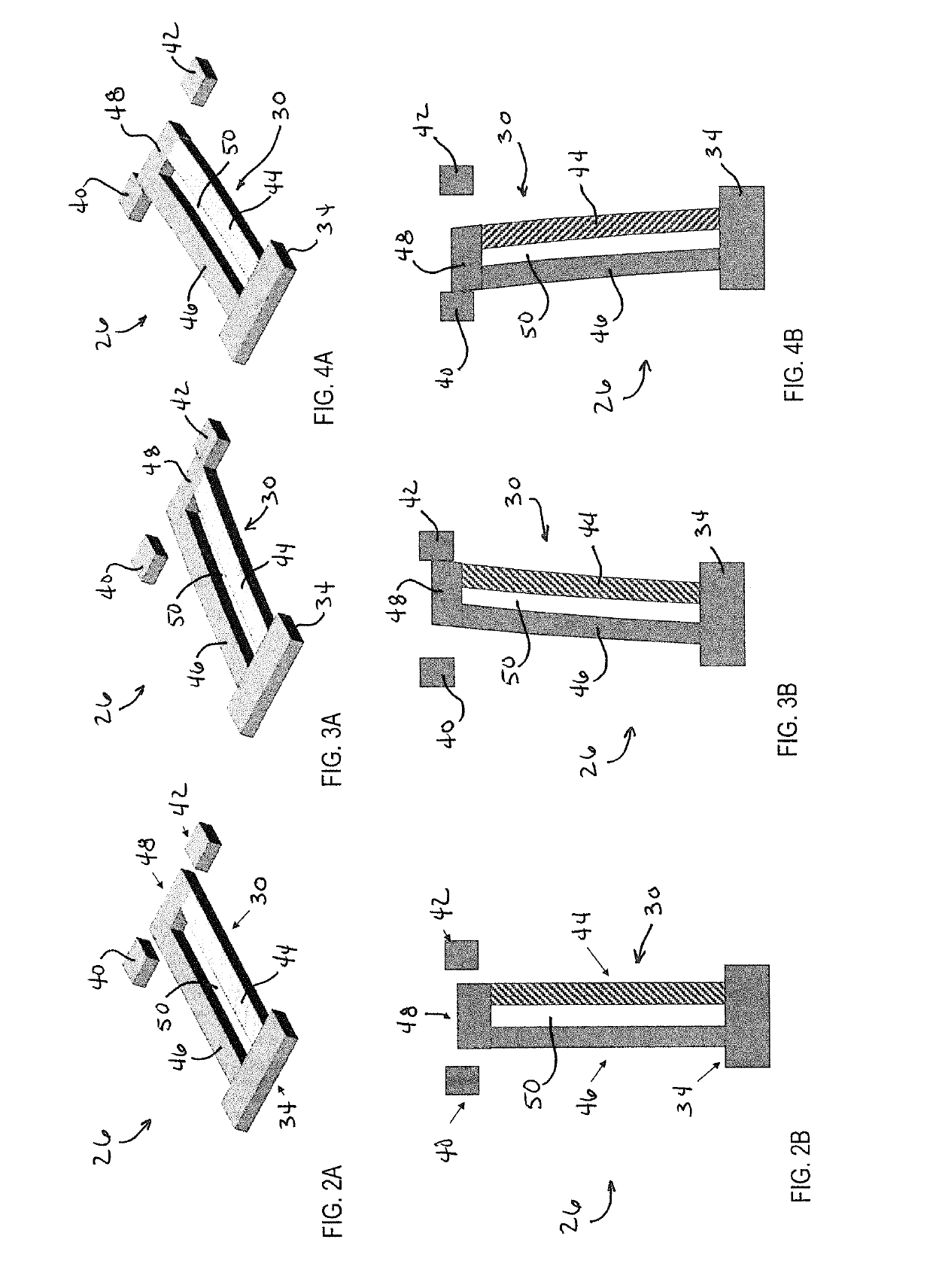
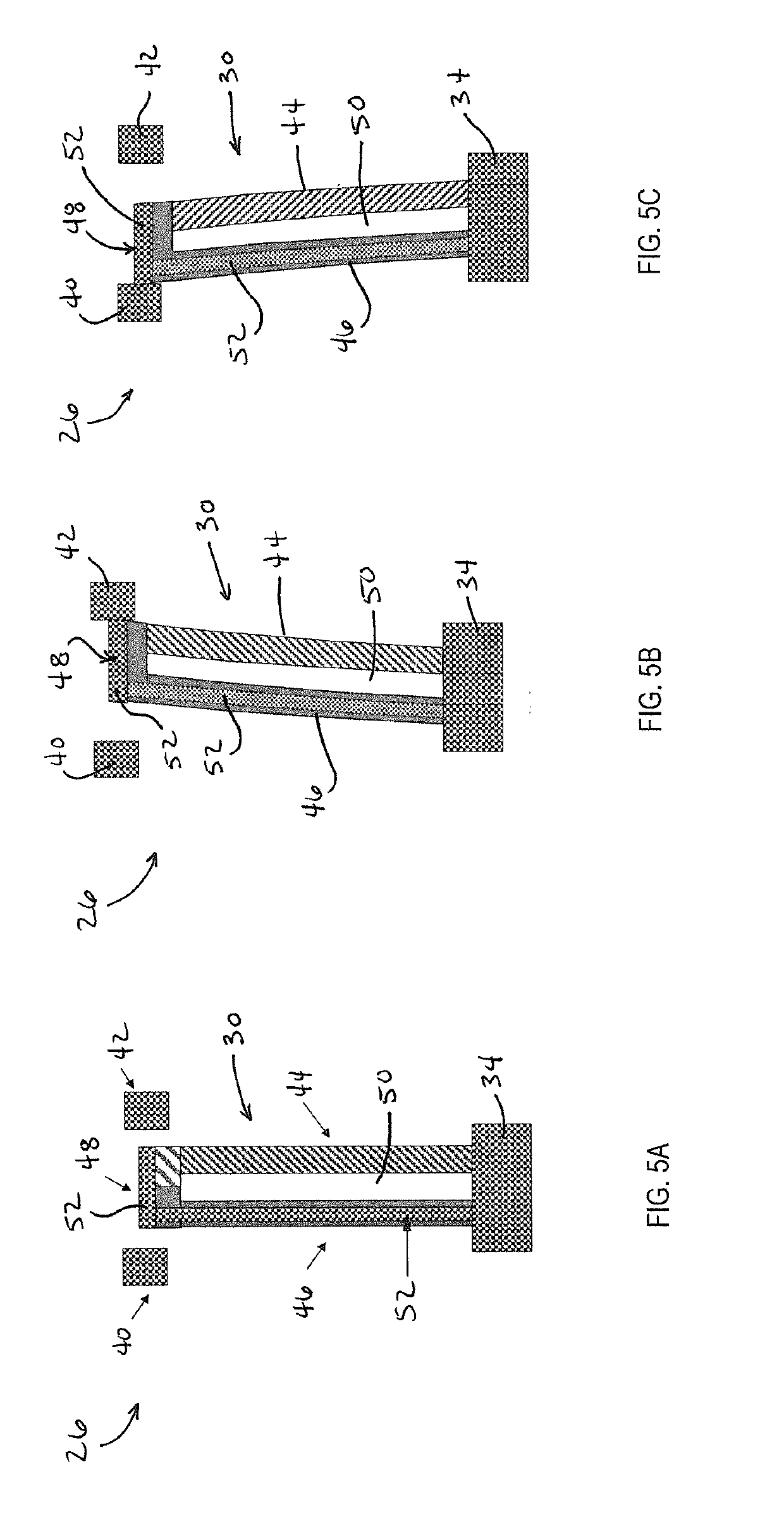
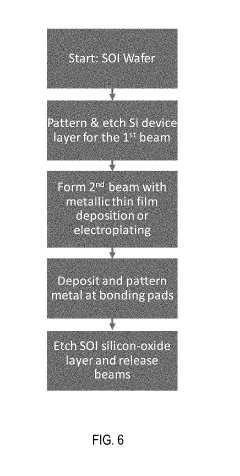
- The use of electromechanical cantilevered structures with dissimilar materials that deflect to open or close contacts in response to environmental parameters, allowing for self-powered sensing without a dedicated power source, utilizing the parameter itself to generate a digital output.
Energy Harvesting Mechanisms Under Variable Environmental Conditions
Energy harvesting technologies demonstrate varying performance characteristics under different environmental conditions, creating both challenges and opportunities for self-powered sensor systems. Temperature fluctuations significantly impact the efficiency of thermoelectric generators, with performance typically peaking at optimal temperature differentials. When ambient temperatures deviate from these ideal ranges, conversion efficiency can decrease by 15-30%, necessitating adaptive circuit designs to maintain stable power output.
Mechanical energy harvesting mechanisms, including piezoelectric and triboelectric generators, exhibit strong dependence on environmental humidity levels. Research indicates that high humidity (>80% RH) can reduce piezoelectric output by up to 40% due to charge leakage and material property alterations. Conversely, extremely dry conditions may increase triboelectric performance but simultaneously introduce challenges related to material degradation and static discharge risks.
Light-based harvesting systems demonstrate predictable diurnal and seasonal variations, with photovoltaic efficiency typically decreasing 0.5% per degree Celsius above standard testing conditions. Cloud cover patterns introduce additional complexity, creating intermittent energy availability that requires sophisticated energy storage and management solutions to ensure continuous sensor operation.
Atmospheric pressure variations affect the performance of certain mechanical harvesters, particularly those utilizing barometric pressure differentials or wind-driven mechanisms. Studies show that low-pressure weather systems can enhance the output of certain pressure-differential harvesters by 10-25%, while simultaneously reducing the effectiveness of wind-based systems due to altered air density properties.
Environmental contaminants present another critical factor, with particulate matter accumulation reducing light transmission to photovoltaic surfaces by up to 30% in industrial settings. Similarly, salt spray in coastal environments accelerates corrosion in mechanical harvesting components, reducing operational lifespan by 40-60% without appropriate protective measures.
Multi-modal energy harvesting approaches have emerged as a promising strategy to mitigate environmental variability. By combining complementary harvesting mechanisms—such as solar with piezoelectric or thermoelectric with electromagnetic—systems can maintain more consistent power output across diverse environmental conditions. Recent research demonstrates that hybrid systems can reduce power variability by 45-70% compared to single-mode harvesters in fluctuating environments.
Advanced materials science is enabling the development of environmentally adaptive harvesting materials, including temperature-compensated piezoelectric composites and humidity-resistant triboelectric surfaces. These materials can maintain performance within 85-90% of optimal levels across much wider environmental ranges than conventional alternatives.
Mechanical energy harvesting mechanisms, including piezoelectric and triboelectric generators, exhibit strong dependence on environmental humidity levels. Research indicates that high humidity (>80% RH) can reduce piezoelectric output by up to 40% due to charge leakage and material property alterations. Conversely, extremely dry conditions may increase triboelectric performance but simultaneously introduce challenges related to material degradation and static discharge risks.
Light-based harvesting systems demonstrate predictable diurnal and seasonal variations, with photovoltaic efficiency typically decreasing 0.5% per degree Celsius above standard testing conditions. Cloud cover patterns introduce additional complexity, creating intermittent energy availability that requires sophisticated energy storage and management solutions to ensure continuous sensor operation.
Atmospheric pressure variations affect the performance of certain mechanical harvesters, particularly those utilizing barometric pressure differentials or wind-driven mechanisms. Studies show that low-pressure weather systems can enhance the output of certain pressure-differential harvesters by 10-25%, while simultaneously reducing the effectiveness of wind-based systems due to altered air density properties.
Environmental contaminants present another critical factor, with particulate matter accumulation reducing light transmission to photovoltaic surfaces by up to 30% in industrial settings. Similarly, salt spray in coastal environments accelerates corrosion in mechanical harvesting components, reducing operational lifespan by 40-60% without appropriate protective measures.
Multi-modal energy harvesting approaches have emerged as a promising strategy to mitigate environmental variability. By combining complementary harvesting mechanisms—such as solar with piezoelectric or thermoelectric with electromagnetic—systems can maintain more consistent power output across diverse environmental conditions. Recent research demonstrates that hybrid systems can reduce power variability by 45-70% compared to single-mode harvesters in fluctuating environments.
Advanced materials science is enabling the development of environmentally adaptive harvesting materials, including temperature-compensated piezoelectric composites and humidity-resistant triboelectric surfaces. These materials can maintain performance within 85-90% of optimal levels across much wider environmental ranges than conventional alternatives.
Standardization and Testing Protocols for Environmental Performance
The standardization of testing protocols for environmental performance is critical for ensuring reliable and comparable data from self-powered sensors across different environmental conditions. Currently, the field lacks unified testing frameworks, resulting in inconsistent performance evaluations that hinder technological advancement and market adoption. Establishing standardized protocols would enable meaningful comparisons between different sensor technologies and accelerate innovation.
A comprehensive standardization approach must address multiple environmental parameters simultaneously. Temperature testing protocols should specify controlled temperature ranges (typically -40°C to 85°C for industrial applications), stabilization periods, and temperature ramping rates. Humidity testing requires standardized exposure cycles at various relative humidity levels (20% to 95%), with particular attention to condensation thresholds that may affect energy harvesting efficiency.
Pressure and vibration testing protocols need to define frequency ranges, amplitudes, and duration of exposure that accurately simulate real-world deployment scenarios. For light-dependent self-powered sensors, standardized illumination conditions must specify spectral distribution, intensity levels, and temporal variations to ensure consistent performance evaluation across different lighting environments.
Correlation methodologies between laboratory testing and field performance represent another critical aspect of standardization. Accelerated aging tests must be developed to predict long-term environmental resilience, with established conversion factors between accelerated testing and real-world performance degradation. This approach enables manufacturers to provide reliable lifetime estimates under various environmental conditions.
International collaboration between industry consortia, academic institutions, and standardization bodies is essential for developing globally accepted testing protocols. Organizations such as IEEE, IEC, and ISO have initiated working groups focused on energy harvesting technologies, but specific standards for environmental testing of self-powered sensors remain in early development stages. The establishment of round-robin testing programs across multiple laboratories would validate protocol reproducibility and build confidence in standardized measurements.
Certification frameworks based on these standardized protocols would provide market clarity and accelerate adoption of self-powered sensing technologies. Such frameworks should include tiered performance classifications that clearly communicate environmental operating ranges and reliability metrics to end-users, facilitating appropriate technology selection for specific applications and environments.
A comprehensive standardization approach must address multiple environmental parameters simultaneously. Temperature testing protocols should specify controlled temperature ranges (typically -40°C to 85°C for industrial applications), stabilization periods, and temperature ramping rates. Humidity testing requires standardized exposure cycles at various relative humidity levels (20% to 95%), with particular attention to condensation thresholds that may affect energy harvesting efficiency.
Pressure and vibration testing protocols need to define frequency ranges, amplitudes, and duration of exposure that accurately simulate real-world deployment scenarios. For light-dependent self-powered sensors, standardized illumination conditions must specify spectral distribution, intensity levels, and temporal variations to ensure consistent performance evaluation across different lighting environments.
Correlation methodologies between laboratory testing and field performance represent another critical aspect of standardization. Accelerated aging tests must be developed to predict long-term environmental resilience, with established conversion factors between accelerated testing and real-world performance degradation. This approach enables manufacturers to provide reliable lifetime estimates under various environmental conditions.
International collaboration between industry consortia, academic institutions, and standardization bodies is essential for developing globally accepted testing protocols. Organizations such as IEEE, IEC, and ISO have initiated working groups focused on energy harvesting technologies, but specific standards for environmental testing of self-powered sensors remain in early development stages. The establishment of round-robin testing programs across multiple laboratories would validate protocol reproducibility and build confidence in standardized measurements.
Certification frameworks based on these standardized protocols would provide market clarity and accelerate adoption of self-powered sensing technologies. Such frameworks should include tiered performance classifications that clearly communicate environmental operating ranges and reliability metrics to end-users, facilitating appropriate technology selection for specific applications and environments.
Unlock deeper insights with Patsnap Eureka Quick Research — get a full tech report to explore trends and direct your research. Try now!
Generate Your Research Report Instantly with AI Agent
Supercharge your innovation with Patsnap Eureka AI Agent Platform!