

How HDR10 vs Dolby Vision Affects Visual Data Processing
OCT 24, 20259 MIN READ
Generate Your Research Report Instantly with AI Agent
PatSnap Eureka helps you evaluate technical feasibility & market potential.
HDR Technology Evolution and Objectives
High Dynamic Range (HDR) technology represents a significant advancement in visual data processing, evolving from the limitations of Standard Dynamic Range (SDR) displays. The journey began in the early 2000s with research into expanded luminance ranges, but commercial implementation only gained momentum around 2012 when the first HDR-capable displays entered the market. This technological evolution aimed to more accurately reproduce the human visual experience by capturing a wider range of brightness levels and color information.
The development of HDR standards has followed distinct evolutionary paths. HDR10, introduced in 2015, established the first widely adopted open standard, utilizing 10-bit color depth and static metadata. This was followed by HDR10+, which incorporated dynamic metadata to enhance scene-by-scene optimization. Concurrently, Dolby Vision emerged as a proprietary solution offering 12-bit color depth and dynamic metadata processing, setting new benchmarks for visual fidelity.
The primary objective of HDR technology is to bridge the gap between human visual perception and digital reproduction capabilities. The human eye can perceive approximately 20 stops of dynamic range, while traditional SDR displays could only reproduce about 6-8 stops. HDR technologies aim to expand this range significantly, with current implementations achieving 13-15 stops, resulting in more realistic image reproduction with greater detail in both highlights and shadows.
Technical objectives for HDR implementation include increasing peak brightness levels from the SDR standard of 100 nits to 1,000-10,000 nits, expanding color gamut coverage to encompass over 90% of the visible spectrum (compared to roughly 35% in traditional displays), and enhancing bit depth to minimize banding artifacts in gradients. These improvements collectively contribute to a more immersive viewing experience that more closely aligns with natural human vision.
The divergence between HDR10 and Dolby Vision represents different approaches to achieving these objectives. HDR10 prioritizes industry-wide adoption through an open standard with reasonable implementation costs, while Dolby Vision focuses on maximizing visual quality through more sophisticated processing algorithms and hardware requirements. This technological bifurcation has shaped the industry's development trajectory, influencing both content creation workflows and display manufacturing priorities.
Looking forward, HDR technology continues to evolve toward increased brightness capabilities, improved color accuracy, and more efficient metadata processing. The ultimate goal remains consistent: to create visual experiences that more faithfully represent the full range of light and color that exists in the natural world, fundamentally transforming how visual data is captured, processed, and displayed.
The development of HDR standards has followed distinct evolutionary paths. HDR10, introduced in 2015, established the first widely adopted open standard, utilizing 10-bit color depth and static metadata. This was followed by HDR10+, which incorporated dynamic metadata to enhance scene-by-scene optimization. Concurrently, Dolby Vision emerged as a proprietary solution offering 12-bit color depth and dynamic metadata processing, setting new benchmarks for visual fidelity.
The primary objective of HDR technology is to bridge the gap between human visual perception and digital reproduction capabilities. The human eye can perceive approximately 20 stops of dynamic range, while traditional SDR displays could only reproduce about 6-8 stops. HDR technologies aim to expand this range significantly, with current implementations achieving 13-15 stops, resulting in more realistic image reproduction with greater detail in both highlights and shadows.
Technical objectives for HDR implementation include increasing peak brightness levels from the SDR standard of 100 nits to 1,000-10,000 nits, expanding color gamut coverage to encompass over 90% of the visible spectrum (compared to roughly 35% in traditional displays), and enhancing bit depth to minimize banding artifacts in gradients. These improvements collectively contribute to a more immersive viewing experience that more closely aligns with natural human vision.
The divergence between HDR10 and Dolby Vision represents different approaches to achieving these objectives. HDR10 prioritizes industry-wide adoption through an open standard with reasonable implementation costs, while Dolby Vision focuses on maximizing visual quality through more sophisticated processing algorithms and hardware requirements. This technological bifurcation has shaped the industry's development trajectory, influencing both content creation workflows and display manufacturing priorities.
Looking forward, HDR technology continues to evolve toward increased brightness capabilities, improved color accuracy, and more efficient metadata processing. The ultimate goal remains consistent: to create visual experiences that more faithfully represent the full range of light and color that exists in the natural world, fundamentally transforming how visual data is captured, processed, and displayed.
Market Demand for Advanced Display Technologies
The global market for advanced display technologies has witnessed substantial growth in recent years, driven by increasing consumer demand for premium visual experiences across various platforms. HDR (High Dynamic Range) technologies, particularly HDR10 and Dolby Vision, have emerged as key differentiators in this landscape, reshaping consumer expectations and industry standards for visual content delivery.
Consumer electronics retailers report that HDR-capable televisions now dominate the premium and mid-range segments, with market penetration exceeding 70% in developed markets. This trend extends beyond traditional home entertainment systems to include monitors, mobile devices, and automotive displays, indicating a broad-based demand for enhanced visual experiences.
Content streaming platforms have responded to this market shift by rapidly expanding their HDR libraries. Major services like Netflix, Amazon Prime, and Disney+ have made significant investments in both HDR10 and Dolby Vision content, recognizing these technologies as critical competitive advantages in the streaming wars. The gaming industry has similarly embraced advanced HDR implementations, with next-generation consoles and PC graphics cards featuring dedicated hardware for HDR processing.
Market research indicates that consumers are increasingly willing to pay premium prices for devices supporting advanced HDR formats. The price differential between standard and HDR-capable displays has narrowed significantly, accelerating adoption rates across various price segments. This democratization of HDR technology has expanded the addressable market while maintaining healthy margins for manufacturers offering superior implementations.
Regional analysis reveals varying adoption patterns, with North America and East Asia leading in HDR technology penetration. European markets show strong growth trajectories, while emerging economies demonstrate increasing demand as prices continue to decline. The commercial sector represents another growth vector, with digital signage, professional content creation, and medical imaging applications increasingly requiring the precision and dynamic range offered by advanced HDR technologies.
Industry forecasts project the global market for HDR-capable displays to maintain double-digit growth rates through 2027, with particularly strong performance in the premium segment where Dolby Vision certification commands significant value. The automotive sector is expected to be a major growth driver as vehicle manufacturers integrate increasingly sophisticated display technologies into their infotainment and driver assistance systems.
The enterprise and professional markets present additional opportunities, with content creation studios, medical imaging facilities, and design firms requiring the color accuracy and dynamic range that advanced HDR technologies provide. This diversification of demand across consumer, commercial, and professional segments indicates a robust and sustainable market trajectory for both HDR10 and Dolby Vision technologies.
Consumer electronics retailers report that HDR-capable televisions now dominate the premium and mid-range segments, with market penetration exceeding 70% in developed markets. This trend extends beyond traditional home entertainment systems to include monitors, mobile devices, and automotive displays, indicating a broad-based demand for enhanced visual experiences.
Content streaming platforms have responded to this market shift by rapidly expanding their HDR libraries. Major services like Netflix, Amazon Prime, and Disney+ have made significant investments in both HDR10 and Dolby Vision content, recognizing these technologies as critical competitive advantages in the streaming wars. The gaming industry has similarly embraced advanced HDR implementations, with next-generation consoles and PC graphics cards featuring dedicated hardware for HDR processing.
Market research indicates that consumers are increasingly willing to pay premium prices for devices supporting advanced HDR formats. The price differential between standard and HDR-capable displays has narrowed significantly, accelerating adoption rates across various price segments. This democratization of HDR technology has expanded the addressable market while maintaining healthy margins for manufacturers offering superior implementations.
Regional analysis reveals varying adoption patterns, with North America and East Asia leading in HDR technology penetration. European markets show strong growth trajectories, while emerging economies demonstrate increasing demand as prices continue to decline. The commercial sector represents another growth vector, with digital signage, professional content creation, and medical imaging applications increasingly requiring the precision and dynamic range offered by advanced HDR technologies.
Industry forecasts project the global market for HDR-capable displays to maintain double-digit growth rates through 2027, with particularly strong performance in the premium segment where Dolby Vision certification commands significant value. The automotive sector is expected to be a major growth driver as vehicle manufacturers integrate increasingly sophisticated display technologies into their infotainment and driver assistance systems.
The enterprise and professional markets present additional opportunities, with content creation studios, medical imaging facilities, and design firms requiring the color accuracy and dynamic range that advanced HDR technologies provide. This diversification of demand across consumer, commercial, and professional segments indicates a robust and sustainable market trajectory for both HDR10 and Dolby Vision technologies.
HDR10 vs Dolby Vision: Technical Challenges
HDR10 and Dolby Vision represent two competing standards in the High Dynamic Range (HDR) ecosystem, each presenting unique technical challenges for visual data processing pipelines. The fundamental difference lies in their metadata handling: HDR10 utilizes static metadata that remains constant throughout content playback, while Dolby Vision implements dynamic metadata that can adjust parameters on a scene-by-scene or even frame-by-frame basis.
The static nature of HDR10 creates significant technical hurdles in scenes with varying brightness levels. When content contains both extremely bright and dark elements, HDR10's fixed tone mapping cannot optimize for both simultaneously, resulting in either crushed shadows or blown-out highlights. This limitation becomes particularly problematic in content with rapidly changing lighting conditions.
Dolby Vision's dynamic approach, while theoretically superior, introduces substantial computational overhead. The processing requirements for real-time adjustment of tone mapping parameters demand more powerful hardware and sophisticated algorithms. This creates implementation challenges for consumer devices with limited processing capabilities, particularly in mobile and lower-end display technologies.
Color volume mapping presents another critical challenge. HDR10 supports a 10-bit color depth (approximately 1.07 billion colors), while Dolby Vision offers 12-bit color depth (68.7 billion colors). This disparity creates compatibility issues when content must be displayed across different systems, requiring complex color transformation algorithms to preserve creative intent while adapting to device limitations.
Both standards face backward compatibility challenges with legacy SDR (Standard Dynamic Range) content. The conversion process from SDR to HDR requires intelligent algorithms for tone expansion and color gamut mapping. Dolby Vision's proprietary algorithms generally produce superior results but require licensing and specialized hardware implementation.
Content mastering workflows differ significantly between the two standards. HDR10 content can be mastered once at a fixed peak brightness (typically 1000 nits), while Dolby Vision requires mastering at multiple brightness levels to create the dynamic metadata profile. This increases production complexity and costs for content creators adopting Dolby Vision.
Bandwidth and storage requirements also diverge between the standards. Dolby Vision's additional metadata and potentially higher bit depth increase file sizes and streaming bandwidth requirements by approximately 15-20% compared to HDR10. This creates challenges for streaming platforms and content delivery networks balancing quality against bandwidth constraints.
The fragmented ecosystem of HDR standards creates interoperability challenges across the visual data processing chain. Content creators must often produce multiple versions of the same content to ensure compatibility across different playback devices and platforms, increasing production complexity and costs.
The static nature of HDR10 creates significant technical hurdles in scenes with varying brightness levels. When content contains both extremely bright and dark elements, HDR10's fixed tone mapping cannot optimize for both simultaneously, resulting in either crushed shadows or blown-out highlights. This limitation becomes particularly problematic in content with rapidly changing lighting conditions.
Dolby Vision's dynamic approach, while theoretically superior, introduces substantial computational overhead. The processing requirements for real-time adjustment of tone mapping parameters demand more powerful hardware and sophisticated algorithms. This creates implementation challenges for consumer devices with limited processing capabilities, particularly in mobile and lower-end display technologies.
Color volume mapping presents another critical challenge. HDR10 supports a 10-bit color depth (approximately 1.07 billion colors), while Dolby Vision offers 12-bit color depth (68.7 billion colors). This disparity creates compatibility issues when content must be displayed across different systems, requiring complex color transformation algorithms to preserve creative intent while adapting to device limitations.
Both standards face backward compatibility challenges with legacy SDR (Standard Dynamic Range) content. The conversion process from SDR to HDR requires intelligent algorithms for tone expansion and color gamut mapping. Dolby Vision's proprietary algorithms generally produce superior results but require licensing and specialized hardware implementation.
Content mastering workflows differ significantly between the two standards. HDR10 content can be mastered once at a fixed peak brightness (typically 1000 nits), while Dolby Vision requires mastering at multiple brightness levels to create the dynamic metadata profile. This increases production complexity and costs for content creators adopting Dolby Vision.
Bandwidth and storage requirements also diverge between the standards. Dolby Vision's additional metadata and potentially higher bit depth increase file sizes and streaming bandwidth requirements by approximately 15-20% compared to HDR10. This creates challenges for streaming platforms and content delivery networks balancing quality against bandwidth constraints.
The fragmented ecosystem of HDR standards creates interoperability challenges across the visual data processing chain. Content creators must often produce multiple versions of the same content to ensure compatibility across different playback devices and platforms, increasing production complexity and costs.
Current HDR Implementation Solutions
01 HDR10 and Dolby Vision encoding and processing techniques
Various techniques for encoding and processing High Dynamic Range (HDR) content, specifically for HDR10 and Dolby Vision formats. These methods involve specialized algorithms for tone mapping, color grading, and dynamic range optimization to accurately represent the expanded color gamut and luminance levels that HDR content offers compared to standard dynamic range content.- HDR10 and Dolby Vision image processing techniques: Various image processing techniques are employed in HDR10 and Dolby Vision technologies to enhance visual quality. These techniques include dynamic range adjustment, color mapping, and tone mapping to optimize content for different display capabilities. The processing algorithms analyze and adjust brightness, contrast, and color information to deliver improved visual experiences across various viewing environments.
- Display device implementations for HDR formats: Display devices implementing HDR10 and Dolby Vision require specific hardware and software configurations to properly render high dynamic range content. These implementations include specialized processors, display panels with enhanced brightness capabilities, and color management systems that can accurately reproduce the wider color gamut associated with HDR content. The display technology must be capable of handling the metadata that accompanies HDR10 and Dolby Vision content.
- Metadata processing for dynamic content optimization: HDR10 and Dolby Vision formats utilize metadata to dynamically optimize content presentation. This metadata contains scene-by-scene or frame-by-frame information about brightness levels, color mapping, and other parameters that guide the display in rendering the content correctly. Processing this metadata efficiently is crucial for maintaining the creative intent while adapting to the specific capabilities of the display device.
- Color space conversion and management: Color space conversion and management are essential components of HDR10 and Dolby Vision processing. These technologies involve transforming color information between different color spaces, such as BT.2020 to BT.709, while preserving the visual quality and artistic intent. Advanced algorithms are employed to ensure accurate color reproduction across different displays and viewing conditions, maintaining consistency in the visual experience.
- Content creation and mastering workflows: Content creation and mastering workflows for HDR10 and Dolby Vision involve specialized tools and processes to capture, edit, and finalize high dynamic range content. These workflows include calibration procedures, grading tools, and quality control mechanisms to ensure that the final content meets the technical specifications of the respective HDR formats. The mastering process establishes the reference point for how the content should appear across different display technologies.
02 Display device optimization for HDR content
Technologies focused on optimizing display devices to properly render HDR10 and Dolby Vision content. This includes hardware and firmware solutions for backlight control, local dimming, color calibration, and brightness adjustment to ensure accurate reproduction of HDR visual data across different viewing environments and display technologies.Expand Specific Solutions03 Content adaptation between HDR formats
Methods for converting and adapting content between different HDR formats, particularly between HDR10 and Dolby Vision. These techniques enable interoperability between different HDR standards and devices, ensuring optimal visual quality regardless of the source format or display capabilities through dynamic metadata processing and format-specific optimization.Expand Specific Solutions04 Signal transmission and compression for HDR content
Specialized signal transmission and compression technologies designed for HDR10 and Dolby Vision content. These solutions address the challenges of efficiently transmitting the increased data requirements of HDR content while maintaining visual quality, including bandwidth optimization, compression algorithms, and transmission protocols specific to high dynamic range visual data.Expand Specific Solutions05 Quality assessment and enhancement for HDR visual data
Methods for evaluating and enhancing the quality of HDR10 and Dolby Vision content. These include objective and subjective quality metrics specifically designed for HDR content, as well as enhancement algorithms that can improve visual quality through noise reduction, artifact removal, and detail preservation while maintaining the expanded dynamic range and color volume.Expand Specific Solutions
Key Industry Players in HDR Ecosystem
The HDR10 vs Dolby Vision competition represents a maturing market in visual data processing technology, currently in its growth phase with an estimated global HDR market size exceeding $13 billion. Dolby Laboratories leads with its proprietary Dolby Vision format offering dynamic metadata and superior color depth, while Samsung champions the open-source HDR10+ standard. Major players including Sony, Apple, and LG have strategically aligned with either technology, creating a fragmented ecosystem. Content providers like NBCUniversal influence adoption rates through their platform choices. Chinese manufacturers such as TCL, Skyworth, and OPPO are rapidly integrating these technologies into mid-range devices, democratizing access while companies like V-Nova develop complementary compression technologies to optimize HDR content delivery across bandwidth constraints.
Dolby Laboratories Licensing Corp.
Technical Solution: Dolby Vision represents Dolby's premium HDR technology that processes visual data using dynamic metadata on a scene-by-scene or even frame-by-frame basis. This approach allows for precise control of brightness, contrast, and color throughout content playback. Dolby Vision supports up to 12-bit color depth (enabling 68.7 billion colors) and peak brightness levels of up to 10,000 nits, though current displays typically max out around 4,000 nits. The technology employs a dual-layer processing system where base layer data compatible with HDR10 ensures backward compatibility, while enhancement layer data provides the additional information needed for Dolby Vision's enhanced experience. This proprietary system requires dedicated hardware processing chips in both content creation equipment and consumer displays, with Dolby maintaining strict certification standards for devices bearing the Dolby Vision logo.
Strengths: Superior dynamic range with frame-by-frame optimization; future-proofed with 12-bit color depth support; consistent viewing experience across devices through certification program. Weaknesses: Higher licensing costs for manufacturers; requires specialized hardware; closed ecosystem requiring Dolby certification.
Samsung Electronics Co., Ltd.
Technical Solution: Samsung has developed HDR10+ as its answer to Dolby Vision, building upon the open HDR10 standard by adding dynamic metadata capabilities. Samsung's approach processes visual data by analyzing brightness, color, and contrast parameters for each scene and adjusting display parameters accordingly. Unlike the static metadata of standard HDR10, HDR10+ provides frame-by-frame optimization similar to Dolby Vision but uses an open, royalty-free standard. Samsung's implementation supports 10-bit color depth (over 1 billion colors) and brightness levels up to 4,000 nits. The company has integrated advanced tone mapping algorithms that help preserve detail in both bright highlights and dark shadows, particularly important for their QLED display technology. Samsung has also developed specialized processing chips for their premium televisions that can analyze incoming HDR content in real-time and optimize it for the specific capabilities of each display model, helping to address the variable performance issues common with HDR content across different display technologies.
Strengths: Royalty-free open standard reducing costs for manufacturers; dynamic metadata providing scene-by-scene optimization; wide industry adoption including Amazon, Panasonic, and 20th Century Fox. Weaknesses: Limited to 10-bit color depth compared to Dolby Vision's 12-bit; less consistent implementation across different manufacturers; slightly less advanced technical capabilities than Dolby Vision.
Core Technical Innovations in Dynamic Metadata
Image quality adjustment method based on dolby Vision HDR
PatentActiveCN107222702B
Innovation
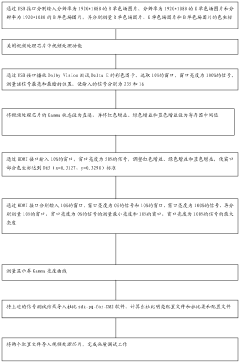
- Adopt an image quality debugging method based on Dolby Vision HDR, input specific signals and graphics cards through USB and HDMI interfaces, measure color coordinates and brightness, adjust gain and Gamma status, import the Dolby sdk_pq_for_DM2 software calculation configuration file, and import the video processing chip Debugging is complete.
Conversion method and device for high dynamic range format
PatentWO2022265282A1
Innovation
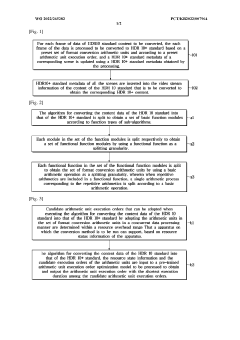
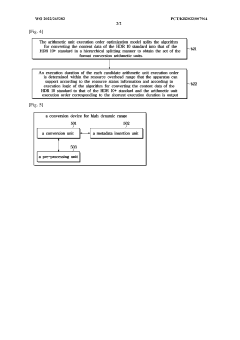
- A conversion method and device that split the HDR10 to HDR10+ algorithm into hierarchical arithmetic units and determine an execution order to minimize processing duration, allowing for concurrent processing and reduced power consumption.
Content Creation Pipeline Considerations
The content creation pipeline for HDR content requires significant adaptation when working with different HDR standards, particularly HDR10 and Dolby Vision. Content creators must consider the fundamental differences in metadata handling between these formats from the earliest stages of production.
HDR10 implements static metadata, meaning that brightness parameters are set once for the entire content. This approach simplifies the production workflow but limits creative flexibility when scenes with varying luminance requirements appear in the same content. Production teams must make compromises to ensure that both bright highlights and dark shadows remain visible throughout the entire content piece.
Dolby Vision, conversely, employs dynamic metadata that can adjust brightness parameters on a scene-by-scene or even frame-by-frame basis. This capability allows for more precise creative control but necessitates a more complex production pipeline. Content creators must invest in compatible equipment and software that can generate, process, and validate Dolby Vision metadata throughout the workflow.
Color grading represents a critical juncture in the HDR content creation pipeline. When working with HDR10, colorists typically grade for a peak brightness of 1,000 nits, adhering to the static metadata limitations. This requires careful balancing of the entire content to ensure optimal viewing across different display capabilities.
For Dolby Vision workflows, colorists can create a master at up to 4,000 nits and then generate multiple trim passes for different display capabilities. This process, while more time-intensive, ensures that the creative intent is preserved across a wider range of viewing environments and display technologies.
Asset management becomes increasingly complex when supporting both formats. Production teams must maintain separate masters or implement sophisticated versioning systems to track HDR10 and Dolby Vision variants. This complexity extends to quality control processes, where different testing protocols must be applied to verify compliance with each standard's specifications.
Distribution considerations also impact upstream production decisions. Content creators must determine whether to produce for both formats simultaneously or prioritize one format with conversion to the other occurring later in the pipeline. Each approach presents different technical and resource allocation challenges that must be addressed early in the production planning phase.
HDR10 implements static metadata, meaning that brightness parameters are set once for the entire content. This approach simplifies the production workflow but limits creative flexibility when scenes with varying luminance requirements appear in the same content. Production teams must make compromises to ensure that both bright highlights and dark shadows remain visible throughout the entire content piece.
Dolby Vision, conversely, employs dynamic metadata that can adjust brightness parameters on a scene-by-scene or even frame-by-frame basis. This capability allows for more precise creative control but necessitates a more complex production pipeline. Content creators must invest in compatible equipment and software that can generate, process, and validate Dolby Vision metadata throughout the workflow.
Color grading represents a critical juncture in the HDR content creation pipeline. When working with HDR10, colorists typically grade for a peak brightness of 1,000 nits, adhering to the static metadata limitations. This requires careful balancing of the entire content to ensure optimal viewing across different display capabilities.
For Dolby Vision workflows, colorists can create a master at up to 4,000 nits and then generate multiple trim passes for different display capabilities. This process, while more time-intensive, ensures that the creative intent is preserved across a wider range of viewing environments and display technologies.
Asset management becomes increasingly complex when supporting both formats. Production teams must maintain separate masters or implement sophisticated versioning systems to track HDR10 and Dolby Vision variants. This complexity extends to quality control processes, where different testing protocols must be applied to verify compliance with each standard's specifications.
Distribution considerations also impact upstream production decisions. Content creators must determine whether to produce for both formats simultaneously or prioritize one format with conversion to the other occurring later in the pipeline. Each approach presents different technical and resource allocation challenges that must be addressed early in the production planning phase.
Display Hardware Requirements and Limitations
The implementation of HDR technologies places significant demands on display hardware, with HDR10 and Dolby Vision having distinct requirements that manufacturers must address. For HDR10 compatibility, displays must support a minimum of 10-bit color depth, providing access to over one billion colors compared to the 16.7 million colors available in standard 8-bit displays. This increased color depth is essential for rendering the expanded color gamut and luminance range that HDR content delivers.
Brightness capabilities represent a critical hardware limitation in HDR implementation. While HDR10 content is typically mastered for 1,000 nits peak brightness, many consumer displays struggle to reach this threshold. Entry-level HDR displays often achieve only 400-600 nits, resulting in compromised HDR presentation. Dolby Vision's more demanding specifications target up to 10,000 nits, though current consumer technology typically maxes out around 2,000-4,000 nits in premium displays.
Local dimming technology constitutes another hardware consideration that significantly impacts HDR performance. High-end displays employ full-array local dimming with numerous independently controlled zones, allowing precise control of brightness in specific screen areas. This capability is particularly important for Dolby Vision content, which benefits from dynamic metadata to optimize scene-by-scene rendering. Less expensive displays often utilize edge-lit dimming or limited dimming zones, resulting in compromised contrast and "blooming" artifacts around bright objects.
Panel technology selection fundamentally determines HDR rendering capabilities. OLED displays excel in producing perfect blacks and infinite contrast ratios due to their self-emissive pixels, making them ideal for Dolby Vision's precision. However, they typically offer lower peak brightness than their LCD counterparts. Mini-LED and quantum dot displays represent technological compromises, offering enhanced brightness while maintaining reasonable black levels through advanced local dimming implementations.
Processing power requirements also differ between HDR10 and Dolby Vision. The dynamic metadata processing in Dolby Vision demands more sophisticated image processors and greater computational resources. This requirement increases manufacturing costs and power consumption, particularly in smaller devices like smartphones and tablets where thermal management presents additional challenges.
Connectivity infrastructure presents another limitation, as full HDR implementation requires HDMI 2.0 or higher for HDR10 and HDMI 2.1 for optimal Dolby Vision performance. Legacy devices with older connection standards cannot fully support these advanced HDR formats, creating fragmentation in the consumer ecosystem and complicating backward compatibility.
Brightness capabilities represent a critical hardware limitation in HDR implementation. While HDR10 content is typically mastered for 1,000 nits peak brightness, many consumer displays struggle to reach this threshold. Entry-level HDR displays often achieve only 400-600 nits, resulting in compromised HDR presentation. Dolby Vision's more demanding specifications target up to 10,000 nits, though current consumer technology typically maxes out around 2,000-4,000 nits in premium displays.
Local dimming technology constitutes another hardware consideration that significantly impacts HDR performance. High-end displays employ full-array local dimming with numerous independently controlled zones, allowing precise control of brightness in specific screen areas. This capability is particularly important for Dolby Vision content, which benefits from dynamic metadata to optimize scene-by-scene rendering. Less expensive displays often utilize edge-lit dimming or limited dimming zones, resulting in compromised contrast and "blooming" artifacts around bright objects.
Panel technology selection fundamentally determines HDR rendering capabilities. OLED displays excel in producing perfect blacks and infinite contrast ratios due to their self-emissive pixels, making them ideal for Dolby Vision's precision. However, they typically offer lower peak brightness than their LCD counterparts. Mini-LED and quantum dot displays represent technological compromises, offering enhanced brightness while maintaining reasonable black levels through advanced local dimming implementations.
Processing power requirements also differ between HDR10 and Dolby Vision. The dynamic metadata processing in Dolby Vision demands more sophisticated image processors and greater computational resources. This requirement increases manufacturing costs and power consumption, particularly in smaller devices like smartphones and tablets where thermal management presents additional challenges.
Connectivity infrastructure presents another limitation, as full HDR implementation requires HDMI 2.0 or higher for HDR10 and HDMI 2.1 for optimal Dolby Vision performance. Legacy devices with older connection standards cannot fully support these advanced HDR formats, creating fragmentation in the consumer ecosystem and complicating backward compatibility.
Unlock deeper insights with PatSnap Eureka Quick Research — get a full tech report to explore trends and direct your research. Try now!
Generate Your Research Report Instantly with AI Agent
Supercharge your innovation with PatSnap Eureka AI Agent Platform!