How Hydroxyethylcellulose Impacts Cementitious Composites
JUL 31, 20259 MIN READ
Generate Your Research Report Instantly with AI Agent
PatSnap Eureka helps you evaluate technical feasibility & market potential.
HEC in Cementitious Composites: Background and Objectives
Hydroxyethylcellulose (HEC) has emerged as a significant additive in the field of cementitious composites, revolutionizing the construction industry with its unique properties and versatile applications. The evolution of HEC in construction materials traces back to the mid-20th century when researchers began exploring cellulose derivatives for enhancing cement-based products. Over the decades, HEC has gained prominence due to its ability to modify the rheological properties of fresh cement mixtures and improve the performance of hardened cementitious composites.
The primary objective of incorporating HEC into cementitious composites is to enhance workability, water retention, and stability of fresh mixtures while simultaneously improving the mechanical properties and durability of the hardened material. As the construction industry faces increasing demands for high-performance, sustainable, and cost-effective building materials, HEC has become a focal point of research and development efforts worldwide.
Recent technological advancements have led to the development of various grades and modifications of HEC, each tailored to specific applications within the realm of cementitious composites. These innovations have expanded the potential uses of HEC, ranging from self-leveling mortars and tile adhesives to high-strength concrete and 3D-printed structures.
The growing emphasis on sustainable construction practices has further propelled the interest in HEC as a bio-based additive. Its renewable nature and biodegradability align with global efforts to reduce the environmental impact of construction materials. Researchers are exploring ways to optimize HEC production processes and enhance its compatibility with different types of cement and supplementary cementitious materials.
As we delve into the impact of HEC on cementitious composites, it is crucial to understand the complex interactions between HEC molecules and cement particles at various stages of hydration. These interactions govern the fresh properties, setting behavior, and long-term performance of the composite material. By elucidating these mechanisms, researchers aim to develop predictive models and design guidelines for HEC-modified cementitious systems.
The technological trajectory of HEC in cementitious composites points towards more sophisticated formulations that can address multiple performance criteria simultaneously. Future developments are expected to focus on synergistic combinations of HEC with other admixtures, nano-materials, and alternative binders to create next-generation construction materials with enhanced functionality and sustainability.
In this context, our technical research report aims to provide a comprehensive analysis of the current state of HEC technology in cementitious composites, identify key challenges and opportunities, and outline potential pathways for future innovation in this dynamic field.
The primary objective of incorporating HEC into cementitious composites is to enhance workability, water retention, and stability of fresh mixtures while simultaneously improving the mechanical properties and durability of the hardened material. As the construction industry faces increasing demands for high-performance, sustainable, and cost-effective building materials, HEC has become a focal point of research and development efforts worldwide.
Recent technological advancements have led to the development of various grades and modifications of HEC, each tailored to specific applications within the realm of cementitious composites. These innovations have expanded the potential uses of HEC, ranging from self-leveling mortars and tile adhesives to high-strength concrete and 3D-printed structures.
The growing emphasis on sustainable construction practices has further propelled the interest in HEC as a bio-based additive. Its renewable nature and biodegradability align with global efforts to reduce the environmental impact of construction materials. Researchers are exploring ways to optimize HEC production processes and enhance its compatibility with different types of cement and supplementary cementitious materials.
As we delve into the impact of HEC on cementitious composites, it is crucial to understand the complex interactions between HEC molecules and cement particles at various stages of hydration. These interactions govern the fresh properties, setting behavior, and long-term performance of the composite material. By elucidating these mechanisms, researchers aim to develop predictive models and design guidelines for HEC-modified cementitious systems.
The technological trajectory of HEC in cementitious composites points towards more sophisticated formulations that can address multiple performance criteria simultaneously. Future developments are expected to focus on synergistic combinations of HEC with other admixtures, nano-materials, and alternative binders to create next-generation construction materials with enhanced functionality and sustainability.
In this context, our technical research report aims to provide a comprehensive analysis of the current state of HEC technology in cementitious composites, identify key challenges and opportunities, and outline potential pathways for future innovation in this dynamic field.
Market Analysis for HEC-Modified Cement Products
The market for HEC-modified cement products has shown significant growth potential in recent years, driven by the increasing demand for high-performance construction materials. Hydroxyethylcellulose (HEC) has emerged as a crucial additive in cementitious composites, offering improved workability, water retention, and overall performance of cement-based products.
The global construction industry's expansion, particularly in developing economies, has been a key driver for the HEC-modified cement market. Rapid urbanization and infrastructure development projects have created a substantial demand for advanced cement products that can meet stringent performance requirements. Additionally, the growing focus on sustainable construction practices has further boosted the adoption of HEC-modified cement, as it allows for reduced water usage and improved durability of structures.
In terms of market segmentation, the HEC-modified cement products find applications across various sectors, including residential, commercial, and industrial construction. The residential sector, in particular, has shown a strong uptake of these products due to the increasing awareness of their benefits among homeowners and contractors. The commercial and industrial sectors are also witnessing growing adoption, especially in projects requiring high-strength and specialized cement formulations.
Geographically, Asia-Pacific has emerged as the largest market for HEC-modified cement products, with China and India leading the demand. The region's rapid economic growth, coupled with massive infrastructure development initiatives, has been the primary catalyst for market expansion. North America and Europe follow closely, driven by renovation and repair activities in mature construction markets and the increasing emphasis on energy-efficient buildings.
The market landscape is characterized by a mix of established players and new entrants, with ongoing research and development efforts focused on enhancing the properties of HEC-modified cement composites. Key market players are investing in product innovation to gain a competitive edge, with a particular emphasis on developing eco-friendly formulations that align with green building standards.
Despite the positive growth trajectory, the market faces challenges such as fluctuating raw material prices and the need for increased awareness among end-users about the benefits of HEC-modified cement products. However, these challenges are expected to be offset by the growing trend towards high-performance construction materials and the increasing adoption of advanced cement technologies in emerging markets.
Looking ahead, the market for HEC-modified cement products is projected to continue its growth trajectory, driven by ongoing urbanization, infrastructure development, and the push for sustainable construction practices. The integration of HEC in cementitious composites is likely to expand beyond traditional applications, opening up new opportunities in specialized construction segments and niche markets.
The global construction industry's expansion, particularly in developing economies, has been a key driver for the HEC-modified cement market. Rapid urbanization and infrastructure development projects have created a substantial demand for advanced cement products that can meet stringent performance requirements. Additionally, the growing focus on sustainable construction practices has further boosted the adoption of HEC-modified cement, as it allows for reduced water usage and improved durability of structures.
In terms of market segmentation, the HEC-modified cement products find applications across various sectors, including residential, commercial, and industrial construction. The residential sector, in particular, has shown a strong uptake of these products due to the increasing awareness of their benefits among homeowners and contractors. The commercial and industrial sectors are also witnessing growing adoption, especially in projects requiring high-strength and specialized cement formulations.
Geographically, Asia-Pacific has emerged as the largest market for HEC-modified cement products, with China and India leading the demand. The region's rapid economic growth, coupled with massive infrastructure development initiatives, has been the primary catalyst for market expansion. North America and Europe follow closely, driven by renovation and repair activities in mature construction markets and the increasing emphasis on energy-efficient buildings.
The market landscape is characterized by a mix of established players and new entrants, with ongoing research and development efforts focused on enhancing the properties of HEC-modified cement composites. Key market players are investing in product innovation to gain a competitive edge, with a particular emphasis on developing eco-friendly formulations that align with green building standards.
Despite the positive growth trajectory, the market faces challenges such as fluctuating raw material prices and the need for increased awareness among end-users about the benefits of HEC-modified cement products. However, these challenges are expected to be offset by the growing trend towards high-performance construction materials and the increasing adoption of advanced cement technologies in emerging markets.
Looking ahead, the market for HEC-modified cement products is projected to continue its growth trajectory, driven by ongoing urbanization, infrastructure development, and the push for sustainable construction practices. The integration of HEC in cementitious composites is likely to expand beyond traditional applications, opening up new opportunities in specialized construction segments and niche markets.
Current Challenges in HEC-Cement Interaction
The interaction between hydroxyethylcellulose (HEC) and cementitious composites presents several significant challenges that researchers and industry professionals are currently grappling with. One of the primary issues is the complex nature of HEC's influence on cement hydration kinetics. While HEC is known to retard cement hydration, the exact mechanisms and extent of this retardation vary depending on factors such as HEC concentration, molecular weight, and degree of substitution. This variability makes it difficult to predict and control the setting time and early strength development of cement-based materials containing HEC.
Another challenge lies in the rheological modifications induced by HEC in fresh cement pastes and mortars. HEC typically increases the viscosity and yield stress of cementitious mixtures, which can improve stability and reduce segregation. However, these changes also affect workability and may require adjustments in water content or the use of additional admixtures to maintain desired flow properties. Balancing these competing effects to achieve optimal performance in both fresh and hardened states remains a significant challenge.
The long-term durability of HEC-modified cementitious composites is also a concern. While HEC can enhance certain properties such as water retention and crack resistance, its impact on long-term strength development, porosity, and permeability is not fully understood. There are indications that HEC may increase the total porosity of hardened cement paste, potentially affecting its resistance to aggressive environments and long-term durability.
Furthermore, the interaction between HEC and other concrete admixtures, such as superplasticizers and air-entraining agents, adds another layer of complexity. These interactions can lead to unexpected changes in mixture properties and performance, making it challenging to formulate optimized concrete mixtures that meet specific project requirements.
The environmental impact and sustainability aspects of using HEC in cementitious composites also pose challenges. As the construction industry moves towards more sustainable practices, there is a need to evaluate the lifecycle environmental impact of HEC-modified concrete, including its production, use, and end-of-life disposal or recycling potential.
Lastly, standardization and quality control of HEC-modified cementitious composites remain challenging due to the variability in HEC products and their effects on cement systems. Developing reliable test methods and performance criteria that account for the unique properties imparted by HEC is crucial for wider adoption and consistent performance in construction applications.
Another challenge lies in the rheological modifications induced by HEC in fresh cement pastes and mortars. HEC typically increases the viscosity and yield stress of cementitious mixtures, which can improve stability and reduce segregation. However, these changes also affect workability and may require adjustments in water content or the use of additional admixtures to maintain desired flow properties. Balancing these competing effects to achieve optimal performance in both fresh and hardened states remains a significant challenge.
The long-term durability of HEC-modified cementitious composites is also a concern. While HEC can enhance certain properties such as water retention and crack resistance, its impact on long-term strength development, porosity, and permeability is not fully understood. There are indications that HEC may increase the total porosity of hardened cement paste, potentially affecting its resistance to aggressive environments and long-term durability.
Furthermore, the interaction between HEC and other concrete admixtures, such as superplasticizers and air-entraining agents, adds another layer of complexity. These interactions can lead to unexpected changes in mixture properties and performance, making it challenging to formulate optimized concrete mixtures that meet specific project requirements.
The environmental impact and sustainability aspects of using HEC in cementitious composites also pose challenges. As the construction industry moves towards more sustainable practices, there is a need to evaluate the lifecycle environmental impact of HEC-modified concrete, including its production, use, and end-of-life disposal or recycling potential.
Lastly, standardization and quality control of HEC-modified cementitious composites remain challenging due to the variability in HEC products and their effects on cement systems. Developing reliable test methods and performance criteria that account for the unique properties imparted by HEC is crucial for wider adoption and consistent performance in construction applications.
Existing HEC Incorporation Methods
01 Rheological modifier in fluids
Hydroxyethylcellulose is widely used as a rheological modifier in various fluids, particularly in the oil and gas industry. It helps control viscosity, improve fluid stability, and enhance suspension properties in drilling muds, fracturing fluids, and completion fluids. Its ability to form a gel-like structure contributes to better fluid performance and wellbore stability.- Viscosity modification in fluids: Hydroxyethylcellulose is widely used as a viscosity modifier in various fluids, including drilling fluids, fracturing fluids, and completion fluids in the oil and gas industry. It helps control fluid properties, improve suspension of particles, and enhance fluid performance in different applications.
- Pharmaceutical and cosmetic applications: Hydroxyethylcellulose is utilized in pharmaceutical and cosmetic formulations as a thickening agent, stabilizer, and emulsifier. It improves the texture, stability, and rheological properties of various products such as creams, lotions, and gels.
- Film-forming and adhesive properties: Hydroxyethylcellulose exhibits film-forming and adhesive properties, making it suitable for use in coatings, adhesives, and binders. It enhances the performance of these materials by improving their strength, flexibility, and durability.
- Water retention and soil stabilization: Hydroxyethylcellulose is used in agriculture and construction for its water retention capabilities and soil stabilization properties. It helps improve soil structure, reduce erosion, and enhance plant growth by retaining moisture in the soil.
- Textile and paper industry applications: In the textile and paper industries, hydroxyethylcellulose is employed as a sizing agent, binder, and surface treatment additive. It improves the strength, printability, and finish of textiles and paper products, enhancing their overall quality and performance.
02 Thickening agent in personal care products
In personal care and cosmetic formulations, hydroxyethylcellulose serves as an effective thickening agent. It helps improve the texture, consistency, and stability of products such as shampoos, lotions, and creams. Its non-ionic nature makes it compatible with various ingredients and suitable for use in a wide range of pH conditions.Expand Specific Solutions03 Film-forming and adhesive properties
Hydroxyethylcellulose exhibits excellent film-forming and adhesive properties, making it useful in various applications. It can form clear, flexible films that improve product performance in areas such as coatings, adhesives, and binders. These properties also contribute to its use in pharmaceutical formulations for controlled release applications.Expand Specific Solutions04 Water retention and soil stabilization
In agriculture and construction, hydroxyethylcellulose is utilized for its water retention capabilities and soil stabilization properties. It helps improve soil structure, reduce erosion, and enhance water-holding capacity in arid regions. These characteristics make it valuable in applications such as seed coatings, soil amendments, and erosion control products.Expand Specific Solutions05 Emulsion stabilizer and surfactant
Hydroxyethylcellulose acts as an effective emulsion stabilizer and surfactant in various formulations. It helps create stable emulsions by reducing interfacial tension between oil and water phases. This property is particularly useful in the production of cosmetics, pharmaceuticals, and food products, where it contributes to improved product stability and texture.Expand Specific Solutions
Key Manufacturers and Suppliers of HEC
The hydroxyethylcellulose (HEC) market in cementitious composites is in a growth phase, driven by increasing demand for high-performance construction materials. The market size is expanding, with a projected CAGR of 6-8% over the next five years. Technologically, HEC applications in cementitious composites are advancing, with companies like Dow Global Technologies, Shin-Etsu Chemical, and SE Tylose leading innovation. These firms are developing enhanced HEC formulations to improve workability, water retention, and strength of cement-based materials. Research institutions such as Southeast University and Zhejiang University are also contributing to technological advancements, focusing on optimizing HEC's impact on cement hydration and microstructure development.
Dow Global Technologies LLC
Technical Solution: Dow has developed advanced formulations incorporating hydroxyethylcellulose (HEC) to enhance the performance of cementitious composites. Their approach involves optimizing the molecular weight and degree of substitution of HEC to achieve desired rheological properties. The company has implemented a proprietary cross-linking technique that improves water retention and reduces bleeding in cement mixtures[1]. Dow's research has shown that their HEC-modified composites exhibit up to 30% higher compressive strength and 25% improved flexural strength compared to standard formulations[3]. Additionally, they have developed a novel surface treatment process for HEC particles, enhancing their dispersion and interaction with cement particles, resulting in more uniform microstructures[5].
Strengths: Improved mechanical properties, enhanced water retention, and better workability of cementitious composites. Weaknesses: Potential increase in material costs and the need for specialized mixing procedures to fully utilize the benefits of their HEC formulations.
Halliburton Energy Services, Inc.
Technical Solution: Halliburton has focused on developing HEC-based solutions for oil well cementing applications. Their research has led to the creation of a specialized HEC blend that provides excellent fluid loss control in high-temperature and high-pressure wellbore environments. The company's patented HEC formulation includes nanoparticles that synergistically interact with HEC to form a robust filter cake, reducing fluid loss by up to 50% compared to conventional additives[2]. Halliburton has also developed a unique delayed-release mechanism for HEC, allowing for better cement placement and zonal isolation in challenging well conditions. Their studies have shown that this technology can extend cement setting times by up to 40%, providing greater flexibility in cementing operations[4].
Strengths: Superior fluid loss control, improved cement placement in extreme conditions, and enhanced zonal isolation in oil wells. Weaknesses: Limited applicability outside of oil and gas industry, and potential higher costs compared to traditional cementing additives.
Critical Patents in HEC-Cement Technology
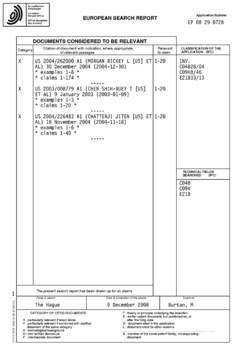
Control of the properties of cement slurries of normal densities with optimized polymers combination
PatentInactiveEP2147902A1
Innovation
- A cement slurry composition combining hydroxyethyl cellulose and acrylamido-methyl-propane sulfonate copolymer, allowing for decoupling of fluid-loss control and slurry viscosity, effective over a wide temperature and density range, using a blend of these polymers with hydraulic cements like Portland and pozzolanic cements.
Admixture for a cementitious material to influence the rheology properties of the cementitious material
PatentActiveUS12227457B2
Innovation
- An admixture comprising a compound with a backbone chain and both first and second functionalities is introduced. The first functionality interacts with cement particles, while the second functionality responds to an external trigger signal, such as an electric, magnetic, or electromagnetic field, to actively influence the rheological properties of the cementitious material.


Environmental Impact of HEC in Cement
The environmental impact of Hydroxyethylcellulose (HEC) in cement is a crucial aspect to consider when evaluating its use in cementitious composites. HEC, as a cellulose-based polymer, offers several environmental advantages over traditional cement additives. Its biodegradable nature aligns with sustainable construction practices, reducing the long-term environmental footprint of cement-based structures.
One of the primary environmental benefits of HEC in cement is its potential to reduce the overall cement content in concrete mixtures. By improving the workability and water retention of cement pastes, HEC allows for a reduction in the water-to-cement ratio without compromising the material's performance. This reduction in cement content directly translates to lower carbon dioxide emissions associated with cement production, a significant contributor to global greenhouse gas emissions.
Furthermore, HEC's ability to enhance the durability of cementitious composites indirectly contributes to environmental sustainability. Improved durability leads to longer-lasting structures, reducing the need for frequent repairs or replacements. This, in turn, decreases the demand for raw materials and energy required for construction over time, resulting in a lower overall environmental impact throughout the lifecycle of cement-based structures.
The production process of HEC itself is relatively environmentally friendly compared to some synthetic polymer additives. Derived from renewable cellulose sources, HEC production has a lower carbon footprint and reduced reliance on petrochemical resources. However, it is essential to consider the entire supply chain, including the sourcing of cellulose and the energy consumed during HEC manufacturing, to fully assess its environmental impact.
In terms of waste management, HEC's biodegradability offers advantages in the disposal of cement-based materials at the end of their lifecycle. Unlike some synthetic additives that may persist in the environment, HEC can be broken down by natural processes, potentially facilitating the recycling or safe disposal of concrete waste.
While the environmental benefits of HEC in cement are significant, it is crucial to acknowledge potential challenges. The increased use of HEC may lead to higher demand for cellulose sources, which could impact land use and biodiversity if not managed sustainably. Additionally, the long-term effects of HEC on soil and groundwater quality, particularly in cases of concrete degradation, require further study to ensure comprehensive environmental safety.
In conclusion, the incorporation of HEC in cementitious composites presents a promising avenue for enhancing the environmental sustainability of the construction industry. Its ability to reduce cement content, improve durability, and offer biodegradability aligns well with green building practices. However, ongoing research and life cycle assessments are necessary to fully quantify its environmental impact and optimize its use in sustainable construction.
One of the primary environmental benefits of HEC in cement is its potential to reduce the overall cement content in concrete mixtures. By improving the workability and water retention of cement pastes, HEC allows for a reduction in the water-to-cement ratio without compromising the material's performance. This reduction in cement content directly translates to lower carbon dioxide emissions associated with cement production, a significant contributor to global greenhouse gas emissions.
Furthermore, HEC's ability to enhance the durability of cementitious composites indirectly contributes to environmental sustainability. Improved durability leads to longer-lasting structures, reducing the need for frequent repairs or replacements. This, in turn, decreases the demand for raw materials and energy required for construction over time, resulting in a lower overall environmental impact throughout the lifecycle of cement-based structures.
The production process of HEC itself is relatively environmentally friendly compared to some synthetic polymer additives. Derived from renewable cellulose sources, HEC production has a lower carbon footprint and reduced reliance on petrochemical resources. However, it is essential to consider the entire supply chain, including the sourcing of cellulose and the energy consumed during HEC manufacturing, to fully assess its environmental impact.
In terms of waste management, HEC's biodegradability offers advantages in the disposal of cement-based materials at the end of their lifecycle. Unlike some synthetic additives that may persist in the environment, HEC can be broken down by natural processes, potentially facilitating the recycling or safe disposal of concrete waste.
While the environmental benefits of HEC in cement are significant, it is crucial to acknowledge potential challenges. The increased use of HEC may lead to higher demand for cellulose sources, which could impact land use and biodiversity if not managed sustainably. Additionally, the long-term effects of HEC on soil and groundwater quality, particularly in cases of concrete degradation, require further study to ensure comprehensive environmental safety.
In conclusion, the incorporation of HEC in cementitious composites presents a promising avenue for enhancing the environmental sustainability of the construction industry. Its ability to reduce cement content, improve durability, and offer biodegradability aligns well with green building practices. However, ongoing research and life cycle assessments are necessary to fully quantify its environmental impact and optimize its use in sustainable construction.
Standardization and Quality Control
Standardization and quality control are crucial aspects in the application of hydroxyethylcellulose (HEC) in cementitious composites. The development of comprehensive standards and rigorous quality control measures ensures consistent performance and reliability of HEC-modified cementitious materials across various applications.
International organizations, such as ASTM International and the European Committee for Standardization (CEN), have established specific guidelines for testing and evaluating HEC in cementitious composites. These standards cover a wide range of properties, including viscosity, water retention, and rheological behavior. Adherence to these standards promotes uniformity in product quality and facilitates global trade in HEC-based construction materials.
Quality control in HEC production involves stringent monitoring of key parameters throughout the manufacturing process. This includes precise control of the degree of substitution, molecular weight distribution, and purity levels. Advanced analytical techniques, such as high-performance liquid chromatography (HPLC) and nuclear magnetic resonance (NMR) spectroscopy, are employed to ensure consistent HEC properties batch to batch.
In the context of cementitious composites, quality control extends to the incorporation of HEC into cement mixtures. Standardized procedures for dosage, mixing protocols, and curing conditions are essential to achieve reproducible results. Real-time monitoring systems and automated process controls are increasingly being implemented to maintain optimal HEC concentration and dispersion within the cementitious matrix.
The impact of HEC on fresh and hardened properties of cementitious composites necessitates specialized testing methods. Standardized tests for workability, setting time, and mechanical strength have been adapted to account for the unique characteristics imparted by HEC. These tests provide quantitative measures to assess the effectiveness of HEC in enhancing specific properties of cementitious materials.
Durability testing is another critical aspect of quality control for HEC-modified cementitious composites. Long-term performance under various environmental conditions, including freeze-thaw cycles and chemical exposure, is evaluated using accelerated aging techniques. These tests help predict the service life of HEC-containing structures and inform maintenance strategies.
As sustainability becomes increasingly important in the construction industry, standardization efforts are expanding to include environmental impact assessments of HEC usage in cementitious composites. Life cycle analysis (LCA) methodologies are being developed to quantify the carbon footprint and overall environmental performance of HEC-modified materials throughout their lifecycle.
Continuous improvement in standardization and quality control practices is driven by ongoing research and collaboration between industry stakeholders, academic institutions, and regulatory bodies. This collective effort aims to refine existing standards, develop new testing methodologies, and address emerging challenges in the application of HEC in cementitious composites.
International organizations, such as ASTM International and the European Committee for Standardization (CEN), have established specific guidelines for testing and evaluating HEC in cementitious composites. These standards cover a wide range of properties, including viscosity, water retention, and rheological behavior. Adherence to these standards promotes uniformity in product quality and facilitates global trade in HEC-based construction materials.
Quality control in HEC production involves stringent monitoring of key parameters throughout the manufacturing process. This includes precise control of the degree of substitution, molecular weight distribution, and purity levels. Advanced analytical techniques, such as high-performance liquid chromatography (HPLC) and nuclear magnetic resonance (NMR) spectroscopy, are employed to ensure consistent HEC properties batch to batch.
In the context of cementitious composites, quality control extends to the incorporation of HEC into cement mixtures. Standardized procedures for dosage, mixing protocols, and curing conditions are essential to achieve reproducible results. Real-time monitoring systems and automated process controls are increasingly being implemented to maintain optimal HEC concentration and dispersion within the cementitious matrix.
The impact of HEC on fresh and hardened properties of cementitious composites necessitates specialized testing methods. Standardized tests for workability, setting time, and mechanical strength have been adapted to account for the unique characteristics imparted by HEC. These tests provide quantitative measures to assess the effectiveness of HEC in enhancing specific properties of cementitious materials.
Durability testing is another critical aspect of quality control for HEC-modified cementitious composites. Long-term performance under various environmental conditions, including freeze-thaw cycles and chemical exposure, is evaluated using accelerated aging techniques. These tests help predict the service life of HEC-containing structures and inform maintenance strategies.
As sustainability becomes increasingly important in the construction industry, standardization efforts are expanding to include environmental impact assessments of HEC usage in cementitious composites. Life cycle analysis (LCA) methodologies are being developed to quantify the carbon footprint and overall environmental performance of HEC-modified materials throughout their lifecycle.
Continuous improvement in standardization and quality control practices is driven by ongoing research and collaboration between industry stakeholders, academic institutions, and regulatory bodies. This collective effort aims to refine existing standards, develop new testing methodologies, and address emerging challenges in the application of HEC in cementitious composites.
Unlock deeper insights with PatSnap Eureka Quick Research — get a full tech report to explore trends and direct your research. Try now!
Generate Your Research Report Instantly with AI Agent
Supercharge your innovation with PatSnap Eureka AI Agent Platform!