

How Quantum Computing Facilitates Autonomous Vehicles Technology
JUL 17, 20259 MIN READ
Generate Your Research Report Instantly with AI Agent
PatSnap Eureka helps you evaluate technical feasibility & market potential.
Quantum Computing in Autonomous Vehicles: Overview and Objectives
Quantum computing and autonomous vehicles represent two of the most transformative technologies of the 21st century. As these fields converge, they promise to revolutionize transportation, enhancing safety, efficiency, and performance in ways previously thought impossible. The integration of quantum computing into autonomous vehicle technology aims to address critical challenges in areas such as sensor data processing, route optimization, and decision-making under uncertainty.
The evolution of autonomous vehicles has been marked by significant advancements in artificial intelligence, machine learning, and sensor technologies. However, as these vehicles become more sophisticated, they face increasingly complex computational challenges that push the limits of classical computing systems. Quantum computing, with its ability to perform certain calculations exponentially faster than traditional computers, offers a potential solution to these bottlenecks.
One of the primary objectives of incorporating quantum computing into autonomous vehicle technology is to enhance real-time data processing and decision-making capabilities. Autonomous vehicles generate vast amounts of data from various sensors, including cameras, lidar, and radar. Processing this data quickly and accurately is crucial for safe navigation and obstacle avoidance. Quantum algorithms have the potential to analyze this data more efficiently, enabling faster and more precise responses to changing road conditions.
Another key goal is to optimize route planning and traffic management on a large scale. Quantum computing could potentially solve complex optimization problems that are currently intractable for classical computers, leading to more efficient traffic flow and reduced congestion in smart cities. This could significantly improve the overall performance and environmental impact of autonomous transportation systems.
Furthermore, quantum computing may play a crucial role in enhancing the security of autonomous vehicles. As these vehicles become more connected and reliant on data exchange, they also become more vulnerable to cyber attacks. Quantum cryptography offers the promise of unbreakable encryption, which could be essential for securing communication between vehicles and infrastructure.
The development of quantum-enhanced machine learning algorithms is another important objective. These algorithms could potentially improve the ability of autonomous vehicles to learn from experience and adapt to new situations more quickly and effectively than current AI systems. This could lead to more robust and reliable autonomous driving systems capable of handling a wider range of driving conditions and scenarios.
As research in this field progresses, the ultimate aim is to create a seamless integration of quantum computing capabilities into the autonomous vehicle ecosystem. This integration could lead to a new generation of vehicles that are not only self-driving but also self-optimizing, continuously improving their performance based on quantum-enhanced data analysis and decision-making processes.
The evolution of autonomous vehicles has been marked by significant advancements in artificial intelligence, machine learning, and sensor technologies. However, as these vehicles become more sophisticated, they face increasingly complex computational challenges that push the limits of classical computing systems. Quantum computing, with its ability to perform certain calculations exponentially faster than traditional computers, offers a potential solution to these bottlenecks.
One of the primary objectives of incorporating quantum computing into autonomous vehicle technology is to enhance real-time data processing and decision-making capabilities. Autonomous vehicles generate vast amounts of data from various sensors, including cameras, lidar, and radar. Processing this data quickly and accurately is crucial for safe navigation and obstacle avoidance. Quantum algorithms have the potential to analyze this data more efficiently, enabling faster and more precise responses to changing road conditions.
Another key goal is to optimize route planning and traffic management on a large scale. Quantum computing could potentially solve complex optimization problems that are currently intractable for classical computers, leading to more efficient traffic flow and reduced congestion in smart cities. This could significantly improve the overall performance and environmental impact of autonomous transportation systems.
Furthermore, quantum computing may play a crucial role in enhancing the security of autonomous vehicles. As these vehicles become more connected and reliant on data exchange, they also become more vulnerable to cyber attacks. Quantum cryptography offers the promise of unbreakable encryption, which could be essential for securing communication between vehicles and infrastructure.
The development of quantum-enhanced machine learning algorithms is another important objective. These algorithms could potentially improve the ability of autonomous vehicles to learn from experience and adapt to new situations more quickly and effectively than current AI systems. This could lead to more robust and reliable autonomous driving systems capable of handling a wider range of driving conditions and scenarios.
As research in this field progresses, the ultimate aim is to create a seamless integration of quantum computing capabilities into the autonomous vehicle ecosystem. This integration could lead to a new generation of vehicles that are not only self-driving but also self-optimizing, continuously improving their performance based on quantum-enhanced data analysis and decision-making processes.
Market Analysis for Quantum-Enhanced Autonomous Vehicles
The market for quantum-enhanced autonomous vehicles represents a convergence of two cutting-edge technologies: quantum computing and self-driving cars. This intersection is poised to revolutionize the automotive industry and transform transportation systems worldwide. The global autonomous vehicle market is projected to grow significantly in the coming years, with estimates suggesting a compound annual growth rate (CAGR) of over 30% between 2021 and 2030.
Quantum computing's potential to enhance autonomous vehicle technology is driving increased interest and investment from both automotive manufacturers and technology companies. Major players in the automotive sector, including Tesla, BMW, and Toyota, are exploring quantum computing applications to improve various aspects of autonomous driving, such as route optimization, traffic prediction, and sensor data processing.
The market demand for quantum-enhanced autonomous vehicles is primarily driven by the need for improved safety, efficiency, and reliability in transportation. Consumers and businesses alike are seeking vehicles that can navigate complex urban environments, reduce accidents, and optimize fuel consumption. Quantum computing's ability to process vast amounts of data and solve complex optimization problems aligns well with these requirements.
Geographically, North America and Europe are expected to lead the market for quantum-enhanced autonomous vehicles, owing to their advanced technological infrastructure and supportive regulatory environments. However, Asia-Pacific, particularly China and Japan, are rapidly catching up, with significant investments in both quantum computing and autonomous vehicle technologies.
The potential applications of quantum-enhanced autonomous vehicles extend beyond personal transportation. The logistics and delivery sector is showing keen interest in this technology, as it promises to optimize supply chain operations and reduce transportation costs. Additionally, the public transportation sector is exploring the use of quantum-enhanced autonomous vehicles to improve urban mobility and reduce congestion.
Despite the promising outlook, the market faces several challenges. The high cost of quantum computing infrastructure, the need for specialized skills, and the current limitations of quantum hardware are significant barriers to widespread adoption. Moreover, regulatory frameworks for autonomous vehicles are still evolving, which could impact market growth.
In conclusion, the market for quantum-enhanced autonomous vehicles is at an early stage but shows immense potential. As quantum computing technology matures and becomes more accessible, its integration with autonomous vehicle systems is expected to accelerate, driving innovation and creating new opportunities in the automotive and transportation sectors.
Quantum computing's potential to enhance autonomous vehicle technology is driving increased interest and investment from both automotive manufacturers and technology companies. Major players in the automotive sector, including Tesla, BMW, and Toyota, are exploring quantum computing applications to improve various aspects of autonomous driving, such as route optimization, traffic prediction, and sensor data processing.
The market demand for quantum-enhanced autonomous vehicles is primarily driven by the need for improved safety, efficiency, and reliability in transportation. Consumers and businesses alike are seeking vehicles that can navigate complex urban environments, reduce accidents, and optimize fuel consumption. Quantum computing's ability to process vast amounts of data and solve complex optimization problems aligns well with these requirements.
Geographically, North America and Europe are expected to lead the market for quantum-enhanced autonomous vehicles, owing to their advanced technological infrastructure and supportive regulatory environments. However, Asia-Pacific, particularly China and Japan, are rapidly catching up, with significant investments in both quantum computing and autonomous vehicle technologies.
The potential applications of quantum-enhanced autonomous vehicles extend beyond personal transportation. The logistics and delivery sector is showing keen interest in this technology, as it promises to optimize supply chain operations and reduce transportation costs. Additionally, the public transportation sector is exploring the use of quantum-enhanced autonomous vehicles to improve urban mobility and reduce congestion.
Despite the promising outlook, the market faces several challenges. The high cost of quantum computing infrastructure, the need for specialized skills, and the current limitations of quantum hardware are significant barriers to widespread adoption. Moreover, regulatory frameworks for autonomous vehicles are still evolving, which could impact market growth.
In conclusion, the market for quantum-enhanced autonomous vehicles is at an early stage but shows immense potential. As quantum computing technology matures and becomes more accessible, its integration with autonomous vehicle systems is expected to accelerate, driving innovation and creating new opportunities in the automotive and transportation sectors.
Current Challenges in Quantum Computing for Autonomous Driving
Quantum computing's application in autonomous vehicles faces several significant challenges that hinder its widespread adoption and practical implementation. One of the primary obstacles is the current limitation in qubit stability and coherence time. Quantum states are extremely fragile and susceptible to environmental interference, making it difficult to maintain quantum information for extended periods. This instability poses a major hurdle in performing complex computations required for real-time decision-making in autonomous vehicles.
Another critical challenge lies in the scalability of quantum systems. While small-scale quantum computers have been developed, scaling them up to handle the massive amounts of data generated by autonomous vehicles remains a formidable task. The number of qubits needed for practical applications in autonomous driving far exceeds the capabilities of current quantum hardware, limiting the potential for immediate integration.
Error correction is another significant hurdle in quantum computing for autonomous driving. Quantum systems are inherently prone to errors due to decoherence and other quantum noise sources. Developing robust error correction techniques that can maintain the integrity of quantum computations in a dynamic and unpredictable driving environment is crucial for reliable operation of autonomous vehicles.
The lack of standardized quantum algorithms specifically tailored for autonomous driving applications presents another challenge. While quantum algorithms have shown promise in certain computational tasks, their adaptation to the specific requirements of autonomous vehicles, such as real-time sensor data processing and decision-making, is still in its infancy. Developing and optimizing quantum algorithms for these specialized tasks requires extensive research and experimentation.
Infrastructure and integration challenges also pose significant obstacles. Quantum computers currently require specialized environments with extreme cooling and isolation from external interference. Integrating such systems into vehicles or creating a reliable quantum cloud infrastructure for autonomous driving presents logistical and technical difficulties that need to be addressed.
Moreover, the high cost and complexity of quantum computing systems present economic barriers to their widespread adoption in the automotive industry. The development, maintenance, and operation of quantum computers require substantial investments, which may limit their accessibility to smaller automotive companies and startups working on autonomous vehicle technology.
Lastly, the shortage of skilled professionals with expertise in both quantum computing and autonomous vehicle technology creates a talent gap that slows down progress in this field. Bridging this knowledge gap and fostering interdisciplinary collaboration between quantum physicists, computer scientists, and automotive engineers is essential for overcoming the current challenges and realizing the potential of quantum computing in autonomous driving.
Another critical challenge lies in the scalability of quantum systems. While small-scale quantum computers have been developed, scaling them up to handle the massive amounts of data generated by autonomous vehicles remains a formidable task. The number of qubits needed for practical applications in autonomous driving far exceeds the capabilities of current quantum hardware, limiting the potential for immediate integration.
Error correction is another significant hurdle in quantum computing for autonomous driving. Quantum systems are inherently prone to errors due to decoherence and other quantum noise sources. Developing robust error correction techniques that can maintain the integrity of quantum computations in a dynamic and unpredictable driving environment is crucial for reliable operation of autonomous vehicles.
The lack of standardized quantum algorithms specifically tailored for autonomous driving applications presents another challenge. While quantum algorithms have shown promise in certain computational tasks, their adaptation to the specific requirements of autonomous vehicles, such as real-time sensor data processing and decision-making, is still in its infancy. Developing and optimizing quantum algorithms for these specialized tasks requires extensive research and experimentation.
Infrastructure and integration challenges also pose significant obstacles. Quantum computers currently require specialized environments with extreme cooling and isolation from external interference. Integrating such systems into vehicles or creating a reliable quantum cloud infrastructure for autonomous driving presents logistical and technical difficulties that need to be addressed.
Moreover, the high cost and complexity of quantum computing systems present economic barriers to their widespread adoption in the automotive industry. The development, maintenance, and operation of quantum computers require substantial investments, which may limit their accessibility to smaller automotive companies and startups working on autonomous vehicle technology.
Lastly, the shortage of skilled professionals with expertise in both quantum computing and autonomous vehicle technology creates a talent gap that slows down progress in this field. Bridging this knowledge gap and fostering interdisciplinary collaboration between quantum physicists, computer scientists, and automotive engineers is essential for overcoming the current challenges and realizing the potential of quantum computing in autonomous driving.
Existing Quantum Solutions for Autonomous Vehicle Challenges
01 Quantum Circuit Design and Optimization
This area focuses on developing and optimizing quantum circuits for various applications. It involves creating efficient quantum gate sequences, reducing circuit depth, and improving overall performance of quantum algorithms. Techniques may include circuit compression, gate decomposition, and noise mitigation strategies to enhance the reliability of quantum computations.- Quantum Computing Architectures: Various quantum computing architectures are being developed to improve qubit stability, scalability, and error correction. These include superconducting circuits, trapped ions, topological qubits, and photonic systems. Each architecture has its own advantages and challenges in terms of coherence time, gate fidelity, and integration with classical computing systems.
- Quantum Error Correction and Fault Tolerance: Quantum error correction techniques are crucial for maintaining the integrity of quantum information in the presence of noise and decoherence. Fault-tolerant quantum computing schemes are being developed to enable large-scale quantum computations. These include surface codes, color codes, and other topological quantum codes that can protect quantum information and allow for reliable quantum operations.
- Quantum Algorithms and Applications: Quantum algorithms are being developed to solve complex problems more efficiently than classical computers. These include algorithms for optimization, machine learning, cryptography, and simulation of quantum systems. Potential applications span various fields such as finance, drug discovery, materials science, and artificial intelligence.
- Quantum-Classical Hybrid Systems: Hybrid quantum-classical systems combine the strengths of both quantum and classical computing paradigms. These systems use quantum processors for specific tasks while leveraging classical computers for control, data processing, and interfacing. This approach allows for near-term practical applications of quantum computing and facilitates the integration of quantum technologies into existing computing infrastructures.
- Quantum Communication and Networking: Quantum communication technologies enable secure data transmission using quantum key distribution and other quantum cryptographic protocols. Quantum networks are being developed to connect multiple quantum processors, allowing for distributed quantum computing and the creation of a quantum internet. These advancements have implications for secure communications, distributed quantum sensing, and large-scale quantum information processing.
02 Quantum Error Correction and Fault Tolerance
Quantum error correction is crucial for maintaining the integrity of quantum information in the presence of noise and decoherence. This field involves developing error-correcting codes, fault-tolerant quantum gates, and protocols to detect and correct errors in quantum systems. Techniques may include surface codes, topological quantum computing, and logical qubit encoding.Expand Specific Solutions03 Quantum-Classical Hybrid Algorithms
Hybrid algorithms combine classical and quantum computing resources to solve complex problems. This approach leverages the strengths of both paradigms, using quantum processors for specific subroutines while classical computers handle other parts of the computation. Examples include variational quantum algorithms for chemistry and optimization problems.Expand Specific Solutions04 Quantum Hardware Architecture
This area focuses on the physical implementation of quantum computers, including the design of qubits, quantum processors, and supporting infrastructure. It encompasses various qubit technologies such as superconducting circuits, trapped ions, and topological qubits, as well as the development of quantum memory, quantum interconnects, and scalable control systems.Expand Specific Solutions05 Quantum Algorithms and Applications
This field involves the development of quantum algorithms that offer potential speedups over classical counterparts. It includes research into quantum simulation for materials science and chemistry, quantum machine learning, optimization problems, and cryptography. The focus is on identifying and exploiting quantum advantages in various computational tasks.Expand Specific Solutions
Key Players in Quantum-Autonomous Vehicle Integration
The quantum computing landscape for autonomous vehicles technology is in its early stages, with significant potential for growth. The market is still nascent, but rapidly expanding as major tech companies and specialized quantum firms invest heavily in research and development. Companies like IBM, D-Wave Systems, and Zapata Computing are at the forefront, developing quantum algorithms and hardware that could revolutionize autonomous vehicle capabilities. The technology's maturity varies across different applications, with some areas like optimization and machine learning showing promise for near-term implementation. However, full-scale quantum advantage in autonomous vehicles is still years away, as researchers work to overcome challenges in qubit stability and error correction. The competitive landscape is diverse, featuring established tech giants, automotive manufacturers, and quantum-focused startups, all vying to harness quantum computing's potential in reshaping the future of transportation.
Amazon Technologies, Inc.
Technical Solution: Amazon is leveraging its quantum computing research to advance autonomous vehicle technology. Through Amazon Braket, their quantum computing service, they are developing quantum algorithms for optimizing supply chain logistics, which has direct applications in autonomous delivery vehicles. Amazon is exploring quantum machine learning techniques to enhance object detection and classification in diverse driving conditions. They are also investigating quantum-inspired algorithms for route optimization and traffic prediction, crucial for efficient autonomous vehicle operation. Additionally, Amazon is working on quantum error correction methods to improve the reliability of quantum computations, which is essential for real-time decision-making in autonomous driving systems[4].
Strengths: Strong cloud infrastructure and extensive data resources for algorithm development. Weaknesses: Relatively new entrant in the quantum computing hardware space.
D-Wave Systems, Inc.
Technical Solution: D-Wave is applying its quantum annealing technology to address specific challenges in autonomous vehicle development. Their approach focuses on using quantum-hybrid solvers for optimization problems in route planning and traffic flow management. D-Wave's quantum annealing processors, such as the Advantage system with over 5000 qubits[5], are being utilized to solve complex scheduling and resource allocation problems relevant to fleet management of autonomous vehicles. The company is also exploring applications of their quantum technology in machine learning, particularly for pattern recognition in sensor data processing. D-Wave's quantum-hybrid algorithms are being developed to enhance real-time decision-making capabilities in autonomous driving systems, potentially improving response times and efficiency[6].
Strengths: Leader in quantum annealing technology with commercially available systems. Weaknesses: Limited to specific types of optimization problems, may not be suitable for all autonomous vehicle challenges.
Breakthrough Quantum Algorithms for Autonomous Navigation
Vehicle with a deployable quantum computer and associated deployable quantum computer system
PatentPendingDE102022105464A1
Innovation
- A deployable quantum computer system utilizing quantum dots, such as NV centers in a diamond substrate, with optical and electrical readout capabilities, integrated with microcircuits for generating radio frequency and microwave signals, and a compact design suitable for vehicles and mobile devices, including a power supply and cooling systems for operation across different temperatures.


Fusion of classical computing, artificial intelligence or quantum computing for vehicle operation
PatentPendingUS20250115270A1
Innovation
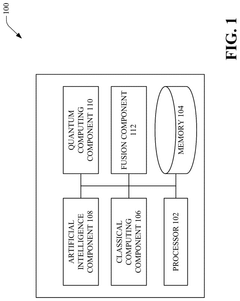
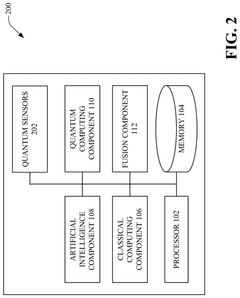
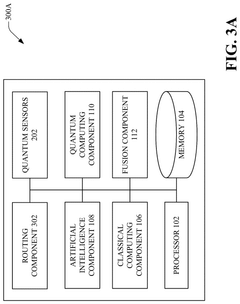
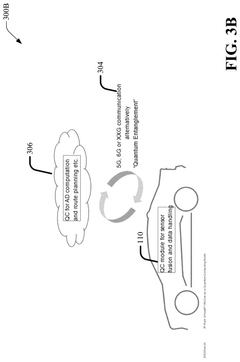
- The integration of classical computing, artificial intelligence, and quantum computing through a fusion component that dynamically engages one or more of these components based on computational intensity, enabling enhanced decision-making, improved data processing, and robust security measures.
Quantum-Classical Hybrid Architectures for Vehicles
Quantum-classical hybrid architectures represent a promising approach to integrating quantum computing capabilities into autonomous vehicle systems. These architectures combine the strengths of classical computing with the unique advantages of quantum processing, creating a synergistic framework that can potentially revolutionize autonomous vehicle technology.
At the core of these hybrid systems is the concept of quantum-classical co-processing. Classical computers handle tasks such as data preprocessing, control systems, and user interfaces, while quantum processors tackle complex optimization problems and machine learning algorithms that are particularly challenging for classical computers. This division of labor allows each type of processor to focus on its strengths, maximizing overall system performance.
One key application of quantum-classical hybrid architectures in autonomous vehicles is route optimization. Quantum algorithms, such as the quantum approximate optimization algorithm (QAOA), can be employed to solve complex routing problems more efficiently than classical algorithms. By integrating these quantum solutions with classical navigation systems, vehicles can potentially find optimal routes in real-time, considering multiple factors such as traffic conditions, energy efficiency, and passenger preferences.
Another significant area where hybrid architectures show promise is in sensor data processing and fusion. Autonomous vehicles rely on a vast array of sensors to perceive their environment. Quantum machine learning algorithms, when combined with classical data processing techniques, can enhance the accuracy and speed of sensor data interpretation. This improved perception can lead to better decision-making in complex driving scenarios, potentially increasing the safety and reliability of autonomous vehicles.
Quantum-classical hybrid systems also offer advantages in the realm of cybersecurity for autonomous vehicles. Quantum key distribution (QKD) protocols can be integrated with classical encryption methods to create highly secure communication channels between vehicles and infrastructure. This hybrid approach combines the theoretical unbreakability of quantum encryption with the practical implementation of classical security measures, providing a robust defense against cyber threats.
The implementation of quantum-classical hybrid architectures in vehicles faces several challenges, including the need for compact, energy-efficient quantum processors that can operate in mobile environments. Additionally, developing software frameworks that can effectively manage the interplay between quantum and classical components is crucial. Despite these challenges, ongoing research and development in this field continue to push the boundaries of what's possible in autonomous vehicle technology.
At the core of these hybrid systems is the concept of quantum-classical co-processing. Classical computers handle tasks such as data preprocessing, control systems, and user interfaces, while quantum processors tackle complex optimization problems and machine learning algorithms that are particularly challenging for classical computers. This division of labor allows each type of processor to focus on its strengths, maximizing overall system performance.
One key application of quantum-classical hybrid architectures in autonomous vehicles is route optimization. Quantum algorithms, such as the quantum approximate optimization algorithm (QAOA), can be employed to solve complex routing problems more efficiently than classical algorithms. By integrating these quantum solutions with classical navigation systems, vehicles can potentially find optimal routes in real-time, considering multiple factors such as traffic conditions, energy efficiency, and passenger preferences.
Another significant area where hybrid architectures show promise is in sensor data processing and fusion. Autonomous vehicles rely on a vast array of sensors to perceive their environment. Quantum machine learning algorithms, when combined with classical data processing techniques, can enhance the accuracy and speed of sensor data interpretation. This improved perception can lead to better decision-making in complex driving scenarios, potentially increasing the safety and reliability of autonomous vehicles.
Quantum-classical hybrid systems also offer advantages in the realm of cybersecurity for autonomous vehicles. Quantum key distribution (QKD) protocols can be integrated with classical encryption methods to create highly secure communication channels between vehicles and infrastructure. This hybrid approach combines the theoretical unbreakability of quantum encryption with the practical implementation of classical security measures, providing a robust defense against cyber threats.
The implementation of quantum-classical hybrid architectures in vehicles faces several challenges, including the need for compact, energy-efficient quantum processors that can operate in mobile environments. Additionally, developing software frameworks that can effectively manage the interplay between quantum and classical components is crucial. Despite these challenges, ongoing research and development in this field continue to push the boundaries of what's possible in autonomous vehicle technology.
Cybersecurity Implications of Quantum-Enabled Autonomous Vehicles
The integration of quantum computing with autonomous vehicle technology introduces significant cybersecurity implications that must be carefully considered. As quantum-enabled autonomous vehicles become more prevalent, they present both opportunities and challenges in the realm of cybersecurity.
Quantum computing's immense processing power can enhance the security measures of autonomous vehicles by enabling more complex encryption algorithms and faster data processing. This increased computational capacity allows for real-time threat detection and response, potentially improving the overall safety and security of autonomous vehicle systems.
However, the advent of quantum computing also poses significant threats to existing cryptographic systems. Quantum computers have the potential to break many of the current encryption methods used in autonomous vehicles, potentially exposing sensitive data and control systems to malicious actors. This vulnerability could lead to severe consequences, including unauthorized access to vehicle controls, data breaches, and compromised safety systems.
To address these challenges, the development of quantum-resistant cryptography is crucial. Post-quantum cryptographic algorithms are being researched and developed to withstand attacks from both classical and quantum computers. Implementing these advanced encryption methods in autonomous vehicles will be essential to maintain the integrity and confidentiality of vehicle communications and data.
Another critical aspect is the secure management of quantum keys used in encryption processes. Quantum Key Distribution (QKD) offers a potential solution by leveraging the principles of quantum mechanics to create and distribute encryption keys that are theoretically impossible to intercept without detection. Integrating QKD systems into autonomous vehicle networks could significantly enhance their security posture.
The increased connectivity of quantum-enabled autonomous vehicles also expands the attack surface for potential cyber threats. As these vehicles rely heavily on communication with other vehicles, infrastructure, and cloud services, securing these communication channels becomes paramount. Quantum-resistant protocols for vehicle-to-vehicle (V2V) and vehicle-to-infrastructure (V2I) communications will be necessary to prevent eavesdropping and man-in-the-middle attacks.
Furthermore, the complexity of quantum-enabled systems in autonomous vehicles necessitates a comprehensive approach to cybersecurity. This includes regular security audits, continuous monitoring for quantum-based threats, and the development of incident response plans specifically tailored to quantum-related vulnerabilities. Training and education for cybersecurity professionals in quantum computing principles will also be crucial to effectively manage and mitigate these emerging risks.
Quantum computing's immense processing power can enhance the security measures of autonomous vehicles by enabling more complex encryption algorithms and faster data processing. This increased computational capacity allows for real-time threat detection and response, potentially improving the overall safety and security of autonomous vehicle systems.
However, the advent of quantum computing also poses significant threats to existing cryptographic systems. Quantum computers have the potential to break many of the current encryption methods used in autonomous vehicles, potentially exposing sensitive data and control systems to malicious actors. This vulnerability could lead to severe consequences, including unauthorized access to vehicle controls, data breaches, and compromised safety systems.
To address these challenges, the development of quantum-resistant cryptography is crucial. Post-quantum cryptographic algorithms are being researched and developed to withstand attacks from both classical and quantum computers. Implementing these advanced encryption methods in autonomous vehicles will be essential to maintain the integrity and confidentiality of vehicle communications and data.
Another critical aspect is the secure management of quantum keys used in encryption processes. Quantum Key Distribution (QKD) offers a potential solution by leveraging the principles of quantum mechanics to create and distribute encryption keys that are theoretically impossible to intercept without detection. Integrating QKD systems into autonomous vehicle networks could significantly enhance their security posture.
The increased connectivity of quantum-enabled autonomous vehicles also expands the attack surface for potential cyber threats. As these vehicles rely heavily on communication with other vehicles, infrastructure, and cloud services, securing these communication channels becomes paramount. Quantum-resistant protocols for vehicle-to-vehicle (V2V) and vehicle-to-infrastructure (V2I) communications will be necessary to prevent eavesdropping and man-in-the-middle attacks.
Furthermore, the complexity of quantum-enabled systems in autonomous vehicles necessitates a comprehensive approach to cybersecurity. This includes regular security audits, continuous monitoring for quantum-based threats, and the development of incident response plans specifically tailored to quantum-related vulnerabilities. Training and education for cybersecurity professionals in quantum computing principles will also be crucial to effectively manage and mitigate these emerging risks.
Unlock deeper insights with PatSnap Eureka Quick Research — get a full tech report to explore trends and direct your research. Try now!
Generate Your Research Report Instantly with AI Agent
Supercharge your innovation with PatSnap Eureka AI Agent Platform!