How to Approach K24 Engine Cooling System Upgrades?
JUL 3, 202510 MIN READ
Generate Your Research Report Instantly with AI Agent
Patsnap Eureka helps you evaluate technical feasibility & market potential.
K24 Engine Cooling Background and Objectives
The K24 engine, developed by Honda, has been a cornerstone in the automotive industry since its introduction in the early 2000s. Known for its reliability and performance, this 2.4-liter inline-four engine has been widely used across various Honda and Acura models. As vehicle technology advances and performance demands increase, there is a growing need to enhance the cooling system of the K24 engine to maintain its efficiency and longevity.
The primary objective of approaching K24 engine cooling system upgrades is to improve the engine's thermal management, allowing for increased power output and enhanced durability under high-stress conditions. This involves addressing the limitations of the stock cooling system, which may struggle to dissipate heat effectively during intense driving scenarios or in modified engines with higher power outputs.
Historically, the K24 engine's cooling system has undergone several iterations, with each generation bringing incremental improvements. The original design featured a conventional radiator and water pump setup, which was adequate for stock applications. However, as enthusiasts began modifying these engines for increased performance, the need for more robust cooling solutions became apparent.
The evolution of K24 engine cooling technology has been driven by both OEM advancements and aftermarket innovations. Honda has continuously refined the cooling system in factory applications, introducing larger radiators, more efficient water pumps, and improved coolant formulations. Concurrently, the aftermarket sector has developed a range of upgrades, including high-flow radiators, electric water pumps, and oil coolers, to address the demands of high-performance applications.
Current technological trends in engine cooling focus on optimizing coolant flow, reducing parasitic losses, and improving heat exchanger efficiency. Advanced computer modeling and fluid dynamics simulations have played a crucial role in developing more effective cooling strategies. Additionally, the integration of smart cooling systems, which can adapt to varying engine loads and environmental conditions, represents a promising direction for future developments.
The goal of K24 engine cooling system upgrades extends beyond mere temperature control. It encompasses improving overall engine efficiency, reducing thermal stress on components, and enabling sustained high-performance operation. By enhancing the cooling capacity, engineers and enthusiasts aim to unlock the full potential of the K24 engine, allowing for increased power output without compromising reliability.
As we delve deeper into the specifics of K24 engine cooling system upgrades, it is essential to consider the balance between performance gains and practical implementation. The challenge lies in developing solutions that are not only effective but also cost-efficient and compatible with a wide range of vehicle applications. This technical exploration will serve as a foundation for understanding the current state of K24 cooling technology and identifying potential avenues for future advancements.
The primary objective of approaching K24 engine cooling system upgrades is to improve the engine's thermal management, allowing for increased power output and enhanced durability under high-stress conditions. This involves addressing the limitations of the stock cooling system, which may struggle to dissipate heat effectively during intense driving scenarios or in modified engines with higher power outputs.
Historically, the K24 engine's cooling system has undergone several iterations, with each generation bringing incremental improvements. The original design featured a conventional radiator and water pump setup, which was adequate for stock applications. However, as enthusiasts began modifying these engines for increased performance, the need for more robust cooling solutions became apparent.
The evolution of K24 engine cooling technology has been driven by both OEM advancements and aftermarket innovations. Honda has continuously refined the cooling system in factory applications, introducing larger radiators, more efficient water pumps, and improved coolant formulations. Concurrently, the aftermarket sector has developed a range of upgrades, including high-flow radiators, electric water pumps, and oil coolers, to address the demands of high-performance applications.
Current technological trends in engine cooling focus on optimizing coolant flow, reducing parasitic losses, and improving heat exchanger efficiency. Advanced computer modeling and fluid dynamics simulations have played a crucial role in developing more effective cooling strategies. Additionally, the integration of smart cooling systems, which can adapt to varying engine loads and environmental conditions, represents a promising direction for future developments.
The goal of K24 engine cooling system upgrades extends beyond mere temperature control. It encompasses improving overall engine efficiency, reducing thermal stress on components, and enabling sustained high-performance operation. By enhancing the cooling capacity, engineers and enthusiasts aim to unlock the full potential of the K24 engine, allowing for increased power output without compromising reliability.
As we delve deeper into the specifics of K24 engine cooling system upgrades, it is essential to consider the balance between performance gains and practical implementation. The challenge lies in developing solutions that are not only effective but also cost-efficient and compatible with a wide range of vehicle applications. This technical exploration will serve as a foundation for understanding the current state of K24 cooling technology and identifying potential avenues for future advancements.
Market Analysis for K24 Engine Cooling Upgrades
The market for K24 engine cooling system upgrades has shown significant growth in recent years, driven by the increasing demand for improved performance and efficiency in Honda and Acura vehicles. The K24 engine, known for its reliability and versatility, has become a popular choice among automotive enthusiasts and racers, creating a robust aftermarket for cooling system enhancements.
The primary market segments for K24 engine cooling upgrades include performance enthusiasts, racing teams, and owners of older Honda and Acura models seeking to extend the life and improve the performance of their vehicles. These segments have demonstrated a willingness to invest in high-quality cooling solutions to address common issues such as overheating during high-performance driving or in extreme weather conditions.
Market research indicates that the global automotive cooling system market is expected to grow steadily, with a particular focus on advanced cooling technologies for high-performance engines. This trend directly benefits the K24 engine cooling upgrade sector, as consumers seek more efficient and durable cooling solutions.
The demand for K24 engine cooling upgrades is particularly strong in regions with hot climates or areas where vehicles are subjected to more demanding driving conditions. North America, especially the southern United States, and parts of Asia and the Middle East have shown substantial market potential for these upgrades.
Key drivers of market growth include the increasing popularity of track days and amateur racing events, where engine cooling becomes critical for sustained performance. Additionally, the rising average age of vehicles on the road has led to a greater need for aftermarket cooling solutions to maintain engine health and longevity.
The market is characterized by a mix of established automotive parts manufacturers and specialized aftermarket companies. These players compete on factors such as product quality, performance improvements, ease of installation, and price. Innovative cooling technologies, such as high-efficiency radiators, electric water pumps, and advanced coolant formulations, are gaining traction in the market.
Consumer trends indicate a growing preference for complete cooling system upgrade kits rather than individual components, as these offer a more comprehensive solution and ensure compatibility between parts. This trend has led to increased collaboration between component manufacturers to create integrated cooling packages for the K24 engine platform.
The e-commerce channel has become increasingly important for the distribution of K24 engine cooling upgrades, with many consumers preferring to research and purchase products online. This shift has expanded market reach and increased competition among sellers, potentially leading to more competitive pricing and a wider range of product options for consumers.
The primary market segments for K24 engine cooling upgrades include performance enthusiasts, racing teams, and owners of older Honda and Acura models seeking to extend the life and improve the performance of their vehicles. These segments have demonstrated a willingness to invest in high-quality cooling solutions to address common issues such as overheating during high-performance driving or in extreme weather conditions.
Market research indicates that the global automotive cooling system market is expected to grow steadily, with a particular focus on advanced cooling technologies for high-performance engines. This trend directly benefits the K24 engine cooling upgrade sector, as consumers seek more efficient and durable cooling solutions.
The demand for K24 engine cooling upgrades is particularly strong in regions with hot climates or areas where vehicles are subjected to more demanding driving conditions. North America, especially the southern United States, and parts of Asia and the Middle East have shown substantial market potential for these upgrades.
Key drivers of market growth include the increasing popularity of track days and amateur racing events, where engine cooling becomes critical for sustained performance. Additionally, the rising average age of vehicles on the road has led to a greater need for aftermarket cooling solutions to maintain engine health and longevity.
The market is characterized by a mix of established automotive parts manufacturers and specialized aftermarket companies. These players compete on factors such as product quality, performance improvements, ease of installation, and price. Innovative cooling technologies, such as high-efficiency radiators, electric water pumps, and advanced coolant formulations, are gaining traction in the market.
Consumer trends indicate a growing preference for complete cooling system upgrade kits rather than individual components, as these offer a more comprehensive solution and ensure compatibility between parts. This trend has led to increased collaboration between component manufacturers to create integrated cooling packages for the K24 engine platform.
The e-commerce channel has become increasingly important for the distribution of K24 engine cooling upgrades, with many consumers preferring to research and purchase products online. This shift has expanded market reach and increased competition among sellers, potentially leading to more competitive pricing and a wider range of product options for consumers.
Current Cooling System Challenges and Limitations
The K24 engine cooling system, while robust in its original design, faces several challenges and limitations when considering upgrades for enhanced performance. One of the primary issues is the system's capacity to handle increased heat loads generated by performance modifications. As enthusiasts seek to extract more power from the K24 engine, the stock cooling system often struggles to maintain optimal operating temperatures under high-stress conditions.
The stock radiator, designed for standard operating conditions, may become inadequate when dealing with the increased thermal output of a modified engine. Its limited surface area and fin density can result in reduced heat dissipation efficiency, leading to potential overheating issues during prolonged high-performance driving or in extreme climates. This limitation is particularly noticeable in track or racing scenarios where the engine is consistently pushed to its limits.
Another significant challenge lies in the coolant flow rate and distribution. The stock water pump and coolant passages may not provide sufficient flow to address hotspots effectively, especially in high-performance applications. This can lead to localized overheating, potentially causing damage to critical engine components or reducing overall engine efficiency.
The thermostat and its housing present another area of concern. The stock thermostat's opening temperature and response time may not be optimized for the altered heat characteristics of a modified K24 engine. This can result in delayed cooling system engagement, potentially allowing engine temperatures to climb higher than desired before the cooling cycle fully activates.
Furthermore, the OEM cooling system's ability to manage air pockets and maintain proper coolant pressure becomes increasingly challenged in high-performance scenarios. Air pockets can form in the system, particularly after modifications, leading to reduced cooling efficiency and potential hotspots within the engine block.
The stock coolant itself may also be a limiting factor. Standard coolants may not offer the thermal capacity or boiling point necessary for high-performance applications, potentially leading to reduced cooling efficiency or coolant breakdown under extreme conditions.
Lastly, the integration of additional cooling components, such as oil coolers or intercoolers for forced induction setups, presents a challenge in terms of packaging and system design. The limited space in the engine bay and the need to maintain proper airflow dynamics can complicate the implementation of comprehensive cooling upgrades.
Addressing these challenges requires a holistic approach to cooling system upgrades, considering not only individual components but also the system's overall design and integration with other performance modifications. This comprehensive view is essential for developing effective solutions that can maintain optimal engine temperatures across a wide range of operating conditions, ensuring both performance and reliability in upgraded K24 engines.
The stock radiator, designed for standard operating conditions, may become inadequate when dealing with the increased thermal output of a modified engine. Its limited surface area and fin density can result in reduced heat dissipation efficiency, leading to potential overheating issues during prolonged high-performance driving or in extreme climates. This limitation is particularly noticeable in track or racing scenarios where the engine is consistently pushed to its limits.
Another significant challenge lies in the coolant flow rate and distribution. The stock water pump and coolant passages may not provide sufficient flow to address hotspots effectively, especially in high-performance applications. This can lead to localized overheating, potentially causing damage to critical engine components or reducing overall engine efficiency.
The thermostat and its housing present another area of concern. The stock thermostat's opening temperature and response time may not be optimized for the altered heat characteristics of a modified K24 engine. This can result in delayed cooling system engagement, potentially allowing engine temperatures to climb higher than desired before the cooling cycle fully activates.
Furthermore, the OEM cooling system's ability to manage air pockets and maintain proper coolant pressure becomes increasingly challenged in high-performance scenarios. Air pockets can form in the system, particularly after modifications, leading to reduced cooling efficiency and potential hotspots within the engine block.
The stock coolant itself may also be a limiting factor. Standard coolants may not offer the thermal capacity or boiling point necessary for high-performance applications, potentially leading to reduced cooling efficiency or coolant breakdown under extreme conditions.
Lastly, the integration of additional cooling components, such as oil coolers or intercoolers for forced induction setups, presents a challenge in terms of packaging and system design. The limited space in the engine bay and the need to maintain proper airflow dynamics can complicate the implementation of comprehensive cooling upgrades.
Addressing these challenges requires a holistic approach to cooling system upgrades, considering not only individual components but also the system's overall design and integration with other performance modifications. This comprehensive view is essential for developing effective solutions that can maintain optimal engine temperatures across a wide range of operating conditions, ensuring both performance and reliability in upgraded K24 engines.
Existing K24 Cooling System Upgrade Solutions
01 Improved radiator design
Enhanced radiator designs for K24 engines focus on increasing surface area and optimizing coolant flow. This may include the use of multi-core radiators, advanced fin designs, or improved coolant channel layouts to maximize heat dissipation and overall cooling efficiency.- Improved radiator design: Enhanced radiator designs for K24 engines focus on increasing surface area and optimizing coolant flow. This may include multi-core radiators, advanced fin designs, or the use of high-performance materials to improve heat dissipation. These improvements lead to more efficient cooling and better overall engine performance.
- Advanced coolant formulations: Specialized coolant formulations for K24 engines can enhance heat transfer properties and provide better protection against corrosion. These advanced coolants may include additives that improve thermal conductivity or reduce the formation of scale and deposits in the cooling system, leading to improved cooling efficiency over time.
- Optimized water pump design: Redesigned water pumps for K24 engines can improve coolant circulation throughout the system. This may involve changes to impeller design, pump capacity, or the integration of variable-speed pumps that adjust flow rates based on engine load and temperature. These improvements ensure more efficient cooling across various operating conditions.
- Enhanced thermostat and control systems: Advanced thermostat designs and electronic control systems can provide more precise regulation of coolant flow and temperature. This may include the use of map-controlled thermostats or integration with the engine management system to optimize cooling based on real-time operating parameters, resulting in improved overall cooling efficiency.
- Improved cooling passages and jackets: Optimized design of cooling passages and water jackets within the engine block and cylinder head can enhance coolant flow and heat transfer. This may involve computer-aided design to identify and eliminate hot spots, create more uniform cooling, and reduce thermal stress on engine components, leading to better overall cooling efficiency for the K24 engine.
02 Advanced coolant formulations
Specialized coolant formulations for K24 engines can improve heat transfer properties and protect against corrosion. These formulations may include additives that enhance thermal conductivity, reduce scaling, and maintain optimal performance over extended periods.Expand Specific Solutions03 Optimized water pump design
Improved water pump designs for K24 engines focus on increasing coolant flow rate and distribution efficiency. This may involve redesigned impeller geometries, enhanced sealing mechanisms, or variable speed pumps that adjust flow based on engine load and temperature.Expand Specific Solutions04 Electronic cooling system control
Advanced electronic control systems for K24 engine cooling can optimize coolant flow and fan operation based on real-time temperature data. This may include adaptive algorithms that adjust cooling parameters for various driving conditions and engine loads to maximize efficiency.Expand Specific Solutions05 Thermostat and bypass system improvements
Enhanced thermostat and bypass systems for K24 engines can provide more precise temperature control and faster warm-up times. This may involve the use of electronically controlled thermostats, optimized bypass circuits, or multi-stage thermostats that offer finer temperature regulation.Expand Specific Solutions
Key Players in K24 Engine Cooling Industry
The K24 engine cooling system upgrade market is in a mature stage, with established players and proven technologies. The market size is substantial, driven by the widespread use of K24 engines in various vehicle models. Technologically, the field is well-developed, with companies like Toyota, Honda, and BorgWarner leading innovations. These firms have extensive experience in thermal management systems and continuously refine their cooling solutions. Hyundai and Kia are also significant players, leveraging their automotive expertise to enhance cooling efficiency. The competition is fierce, with manufacturers focusing on improving performance, reliability, and fuel efficiency through advanced cooling technologies.
Toyota Motor Corp.
Technical Solution: Toyota has developed an advanced cooling system for the K24 engine, focusing on efficiency and performance. Their approach includes a high-capacity radiator with an increased core size, allowing for better heat dissipation[1]. The system incorporates a variable-speed electric water pump that adjusts coolant flow based on engine load and temperature, optimizing cooling efficiency[2]. Toyota also utilizes a split cooling system, separating the cylinder head and block circuits, which allows for more precise temperature control in different engine areas[3]. Additionally, they have implemented a low-friction coolant formulation that enhances heat transfer and reduces pump power requirements[4]. The K24 cooling system upgrade also features an intelligent thermostat that can rapidly adjust to varying driving conditions, ensuring optimal engine temperature across a wide range of operations[5].
Strengths: Improved heat dissipation, precise temperature control, and adaptability to various driving conditions. Weaknesses: Potentially higher complexity and cost compared to traditional cooling systems, may require specialized maintenance.
BorgWarner, Inc.
Technical Solution: BorgWarner's approach to K24 engine cooling system upgrades focuses on advanced thermal management solutions. They have developed a modular coolant control valve system that allows for rapid warm-up and precise temperature regulation[1]. This system incorporates electronically controlled valves that can redirect coolant flow to optimize engine efficiency and reduce emissions[2]. BorgWarner's solution also includes a high-efficiency electric water pump that provides on-demand cooling, reducing parasitic losses when full cooling capacity is not required[3]. The company has integrated their cooling system with exhaust heat recovery technology, capturing waste heat to warm the engine more quickly and improve overall thermal efficiency[4]. Additionally, BorgWarner's cooling upgrade incorporates advanced materials in radiator construction, such as aluminum alloys with enhanced thermal conductivity, to improve heat rejection capabilities[5].
Strengths: Improved fuel efficiency, reduced emissions, and faster engine warm-up times. Weaknesses: Higher initial cost and potential complexity in integration with existing engine management systems.
Innovative Cooling Technologies for K24 Engines
Engine cooling system
PatentWO2014181824A1
Innovation
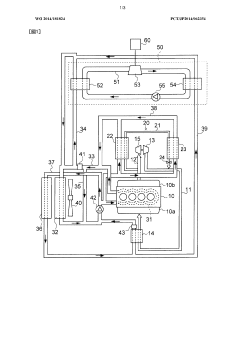
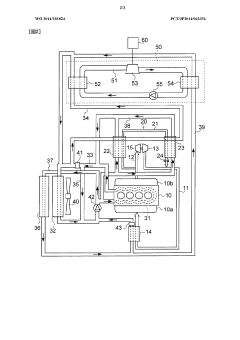
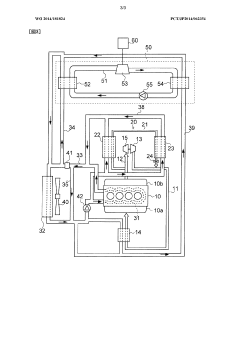
- The engine cooling system incorporates a Rankine cycle device with a first heat exchanger, expander, and compressor, along with a main radiator and sub-radiator, to enhance cooling performance while recovering waste heat by utilizing a Rankine cycle to convert thermal energy into power.
Vehicular air-conditioning system and control method of same
PatentInactiveCN101516657A
Innovation
- By introducing an electric pump into the air conditioning system, the start/stop and speed of the electric pump are controlled according to the coolant temperature and vehicle speed, and the heater core is used to circulate the coolant to adjust the temperature and flow rate of the supply air to ensure passenger comfort and save energy. .


Environmental Impact of Cooling System Upgrades
The environmental impact of cooling system upgrades for the K24 engine is a crucial consideration in the automotive industry's ongoing efforts to reduce emissions and improve sustainability. These upgrades can have both positive and negative effects on the environment, necessitating a careful balance between performance enhancement and ecological responsibility.
One of the primary environmental benefits of upgrading the K24 engine's cooling system is the potential for improved fuel efficiency. A more effective cooling system can help maintain optimal engine temperatures, reducing the likelihood of overheating and ensuring that the engine operates at peak efficiency. This can lead to decreased fuel consumption and, consequently, lower greenhouse gas emissions. Additionally, a well-designed cooling system can contribute to extended engine life, reducing the need for premature replacements and the associated environmental costs of manufacturing new engines.
However, the production and installation of upgraded cooling system components can have environmental drawbacks. The manufacturing process for high-performance radiators, water pumps, and other cooling system parts often requires energy-intensive processes and may involve the use of materials with significant environmental footprints. Furthermore, the disposal of old cooling system components can contribute to electronic waste if not properly recycled or repurposed.
Another environmental consideration is the potential use of more environmentally friendly coolants. Traditional ethylene glycol-based coolants can be toxic to wildlife and contaminate water sources if improperly disposed of. Upgrading to newer, less toxic propylene glycol-based coolants or exploring emerging biodegradable alternatives can mitigate these risks and reduce the environmental impact of coolant leaks or disposal.
The choice of materials in cooling system upgrades can also influence their environmental impact. Opting for recyclable materials such as aluminum for radiators and hoses made from sustainable rubber compounds can improve the overall lifecycle sustainability of the cooling system. Additionally, the use of more durable materials can extend the lifespan of the cooling system, reducing the frequency of replacements and associated waste.
It's important to consider the potential for increased power output resulting from cooling system upgrades, which may lead to higher fuel consumption if not managed properly. While improved cooling can enhance engine efficiency, it may also enable more aggressive driving styles or higher-performance settings that could negate the environmental benefits. Therefore, it's crucial to balance performance gains with responsible use to maximize the positive environmental impact of cooling system upgrades.
In conclusion, while K24 engine cooling system upgrades have the potential to yield environmental benefits through improved efficiency and longevity, careful consideration must be given to material selection, manufacturing processes, and end-of-life disposal to ensure a net positive environmental impact. As the automotive industry continues to prioritize sustainability, future cooling system upgrades may increasingly focus on eco-friendly materials, energy-efficient production methods, and designs that facilitate easy recycling or reuse.
One of the primary environmental benefits of upgrading the K24 engine's cooling system is the potential for improved fuel efficiency. A more effective cooling system can help maintain optimal engine temperatures, reducing the likelihood of overheating and ensuring that the engine operates at peak efficiency. This can lead to decreased fuel consumption and, consequently, lower greenhouse gas emissions. Additionally, a well-designed cooling system can contribute to extended engine life, reducing the need for premature replacements and the associated environmental costs of manufacturing new engines.
However, the production and installation of upgraded cooling system components can have environmental drawbacks. The manufacturing process for high-performance radiators, water pumps, and other cooling system parts often requires energy-intensive processes and may involve the use of materials with significant environmental footprints. Furthermore, the disposal of old cooling system components can contribute to electronic waste if not properly recycled or repurposed.
Another environmental consideration is the potential use of more environmentally friendly coolants. Traditional ethylene glycol-based coolants can be toxic to wildlife and contaminate water sources if improperly disposed of. Upgrading to newer, less toxic propylene glycol-based coolants or exploring emerging biodegradable alternatives can mitigate these risks and reduce the environmental impact of coolant leaks or disposal.
The choice of materials in cooling system upgrades can also influence their environmental impact. Opting for recyclable materials such as aluminum for radiators and hoses made from sustainable rubber compounds can improve the overall lifecycle sustainability of the cooling system. Additionally, the use of more durable materials can extend the lifespan of the cooling system, reducing the frequency of replacements and associated waste.
It's important to consider the potential for increased power output resulting from cooling system upgrades, which may lead to higher fuel consumption if not managed properly. While improved cooling can enhance engine efficiency, it may also enable more aggressive driving styles or higher-performance settings that could negate the environmental benefits. Therefore, it's crucial to balance performance gains with responsible use to maximize the positive environmental impact of cooling system upgrades.
In conclusion, while K24 engine cooling system upgrades have the potential to yield environmental benefits through improved efficiency and longevity, careful consideration must be given to material selection, manufacturing processes, and end-of-life disposal to ensure a net positive environmental impact. As the automotive industry continues to prioritize sustainability, future cooling system upgrades may increasingly focus on eco-friendly materials, energy-efficient production methods, and designs that facilitate easy recycling or reuse.
Performance Testing and Validation Methods
Performance testing and validation methods are crucial components in the process of upgrading the K24 engine cooling system. These methods ensure that the modifications made to the cooling system meet the desired performance criteria and maintain the engine's reliability under various operating conditions.
A comprehensive approach to performance testing begins with establishing baseline measurements of the stock cooling system. This includes monitoring coolant temperatures at multiple points in the system, measuring engine oil temperatures, and recording ambient air temperatures during different driving scenarios. These baseline data serve as a reference point for comparing the effectiveness of the upgrades.
Once the cooling system upgrades are implemented, a series of controlled tests should be conducted to evaluate their impact. These tests typically involve running the engine at various RPM ranges and load conditions, simulating real-world driving scenarios. Temperature sensors placed at critical points in the cooling system, such as the radiator inlet and outlet, engine block, and cylinder head, provide valuable data on heat dissipation efficiency.
Dynamometer testing is an essential method for validating cooling system upgrades. This allows for precise control of engine load and speed while monitoring temperatures and overall engine performance. During dyno runs, it's important to simulate extended high-load conditions to assess the cooling system's ability to maintain stable temperatures over time.
Field testing is equally important to evaluate the cooling system's performance in real-world conditions. This includes extended highway driving, stop-and-go traffic scenarios, and high-performance driving on tracks or closed courses. Data logging equipment should be used to capture temperature readings, engine parameters, and ambient conditions throughout these tests.
Thermal imaging cameras can provide valuable insights into heat distribution across the engine and cooling components. This non-contact method helps identify potential hot spots or areas of inefficient heat transfer, guiding further refinements to the cooling system design.
Computational Fluid Dynamics (CFD) simulations can complement physical testing by providing detailed analysis of coolant flow patterns and heat transfer characteristics. These simulations can help optimize component designs and predict system performance under various conditions before physical prototypes are built.
Endurance testing is crucial to validate the long-term reliability of the upgraded cooling system. This involves running the engine for extended periods under varying load conditions, simulating thousands of miles of real-world use. During these tests, coolant chemistry should be monitored to ensure the upgrades haven't negatively impacted the system's corrosion resistance or thermal stability.
Finally, comparative analysis of the collected data against the baseline measurements and predetermined performance targets is essential. This analysis should consider not only peak temperatures but also the rate of temperature change, system pressure, and overall engine performance metrics. The results of these comprehensive testing and validation methods provide a solid foundation for assessing the effectiveness of the K24 engine cooling system upgrades and identifying any areas that may require further optimization.
A comprehensive approach to performance testing begins with establishing baseline measurements of the stock cooling system. This includes monitoring coolant temperatures at multiple points in the system, measuring engine oil temperatures, and recording ambient air temperatures during different driving scenarios. These baseline data serve as a reference point for comparing the effectiveness of the upgrades.
Once the cooling system upgrades are implemented, a series of controlled tests should be conducted to evaluate their impact. These tests typically involve running the engine at various RPM ranges and load conditions, simulating real-world driving scenarios. Temperature sensors placed at critical points in the cooling system, such as the radiator inlet and outlet, engine block, and cylinder head, provide valuable data on heat dissipation efficiency.
Dynamometer testing is an essential method for validating cooling system upgrades. This allows for precise control of engine load and speed while monitoring temperatures and overall engine performance. During dyno runs, it's important to simulate extended high-load conditions to assess the cooling system's ability to maintain stable temperatures over time.
Field testing is equally important to evaluate the cooling system's performance in real-world conditions. This includes extended highway driving, stop-and-go traffic scenarios, and high-performance driving on tracks or closed courses. Data logging equipment should be used to capture temperature readings, engine parameters, and ambient conditions throughout these tests.
Thermal imaging cameras can provide valuable insights into heat distribution across the engine and cooling components. This non-contact method helps identify potential hot spots or areas of inefficient heat transfer, guiding further refinements to the cooling system design.
Computational Fluid Dynamics (CFD) simulations can complement physical testing by providing detailed analysis of coolant flow patterns and heat transfer characteristics. These simulations can help optimize component designs and predict system performance under various conditions before physical prototypes are built.
Endurance testing is crucial to validate the long-term reliability of the upgraded cooling system. This involves running the engine for extended periods under varying load conditions, simulating thousands of miles of real-world use. During these tests, coolant chemistry should be monitored to ensure the upgrades haven't negatively impacted the system's corrosion resistance or thermal stability.
Finally, comparative analysis of the collected data against the baseline measurements and predetermined performance targets is essential. This analysis should consider not only peak temperatures but also the rate of temperature change, system pressure, and overall engine performance metrics. The results of these comprehensive testing and validation methods provide a solid foundation for assessing the effectiveness of the K24 engine cooling system upgrades and identifying any areas that may require further optimization.
Unlock deeper insights with Patsnap Eureka Quick Research — get a full tech report to explore trends and direct your research. Try now!
Generate Your Research Report Instantly with AI Agent
Supercharge your innovation with Patsnap Eureka AI Agent Platform!