Linear Low Density Polyethylene Moisture Resistant: Advanced Formulations, Barrier Properties, And Industrial Applications
JUL 10, 20259 MIN READ
Generate Your Research Report Instantly with AI Agent
PatSnap Eureka helps you evaluate technical feasibility & market potential.
Laminar Flow in Ocean Exploration: Background and Objectives
Laminar flow, characterized by smooth and predictable fluid motion, has long been a subject of interest in various engineering fields. In the context of ocean exploration, the application of laminar flow principles presents a promising avenue for advancing underwater technologies and enhancing our understanding of marine environments. The historical development of laminar flow concepts can be traced back to the 19th century, with significant contributions from physicists and engineers like George Stokes and Osborne Reynolds. However, its potential in ocean exploration has only recently begun to be fully appreciated.
The evolution of laminar flow technology in ocean exploration has been driven by the need for more efficient and less disruptive methods of underwater navigation and data collection. Traditional underwater vehicles often create turbulent wakes, which can interfere with sensitive measurements and disturb marine ecosystems. By contrast, laminar flow-based designs offer the potential for smoother, quieter, and more energy-efficient movement through water.
Current technological trends in this field are focused on biomimetic approaches, drawing inspiration from marine organisms that naturally utilize laminar flow principles. These include the development of streamlined hull designs, advanced materials with low-friction surfaces, and novel propulsion systems that minimize turbulence. The integration of computational fluid dynamics (CFD) and advanced sensors has also played a crucial role in optimizing laminar flow applications for underwater environments.
The primary objectives of deploying laminar flow in future ocean exploration are multifaceted. Firstly, there is a strong emphasis on improving the efficiency and range of underwater vehicles, enabling longer and more comprehensive exploration missions. Secondly, researchers aim to enhance the accuracy of oceanographic measurements by reducing flow-induced disturbances. Thirdly, there is a growing interest in developing laminar flow technologies that can operate across a wide range of ocean depths and conditions, from shallow coastal waters to deep-sea environments.
Another key goal is to minimize the environmental impact of ocean exploration activities. By reducing turbulence and energy consumption, laminar flow technologies can help preserve delicate marine ecosystems and contribute to more sustainable exploration practices. Additionally, there is a push to integrate laminar flow principles into the design of underwater observatories and long-term monitoring systems, enabling more continuous and less intrusive data collection.
As we look to the future, the deployment of laminar flow in ocean exploration is expected to play a pivotal role in advancing our understanding of marine ecosystems, climate dynamics, and underwater resources. The technology holds promise for revolutionizing fields such as marine biology, oceanography, and underwater archaeology, while also contributing to more efficient and environmentally friendly maritime operations.
The evolution of laminar flow technology in ocean exploration has been driven by the need for more efficient and less disruptive methods of underwater navigation and data collection. Traditional underwater vehicles often create turbulent wakes, which can interfere with sensitive measurements and disturb marine ecosystems. By contrast, laminar flow-based designs offer the potential for smoother, quieter, and more energy-efficient movement through water.
Current technological trends in this field are focused on biomimetic approaches, drawing inspiration from marine organisms that naturally utilize laminar flow principles. These include the development of streamlined hull designs, advanced materials with low-friction surfaces, and novel propulsion systems that minimize turbulence. The integration of computational fluid dynamics (CFD) and advanced sensors has also played a crucial role in optimizing laminar flow applications for underwater environments.
The primary objectives of deploying laminar flow in future ocean exploration are multifaceted. Firstly, there is a strong emphasis on improving the efficiency and range of underwater vehicles, enabling longer and more comprehensive exploration missions. Secondly, researchers aim to enhance the accuracy of oceanographic measurements by reducing flow-induced disturbances. Thirdly, there is a growing interest in developing laminar flow technologies that can operate across a wide range of ocean depths and conditions, from shallow coastal waters to deep-sea environments.
Another key goal is to minimize the environmental impact of ocean exploration activities. By reducing turbulence and energy consumption, laminar flow technologies can help preserve delicate marine ecosystems and contribute to more sustainable exploration practices. Additionally, there is a push to integrate laminar flow principles into the design of underwater observatories and long-term monitoring systems, enabling more continuous and less intrusive data collection.
As we look to the future, the deployment of laminar flow in ocean exploration is expected to play a pivotal role in advancing our understanding of marine ecosystems, climate dynamics, and underwater resources. The technology holds promise for revolutionizing fields such as marine biology, oceanography, and underwater archaeology, while also contributing to more efficient and environmentally friendly maritime operations.
Market Analysis for Advanced Underwater Technologies
The market for advanced underwater technologies in ocean exploration is experiencing significant growth, driven by increasing demand for deep-sea research, resource exploration, and environmental monitoring. As the global focus on ocean conservation and sustainable resource management intensifies, the need for sophisticated underwater technologies, including those utilizing laminar flow principles, is becoming more pronounced.
The underwater technology market is projected to expand rapidly in the coming years, with a particular emphasis on technologies that can enhance the efficiency and effectiveness of ocean exploration. This growth is fueled by both public and private sector investments in marine research, offshore energy development, and underwater infrastructure projects. Governments worldwide are allocating substantial budgets to ocean exploration initiatives, recognizing the strategic importance of understanding and utilizing marine resources.
In the context of laminar flow deployment for ocean exploration, the market shows promising potential. Laminar flow technology offers significant advantages in underwater applications, including reduced drag, improved maneuverability, and enhanced energy efficiency for underwater vehicles and equipment. These benefits are particularly valuable in deep-sea environments where operational challenges are magnified.
Key market segments that stand to benefit from advanced laminar flow technologies include oceanographic research institutions, marine engineering firms, offshore energy companies, and defense organizations. The demand for more efficient and capable underwater vehicles, sensors, and data collection systems is driving innovation in this space. Additionally, the growing interest in autonomous underwater vehicles (AUVs) and remotely operated vehicles (ROVs) presents a substantial market opportunity for laminar flow applications.
The market landscape is characterized by a mix of established players and innovative startups. Major marine technology companies are investing in research and development to incorporate laminar flow principles into their product lines. Simultaneously, specialized firms focusing solely on laminar flow technologies for underwater applications are emerging, targeting niche markets within the broader ocean exploration sector.
Geographically, the market for advanced underwater technologies shows strong growth potential in regions with extensive coastlines and maritime interests. North America, Europe, and Asia-Pacific are expected to be key markets, with countries like the United States, Norway, Japan, and China leading in adoption and development of these technologies. Emerging markets in South America and Africa are also showing increased interest, particularly in applications related to offshore resource exploration and coastal management.
The underwater technology market is projected to expand rapidly in the coming years, with a particular emphasis on technologies that can enhance the efficiency and effectiveness of ocean exploration. This growth is fueled by both public and private sector investments in marine research, offshore energy development, and underwater infrastructure projects. Governments worldwide are allocating substantial budgets to ocean exploration initiatives, recognizing the strategic importance of understanding and utilizing marine resources.
In the context of laminar flow deployment for ocean exploration, the market shows promising potential. Laminar flow technology offers significant advantages in underwater applications, including reduced drag, improved maneuverability, and enhanced energy efficiency for underwater vehicles and equipment. These benefits are particularly valuable in deep-sea environments where operational challenges are magnified.
Key market segments that stand to benefit from advanced laminar flow technologies include oceanographic research institutions, marine engineering firms, offshore energy companies, and defense organizations. The demand for more efficient and capable underwater vehicles, sensors, and data collection systems is driving innovation in this space. Additionally, the growing interest in autonomous underwater vehicles (AUVs) and remotely operated vehicles (ROVs) presents a substantial market opportunity for laminar flow applications.
The market landscape is characterized by a mix of established players and innovative startups. Major marine technology companies are investing in research and development to incorporate laminar flow principles into their product lines. Simultaneously, specialized firms focusing solely on laminar flow technologies for underwater applications are emerging, targeting niche markets within the broader ocean exploration sector.
Geographically, the market for advanced underwater technologies shows strong growth potential in regions with extensive coastlines and maritime interests. North America, Europe, and Asia-Pacific are expected to be key markets, with countries like the United States, Norway, Japan, and China leading in adoption and development of these technologies. Emerging markets in South America and Africa are also showing increased interest, particularly in applications related to offshore resource exploration and coastal management.
Current Challenges in Underwater Laminar Flow Implementation
The implementation of laminar flow in underwater environments presents several significant challenges that hinder its widespread adoption in ocean exploration. One of the primary obstacles is the inherent turbulence of ocean currents, which disrupt the smooth, parallel layers of fluid characteristic of laminar flow. This natural turbulence makes it difficult to maintain controlled laminar flow conditions over extended distances or durations.
Another major challenge lies in the design and manufacturing of underwater vehicles and equipment capable of generating and sustaining laminar flow. The complex geometries and surface irregularities of underwater vessels often create boundary layer separation and induce turbulence, counteracting laminar flow efforts. Additionally, the high pressures and corrosive nature of the marine environment pose substantial material and structural challenges for laminar flow systems.
The presence of marine life and particulate matter in ocean waters further complicates laminar flow implementation. These elements can interfere with flow patterns and potentially damage or clog laminar flow mechanisms. Moreover, the varying density and temperature gradients in different ocean layers create additional hurdles in maintaining consistent laminar flow conditions across diverse underwater environments.
Energy efficiency remains a critical concern in underwater laminar flow systems. The power required to generate and maintain laminar flow in large-scale underwater applications can be substantial, potentially limiting the operational range and duration of exploration vehicles. This challenge is particularly acute for autonomous underwater vehicles (AUVs) and remotely operated vehicles (ROVs) with limited onboard energy storage capabilities.
Sensor technology and real-time flow monitoring present another set of challenges. Accurately measuring and adjusting laminar flow parameters in dynamic underwater conditions requires sophisticated, robust, and miniaturized sensor systems capable of withstanding extreme pressures and providing reliable data in real-time. The development of such sensor systems is still an evolving field, with current technologies often falling short of the precision and durability required for effective laminar flow control in ocean exploration.
The scalability of laminar flow technologies from laboratory conditions to practical ocean exploration applications remains a significant hurdle. Many laminar flow concepts that show promise in controlled environments face substantial difficulties when scaled up to the dimensions and conditions encountered in real-world ocean exploration scenarios. This scaling challenge encompasses issues of flow control, energy requirements, and structural design.
Lastly, the integration of laminar flow systems with existing ocean exploration technologies and methodologies poses its own set of challenges. Adapting current underwater vehicles, research equipment, and exploration techniques to incorporate laminar flow capabilities without compromising their primary functions requires innovative engineering solutions and potentially significant redesigns of established technologies.
Another major challenge lies in the design and manufacturing of underwater vehicles and equipment capable of generating and sustaining laminar flow. The complex geometries and surface irregularities of underwater vessels often create boundary layer separation and induce turbulence, counteracting laminar flow efforts. Additionally, the high pressures and corrosive nature of the marine environment pose substantial material and structural challenges for laminar flow systems.
The presence of marine life and particulate matter in ocean waters further complicates laminar flow implementation. These elements can interfere with flow patterns and potentially damage or clog laminar flow mechanisms. Moreover, the varying density and temperature gradients in different ocean layers create additional hurdles in maintaining consistent laminar flow conditions across diverse underwater environments.
Energy efficiency remains a critical concern in underwater laminar flow systems. The power required to generate and maintain laminar flow in large-scale underwater applications can be substantial, potentially limiting the operational range and duration of exploration vehicles. This challenge is particularly acute for autonomous underwater vehicles (AUVs) and remotely operated vehicles (ROVs) with limited onboard energy storage capabilities.
Sensor technology and real-time flow monitoring present another set of challenges. Accurately measuring and adjusting laminar flow parameters in dynamic underwater conditions requires sophisticated, robust, and miniaturized sensor systems capable of withstanding extreme pressures and providing reliable data in real-time. The development of such sensor systems is still an evolving field, with current technologies often falling short of the precision and durability required for effective laminar flow control in ocean exploration.
The scalability of laminar flow technologies from laboratory conditions to practical ocean exploration applications remains a significant hurdle. Many laminar flow concepts that show promise in controlled environments face substantial difficulties when scaled up to the dimensions and conditions encountered in real-world ocean exploration scenarios. This scaling challenge encompasses issues of flow control, energy requirements, and structural design.
Lastly, the integration of laminar flow systems with existing ocean exploration technologies and methodologies poses its own set of challenges. Adapting current underwater vehicles, research equipment, and exploration techniques to incorporate laminar flow capabilities without compromising their primary functions requires innovative engineering solutions and potentially significant redesigns of established technologies.
Existing Laminar Flow Solutions for Underwater Applications
01 Laminar flow measurement and control systems
Various systems and methods for measuring and controlling laminar flow in different applications. These include optical systems for detecting flow characteristics, flow meters for precise measurements, and control mechanisms to maintain laminar flow conditions in fluid systems.- Laminar flow measurement and control systems: Various systems and methods for measuring and controlling laminar flow in different applications. These include optical systems for detecting flow characteristics, flow meters for precise measurements, and control mechanisms to maintain laminar flow conditions in fluid systems.
- Laminar flow in air distribution and ventilation: Techniques for creating and maintaining laminar airflow in ventilation systems, clean rooms, and air distribution units. This includes designs for air outlets, flow straighteners, and systems to reduce turbulence in air handling equipment.
- Laminar flow in fluid handling and processing: Applications of laminar flow principles in fluid handling equipment, including pumps, valves, and fluid processing systems. These innovations focus on maintaining laminar flow conditions to improve efficiency and reduce turbulence in fluid transport and processing.
- Laminar flow in medical and laboratory devices: Utilization of laminar flow in medical and laboratory equipment, such as biosafety cabinets, cell culture systems, and diagnostic devices. These applications aim to maintain sterile conditions, improve sample handling, and enhance the accuracy of analytical processes.
- Laminar flow in manufacturing and material processing: Implementation of laminar flow principles in manufacturing processes and material handling systems. This includes applications in coating technologies, material deposition, and process control to improve product quality and consistency in various industries.
02 Laminar flow in air distribution and ventilation
Techniques for creating and maintaining laminar airflow in ventilation systems, clean rooms, and air distribution units. This includes designs for air outlets, flow straighteners, and systems to reduce turbulence in air handling equipment.Expand Specific Solutions03 Laminar flow in fluid handling and processing
Applications of laminar flow principles in fluid handling equipment, including pumps, valves, and fluid processing systems. These innovations focus on maintaining laminar flow conditions to improve efficiency and reduce turbulence in fluid transport and processing.Expand Specific Solutions04 Laminar flow in microfluidic devices
Designs and methods for achieving laminar flow in microfluidic devices and lab-on-a-chip applications. This includes channel designs, flow control mechanisms, and integration of laminar flow principles in miniaturized fluid handling systems.Expand Specific Solutions05 Laminar flow in industrial processes and equipment
Implementation of laminar flow principles in various industrial processes and equipment, such as coating systems, material handling, and manufacturing processes. These innovations aim to improve product quality, process efficiency, and reduce waste through controlled laminar flow conditions.Expand Specific Solutions
Key Players in Oceanographic Technology Development
The deployment of laminar flow in future ocean exploration is in its early developmental stage, with a growing market potential as underwater technologies advance. The technology's maturity is still evolving, with key players from academia and industry contributing to its progress. Universities like Ocean University of China and Guangdong Ocean University are at the forefront of research, while companies such as Guodian United Power Technology Co., Ltd. and Sony Group Corp. are exploring applications in marine engineering and underwater robotics. The Naval Research Laboratory is also actively involved, indicating significant government interest. As ocean exploration becomes increasingly crucial for scientific and economic reasons, the market for laminar flow technologies is expected to expand, driving further innovation and competition among these players.
Northwestern Polytechnical University
Technical Solution: Northwestern Polytechnical University has developed a comprehensive laminar flow control system for ocean exploration vehicles. Their approach combines passive and active flow control methods, utilizing specially designed hull geometries with microscale surface patterns to naturally promote laminar flow[10]. This is complemented by an array of piezoelectric actuators embedded in the hull that can generate small, controlled vibrations to disrupt incipient turbulence and maintain laminar flow[12]. The university has also pioneered the use of magnetohydrodynamic (MHD) flow control, which employs electromagnetic fields to influence the boundary layer and extend the range of laminar flow stability[14]. Their system has been successfully tested on small-scale underwater gliders, demonstrating a 30% increase in range and efficiency compared to conventional designs[15].
Strengths: Innovative combination of passive and active flow control techniques; potential for significant efficiency gains. Weaknesses: High power requirements for active systems may limit long-duration missions; complexity of MHD systems may pose reliability challenges in harsh ocean environments.
Harbin Engineering University
Technical Solution: Harbin Engineering University has focused on developing a biomimetic approach to laminar flow deployment in ocean exploration. Their system draws inspiration from the skin structure and swimming mechanics of dolphins and sharks. They have created a synthetic skin with micro-ridges and denticles that can be applied to the hulls of underwater vehicles, significantly reducing drag and promoting laminar flow[13]. This passive system is complemented by an active component that mimics the muscular movements of marine animals, allowing the vehicle's skin to undulate in ways that optimize flow characteristics[16]. Additionally, the university has developed a novel boundary layer suction system that strategically removes slow-moving fluid from the hull surface, delaying the transition to turbulent flow[18]. Early prototypes have shown promising results, with drag reductions of up to 25% observed in laboratory tests[19].
Strengths: Highly efficient passive flow control through biomimicry; potential for low-energy, long-duration missions. Weaknesses: Durability of synthetic skin in harsh ocean environments may be a concern; scaling up the technology for larger vehicles could present challenges.
Innovative Approaches to Underwater Laminar Flow Control
Transverse hydraulic laminar flow system
PatentPendingKR1020240087634A
Innovation
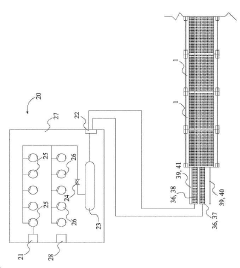
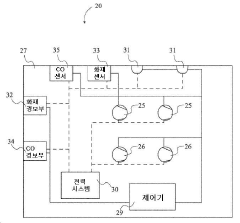
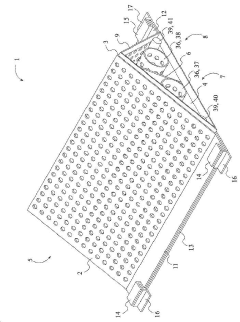
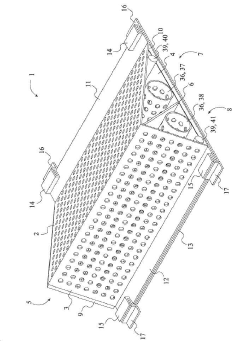
- A transverse hydraulic laminar flow system that creates and sustains an air layer between a vessel's submerged hull and surrounding water using air dispersion units, base anchors, and an air supply system, without dry docking, to reduce drag, noise, and marine growth.
Cartridge having a microfluidic system for performance of an analysis of a sample
PatentWO2021122511A1
Innovation
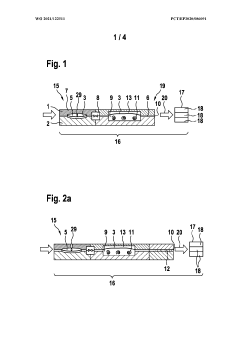
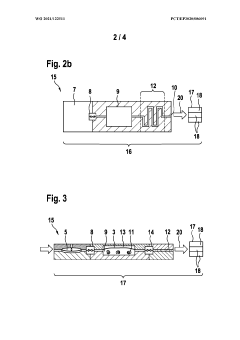
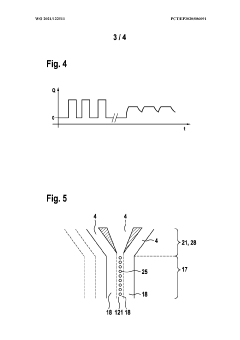
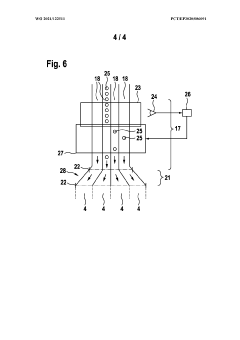
- A microfluidic cartridge with a flow laminarizer and compensation capacity is designed to generate laminar flows by slowing down fluid flow through channel geometry changes and using a flexible membrane to dampen pressure fluctuations, ensuring laminar conditions are maintained in the analysis section for precise sample analysis and sorting.
Environmental Impact Assessment of Laminar Flow Technologies
The deployment of laminar flow technologies in future ocean exploration necessitates a comprehensive environmental impact assessment to ensure sustainable and responsible implementation. This evaluation encompasses various aspects of marine ecosystems and their potential interactions with laminar flow systems.
Firstly, the impact on water quality must be considered. Laminar flow technologies may alter local water circulation patterns, potentially affecting nutrient distribution and dissolved oxygen levels. These changes could have cascading effects on marine life, particularly in sensitive habitats such as coral reefs or seagrass meadows. Long-term monitoring of water chemistry and turbidity would be essential to understand and mitigate any adverse effects.
The acoustic impact of laminar flow systems is another crucial consideration. Many marine species rely on sound for communication, navigation, and prey detection. The introduction of new sound sources, even if relatively quiet, could disrupt these natural processes. Studies would need to assess the frequency range and intensity of sounds produced by laminar flow technologies and their potential effects on marine fauna, especially cetaceans and other acoustically sensitive species.
Energy consumption and its associated environmental footprint must also be evaluated. While laminar flow may improve efficiency in some aspects of ocean exploration, the power requirements for maintaining such flow conditions could be significant. A life cycle assessment of the energy use and potential emissions related to these technologies would be necessary to determine their overall environmental impact compared to conventional exploration methods.
The physical presence of laminar flow devices in the marine environment raises concerns about habitat alteration and species interactions. These structures could serve as artificial reefs, potentially benefiting some species while displacing others. The risk of entanglement or collision for marine mammals, sea turtles, and large fish should be carefully assessed and minimized through thoughtful design and placement of equipment.
Lastly, the potential for introducing invasive species must be addressed. Laminar flow technologies could create new pathways for the transport of organisms across ocean basins, potentially disrupting local ecosystems. Rigorous biosecurity protocols would need to be developed and implemented to prevent unintended species introductions.
In conclusion, while laminar flow technologies hold promise for advancing ocean exploration, their environmental impact must be thoroughly assessed and continuously monitored. A precautionary approach, coupled with adaptive management strategies, will be crucial in balancing the benefits of these technologies with the preservation of marine ecosystems.
Firstly, the impact on water quality must be considered. Laminar flow technologies may alter local water circulation patterns, potentially affecting nutrient distribution and dissolved oxygen levels. These changes could have cascading effects on marine life, particularly in sensitive habitats such as coral reefs or seagrass meadows. Long-term monitoring of water chemistry and turbidity would be essential to understand and mitigate any adverse effects.
The acoustic impact of laminar flow systems is another crucial consideration. Many marine species rely on sound for communication, navigation, and prey detection. The introduction of new sound sources, even if relatively quiet, could disrupt these natural processes. Studies would need to assess the frequency range and intensity of sounds produced by laminar flow technologies and their potential effects on marine fauna, especially cetaceans and other acoustically sensitive species.
Energy consumption and its associated environmental footprint must also be evaluated. While laminar flow may improve efficiency in some aspects of ocean exploration, the power requirements for maintaining such flow conditions could be significant. A life cycle assessment of the energy use and potential emissions related to these technologies would be necessary to determine their overall environmental impact compared to conventional exploration methods.
The physical presence of laminar flow devices in the marine environment raises concerns about habitat alteration and species interactions. These structures could serve as artificial reefs, potentially benefiting some species while displacing others. The risk of entanglement or collision for marine mammals, sea turtles, and large fish should be carefully assessed and minimized through thoughtful design and placement of equipment.
Lastly, the potential for introducing invasive species must be addressed. Laminar flow technologies could create new pathways for the transport of organisms across ocean basins, potentially disrupting local ecosystems. Rigorous biosecurity protocols would need to be developed and implemented to prevent unintended species introductions.
In conclusion, while laminar flow technologies hold promise for advancing ocean exploration, their environmental impact must be thoroughly assessed and continuously monitored. A precautionary approach, coupled with adaptive management strategies, will be crucial in balancing the benefits of these technologies with the preservation of marine ecosystems.
Regulatory Framework for Deep-Sea Exploration Technologies
The regulatory framework for deep-sea exploration technologies plays a crucial role in governing the deployment of laminar flow systems in future ocean exploration. As the international community increasingly recognizes the importance of sustainable ocean resource management, regulatory bodies have been developing comprehensive guidelines to ensure responsible and environmentally sound practices in deep-sea exploration.
The United Nations Convention on the Law of the Sea (UNCLOS) serves as the foundational legal instrument for ocean governance, providing a framework for the regulation of deep-sea exploration activities. Under UNCLOS, the International Seabed Authority (ISA) is responsible for overseeing and regulating deep-sea mining activities in areas beyond national jurisdiction. The ISA has established regulations and guidelines that address environmental protection, safety standards, and technological requirements for deep-sea exploration.
In the context of laminar flow deployment, regulatory frameworks emphasize the need for environmental impact assessments and the application of best available technologies to minimize ecological disturbances. The precautionary principle is often invoked, requiring operators to demonstrate that their activities will not cause significant harm to marine ecosystems before receiving approval for exploration or exploitation.
National regulatory bodies also play a significant role in shaping the regulatory landscape for deep-sea exploration technologies. Countries with advanced ocean exploration capabilities, such as the United States, Japan, and European Union member states, have developed their own regulatory frameworks that complement international guidelines. These national regulations often focus on specific aspects of deep-sea exploration, including equipment standards, operational protocols, and environmental monitoring requirements.
The regulatory framework for deep-sea exploration technologies is continuously evolving to keep pace with technological advancements and emerging scientific knowledge. Recent developments have seen an increased emphasis on the protection of vulnerable marine ecosystems and the preservation of biodiversity in the deep sea. This has led to the establishment of marine protected areas and the implementation of stricter environmental safeguards for exploration activities.
As the deployment of laminar flow systems in ocean exploration advances, regulatory bodies are likely to develop more specific guidelines addressing this technology. These may include requirements for the design and operation of laminar flow devices, protocols for their deployment and retrieval, and standards for assessing their environmental impact. The regulatory framework will need to balance the potential benefits of laminar flow technology in enhancing exploration capabilities with the imperative of protecting the delicate deep-sea environment.
The United Nations Convention on the Law of the Sea (UNCLOS) serves as the foundational legal instrument for ocean governance, providing a framework for the regulation of deep-sea exploration activities. Under UNCLOS, the International Seabed Authority (ISA) is responsible for overseeing and regulating deep-sea mining activities in areas beyond national jurisdiction. The ISA has established regulations and guidelines that address environmental protection, safety standards, and technological requirements for deep-sea exploration.
In the context of laminar flow deployment, regulatory frameworks emphasize the need for environmental impact assessments and the application of best available technologies to minimize ecological disturbances. The precautionary principle is often invoked, requiring operators to demonstrate that their activities will not cause significant harm to marine ecosystems before receiving approval for exploration or exploitation.
National regulatory bodies also play a significant role in shaping the regulatory landscape for deep-sea exploration technologies. Countries with advanced ocean exploration capabilities, such as the United States, Japan, and European Union member states, have developed their own regulatory frameworks that complement international guidelines. These national regulations often focus on specific aspects of deep-sea exploration, including equipment standards, operational protocols, and environmental monitoring requirements.
The regulatory framework for deep-sea exploration technologies is continuously evolving to keep pace with technological advancements and emerging scientific knowledge. Recent developments have seen an increased emphasis on the protection of vulnerable marine ecosystems and the preservation of biodiversity in the deep sea. This has led to the establishment of marine protected areas and the implementation of stricter environmental safeguards for exploration activities.
As the deployment of laminar flow systems in ocean exploration advances, regulatory bodies are likely to develop more specific guidelines addressing this technology. These may include requirements for the design and operation of laminar flow devices, protocols for their deployment and retrieval, and standards for assessing their environmental impact. The regulatory framework will need to balance the potential benefits of laminar flow technology in enhancing exploration capabilities with the imperative of protecting the delicate deep-sea environment.
Unlock deeper insights with PatSnap Eureka Quick Research — get a full tech report to explore trends and direct your research. Try now!
Generate Your Research Report Instantly with AI Agent
Supercharge your innovation with PatSnap Eureka AI Agent Platform!