How to Leverage Alkyl Modifications for Drug Design?
JUL 15, 20259 MIN READ
Generate Your Research Report Instantly with AI Agent
Patsnap Eureka helps you evaluate technical feasibility & market potential.
Alkyl Modifications in Drug Design: Background and Objectives
Alkyl modifications have played a pivotal role in drug design and development for decades, serving as a cornerstone in medicinal chemistry. These modifications involve the addition or alteration of alkyl groups, which are hydrocarbon chains, to existing molecular structures. The primary objective of such modifications is to enhance the pharmacological properties of drug candidates, ultimately improving their efficacy and safety profiles.
The evolution of alkyl modifications in drug design can be traced back to the early days of pharmaceutical research. Initially, these modifications were employed empirically, often through trial and error approaches. However, as our understanding of molecular interactions and drug-target relationships advanced, the application of alkyl modifications became more sophisticated and targeted.
In recent years, the field has witnessed a significant shift towards rational drug design, where alkyl modifications are strategically implemented based on computational modeling and structure-activity relationship studies. This transition has been driven by advancements in computational chemistry, molecular biology, and high-throughput screening technologies, enabling researchers to predict and optimize the effects of alkyl modifications with greater precision.
The primary goals of leveraging alkyl modifications in drug design are multifaceted. Firstly, they aim to enhance the drug's pharmacokinetic properties, including absorption, distribution, metabolism, and excretion (ADME). By manipulating the lipophilicity and molecular size through alkyl modifications, researchers can fine-tune a compound's ability to cross biological membranes and reach its intended target.
Secondly, alkyl modifications are utilized to improve the binding affinity and selectivity of drug molecules to their target proteins. This is achieved by optimizing the shape and electronic properties of the compound to better complement the binding pocket of the target, potentially leading to increased potency and reduced off-target effects.
Another crucial objective is to modulate the metabolic stability of drug candidates. Strategic alkyl modifications can protect vulnerable sites from enzymatic degradation, thereby extending the half-life of the drug in the body and potentially reducing dosing frequency.
Furthermore, alkyl modifications are employed to address solubility issues, a common challenge in drug development. By carefully balancing hydrophobic and hydrophilic properties through alkyl group manipulations, researchers can enhance the solubility and bioavailability of drug candidates, facilitating their formulation and delivery.
As we look towards the future, the field of alkyl modifications in drug design continues to evolve. Emerging trends include the exploration of novel alkyl groups, such as fluorinated alkyl chains, to impart unique properties to drug molecules. Additionally, there is a growing focus on leveraging alkyl modifications to develop targeted drug delivery systems and to fine-tune the pharmacodynamic properties of biologics and large molecule therapeutics.
The evolution of alkyl modifications in drug design can be traced back to the early days of pharmaceutical research. Initially, these modifications were employed empirically, often through trial and error approaches. However, as our understanding of molecular interactions and drug-target relationships advanced, the application of alkyl modifications became more sophisticated and targeted.
In recent years, the field has witnessed a significant shift towards rational drug design, where alkyl modifications are strategically implemented based on computational modeling and structure-activity relationship studies. This transition has been driven by advancements in computational chemistry, molecular biology, and high-throughput screening technologies, enabling researchers to predict and optimize the effects of alkyl modifications with greater precision.
The primary goals of leveraging alkyl modifications in drug design are multifaceted. Firstly, they aim to enhance the drug's pharmacokinetic properties, including absorption, distribution, metabolism, and excretion (ADME). By manipulating the lipophilicity and molecular size through alkyl modifications, researchers can fine-tune a compound's ability to cross biological membranes and reach its intended target.
Secondly, alkyl modifications are utilized to improve the binding affinity and selectivity of drug molecules to their target proteins. This is achieved by optimizing the shape and electronic properties of the compound to better complement the binding pocket of the target, potentially leading to increased potency and reduced off-target effects.
Another crucial objective is to modulate the metabolic stability of drug candidates. Strategic alkyl modifications can protect vulnerable sites from enzymatic degradation, thereby extending the half-life of the drug in the body and potentially reducing dosing frequency.
Furthermore, alkyl modifications are employed to address solubility issues, a common challenge in drug development. By carefully balancing hydrophobic and hydrophilic properties through alkyl group manipulations, researchers can enhance the solubility and bioavailability of drug candidates, facilitating their formulation and delivery.
As we look towards the future, the field of alkyl modifications in drug design continues to evolve. Emerging trends include the exploration of novel alkyl groups, such as fluorinated alkyl chains, to impart unique properties to drug molecules. Additionally, there is a growing focus on leveraging alkyl modifications to develop targeted drug delivery systems and to fine-tune the pharmacodynamic properties of biologics and large molecule therapeutics.
Market Analysis for Alkyl-Modified Drugs
The market for alkyl-modified drugs has shown significant growth potential in recent years, driven by the increasing demand for more effective and targeted therapeutic solutions. Alkyl modifications have emerged as a powerful tool in drug design, offering enhanced pharmacokinetic properties, improved bioavailability, and reduced toxicity profiles for various pharmaceutical compounds.
The global market for alkyl-modified drugs is expected to experience robust growth over the next decade. This growth is primarily attributed to the rising prevalence of chronic diseases, the need for more efficient drug delivery systems, and the continuous advancements in medicinal chemistry and drug discovery technologies. The pharmaceutical industry's focus on developing personalized medicine and precision therapies has further accelerated the adoption of alkyl modification techniques in drug design.
Key market segments for alkyl-modified drugs include oncology, neurology, cardiovascular diseases, and infectious diseases. Among these, oncology represents the largest market share, with a growing pipeline of alkyl-modified anticancer drugs showing promising results in clinical trials. The neurology segment is also witnessing rapid growth, particularly in the development of drugs for neurodegenerative disorders such as Alzheimer's and Parkinson's disease.
Geographically, North America and Europe dominate the alkyl-modified drug market, owing to their well-established pharmaceutical industries, robust research and development infrastructure, and favorable regulatory environments. However, the Asia-Pacific region is expected to exhibit the highest growth rate in the coming years, driven by increasing healthcare expenditure, growing awareness of advanced therapies, and the presence of a large patient population.
The competitive landscape of the alkyl-modified drug market is characterized by the presence of both large pharmaceutical companies and innovative biotech firms. Major players are investing heavily in research and development to expand their product portfolios and gain a competitive edge. Strategic collaborations, mergers, and acquisitions are common strategies employed by companies to strengthen their market position and access new technologies.
Despite the promising outlook, the market for alkyl-modified drugs faces several challenges. These include the high costs associated with drug development, stringent regulatory requirements, and the need for extensive clinical trials to demonstrate safety and efficacy. Additionally, patent expirations and the emergence of biosimilars pose potential threats to market growth.
In conclusion, the market for alkyl-modified drugs presents significant opportunities for pharmaceutical companies and investors. As research in this field continues to advance, it is expected to revolutionize drug design and development, leading to more effective and personalized treatment options for patients across various therapeutic areas.
The global market for alkyl-modified drugs is expected to experience robust growth over the next decade. This growth is primarily attributed to the rising prevalence of chronic diseases, the need for more efficient drug delivery systems, and the continuous advancements in medicinal chemistry and drug discovery technologies. The pharmaceutical industry's focus on developing personalized medicine and precision therapies has further accelerated the adoption of alkyl modification techniques in drug design.
Key market segments for alkyl-modified drugs include oncology, neurology, cardiovascular diseases, and infectious diseases. Among these, oncology represents the largest market share, with a growing pipeline of alkyl-modified anticancer drugs showing promising results in clinical trials. The neurology segment is also witnessing rapid growth, particularly in the development of drugs for neurodegenerative disorders such as Alzheimer's and Parkinson's disease.
Geographically, North America and Europe dominate the alkyl-modified drug market, owing to their well-established pharmaceutical industries, robust research and development infrastructure, and favorable regulatory environments. However, the Asia-Pacific region is expected to exhibit the highest growth rate in the coming years, driven by increasing healthcare expenditure, growing awareness of advanced therapies, and the presence of a large patient population.
The competitive landscape of the alkyl-modified drug market is characterized by the presence of both large pharmaceutical companies and innovative biotech firms. Major players are investing heavily in research and development to expand their product portfolios and gain a competitive edge. Strategic collaborations, mergers, and acquisitions are common strategies employed by companies to strengthen their market position and access new technologies.
Despite the promising outlook, the market for alkyl-modified drugs faces several challenges. These include the high costs associated with drug development, stringent regulatory requirements, and the need for extensive clinical trials to demonstrate safety and efficacy. Additionally, patent expirations and the emergence of biosimilars pose potential threats to market growth.
In conclusion, the market for alkyl-modified drugs presents significant opportunities for pharmaceutical companies and investors. As research in this field continues to advance, it is expected to revolutionize drug design and development, leading to more effective and personalized treatment options for patients across various therapeutic areas.
Current Challenges in Alkyl Modification Techniques
Alkyl modification techniques in drug design face several significant challenges that hinder their widespread application and effectiveness. One of the primary obstacles is the lack of precise control over the position and extent of alkylation. This imprecision can lead to unintended modifications, potentially altering the drug's efficacy or safety profile. Researchers struggle to develop methods that allow for site-specific alkylation, especially in complex molecular structures.
Another major challenge lies in the stability of alkyl modifications. Many alkylated compounds are susceptible to degradation or undesired reactions under physiological conditions. This instability can result in reduced drug half-life, diminished therapeutic effects, or the formation of potentially toxic metabolites. Developing strategies to enhance the stability of alkyl modifications without compromising their intended functions remains a significant hurdle.
The bioavailability of alkylated drugs presents yet another challenge. Alkyl groups can significantly alter a compound's physicochemical properties, potentially affecting its solubility, permeability, and overall pharmacokinetic profile. Balancing the benefits of alkylation with the need to maintain or improve bioavailability requires careful consideration and often involves complex trade-offs.
Furthermore, the scalability of alkyl modification techniques poses difficulties in industrial settings. Many current methods are effective at small scales but face challenges when scaled up for commercial production. Issues such as reagent costs, reaction efficiency, and purification processes become more pronounced at larger scales, necessitating the development of more robust and economically viable alkylation strategies.
The potential for off-target effects and toxicity remains a persistent concern in alkyl modification techniques. Alkylating agents can be highly reactive, potentially leading to unintended modifications of biological molecules in vivo. This reactivity can result in adverse effects or toxicity, complicating the drug development process and requiring extensive safety evaluations.
Lastly, the limited diversity of available alkylating agents restricts the range of modifications that can be achieved. While there is a growing arsenal of alkylating reagents, many desirable modifications remain challenging or impossible to implement. Expanding the toolkit of alkylating agents and developing novel chemistries for alkyl group introduction are crucial for advancing the field and unlocking new possibilities in drug design.
Addressing these challenges requires a multidisciplinary approach, combining advances in synthetic chemistry, computational modeling, and biological evaluation. As researchers continue to innovate and overcome these obstacles, the potential for alkyl modifications to revolutionize drug design and development remains significant, promising more effective and tailored therapeutic solutions in the future.
Another major challenge lies in the stability of alkyl modifications. Many alkylated compounds are susceptible to degradation or undesired reactions under physiological conditions. This instability can result in reduced drug half-life, diminished therapeutic effects, or the formation of potentially toxic metabolites. Developing strategies to enhance the stability of alkyl modifications without compromising their intended functions remains a significant hurdle.
The bioavailability of alkylated drugs presents yet another challenge. Alkyl groups can significantly alter a compound's physicochemical properties, potentially affecting its solubility, permeability, and overall pharmacokinetic profile. Balancing the benefits of alkylation with the need to maintain or improve bioavailability requires careful consideration and often involves complex trade-offs.
Furthermore, the scalability of alkyl modification techniques poses difficulties in industrial settings. Many current methods are effective at small scales but face challenges when scaled up for commercial production. Issues such as reagent costs, reaction efficiency, and purification processes become more pronounced at larger scales, necessitating the development of more robust and economically viable alkylation strategies.
The potential for off-target effects and toxicity remains a persistent concern in alkyl modification techniques. Alkylating agents can be highly reactive, potentially leading to unintended modifications of biological molecules in vivo. This reactivity can result in adverse effects or toxicity, complicating the drug development process and requiring extensive safety evaluations.
Lastly, the limited diversity of available alkylating agents restricts the range of modifications that can be achieved. While there is a growing arsenal of alkylating reagents, many desirable modifications remain challenging or impossible to implement. Expanding the toolkit of alkylating agents and developing novel chemistries for alkyl group introduction are crucial for advancing the field and unlocking new possibilities in drug design.
Addressing these challenges requires a multidisciplinary approach, combining advances in synthetic chemistry, computational modeling, and biological evaluation. As researchers continue to innovate and overcome these obstacles, the potential for alkyl modifications to revolutionize drug design and development remains significant, promising more effective and tailored therapeutic solutions in the future.
Existing Alkyl Modification Methods in Drug Design
01 Alkyl modifications in chemical compounds
Alkyl modifications involve the addition or alteration of alkyl groups in chemical compounds. These modifications can change the properties of molecules, affecting their reactivity, solubility, and other characteristics. This technique is widely used in organic synthesis and pharmaceutical development to optimize drug candidates or create new materials with desired properties.- Alkyl modifications in chemical compounds: Alkyl modifications involve the addition or alteration of alkyl groups in chemical compounds. These modifications can change the properties of the compounds, such as solubility, reactivity, or biological activity. This technique is widely used in various fields, including pharmaceuticals, materials science, and organic synthesis.
- Alkyl modifications in data structures and algorithms: In computer science, alkyl modifications can refer to specific alterations or optimizations in data structures and algorithms. These modifications may improve performance, efficiency, or functionality of software systems. This approach is particularly relevant in areas such as database management, search algorithms, and data processing.
- Alkyl modifications in machine learning and AI: Alkyl modifications in the context of machine learning and artificial intelligence may involve adjustments to model architectures, training algorithms, or data preprocessing techniques. These modifications can enhance the performance, accuracy, or generalization capabilities of AI models across various applications.
- Alkyl modifications in network communication: In network communication, alkyl modifications may refer to specific changes in protocols, data transmission methods, or encryption techniques. These modifications can improve security, efficiency, or reliability of network communications across different platforms and devices.
- Alkyl modifications in user interface design: Alkyl modifications in user interface design involve specific changes to the layout, interaction patterns, or visual elements of software interfaces. These modifications aim to enhance user experience, accessibility, or functionality across different devices and platforms.
02 Computational methods for predicting alkyl modifications
Advanced computational methods and algorithms are employed to predict and analyze the effects of alkyl modifications on molecular structures. These tools can simulate various alkyl group additions or substitutions, helping researchers to efficiently design and optimize compounds with specific properties or functions without extensive laboratory testing.Expand Specific Solutions03 Database systems for managing alkyl modification data
Specialized database systems are developed to store, organize, and retrieve information related to alkyl modifications. These systems can handle large volumes of chemical data, including molecular structures, properties, and experimental results. They enable researchers to efficiently access and analyze data on various alkyl modifications, facilitating the discovery of new compounds or optimization of existing ones.Expand Specific Solutions04 Alkyl modifications in polymer science
In polymer science, alkyl modifications play a crucial role in tailoring the properties of polymeric materials. By introducing or altering alkyl groups in polymer chains, researchers can modify characteristics such as hydrophobicity, thermal stability, and mechanical strength. This approach is valuable in developing advanced materials for various applications, including coatings, adhesives, and biomedical devices.Expand Specific Solutions05 Analytical techniques for characterizing alkyl modifications
Various analytical techniques are employed to characterize and quantify alkyl modifications in molecules. These may include spectroscopic methods such as NMR and mass spectrometry, as well as chromatographic techniques. Advanced imaging and microscopy methods can also be used to visualize the effects of alkyl modifications on molecular structures or material properties at different scales.Expand Specific Solutions
Key Players in Alkyl-Modified Drug Development
The field of alkyl modifications for drug design is in a mature stage of development, with a significant market size and established players. The technology's maturity is evident from the involvement of major pharmaceutical companies like Pfizer, Bristol Myers Squibb, and Merck Sharp & Dohme Corp. These industry leaders, along with specialized firms such as PTC Therapeutics and ArQule, are driving innovation in this area. Academic institutions like the University of Zurich and Massachusetts Institute of Technology contribute to the research landscape, while biotechnology companies like Rigel Pharmaceuticals and Cumberland Pharmaceuticals focus on developing novel drug candidates. The competitive landscape is diverse, with players ranging from global pharmaceutical giants to smaller, specialized research-oriented firms, indicating a robust and dynamic market for alkyl modification technologies in drug design.
Jiangsu Hengrui Pharmaceuticals Co., Ltd.
Technical Solution: Jiangsu Hengrui Pharmaceuticals leverages alkyl modifications in their drug design process to enhance the efficacy and safety profiles of their compounds. They employ rational drug design approaches, utilizing alkyl groups to optimize the pharmacokinetic properties of their drug candidates[13]. Hengrui's strategy includes the use of alkyl substituents to modulate the electronic properties of key functional groups, potentially improving target binding and selectivity[14]. They also explore the application of alkyl modifications in the development of long-acting formulations, aiming to reduce dosing frequency and improve patient compliance[15]. Additionally, Hengrui investigates the use of alkyl linkers in the design of dual-targeting compounds, potentially addressing multiple disease pathways simultaneously[16].
Strengths: Strong presence in the Chinese pharmaceutical market, growing international pipeline, and expertise in medicinal chemistry. Weaknesses: Relatively limited global presence compared to multinational pharmaceutical companies.
Merck Sharp & Dohme Corp.
Technical Solution: Merck Sharp & Dohme Corp. employs alkyl modifications in their drug design process to enhance the pharmacological properties of their compounds. They utilize computational chemistry and molecular modeling to predict the effects of various alkyl substituents on target binding and ADME properties[5]. Merck's approach includes the strategic placement of alkyl groups to improve metabolic stability, reduce toxicity, and enhance target selectivity[6]. They also explore the use of alkyl spacers in the design of prodrugs, allowing for better control over drug release and activation[7]. Furthermore, Merck investigates the impact of alkyl modifications on the crystal packing of solid dosage forms, potentially improving drug solubility and bioavailability[8].
Strengths: Strong track record in drug discovery, robust pipeline, and expertise in computational chemistry. Weaknesses: High competition in key therapeutic areas may limit the application of novel alkyl modification strategies.
Innovative Alkyl Modification Approaches
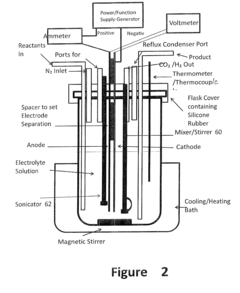
Conversion of Pharmaceuticals and Chemicals into different Compounds by Polarity Reversal Electrolysis
PatentInactiveUS20160097134A1
Innovation
- A process involving polarity reversing electrolysis to decarboxylate carboxylic acids, producing decarboxylated derivatives like hydrocarbons, alkenes, and alkyl-aryl hydrocarbons, which preserves double bonds and reduces energy consumption by utilizing hydrogen generated in the process, and avoids the need for external hydrogen sources.



Regulatory Considerations for Alkyl-Modified Drugs
The regulatory landscape for alkyl-modified drugs is complex and multifaceted, requiring careful consideration throughout the drug development process. Regulatory agencies, such as the FDA in the United States and the EMA in Europe, have established specific guidelines and requirements for the approval of drugs containing alkyl modifications.
One of the primary regulatory considerations is the safety assessment of alkyl-modified drugs. Regulatory bodies require extensive preclinical and clinical studies to evaluate the potential toxicity and long-term effects of these modifications. This includes thorough examination of the pharmacokinetics and pharmacodynamics of the modified compounds, as well as their potential for off-target effects and drug-drug interactions.
The manufacturing process for alkyl-modified drugs is subject to stringent regulatory oversight. Good Manufacturing Practices (GMP) must be adhered to, with particular attention paid to the consistency and purity of the alkyl modifications. Regulatory agencies often require detailed documentation of the synthetic processes, analytical methods, and quality control measures employed in the production of these drugs.
Intellectual property considerations also play a significant role in the regulatory landscape. Patent protection for novel alkyl modifications and their applications in drug design is crucial for pharmaceutical companies. Regulatory bodies may require disclosure of relevant patents and their expiration dates as part of the approval process.
The regulatory pathway for alkyl-modified drugs may vary depending on whether the modification is applied to a new chemical entity or an existing approved drug. For modifications to existing drugs, regulatory agencies often require comparative studies to demonstrate the benefits and potential risks of the alkyl-modified version compared to the original compound.
Labeling and packaging requirements for alkyl-modified drugs are another important regulatory consideration. Clear and accurate information about the nature of the modification, its impact on drug properties, and any specific handling or storage requirements must be provided to healthcare professionals and patients.
Post-market surveillance is a critical component of the regulatory framework for alkyl-modified drugs. Regulatory agencies typically require ongoing monitoring and reporting of adverse events, as well as periodic safety updates to ensure the continued safety and efficacy of these drugs in real-world use.
One of the primary regulatory considerations is the safety assessment of alkyl-modified drugs. Regulatory bodies require extensive preclinical and clinical studies to evaluate the potential toxicity and long-term effects of these modifications. This includes thorough examination of the pharmacokinetics and pharmacodynamics of the modified compounds, as well as their potential for off-target effects and drug-drug interactions.
The manufacturing process for alkyl-modified drugs is subject to stringent regulatory oversight. Good Manufacturing Practices (GMP) must be adhered to, with particular attention paid to the consistency and purity of the alkyl modifications. Regulatory agencies often require detailed documentation of the synthetic processes, analytical methods, and quality control measures employed in the production of these drugs.
Intellectual property considerations also play a significant role in the regulatory landscape. Patent protection for novel alkyl modifications and their applications in drug design is crucial for pharmaceutical companies. Regulatory bodies may require disclosure of relevant patents and their expiration dates as part of the approval process.
The regulatory pathway for alkyl-modified drugs may vary depending on whether the modification is applied to a new chemical entity or an existing approved drug. For modifications to existing drugs, regulatory agencies often require comparative studies to demonstrate the benefits and potential risks of the alkyl-modified version compared to the original compound.
Labeling and packaging requirements for alkyl-modified drugs are another important regulatory consideration. Clear and accurate information about the nature of the modification, its impact on drug properties, and any specific handling or storage requirements must be provided to healthcare professionals and patients.
Post-market surveillance is a critical component of the regulatory framework for alkyl-modified drugs. Regulatory agencies typically require ongoing monitoring and reporting of adverse events, as well as periodic safety updates to ensure the continued safety and efficacy of these drugs in real-world use.
Safety and Toxicity Assessment of Alkyl Modifications
The safety and toxicity assessment of alkyl modifications is a critical aspect of drug design and development. This evaluation process involves a comprehensive analysis of potential risks associated with the introduction of alkyl groups to drug molecules. Researchers must consider both the direct effects of these modifications on the drug's safety profile and any indirect consequences that may arise from altered pharmacokinetics or metabolic pathways.
One primary focus of safety assessment is the potential for alkyl modifications to influence the drug's interaction with biological systems. This includes evaluating the impact on target binding, off-target effects, and overall toxicity profiles. Alkyl groups can significantly alter a compound's lipophilicity, which may affect its distribution in the body and its ability to cross biological barriers. These changes can lead to unexpected accumulation in certain tissues or organs, potentially increasing the risk of adverse effects.
Metabolic considerations play a crucial role in the safety evaluation of alkylated drugs. The introduction of alkyl groups can create new sites for metabolic transformation, potentially leading to the formation of reactive metabolites. These metabolites may interact with cellular components, causing toxicity or triggering immune responses. Comprehensive metabolic studies, including in vitro and in vivo assessments, are essential to identify and characterize these potential risks.
Toxicity testing for alkyl-modified drugs typically involves a battery of in vitro and in vivo studies. These may include genotoxicity assays, acute and chronic toxicity studies, and specific organ toxicity evaluations. Particular attention is often given to hepatotoxicity and nephrotoxicity, as the liver and kidneys are primary sites of drug metabolism and elimination. Advanced techniques such as toxicogenomics and metabolomics are increasingly employed to provide a more comprehensive understanding of toxicity mechanisms.
The long-term effects of alkyl modifications on drug safety are another critical consideration. Chronic exposure studies are conducted to assess the potential for cumulative toxicity or delayed onset of adverse effects. These studies also help to identify any carcinogenic potential or effects on reproductive health that may not be apparent in short-term evaluations.
Regulatory agencies have established guidelines for the safety assessment of new chemical entities, including those with alkyl modifications. Adherence to these guidelines is essential for drug developers to ensure a thorough evaluation of potential risks. The data generated from these assessments not only informs decision-making during the drug development process but also contributes to the overall body of knowledge regarding the safety of alkyl modifications in pharmaceutical compounds.
One primary focus of safety assessment is the potential for alkyl modifications to influence the drug's interaction with biological systems. This includes evaluating the impact on target binding, off-target effects, and overall toxicity profiles. Alkyl groups can significantly alter a compound's lipophilicity, which may affect its distribution in the body and its ability to cross biological barriers. These changes can lead to unexpected accumulation in certain tissues or organs, potentially increasing the risk of adverse effects.
Metabolic considerations play a crucial role in the safety evaluation of alkylated drugs. The introduction of alkyl groups can create new sites for metabolic transformation, potentially leading to the formation of reactive metabolites. These metabolites may interact with cellular components, causing toxicity or triggering immune responses. Comprehensive metabolic studies, including in vitro and in vivo assessments, are essential to identify and characterize these potential risks.
Toxicity testing for alkyl-modified drugs typically involves a battery of in vitro and in vivo studies. These may include genotoxicity assays, acute and chronic toxicity studies, and specific organ toxicity evaluations. Particular attention is often given to hepatotoxicity and nephrotoxicity, as the liver and kidneys are primary sites of drug metabolism and elimination. Advanced techniques such as toxicogenomics and metabolomics are increasingly employed to provide a more comprehensive understanding of toxicity mechanisms.
The long-term effects of alkyl modifications on drug safety are another critical consideration. Chronic exposure studies are conducted to assess the potential for cumulative toxicity or delayed onset of adverse effects. These studies also help to identify any carcinogenic potential or effects on reproductive health that may not be apparent in short-term evaluations.
Regulatory agencies have established guidelines for the safety assessment of new chemical entities, including those with alkyl modifications. Adherence to these guidelines is essential for drug developers to ensure a thorough evaluation of potential risks. The data generated from these assessments not only informs decision-making during the drug development process but also contributes to the overall body of knowledge regarding the safety of alkyl modifications in pharmaceutical compounds.
Unlock deeper insights with Patsnap Eureka Quick Research — get a full tech report to explore trends and direct your research. Try now!
Generate Your Research Report Instantly with AI Agent
Supercharge your innovation with Patsnap Eureka AI Agent Platform!