How weather factors affect EREV operational efficiency
AUG 14, 202510 MIN READ
Generate Your Research Report Instantly with AI Agent
PatSnap Eureka helps you evaluate technical feasibility & market potential.
EREV Weather Impact Background
Extended Range Electric Vehicles (EREVs) have emerged as a promising solution to address the limitations of traditional electric vehicles, particularly in terms of range anxiety. These vehicles combine the benefits of both electric and conventional powertrains, offering extended driving range and improved operational flexibility. However, the performance and efficiency of EREVs are significantly influenced by various weather factors, making it crucial to understand their impact on the overall operational efficiency of these vehicles.
Weather conditions play a pivotal role in determining the energy consumption, range, and overall performance of EREVs. Temperature, humidity, precipitation, and wind speed are among the key weather factors that can affect the vehicle's operational efficiency. These factors can impact various components and systems of the EREV, including the battery, electric motor, internal combustion engine, and thermal management systems.
One of the most significant weather-related challenges for EREVs is extreme temperatures. Cold weather can lead to reduced battery capacity and increased energy consumption for cabin heating, resulting in decreased electric range. Conversely, hot weather can cause battery overheating, necessitating additional cooling and potentially reducing overall efficiency. These temperature-related issues are particularly pronounced in EREVs due to their reliance on both electric and conventional powertrains.
Humidity levels can also affect EREV performance, particularly in relation to the air conditioning system and battery thermal management. High humidity may increase the load on the air conditioning system, leading to higher energy consumption and reduced efficiency. Additionally, humidity can impact the effectiveness of battery cooling systems, potentially affecting battery life and performance over time.
Precipitation, such as rain or snow, can have both direct and indirect effects on EREV operational efficiency. Wet road conditions can increase rolling resistance and reduce traction, leading to higher energy consumption. Snow accumulation on the vehicle can increase aerodynamic drag and vehicle weight, further impacting efficiency. Moreover, the use of windshield wipers, defrosters, and other weather-related accessories can contribute to increased energy consumption.
Wind speed and direction are additional factors that can influence EREV efficiency. Strong headwinds can significantly increase aerodynamic drag, leading to higher energy consumption and reduced range. Conversely, tailwinds may provide a slight efficiency boost. The impact of wind on EREV performance can be more pronounced compared to conventional vehicles due to the importance of maximizing electric range.
Understanding these weather-related impacts on EREV operational efficiency is crucial for vehicle manufacturers, fleet operators, and individual users. It enables the development of more robust and adaptive vehicle systems, improved energy management strategies, and better-informed decision-making regarding vehicle usage and charging patterns. As EREV technology continues to evolve, addressing these weather-related challenges will be key to enhancing their overall performance and market acceptance.
Weather conditions play a pivotal role in determining the energy consumption, range, and overall performance of EREVs. Temperature, humidity, precipitation, and wind speed are among the key weather factors that can affect the vehicle's operational efficiency. These factors can impact various components and systems of the EREV, including the battery, electric motor, internal combustion engine, and thermal management systems.
One of the most significant weather-related challenges for EREVs is extreme temperatures. Cold weather can lead to reduced battery capacity and increased energy consumption for cabin heating, resulting in decreased electric range. Conversely, hot weather can cause battery overheating, necessitating additional cooling and potentially reducing overall efficiency. These temperature-related issues are particularly pronounced in EREVs due to their reliance on both electric and conventional powertrains.
Humidity levels can also affect EREV performance, particularly in relation to the air conditioning system and battery thermal management. High humidity may increase the load on the air conditioning system, leading to higher energy consumption and reduced efficiency. Additionally, humidity can impact the effectiveness of battery cooling systems, potentially affecting battery life and performance over time.
Precipitation, such as rain or snow, can have both direct and indirect effects on EREV operational efficiency. Wet road conditions can increase rolling resistance and reduce traction, leading to higher energy consumption. Snow accumulation on the vehicle can increase aerodynamic drag and vehicle weight, further impacting efficiency. Moreover, the use of windshield wipers, defrosters, and other weather-related accessories can contribute to increased energy consumption.
Wind speed and direction are additional factors that can influence EREV efficiency. Strong headwinds can significantly increase aerodynamic drag, leading to higher energy consumption and reduced range. Conversely, tailwinds may provide a slight efficiency boost. The impact of wind on EREV performance can be more pronounced compared to conventional vehicles due to the importance of maximizing electric range.
Understanding these weather-related impacts on EREV operational efficiency is crucial for vehicle manufacturers, fleet operators, and individual users. It enables the development of more robust and adaptive vehicle systems, improved energy management strategies, and better-informed decision-making regarding vehicle usage and charging patterns. As EREV technology continues to evolve, addressing these weather-related challenges will be key to enhancing their overall performance and market acceptance.
EREV Market Demand Analysis
The market demand for Extended Range Electric Vehicles (EREVs) has been steadily growing in recent years, driven by increasing environmental concerns and the need for more flexible and efficient transportation solutions. EREVs offer a unique combination of electric vehicle benefits and the extended range capabilities of traditional combustion engines, making them an attractive option for consumers seeking to reduce their carbon footprint without compromising on convenience.
The global EREV market is expected to experience significant growth in the coming years, with projections indicating a compound annual growth rate (CAGR) of over 10% between 2021 and 2026. This growth is primarily attributed to the increasing adoption of electric vehicles, supportive government policies, and advancements in battery technology. The market demand for EREVs is particularly strong in regions with well-developed charging infrastructure and favorable incentives for electric vehicle adoption.
One of the key factors driving the demand for EREVs is their ability to address range anxiety, a common concern among potential electric vehicle buyers. By offering an extended range through a combination of electric and gasoline power, EREVs provide a practical solution for consumers who require longer driving distances or have limited access to charging stations. This feature makes EREVs especially appealing in areas with less developed charging infrastructure or for consumers who frequently undertake long-distance trips.
The impact of weather factors on EREV operational efficiency has become an increasingly important consideration for both manufacturers and consumers. As extreme weather events become more frequent due to climate change, the performance of EREVs under various weather conditions has gained significant attention. Consumers are increasingly seeking vehicles that can maintain optimal efficiency and range regardless of external temperature, precipitation, or other weather-related factors.
Market research indicates that consumers are willing to pay a premium for EREVs that demonstrate superior performance in adverse weather conditions. This demand has led to increased investment in research and development by automotive manufacturers to improve EREV technology and address weather-related challenges. Innovations in battery thermal management systems, regenerative braking efficiency, and overall vehicle aerodynamics are being pursued to enhance EREV performance across diverse weather scenarios.
The commercial sector has also shown growing interest in EREVs, particularly for fleet operations in regions with variable weather conditions. Businesses are recognizing the potential of EREVs to maintain operational efficiency while reducing fuel costs and environmental impact. This trend is expected to further drive market demand for EREVs in the coming years, especially in industries such as logistics, ride-sharing, and public transportation.
As the market for EREVs continues to evolve, manufacturers are focusing on developing more advanced weather-resistant technologies to meet consumer expectations and regulatory requirements. This ongoing innovation is likely to result in EREVs that offer even greater operational efficiency across a wide range of weather conditions, further stimulating market demand and accelerating the transition towards more sustainable transportation solutions.
The global EREV market is expected to experience significant growth in the coming years, with projections indicating a compound annual growth rate (CAGR) of over 10% between 2021 and 2026. This growth is primarily attributed to the increasing adoption of electric vehicles, supportive government policies, and advancements in battery technology. The market demand for EREVs is particularly strong in regions with well-developed charging infrastructure and favorable incentives for electric vehicle adoption.
One of the key factors driving the demand for EREVs is their ability to address range anxiety, a common concern among potential electric vehicle buyers. By offering an extended range through a combination of electric and gasoline power, EREVs provide a practical solution for consumers who require longer driving distances or have limited access to charging stations. This feature makes EREVs especially appealing in areas with less developed charging infrastructure or for consumers who frequently undertake long-distance trips.
The impact of weather factors on EREV operational efficiency has become an increasingly important consideration for both manufacturers and consumers. As extreme weather events become more frequent due to climate change, the performance of EREVs under various weather conditions has gained significant attention. Consumers are increasingly seeking vehicles that can maintain optimal efficiency and range regardless of external temperature, precipitation, or other weather-related factors.
Market research indicates that consumers are willing to pay a premium for EREVs that demonstrate superior performance in adverse weather conditions. This demand has led to increased investment in research and development by automotive manufacturers to improve EREV technology and address weather-related challenges. Innovations in battery thermal management systems, regenerative braking efficiency, and overall vehicle aerodynamics are being pursued to enhance EREV performance across diverse weather scenarios.
The commercial sector has also shown growing interest in EREVs, particularly for fleet operations in regions with variable weather conditions. Businesses are recognizing the potential of EREVs to maintain operational efficiency while reducing fuel costs and environmental impact. This trend is expected to further drive market demand for EREVs in the coming years, especially in industries such as logistics, ride-sharing, and public transportation.
As the market for EREVs continues to evolve, manufacturers are focusing on developing more advanced weather-resistant technologies to meet consumer expectations and regulatory requirements. This ongoing innovation is likely to result in EREVs that offer even greater operational efficiency across a wide range of weather conditions, further stimulating market demand and accelerating the transition towards more sustainable transportation solutions.
Weather Challenges for EREV
Extended Range Electric Vehicles (EREVs) face significant operational challenges due to various weather factors. Temperature fluctuations, precipitation, wind, and other atmospheric conditions can substantially impact the performance and efficiency of these vehicles. Extreme temperatures, both hot and cold, affect battery performance and range. In cold weather, battery capacity decreases, reducing the overall driving range. Conversely, high temperatures can lead to accelerated battery degradation and potential overheating issues.
Precipitation, such as rain, snow, and ice, poses additional challenges for EREVs. Wet road conditions increase rolling resistance and energy consumption, while snow and ice accumulation on the vehicle can add weight and reduce aerodynamic efficiency. Furthermore, the use of climate control systems to maintain cabin comfort in adverse weather conditions draws additional power from the battery, further impacting the vehicle's range.
Wind is another critical factor affecting EREV efficiency. Strong headwinds increase aerodynamic drag, requiring more energy to maintain speed and potentially reducing range. Crosswinds can also affect vehicle stability and handling, particularly for lighter electric vehicles. These wind-related challenges may necessitate more frequent charging stops or route adjustments to optimize energy consumption.
Humidity levels can impact the performance of EREVs as well. High humidity can lead to increased condensation on electrical components, potentially affecting their functionality and longevity. Additionally, humid conditions may require more frequent use of air conditioning systems, further straining the battery and reducing overall efficiency.
Atmospheric pressure variations, while less significant than other weather factors, can still influence EREV performance. Changes in altitude can affect the power output of electric motors and the efficiency of regenerative braking systems. This is particularly relevant for EREVs operating in mountainous or hilly terrains.
Solar radiation is another weather-related factor that can impact EREV operation. While solar energy can potentially be harnessed to supplement vehicle power through integrated solar panels, intense sunlight can also lead to increased cabin temperatures, necessitating greater use of cooling systems and consequently reducing overall efficiency.
To address these weather-related challenges, EREV manufacturers and operators must implement various strategies. These may include advanced battery thermal management systems, improved aerodynamic designs, and intelligent energy management algorithms that adapt to changing weather conditions. Additionally, the development of more robust weather-resistant components and materials can enhance the resilience of EREVs in diverse climatic environments.
Precipitation, such as rain, snow, and ice, poses additional challenges for EREVs. Wet road conditions increase rolling resistance and energy consumption, while snow and ice accumulation on the vehicle can add weight and reduce aerodynamic efficiency. Furthermore, the use of climate control systems to maintain cabin comfort in adverse weather conditions draws additional power from the battery, further impacting the vehicle's range.
Wind is another critical factor affecting EREV efficiency. Strong headwinds increase aerodynamic drag, requiring more energy to maintain speed and potentially reducing range. Crosswinds can also affect vehicle stability and handling, particularly for lighter electric vehicles. These wind-related challenges may necessitate more frequent charging stops or route adjustments to optimize energy consumption.
Humidity levels can impact the performance of EREVs as well. High humidity can lead to increased condensation on electrical components, potentially affecting their functionality and longevity. Additionally, humid conditions may require more frequent use of air conditioning systems, further straining the battery and reducing overall efficiency.
Atmospheric pressure variations, while less significant than other weather factors, can still influence EREV performance. Changes in altitude can affect the power output of electric motors and the efficiency of regenerative braking systems. This is particularly relevant for EREVs operating in mountainous or hilly terrains.
Solar radiation is another weather-related factor that can impact EREV operation. While solar energy can potentially be harnessed to supplement vehicle power through integrated solar panels, intense sunlight can also lead to increased cabin temperatures, necessitating greater use of cooling systems and consequently reducing overall efficiency.
To address these weather-related challenges, EREV manufacturers and operators must implement various strategies. These may include advanced battery thermal management systems, improved aerodynamic designs, and intelligent energy management algorithms that adapt to changing weather conditions. Additionally, the development of more robust weather-resistant components and materials can enhance the resilience of EREVs in diverse climatic environments.
Current Weather Mitigation Solutions
01 Energy management systems for EREV
Advanced energy management systems are crucial for optimizing the operational efficiency of Extended Range Electric Vehicles (EREVs). These systems intelligently control the distribution of power between the electric motor and the range extender, maximizing the use of electric power and minimizing fuel consumption. They also incorporate predictive algorithms to anticipate driving conditions and adjust power distribution accordingly.- Energy management systems for EREV: Advanced energy management systems are crucial for optimizing the operational efficiency of Extended Range Electric Vehicles (EREVs). These systems intelligently control the distribution of power between the electric motor and the range extender, maximizing the use of electric power and minimizing fuel consumption. They also incorporate predictive algorithms to anticipate driving conditions and adjust power allocation accordingly.
- Regenerative braking optimization: Improving regenerative braking systems in EREVs can significantly enhance operational efficiency. Advanced regenerative braking technologies capture and store more kinetic energy during deceleration, which can then be used to recharge the battery. This reduces the load on the range extender and increases overall energy efficiency.
- Lightweight materials and aerodynamic design: Utilizing lightweight materials in EREV construction and implementing aerodynamic designs can greatly improve operational efficiency. Reduced vehicle weight decreases energy consumption, while improved aerodynamics minimize air resistance, allowing the vehicle to travel further on the same amount of energy.
- Smart charging and grid integration: Developing smart charging systems and improving grid integration for EREVs can enhance overall operational efficiency. These technologies enable optimal charging strategies, taking advantage of off-peak electricity rates and renewable energy sources. They also allow for vehicle-to-grid (V2G) capabilities, potentially providing grid stability services.
- Advanced range extender technologies: Improving the efficiency of range extender engines in EREVs is crucial for overall operational efficiency. This includes developing more fuel-efficient engines, exploring alternative fuels, and optimizing the integration between the range extender and the electric powertrain. Advanced control strategies can also help to minimize emissions and maximize energy conversion efficiency.
02 Regenerative braking optimization
Improving regenerative braking systems in EREVs can significantly enhance operational efficiency. Advanced regenerative braking technologies capture and store more kinetic energy during deceleration, which can then be used to recharge the battery. This reduces the load on the range extender and extends the electric-only driving range, thereby improving overall vehicle efficiency.Expand Specific Solutions03 Lightweight materials and aerodynamic design
Utilizing lightweight materials in EREV construction and implementing aerodynamic design principles can greatly improve operational efficiency. Reducing vehicle weight decreases energy consumption, while improved aerodynamics reduce air resistance. These factors combine to extend the electric-only range and reduce the frequency of range extender activation, leading to better overall efficiency.Expand Specific Solutions04 Advanced battery management systems
Sophisticated battery management systems play a crucial role in EREV operational efficiency. These systems monitor and optimize battery performance, manage thermal conditions, and implement smart charging strategies. By maximizing battery life and performance, they contribute to extended electric range and reduced reliance on the range extender, thereby improving overall vehicle efficiency.Expand Specific Solutions05 Intelligent driving modes and user interfaces
Implementing intelligent driving modes and user-friendly interfaces can significantly enhance EREV operational efficiency. These features allow drivers to select optimal driving modes based on conditions and preferences, provide real-time efficiency feedback, and offer suggestions for maximizing electric range. By engaging drivers in efficient operation, these systems contribute to overall improved vehicle performance and energy utilization.Expand Specific Solutions
Key EREV Manufacturers
The competition landscape for "How weather factors affect EREV operational efficiency" is in an early development stage, with a growing market as electric and hybrid vehicles gain popularity. The technology is still evolving, with varying levels of maturity among key players. Companies like Ford, Geely, and BYD are leading in EREV development, leveraging their automotive expertise. Emerging players such as Chongqing Jinkang and Lantu are also entering the market, focusing on innovative solutions. The research is interdisciplinary, involving automotive engineering, meteorology, and energy management, with potential for significant advancements in optimizing EREV performance under diverse weather conditions.
Ford Global Technologies LLC
Technical Solution: Ford has developed an advanced weather-adaptive EREV system that optimizes operational efficiency based on real-time environmental conditions. The system utilizes a combination of sensors and AI algorithms to continuously monitor temperature, humidity, wind speed, and precipitation. It then adjusts the powertrain's operation mode, battery thermal management, and regenerative braking intensity to maximize energy efficiency[1]. For instance, in cold weather, the system pre-heats the battery and cabin using grid electricity while the vehicle is still plugged in, reducing the energy drain on the battery during initial operation[3]. In hot conditions, it employs predictive cooling strategies to maintain optimal battery temperature without overusing the air conditioning system[5].
Strengths: Comprehensive weather adaptation, real-time optimization, and integration with vehicle systems. Weaknesses: Complexity may lead to higher costs and potential reliability issues in extreme conditions.
Guangzhou Automobile Group Co., Ltd.
Technical Solution: Guangzhou Automobile Group (GAC) has developed a Weather-Optimized Range and Efficiency (WORE) system for their EREVs. This system incorporates a suite of sensors that monitor not only temperature and humidity but also air pressure and solar radiation intensity. GAC's WORE system uses this data to dynamically adjust the power distribution between the electric motor and range extender, optimizing for efficiency in various weather conditions[13]. In cold weather, the system employs a novel phase-change material in the battery pack that releases stored heat to maintain optimal operating temperature, reducing the energy required for battery heating[14]. For hot weather operation, GAC has implemented an intelligent cooling system that prioritizes battery thermal management over cabin cooling when necessary, ensuring maximum range and efficiency[15]. The WORE system also includes an eco-routing feature that considers weather conditions along the planned route to suggest the most energy-efficient path.
Strengths: Comprehensive weather data integration, innovative thermal management solutions, and intelligent route planning. Weaknesses: Potential for increased vehicle complexity and cost due to advanced sensor suite and materials.
Weather-Resistant EREV Technologies
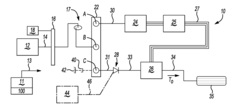
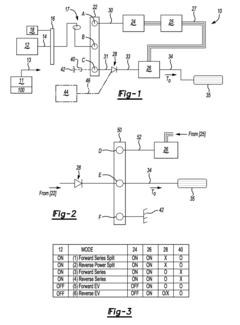
Low content extended-range electric vehicle powertrain
PatentInactiveUS20110297466A1
Innovation
- The EREV design incorporates a direct mechanical path between the engine and drive wheels through a series mode, utilizing two electric machines, a one-way clutch, and an auxiliary starter motor, allowing for efficient operation in various modes including electric-only, power-split, and series modes, with a planetary gear set and controller algorithm to manage these modes.
Environmental Regulations Impact
Environmental regulations play a crucial role in shaping the operational landscape for Extended Range Electric Vehicles (EREVs). These regulations, designed to mitigate the environmental impact of transportation, significantly influence the efficiency and performance of EREVs under various weather conditions.
In regions with stringent emission standards, EREVs are subject to more rigorous testing and compliance requirements. These regulations often mandate specific performance levels in diverse weather scenarios, pushing manufacturers to optimize EREV systems for a wide range of environmental conditions. As a result, the operational efficiency of EREVs in extreme weather is directly impacted by the need to meet these regulatory benchmarks.
Cold weather regions, for instance, may require EREVs to maintain a certain level of battery performance and range even in sub-zero temperatures. This necessitates the implementation of advanced thermal management systems and battery technologies, which can affect the overall energy consumption and efficiency of the vehicle. Conversely, in hot climates, regulations may focus on the cooling efficiency of battery packs and electric motors, influencing the design and operation of these components.
Air quality regulations in urban areas have led to the implementation of low emission zones, where EREVs may be required to operate in pure electric mode. This requirement can impact the vehicle's operational strategy, potentially affecting its overall efficiency depending on the weather conditions and the duration of electric-only operation.
Furthermore, noise pollution regulations can influence the operation of EREVs, particularly in adverse weather conditions. The need for quieter operation may lead to design changes in the powertrain and cooling systems, which can have implications for the vehicle's efficiency in challenging weather scenarios.
Regulatory frameworks also often include incentives for vehicles that demonstrate superior efficiency and environmental performance. These incentives can drive innovation in EREV technology, leading to the development of weather-adaptive systems that optimize performance across various climatic conditions. For example, smart energy management systems that adjust power distribution based on real-time weather data may be developed to meet both regulatory requirements and efficiency goals.
As global climate policies evolve, EREVs are increasingly expected to demonstrate resilience and maintain efficiency across a broader range of weather conditions. This regulatory pressure is driving advancements in materials science, battery chemistry, and thermal management technologies, all of which contribute to improving EREV operational efficiency in diverse weather scenarios.
In conclusion, environmental regulations serve as a significant external factor influencing how weather impacts EREV operational efficiency. These regulations not only set performance standards but also drive technological innovation, shaping the development of EREVs that can maintain high efficiency levels regardless of weather conditions.
In regions with stringent emission standards, EREVs are subject to more rigorous testing and compliance requirements. These regulations often mandate specific performance levels in diverse weather scenarios, pushing manufacturers to optimize EREV systems for a wide range of environmental conditions. As a result, the operational efficiency of EREVs in extreme weather is directly impacted by the need to meet these regulatory benchmarks.
Cold weather regions, for instance, may require EREVs to maintain a certain level of battery performance and range even in sub-zero temperatures. This necessitates the implementation of advanced thermal management systems and battery technologies, which can affect the overall energy consumption and efficiency of the vehicle. Conversely, in hot climates, regulations may focus on the cooling efficiency of battery packs and electric motors, influencing the design and operation of these components.
Air quality regulations in urban areas have led to the implementation of low emission zones, where EREVs may be required to operate in pure electric mode. This requirement can impact the vehicle's operational strategy, potentially affecting its overall efficiency depending on the weather conditions and the duration of electric-only operation.
Furthermore, noise pollution regulations can influence the operation of EREVs, particularly in adverse weather conditions. The need for quieter operation may lead to design changes in the powertrain and cooling systems, which can have implications for the vehicle's efficiency in challenging weather scenarios.
Regulatory frameworks also often include incentives for vehicles that demonstrate superior efficiency and environmental performance. These incentives can drive innovation in EREV technology, leading to the development of weather-adaptive systems that optimize performance across various climatic conditions. For example, smart energy management systems that adjust power distribution based on real-time weather data may be developed to meet both regulatory requirements and efficiency goals.
As global climate policies evolve, EREVs are increasingly expected to demonstrate resilience and maintain efficiency across a broader range of weather conditions. This regulatory pressure is driving advancements in materials science, battery chemistry, and thermal management technologies, all of which contribute to improving EREV operational efficiency in diverse weather scenarios.
In conclusion, environmental regulations serve as a significant external factor influencing how weather impacts EREV operational efficiency. These regulations not only set performance standards but also drive technological innovation, shaping the development of EREVs that can maintain high efficiency levels regardless of weather conditions.
EREV Weather Testing Standards
The development of standardized weather testing protocols for Extended Range Electric Vehicles (EREVs) is crucial for assessing their operational efficiency across various environmental conditions. These standards aim to provide a comprehensive framework for evaluating EREV performance under different weather scenarios, ensuring consistency and reliability in testing procedures.
Weather testing standards for EREVs typically encompass a range of environmental factors, including temperature, humidity, precipitation, wind speed, and atmospheric pressure. These standards often specify controlled laboratory conditions as well as real-world testing scenarios to simulate diverse climatic situations that vehicles may encounter during operation.
Temperature testing is a key component of EREV weather standards, with protocols designed to evaluate vehicle performance in extreme cold and hot conditions. This includes assessing battery efficiency, range impact, and overall system functionality at temperature extremes, often ranging from -40°C to +50°C. Humidity testing is integrated to examine the effects of moisture on electrical components and battery systems, typically conducted in conjunction with temperature variations.
Precipitation testing standards focus on evaluating EREV performance during rain, snow, and icy conditions. These protocols assess factors such as traction control, regenerative braking efficiency, and the impact of water ingress on electrical systems. Wind tunnel testing is incorporated to measure aerodynamic performance and energy consumption under various wind speeds and directions.
EREV weather testing standards also include procedures for evaluating the vehicle's climate control systems, as these significantly impact overall energy consumption and range. This involves measuring the energy required to maintain cabin comfort across different ambient temperatures and humidity levels.
Standardized drive cycles are often specified within these protocols, designed to replicate real-world driving conditions under various weather scenarios. These cycles help in comparing EREV performance across different models and manufacturers, ensuring a level playing field for efficiency assessments.
Additionally, EREV weather testing standards typically include guidelines for data collection, analysis, and reporting. This ensures that test results are presented in a consistent format, facilitating easy comparison and interpretation by regulatory bodies, manufacturers, and consumers alike.
As EREV technology continues to evolve, these weather testing standards are regularly reviewed and updated to incorporate new insights and technological advancements. This ongoing refinement process helps to maintain the relevance and effectiveness of the standards in accurately assessing EREV operational efficiency across diverse weather conditions.
Weather testing standards for EREVs typically encompass a range of environmental factors, including temperature, humidity, precipitation, wind speed, and atmospheric pressure. These standards often specify controlled laboratory conditions as well as real-world testing scenarios to simulate diverse climatic situations that vehicles may encounter during operation.
Temperature testing is a key component of EREV weather standards, with protocols designed to evaluate vehicle performance in extreme cold and hot conditions. This includes assessing battery efficiency, range impact, and overall system functionality at temperature extremes, often ranging from -40°C to +50°C. Humidity testing is integrated to examine the effects of moisture on electrical components and battery systems, typically conducted in conjunction with temperature variations.
Precipitation testing standards focus on evaluating EREV performance during rain, snow, and icy conditions. These protocols assess factors such as traction control, regenerative braking efficiency, and the impact of water ingress on electrical systems. Wind tunnel testing is incorporated to measure aerodynamic performance and energy consumption under various wind speeds and directions.
EREV weather testing standards also include procedures for evaluating the vehicle's climate control systems, as these significantly impact overall energy consumption and range. This involves measuring the energy required to maintain cabin comfort across different ambient temperatures and humidity levels.
Standardized drive cycles are often specified within these protocols, designed to replicate real-world driving conditions under various weather scenarios. These cycles help in comparing EREV performance across different models and manufacturers, ensuring a level playing field for efficiency assessments.
Additionally, EREV weather testing standards typically include guidelines for data collection, analysis, and reporting. This ensures that test results are presented in a consistent format, facilitating easy comparison and interpretation by regulatory bodies, manufacturers, and consumers alike.
As EREV technology continues to evolve, these weather testing standards are regularly reviewed and updated to incorporate new insights and technological advancements. This ongoing refinement process helps to maintain the relevance and effectiveness of the standards in accurately assessing EREV operational efficiency across diverse weather conditions.
Unlock deeper insights with PatSnap Eureka Quick Research — get a full tech report to explore trends and direct your research. Try now!
Generate Your Research Report Instantly with AI Agent
Supercharge your innovation with PatSnap Eureka AI Agent Platform!