

What Are the Latest Developments in Carbon Capture Technologies
OCT 27, 20259 MIN READ
Generate Your Research Report Instantly with AI Agent
PatSnap Eureka helps you evaluate technical feasibility & market potential.
Carbon Capture Evolution and Objectives
Carbon capture technologies have evolved significantly over the past several decades, transitioning from theoretical concepts to practical applications in various industrial settings. The journey began in the 1970s with early experiments in capturing carbon dioxide from power plant emissions, primarily using amine-based chemical absorption methods. These initial approaches, while effective, were characterized by high energy consumption and operational costs, limiting their widespread adoption.
The 1990s marked a pivotal shift as environmental concerns gained prominence globally, catalyzing increased research investment in carbon capture technologies. This period saw the emergence of more efficient solvent-based systems and the initial development of membrane separation techniques, establishing the foundation for modern carbon capture methodologies.
The early 2000s witnessed the implementation of the first large-scale carbon capture and storage (CCS) projects, demonstrating the technical feasibility of capturing and sequestering significant volumes of CO2. Notable examples include the Sleipner project in Norway and the Weyburn-Midale CO2 monitoring project in Canada, which provided valuable operational data and insights into long-term storage viability.
Recent technological advancements have dramatically expanded the carbon capture landscape. Direct air capture (DAC) technologies have progressed from laboratory concepts to commercial-scale operations, offering the potential to address historical emissions by extracting CO2 directly from ambient air. Simultaneously, novel materials such as metal-organic frameworks (MOFs) and advanced membranes have demonstrated superior capture efficiency and selectivity compared to traditional methods.
The current technological trajectory aims to address several critical objectives. Primary among these is cost reduction, with targets to decrease capture costs from the current range of $40-80 per ton of CO2 to below $30 per ton by 2030. Energy efficiency improvements represent another crucial goal, focusing on minimizing the parasitic energy load that carbon capture systems impose on host facilities.
Integration flexibility has emerged as a key objective, with developers working to create modular systems adaptable to diverse industrial environments, from power generation to cement production and steel manufacturing. Additionally, the field is increasingly focused on developing end-to-end solutions that encompass not only capture but also transportation, utilization, and permanent storage of captured carbon.
Looking forward, the carbon capture sector is evolving toward multi-functional systems that deliver economic co-benefits beyond emissions reduction, such as producing valuable chemicals or enhancing industrial processes, thereby improving the overall business case for widespread adoption.
The 1990s marked a pivotal shift as environmental concerns gained prominence globally, catalyzing increased research investment in carbon capture technologies. This period saw the emergence of more efficient solvent-based systems and the initial development of membrane separation techniques, establishing the foundation for modern carbon capture methodologies.
The early 2000s witnessed the implementation of the first large-scale carbon capture and storage (CCS) projects, demonstrating the technical feasibility of capturing and sequestering significant volumes of CO2. Notable examples include the Sleipner project in Norway and the Weyburn-Midale CO2 monitoring project in Canada, which provided valuable operational data and insights into long-term storage viability.
Recent technological advancements have dramatically expanded the carbon capture landscape. Direct air capture (DAC) technologies have progressed from laboratory concepts to commercial-scale operations, offering the potential to address historical emissions by extracting CO2 directly from ambient air. Simultaneously, novel materials such as metal-organic frameworks (MOFs) and advanced membranes have demonstrated superior capture efficiency and selectivity compared to traditional methods.
The current technological trajectory aims to address several critical objectives. Primary among these is cost reduction, with targets to decrease capture costs from the current range of $40-80 per ton of CO2 to below $30 per ton by 2030. Energy efficiency improvements represent another crucial goal, focusing on minimizing the parasitic energy load that carbon capture systems impose on host facilities.
Integration flexibility has emerged as a key objective, with developers working to create modular systems adaptable to diverse industrial environments, from power generation to cement production and steel manufacturing. Additionally, the field is increasingly focused on developing end-to-end solutions that encompass not only capture but also transportation, utilization, and permanent storage of captured carbon.
Looking forward, the carbon capture sector is evolving toward multi-functional systems that deliver economic co-benefits beyond emissions reduction, such as producing valuable chemicals or enhancing industrial processes, thereby improving the overall business case for widespread adoption.
Market Analysis for Carbon Capture Solutions
The global carbon capture market is experiencing significant growth, driven by increasing environmental concerns and regulatory pressures. As of 2023, the market size has reached approximately 7 billion USD, with projections indicating potential expansion to 30 billion USD by 2030, representing a compound annual growth rate of over 20%. This remarkable growth trajectory is primarily fueled by governmental commitments to carbon neutrality targets and the implementation of carbon pricing mechanisms across various regions.
The industrial sector currently dominates the demand landscape, accounting for roughly 70% of the total market share. Power generation follows as the second-largest segment, with emerging applications in direct air capture technologies gradually gaining traction. Geographically, North America leads the market with approximately 40% share, followed by Europe at 30% and Asia-Pacific at 20%, with the latter showing the fastest growth rate due to rapid industrialization coupled with strengthening environmental regulations.
Investment patterns reveal increasing private sector participation, with venture capital funding for carbon capture startups exceeding 1.5 billion USD in 2022 alone. This represents a threefold increase compared to 2019 figures, indicating growing confidence in the commercial viability of these technologies. Corporate partnerships between technology providers and industrial emitters have also become more prevalent, creating new business models centered around carbon capture as a service.
Customer segmentation within this market reveals three primary groups: large industrial emitters seeking compliance solutions, energy companies pursuing portfolio diversification, and governments implementing climate action plans. Each segment exhibits distinct purchasing behaviors and price sensitivities, with industrial clients particularly focused on total cost of ownership rather than initial capital expenditure.
Market barriers remain significant, with high implementation costs being the foremost challenge. The levelized cost of carbon capture currently ranges from 40 to 120 USD per ton of CO2, depending on the technology and application. Additional barriers include limited infrastructure for carbon transport and storage, regulatory uncertainties regarding carbon pricing, and technical challenges related to integration with existing industrial processes.
Future market trends point toward increased commoditization of captured carbon, with emerging markets for carbon utilization in materials manufacturing, synthetic fuels, and enhanced oil recovery. The development of modular, scalable solutions is expected to expand market accessibility to medium-sized enterprises, potentially doubling the addressable market by 2028. Additionally, cross-sector collaborations between technology providers, industrial users, and financial institutions are creating innovative financing mechanisms that could accelerate market penetration rates by reducing capital barriers.
The industrial sector currently dominates the demand landscape, accounting for roughly 70% of the total market share. Power generation follows as the second-largest segment, with emerging applications in direct air capture technologies gradually gaining traction. Geographically, North America leads the market with approximately 40% share, followed by Europe at 30% and Asia-Pacific at 20%, with the latter showing the fastest growth rate due to rapid industrialization coupled with strengthening environmental regulations.
Investment patterns reveal increasing private sector participation, with venture capital funding for carbon capture startups exceeding 1.5 billion USD in 2022 alone. This represents a threefold increase compared to 2019 figures, indicating growing confidence in the commercial viability of these technologies. Corporate partnerships between technology providers and industrial emitters have also become more prevalent, creating new business models centered around carbon capture as a service.
Customer segmentation within this market reveals three primary groups: large industrial emitters seeking compliance solutions, energy companies pursuing portfolio diversification, and governments implementing climate action plans. Each segment exhibits distinct purchasing behaviors and price sensitivities, with industrial clients particularly focused on total cost of ownership rather than initial capital expenditure.
Market barriers remain significant, with high implementation costs being the foremost challenge. The levelized cost of carbon capture currently ranges from 40 to 120 USD per ton of CO2, depending on the technology and application. Additional barriers include limited infrastructure for carbon transport and storage, regulatory uncertainties regarding carbon pricing, and technical challenges related to integration with existing industrial processes.
Future market trends point toward increased commoditization of captured carbon, with emerging markets for carbon utilization in materials manufacturing, synthetic fuels, and enhanced oil recovery. The development of modular, scalable solutions is expected to expand market accessibility to medium-sized enterprises, potentially doubling the addressable market by 2028. Additionally, cross-sector collaborations between technology providers, industrial users, and financial institutions are creating innovative financing mechanisms that could accelerate market penetration rates by reducing capital barriers.
Global Carbon Capture Landscape and Barriers
Carbon capture technologies have seen significant global development in recent years, with varying levels of implementation across different regions. North America, particularly the United States and Canada, leads in carbon capture deployment with several large-scale projects operational in power generation and industrial sectors. The European Union has established ambitious climate targets driving carbon capture research, with notable projects in Norway, the Netherlands, and the UK focusing on industrial clusters and offshore storage solutions.
Asia-Pacific represents a rapidly growing market, with China investing heavily in carbon capture research while developing pilot projects for coal-fired power plants. Japan and South Korea are advancing innovative capture technologies, particularly for industrial applications. Meanwhile, the Middle East has begun integrating carbon capture with enhanced oil recovery operations, creating economic incentives for deployment.
Despite this progress, significant barriers impede widespread adoption. Technical challenges persist, including high energy penalties that reduce overall system efficiency, with current technologies requiring 15-30% additional energy for capture processes. Capture rates typically range from 85-95%, but achieving higher rates becomes exponentially more expensive. Integration challenges with existing infrastructure present substantial retrofit complexities and operational disruptions.
Economic barriers remain formidable, with capture costs ranging from $40-120 per ton of CO₂ depending on the source and technology. Transportation infrastructure for captured carbon is underdeveloped in most regions, requiring substantial investment in pipeline networks or shipping capabilities. Storage capacity assessment remains incomplete in many regions, creating uncertainty for long-term project planning.
Regulatory frameworks vary significantly across jurisdictions, creating an uneven playing field for technology deployment. Many countries lack comprehensive carbon pricing mechanisms that would make capture economically viable. Public acceptance issues persist around geological storage safety and potential environmental impacts, particularly regarding potential leakage risks and induced seismicity.
Cross-border collaboration faces challenges related to liability frameworks for international CO₂ transport and storage. Knowledge sharing between projects and regions remains limited by commercial confidentiality concerns and competitive positioning. These barriers collectively slow the pace of global deployment despite the technical feasibility of many carbon capture approaches.
Asia-Pacific represents a rapidly growing market, with China investing heavily in carbon capture research while developing pilot projects for coal-fired power plants. Japan and South Korea are advancing innovative capture technologies, particularly for industrial applications. Meanwhile, the Middle East has begun integrating carbon capture with enhanced oil recovery operations, creating economic incentives for deployment.
Despite this progress, significant barriers impede widespread adoption. Technical challenges persist, including high energy penalties that reduce overall system efficiency, with current technologies requiring 15-30% additional energy for capture processes. Capture rates typically range from 85-95%, but achieving higher rates becomes exponentially more expensive. Integration challenges with existing infrastructure present substantial retrofit complexities and operational disruptions.
Economic barriers remain formidable, with capture costs ranging from $40-120 per ton of CO₂ depending on the source and technology. Transportation infrastructure for captured carbon is underdeveloped in most regions, requiring substantial investment in pipeline networks or shipping capabilities. Storage capacity assessment remains incomplete in many regions, creating uncertainty for long-term project planning.
Regulatory frameworks vary significantly across jurisdictions, creating an uneven playing field for technology deployment. Many countries lack comprehensive carbon pricing mechanisms that would make capture economically viable. Public acceptance issues persist around geological storage safety and potential environmental impacts, particularly regarding potential leakage risks and induced seismicity.
Cross-border collaboration faces challenges related to liability frameworks for international CO₂ transport and storage. Knowledge sharing between projects and regions remains limited by commercial confidentiality concerns and competitive positioning. These barriers collectively slow the pace of global deployment despite the technical feasibility of many carbon capture approaches.
Current Carbon Capture Implementation Approaches
01 Direct Air Capture Technologies
Direct Air Capture (DAC) technologies involve systems that extract carbon dioxide directly from the atmosphere. These systems typically use sorbent materials or chemical solutions that selectively capture CO2 from ambient air. After capture, the CO2 can be concentrated and either stored underground or utilized in various applications. DAC technologies are particularly valuable for addressing distributed emissions sources and can be deployed in various locations regardless of proximity to emission sources.- Chemical absorption methods for carbon capture: Chemical absorption is a widely used method for carbon capture that involves the use of solvents to absorb CO2 from flue gases. These processes typically use amine-based solvents or other chemical compounds that selectively bind with carbon dioxide. The CO2-rich solution is then heated to release the captured carbon dioxide, which can be compressed and stored. This technology is particularly effective for post-combustion capture from power plants and industrial facilities.
- Direct air capture (DAC) technologies: Direct air capture technologies extract CO2 directly from the atmosphere rather than from point sources like power plants. These systems use specialized materials such as solid sorbents or liquid solutions that can selectively capture carbon dioxide from ambient air. After capture, the CO2 is released through heating or other processes, then compressed for storage or utilization. DAC is particularly valuable for addressing distributed emissions and potentially achieving negative emissions.
- Membrane-based carbon capture systems: Membrane-based carbon capture technologies utilize selective permeable barriers that allow CO2 to pass through while blocking other gases. These membranes can be made from polymers, ceramics, or composite materials specifically designed to have high CO2 selectivity and permeability. Membrane systems are attractive for their potential energy efficiency, compact design, and continuous operation capabilities, making them suitable for various industrial applications including natural gas processing and post-combustion capture.
- Biological carbon capture methods: Biological carbon capture methods leverage natural biological processes to absorb and sequester carbon dioxide. These approaches include engineered microalgae systems, artificial photosynthesis, and enhanced forest management. Microalgae can capture CO2 through photosynthesis at rates much higher than terrestrial plants, converting it into biomass that can be processed for various applications. These biological methods offer sustainable approaches to carbon capture with potential co-benefits such as biofuel production or ecosystem restoration.
- Carbon mineralization and geological storage: Carbon mineralization involves converting CO2 into stable mineral carbonates through reaction with metal oxides, effectively locking carbon away permanently. This can occur naturally or be accelerated through engineered processes. Geological storage involves injecting captured CO2 into deep underground formations such as depleted oil and gas reservoirs or saline aquifers where it can be trapped for long periods. These approaches focus on the permanent sequestration aspect of carbon capture and storage, addressing the critical need for long-term carbon removal solutions.
02 Post-Combustion Carbon Capture
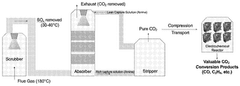
Post-combustion carbon capture technologies focus on removing CO2 from flue gases after the combustion process in power plants and industrial facilities. These systems typically employ chemical solvents, solid sorbents, or membrane separation techniques to selectively capture CO2 from exhaust streams. The captured CO2 is then compressed and transported for storage or utilization. This approach allows for retrofitting existing facilities without major modifications to the primary industrial processes.Expand Specific Solutions03 Biological Carbon Sequestration Methods
Biological carbon sequestration leverages natural processes to capture and store carbon dioxide. These methods include enhanced forestry management, algae-based capture systems, and engineered microorganisms designed to absorb CO2 efficiently. Some approaches focus on accelerating natural carbon cycles through biochar production or enhancing soil carbon content in agricultural settings. Biological methods are often considered more sustainable and can provide additional environmental benefits beyond carbon capture.Expand Specific Solutions04 Carbon Utilization and Conversion
Carbon utilization technologies focus on converting captured CO2 into valuable products rather than simply storing it. These processes transform carbon dioxide into fuels, chemicals, building materials, and other commercial products. Methods include catalytic conversion, electrochemical reduction, and mineralization processes that incorporate CO2 into concrete and other construction materials. These approaches create economic incentives for carbon capture by generating marketable products from what would otherwise be considered a waste stream.Expand Specific Solutions05 Novel Materials and Processes for Enhanced Capture
Advanced materials and innovative processes are being developed to improve the efficiency and reduce the cost of carbon capture. These include metal-organic frameworks (MOFs), specialized polymers, and engineered sorbents with high CO2 selectivity and capacity. Novel process designs incorporate energy-efficient regeneration methods, hybrid capture systems, and integrated approaches that combine capture with utilization or storage. These technological advances aim to overcome the energy penalties and economic barriers associated with conventional carbon capture methods.Expand Specific Solutions
Industry Leaders in Carbon Capture Innovation
Carbon capture technology is currently in a growth phase, with the market expected to expand significantly due to increasing climate change concerns. The global carbon capture market is projected to reach $7-10 billion by 2030, growing at a CAGR of approximately 20%. Technologically, the field shows varying maturity levels across different capture methods. Leading players like Sinopec and PETRONAS Energy Canada are advancing post-combustion technologies, while academic institutions such as MIT, Arizona State University, and Zhejiang University are pioneering next-generation approaches including direct air capture and novel sorbents. Chinese companies including Huadian Environmental Systems and Xi'an Thermal Power Research Institute are rapidly developing indigenous technologies, while specialized firms like C-TECH and Pi Green Innovations focus on niche applications and integration solutions.
China Petroleum & Chemical Corp.
Technical Solution: China Petroleum & Chemical Corp. (Sinopec) has developed an innovative carbon capture, utilization, and storage (CCUS) technology suite that includes both pre-combustion and post-combustion capture methods. Their flagship technology employs advanced amine-based solvents with proprietary additives that reduce energy consumption by approximately 30% compared to conventional MEA systems[1]. Sinopec has successfully implemented this technology at their Qilu Petrochemical facility, capturing over 1 million tons of CO2 annually and transporting it via a 10km pipeline for enhanced oil recovery operations[2]. Their integrated approach combines capture technology with utilization pathways, including CO2-EOR (Enhanced Oil Recovery), CO2 mineralization for building materials, and conversion to chemicals like methanol and formic acid. Sinopec has also pioneered membrane-based separation technologies that operate at higher temperatures, reducing the energy penalty associated with traditional carbon capture methods[3].
Strengths: Extensive industrial implementation experience with proven large-scale operations; integrated CCUS value chain from capture to utilization; proprietary solvent formulations with reduced energy requirements. Weaknesses: Technologies primarily optimized for their own industrial facilities; relatively high capital costs for initial deployment; some solutions remain dependent on geological storage availability.
GE Infrastructure Technology, Inc.
Technical Solution: GE Infrastructure Technology has developed a comprehensive carbon capture portfolio centered around their Advanced Chilled Ammonia Process (CAP). This technology uses ammonia-based solvents to capture CO2 at lower temperatures (0-10°C), significantly reducing the energy penalty compared to conventional amine processes by up to 25%[1]. Their system incorporates proprietary heat integration designs that recover waste heat throughout the capture process, further improving efficiency. GE has demonstrated this technology at commercial scale through their partnership with EDF at the Le Havre power plant in France, capturing approximately 25 tons of CO2 per day with 90% capture efficiency[2]. Additionally, GE has developed specialized turbine modifications that enable higher hydrogen content in natural gas turbines, facilitating the transition to pre-combustion carbon capture with hydrogen as an energy carrier. Their modular design approach allows for retrofitting existing power plants and industrial facilities with minimal disruption to operations[3].
Strengths: Proven technology with commercial-scale demonstrations; lower energy requirements than many competing technologies; adaptable to both new builds and retrofits of existing facilities. Weaknesses: Chilled ammonia process requires significant cooling infrastructure; ammonia slip must be carefully managed to prevent environmental issues; higher capital costs compared to some emerging technologies.
Breakthrough Patents in Carbon Sequestration
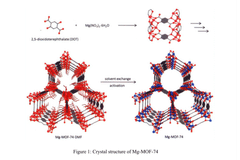
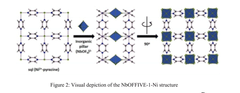
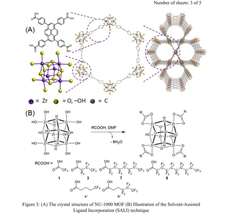
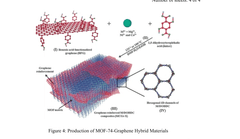
Advanced carbon capture technologies using metal-organic frameworks
PatentPendingIN202441037277A
Innovation
- The development of Metal-Organic Frameworks (MOFs) with tailored compositions, amine-functionalization, and solvent confinement strategies enhances CO2 adsorption capacity, stability, and selectivity, facilitating chemical bonding of CO2 molecules and reducing reactivation energy.
Systems, articles, and methods related to capture and/or conversion of gases including carbon dioxide
PatentWO2025160138A1
Innovation
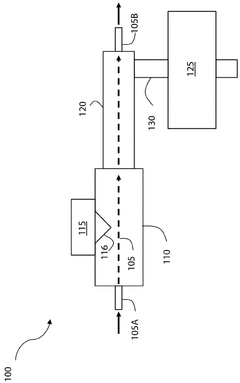
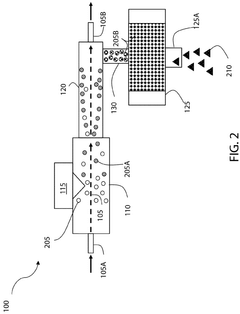
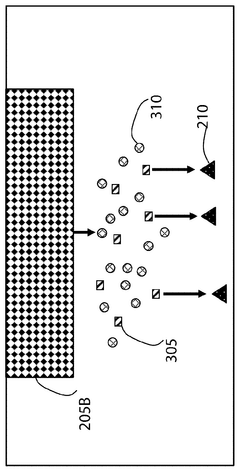
- An integrated system that combines carbon dioxide capture and conversion, using a gas flow pathway with an absorption zone, electrostatic separation, and a conversion apparatus to convert gaseous carbon dioxide into valuable products like carbon monoxide and ethanol, utilizing a liquid mist to enhance capture efficiency and reduce the need for compression and transportation.
Policy Frameworks and Incentive Mechanisms
The evolution of carbon capture technologies is significantly influenced by the policy frameworks and incentive mechanisms established by governments worldwide. The Paris Agreement of 2015 marked a pivotal moment, setting global targets for emissions reduction and catalyzing national policies supporting carbon capture deployment. Countries have since implemented varied approaches to incentivize carbon capture adoption, with the United States' 45Q tax credit program standing as a prominent example, offering up to $50 per metric ton of CO2 sequestered.
The European Union has established the Innovation Fund, allocating substantial resources to carbon capture projects while implementing the Emissions Trading System (ETS) that creates a market-based incentive for emissions reduction. This cap-and-trade mechanism effectively puts a price on carbon emissions, making carbon capture technologies economically viable for industrial operators facing high carbon costs.
In Asia, countries like Japan and China have developed their own policy frameworks. Japan's Green Innovation Fund provides financial support for carbon capture initiatives, while China has incorporated carbon capture into its Five-Year Plans and launched regional emissions trading pilots. These diverse approaches reflect the adaptation of policy frameworks to specific national contexts and industrial landscapes.
Carbon pricing mechanisms represent a critical component of the incentive structure, with carbon taxes and emissions trading systems creating direct financial incentives for emissions reduction. The effectiveness of these mechanisms depends on the carbon price level, with experts suggesting that prices above $50-100 per ton of CO2 are necessary to drive widespread adoption of carbon capture technologies.
Beyond direct carbon pricing, governments have implemented various supporting policies, including research grants, demonstration project funding, and regulatory frameworks for CO2 transport and storage. Public-private partnerships have emerged as effective vehicles for risk-sharing and technology development, exemplified by initiatives like the UK's CCUS Infrastructure Fund.
The regulatory landscape continues to evolve, with standards for measurement, reporting, and verification (MRV) of captured carbon becoming increasingly sophisticated. These standards are essential for ensuring the integrity of incentive programs and building public confidence in carbon capture as a climate solution. As technologies mature, policy frameworks are shifting from supporting research and development to facilitating commercial deployment at scale.
The European Union has established the Innovation Fund, allocating substantial resources to carbon capture projects while implementing the Emissions Trading System (ETS) that creates a market-based incentive for emissions reduction. This cap-and-trade mechanism effectively puts a price on carbon emissions, making carbon capture technologies economically viable for industrial operators facing high carbon costs.
In Asia, countries like Japan and China have developed their own policy frameworks. Japan's Green Innovation Fund provides financial support for carbon capture initiatives, while China has incorporated carbon capture into its Five-Year Plans and launched regional emissions trading pilots. These diverse approaches reflect the adaptation of policy frameworks to specific national contexts and industrial landscapes.
Carbon pricing mechanisms represent a critical component of the incentive structure, with carbon taxes and emissions trading systems creating direct financial incentives for emissions reduction. The effectiveness of these mechanisms depends on the carbon price level, with experts suggesting that prices above $50-100 per ton of CO2 are necessary to drive widespread adoption of carbon capture technologies.
Beyond direct carbon pricing, governments have implemented various supporting policies, including research grants, demonstration project funding, and regulatory frameworks for CO2 transport and storage. Public-private partnerships have emerged as effective vehicles for risk-sharing and technology development, exemplified by initiatives like the UK's CCUS Infrastructure Fund.
The regulatory landscape continues to evolve, with standards for measurement, reporting, and verification (MRV) of captured carbon becoming increasingly sophisticated. These standards are essential for ensuring the integrity of incentive programs and building public confidence in carbon capture as a climate solution. As technologies mature, policy frameworks are shifting from supporting research and development to facilitating commercial deployment at scale.
Environmental Impact Assessment
Carbon capture technologies have significant environmental implications that extend beyond their primary function of reducing greenhouse gas emissions. When properly implemented, these technologies can contribute substantially to climate change mitigation by preventing millions of tons of CO2 from entering the atmosphere. Recent assessments indicate that advanced direct air capture systems could potentially remove between 0.5-5 gigatons of CO2 annually by 2050, representing a meaningful contribution to global emission reduction targets.
However, the environmental footprint of carbon capture technologies themselves requires careful consideration. Energy consumption remains a critical concern, with most current capture systems requiring 1.5-3.5 GJ of energy per ton of CO2 captured. This energy penalty can partially offset emission benefits unless powered by renewable sources. The latest developments in solvent-based systems have shown promising reductions in energy requirements, with some novel amine formulations demonstrating up to 30% lower energy consumption compared to conventional MEA solvents.
Water usage presents another environmental challenge, particularly for direct air capture systems that may require 3-7 tons of water per ton of CO2 captured in certain implementations. This impact is especially concerning in water-stressed regions. Encouragingly, newer membrane-based technologies and advanced cooling systems have demonstrated potential water use reductions of 40-60% compared to first-generation systems.
Land use considerations vary significantly between capture technologies. Post-combustion capture facilities at existing power plants typically add 30-50% to the plant's physical footprint, while direct air capture arrays may require substantial land area depending on their configuration. The environmental disruption from construction and operation of these facilities must be weighed against their climate benefits.
Chemical pollution risks exist with solvent-based capture systems, as degradation products and potential emissions of amines or ammonia can impact local air quality and ecosystems. Modern systems incorporate increasingly sophisticated emission control technologies, with recent designs achieving over 99% containment of potentially harmful compounds.
Life cycle assessments of the latest carbon capture technologies reveal improving environmental profiles, with net carbon reduction benefits typically ranging from 70-90% when accounting for all implementation factors. The most advanced systems approaching commercial deployment demonstrate significantly better environmental performance across multiple indicators compared to technologies from just five years ago, highlighting the rapid pace of improvement in this field.
However, the environmental footprint of carbon capture technologies themselves requires careful consideration. Energy consumption remains a critical concern, with most current capture systems requiring 1.5-3.5 GJ of energy per ton of CO2 captured. This energy penalty can partially offset emission benefits unless powered by renewable sources. The latest developments in solvent-based systems have shown promising reductions in energy requirements, with some novel amine formulations demonstrating up to 30% lower energy consumption compared to conventional MEA solvents.
Water usage presents another environmental challenge, particularly for direct air capture systems that may require 3-7 tons of water per ton of CO2 captured in certain implementations. This impact is especially concerning in water-stressed regions. Encouragingly, newer membrane-based technologies and advanced cooling systems have demonstrated potential water use reductions of 40-60% compared to first-generation systems.
Land use considerations vary significantly between capture technologies. Post-combustion capture facilities at existing power plants typically add 30-50% to the plant's physical footprint, while direct air capture arrays may require substantial land area depending on their configuration. The environmental disruption from construction and operation of these facilities must be weighed against their climate benefits.
Chemical pollution risks exist with solvent-based capture systems, as degradation products and potential emissions of amines or ammonia can impact local air quality and ecosystems. Modern systems incorporate increasingly sophisticated emission control technologies, with recent designs achieving over 99% containment of potentially harmful compounds.
Life cycle assessments of the latest carbon capture technologies reveal improving environmental profiles, with net carbon reduction benefits typically ranging from 70-90% when accounting for all implementation factors. The most advanced systems approaching commercial deployment demonstrate significantly better environmental performance across multiple indicators compared to technologies from just five years ago, highlighting the rapid pace of improvement in this field.
Unlock deeper insights with PatSnap Eureka Quick Research — get a full tech report to explore trends and direct your research. Try now!
Generate Your Research Report Instantly with AI Agent
Supercharge your innovation with PatSnap Eureka AI Agent Platform!