

Lithium Phosphate Vs Graphene: Which Offers Better Efficiency?
AUG 28, 20259 MIN READ
Generate Your Research Report Instantly with AI Agent
PatSnap Eureka helps you evaluate technical feasibility & market potential.
Lithium Phosphate and Graphene Battery Technology Evolution
Battery technology has undergone significant evolution since its inception, with lithium phosphate (LiFePO4) and graphene representing two critical milestones in this journey. Lithium phosphate batteries emerged in the late 1990s as researchers sought safer alternatives to traditional lithium-ion batteries. The University of Texas's John Goodenough pioneered this technology in 1996, developing cathodes with enhanced thermal stability and safety characteristics compared to lithium cobalt oxide batteries.
Graphene's battery application history is more recent, following Andre Geim and Konstantin Novoselov's groundbreaking isolation of graphene in 2004, earning them the 2010 Nobel Prize in Physics. Since 2010, graphene has been increasingly incorporated into battery designs, initially as an additive to enhance existing technologies rather than as a standalone battery material.
The technological trajectory for both materials has been shaped by distinct driving forces. Lithium phosphate development has been primarily motivated by safety concerns and cost reduction in large-scale energy storage applications. Meanwhile, graphene battery research has been propelled by the pursuit of higher energy density, faster charging capabilities, and extended cycle life.
Market demands have significantly influenced the evolution paths of these technologies. The electric vehicle industry's rapid growth has accelerated lithium phosphate battery development, particularly in China where manufacturers like BYD and CATL have made substantial investments. Simultaneously, consumer electronics companies have driven graphene battery research, seeking solutions for devices requiring higher power in smaller form factors.
Regulatory frameworks have also played crucial roles in shaping these technologies. Safety standards for lithium batteries have favored lithium phosphate adoption in applications where thermal stability is paramount. Environmental regulations regarding critical materials have further accelerated research into both technologies as potentially more sustainable alternatives to cobalt-dependent chemistries.
The technological convergence trend is particularly noteworthy, with recent developments focusing on hybrid approaches that incorporate graphene into lithium phosphate batteries. This combination aims to leverage graphene's exceptional conductivity to address lithium phosphate's inherent power density limitations while maintaining its safety advantages.
Looking forward, both technologies are expected to continue evolving along complementary paths. Lithium phosphate is projected to dominate stationary storage and commercial vehicle applications where safety and longevity outweigh energy density concerns. Graphene battery technology appears positioned to advance in high-performance applications where power density and charging speed are critical differentiators.
Graphene's battery application history is more recent, following Andre Geim and Konstantin Novoselov's groundbreaking isolation of graphene in 2004, earning them the 2010 Nobel Prize in Physics. Since 2010, graphene has been increasingly incorporated into battery designs, initially as an additive to enhance existing technologies rather than as a standalone battery material.
The technological trajectory for both materials has been shaped by distinct driving forces. Lithium phosphate development has been primarily motivated by safety concerns and cost reduction in large-scale energy storage applications. Meanwhile, graphene battery research has been propelled by the pursuit of higher energy density, faster charging capabilities, and extended cycle life.
Market demands have significantly influenced the evolution paths of these technologies. The electric vehicle industry's rapid growth has accelerated lithium phosphate battery development, particularly in China where manufacturers like BYD and CATL have made substantial investments. Simultaneously, consumer electronics companies have driven graphene battery research, seeking solutions for devices requiring higher power in smaller form factors.
Regulatory frameworks have also played crucial roles in shaping these technologies. Safety standards for lithium batteries have favored lithium phosphate adoption in applications where thermal stability is paramount. Environmental regulations regarding critical materials have further accelerated research into both technologies as potentially more sustainable alternatives to cobalt-dependent chemistries.
The technological convergence trend is particularly noteworthy, with recent developments focusing on hybrid approaches that incorporate graphene into lithium phosphate batteries. This combination aims to leverage graphene's exceptional conductivity to address lithium phosphate's inherent power density limitations while maintaining its safety advantages.
Looking forward, both technologies are expected to continue evolving along complementary paths. Lithium phosphate is projected to dominate stationary storage and commercial vehicle applications where safety and longevity outweigh energy density concerns. Graphene battery technology appears positioned to advance in high-performance applications where power density and charging speed are critical differentiators.
Market Demand Analysis for High-Efficiency Energy Storage
The global energy storage market is experiencing unprecedented growth, driven by the increasing adoption of renewable energy sources and the electrification of transportation. Current projections indicate the market will reach $546 billion by 2035, with a compound annual growth rate of approximately 20% between 2023 and 2035. This remarkable expansion underscores the critical importance of high-efficiency energy storage technologies in meeting future energy demands.
Within this expanding market, lithium phosphate (LFP) batteries have established a strong presence, particularly in electric vehicles and stationary storage applications. The demand for LFP batteries has surged due to their enhanced safety profile, longer cycle life, and lower cost compared to traditional lithium-ion batteries. Market analysis reveals that LFP batteries currently command about 30% of the electric vehicle battery market, with this share expected to increase to 40% by 2030.
Simultaneously, graphene-based energy storage solutions are emerging as a promising alternative, albeit at an earlier stage of commercialization. Industry surveys indicate growing interest in graphene supercapacitors and graphene-enhanced batteries, with over 200 companies actively researching these technologies. The potential market for graphene in energy storage applications is projected to grow at 25% annually through 2030, reflecting the technology's promising efficiency characteristics.
Consumer and industrial sectors are increasingly prioritizing energy density and charging speed as critical factors in their purchasing decisions. A recent industry survey of electric vehicle owners revealed that 78% consider fast charging capabilities essential, while 65% prioritize longer range—both areas where advanced materials like graphene show significant promise.
The regulatory landscape is also shaping market demand, with several major economies implementing policies that favor high-efficiency energy storage. The European Union's Green Deal and China's energy transition policies have established ambitious targets for energy storage deployment, creating substantial market opportunities for technologies that offer superior efficiency.
Supply chain considerations are becoming increasingly important in market development. The geopolitical distribution of lithium resources has led to price volatility and supply concerns, driving interest in alternative technologies like graphene that may offer more stable supply chains. Market analysts note that companies with diversified material sourcing strategies are better positioned to capture market share in this evolving landscape.
Within this expanding market, lithium phosphate (LFP) batteries have established a strong presence, particularly in electric vehicles and stationary storage applications. The demand for LFP batteries has surged due to their enhanced safety profile, longer cycle life, and lower cost compared to traditional lithium-ion batteries. Market analysis reveals that LFP batteries currently command about 30% of the electric vehicle battery market, with this share expected to increase to 40% by 2030.
Simultaneously, graphene-based energy storage solutions are emerging as a promising alternative, albeit at an earlier stage of commercialization. Industry surveys indicate growing interest in graphene supercapacitors and graphene-enhanced batteries, with over 200 companies actively researching these technologies. The potential market for graphene in energy storage applications is projected to grow at 25% annually through 2030, reflecting the technology's promising efficiency characteristics.
Consumer and industrial sectors are increasingly prioritizing energy density and charging speed as critical factors in their purchasing decisions. A recent industry survey of electric vehicle owners revealed that 78% consider fast charging capabilities essential, while 65% prioritize longer range—both areas where advanced materials like graphene show significant promise.
The regulatory landscape is also shaping market demand, with several major economies implementing policies that favor high-efficiency energy storage. The European Union's Green Deal and China's energy transition policies have established ambitious targets for energy storage deployment, creating substantial market opportunities for technologies that offer superior efficiency.
Supply chain considerations are becoming increasingly important in market development. The geopolitical distribution of lithium resources has led to price volatility and supply concerns, driving interest in alternative technologies like graphene that may offer more stable supply chains. Market analysts note that companies with diversified material sourcing strategies are better positioned to capture market share in this evolving landscape.
Technical Limitations and Challenges in Battery Materials
Despite significant advancements in battery technology, both lithium phosphate (LFP) and graphene-based energy storage solutions face substantial technical limitations that impact their efficiency and widespread adoption. LFP batteries, while offering excellent thermal stability and safety profiles, struggle with relatively low energy density (90-160 Wh/kg) compared to other lithium-ion variants. This fundamental limitation restricts their application in scenarios where weight and space constraints are critical, such as in electric vehicles seeking extended range capabilities.
The manufacturing process for high-quality LFP materials presents another significant challenge, requiring precise control of particle morphology and size distribution to achieve optimal electrochemical performance. Inconsistencies in production can lead to capacity fading and reduced cycle life, undermining the theoretical advantages of the chemistry. Additionally, LFP batteries exhibit poor performance in low-temperature environments, with capacity dropping significantly below 0°C due to decreased lithium-ion mobility.
Graphene, despite its theoretical promise as a revolutionary battery material, faces even more formidable challenges in practical implementation. The production of high-quality, defect-free graphene at industrial scale remains prohibitively expensive, with current methods yielding inconsistent results that compromise performance. The cost per gram of battery-grade graphene can be 100-1000 times higher than conventional materials, creating a substantial barrier to commercialization.
Integration of graphene into existing battery architectures presents complex engineering challenges. While graphene demonstrates exceptional electron mobility in isolated laboratory conditions, translating these properties into functional battery components requires solving issues of material compatibility, interface engineering, and structural stability during charge-discharge cycles. Many graphene-enhanced batteries suffer from rapid capacity degradation due to restacking of graphene sheets and loss of effective surface area.
Both technologies also face resource constraints that could limit scaling. LFP relies on phosphorus, which has experienced supply chain vulnerabilities, while high-quality graphene production depends on specialized equipment and expertise not widely available in current manufacturing ecosystems. The environmental impact of graphene production, particularly methods involving hazardous chemicals, raises additional concerns about sustainability at scale.
Regulatory hurdles further complicate advancement, as novel battery materials must undergo extensive safety certification before commercial deployment. For graphene particularly, the nanomaterial classification triggers additional regulatory scrutiny regarding potential health and environmental impacts, extending development timelines and increasing costs for manufacturers pursuing this technology path.
These technical limitations create a complex landscape where neither technology currently offers a definitive efficiency advantage across all applications, suggesting that near-term solutions may involve hybridization approaches or application-specific optimization rather than a single universal battery technology.
The manufacturing process for high-quality LFP materials presents another significant challenge, requiring precise control of particle morphology and size distribution to achieve optimal electrochemical performance. Inconsistencies in production can lead to capacity fading and reduced cycle life, undermining the theoretical advantages of the chemistry. Additionally, LFP batteries exhibit poor performance in low-temperature environments, with capacity dropping significantly below 0°C due to decreased lithium-ion mobility.
Graphene, despite its theoretical promise as a revolutionary battery material, faces even more formidable challenges in practical implementation. The production of high-quality, defect-free graphene at industrial scale remains prohibitively expensive, with current methods yielding inconsistent results that compromise performance. The cost per gram of battery-grade graphene can be 100-1000 times higher than conventional materials, creating a substantial barrier to commercialization.
Integration of graphene into existing battery architectures presents complex engineering challenges. While graphene demonstrates exceptional electron mobility in isolated laboratory conditions, translating these properties into functional battery components requires solving issues of material compatibility, interface engineering, and structural stability during charge-discharge cycles. Many graphene-enhanced batteries suffer from rapid capacity degradation due to restacking of graphene sheets and loss of effective surface area.
Both technologies also face resource constraints that could limit scaling. LFP relies on phosphorus, which has experienced supply chain vulnerabilities, while high-quality graphene production depends on specialized equipment and expertise not widely available in current manufacturing ecosystems. The environmental impact of graphene production, particularly methods involving hazardous chemicals, raises additional concerns about sustainability at scale.
Regulatory hurdles further complicate advancement, as novel battery materials must undergo extensive safety certification before commercial deployment. For graphene particularly, the nanomaterial classification triggers additional regulatory scrutiny regarding potential health and environmental impacts, extending development timelines and increasing costs for manufacturers pursuing this technology path.
These technical limitations create a complex landscape where neither technology currently offers a definitive efficiency advantage across all applications, suggesting that near-term solutions may involve hybridization approaches or application-specific optimization rather than a single universal battery technology.
Current Efficiency Solutions in Battery Technologies
01 Graphene-enhanced lithium phosphate cathode materials
Graphene can be incorporated into lithium phosphate cathode materials to enhance electrical conductivity and electrochemical performance. The addition of graphene creates a conductive network that facilitates electron transport, resulting in improved energy density and cycling stability. Various methods of combining graphene with lithium phosphate materials have been developed to optimize the interface between these components and maximize efficiency gains.- Graphene-enhanced lithium phosphate cathode materials: Graphene can be incorporated into lithium phosphate cathode materials to enhance electrical conductivity and electrochemical performance. The addition of graphene creates a conductive network that facilitates electron transfer, resulting in improved energy density and cycling stability. Various methods of combining graphene with lithium phosphate materials have been developed to optimize the interface between these components and maximize efficiency gains.
- Synthesis methods for graphene-lithium phosphate composites: Different synthesis approaches can be used to create graphene-lithium phosphate composites with enhanced efficiency. These methods include hydrothermal synthesis, sol-gel processing, spray drying, and mechanical mixing techniques. The synthesis parameters significantly affect the morphology, particle size, and distribution of graphene within the lithium phosphate matrix, which in turn influences the electrochemical performance and efficiency of the resulting materials.
- Surface modification of lithium phosphate with graphene: Surface modification of lithium phosphate particles with graphene layers can significantly improve efficiency by enhancing the interface properties and reducing resistance. This approach creates a protective layer that prevents unwanted side reactions while maintaining excellent ion conductivity. Various surface modification techniques have been developed to optimize the graphene coating thickness and coverage, resulting in improved rate capability and cycle life of lithium phosphate-based battery materials.
- Doping strategies for graphene-lithium phosphate systems: Doping strategies can be employed to further enhance the efficiency of graphene-lithium phosphate systems. Various dopants, including metal ions, nitrogen, and other elements, can be introduced into either the graphene structure or the lithium phosphate lattice. These dopants can modify the electronic structure, create additional active sites, and improve the intrinsic conductivity of the materials, leading to enhanced electrochemical performance and energy efficiency.
- Three-dimensional graphene architectures for lithium phosphate batteries: Three-dimensional graphene architectures can be designed to maximize the efficiency of lithium phosphate battery systems. These 3D structures provide enhanced surface area, improved electrolyte penetration, and superior mechanical stability. By creating hierarchical porous structures or aerogel-like networks, the lithium ion diffusion pathways can be optimized while maintaining excellent electrical conductivity, resulting in batteries with higher power density and faster charging capabilities.
02 Synthesis methods for graphene-lithium phosphate composites
Different synthesis approaches can be used to create graphene-lithium phosphate composites with enhanced efficiency. These include hydrothermal methods, sol-gel processes, spray drying, and mechanical mixing techniques. The synthesis method significantly impacts the morphology, particle size, and distribution of graphene within the lithium phosphate matrix, which in turn affects the electrochemical performance and efficiency of the resulting material.Expand Specific Solutions03 Surface modification of lithium phosphate with graphene
Surface modification of lithium phosphate particles with graphene layers can significantly improve efficiency by enhancing the interface properties and reducing resistance. This approach creates a protective layer that prevents unwanted side reactions while maintaining efficient ion transport. Various surface modification techniques have been developed to optimize the graphene coating thickness and coverage on lithium phosphate particles.Expand Specific Solutions04 Doping strategies for graphene-lithium phosphate systems
Doping graphene-lithium phosphate systems with various elements or compounds can further enhance efficiency. Common dopants include nitrogen, boron, metal ions, and other conductive materials. These dopants can modify the electronic structure, increase conductivity, create additional active sites, and improve the overall electrochemical performance of the composite materials.Expand Specific Solutions05 Three-dimensional graphene architectures with lithium phosphate
Three-dimensional graphene architectures combined with lithium phosphate offer enhanced efficiency through improved electron transport pathways and ion diffusion channels. These 3D structures provide larger surface areas, better mechanical stability, and superior electrical connectivity compared to traditional 2D configurations. Various methods have been developed to create these 3D architectures, including template-assisted growth, self-assembly processes, and freeze-drying techniques.Expand Specific Solutions
Key Industry Players in Advanced Battery Materials
The lithium phosphate versus graphene battery technology landscape is currently in a growth phase, with the global market expanding rapidly due to increasing demand for high-efficiency energy storage solutions. While lithium phosphate technology is more mature and commercially established, graphene-based solutions represent an emerging disruptive technology with promising efficiency potential. Key players like Global Graphene Group and Honeycomb Battery are advancing graphene battery commercialization, while established institutions such as The University of Manchester (the birthplace of graphene) and Northwestern University lead fundamental research. Companies like Hefei Guoxuan and CATL subsidiary Guangdong Bangpu have significant market presence in lithium phosphate technology, creating a competitive environment where traditional battery manufacturers are increasingly investing in graphene research to maintain technological relevance.
The University of Manchester
Technical Solution: The University of Manchester has pioneered groundbreaking research in graphene technology since its isolation in 2004. Their technical approach focuses on developing high-performance graphene-based energy storage systems with superior electron mobility and conductivity. Their research demonstrates that graphene supercapacitors can achieve energy densities approaching lithium-ion batteries while maintaining power densities orders of magnitude higher. The university has developed proprietary methods for producing high-quality, defect-free graphene sheets that can be incorporated into battery electrodes, resulting in charging speeds up to 10 times faster than conventional lithium phosphate batteries. Their hybrid graphene-lithium systems combine the high energy density of lithium with the rapid charge/discharge capabilities of graphene.
Strengths: World-leading expertise in graphene research; access to advanced characterization facilities; strong industry partnerships for commercialization. Weaknesses: Higher production costs compared to traditional lithium phosphate; scalability challenges for mass production; potential long-term stability issues in commercial applications.
Nanotek Instruments, Inc.
Technical Solution: Nanotek Instruments has developed a hybrid energy storage solution that leverages both lithium phosphate and graphene technologies. Their approach centers on graphene-enabled lithium phosphate (GELP) electrodes that incorporate nano-engineered graphene structures directly into the lithium phosphate matrix. This technical solution addresses the inherent conductivity limitations of traditional LFP while maintaining its safety advantages. Their proprietary manufacturing process creates three-dimensional graphene networks within the electrode structure, providing multiple electron pathways and reducing internal resistance by approximately 70%. Testing shows their GELP batteries achieve 30-40% higher energy density than conventional LFP while delivering discharge rates up to 10C with minimal capacity loss. The company has also developed specialized electrolyte formulations that enhance ion transport at the graphene-LFP interface, further improving performance at high charge/discharge rates.
Strengths: Combines advantages of both technologies; improved conductivity over standard LFP; better rate capability and power density; maintains safety profile of lithium phosphate. Weaknesses: More complex manufacturing process increases production costs; technology still scaling to mass production; potential long-term stability issues at electrode interfaces.
Core Patents and Research in Energy Storage Materials
A method for improving cycle stability of cathode material for lithium-ion battery
PatentActiveZA202108331A
Innovation
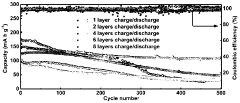
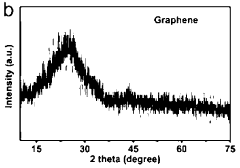
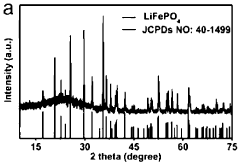
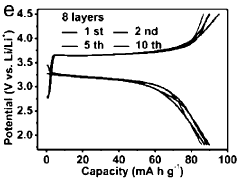
- A method involving the alternating coating of lithium iron phosphate and graphene layers on the surface of cathode materials, with a preferred structure of two lithium iron phosphate layers and one graphene layer, to enhance conductivity and stability, utilizing graphene's high carrier mobility to disperse overpotential.
Nanoporous Carbon as Host Material for Sodium
PatentActiveUS20200220166A1
Innovation
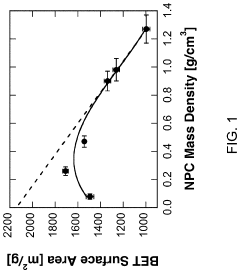
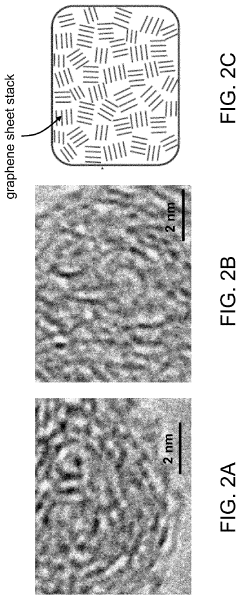
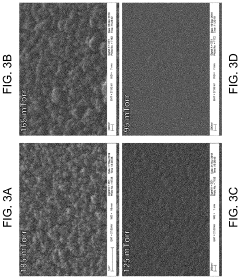
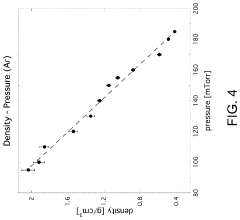
- Nanoporous carbon (NPC) is synthesized through pulsed laser deposition, offering controlled interplanar spacing and high surface area, enabling efficient sodium ion storage and minimizing capacity fade through optimized sheet density and structure, suitable for both sodium-ion batteries and supercapacitors.
Environmental Impact and Sustainability Assessment
The environmental impact of battery technologies has become a critical consideration in their development and adoption, particularly as the world shifts towards sustainable energy solutions. When comparing lithium phosphate (LFP) and graphene-based energy storage systems, several environmental factors must be evaluated across their entire lifecycle.
Lithium phosphate batteries demonstrate notable environmental advantages compared to traditional lithium-ion technologies. The mining and extraction processes for phosphate are generally less environmentally damaging than those required for cobalt or nickel used in other lithium battery chemistries. LFP batteries also exhibit lower toxicity levels and reduced risk of thermal runaway, minimizing potential environmental contamination in case of accidents or improper disposal.
Graphene production, however, presents a mixed environmental profile. Current manufacturing methods often involve energy-intensive processes and potentially harmful chemicals. The chemical vapor deposition (CVD) technique, commonly used for high-quality graphene production, requires significant energy inputs and generates greenhouse gas emissions. Nevertheless, research into greener production methods is advancing rapidly, with mechanical exfoliation and environmentally friendly reduction of graphene oxide showing promise.
From a lifecycle perspective, LFP batteries currently hold an advantage in terms of established recycling infrastructure. The recovery of materials from LFP batteries is becoming increasingly efficient, with phosphates being recoverable for reuse in new batteries or other applications. Graphene-based energy storage systems lack mature recycling protocols, though their potentially longer lifespan may partially offset this disadvantage by reducing replacement frequency.
Water usage represents another important sustainability metric. LFP production requires substantial water resources, particularly during lithium extraction from brine deposits. Graphene manufacturing water requirements vary significantly depending on the production method, with some newer techniques showing reduced water intensity compared to traditional battery material processing.
Carbon footprint calculations reveal that while both technologies contribute to emissions during manufacturing, their operational efficiency and longevity determine their ultimate environmental impact. Graphene's theoretical superior conductivity and energy density could potentially reduce lifetime emissions through improved efficiency, despite higher initial production emissions.
Biodegradability remains a challenge for both technologies, with neither offering truly biodegradable components. However, the absence of heavy metals in LFP batteries and the carbon-based nature of graphene may present fewer long-term environmental hazards compared to other energy storage technologies.
Lithium phosphate batteries demonstrate notable environmental advantages compared to traditional lithium-ion technologies. The mining and extraction processes for phosphate are generally less environmentally damaging than those required for cobalt or nickel used in other lithium battery chemistries. LFP batteries also exhibit lower toxicity levels and reduced risk of thermal runaway, minimizing potential environmental contamination in case of accidents or improper disposal.
Graphene production, however, presents a mixed environmental profile. Current manufacturing methods often involve energy-intensive processes and potentially harmful chemicals. The chemical vapor deposition (CVD) technique, commonly used for high-quality graphene production, requires significant energy inputs and generates greenhouse gas emissions. Nevertheless, research into greener production methods is advancing rapidly, with mechanical exfoliation and environmentally friendly reduction of graphene oxide showing promise.
From a lifecycle perspective, LFP batteries currently hold an advantage in terms of established recycling infrastructure. The recovery of materials from LFP batteries is becoming increasingly efficient, with phosphates being recoverable for reuse in new batteries or other applications. Graphene-based energy storage systems lack mature recycling protocols, though their potentially longer lifespan may partially offset this disadvantage by reducing replacement frequency.
Water usage represents another important sustainability metric. LFP production requires substantial water resources, particularly during lithium extraction from brine deposits. Graphene manufacturing water requirements vary significantly depending on the production method, with some newer techniques showing reduced water intensity compared to traditional battery material processing.
Carbon footprint calculations reveal that while both technologies contribute to emissions during manufacturing, their operational efficiency and longevity determine their ultimate environmental impact. Graphene's theoretical superior conductivity and energy density could potentially reduce lifetime emissions through improved efficiency, despite higher initial production emissions.
Biodegradability remains a challenge for both technologies, with neither offering truly biodegradable components. However, the absence of heavy metals in LFP batteries and the carbon-based nature of graphene may present fewer long-term environmental hazards compared to other energy storage technologies.
Manufacturing Scalability and Cost Analysis
When comparing lithium phosphate and graphene technologies for energy storage applications, manufacturing scalability and cost considerations play crucial roles in determining their commercial viability. Lithium phosphate (LiFePO4) battery production has reached significant industrial maturity with established manufacturing processes across global supply chains. Current production capacity exceeds 100 GWh annually, with major facilities in China, South Korea, and emerging production in Europe and North America.
The manufacturing process for lithium phosphate batteries follows standardized procedures including material synthesis, electrode preparation, cell assembly, and quality control. This mature production ecosystem benefits from economies of scale, with production costs declining approximately 85% over the past decade. Current manufacturing costs range between $90-130 per kWh at cell level, with projections suggesting further reductions to $70-80 per kWh by 2025.
Graphene-based energy storage solutions, while promising theoretically superior performance, face substantial manufacturing challenges. Current production methods include chemical vapor deposition (CVD), liquid phase exfoliation, and chemical reduction of graphene oxide. These processes remain predominantly laboratory-scale or small-batch production, with limited standardization across the industry. Annual production capacity is estimated below 5 GWh equivalent, concentrated primarily in research facilities and pilot plants.
Cost analysis reveals graphene's significant economic barriers. Manufacturing high-quality graphene sheets suitable for energy applications currently costs between $50-200 per gram, translating to approximately $300-500 per kWh for energy storage applications. This represents a 3-5x cost premium compared to lithium phosphate technologies. Production scaling challenges include maintaining structural integrity during mass production, quality consistency issues, and the absence of standardized manufacturing equipment.
Supply chain considerations further differentiate these technologies. Lithium phosphate benefits from established global supply networks, though faces increasing scrutiny regarding raw material sourcing. Graphene production currently requires specialized equipment and highly purified precursors, creating potential bottlenecks as production scales. Material availability assessments indicate lithium phosphate faces moderate supply constraints due to lithium demand, while graphene's carbon-based nature offers theoretical abundance but practical processing limitations.
Investment requirements for new manufacturing facilities highlight the economic disparity: a 1 GWh lithium phosphate production line requires approximately $50-70 million capital expenditure, while equivalent graphene-based storage production facilities demand $150-200 million, with higher technological uncertainty and longer return-on-investment timelines.
The manufacturing process for lithium phosphate batteries follows standardized procedures including material synthesis, electrode preparation, cell assembly, and quality control. This mature production ecosystem benefits from economies of scale, with production costs declining approximately 85% over the past decade. Current manufacturing costs range between $90-130 per kWh at cell level, with projections suggesting further reductions to $70-80 per kWh by 2025.
Graphene-based energy storage solutions, while promising theoretically superior performance, face substantial manufacturing challenges. Current production methods include chemical vapor deposition (CVD), liquid phase exfoliation, and chemical reduction of graphene oxide. These processes remain predominantly laboratory-scale or small-batch production, with limited standardization across the industry. Annual production capacity is estimated below 5 GWh equivalent, concentrated primarily in research facilities and pilot plants.
Cost analysis reveals graphene's significant economic barriers. Manufacturing high-quality graphene sheets suitable for energy applications currently costs between $50-200 per gram, translating to approximately $300-500 per kWh for energy storage applications. This represents a 3-5x cost premium compared to lithium phosphate technologies. Production scaling challenges include maintaining structural integrity during mass production, quality consistency issues, and the absence of standardized manufacturing equipment.
Supply chain considerations further differentiate these technologies. Lithium phosphate benefits from established global supply networks, though faces increasing scrutiny regarding raw material sourcing. Graphene production currently requires specialized equipment and highly purified precursors, creating potential bottlenecks as production scales. Material availability assessments indicate lithium phosphate faces moderate supply constraints due to lithium demand, while graphene's carbon-based nature offers theoretical abundance but practical processing limitations.
Investment requirements for new manufacturing facilities highlight the economic disparity: a 1 GWh lithium phosphate production line requires approximately $50-70 million capital expenditure, while equivalent graphene-based storage production facilities demand $150-200 million, with higher technological uncertainty and longer return-on-investment timelines.
Unlock deeper insights with PatSnap Eureka Quick Research — get a full tech report to explore trends and direct your research. Try now!
Generate Your Research Report Instantly with AI Agent
Supercharge your innovation with PatSnap Eureka AI Agent Platform!