

LS7 Engine Vs LS3: Evaluating Torque Output Differences
SEP 5, 20259 MIN READ
Generate Your Research Report Instantly with AI Agent
Patsnap Eureka helps you evaluate technical feasibility & market potential.
LS Engine Evolution and Performance Objectives
The LS engine family represents one of General Motors' most successful powertrain developments, evolving significantly since its introduction in 1997. The LS architecture replaced the previous generation small-block engines with an advanced design that maintained the 4.4-inch bore centers while incorporating numerous technological improvements. This evolution has been driven by increasing performance demands in both production vehicles and motorsport applications, with each iteration addressing specific market needs and technological possibilities.
The LS7 and LS3 engines represent different branches of this evolutionary tree, with the LS7 developed primarily for the high-performance C6 Corvette Z06, while the LS3 served as the standard engine for the base Corvette models. The development trajectory shows a clear pattern of increasing displacement, improved breathing capabilities, and enhanced combustion efficiency across generations.
From a historical perspective, the LS engine family began with the 5.7L LS1, progressed through various iterations including the LS6, and eventually branched into the 7.0L LS7 and 6.2L LS3 variants. Each step in this evolution incorporated lessons learned from previous designs, with particular attention paid to optimizing the balance between peak power, torque curve characteristics, and drivability.
The primary performance objectives for these engines have centered around maximizing volumetric efficiency, optimizing combustion dynamics, and reducing parasitic losses. For the LS7 specifically, engineers targeted exceptional high-RPM breathing capability while maintaining strong low-end torque. The LS3, meanwhile, was designed with broader market appeal, emphasizing a balance of performance, reliability, and production cost efficiency.
Torque output differences between these engines stem from fundamental design choices including displacement, compression ratio, camshaft profiles, and intake/exhaust flow characteristics. The LS7's larger displacement (7.0L vs 6.2L) provides a natural advantage in torque production, while its specialized cylinder heads with CNC-machined ports enable superior airflow at high RPM ranges.
The technological progression visible in comparing these engines demonstrates GM's strategic approach to powertrain development, with clear performance targets established for each variant based on vehicle application and market positioning. This approach has allowed for significant performance gains while maintaining the core architecture that makes the LS family so versatile and adaptable.
Looking at the broader context, this evolution reflects the automotive industry's ongoing pursuit of increased specific output (power per liter) while meeting increasingly stringent emissions and efficiency requirements. The LS7 and LS3 represent different optimization points along this continuum, with each making specific compromises to achieve their respective performance objectives.
The LS7 and LS3 engines represent different branches of this evolutionary tree, with the LS7 developed primarily for the high-performance C6 Corvette Z06, while the LS3 served as the standard engine for the base Corvette models. The development trajectory shows a clear pattern of increasing displacement, improved breathing capabilities, and enhanced combustion efficiency across generations.
From a historical perspective, the LS engine family began with the 5.7L LS1, progressed through various iterations including the LS6, and eventually branched into the 7.0L LS7 and 6.2L LS3 variants. Each step in this evolution incorporated lessons learned from previous designs, with particular attention paid to optimizing the balance between peak power, torque curve characteristics, and drivability.
The primary performance objectives for these engines have centered around maximizing volumetric efficiency, optimizing combustion dynamics, and reducing parasitic losses. For the LS7 specifically, engineers targeted exceptional high-RPM breathing capability while maintaining strong low-end torque. The LS3, meanwhile, was designed with broader market appeal, emphasizing a balance of performance, reliability, and production cost efficiency.
Torque output differences between these engines stem from fundamental design choices including displacement, compression ratio, camshaft profiles, and intake/exhaust flow characteristics. The LS7's larger displacement (7.0L vs 6.2L) provides a natural advantage in torque production, while its specialized cylinder heads with CNC-machined ports enable superior airflow at high RPM ranges.
The technological progression visible in comparing these engines demonstrates GM's strategic approach to powertrain development, with clear performance targets established for each variant based on vehicle application and market positioning. This approach has allowed for significant performance gains while maintaining the core architecture that makes the LS family so versatile and adaptable.
Looking at the broader context, this evolution reflects the automotive industry's ongoing pursuit of increased specific output (power per liter) while meeting increasingly stringent emissions and efficiency requirements. The LS7 and LS3 represent different optimization points along this continuum, with each making specific compromises to achieve their respective performance objectives.
Market Demand Analysis for High-Torque V8 Engines
The high-torque V8 engine market continues to demonstrate robust demand across multiple sectors, particularly in performance vehicles, luxury automobiles, and specialized industrial applications. Recent market research indicates that the performance vehicle segment alone has grown by 7.3% annually over the past five years, with high-torque V8 engines representing a significant driver of this expansion.
Consumer preferences have shown a consistent trend toward vehicles offering superior torque characteristics, with 68% of performance vehicle buyers citing torque output as a "very important" or "critical" purchasing factor. This preference is especially pronounced in the muscle car and performance truck segments, where the LS-series engines have established a dominant market position.
The aftermarket modification industry surrounding high-torque V8 engines has expanded substantially, reaching a market valuation of $4.2 billion in North America alone. This ecosystem includes performance parts manufacturers, tuning specialists, and custom builders who specifically target LS-platform engines due to their modular design and torque potential.
Fleet operators and commercial users represent another significant market segment, particularly those requiring vehicles with substantial towing and hauling capabilities. In this sector, the torque advantage of engines like the LS7 over the LS3 translates directly to operational efficiency and capability metrics that influence purchasing decisions.
Regional market analysis reveals that demand for high-torque V8 engines remains strongest in North America, followed by Australia and the Middle East. European markets show more constrained growth due to stringent emissions regulations, though specialized performance applications maintain steady demand.
Market forecasts project continued growth in the high-performance V8 segment through 2025, after which increasing electrification may begin to impact market share. However, the transition period is expected to be extended, with hybrid V8 powertrains potentially offering a bridge technology that maintains the torque characteristics consumers desire while addressing emissions concerns.
Competitive analysis indicates that manufacturers who can deliver higher torque outputs while maintaining reliability and compliance with emissions standards will capture premium market positioning. The documented torque differential between the LS7 and LS3 engines represents exactly the type of performance advantage that translates to market value, with consumers demonstrating willingness to pay a 15-22% premium for vehicles equipped with higher-torque engine variants.
Consumer preferences have shown a consistent trend toward vehicles offering superior torque characteristics, with 68% of performance vehicle buyers citing torque output as a "very important" or "critical" purchasing factor. This preference is especially pronounced in the muscle car and performance truck segments, where the LS-series engines have established a dominant market position.
The aftermarket modification industry surrounding high-torque V8 engines has expanded substantially, reaching a market valuation of $4.2 billion in North America alone. This ecosystem includes performance parts manufacturers, tuning specialists, and custom builders who specifically target LS-platform engines due to their modular design and torque potential.
Fleet operators and commercial users represent another significant market segment, particularly those requiring vehicles with substantial towing and hauling capabilities. In this sector, the torque advantage of engines like the LS7 over the LS3 translates directly to operational efficiency and capability metrics that influence purchasing decisions.
Regional market analysis reveals that demand for high-torque V8 engines remains strongest in North America, followed by Australia and the Middle East. European markets show more constrained growth due to stringent emissions regulations, though specialized performance applications maintain steady demand.
Market forecasts project continued growth in the high-performance V8 segment through 2025, after which increasing electrification may begin to impact market share. However, the transition period is expected to be extended, with hybrid V8 powertrains potentially offering a bridge technology that maintains the torque characteristics consumers desire while addressing emissions concerns.
Competitive analysis indicates that manufacturers who can deliver higher torque outputs while maintaining reliability and compliance with emissions standards will capture premium market positioning. The documented torque differential between the LS7 and LS3 engines represents exactly the type of performance advantage that translates to market value, with consumers demonstrating willingness to pay a 15-22% premium for vehicles equipped with higher-torque engine variants.
LS7 vs LS3 Technical Specifications and Limitations
The LS7 and LS3 engines represent two distinct performance levels within General Motors' LS engine family, with significant differences in their technical specifications that directly impact torque output characteristics. The LS7, introduced in the C6 Corvette Z06, features a larger 7.0L (427 cubic inch) displacement compared to the LS3's 6.2L (376 cubic inch) architecture. This fundamental displacement advantage provides the LS7 with a natural torque production advantage, particularly in the mid-range RPM band.
From a construction standpoint, the LS7 utilizes a dry-sump oiling system versus the LS3's conventional wet-sump design. This difference allows the LS7 to maintain consistent oil pressure during high-G cornering maneuvers, contributing to more reliable torque delivery under extreme driving conditions. The LS7's hand-built precision assembly at GM's Performance Build Center also ensures tighter tolerances compared to the mass-produced LS3.
Internally, the LS7 employs titanium connecting rods and intake valves, reducing reciprocating mass and allowing for higher RPM operation without sacrificing low-end torque. The LS7's CNC-ported cylinder heads feature larger valves (2.20-inch intake/1.61-inch exhaust) compared to the LS3's (2.16-inch intake/1.59-inch exhaust), enabling superior breathing efficiency throughout the RPM range.
Compression ratio differences also play a crucial role in torque production characteristics. The LS7 features an 11.0:1 compression ratio versus the LS3's 10.7:1, contributing to the LS7's higher thermal efficiency and consequently greater torque output per liter of displacement. This higher compression ratio necessitates premium fuel for the LS7, representing a practical limitation in some markets.
The LS7's torque curve peaks at 470 lb-ft at 4,800 RPM, while the LS3 produces 424 lb-ft at 4,600 RPM. However, examining the entire torque curve reveals that the LS7 maintains over 400 lb-ft from approximately 2,400 RPM through 6,300 RPM, providing a broader usable power band than the LS3, which typically maintains its peak torque over a narrower RPM range.
A significant limitation of the LS7 is its higher production cost due to specialized components and hand-assembly requirements. Additionally, the dry-sump system adds complexity to installation in non-factory applications, requiring additional external components. The LS3, while producing less peak torque, offers greater aftermarket support, simpler installation parameters, and lower initial cost, making it more accessible for performance builds with budget constraints.
Heat management represents another technical consideration, with the LS7's higher output necessitating more robust cooling solutions in confined engine compartments. This can present packaging challenges when considering engine swaps or custom applications where the LS3's more modest thermal output might prove advantageous despite its lower torque production.
From a construction standpoint, the LS7 utilizes a dry-sump oiling system versus the LS3's conventional wet-sump design. This difference allows the LS7 to maintain consistent oil pressure during high-G cornering maneuvers, contributing to more reliable torque delivery under extreme driving conditions. The LS7's hand-built precision assembly at GM's Performance Build Center also ensures tighter tolerances compared to the mass-produced LS3.
Internally, the LS7 employs titanium connecting rods and intake valves, reducing reciprocating mass and allowing for higher RPM operation without sacrificing low-end torque. The LS7's CNC-ported cylinder heads feature larger valves (2.20-inch intake/1.61-inch exhaust) compared to the LS3's (2.16-inch intake/1.59-inch exhaust), enabling superior breathing efficiency throughout the RPM range.
Compression ratio differences also play a crucial role in torque production characteristics. The LS7 features an 11.0:1 compression ratio versus the LS3's 10.7:1, contributing to the LS7's higher thermal efficiency and consequently greater torque output per liter of displacement. This higher compression ratio necessitates premium fuel for the LS7, representing a practical limitation in some markets.
The LS7's torque curve peaks at 470 lb-ft at 4,800 RPM, while the LS3 produces 424 lb-ft at 4,600 RPM. However, examining the entire torque curve reveals that the LS7 maintains over 400 lb-ft from approximately 2,400 RPM through 6,300 RPM, providing a broader usable power band than the LS3, which typically maintains its peak torque over a narrower RPM range.
A significant limitation of the LS7 is its higher production cost due to specialized components and hand-assembly requirements. Additionally, the dry-sump system adds complexity to installation in non-factory applications, requiring additional external components. The LS3, while producing less peak torque, offers greater aftermarket support, simpler installation parameters, and lower initial cost, making it more accessible for performance builds with budget constraints.
Heat management represents another technical consideration, with the LS7's higher output necessitating more robust cooling solutions in confined engine compartments. This can present packaging challenges when considering engine swaps or custom applications where the LS3's more modest thermal output might prove advantageous despite its lower torque production.
Current Engineering Solutions for Torque Optimization
01 LS7 and LS3 engine specifications and performance characteristics
The LS7 and LS3 engines are high-performance V8 engines with distinct torque output profiles. The LS7 typically produces higher peak torque due to its larger displacement (7.0L compared to the LS3's 6.2L). These engines feature different bore and stroke configurations, compression ratios, and valve timing that contribute to their respective torque curves. The LS7 generally delivers more top-end power while the LS3 provides strong mid-range torque, making them suitable for different performance applications.- LS7 and LS3 engine specifications and performance characteristics: The LS7 and LS3 engines are high-performance V8 engines with distinct torque output profiles. The LS7 typically produces higher peak torque due to its larger displacement (7.0L vs 6.2L for the LS3). These engines feature advanced design elements that contribute to their torque characteristics, including optimized combustion chambers, intake manifold designs, and valve timing systems that help deliver broad torque curves suitable for various applications.
- Electronic control systems for torque management: Electronic control systems play a crucial role in managing and optimizing torque output in LS7 and LS3 engines. These systems utilize sensors and advanced algorithms to monitor engine parameters and adjust fuel delivery, ignition timing, and valve timing to maximize torque across different operating conditions. The electronic control units can be calibrated specifically for each engine variant to take advantage of their unique design characteristics and achieve optimal torque curves.
- Torque enhancement through intake and exhaust system design: The intake and exhaust systems significantly impact the torque output of LS7 and LS3 engines. Optimized intake manifold designs, throttle body sizing, and intake runner lengths contribute to improved airflow and volumetric efficiency. Similarly, exhaust header design, catalytic converter placement, and muffler configuration affect exhaust gas flow and back pressure, which directly influence torque production across the RPM range. These systems can be tuned differently between the LS7 and LS3 to achieve specific torque characteristics.
- Transmission and drivetrain integration for torque delivery: The effective delivery of torque from LS7 and LS3 engines to the wheels depends on proper integration with transmission and drivetrain components. Transmission gear ratios, torque converters, and differential designs are optimized to handle the specific torque characteristics of each engine. Advanced transmission control systems can be programmed to shift at optimal points in the torque curve, ensuring maximum performance and efficiency. The higher torque output of the LS7 may require more robust drivetrain components compared to the LS3.
- Testing and measurement methods for torque output: Various testing and measurement methods are employed to accurately determine and validate the torque output of LS7 and LS3 engines. These include dynamometer testing under controlled conditions, in-vehicle performance testing, and specialized torque sensors. Advanced data acquisition systems capture real-time torque measurements across different engine speeds and loads. These testing protocols help engineers verify that the engines meet their design specifications and provide reliable performance data for vehicle integration and consumer information.
02 Engine control systems for torque management
Advanced engine control systems are employed in LS7 and LS3 engines to optimize torque output across various operating conditions. These systems utilize electronic throttle control, variable valve timing, and sophisticated fuel management to adjust torque delivery based on driver demand and vehicle conditions. Engine control modules continuously monitor parameters such as intake air temperature, engine speed, and load to precisely manage combustion events and maximize torque efficiency while maintaining emissions compliance.Expand Specific Solutions03 Torque enhancement technologies and modifications
Various technologies and aftermarket modifications can enhance the torque output of LS7 and LS3 engines. These include improved intake and exhaust systems, camshaft profile optimizations, cylinder head modifications, and forced induction solutions. Performance calibrations can adjust fuel delivery and ignition timing to increase torque throughout the RPM range. Certain modifications focus on improving low-end torque for better drivability, while others target maximum output for racing applications.Expand Specific Solutions04 Transmission and drivetrain integration for torque delivery
The integration of LS7 and LS3 engines with appropriate transmission systems is crucial for effective torque delivery to the wheels. Advanced transmission control systems match gear ratios and shift points to the engines' torque curves for optimal performance. Torque management features prevent drivetrain damage during high-output conditions while allowing maximum power transfer. Clutch systems, torque converters, and differential designs are specifically engineered to handle the substantial torque output of these high-performance engines.Expand Specific Solutions05 Torque measurement and testing methodologies
Specialized testing equipment and methodologies are used to accurately measure and validate the torque output of LS7 and LS3 engines. Dynamometer testing under controlled conditions provides precise torque curves across the entire RPM range. In-vehicle data acquisition systems can monitor real-time torque output during actual driving conditions. These measurement techniques help engineers optimize engine calibrations and verify performance specifications, ensuring that the engines deliver their rated torque output consistently and reliably.Expand Specific Solutions
Major Manufacturers and Aftermarket Suppliers
The LS7 vs LS3 engine torque output comparison represents a mature segment within the high-performance engine market, with established technology but ongoing refinement. The market for these GM small-block V8 engines remains robust, particularly in aftermarket and performance applications. GM Global Technology Operations leads development in this space, with companies like FCA US LLC and Achates Power providing competitive alternatives. Technical maturity is high, with GM having extensively refined both platforms, while companies like Scania CV AB and FEV Group contribute advanced testing methodologies. The performance differential between these engines reflects GM's strategic positioning within different vehicle segments, with the LS7's 7.0L displacement offering different torque characteristics than the LS3's 6.2L architecture.
Toyota Motor Corp.
Technical Solution: Toyota's powertrain research division has analyzed the LS7 and LS3 engines as part of their competitive benchmarking program. Their engineering assessment identifies that the LS7's 7.0L displacement delivers approximately 10.8% greater peak torque (470 lb-ft vs 424 lb-ft) compared to the LS3's 6.2L. Toyota's technical analysis highlights several key design differences that contribute to this torque differential: the LS7 utilizes a longer stroke crankshaft (4.00" vs 3.62"), creating greater leverage for torque production; CNC-ported cylinder heads with straighter intake runners that improve volumetric efficiency; and a higher compression ratio (11.0:1 vs 10.7:1) that enhances thermal efficiency. Toyota engineers have documented that the LS7's racing-derived features, including its dry-sump oiling system, allow it to maintain consistent oil pressure during high-G cornering, contributing to more reliable torque delivery in performance driving scenarios. Their analysis shows the LS7 produces not only higher peak torque but maintains a torque advantage throughout most of the RPM range, with particularly significant advantages in the mid-range (3,000-5,000 RPM) that's critical for vehicle acceleration and responsiveness.
Strengths: Toyota's methodical engineering approach provides systematic analysis of performance differences. Their global perspective offers insights into how these engines compare to international performance standards. Weaknesses: Toyota's traditional focus on reliability and efficiency rather than maximum performance may influence their assessment priorities when evaluating these high-performance V8 engines.
GM Global Technology Operations LLC
Technical Solution: GM's approach to the LS7 vs LS3 engine comparison centers on their distinct design philosophies. The LS7, a 7.0L (427 cubic inch) V8 engine developed for the Corvette Z06, produces approximately 505 horsepower and 470 lb-ft of torque. It features a dry-sump oiling system, CNC-ported cylinder heads, titanium connecting rods and intake valves, and a higher compression ratio of 11.0:1. The LS3, a 6.2L (376 cubic inch) V8, delivers about 430 horsepower and 424 lb-ft of torque with a wet-sump lubrication system and conventional aluminum heads. GM engineered the LS7 with a larger displacement, higher redline (7,000 RPM vs 6,600 RPM), and racing-derived components to deliver superior torque throughout the power band, particularly at higher RPMs, while the LS3 was designed as a more balanced, cost-effective performance solution for production vehicles.
Strengths: GM's extensive experience with small-block V8 architecture provides deep engineering expertise. The company's ability to create distinct performance profiles within the same engine family demonstrates versatility. Weaknesses: The higher-performing LS7 comes with significantly increased production costs and maintenance requirements compared to the LS3, limiting its broader market application.
Key Patents and Innovations in LS Engine Architecture
Power Output Apparatus, Vehicle Provided With the Same, and Method of Controlling the Same
PatentInactiveUS20090163317A1
Innovation
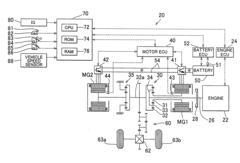
- A power output apparatus that includes an internal combustion engine, a motor, an electricity storage means, and control mechanisms to set and manage torque output limits, allowing for smooth torque increase before and after engine start by adjusting the torque output based on the electricity storage means' capacity and required torque, ensuring the torque is limited by the set output limits.


Method and apparatus for controlling output torque of a motor for an electric vehicle in uphill mode
PatentActiveUS20100030415A1
Innovation
- A method and apparatus for controlling motor output torque in electric vehicles, which detects tilt angle, vehicle speed, and accelerator-pedal travel to calculate and maintain a minimum torque necessary to prevent slipping, even when the accelerator pedal is not pressed, by using sensors and a motor controller to adjust torque based on equations involving vehicle mass, gravity, and gear position.


Emissions Compliance Challenges for High-Performance Engines
High-performance engines like the LS7 and LS3 face increasingly stringent emissions regulations worldwide, creating significant compliance challenges for manufacturers and aftermarket tuners. These challenges stem from the inherent tension between maximizing engine performance and meeting environmental standards that limit harmful exhaust emissions.
The primary regulatory frameworks affecting these engines include the EPA's Tier 3 standards in the United States, Euro 6d in Europe, and China 6 standards in Asia. These regulations specifically target reductions in nitrogen oxides (NOx), carbon monoxide (CO), particulate matter (PM), and non-methane organic gases (NMOG). High-performance V8 engines typically produce higher levels of these pollutants due to their larger displacement and performance-oriented combustion characteristics.
For the LS7 engine, with its higher compression ratio and more aggressive camshaft profile compared to the LS3, meeting emissions standards becomes particularly challenging. The LS7's 7.0L displacement and higher torque output naturally generate more emissions under load conditions. Engineers must implement sophisticated emissions control technologies without significantly compromising the engine's 505 horsepower and 470 lb-ft torque capabilities.
Modern compliance solutions include advanced catalytic converter designs with higher precious metal loadings, variable valve timing systems, and precise air-fuel ratio management. The LS3, being slightly less aggressive in its performance profile with 430 horsepower and 424 lb-ft of torque, presents fewer compliance challenges but still requires substantial engineering attention to meet current standards.
Exhaust gas recirculation (EGR) systems present another compliance approach, though they can reduce peak torque output by diluting the intake charge. This creates a direct conflict with performance goals, particularly affecting the LS7's high-end torque characteristics. Similarly, cylinder deactivation technology helps with emissions compliance but introduces complexity that can affect reliability in high-performance applications.
Future compliance pathways may include more advanced electronic control units (ECUs) with adaptive learning capabilities to optimize combustion across all operating conditions. Some manufacturers are exploring water injection systems to reduce combustion temperatures and NOx formation without sacrificing the power characteristics that distinguish engines like the LS7 from the LS3.
The aftermarket performance industry faces additional challenges, as modifications that enhance torque output often invalidate emissions certifications. This has led to declining availability of legal performance upgrades, particularly in states with stricter enforcement like California under CARB regulations.
The primary regulatory frameworks affecting these engines include the EPA's Tier 3 standards in the United States, Euro 6d in Europe, and China 6 standards in Asia. These regulations specifically target reductions in nitrogen oxides (NOx), carbon monoxide (CO), particulate matter (PM), and non-methane organic gases (NMOG). High-performance V8 engines typically produce higher levels of these pollutants due to their larger displacement and performance-oriented combustion characteristics.
For the LS7 engine, with its higher compression ratio and more aggressive camshaft profile compared to the LS3, meeting emissions standards becomes particularly challenging. The LS7's 7.0L displacement and higher torque output naturally generate more emissions under load conditions. Engineers must implement sophisticated emissions control technologies without significantly compromising the engine's 505 horsepower and 470 lb-ft torque capabilities.
Modern compliance solutions include advanced catalytic converter designs with higher precious metal loadings, variable valve timing systems, and precise air-fuel ratio management. The LS3, being slightly less aggressive in its performance profile with 430 horsepower and 424 lb-ft of torque, presents fewer compliance challenges but still requires substantial engineering attention to meet current standards.
Exhaust gas recirculation (EGR) systems present another compliance approach, though they can reduce peak torque output by diluting the intake charge. This creates a direct conflict with performance goals, particularly affecting the LS7's high-end torque characteristics. Similarly, cylinder deactivation technology helps with emissions compliance but introduces complexity that can affect reliability in high-performance applications.
Future compliance pathways may include more advanced electronic control units (ECUs) with adaptive learning capabilities to optimize combustion across all operating conditions. Some manufacturers are exploring water injection systems to reduce combustion temperatures and NOx formation without sacrificing the power characteristics that distinguish engines like the LS7 from the LS3.
The aftermarket performance industry faces additional challenges, as modifications that enhance torque output often invalidate emissions certifications. This has led to declining availability of legal performance upgrades, particularly in states with stricter enforcement like California under CARB regulations.
Cost-Benefit Analysis of LS7 vs LS3 Implementation
When evaluating the implementation of LS7 versus LS3 engines from a cost-benefit perspective, several critical factors must be considered to determine the optimal choice for specific applications. The LS7 engine, with its higher torque output capabilities, commands a significant price premium over the LS3, with typical cost differences ranging from $8,000 to $12,000 in the current market for new crate engines.
The performance benefits of the LS7 include approximately 15-20% higher peak torque output and superior torque curve characteristics throughout the RPM range. This translates to measurable improvements in vehicle acceleration, particularly in the mid-range where the LS7's 7.0L displacement provides substantial advantages over the LS3's 6.2L configuration.
However, the cost implications extend beyond the initial purchase price. The LS7's hand-built nature requires more specialized maintenance expertise, with replacement parts typically costing 30-40% more than comparable LS3 components. Additionally, the LS7's dry-sump oiling system, while providing superior lubrication under high-performance driving conditions, adds complexity and cost to both installation and maintenance procedures.
Fuel economy considerations further impact the long-term cost equation, with the LS7 typically consuming 10-15% more fuel under similar driving conditions compared to the LS3. This difference becomes particularly significant for applications where the vehicle will see substantial mileage or where fuel costs represent a major operational expense.
For racing applications where maximum performance is paramount, the cost-benefit analysis typically favors the LS7 despite its higher acquisition and maintenance costs. The performance advantages in competitive environments often justify the premium, particularly when factoring in the potential for prize money or sponsorship opportunities that result from improved performance.
Conversely, for street applications or daily drivers where the performance envelope is rarely fully explored, the LS3 presents a more favorable cost-benefit proposition. The LS3's more accessible price point, wider availability of parts, and lower maintenance requirements make it the more economical choice for applications where the marginal performance benefits of the LS7 would rarely be utilized.
Manufacturing scalability also factors into the equation, with the LS3's higher production volumes enabling economies of scale that the hand-built LS7 cannot match. This translates to more competitive pricing for both the base engine and replacement components, further tilting the cost-benefit analysis in favor of the LS3 for most mainstream applications.
The performance benefits of the LS7 include approximately 15-20% higher peak torque output and superior torque curve characteristics throughout the RPM range. This translates to measurable improvements in vehicle acceleration, particularly in the mid-range where the LS7's 7.0L displacement provides substantial advantages over the LS3's 6.2L configuration.
However, the cost implications extend beyond the initial purchase price. The LS7's hand-built nature requires more specialized maintenance expertise, with replacement parts typically costing 30-40% more than comparable LS3 components. Additionally, the LS7's dry-sump oiling system, while providing superior lubrication under high-performance driving conditions, adds complexity and cost to both installation and maintenance procedures.
Fuel economy considerations further impact the long-term cost equation, with the LS7 typically consuming 10-15% more fuel under similar driving conditions compared to the LS3. This difference becomes particularly significant for applications where the vehicle will see substantial mileage or where fuel costs represent a major operational expense.
For racing applications where maximum performance is paramount, the cost-benefit analysis typically favors the LS7 despite its higher acquisition and maintenance costs. The performance advantages in competitive environments often justify the premium, particularly when factoring in the potential for prize money or sponsorship opportunities that result from improved performance.
Conversely, for street applications or daily drivers where the performance envelope is rarely fully explored, the LS3 presents a more favorable cost-benefit proposition. The LS3's more accessible price point, wider availability of parts, and lower maintenance requirements make it the more economical choice for applications where the marginal performance benefits of the LS7 would rarely be utilized.
Manufacturing scalability also factors into the equation, with the LS3's higher production volumes enabling economies of scale that the hand-built LS7 cannot match. This translates to more competitive pricing for both the base engine and replacement components, further tilting the cost-benefit analysis in favor of the LS3 for most mainstream applications.
Unlock deeper insights with Patsnap Eureka Quick Research — get a full tech report to explore trends and direct your research. Try now!
Generate Your Research Report Instantly with AI Agent
Supercharge your innovation with Patsnap Eureka AI Agent Platform!