

Optimizing Phased Array Outputs for High-Fidelity Audio
SEP 22, 20259 MIN READ
Generate Your Research Report Instantly with AI Agent
PatSnap Eureka helps you evaluate technical feasibility & market potential.
Phased Array Audio Technology Background and Objectives
Phased array technology in audio systems has evolved significantly over the past several decades, transforming from theoretical concepts to practical applications in various fields. Initially developed for radar and telecommunications, phased array technology has been adapted for audio applications to achieve precise sound beam steering and spatial audio reproduction. The fundamental principle involves controlling the phase and amplitude of signals across multiple transducers to create constructive and destructive interference patterns, allowing for directional sound projection.
The evolution of digital signal processing capabilities has been instrumental in advancing phased array audio systems. Early implementations were limited by computational constraints, but modern DSP hardware now enables real-time processing of complex algorithms necessary for high-fidelity audio beamforming. This progression has paralleled developments in transducer technology, with improvements in speaker and microphone array designs contributing to enhanced performance characteristics.
Current technical objectives in phased array audio optimization focus on achieving higher fidelity reproduction while maintaining directional control. This includes minimizing side lobes, reducing spatial aliasing, and extending frequency response range without compromising directional performance. Additionally, there is significant interest in developing more efficient algorithms that can operate with lower computational overhead, enabling implementation in consumer-grade devices.
Another critical objective is the improvement of spatial resolution and coverage uniformity across listening environments. Traditional phased array systems often suffer from performance degradation in reverberant spaces or when listeners move outside the optimal listening position. Advanced optimization techniques aim to create more robust sound fields that maintain fidelity regardless of environmental conditions or listener position.
Energy efficiency represents another important goal, particularly for battery-powered applications. Optimizing the power distribution across array elements while maintaining sound quality requires sophisticated control algorithms that can dynamically adjust based on content and listening conditions. This becomes especially challenging when attempting to deliver high sound pressure levels with limited power resources.
The integration of machine learning approaches marks a significant trend in phased array optimization. Adaptive algorithms capable of learning from acoustic environments and listener preferences show promise for creating personalized audio experiences. These systems can potentially overcome traditional limitations by continuously refining their performance parameters based on real-world feedback.
The ultimate technical goal remains the creation of phased array systems capable of delivering studio-quality audio with precise spatial control across the entire audible frequency spectrum. This would enable applications ranging from personalized listening zones in shared spaces to immersive spatial audio for virtual and augmented reality experiences, representing a significant advancement in audio reproduction technology.
The evolution of digital signal processing capabilities has been instrumental in advancing phased array audio systems. Early implementations were limited by computational constraints, but modern DSP hardware now enables real-time processing of complex algorithms necessary for high-fidelity audio beamforming. This progression has paralleled developments in transducer technology, with improvements in speaker and microphone array designs contributing to enhanced performance characteristics.
Current technical objectives in phased array audio optimization focus on achieving higher fidelity reproduction while maintaining directional control. This includes minimizing side lobes, reducing spatial aliasing, and extending frequency response range without compromising directional performance. Additionally, there is significant interest in developing more efficient algorithms that can operate with lower computational overhead, enabling implementation in consumer-grade devices.
Another critical objective is the improvement of spatial resolution and coverage uniformity across listening environments. Traditional phased array systems often suffer from performance degradation in reverberant spaces or when listeners move outside the optimal listening position. Advanced optimization techniques aim to create more robust sound fields that maintain fidelity regardless of environmental conditions or listener position.
Energy efficiency represents another important goal, particularly for battery-powered applications. Optimizing the power distribution across array elements while maintaining sound quality requires sophisticated control algorithms that can dynamically adjust based on content and listening conditions. This becomes especially challenging when attempting to deliver high sound pressure levels with limited power resources.
The integration of machine learning approaches marks a significant trend in phased array optimization. Adaptive algorithms capable of learning from acoustic environments and listener preferences show promise for creating personalized audio experiences. These systems can potentially overcome traditional limitations by continuously refining their performance parameters based on real-world feedback.
The ultimate technical goal remains the creation of phased array systems capable of delivering studio-quality audio with precise spatial control across the entire audible frequency spectrum. This would enable applications ranging from personalized listening zones in shared spaces to immersive spatial audio for virtual and augmented reality experiences, representing a significant advancement in audio reproduction technology.
Market Analysis for High-Fidelity Audio Solutions
The high-fidelity audio market has experienced significant growth over the past decade, driven by increasing consumer demand for premium sound experiences across various applications. The global high-fidelity audio equipment market was valued at approximately $11.5 billion in 2022 and is projected to reach $16.8 billion by 2027, growing at a CAGR of 7.9%. This growth trajectory is supported by rising disposable incomes, technological advancements, and changing consumer preferences toward immersive audio experiences.
Phased array audio technology represents a high-potential segment within this market, with applications spanning from home entertainment systems to professional audio installations, automotive sound systems, and virtual reality environments. The market for phased array audio solutions specifically is estimated to reach $2.3 billion by 2025, representing one of the fastest-growing segments within the broader audio technology landscape.
Consumer preferences are increasingly shifting toward spatially accurate sound reproduction, with 68% of premium audio consumers citing "realistic soundstage" as a critical factor in purchasing decisions. This trend is particularly pronounced among younger demographics (25-40 age group), who demonstrate greater willingness to invest in advanced audio technologies that deliver immersive experiences.
The commercial sector presents substantial opportunities for phased array audio solutions, with concert venues, theaters, and conference facilities increasingly adopting directional audio technologies to enhance audience experiences. The commercial installation segment for high-fidelity audio solutions grew by 12.3% in 2022, outpacing the consumer segment.
Regional analysis reveals varying adoption patterns, with North America and Europe currently leading in market share for high-fidelity audio solutions (38% and 29% respectively), while Asia-Pacific represents the fastest-growing region with a 14.2% annual growth rate. China and South Korea are emerging as particularly dynamic markets, driven by strong domestic manufacturing capabilities and rising consumer demand.
Competitive analysis indicates that the high-fidelity audio market features both established audio equipment manufacturers and emerging technology-focused startups. Traditional audio companies are increasingly investing in phased array technologies through R&D and strategic acquisitions, recognizing the potential for market disruption.
Price sensitivity remains a significant factor, with premium phased array audio solutions currently positioned at price points accessible primarily to audiophiles and professional users. However, manufacturing efficiencies and technological advancements are gradually reducing production costs, suggesting potential for broader market penetration in the medium term.
Phased array audio technology represents a high-potential segment within this market, with applications spanning from home entertainment systems to professional audio installations, automotive sound systems, and virtual reality environments. The market for phased array audio solutions specifically is estimated to reach $2.3 billion by 2025, representing one of the fastest-growing segments within the broader audio technology landscape.
Consumer preferences are increasingly shifting toward spatially accurate sound reproduction, with 68% of premium audio consumers citing "realistic soundstage" as a critical factor in purchasing decisions. This trend is particularly pronounced among younger demographics (25-40 age group), who demonstrate greater willingness to invest in advanced audio technologies that deliver immersive experiences.
The commercial sector presents substantial opportunities for phased array audio solutions, with concert venues, theaters, and conference facilities increasingly adopting directional audio technologies to enhance audience experiences. The commercial installation segment for high-fidelity audio solutions grew by 12.3% in 2022, outpacing the consumer segment.
Regional analysis reveals varying adoption patterns, with North America and Europe currently leading in market share for high-fidelity audio solutions (38% and 29% respectively), while Asia-Pacific represents the fastest-growing region with a 14.2% annual growth rate. China and South Korea are emerging as particularly dynamic markets, driven by strong domestic manufacturing capabilities and rising consumer demand.
Competitive analysis indicates that the high-fidelity audio market features both established audio equipment manufacturers and emerging technology-focused startups. Traditional audio companies are increasingly investing in phased array technologies through R&D and strategic acquisitions, recognizing the potential for market disruption.
Price sensitivity remains a significant factor, with premium phased array audio solutions currently positioned at price points accessible primarily to audiophiles and professional users. However, manufacturing efficiencies and technological advancements are gradually reducing production costs, suggesting potential for broader market penetration in the medium term.
Current Challenges in Phased Array Audio Systems
Despite significant advancements in phased array audio technology, several critical challenges continue to impede optimal performance and widespread adoption. The primary technical obstacle remains the computational complexity required for real-time processing of multiple audio channels. Current digital signal processors struggle to handle the intensive calculations needed for precise beam steering and spatial audio rendering, particularly when scaling to arrays with dozens or hundreds of elements.
Signal interference and acoustic shadowing present persistent challenges in real-world environments. When phased array systems operate in spaces with reflective surfaces or obstacles, unwanted reflections create complex interference patterns that degrade audio quality. This problem becomes particularly acute in reverberant environments where maintaining coherent wavefronts becomes exceedingly difficult.
Frequency-dependent behavior represents another significant hurdle. Phased arrays exhibit dramatically different performance characteristics across the audio spectrum, with optimal directivity typically achievable only within narrow frequency bands. Low frequencies, with their longer wavelengths, prove especially problematic as they require impractically large array dimensions to achieve meaningful directional control.
Power consumption and thermal management issues limit the deployment of high-performance phased array systems in portable or compact applications. The multiple amplification channels and processing hardware generate substantial heat and drain power resources quickly, creating design constraints that compromise audio fidelity.
Calibration complexity remains a substantial barrier to consistent performance. Environmental factors, component tolerances, and aging effects necessitate sophisticated calibration procedures that often exceed the capabilities of non-technical users. Without proper calibration, phase and amplitude errors accumulate across the array, severely degrading output quality.
Cost factors continue to restrict widespread implementation, with high-quality transducers, multichannel amplifiers, and specialized DSP hardware driving system prices beyond consumer-friendly levels. The economic barriers are particularly evident when scaling to larger arrays needed for superior spatial resolution.
Standardization gaps across the industry have resulted in fragmented approaches to phased array implementation. The lack of unified protocols for control interfaces, signal processing algorithms, and performance metrics hampers interoperability and slows innovation cycles.
Finally, psychoacoustic optimization remains underdeveloped. Current systems often fail to fully leverage human perception characteristics, resulting in technically accurate but perceptually suboptimal audio reproduction. Bridging the gap between objective measurements and subjective listening experience represents a frontier challenge for next-generation systems.
Signal interference and acoustic shadowing present persistent challenges in real-world environments. When phased array systems operate in spaces with reflective surfaces or obstacles, unwanted reflections create complex interference patterns that degrade audio quality. This problem becomes particularly acute in reverberant environments where maintaining coherent wavefronts becomes exceedingly difficult.
Frequency-dependent behavior represents another significant hurdle. Phased arrays exhibit dramatically different performance characteristics across the audio spectrum, with optimal directivity typically achievable only within narrow frequency bands. Low frequencies, with their longer wavelengths, prove especially problematic as they require impractically large array dimensions to achieve meaningful directional control.
Power consumption and thermal management issues limit the deployment of high-performance phased array systems in portable or compact applications. The multiple amplification channels and processing hardware generate substantial heat and drain power resources quickly, creating design constraints that compromise audio fidelity.
Calibration complexity remains a substantial barrier to consistent performance. Environmental factors, component tolerances, and aging effects necessitate sophisticated calibration procedures that often exceed the capabilities of non-technical users. Without proper calibration, phase and amplitude errors accumulate across the array, severely degrading output quality.
Cost factors continue to restrict widespread implementation, with high-quality transducers, multichannel amplifiers, and specialized DSP hardware driving system prices beyond consumer-friendly levels. The economic barriers are particularly evident when scaling to larger arrays needed for superior spatial resolution.
Standardization gaps across the industry have resulted in fragmented approaches to phased array implementation. The lack of unified protocols for control interfaces, signal processing algorithms, and performance metrics hampers interoperability and slows innovation cycles.
Finally, psychoacoustic optimization remains underdeveloped. Current systems often fail to fully leverage human perception characteristics, resulting in technically accurate but perceptually suboptimal audio reproduction. Bridging the gap between objective measurements and subjective listening experience represents a frontier challenge for next-generation systems.
Current Optimization Methods for Phased Array Outputs
01 Phased array speaker systems for improved audio fidelity
Phased array technology applied to speaker systems can significantly enhance audio fidelity by controlling the directivity of sound waves. These systems use multiple speakers arranged in specific configurations with precisely timed signals to create focused sound beams, reduce interference, and improve overall sound quality. The technology allows for better spatial audio reproduction and can adapt to different acoustic environments, resulting in clearer, more accurate sound reproduction with enhanced frequency response.- Phased array speaker systems for improved audio fidelity: Phased array technology applied to speaker systems can significantly enhance audio fidelity by controlling the directivity of sound waves. These systems use multiple speakers arranged in specific configurations with precisely timed signals to create focused sound beams, reduce interference, and improve overall sound quality. The technology allows for better spatial audio reproduction and more immersive listening experiences by manipulating phase relationships between audio signals.
- Digital signal processing techniques for phased array audio: Advanced digital signal processing (DSP) techniques are essential for optimizing phased array audio systems. These techniques include beamforming algorithms, phase correction, and adaptive filtering to enhance audio fidelity. DSP enables precise control over the timing and amplitude of signals sent to each element in the array, allowing for dynamic adjustment of sound field characteristics and compensation for acoustic environments, resulting in clearer, more accurate sound reproduction.
- Beamforming technology for directional audio reproduction: Beamforming technology enables highly directional audio reproduction by constructively combining signals from multiple transducers in a phased array. This approach allows sound energy to be focused in specific directions while minimizing dispersion in unwanted areas. Advanced beamforming algorithms can create multiple simultaneous audio zones, reduce ambient noise interference, and deliver personalized audio experiences to different listeners in the same space, significantly improving perceived audio fidelity.
- Microphone array systems for enhanced audio capture: Phased array microphone systems utilize multiple microphone elements to capture audio with superior fidelity. By employing beamforming techniques, these systems can focus on desired sound sources while rejecting background noise and reverberation. The arrays can adaptively track moving sound sources, adjust directivity patterns, and implement spatial filtering, resulting in cleaner audio recordings with improved signal-to-noise ratios and greater clarity for applications ranging from teleconferencing to professional audio recording.
- Integration of phased array audio with wireless communication systems: The integration of phased array audio technology with wireless communication systems creates opportunities for enhanced audio fidelity in mobile and distributed environments. These integrated systems leverage wireless protocols to synchronize multiple audio array elements, enable spatial audio streaming, and facilitate seamless audio handover between devices. The combination allows for flexible deployment of audio systems that can maintain high fidelity across varying acoustic environments while minimizing physical connections and installation complexity.
02 Digital signal processing techniques for phased array audio
Advanced digital signal processing (DSP) techniques are essential for optimizing phased array audio systems. These techniques include beamforming algorithms, phase alignment processing, and adaptive filtering that work together to enhance audio fidelity. DSP allows for real-time adjustment of audio parameters, compensation for acoustic anomalies, and precise control over the directional characteristics of sound reproduction, resulting in improved clarity, reduced distortion, and more accurate sound imaging.Expand Specific Solutions03 Microphone array technologies for high-fidelity audio capture
Microphone phased arrays utilize multiple microphones in specific arrangements to achieve directional audio capture with superior fidelity. These systems employ beamforming techniques to focus on desired sound sources while rejecting ambient noise and reverberation. By precisely controlling the phase relationships between microphone elements, these arrays can achieve highly selective spatial filtering, resulting in cleaner audio recordings with enhanced signal-to-noise ratio and improved intelligibility in challenging acoustic environments.Expand Specific Solutions04 Wireless audio transmission with phased array technology
Wireless audio systems incorporating phased array technology can maintain high fidelity while eliminating physical connections. These systems use beamforming to direct wireless signals precisely toward receivers, reducing interference and signal degradation. Advanced modulation techniques and error correction algorithms work in conjunction with the phased arrays to preserve audio quality across wireless transmissions. This approach enables robust, high-quality audio delivery in environments with multiple devices and potential sources of interference.Expand Specific Solutions05 Integration of phased array audio in multimedia and virtual reality systems
Phased array audio technology is being integrated into multimedia and virtual reality systems to create immersive, high-fidelity sound experiences. These implementations use spatial audio rendering techniques to position sounds accurately within three-dimensional environments. By precisely controlling the phase and amplitude of multiple audio channels, these systems can create convincing acoustic illusions that match visual cues, enhancing the sense of presence and realism in virtual environments while maintaining exceptional audio quality and detail.Expand Specific Solutions
Leading Companies in Phased Array Audio Industry
The high-fidelity audio phased array market is currently in a growth phase, with increasing demand for immersive audio experiences driving innovation. The market is expected to reach significant scale as technologies mature from research to commercial applications. Leading technology companies like Sony, Yamaha, and Dolby Laboratories are advancing core technologies, while specialized audio firms such as Trinnov Audio and Syng are developing breakthrough products. Research institutions including Fraunhofer-Gesellschaft and universities collaborate with industry players to solve complex acoustic challenges. Chinese companies like Huawei and Midea are rapidly expanding their presence, particularly in consumer applications. The competitive landscape features established audio giants competing with innovative startups and research-driven organizations, all working to optimize phased array technologies for superior spatial audio reproduction.
Sony Group Corp.
Technical Solution: Sony has developed innovative phased array audio solutions through their 360 Reality Audio and Sonic Surface technologies. Their approach utilizes object-based spatial audio processing that precisely controls phase relationships between array elements to create immersive sound fields. Sony's technology implements advanced digital signal processing algorithms that optimize phase coherence across the entire frequency spectrum while maintaining natural timbral characteristics. Their systems feature proprietary driver arrangements that minimize destructive interference patterns between adjacent elements in the array. Sony has also developed specialized room calibration systems that measure and compensate for phase distortions caused by room acoustics. Their technology incorporates psychoacoustic modeling that optimizes perceived spatial accuracy by carefully managing phase relationships between direct and reflected sound. Sony's arrays utilize adaptive processing that can dynamically adjust phase characteristics based on content type and listening position.
Strengths: Vertical integration of hardware and content creation tools; strong consumer electronics distribution channels; extensive intellectual property portfolio; established ecosystem of compatible products. Weaknesses: Proprietary technologies may limit interoperability with other systems; consumer-focused solutions may sacrifice some technical performance for ease of use; implementation across product lines can be inconsistent.
Fraunhofer-Gesellschaft eV
Technical Solution: Fraunhofer has developed comprehensive phased array audio optimization technologies through their MPEG-H Audio and SpatialSound Wave systems. Their approach utilizes object-based audio processing that precisely controls the phase relationships between array elements to create accurate spatial positioning of sound objects. Fraunhofer's technology implements wave field synthesis techniques that reconstruct complex sound fields by controlling the phase and timing of hundreds of individual drivers with sub-millisecond precision. Their systems feature adaptive beamforming algorithms that dynamically adjust array directivity patterns based on content type and listening environment. Fraunhofer has also pioneered psychoacoustic optimization methods that specifically target phase coherence issues that affect perceived audio quality. Their technology incorporates sophisticated room interaction models that predict and compensate for phase distortions caused by reflective surfaces.
Strengths: World-class research capabilities; development of international audio standards; extensive intellectual property portfolio; partnerships with major technology companies. Weaknesses: Technologies often require licensing to hardware manufacturers; implementation complexity can be high; may require specialized expertise for optimal deployment.
Key Patents and Research in Audio Phased Array Systems
Phased array radio frequency pulse generator
PatentInactiveUS7342534B1
Innovation
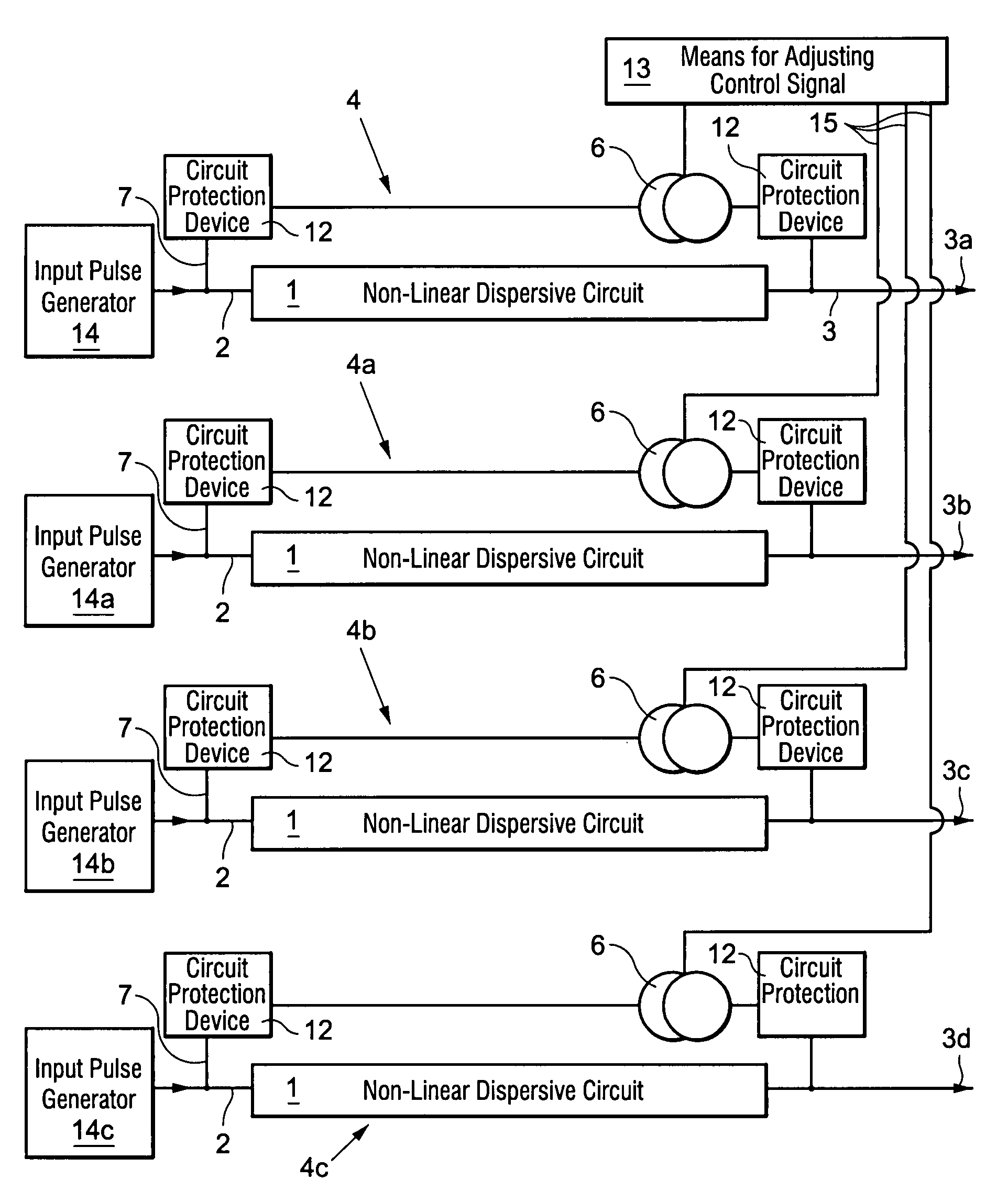
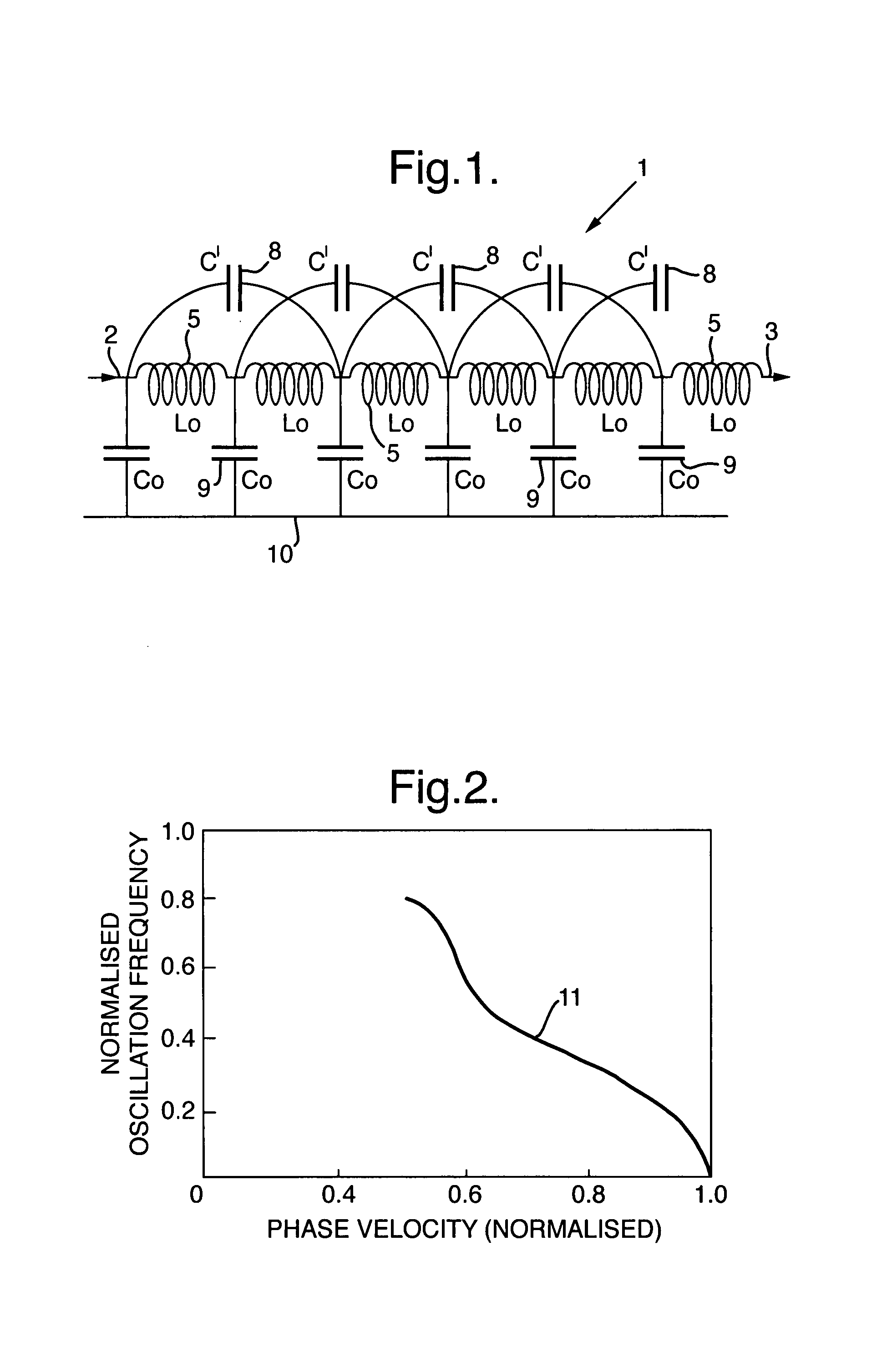
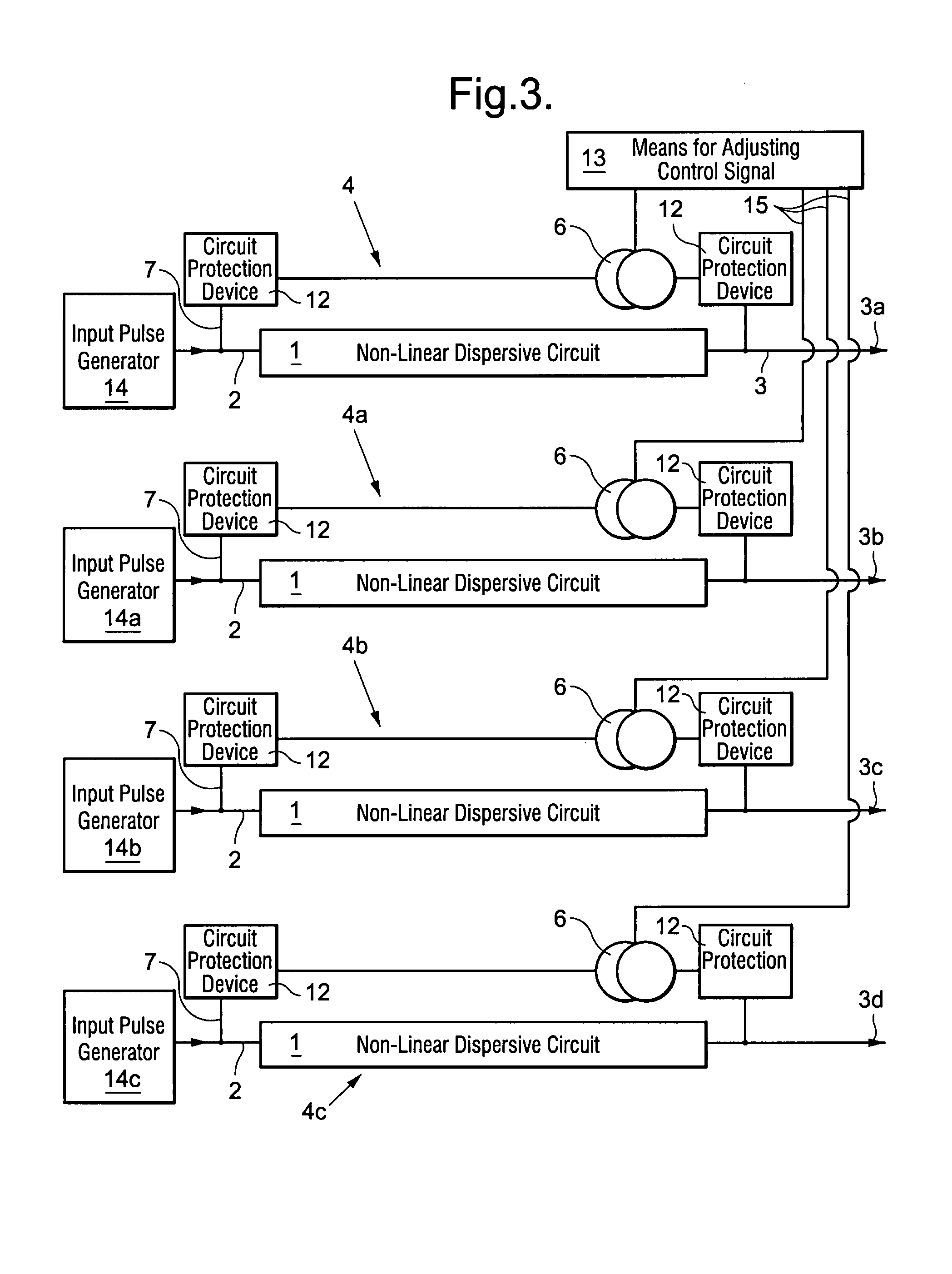
- A phased array radio frequency pulse generator using non-linear dispersive electrical circuits with ferromagnetic or ferroelectric materials, where a low power control signal adjusts the non-linearity of the elements to vary the timing and phase of the radio frequency output signals, allowing for electronic control of relative phases and increased power handling.
Acoustic Environment Impact Assessment
The acoustic environment in which phased array audio systems operate significantly influences their performance and the resulting sound quality. Different environments present unique challenges for optimizing phased array outputs due to varying acoustic properties such as reverberation, absorption, and diffraction. Indoor environments typically exhibit higher reverberation times and complex reflection patterns that can interfere with the intended sound field, potentially degrading the spatial accuracy of phased array systems.
Outdoor environments, while generally having fewer reflective surfaces, introduce other challenges such as wind effects, temperature gradients, and ambient noise that can distort the phased wavefront. These environmental factors necessitate adaptive processing algorithms that can compensate for these disturbances in real-time to maintain high-fidelity audio reproduction.
The physical dimensions and materials present in the listening space also play a crucial role in determining the effectiveness of phased array systems. Hard, reflective surfaces can create unwanted early reflections that interfere with the direct sound, while soft, absorptive materials can attenuate certain frequencies disproportionately, affecting the spectral balance of the reproduced audio.
Room modes, standing waves that occur at specific frequencies related to the room dimensions, can cause significant frequency response irregularities that phased array systems must account for. Advanced room correction algorithms integrated with phased array processing can help mitigate these effects by applying targeted equalization and phase adjustments.
Listener position relative to the phased array also constitutes a critical environmental factor. The sweet spot—where optimal phase coherence occurs—can be limited in conventional systems. Modern phased array technologies aim to expand this sweet spot through sophisticated beamforming techniques that adapt to listener movement and environmental changes.
Environmental noise presents another significant challenge, as it can mask certain frequencies and reduce the perceived quality of the audio output. Phased arrays can implement noise cancellation techniques by creating anti-phase signals directed at noise sources, though this requires accurate environmental sensing and rapid processing capabilities.
Temperature and humidity variations affect sound propagation speed and can cause phase shifts that degrade array performance if not properly compensated for. High-fidelity systems must incorporate environmental sensors and adaptive algorithms that adjust array parameters based on these atmospheric conditions to maintain optimal performance across varying environmental conditions.
Outdoor environments, while generally having fewer reflective surfaces, introduce other challenges such as wind effects, temperature gradients, and ambient noise that can distort the phased wavefront. These environmental factors necessitate adaptive processing algorithms that can compensate for these disturbances in real-time to maintain high-fidelity audio reproduction.
The physical dimensions and materials present in the listening space also play a crucial role in determining the effectiveness of phased array systems. Hard, reflective surfaces can create unwanted early reflections that interfere with the direct sound, while soft, absorptive materials can attenuate certain frequencies disproportionately, affecting the spectral balance of the reproduced audio.
Room modes, standing waves that occur at specific frequencies related to the room dimensions, can cause significant frequency response irregularities that phased array systems must account for. Advanced room correction algorithms integrated with phased array processing can help mitigate these effects by applying targeted equalization and phase adjustments.
Listener position relative to the phased array also constitutes a critical environmental factor. The sweet spot—where optimal phase coherence occurs—can be limited in conventional systems. Modern phased array technologies aim to expand this sweet spot through sophisticated beamforming techniques that adapt to listener movement and environmental changes.
Environmental noise presents another significant challenge, as it can mask certain frequencies and reduce the perceived quality of the audio output. Phased arrays can implement noise cancellation techniques by creating anti-phase signals directed at noise sources, though this requires accurate environmental sensing and rapid processing capabilities.
Temperature and humidity variations affect sound propagation speed and can cause phase shifts that degrade array performance if not properly compensated for. High-fidelity systems must incorporate environmental sensors and adaptive algorithms that adjust array parameters based on these atmospheric conditions to maintain optimal performance across varying environmental conditions.
Signal Processing Algorithms for Phased Array Systems
Signal processing algorithms form the backbone of modern phased array systems for high-fidelity audio applications. These algorithms can be broadly categorized into beamforming techniques, adaptive filtering methods, and spatial audio processing approaches, each serving distinct purposes in the optimization pipeline.
Beamforming algorithms manipulate the phase and amplitude of signals from multiple array elements to enhance directional sensitivity. Delay-and-sum beamforming represents the classical approach, where signals from each element are time-delayed and combined to reinforce signals from the target direction while attenuating others. More sophisticated methods include Filter-and-Sum beamforming, which applies specific frequency-dependent filtering to each channel before summation, significantly improving performance across the audio spectrum.
Adaptive beamforming techniques such as Minimum Variance Distortionless Response (MVDR) and Linearly Constrained Minimum Variance (LCMV) algorithms dynamically adjust weights based on the acoustic environment. These algorithms calculate optimal weights by minimizing output power while maintaining unity gain in the desired direction, effectively suppressing interference and noise.
Frequency-domain processing has proven particularly effective for audio applications. Fast Fourier Transform (FFT) based methods enable efficient implementation of complex filtering operations, with overlap-add techniques ensuring seamless processing across audio frames. Subband adaptive filtering further enhances performance by applying different processing strategies to different frequency bands, accounting for the frequency-dependent characteristics of audio signals.
Machine learning approaches have recently revolutionized phased array signal processing. Deep neural networks can be trained to optimize beamforming weights directly from raw audio data, outperforming traditional methods in complex acoustic environments. Particularly, recurrent neural networks (RNNs) and convolutional neural networks (CNNs) have demonstrated remarkable capabilities in handling time-varying acoustic conditions and extracting spatial features.
Post-processing algorithms further refine the beamformed output to enhance audio quality. Spectral enhancement techniques reduce musical noise artifacts often introduced during beamforming. Dereverberation algorithms mitigate the effects of room reflections, while nonlinear processing methods address residual noise components that linear beamforming cannot eliminate.
Real-time implementation considerations significantly influence algorithm selection. Computational complexity, memory requirements, and processing latency must be carefully balanced against performance gains. Block-based processing schemes with appropriate buffer management strategies help maintain low latency while enabling complex frequency-domain operations essential for high-fidelity audio reproduction.
Beamforming algorithms manipulate the phase and amplitude of signals from multiple array elements to enhance directional sensitivity. Delay-and-sum beamforming represents the classical approach, where signals from each element are time-delayed and combined to reinforce signals from the target direction while attenuating others. More sophisticated methods include Filter-and-Sum beamforming, which applies specific frequency-dependent filtering to each channel before summation, significantly improving performance across the audio spectrum.
Adaptive beamforming techniques such as Minimum Variance Distortionless Response (MVDR) and Linearly Constrained Minimum Variance (LCMV) algorithms dynamically adjust weights based on the acoustic environment. These algorithms calculate optimal weights by minimizing output power while maintaining unity gain in the desired direction, effectively suppressing interference and noise.
Frequency-domain processing has proven particularly effective for audio applications. Fast Fourier Transform (FFT) based methods enable efficient implementation of complex filtering operations, with overlap-add techniques ensuring seamless processing across audio frames. Subband adaptive filtering further enhances performance by applying different processing strategies to different frequency bands, accounting for the frequency-dependent characteristics of audio signals.
Machine learning approaches have recently revolutionized phased array signal processing. Deep neural networks can be trained to optimize beamforming weights directly from raw audio data, outperforming traditional methods in complex acoustic environments. Particularly, recurrent neural networks (RNNs) and convolutional neural networks (CNNs) have demonstrated remarkable capabilities in handling time-varying acoustic conditions and extracting spatial features.
Post-processing algorithms further refine the beamformed output to enhance audio quality. Spectral enhancement techniques reduce musical noise artifacts often introduced during beamforming. Dereverberation algorithms mitigate the effects of room reflections, while nonlinear processing methods address residual noise components that linear beamforming cannot eliminate.
Real-time implementation considerations significantly influence algorithm selection. Computational complexity, memory requirements, and processing latency must be carefully balanced against performance gains. Block-based processing schemes with appropriate buffer management strategies help maintain low latency while enabling complex frequency-domain operations essential for high-fidelity audio reproduction.
Unlock deeper insights with PatSnap Eureka Quick Research — get a full tech report to explore trends and direct your research. Try now!
Generate Your Research Report Instantly with AI Agent
Supercharge your innovation with PatSnap Eureka AI Agent Platform!