Optimizing Pyrolysis Conditions For Targeted Biochar Properties
AUG 28, 20259 MIN READ
Generate Your Research Report Instantly with AI Agent
PatSnap Eureka helps you evaluate technical feasibility & market potential.
Pyrolysis Technology Evolution and Biochar Production Goals
Pyrolysis technology has evolved significantly over the past century, transitioning from rudimentary charcoal production methods to sophisticated, controlled thermal decomposition processes. The earliest industrial applications in the 1920s focused primarily on coal pyrolysis for fuel production, with limited control over process parameters. By the 1970s, interest in biomass pyrolysis emerged as an alternative energy pathway, though biochar was initially considered a byproduct rather than a primary product.
The 1990s marked a turning point with the recognition of biochar's agricultural and environmental benefits, leading to more targeted research on production methods. This period saw the development of slow pyrolysis techniques specifically optimized for biochar yield rather than bio-oil production. The early 2000s witnessed significant technological advancements with the introduction of continuous feed systems, improved reactor designs, and better temperature control mechanisms.
Recent technological evolution has focused on precision engineering of biochar properties through careful manipulation of pyrolysis conditions. Modern systems now incorporate real-time monitoring and adjustment of temperature profiles, residence time, heating rates, and pressure conditions. This evolution reflects a paradigm shift from quantity-focused to quality-focused production, acknowledging that biochar's functionality depends critically on its physical and chemical characteristics.
The current technological frontier involves the development of modular, scalable systems capable of processing diverse feedstocks while maintaining precise control over production parameters. Advanced analytics and machine learning algorithms are increasingly being integrated to predict and optimize biochar properties based on feedstock characteristics and process conditions.
The primary goals of modern biochar production center on achieving specific targeted properties tailored to particular applications. For agricultural applications, the focus is on producing biochar with optimal porosity, surface area, and nutrient retention capabilities. Environmental remediation applications require biochar with specific adsorption characteristics for contaminant removal. Carbon sequestration goals necessitate biochar with high stability and resistance to degradation.
Additional production goals include improving energy efficiency of the pyrolysis process, minimizing harmful emissions, and developing integrated systems that effectively capture and utilize byproducts such as syngas and bio-oil. Economic viability remains a critical objective, with efforts directed toward reducing production costs while maintaining quality control.
The technological trajectory points toward increasingly sophisticated, AI-driven production systems capable of real-time adjustment to achieve precise biochar specifications from heterogeneous feedstocks. This evolution reflects the growing recognition of biochar not as a uniform product but as a highly customizable material whose properties can be engineered to meet specific application requirements.
The 1990s marked a turning point with the recognition of biochar's agricultural and environmental benefits, leading to more targeted research on production methods. This period saw the development of slow pyrolysis techniques specifically optimized for biochar yield rather than bio-oil production. The early 2000s witnessed significant technological advancements with the introduction of continuous feed systems, improved reactor designs, and better temperature control mechanisms.
Recent technological evolution has focused on precision engineering of biochar properties through careful manipulation of pyrolysis conditions. Modern systems now incorporate real-time monitoring and adjustment of temperature profiles, residence time, heating rates, and pressure conditions. This evolution reflects a paradigm shift from quantity-focused to quality-focused production, acknowledging that biochar's functionality depends critically on its physical and chemical characteristics.
The current technological frontier involves the development of modular, scalable systems capable of processing diverse feedstocks while maintaining precise control over production parameters. Advanced analytics and machine learning algorithms are increasingly being integrated to predict and optimize biochar properties based on feedstock characteristics and process conditions.
The primary goals of modern biochar production center on achieving specific targeted properties tailored to particular applications. For agricultural applications, the focus is on producing biochar with optimal porosity, surface area, and nutrient retention capabilities. Environmental remediation applications require biochar with specific adsorption characteristics for contaminant removal. Carbon sequestration goals necessitate biochar with high stability and resistance to degradation.
Additional production goals include improving energy efficiency of the pyrolysis process, minimizing harmful emissions, and developing integrated systems that effectively capture and utilize byproducts such as syngas and bio-oil. Economic viability remains a critical objective, with efforts directed toward reducing production costs while maintaining quality control.
The technological trajectory points toward increasingly sophisticated, AI-driven production systems capable of real-time adjustment to achieve precise biochar specifications from heterogeneous feedstocks. This evolution reflects the growing recognition of biochar not as a uniform product but as a highly customizable material whose properties can be engineered to meet specific application requirements.
Market Analysis for Engineered Biochar Products
The engineered biochar market is experiencing significant growth, driven by increasing awareness of sustainable agricultural practices and carbon sequestration needs. Current market valuation stands at approximately $1.5 billion globally, with projections indicating a compound annual growth rate of 13.2% through 2028. This growth trajectory is supported by expanding applications beyond traditional soil amendment uses, including water filtration, construction materials, and energy storage solutions.
Agricultural applications currently dominate the market, accounting for roughly 65% of biochar consumption. This segment is particularly strong in regions with intensive farming practices and degraded soils, including North America, Europe, and parts of Asia. The water treatment sector represents the fastest-growing application segment, expanding at nearly 17% annually as municipalities and industries seek cost-effective filtration alternatives.
Consumer demand patterns reveal a bifurcation in the market. Commercial agricultural operations primarily seek biochar with consistent physical properties and certified carbon sequestration potential, often willing to pay premium prices for products with documented performance metrics. Meanwhile, smaller-scale users and specialty applications demand biochar with highly specific properties tailored to particular needs, creating valuable niche markets.
Regional market analysis shows North America leading with approximately 38% market share, followed by Europe (29%) and Asia-Pacific (24%). However, the Asia-Pacific region demonstrates the highest growth potential due to increasing agricultural intensification and environmental regulations in China and India.
Price sensitivity varies significantly by application. Agricultural bulk users demonstrate high price sensitivity, whereas specialized industrial applications show greater willingness to pay premium prices for biochar with precisely engineered properties. Current market prices range from $500-$3,000 per ton depending on quality specifications, production methods, and certification status.
Key market drivers include tightening environmental regulations, carbon credit opportunities, and growing demand for sustainable agricultural inputs. The potential for biochar to qualify for carbon credits represents a particularly significant market accelerator, with several countries developing frameworks to monetize the carbon sequestration value of biochar applications.
Market barriers include inconsistent product quality, limited consumer awareness, and relatively high production costs compared to conventional alternatives. Additionally, the fragmented regulatory landscape regarding biochar certification and carbon credit qualification creates market uncertainty that constrains investment and adoption.
Agricultural applications currently dominate the market, accounting for roughly 65% of biochar consumption. This segment is particularly strong in regions with intensive farming practices and degraded soils, including North America, Europe, and parts of Asia. The water treatment sector represents the fastest-growing application segment, expanding at nearly 17% annually as municipalities and industries seek cost-effective filtration alternatives.
Consumer demand patterns reveal a bifurcation in the market. Commercial agricultural operations primarily seek biochar with consistent physical properties and certified carbon sequestration potential, often willing to pay premium prices for products with documented performance metrics. Meanwhile, smaller-scale users and specialty applications demand biochar with highly specific properties tailored to particular needs, creating valuable niche markets.
Regional market analysis shows North America leading with approximately 38% market share, followed by Europe (29%) and Asia-Pacific (24%). However, the Asia-Pacific region demonstrates the highest growth potential due to increasing agricultural intensification and environmental regulations in China and India.
Price sensitivity varies significantly by application. Agricultural bulk users demonstrate high price sensitivity, whereas specialized industrial applications show greater willingness to pay premium prices for biochar with precisely engineered properties. Current market prices range from $500-$3,000 per ton depending on quality specifications, production methods, and certification status.
Key market drivers include tightening environmental regulations, carbon credit opportunities, and growing demand for sustainable agricultural inputs. The potential for biochar to qualify for carbon credits represents a particularly significant market accelerator, with several countries developing frameworks to monetize the carbon sequestration value of biochar applications.
Market barriers include inconsistent product quality, limited consumer awareness, and relatively high production costs compared to conventional alternatives. Additionally, the fragmented regulatory landscape regarding biochar certification and carbon credit qualification creates market uncertainty that constrains investment and adoption.
Current Pyrolysis Methods and Technical Limitations
Pyrolysis technology for biochar production has evolved significantly over the past decades, with several methods now established in both research and commercial settings. Slow pyrolysis, operating at temperatures between 300-700°C with residence times of hours to days, remains the most widely used approach for biochar production due to its relatively simple operation and higher char yields (typically 25-35% of feedstock mass). Fast pyrolysis, characterized by rapid heating rates (>100°C/min) and short vapor residence times (<2 seconds), is primarily optimized for bio-oil production rather than biochar, typically yielding only 10-20% biochar.
Intermediate pyrolysis bridges these approaches with moderate heating rates and residence times, offering a balanced production of biochar, bio-oil, and syngas. Microwave-assisted pyrolysis has emerged as an energy-efficient alternative, utilizing electromagnetic radiation to heat biomass internally rather than through conductive heat transfer, potentially reducing energy consumption by 30-50% compared to conventional methods.
Hydrothermal carbonization represents another significant development, processing wet biomass under subcritical water conditions (180-250°C) under pressure, eliminating the energy-intensive drying step required by conventional pyrolysis. This method is particularly valuable for high-moisture feedstocks like sewage sludge or food waste.
Despite these advancements, several technical limitations persist across pyrolysis technologies. Temperature control precision remains challenging, particularly in scaled-up systems where thermal gradients can lead to inconsistent biochar properties within the same batch. Most commercial systems struggle to maintain temperature uniformity within ±15°C throughout the reactor volume, whereas targeted biochar properties often require precision within ±5°C.
Feedstock heterogeneity presents another significant challenge, as variations in moisture content, particle size, and composition significantly impact pyrolysis behavior and resulting biochar properties. Current preprocessing technologies often fail to standardize biomass sufficiently for predictable outcomes.
Process scalability represents a persistent barrier, with many laboratory-optimized conditions proving difficult to maintain in industrial-scale operations. Heat and mass transfer limitations become increasingly problematic as reactor dimensions increase, often necessitating design compromises that affect biochar quality.
Energy efficiency remains suboptimal in most systems, with thermal losses accounting for 20-40% of input energy. Additionally, the inability to precisely control residence time distribution in continuous systems leads to product variability. Most current technologies also lack real-time monitoring capabilities for biochar properties during production, relying instead on post-production testing and subsequent process adjustments.
Intermediate pyrolysis bridges these approaches with moderate heating rates and residence times, offering a balanced production of biochar, bio-oil, and syngas. Microwave-assisted pyrolysis has emerged as an energy-efficient alternative, utilizing electromagnetic radiation to heat biomass internally rather than through conductive heat transfer, potentially reducing energy consumption by 30-50% compared to conventional methods.
Hydrothermal carbonization represents another significant development, processing wet biomass under subcritical water conditions (180-250°C) under pressure, eliminating the energy-intensive drying step required by conventional pyrolysis. This method is particularly valuable for high-moisture feedstocks like sewage sludge or food waste.
Despite these advancements, several technical limitations persist across pyrolysis technologies. Temperature control precision remains challenging, particularly in scaled-up systems where thermal gradients can lead to inconsistent biochar properties within the same batch. Most commercial systems struggle to maintain temperature uniformity within ±15°C throughout the reactor volume, whereas targeted biochar properties often require precision within ±5°C.
Feedstock heterogeneity presents another significant challenge, as variations in moisture content, particle size, and composition significantly impact pyrolysis behavior and resulting biochar properties. Current preprocessing technologies often fail to standardize biomass sufficiently for predictable outcomes.
Process scalability represents a persistent barrier, with many laboratory-optimized conditions proving difficult to maintain in industrial-scale operations. Heat and mass transfer limitations become increasingly problematic as reactor dimensions increase, often necessitating design compromises that affect biochar quality.
Energy efficiency remains suboptimal in most systems, with thermal losses accounting for 20-40% of input energy. Additionally, the inability to precisely control residence time distribution in continuous systems leads to product variability. Most current technologies also lack real-time monitoring capabilities for biochar properties during production, relying instead on post-production testing and subsequent process adjustments.
Established Protocols for Tailoring Biochar Properties
01 Physical and structural properties of biochar
Biochar exhibits unique physical and structural characteristics that make it valuable for various applications. These properties include high porosity, large surface area, and a stable carbon structure. The porous nature of biochar allows it to retain water and nutrients, while its high surface area provides numerous sites for chemical reactions and microbial activity. The structural stability of biochar enables it to persist in soil for extended periods, contributing to long-term carbon sequestration.- Physical and structural properties of biochar: Biochar exhibits unique physical and structural characteristics that make it valuable for various applications. These properties include high porosity, large surface area, and a stable carbon structure. The porous nature of biochar allows it to retain water and nutrients, while its high surface area provides numerous adsorption sites. The structural stability of biochar enables it to persist in soil for extended periods, contributing to long-term carbon sequestration.
- Chemical composition and adsorption capabilities: The chemical composition of biochar significantly influences its functionality. Biochar contains various functional groups on its surface, including carboxyl, hydroxyl, and phenolic groups, which contribute to its adsorption capabilities. These properties enable biochar to effectively bind with heavy metals, organic pollutants, and nutrients. The chemical characteristics of biochar can be tailored through production parameters such as pyrolysis temperature and feedstock selection, allowing for customization based on specific application requirements.
- Agricultural and soil amendment applications: Biochar serves as an effective soil amendment that improves soil fertility and crop productivity. When incorporated into soil, biochar enhances water retention, increases nutrient availability, and promotes beneficial microbial activity. It can modify soil pH and improve soil structure, leading to better aeration and reduced compaction. These properties make biochar particularly valuable for rehabilitating degraded soils and increasing agricultural resilience to climate change impacts.
- Environmental remediation capabilities: Biochar demonstrates significant potential for environmental remediation applications due to its adsorption properties. It can effectively remove contaminants from water and soil, including heavy metals, pesticides, and industrial pollutants. The high cation exchange capacity of biochar enables it to immobilize toxic substances, reducing their bioavailability and environmental impact. Additionally, biochar can help mitigate greenhouse gas emissions from soil by sequestering carbon and reducing nitrous oxide and methane emissions.
- Production methods and feedstock influence: The properties of biochar are significantly influenced by production methods and feedstock selection. Different pyrolysis conditions, including temperature, heating rate, and residence time, affect the physical and chemical characteristics of the resulting biochar. Similarly, the type of biomass used as feedstock impacts the final product properties. Agricultural residues, wood waste, and animal manures produce biochars with varying compositions and functionalities. Understanding these relationships allows for the production of engineered biochars with tailored properties for specific applications.
02 Chemical composition and adsorption capabilities
Biochar's chemical composition varies based on feedstock and production conditions, typically containing carbon, hydrogen, oxygen, nitrogen, and minerals. This composition gives biochar excellent adsorption capabilities for contaminants, heavy metals, and organic pollutants. The surface functional groups on biochar, such as carboxyl, hydroxyl, and phenolic groups, enable ion exchange and complexation reactions. These chemical properties make biochar effective for environmental remediation and water purification applications.Expand Specific Solutions03 Agricultural and soil amendment applications
Biochar serves as an effective soil amendment that improves soil fertility and crop productivity. When incorporated into soil, biochar enhances water retention, increases nutrient availability, and promotes beneficial microbial activity. It can modify soil pH, improve soil structure, and reduce nutrient leaching. The stable carbon structure of biochar contributes to long-term soil carbon sequestration while providing a habitat for soil microorganisms, ultimately leading to improved agricultural yields and sustainable farming practices.Expand Specific Solutions04 Environmental remediation and carbon sequestration
Biochar plays a significant role in environmental remediation and carbon sequestration efforts. Its stable carbon structure allows it to store carbon for hundreds to thousands of years, effectively removing carbon dioxide from the atmosphere. Biochar can remediate contaminated soils by immobilizing heavy metals and organic pollutants, reducing their bioavailability and environmental impact. Additionally, biochar application can decrease greenhouse gas emissions from soil by reducing nitrous oxide and methane emissions, contributing to climate change mitigation strategies.Expand Specific Solutions05 Production methods and quality control
The properties of biochar are significantly influenced by production methods and feedstock selection. Various thermochemical processes, including pyrolysis, gasification, and hydrothermal carbonization, can be used to produce biochar with different characteristics. The production temperature, residence time, and heating rate affect the physical and chemical properties of the resulting biochar. Quality control measures and standardization are essential to ensure consistent biochar properties for specific applications. Advanced characterization techniques help assess biochar quality and suitability for various uses.Expand Specific Solutions
Leading Organizations in Biochar Production Technology
The biochar pyrolysis optimization market is currently in a growth phase, with increasing research focus on tailoring biochar properties for specific applications. The global biochar market is projected to reach approximately $3.1 billion by 2025, growing at a CAGR of around 13%. Technologically, the field is advancing from experimental to commercial implementation, with varying levels of maturity across applications. Leading academic institutions like Tianjin University, Zhejiang University, and Technical University of Denmark are driving fundamental research, while companies such as Carbon Technology Holdings, Applied Gaia Corp., and Full Circle Biochar are commercializing advanced pyrolysis technologies. Research organizations like Chinese Academy of Science Guangzhou Energy Research Institute and GTI Energy are bridging the gap between academic research and industrial implementation, focusing on process optimization and scalability challenges.
Carbon Technology Holdings LLC
Technical Solution: Carbon Technology Holdings LLC has developed an advanced pyrolysis optimization system that precisely controls temperature profiles, residence time, and feedstock preparation to produce biochar with targeted properties. Their technology employs a multi-stage pyrolysis process with real-time monitoring and adjustment capabilities, allowing for the production of biochar with specific surface area, porosity, and functional group characteristics. The system incorporates a proprietary thermal gradient control mechanism that can maintain temperature stability within ±5°C throughout the reaction chamber[1], ensuring consistent biochar quality. Their process also features an innovative gas recirculation system that captures and reuses volatile compounds, improving both energy efficiency and allowing for selective condensation of bio-oils with different properties[3]. The company has demonstrated the ability to produce biochar with surface areas ranging from 200-800 m²/g by adjusting pyrolysis parameters for different agricultural and environmental applications.
Strengths: Precise temperature control allows for highly customizable biochar properties; integrated monitoring system enables real-time adjustments; energy-efficient design reduces operational costs. Weaknesses: Complex system requires specialized technical expertise; higher capital investment compared to simpler pyrolysis systems; optimization process may be feedstock-specific, requiring recalibration for new biomass sources.
Full Circle Biochar, Inc.
Technical Solution: Full Circle Biochar has pioneered a modular pyrolysis system specifically designed to optimize biochar properties for agricultural applications. Their technology employs a controlled oxygen-limited environment with precise temperature ramping profiles (300-700°C) to target specific biochar characteristics. The company's process incorporates a proprietary pre-treatment phase that conditions biomass feedstock through particle size optimization and moisture content adjustment, significantly improving the consistency of the final biochar product[2]. Their system features automated control algorithms that adjust residence time and heating rates based on continuous monitoring of process conditions and evolving gas composition. This allows for the production of biochar with tailored pH levels (6.5-9.5), specific surface areas (300-600 m²/g), and controlled carbon stability (70-90% fixed carbon)[4]. Full Circle has also developed post-pyrolysis activation techniques that can enhance cation exchange capacity and surface functionality for specific agricultural soil amendment applications.
Strengths: Specialized focus on agricultural-grade biochar with proven field results; modular design allows for scalability and deployment in various settings; comprehensive approach addressing pre-treatment through post-activation. Weaknesses: Higher production costs compared to conventional methods; system optimization requires extensive calibration for different feedstocks; technology may be less adaptable to non-agricultural biochar applications.
Critical Parameters Affecting Biochar Characteristics
Reducing the environmental impact of farming using biochar
PatentActiveUS20230125341A1
Innovation
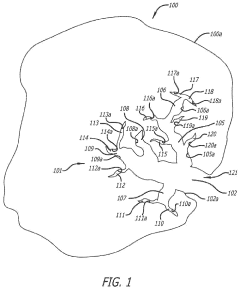
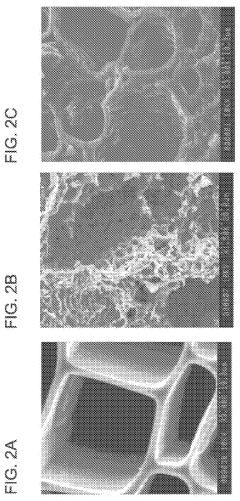
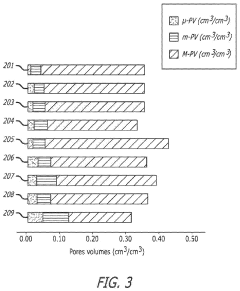
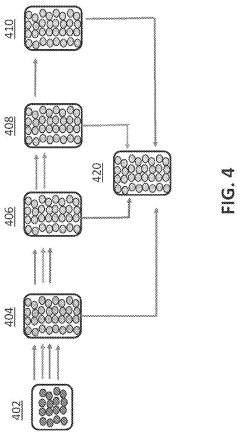
- Treated biochar with specific physical and chemical properties is produced through enhanced processing methods, including vacuum impregnation and surfactant treatments, to improve bulk density, porosity, pH, and nutrient retention, reducing toxicity and enhancing environmental benefits.
Enhanced biochar
PatentActiveUS20190367425A1
Innovation
- Treated biochar is produced by modifying physical and chemical properties such as bulk density, porosity, pH, and water retention capacity through processes like vacuum impregnation and surfactant treatment to enhance its performance and predictability for specific agricultural and environmental applications.


Environmental Impact Assessment of Biochar Production
The environmental impact of biochar production through pyrolysis represents a critical consideration in the sustainable development of this technology. When evaluating the environmental footprint of biochar production systems, lifecycle assessment (LCA) methodologies reveal that pyrolysis conditions significantly influence overall sustainability outcomes. Higher temperature pyrolysis (>500°C) typically requires greater energy inputs but produces biochar with enhanced carbon stability, potentially offering superior long-term carbon sequestration benefits compared to lower temperature processes.
Emissions profiles vary substantially based on pyrolysis conditions. Fast pyrolysis systems operating at moderate temperatures (400-500°C) generally produce more bio-oil and syngas with corresponding increases in potential volatile organic compound (VOC) emissions if not properly managed. Slow pyrolysis at similar temperatures tends to minimize these emissions while maximizing biochar yield, though with longer processing times and potentially higher cumulative energy requirements.
Water resource impacts must also be considered, as feedstock preparation may require washing steps depending on biomass source. Post-pyrolysis quenching can generate contaminated wastewater requiring treatment, particularly when processing feedstocks with high mineral or heavy metal content. Optimizing pyrolysis conditions can minimize water requirements and contamination risks.
Land use considerations extend beyond the production facility footprint to include biomass sourcing. Sustainable biochar production depends on responsible biomass procurement that avoids competition with food production or natural ecosystem conversion. Pyrolysis conditions that maximize biochar yield from a given feedstock quantity can reduce overall land use pressure.
Energy balance assessments indicate that self-sustaining systems utilizing syngas for process heat can achieve carbon-negative outcomes when operating parameters are optimized. Modern continuous pyrolysis systems operating at 450-550°C with heat recovery mechanisms demonstrate superior energy efficiency compared to batch systems, particularly at commercial scales.
Soil and water ecosystem impacts from biochar application vary with production conditions. Biochar produced at temperatures exceeding 600°C typically contains fewer labile compounds and presents reduced risk of leachable contaminants, while potentially offering greater long-term soil carbon benefits. However, such high-temperature biochar may provide fewer immediate agronomic benefits than material produced at moderate temperatures (350-500°C) with greater nutrient retention and functional surface properties.
Regulatory frameworks increasingly recognize these environmental dimensions, with emerging carbon credit methodologies specifically addressing production parameters that influence biochar's environmental performance. Standardization efforts like the European Biochar Certificate and International Biochar Initiative standards incorporate production conditions as key determinants of environmental sustainability classification.
Emissions profiles vary substantially based on pyrolysis conditions. Fast pyrolysis systems operating at moderate temperatures (400-500°C) generally produce more bio-oil and syngas with corresponding increases in potential volatile organic compound (VOC) emissions if not properly managed. Slow pyrolysis at similar temperatures tends to minimize these emissions while maximizing biochar yield, though with longer processing times and potentially higher cumulative energy requirements.
Water resource impacts must also be considered, as feedstock preparation may require washing steps depending on biomass source. Post-pyrolysis quenching can generate contaminated wastewater requiring treatment, particularly when processing feedstocks with high mineral or heavy metal content. Optimizing pyrolysis conditions can minimize water requirements and contamination risks.
Land use considerations extend beyond the production facility footprint to include biomass sourcing. Sustainable biochar production depends on responsible biomass procurement that avoids competition with food production or natural ecosystem conversion. Pyrolysis conditions that maximize biochar yield from a given feedstock quantity can reduce overall land use pressure.
Energy balance assessments indicate that self-sustaining systems utilizing syngas for process heat can achieve carbon-negative outcomes when operating parameters are optimized. Modern continuous pyrolysis systems operating at 450-550°C with heat recovery mechanisms demonstrate superior energy efficiency compared to batch systems, particularly at commercial scales.
Soil and water ecosystem impacts from biochar application vary with production conditions. Biochar produced at temperatures exceeding 600°C typically contains fewer labile compounds and presents reduced risk of leachable contaminants, while potentially offering greater long-term soil carbon benefits. However, such high-temperature biochar may provide fewer immediate agronomic benefits than material produced at moderate temperatures (350-500°C) with greater nutrient retention and functional surface properties.
Regulatory frameworks increasingly recognize these environmental dimensions, with emerging carbon credit methodologies specifically addressing production parameters that influence biochar's environmental performance. Standardization efforts like the European Biochar Certificate and International Biochar Initiative standards incorporate production conditions as key determinants of environmental sustainability classification.
Standardization and Quality Control Frameworks
The standardization of biochar production processes and quality control frameworks is essential for ensuring consistent and reliable biochar properties tailored to specific applications. Currently, the biochar industry faces significant challenges due to the lack of universally accepted standards, which hampers market development and consumer confidence. Several international organizations, including the International Biochar Initiative (IBI) and the European Biochar Certificate (EBC), have developed certification systems that provide baseline quality parameters for biochar products.
These frameworks typically include specifications for carbon content, hydrogen-to-carbon and oxygen-to-carbon ratios, surface area measurements, pH levels, and contaminant thresholds. For instance, the IBI certification requires biochar to contain at least 60% carbon and have an H:C ratio below 0.7 to ensure stability. Similarly, the EBC mandates strict limits on heavy metals and polycyclic aromatic hydrocarbons (PAHs) to guarantee environmental safety.
Quality control in pyrolysis operations necessitates robust monitoring systems throughout the production process. Real-time temperature profiling across the pyrolysis reactor is crucial, as temperature variations as small as 50°C can significantly alter biochar properties. Advanced monitoring technologies, such as thermocouples arrays and infrared imaging, enable precise temperature control and help maintain consistency between production batches.
Feedstock characterization represents another critical aspect of quality control. Standardized protocols for measuring moisture content, particle size distribution, and elemental composition of biomass inputs help predict and control the resulting biochar properties. The development of rapid assessment techniques, including near-infrared spectroscopy (NIRS) and X-ray fluorescence (XRF), allows for efficient feedstock screening before pyrolysis.
Post-production testing protocols are equally important for quality assurance. These typically include physical characterization (bulk density, particle size distribution), chemical analysis (elemental composition, ash content), and functional property assessments (water holding capacity, cation exchange capacity). The establishment of reference materials and round-robin testing between laboratories has improved measurement reliability and comparability across different production facilities.
Emerging digital technologies are revolutionizing quality control frameworks in biochar production. Machine learning algorithms can now predict biochar properties based on feedstock characteristics and pyrolysis conditions, enabling producers to optimize their processes for specific target applications. Blockchain-based traceability systems are also being implemented to document the entire production chain, from biomass sourcing to final product certification, enhancing transparency and consumer trust.
These frameworks typically include specifications for carbon content, hydrogen-to-carbon and oxygen-to-carbon ratios, surface area measurements, pH levels, and contaminant thresholds. For instance, the IBI certification requires biochar to contain at least 60% carbon and have an H:C ratio below 0.7 to ensure stability. Similarly, the EBC mandates strict limits on heavy metals and polycyclic aromatic hydrocarbons (PAHs) to guarantee environmental safety.
Quality control in pyrolysis operations necessitates robust monitoring systems throughout the production process. Real-time temperature profiling across the pyrolysis reactor is crucial, as temperature variations as small as 50°C can significantly alter biochar properties. Advanced monitoring technologies, such as thermocouples arrays and infrared imaging, enable precise temperature control and help maintain consistency between production batches.
Feedstock characterization represents another critical aspect of quality control. Standardized protocols for measuring moisture content, particle size distribution, and elemental composition of biomass inputs help predict and control the resulting biochar properties. The development of rapid assessment techniques, including near-infrared spectroscopy (NIRS) and X-ray fluorescence (XRF), allows for efficient feedstock screening before pyrolysis.
Post-production testing protocols are equally important for quality assurance. These typically include physical characterization (bulk density, particle size distribution), chemical analysis (elemental composition, ash content), and functional property assessments (water holding capacity, cation exchange capacity). The establishment of reference materials and round-robin testing between laboratories has improved measurement reliability and comparability across different production facilities.
Emerging digital technologies are revolutionizing quality control frameworks in biochar production. Machine learning algorithms can now predict biochar properties based on feedstock characteristics and pyrolysis conditions, enabling producers to optimize their processes for specific target applications. Blockchain-based traceability systems are also being implemented to document the entire production chain, from biomass sourcing to final product certification, enhancing transparency and consumer trust.
Unlock deeper insights with PatSnap Eureka Quick Research — get a full tech report to explore trends and direct your research. Try now!
Generate Your Research Report Instantly with AI Agent
Supercharge your innovation with PatSnap Eureka AI Agent Platform!