
Particle Formation Control In Continuous Multiphase Synthesis
SEP 3, 20259 MIN READ
Generate Your Research Report Instantly with AI Agent
Patsnap Eureka helps you evaluate technical feasibility & market potential.
Particle Synthesis Evolution and Objectives
Particle formation control in continuous multiphase synthesis has evolved significantly over the past decades, transforming from batch processing methods to more sophisticated continuous flow approaches. The historical trajectory began in the 1950s with rudimentary batch precipitation techniques, progressing through semi-continuous methods in the 1970s-1980s, and finally advancing to fully integrated continuous synthesis platforms in the early 2000s. This evolution has been driven by increasing demands for precise control over particle characteristics including size, morphology, crystallinity, and surface properties.
The fundamental challenge in particle synthesis has always been achieving reproducible, uniform particles with tailored properties. Traditional batch methods suffered from inherent limitations in mixing efficiency, heat transfer, and scalability, resulting in batch-to-batch variations. The shift toward continuous processing represents a paradigm change in addressing these limitations, offering enhanced control over reaction parameters and enabling real-time adjustments during synthesis.
Recent technological advancements have focused on microfluidic and millifluidic platforms that provide unprecedented control over reaction conditions. These systems enable precise manipulation of fluid dynamics, interfacial phenomena, and mass transfer rates—critical factors in nucleation and growth processes that determine final particle characteristics. The integration of in-line monitoring techniques and feedback control systems has further revolutionized the field, allowing for automated optimization of synthesis parameters.
The primary objectives of current research in particle formation control include developing universal methodologies applicable across diverse chemical systems, enhancing scalability while maintaining quality, and establishing predictive models that connect process parameters to particle properties. There is particular emphasis on creating platforms that can dynamically adjust to variations in feedstock quality and environmental conditions, ensuring consistent output regardless of external factors.
Another significant goal is reducing energy consumption and waste generation in particle synthesis processes. Continuous methods offer inherent advantages in this regard, with potential for smaller equipment footprints, reduced solvent usage, and more efficient energy utilization. The development of green chemistry approaches compatible with continuous processing represents a convergent evolution of sustainability and technical performance objectives.
Looking forward, the field aims to achieve autonomous particle synthesis systems capable of self-optimization through machine learning algorithms and advanced process analytical technologies. The ultimate vision encompasses digital twin models that can accurately simulate particle formation processes, enabling rapid development of new materials with precisely engineered properties for applications ranging from pharmaceuticals to advanced energy storage systems.
The fundamental challenge in particle synthesis has always been achieving reproducible, uniform particles with tailored properties. Traditional batch methods suffered from inherent limitations in mixing efficiency, heat transfer, and scalability, resulting in batch-to-batch variations. The shift toward continuous processing represents a paradigm change in addressing these limitations, offering enhanced control over reaction parameters and enabling real-time adjustments during synthesis.
Recent technological advancements have focused on microfluidic and millifluidic platforms that provide unprecedented control over reaction conditions. These systems enable precise manipulation of fluid dynamics, interfacial phenomena, and mass transfer rates—critical factors in nucleation and growth processes that determine final particle characteristics. The integration of in-line monitoring techniques and feedback control systems has further revolutionized the field, allowing for automated optimization of synthesis parameters.
The primary objectives of current research in particle formation control include developing universal methodologies applicable across diverse chemical systems, enhancing scalability while maintaining quality, and establishing predictive models that connect process parameters to particle properties. There is particular emphasis on creating platforms that can dynamically adjust to variations in feedstock quality and environmental conditions, ensuring consistent output regardless of external factors.
Another significant goal is reducing energy consumption and waste generation in particle synthesis processes. Continuous methods offer inherent advantages in this regard, with potential for smaller equipment footprints, reduced solvent usage, and more efficient energy utilization. The development of green chemistry approaches compatible with continuous processing represents a convergent evolution of sustainability and technical performance objectives.
Looking forward, the field aims to achieve autonomous particle synthesis systems capable of self-optimization through machine learning algorithms and advanced process analytical technologies. The ultimate vision encompasses digital twin models that can accurately simulate particle formation processes, enabling rapid development of new materials with precisely engineered properties for applications ranging from pharmaceuticals to advanced energy storage systems.
Market Analysis for Continuous Multiphase Particle Technologies
The continuous multiphase particle synthesis market is experiencing robust growth, driven by increasing demand across pharmaceutical, chemical, and materials science industries. This technology offers significant advantages over traditional batch processing methods, including enhanced control over particle characteristics, improved reproducibility, and reduced production costs. The global market for continuous manufacturing technologies in pharmaceuticals alone was valued at approximately $400 million in 2022 and is projected to grow at a CAGR of 13.5% through 2028.
Pharmaceutical companies represent the largest market segment, accounting for nearly 45% of the total market share. The industry's shift toward continuous manufacturing is primarily motivated by regulatory encouragement from agencies like the FDA and EMA, which recognize the quality benefits of continuous processes. Major pharmaceutical companies including Johnson & Johnson, Pfizer, and Novartis have made substantial investments in continuous manufacturing capabilities for particle-based products.
The specialty chemicals sector constitutes the second-largest market segment at 30%, with applications in catalysts, pigments, and advanced materials production. Companies like BASF, Evonik, and DuPont have integrated continuous multiphase synthesis into their production processes to achieve more precise particle size distribution and morphology control.
Regionally, North America leads the market with approximately 38% share, followed by Europe (32%) and Asia-Pacific (25%). However, the Asia-Pacific region is expected to witness the fastest growth rate of 15.2% annually, driven by rapid industrialization in China and India, along with increasing pharmaceutical manufacturing outsourcing to these regions.
Market penetration varies significantly by application area. While approximately 65% of new pharmaceutical nanoparticle formulations utilize continuous processing methods, only about 25% of conventional chemical manufacturing has transitioned to continuous multiphase synthesis. This disparity indicates substantial growth potential as technology adoption increases across broader industrial applications.
Key market drivers include increasing pressure to reduce manufacturing costs (continuous processes typically reduce operational expenses by 15-30%), growing demand for nanomaterials with precise specifications, and stricter regulatory requirements for product consistency. Additionally, sustainability considerations are becoming increasingly important, with continuous processes demonstrating 20-40% lower energy consumption and reduced waste generation compared to batch processes.
Market challenges include high initial capital investment requirements, technical expertise barriers, and regulatory uncertainty in some regions. Despite these challenges, the market is expected to continue its strong growth trajectory as technology advances and economic benefits become more widely recognized.
Pharmaceutical companies represent the largest market segment, accounting for nearly 45% of the total market share. The industry's shift toward continuous manufacturing is primarily motivated by regulatory encouragement from agencies like the FDA and EMA, which recognize the quality benefits of continuous processes. Major pharmaceutical companies including Johnson & Johnson, Pfizer, and Novartis have made substantial investments in continuous manufacturing capabilities for particle-based products.
The specialty chemicals sector constitutes the second-largest market segment at 30%, with applications in catalysts, pigments, and advanced materials production. Companies like BASF, Evonik, and DuPont have integrated continuous multiphase synthesis into their production processes to achieve more precise particle size distribution and morphology control.
Regionally, North America leads the market with approximately 38% share, followed by Europe (32%) and Asia-Pacific (25%). However, the Asia-Pacific region is expected to witness the fastest growth rate of 15.2% annually, driven by rapid industrialization in China and India, along with increasing pharmaceutical manufacturing outsourcing to these regions.
Market penetration varies significantly by application area. While approximately 65% of new pharmaceutical nanoparticle formulations utilize continuous processing methods, only about 25% of conventional chemical manufacturing has transitioned to continuous multiphase synthesis. This disparity indicates substantial growth potential as technology adoption increases across broader industrial applications.
Key market drivers include increasing pressure to reduce manufacturing costs (continuous processes typically reduce operational expenses by 15-30%), growing demand for nanomaterials with precise specifications, and stricter regulatory requirements for product consistency. Additionally, sustainability considerations are becoming increasingly important, with continuous processes demonstrating 20-40% lower energy consumption and reduced waste generation compared to batch processes.
Market challenges include high initial capital investment requirements, technical expertise barriers, and regulatory uncertainty in some regions. Despite these challenges, the market is expected to continue its strong growth trajectory as technology advances and economic benefits become more widely recognized.
Current Challenges in Particle Formation Control
Despite significant advancements in continuous multiphase synthesis, particle formation control remains one of the most challenging aspects in this field. The primary difficulty lies in achieving precise control over particle size distribution, morphology, and composition in dynamic flow environments. Traditional batch processes offer relatively stable conditions for particle growth, but continuous systems introduce complex fluid dynamics that significantly impact nucleation and growth mechanisms.
The interface between different phases (liquid-liquid, gas-liquid, or solid-liquid) presents particular challenges, as these boundaries are where critical particle formation processes occur. Maintaining consistent interfacial properties throughout the continuous process is extremely difficult, leading to variability in particle characteristics. This variability becomes especially problematic when scaling up production from laboratory to industrial levels.
Temperature and concentration gradients represent another major obstacle. In continuous flow systems, these gradients can develop along the flow path, creating non-uniform conditions for particle formation. Even minor fluctuations in local temperature or reactant concentration can dramatically alter nucleation rates and growth patterns, resulting in heterogeneous particle populations.
Mixing efficiency presents a paradoxical challenge: while efficient mixing is essential for uniform reaction conditions, excessive shear forces can disrupt delicate particle structures or cause unwanted agglomeration. Current mixing technologies struggle to balance these competing requirements, particularly for processes involving sensitive materials or complex morphologies.
Real-time monitoring and feedback control systems remain inadequate for many continuous particle synthesis applications. Existing analytical techniques often cannot provide the rapid, in-situ measurements needed to make timely adjustments to process parameters. This limitation severely restricts the implementation of advanced control strategies that could otherwise compensate for process disturbances.
Material fouling and clogging of flow channels represent persistent operational challenges. As particles form and grow, they can adhere to reactor surfaces, gradually altering flow patterns and reaction conditions. This not only affects product quality but also limits the practical duration of continuous operations before maintenance is required.
The mathematical modeling of particle formation in continuous multiphase systems remains underdeveloped. Current models often fail to accurately capture the complex interplay between fluid dynamics, mass transfer, and reaction kinetics. This knowledge gap hampers both process design and the development of predictive control strategies that could overcome many of the aforementioned challenges.
The interface between different phases (liquid-liquid, gas-liquid, or solid-liquid) presents particular challenges, as these boundaries are where critical particle formation processes occur. Maintaining consistent interfacial properties throughout the continuous process is extremely difficult, leading to variability in particle characteristics. This variability becomes especially problematic when scaling up production from laboratory to industrial levels.
Temperature and concentration gradients represent another major obstacle. In continuous flow systems, these gradients can develop along the flow path, creating non-uniform conditions for particle formation. Even minor fluctuations in local temperature or reactant concentration can dramatically alter nucleation rates and growth patterns, resulting in heterogeneous particle populations.
Mixing efficiency presents a paradoxical challenge: while efficient mixing is essential for uniform reaction conditions, excessive shear forces can disrupt delicate particle structures or cause unwanted agglomeration. Current mixing technologies struggle to balance these competing requirements, particularly for processes involving sensitive materials or complex morphologies.
Real-time monitoring and feedback control systems remain inadequate for many continuous particle synthesis applications. Existing analytical techniques often cannot provide the rapid, in-situ measurements needed to make timely adjustments to process parameters. This limitation severely restricts the implementation of advanced control strategies that could otherwise compensate for process disturbances.
Material fouling and clogging of flow channels represent persistent operational challenges. As particles form and grow, they can adhere to reactor surfaces, gradually altering flow patterns and reaction conditions. This not only affects product quality but also limits the practical duration of continuous operations before maintenance is required.
The mathematical modeling of particle formation in continuous multiphase systems remains underdeveloped. Current models often fail to accurately capture the complex interplay between fluid dynamics, mass transfer, and reaction kinetics. This knowledge gap hampers both process design and the development of predictive control strategies that could overcome many of the aforementioned challenges.
Established Control Strategies for Particle Morphology
01 Microfluidic systems for continuous particle synthesis
Microfluidic systems enable precise control over continuous multiphase synthesis of particles. These systems utilize controlled flow rates and channel geometries to create uniform droplets or particles at the interface between immiscible phases. The technology allows for consistent particle size distribution and morphology by maintaining stable flow conditions and precise mixing of reagents, resulting in high-quality particles with tailored properties for various applications.- Continuous flow reactors for multiphase particle synthesis: Continuous flow reactors are used for the synthesis of particles in multiphase systems. These reactors allow for precise control over reaction conditions, resulting in uniform particle formation. The continuous nature of the process enables scalable production of particles with consistent properties. Various reactor designs can be employed, including microfluidic devices and tubular reactors, which facilitate efficient mixing of different phases and controlled particle nucleation and growth.
- Emulsion-based techniques for particle formation: Emulsion-based methods are employed in continuous multiphase synthesis for particle formation. These techniques involve the dispersion of one phase into another immiscible phase, creating droplets that serve as templates for particle synthesis. By controlling the emulsion properties, particles with specific sizes, morphologies, and compositions can be produced. Stabilizers and surfactants are often incorporated to maintain emulsion stability during the synthesis process, leading to more uniform particle formation.
- Microfluidic systems for controlled particle synthesis: Microfluidic systems provide precise control over fluid dynamics in multiphase particle synthesis. These systems enable manipulation of small volumes of fluids in channels with dimensions on the micrometer scale. The laminar flow conditions in microfluidic devices allow for controlled mixing of reagents and predictable reaction environments. This technology facilitates the production of monodisperse particles with tailored properties by precisely controlling parameters such as flow rates, channel geometry, and residence time.
- Precipitation and crystallization methods in continuous synthesis: Precipitation and crystallization processes are fundamental approaches in continuous multiphase particle synthesis. These methods involve the formation of solid particles from solution through controlled supersaturation and nucleation. In continuous systems, parameters such as temperature, concentration gradients, and mixing conditions are carefully managed to achieve desired particle characteristics. Anti-solvent addition, pH adjustment, or temperature changes can be used to trigger particle formation in a controlled manner, resulting in particles with specific crystalline structures or morphologies.
- Hybrid reactor systems for complex particle synthesis: Hybrid reactor systems combine different processing techniques for enhanced control over multiphase particle synthesis. These systems may integrate features of various reactor types, such as combining continuous stirred tank reactors with tubular flow reactors or incorporating static mixers with membrane contactors. The hybrid approach allows for optimization of different stages of particle formation, including mixing, nucleation, growth, and aging. This versatility enables the synthesis of complex particles with hierarchical structures or multiple functionalities that would be difficult to achieve with conventional single-mode reactors.
02 Emulsion-based techniques for particle formation
Emulsion-based techniques involve the formation of droplets of one phase dispersed in another immiscible phase, which serve as microreactors for particle synthesis. These methods utilize surfactants or stabilizers to maintain the stability of the emulsion during the synthesis process. By controlling the emulsion properties and reaction conditions, particles with specific characteristics can be produced continuously, offering advantages in terms of scalability and reproducibility.Expand Specific Solutions03 Reactor design for continuous multiphase synthesis
Specialized reactor designs facilitate continuous multiphase synthesis of particles by providing optimal conditions for phase interaction and reaction. These reactors incorporate features such as mixing zones, temperature control systems, and residence time distribution management to ensure consistent particle formation. Advanced reactor configurations enable scalable production while maintaining product quality and process efficiency across different synthesis conditions.Expand Specific Solutions04 Process monitoring and control systems
Advanced monitoring and control systems are essential for maintaining consistent conditions during continuous multiphase particle synthesis. These systems employ sensors and analytical techniques to track critical process parameters in real-time, allowing for automated adjustments to maintain optimal synthesis conditions. Integration of process analytical technology enables detection of deviations and implementation of corrective actions, ensuring consistent particle quality throughout extended production runs.Expand Specific Solutions05 Novel materials and formulations for particle synthesis
Innovative materials and formulations enhance the capabilities of continuous multiphase synthesis processes. These include specialized precursors, novel surfactants, and functional additives that enable the production of particles with advanced properties. By carefully selecting and combining these materials, researchers can develop particles with tailored characteristics such as controlled release profiles, targeted delivery capabilities, or enhanced stability, expanding the range of applications for synthesized particles.Expand Specific Solutions
Industry Leaders in Continuous Particle Manufacturing
Particle Formation Control in Continuous Multiphase Synthesis is currently in a growth phase, with an expanding market driven by increasing demand for precise nanomaterial manufacturing. The technology is approaching maturity with academic institutions like Zhejiang University, Beijing University of Chemical Technology, and Jiangsu University leading fundamental research, while companies including Jiangsu Boqian New Materials, ULVAC, and Applied Materials are commercializing advanced applications. The competitive landscape features collaboration between research institutions and industry players, with companies like IFP Energies Nouvelles, Polymetrix AG, and Covestro developing proprietary continuous flow technologies. The field is witnessing significant innovation in real-time monitoring and process control systems, with major corporations like IBM and Toshiba investing in automation solutions for particle synthesis.
Zhejiang University
Technical Solution: Zhejiang University has developed advanced microfluidic platforms for precise particle formation control in continuous multiphase synthesis. Their approach utilizes specially designed microreactors with controlled flow patterns to achieve uniform particle size distribution and morphology. The university's research team has pioneered the use of acoustic and electric field-assisted particle formation techniques that enable real-time adjustment of particle characteristics during synthesis. Their technology incorporates in-line monitoring systems using spectroscopic methods to provide feedback for process optimization, allowing for automated control of reaction parameters such as temperature gradients, residence time, and mixing intensity to maintain consistent product quality. Recent developments include the integration of machine learning algorithms to predict optimal synthesis conditions based on desired particle properties.
Strengths: Strong academic research foundation with extensive publication record; innovative integration of multiple physical fields for particle control; advanced in-line monitoring capabilities. Weaknesses: Potential challenges in scaling up from laboratory to industrial production; higher implementation costs compared to conventional batch processes.
Beijing University of Chemical Technology
Technical Solution: Beijing University of Chemical Technology has developed a comprehensive approach to particle formation control in continuous multiphase synthesis focusing on polymer microparticles and inorganic nanocrystals. Their technology employs specially designed flow reactors with precise control over mixing zones and residence time distribution. The university has pioneered the use of ultrasonic-assisted continuous crystallization techniques that enable manipulation of nucleation and growth kinetics in real-time. Their system incorporates advanced process analytical technology (PAT) tools including in-line Raman spectroscopy and dynamic light scattering for continuous monitoring of particle characteristics. A distinctive feature is their development of modular reactor designs that can be reconfigured for different particle synthesis requirements, allowing flexibility in production while maintaining tight control over particle size distribution, morphology, and composition.
Strengths: Extensive expertise in crystallization phenomena and polymer chemistry; innovative modular reactor designs; strong integration of process analytical technologies. Weaknesses: Technology may require significant adaptation for different chemical systems; higher initial capital investment compared to conventional batch processes.
Key Patents in Continuous Multiphase Particle Formation
Process for the synthesis of nanosize metal-containing nanoparticles and nanoparticle dispersions
PatentInactiveEP2106464A1
Innovation
- A continuous liquid-phase process using microstructured reaction modules with separate temperature control allows for temporal and spatial separation of nucleation and growth processes, enabling precise control of particle size, distribution, and morphology, and the use of microreaction technology systems for efficient heat transfer and mixing.
Control of particle formation at the nanoscale
PatentInactiveUS8685293B1
Innovation
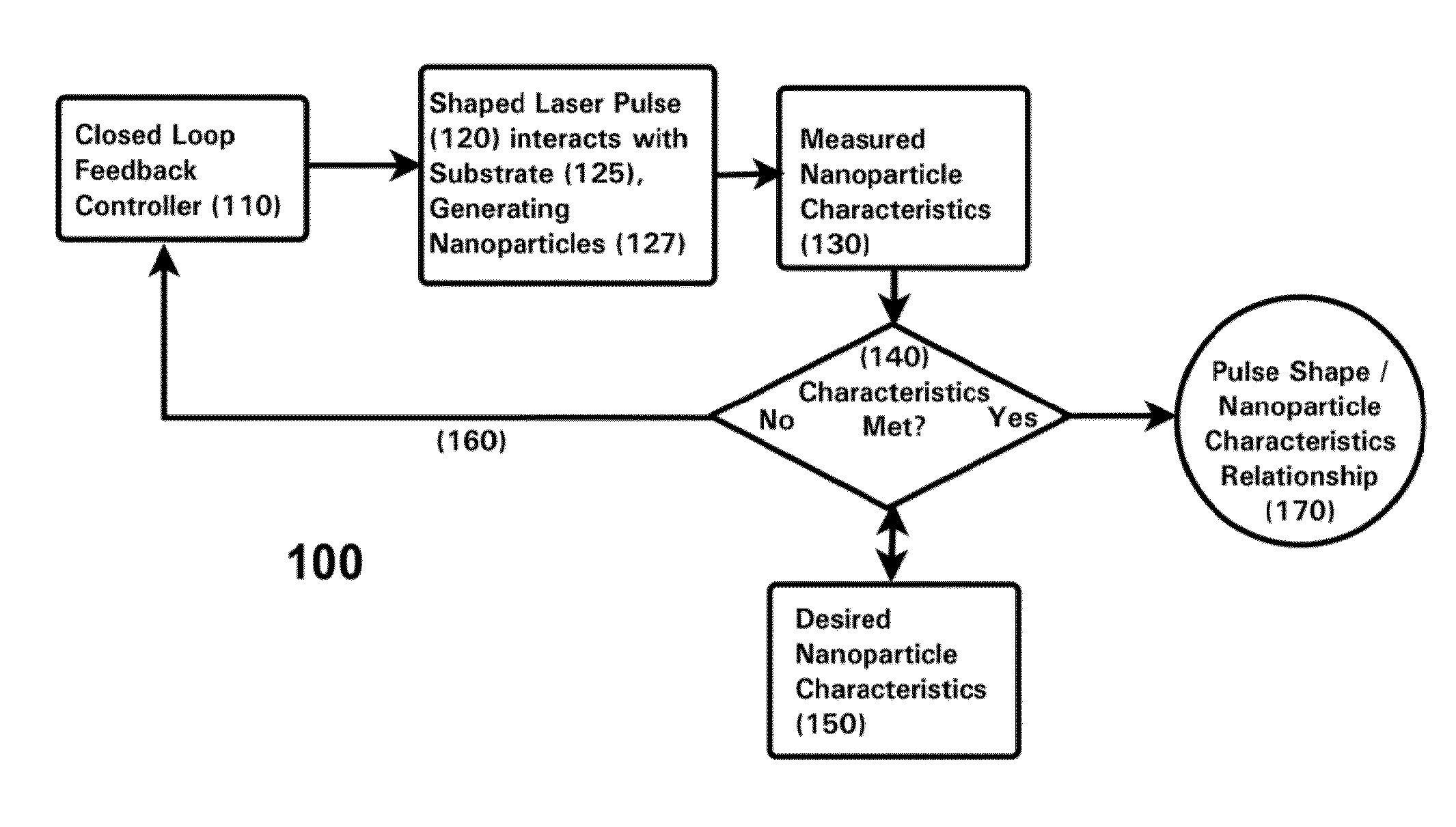
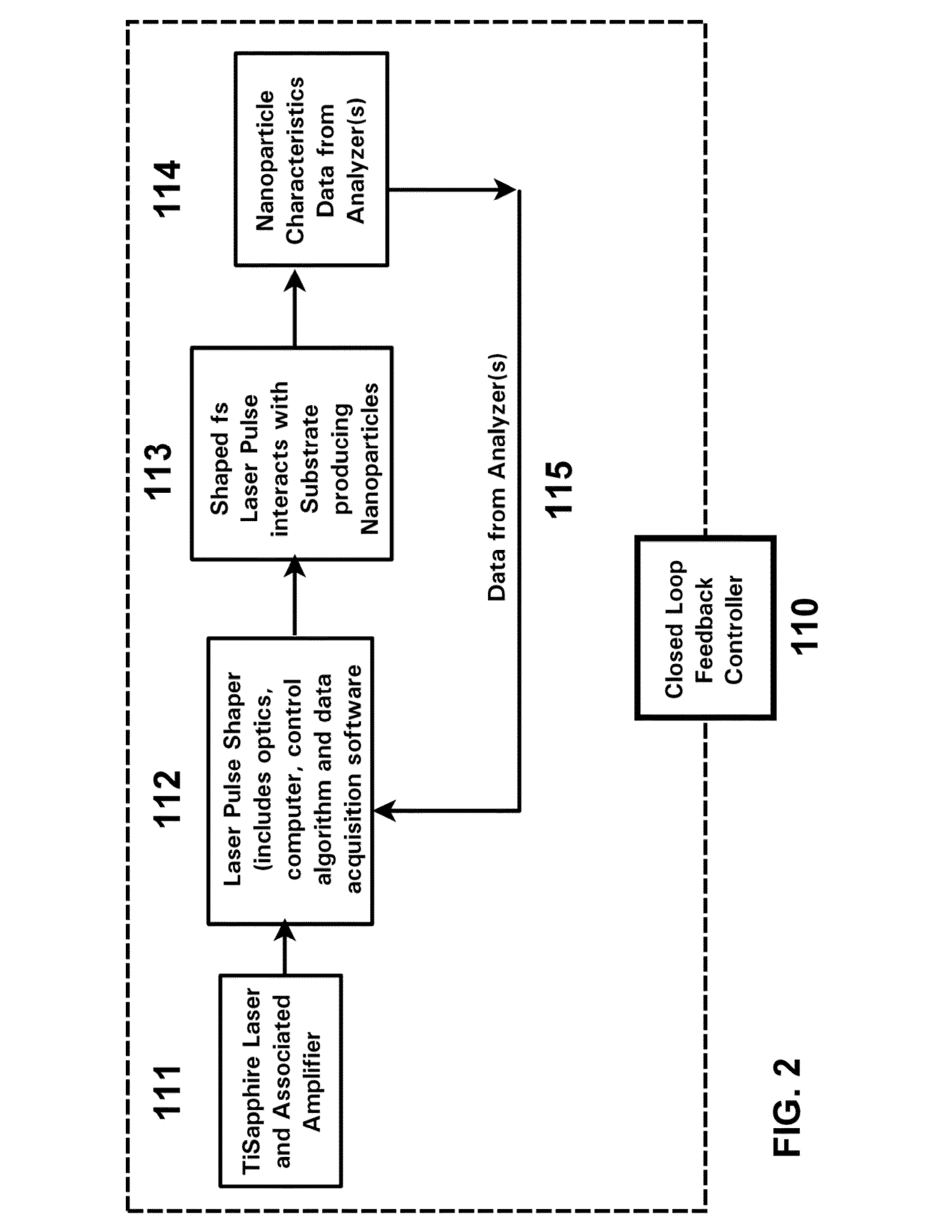
- A closed-loop feedback system using shaped femtosecond laser pulses interacts with a substrate to form nanoparticles, where the laser pulse shape is continuously adjusted based on real-time characterization data to achieve desired nanoparticle characteristics, creating a database of pulse shapes and corresponding nanoparticle properties.

Scale-up Considerations for Industrial Implementation
The transition from laboratory-scale continuous multiphase synthesis to industrial production presents significant engineering challenges that must be addressed systematically. When scaling up particle formation processes, maintaining consistent product quality requires careful consideration of several critical factors. Reactor geometry and dimensions significantly impact mixing efficiency, residence time distribution, and heat transfer characteristics. As vessel size increases, surface-to-volume ratios decrease, potentially altering reaction kinetics and particle nucleation patterns. Engineers must employ computational fluid dynamics (CFD) modeling to predict flow patterns and optimize reactor designs that preserve the mixing dynamics observed at smaller scales.
Process control systems become increasingly sophisticated during scale-up, necessitating robust monitoring technologies. Real-time particle size analysis, inline concentration measurements, and automated feedback loops are essential for maintaining tight control over nucleation and growth mechanisms. The implementation of Process Analytical Technology (PAT) frameworks enables continuous quality verification rather than end-product testing, aligning with regulatory expectations for pharmaceutical and specialty chemical applications.
Heat management represents another critical consideration, as exothermic crystallization or precipitation reactions can create temperature gradients in larger vessels. Strategic placement of cooling systems and the potential implementation of segmented flow reactors can mitigate these challenges by improving temperature uniformity. Similarly, pressure control becomes more complex at industrial scales, particularly for processes involving volatile components or gas-liquid interactions that influence particle morphology.
Material selection for industrial equipment must account for potential corrosion, fouling, and product contamination risks. Specialized coatings or construction materials may be necessary to prevent unwanted surface nucleation or catalytic effects that could alter particle characteristics. Additionally, continuous operation at industrial scale requires careful consideration of startup and shutdown procedures to minimize off-specification product generation during transitional states.
Economic viability ultimately determines implementation success, necessitating thorough analysis of capital expenditure versus operational benefits. Continuous processes typically offer advantages in labor costs, energy efficiency, and space requirements compared to batch alternatives. However, the initial investment in specialized equipment and control systems must be justified through improved product consistency, reduced waste generation, or enhanced production capacity. Regulatory considerations also influence scale-up strategies, particularly for pharmaceutical applications where process validation and change management protocols are strictly enforced.
Process control systems become increasingly sophisticated during scale-up, necessitating robust monitoring technologies. Real-time particle size analysis, inline concentration measurements, and automated feedback loops are essential for maintaining tight control over nucleation and growth mechanisms. The implementation of Process Analytical Technology (PAT) frameworks enables continuous quality verification rather than end-product testing, aligning with regulatory expectations for pharmaceutical and specialty chemical applications.
Heat management represents another critical consideration, as exothermic crystallization or precipitation reactions can create temperature gradients in larger vessels. Strategic placement of cooling systems and the potential implementation of segmented flow reactors can mitigate these challenges by improving temperature uniformity. Similarly, pressure control becomes more complex at industrial scales, particularly for processes involving volatile components or gas-liquid interactions that influence particle morphology.
Material selection for industrial equipment must account for potential corrosion, fouling, and product contamination risks. Specialized coatings or construction materials may be necessary to prevent unwanted surface nucleation or catalytic effects that could alter particle characteristics. Additionally, continuous operation at industrial scale requires careful consideration of startup and shutdown procedures to minimize off-specification product generation during transitional states.
Economic viability ultimately determines implementation success, necessitating thorough analysis of capital expenditure versus operational benefits. Continuous processes typically offer advantages in labor costs, energy efficiency, and space requirements compared to batch alternatives. However, the initial investment in specialized equipment and control systems must be justified through improved product consistency, reduced waste generation, or enhanced production capacity. Regulatory considerations also influence scale-up strategies, particularly for pharmaceutical applications where process validation and change management protocols are strictly enforced.
Environmental Impact and Sustainability Aspects
The continuous multiphase synthesis approach for particle formation offers significant environmental and sustainability advantages over traditional batch processes. The reduction in solvent usage represents one of the most substantial environmental benefits, with continuous flow systems typically requiring 10-100 times less solvent per unit of product. This dramatic decrease directly translates to reduced waste generation, lower emissions of volatile organic compounds (VOCs), and diminished environmental contamination risks associated with solvent disposal.
Energy efficiency constitutes another critical sustainability aspect of continuous particle synthesis. These systems generally operate at higher space-time yields, enabling more product to be manufactured with less energy input. Studies have demonstrated energy savings of 30-60% compared to conventional batch methods, primarily due to improved heat transfer efficiency and the elimination of heating/cooling cycles between batches. The smaller reactor volumes also contribute to reduced energy requirements for maintaining reaction conditions.
Process intensification through continuous multiphase synthesis aligns perfectly with green chemistry principles. The precise control over reaction parameters enables optimization toward atom economy and reaction selectivity, minimizing byproduct formation. Recent implementations have achieved byproduct reduction rates of 15-40%, significantly lowering the environmental footprint of chemical manufacturing processes.
The life cycle assessment (LCA) of continuous particle formation processes reveals substantial sustainability improvements. When considering the entire production chain from raw materials to final product, continuous methods typically show 20-50% lower environmental impact scores across categories including global warming potential, acidification, and resource depletion. These improvements stem from both direct process efficiencies and indirect benefits like reduced transportation needs due to smaller equipment footprints.
Regulatory frameworks increasingly favor sustainable manufacturing approaches. Continuous particle formation technologies facilitate compliance with stringent environmental regulations such as the European Union's REACH (Registration, Evaluation, Authorization and Restriction of Chemicals) and various clean air and water acts worldwide. Companies implementing these technologies often gain competitive advantages through improved environmental performance metrics and enhanced corporate sustainability profiles.
Future developments in continuous multiphase particle synthesis are increasingly focused on incorporating renewable feedstocks and designing inherently safer processes. Emerging research demonstrates successful integration of bio-based starting materials, further enhancing sustainability credentials. Additionally, the closed nature of continuous systems offers improved containment of hazardous materials, reducing workplace exposure risks and potential environmental release scenarios during manufacturing operations.
Energy efficiency constitutes another critical sustainability aspect of continuous particle synthesis. These systems generally operate at higher space-time yields, enabling more product to be manufactured with less energy input. Studies have demonstrated energy savings of 30-60% compared to conventional batch methods, primarily due to improved heat transfer efficiency and the elimination of heating/cooling cycles between batches. The smaller reactor volumes also contribute to reduced energy requirements for maintaining reaction conditions.
Process intensification through continuous multiphase synthesis aligns perfectly with green chemistry principles. The precise control over reaction parameters enables optimization toward atom economy and reaction selectivity, minimizing byproduct formation. Recent implementations have achieved byproduct reduction rates of 15-40%, significantly lowering the environmental footprint of chemical manufacturing processes.
The life cycle assessment (LCA) of continuous particle formation processes reveals substantial sustainability improvements. When considering the entire production chain from raw materials to final product, continuous methods typically show 20-50% lower environmental impact scores across categories including global warming potential, acidification, and resource depletion. These improvements stem from both direct process efficiencies and indirect benefits like reduced transportation needs due to smaller equipment footprints.
Regulatory frameworks increasingly favor sustainable manufacturing approaches. Continuous particle formation technologies facilitate compliance with stringent environmental regulations such as the European Union's REACH (Registration, Evaluation, Authorization and Restriction of Chemicals) and various clean air and water acts worldwide. Companies implementing these technologies often gain competitive advantages through improved environmental performance metrics and enhanced corporate sustainability profiles.
Future developments in continuous multiphase particle synthesis are increasingly focused on incorporating renewable feedstocks and designing inherently safer processes. Emerging research demonstrates successful integration of bio-based starting materials, further enhancing sustainability credentials. Additionally, the closed nature of continuous systems offers improved containment of hazardous materials, reducing workplace exposure risks and potential environmental release scenarios during manufacturing operations.
Unlock deeper insights with Patsnap Eureka Quick Research — get a full tech report to explore trends and direct your research. Try now!
Generate Your Research Report Instantly with AI Agent
Supercharge your innovation with Patsnap Eureka AI Agent Platform!