Quantum Computing and its Place in Quantum Biology Studies
JUL 17, 20259 MIN READ
Generate Your Research Report Instantly with AI Agent
PatSnap Eureka helps you evaluate technical feasibility & market potential.
Quantum Computing in Quantum Biology: Background and Objectives
Quantum computing and quantum biology represent two cutting-edge fields that have recently begun to intersect, offering exciting possibilities for advancing our understanding of complex biological systems. The emergence of quantum biology as a distinct discipline has its roots in the early 20th century, with pioneering work on quantum mechanics in biological processes. However, it is only in recent years that the potential for quantum computing to revolutionize this field has become apparent.
The evolution of quantum biology has been marked by several key milestones, including the discovery of quantum coherence in photosynthesis and the potential role of quantum effects in avian magnetoreception. These findings have challenged classical views of biological processes and opened up new avenues for research. As quantum biology has progressed, it has become increasingly clear that conventional computing methods are insufficient to model and simulate the complex quantum systems involved in biological processes.
This is where quantum computing enters the picture. Quantum computers, with their ability to harness quantum mechanical phenomena such as superposition and entanglement, offer unprecedented computational power for tackling the intricate quantum systems found in biology. The synergy between quantum computing and quantum biology presents a unique opportunity to unlock new insights into fundamental biological processes at the quantum level.
The primary objective of integrating quantum computing into quantum biology studies is to develop more accurate and efficient models of quantum biological systems. This includes simulating quantum coherence in photosynthetic light-harvesting complexes, modeling enzyme catalysis that may involve quantum tunneling, and investigating the quantum mechanical aspects of DNA mutation and repair processes.
Furthermore, quantum computing aims to enable the exploration of larger and more complex biological systems that are currently beyond the reach of classical computational methods. This could lead to breakthroughs in our understanding of protein folding, drug discovery, and the design of bio-inspired quantum technologies.
Another crucial goal is to bridge the gap between theoretical quantum biology and experimental observations. Quantum computers have the potential to validate or refute hypotheses about quantum effects in biological systems by providing more accurate simulations that can be compared with experimental data. This iterative process between theory, simulation, and experiment is expected to accelerate progress in the field significantly.
As we look to the future, the integration of quantum computing into quantum biology studies is poised to drive innovation across multiple disciplines, including biophysics, biochemistry, and quantum information science. The cross-pollination of ideas between these fields may lead to the development of novel quantum-inspired algorithms for solving complex optimization problems in biology and beyond.
The evolution of quantum biology has been marked by several key milestones, including the discovery of quantum coherence in photosynthesis and the potential role of quantum effects in avian magnetoreception. These findings have challenged classical views of biological processes and opened up new avenues for research. As quantum biology has progressed, it has become increasingly clear that conventional computing methods are insufficient to model and simulate the complex quantum systems involved in biological processes.
This is where quantum computing enters the picture. Quantum computers, with their ability to harness quantum mechanical phenomena such as superposition and entanglement, offer unprecedented computational power for tackling the intricate quantum systems found in biology. The synergy between quantum computing and quantum biology presents a unique opportunity to unlock new insights into fundamental biological processes at the quantum level.
The primary objective of integrating quantum computing into quantum biology studies is to develop more accurate and efficient models of quantum biological systems. This includes simulating quantum coherence in photosynthetic light-harvesting complexes, modeling enzyme catalysis that may involve quantum tunneling, and investigating the quantum mechanical aspects of DNA mutation and repair processes.
Furthermore, quantum computing aims to enable the exploration of larger and more complex biological systems that are currently beyond the reach of classical computational methods. This could lead to breakthroughs in our understanding of protein folding, drug discovery, and the design of bio-inspired quantum technologies.
Another crucial goal is to bridge the gap between theoretical quantum biology and experimental observations. Quantum computers have the potential to validate or refute hypotheses about quantum effects in biological systems by providing more accurate simulations that can be compared with experimental data. This iterative process between theory, simulation, and experiment is expected to accelerate progress in the field significantly.
As we look to the future, the integration of quantum computing into quantum biology studies is poised to drive innovation across multiple disciplines, including biophysics, biochemistry, and quantum information science. The cross-pollination of ideas between these fields may lead to the development of novel quantum-inspired algorithms for solving complex optimization problems in biology and beyond.
Market Analysis for Quantum Biology Applications
The market for quantum biology applications is rapidly evolving, driven by the convergence of quantum computing and biological sciences. This intersection presents significant opportunities for innovation and commercial development across various sectors. The global quantum computing market, which underpins many quantum biology applications, is projected to grow substantially in the coming years, with estimates suggesting a compound annual growth rate (CAGR) of over 30% through 2030.
In the pharmaceutical and biotechnology industries, quantum biology applications are gaining traction for drug discovery and development processes. These applications offer the potential to simulate complex molecular interactions more accurately than classical computing methods, potentially reducing the time and cost associated with bringing new drugs to market. Several major pharmaceutical companies have already begun investing in quantum computing research for this purpose, indicating a growing market demand.
The healthcare sector is another area where quantum biology applications show promise. Personalized medicine, which relies on analyzing vast amounts of genetic and molecular data, could benefit significantly from quantum computing capabilities. This could lead to more targeted and effective treatments, potentially revolutionizing patient care and creating new market opportunities for healthcare providers and technology companies alike.
Agricultural biotechnology is also emerging as a potential market for quantum biology applications. Quantum computing could enhance our understanding of plant genetics and biochemistry, leading to the development of more resilient crops and sustainable farming practices. This aligns with the growing global demand for food security and environmentally friendly agricultural solutions.
Environmental science and climate change research represent additional markets for quantum biology applications. Quantum computing could improve our ability to model complex ecological systems and predict environmental changes, offering valuable tools for policymakers and conservation efforts.
The market for quantum biology applications is still in its early stages, with many potential use cases yet to be fully explored or commercialized. However, the increasing investment in quantum computing infrastructure and research by both private companies and government entities suggests a growing recognition of its potential value. As quantum computing technology matures and becomes more accessible, we can expect to see a corresponding expansion in the market for quantum biology applications across various industries.
In the pharmaceutical and biotechnology industries, quantum biology applications are gaining traction for drug discovery and development processes. These applications offer the potential to simulate complex molecular interactions more accurately than classical computing methods, potentially reducing the time and cost associated with bringing new drugs to market. Several major pharmaceutical companies have already begun investing in quantum computing research for this purpose, indicating a growing market demand.
The healthcare sector is another area where quantum biology applications show promise. Personalized medicine, which relies on analyzing vast amounts of genetic and molecular data, could benefit significantly from quantum computing capabilities. This could lead to more targeted and effective treatments, potentially revolutionizing patient care and creating new market opportunities for healthcare providers and technology companies alike.
Agricultural biotechnology is also emerging as a potential market for quantum biology applications. Quantum computing could enhance our understanding of plant genetics and biochemistry, leading to the development of more resilient crops and sustainable farming practices. This aligns with the growing global demand for food security and environmentally friendly agricultural solutions.
Environmental science and climate change research represent additional markets for quantum biology applications. Quantum computing could improve our ability to model complex ecological systems and predict environmental changes, offering valuable tools for policymakers and conservation efforts.
The market for quantum biology applications is still in its early stages, with many potential use cases yet to be fully explored or commercialized. However, the increasing investment in quantum computing infrastructure and research by both private companies and government entities suggests a growing recognition of its potential value. As quantum computing technology matures and becomes more accessible, we can expect to see a corresponding expansion in the market for quantum biology applications across various industries.
Current State and Challenges in Quantum Computing for Biology
Quantum computing has made significant strides in recent years, yet its application to biological systems remains in its infancy. The current state of quantum computing for biology is characterized by both promising advancements and formidable challenges. One of the primary areas of progress is in the simulation of complex molecular systems, where quantum computers show potential in modeling protein folding and drug interactions with unprecedented accuracy.
However, the field faces several significant hurdles. The most pressing challenge is the issue of quantum decoherence, where quantum states are easily disrupted by environmental factors. This is particularly problematic in biological contexts, which are inherently "noisy" and complex. Researchers are actively working on developing more robust quantum systems and error correction techniques to mitigate this issue.
Another major challenge lies in scaling quantum systems to a level where they can effectively model large biological molecules and processes. Current quantum computers are limited in the number of qubits they can maintain in a coherent state, restricting their ability to simulate complex biological systems. The development of quantum processors with higher qubit counts and improved coherence times is crucial for advancing the field.
The integration of quantum algorithms with classical computational methods also presents a significant challenge. Many biological problems require a hybrid approach, combining quantum and classical computing techniques. Developing efficient interfaces and algorithms that can seamlessly bridge these two computational paradigms is an active area of research.
Data interpretation poses another hurdle. The output of quantum computations can be probabilistic and challenging to interpret in a biological context. Developing robust methods for translating quantum computational results into meaningful biological insights is essential for the field's progress.
Lastly, the accessibility of quantum computing resources for biology researchers remains limited. The high cost and specialized knowledge required to operate quantum systems create barriers to entry for many in the life sciences. Efforts to develop more user-friendly interfaces and cloud-based quantum computing services are underway to address this challenge.
Despite these challenges, the potential of quantum computing in biology is immense. As the technology matures, it promises to revolutionize our understanding of complex biological systems, from molecular interactions to ecosystem dynamics. The ongoing collaboration between quantum physicists, computer scientists, and biologists is crucial in overcoming these hurdles and realizing the full potential of quantum computing in the life sciences.
However, the field faces several significant hurdles. The most pressing challenge is the issue of quantum decoherence, where quantum states are easily disrupted by environmental factors. This is particularly problematic in biological contexts, which are inherently "noisy" and complex. Researchers are actively working on developing more robust quantum systems and error correction techniques to mitigate this issue.
Another major challenge lies in scaling quantum systems to a level where they can effectively model large biological molecules and processes. Current quantum computers are limited in the number of qubits they can maintain in a coherent state, restricting their ability to simulate complex biological systems. The development of quantum processors with higher qubit counts and improved coherence times is crucial for advancing the field.
The integration of quantum algorithms with classical computational methods also presents a significant challenge. Many biological problems require a hybrid approach, combining quantum and classical computing techniques. Developing efficient interfaces and algorithms that can seamlessly bridge these two computational paradigms is an active area of research.
Data interpretation poses another hurdle. The output of quantum computations can be probabilistic and challenging to interpret in a biological context. Developing robust methods for translating quantum computational results into meaningful biological insights is essential for the field's progress.
Lastly, the accessibility of quantum computing resources for biology researchers remains limited. The high cost and specialized knowledge required to operate quantum systems create barriers to entry for many in the life sciences. Efforts to develop more user-friendly interfaces and cloud-based quantum computing services are underway to address this challenge.
Despite these challenges, the potential of quantum computing in biology is immense. As the technology matures, it promises to revolutionize our understanding of complex biological systems, from molecular interactions to ecosystem dynamics. The ongoing collaboration between quantum physicists, computer scientists, and biologists is crucial in overcoming these hurdles and realizing the full potential of quantum computing in the life sciences.
Existing Quantum Algorithms for Biological Simulations
01 Quantum circuit optimization and error mitigation
This area focuses on improving the efficiency and reliability of quantum circuits. Techniques include optimizing circuit layouts, reducing gate counts, and implementing error correction protocols to mitigate the effects of noise and decoherence in quantum systems. These advancements aim to enhance the performance and accuracy of quantum computations.- Quantum Circuit Design and Optimization: This area focuses on developing and optimizing quantum circuits for various applications. It involves creating efficient quantum gate sequences, reducing circuit depth, and improving qubit connectivity to enhance overall quantum algorithm performance.
- Error Correction and Fault Tolerance: Error correction and fault tolerance are crucial for maintaining the stability of quantum computations. This includes developing techniques to mitigate decoherence, implementing quantum error correction codes, and designing fault-tolerant quantum architectures to improve the reliability of quantum systems.
- Quantum-Classical Hybrid Algorithms: Hybrid algorithms combine classical and quantum computing techniques to solve complex problems. This approach leverages the strengths of both paradigms, allowing for more efficient solutions to certain computational tasks and potentially bridging the gap between current quantum capabilities and practical applications.
- Quantum Machine Learning: Quantum machine learning explores the intersection of quantum computing and machine learning algorithms. This field aims to develop quantum versions of classical machine learning techniques, potentially offering speedups for certain tasks such as data classification, clustering, and pattern recognition.
- Quantum Communication and Cryptography: Quantum communication and cryptography focus on leveraging quantum mechanical principles for secure information transmission. This includes developing quantum key distribution protocols, quantum repeaters for long-distance communication, and post-quantum cryptography to protect against potential quantum attacks on classical encryption systems.
02 Quantum-classical hybrid algorithms
Hybrid algorithms combine classical and quantum computing techniques to solve complex problems. These approaches leverage the strengths of both classical and quantum systems, allowing for more efficient problem-solving in areas such as optimization, machine learning, and cryptography. The development of these hybrid algorithms aims to bridge the gap between current classical computing capabilities and future large-scale quantum computers.Expand Specific Solutions03 Quantum hardware architectures
This area involves the design and development of novel quantum computing hardware architectures. It includes research into different qubit implementations, such as superconducting circuits, trapped ions, and topological qubits. The focus is on creating scalable and stable quantum processors that can maintain coherence for longer periods and support a larger number of qubits.Expand Specific Solutions04 Quantum algorithms for specific applications
This category encompasses the development of quantum algorithms tailored for specific applications across various fields. These include algorithms for cryptography, drug discovery, financial modeling, and materials science. The goal is to leverage the unique properties of quantum systems to solve problems that are intractable for classical computers.Expand Specific Solutions05 Quantum software development tools
This area focuses on creating software tools and frameworks to facilitate quantum algorithm development and execution. It includes quantum programming languages, compilers, simulators, and debugging tools. These resources aim to make quantum computing more accessible to developers and researchers, enabling them to design, test, and optimize quantum algorithms more efficiently.Expand Specific Solutions
Key Players in Quantum Computing and Quantum Biology
The quantum computing landscape in quantum biology studies is evolving rapidly, with significant potential for growth. The market is in its early stages, characterized by intense research and development efforts across academia and industry. Key players like IBM, Google, and Intel are investing heavily in quantum hardware, while specialized companies such as D-Wave Systems and Zapata Computing focus on quantum software and applications. The technology is still maturing, with various approaches being explored, including superconducting qubits, trapped ions, and silicon-based quantum dots. Universities like MIT, Caltech, and Delft University of Technology are contributing fundamental research, while national laboratories and research institutions are bridging the gap between academic discoveries and industrial applications. As the field progresses, collaborations between these diverse stakeholders are becoming increasingly important to address the complex challenges in quantum biology.
Zapata Computing, Inc.
Technical Solution: Zapata Computing focuses on developing quantum software and algorithms with applications across various fields, including quantum biology. Their Orquestra platform integrates quantum and classical computational resources, allowing researchers to design and implement quantum workflows for biological simulations. Zapata has been working on quantum algorithms for electronic structure calculations, which are crucial for understanding quantum effects in photosynthesis and other biological processes [7]. They are also exploring quantum machine learning techniques that could be applied to analyzing complex biological data sets and predicting protein structures [8].
Strengths: Specialized quantum software development, focus on practical applications of quantum computing in biology. Weaknesses: Reliant on hardware developed by other companies, which may limit their ability to fully optimize their solutions for specific quantum biology problems.
Google LLC
Technical Solution: Google's quantum computing efforts, led by their Quantum AI lab, focus on developing quantum processors and algorithms with potential applications in quantum biology. Their Sycamore processor demonstrated quantum supremacy in 2019, completing a task in 200 seconds that would take a classical supercomputer 10,000 years [3]. Google is exploring the use of quantum algorithms to simulate molecular dynamics and protein folding, which are crucial for understanding quantum effects in biological systems. They are also developing error correction techniques to improve the stability and reliability of quantum computations, which is essential for modeling complex biological processes [4].
Strengths: Cutting-edge quantum hardware and significant computational resources. Weaknesses: Still in early stages of applying quantum computing to biological problems, with limited practical demonstrations in quantum biology.
Breakthrough Quantum Technologies for Biological Systems
Quantum bio-computing
PatentPendingIN202411020299A
Innovation
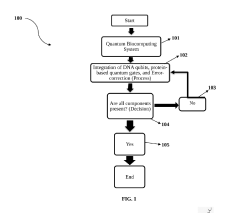
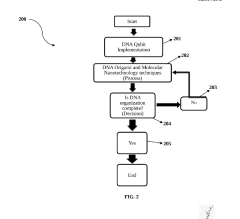
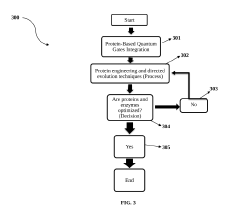
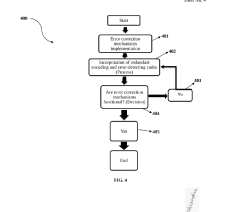
- Integration of DNA molecules as qubits and proteins/enzymes as quantum gates within a quantum bio-computing framework, leveraging biological molecules' intrinsic quantum characteristics for enhanced computational capabilities and error correction mechanisms.
Ethical Implications of Quantum Biology Advancements
The intersection of quantum computing and quantum biology raises significant ethical considerations that demand careful examination. As these fields advance, they have the potential to revolutionize our understanding of life processes and enable unprecedented interventions in biological systems. This progress, however, comes with a host of ethical implications that must be addressed proactively.
One primary concern is the potential for quantum biology advancements to exacerbate existing inequalities in healthcare and biotechnology access. As quantum computing enables more sophisticated modeling of biological systems, there is a risk that only wealthy nations or individuals will benefit from these breakthroughs, widening the global health divide. Ensuring equitable access to quantum biology-derived treatments and technologies should be a priority for policymakers and researchers alike.
Privacy and data security present another critical ethical challenge. Quantum computing's ability to process vast amounts of biological data could lead to unprecedented insights into individual health profiles. While this holds immense potential for personalized medicine, it also raises concerns about data ownership, consent, and the potential for misuse of sensitive genetic information. Robust safeguards and ethical frameworks must be developed to protect individual privacy in the quantum biology era.
The potential for quantum biology to enable genetic engineering at an unprecedented scale also raises profound ethical questions. As our ability to manipulate biological systems at the quantum level improves, we may face decisions about altering fundamental aspects of human biology. This could lead to complex debates about human enhancement, the nature of consciousness, and the boundaries of what it means to be human.
Environmental ethics must also be considered as quantum biology advances. While these technologies may offer solutions to environmental challenges, they could also pose risks if not properly managed. For instance, the ability to engineer organisms at the quantum level could have unforeseen consequences for ecosystems if released into the environment.
Lastly, the dual-use potential of quantum biology advancements presents ethical dilemmas. Technologies developed for medical or environmental benefits could potentially be repurposed for harmful applications, such as the development of advanced biological weapons. Establishing international governance frameworks to prevent misuse while fostering beneficial research will be crucial.
As we navigate these ethical challenges, it is essential to foster interdisciplinary dialogue between quantum physicists, biologists, ethicists, policymakers, and the public. Only through collaborative efforts can we ensure that the transformative potential of quantum biology is realized in a manner that upholds ethical principles and promotes the greater good of humanity and our planet.
One primary concern is the potential for quantum biology advancements to exacerbate existing inequalities in healthcare and biotechnology access. As quantum computing enables more sophisticated modeling of biological systems, there is a risk that only wealthy nations or individuals will benefit from these breakthroughs, widening the global health divide. Ensuring equitable access to quantum biology-derived treatments and technologies should be a priority for policymakers and researchers alike.
Privacy and data security present another critical ethical challenge. Quantum computing's ability to process vast amounts of biological data could lead to unprecedented insights into individual health profiles. While this holds immense potential for personalized medicine, it also raises concerns about data ownership, consent, and the potential for misuse of sensitive genetic information. Robust safeguards and ethical frameworks must be developed to protect individual privacy in the quantum biology era.
The potential for quantum biology to enable genetic engineering at an unprecedented scale also raises profound ethical questions. As our ability to manipulate biological systems at the quantum level improves, we may face decisions about altering fundamental aspects of human biology. This could lead to complex debates about human enhancement, the nature of consciousness, and the boundaries of what it means to be human.
Environmental ethics must also be considered as quantum biology advances. While these technologies may offer solutions to environmental challenges, they could also pose risks if not properly managed. For instance, the ability to engineer organisms at the quantum level could have unforeseen consequences for ecosystems if released into the environment.
Lastly, the dual-use potential of quantum biology advancements presents ethical dilemmas. Technologies developed for medical or environmental benefits could potentially be repurposed for harmful applications, such as the development of advanced biological weapons. Establishing international governance frameworks to prevent misuse while fostering beneficial research will be crucial.
As we navigate these ethical challenges, it is essential to foster interdisciplinary dialogue between quantum physicists, biologists, ethicists, policymakers, and the public. Only through collaborative efforts can we ensure that the transformative potential of quantum biology is realized in a manner that upholds ethical principles and promotes the greater good of humanity and our planet.
Quantum Biology's Impact on Pharmaceutical Development
Quantum biology's impact on pharmaceutical development is becoming increasingly significant as our understanding of quantum phenomena in biological systems deepens. This emerging field has the potential to revolutionize drug discovery and development processes, offering new insights into molecular interactions and biological mechanisms at the quantum level.
One of the most promising applications of quantum biology in pharmaceuticals is in the area of enzyme catalysis. Quantum tunneling, a phenomenon where particles can pass through energy barriers that classical physics would deem impenetrable, has been observed in enzyme-catalyzed reactions. This understanding could lead to the design of more efficient and selective drugs that target specific enzymatic processes.
Furthermore, quantum coherence has been identified in photosynthetic systems, suggesting that quantum effects may play a role in energy transfer within biological molecules. This discovery has implications for the development of new drugs that could modulate energy transfer processes in cells, potentially leading to novel treatments for metabolic disorders or energy-related cellular dysfunctions.
The study of quantum entanglement in biological systems is another area with significant pharmaceutical potential. Entanglement, a quantum phenomenon where particles remain connected regardless of distance, may play a role in the olfactory system and could inform the development of new olfactory-based diagnostic tools or treatments.
Quantum biology also offers new perspectives on the mechanism of action of certain drugs. For instance, the quantum tunneling of protons has been implicated in the function of some ion channels, which are important targets for many pharmaceutical compounds. Understanding these quantum effects could lead to the development of more precise and effective ion channel modulators.
In the realm of drug design, quantum biology principles are being applied to improve molecular modeling and simulation techniques. Quantum mechanical calculations can provide more accurate predictions of drug-target interactions, potentially accelerating the drug discovery process and reducing the need for extensive experimental screening.
Moreover, the field of quantum biology is shedding light on the fundamental nature of mutations and DNA damage, which are critical factors in cancer development and treatment. Quantum effects in DNA base pairing and repair mechanisms could inform new strategies for cancer prevention and therapy.
As quantum biology continues to evolve, it is likely to have an increasingly profound impact on pharmaceutical development. The integration of quantum principles into drug discovery and development workflows may lead to more targeted, efficient, and effective therapeutic interventions, ultimately transforming the landscape of modern medicine.
One of the most promising applications of quantum biology in pharmaceuticals is in the area of enzyme catalysis. Quantum tunneling, a phenomenon where particles can pass through energy barriers that classical physics would deem impenetrable, has been observed in enzyme-catalyzed reactions. This understanding could lead to the design of more efficient and selective drugs that target specific enzymatic processes.
Furthermore, quantum coherence has been identified in photosynthetic systems, suggesting that quantum effects may play a role in energy transfer within biological molecules. This discovery has implications for the development of new drugs that could modulate energy transfer processes in cells, potentially leading to novel treatments for metabolic disorders or energy-related cellular dysfunctions.
The study of quantum entanglement in biological systems is another area with significant pharmaceutical potential. Entanglement, a quantum phenomenon where particles remain connected regardless of distance, may play a role in the olfactory system and could inform the development of new olfactory-based diagnostic tools or treatments.
Quantum biology also offers new perspectives on the mechanism of action of certain drugs. For instance, the quantum tunneling of protons has been implicated in the function of some ion channels, which are important targets for many pharmaceutical compounds. Understanding these quantum effects could lead to the development of more precise and effective ion channel modulators.
In the realm of drug design, quantum biology principles are being applied to improve molecular modeling and simulation techniques. Quantum mechanical calculations can provide more accurate predictions of drug-target interactions, potentially accelerating the drug discovery process and reducing the need for extensive experimental screening.
Moreover, the field of quantum biology is shedding light on the fundamental nature of mutations and DNA damage, which are critical factors in cancer development and treatment. Quantum effects in DNA base pairing and repair mechanisms could inform new strategies for cancer prevention and therapy.
As quantum biology continues to evolve, it is likely to have an increasingly profound impact on pharmaceutical development. The integration of quantum principles into drug discovery and development workflows may lead to more targeted, efficient, and effective therapeutic interventions, ultimately transforming the landscape of modern medicine.
Unlock deeper insights with PatSnap Eureka Quick Research — get a full tech report to explore trends and direct your research. Try now!
Generate Your Research Report Instantly with AI Agent
Supercharge your innovation with PatSnap Eureka AI Agent Platform!