

Quantum Computing in Accelerating Pharmaceutical Development Processes
JUL 17, 20259 MIN READ
Generate Your Research Report Instantly with AI Agent
PatSnap Eureka helps you evaluate technical feasibility & market potential.
Quantum Computing in Pharma: Background and Objectives
Quantum computing represents a paradigm shift in computational capabilities, offering unprecedented potential to revolutionize various industries, including pharmaceutical development. The background of quantum computing in the pharmaceutical sector stems from the increasing complexity of drug discovery and development processes, which traditional computing methods struggle to address efficiently.
The evolution of quantum computing technology has been marked by significant milestones since its theoretical conception in the 1980s. Early quantum systems were limited in their practical applications due to challenges in maintaining quantum coherence. However, recent advancements in quantum hardware, error correction techniques, and algorithm development have propelled quantum computing towards practical viability in solving complex problems.
In the pharmaceutical industry, the drug discovery and development pipeline is characterized by lengthy timelines, high costs, and substantial risks. Traditional computational methods often fall short in handling the vast chemical space and intricate biological interactions involved in drug design. This limitation has created a pressing need for more powerful computational tools to accelerate and optimize the drug development process.
The primary objective of integrating quantum computing in pharmaceutical development is to leverage its unique capabilities to address these challenges. Quantum computers have the potential to simulate molecular interactions with unprecedented accuracy, potentially reducing the time and resources required for drug discovery. By harnessing quantum superposition and entanglement, these systems can explore vast chemical spaces and perform complex calculations that are intractable for classical computers.
Key areas where quantum computing aims to make significant impacts include molecular modeling, protein folding simulations, and optimization of lead compounds. The technology promises to enhance the prediction of drug-target interactions, improve the accuracy of toxicity assessments, and streamline the identification of potential drug candidates. These advancements could lead to more efficient drug discovery processes, reduced development costs, and ultimately, faster delivery of novel therapeutics to patients.
The convergence of quantum computing and pharmaceutical research is driven by the increasing availability of quantum hardware and the development of quantum algorithms tailored for chemical and biological simulations. As quantum systems continue to scale up in terms of qubit count and coherence times, their potential to tackle more complex pharmaceutical challenges grows exponentially.
However, realizing the full potential of quantum computing in drug development requires overcoming several technical hurdles. These include improving quantum error correction, developing more robust quantum algorithms, and bridging the gap between theoretical quantum advantages and practical implementations in pharmaceutical workflows. The ongoing research and development efforts in both quantum computing and pharmaceutical sciences are focused on addressing these challenges to unlock the transformative potential of this technology in drug discovery and development processes.
The evolution of quantum computing technology has been marked by significant milestones since its theoretical conception in the 1980s. Early quantum systems were limited in their practical applications due to challenges in maintaining quantum coherence. However, recent advancements in quantum hardware, error correction techniques, and algorithm development have propelled quantum computing towards practical viability in solving complex problems.
In the pharmaceutical industry, the drug discovery and development pipeline is characterized by lengthy timelines, high costs, and substantial risks. Traditional computational methods often fall short in handling the vast chemical space and intricate biological interactions involved in drug design. This limitation has created a pressing need for more powerful computational tools to accelerate and optimize the drug development process.
The primary objective of integrating quantum computing in pharmaceutical development is to leverage its unique capabilities to address these challenges. Quantum computers have the potential to simulate molecular interactions with unprecedented accuracy, potentially reducing the time and resources required for drug discovery. By harnessing quantum superposition and entanglement, these systems can explore vast chemical spaces and perform complex calculations that are intractable for classical computers.
Key areas where quantum computing aims to make significant impacts include molecular modeling, protein folding simulations, and optimization of lead compounds. The technology promises to enhance the prediction of drug-target interactions, improve the accuracy of toxicity assessments, and streamline the identification of potential drug candidates. These advancements could lead to more efficient drug discovery processes, reduced development costs, and ultimately, faster delivery of novel therapeutics to patients.
The convergence of quantum computing and pharmaceutical research is driven by the increasing availability of quantum hardware and the development of quantum algorithms tailored for chemical and biological simulations. As quantum systems continue to scale up in terms of qubit count and coherence times, their potential to tackle more complex pharmaceutical challenges grows exponentially.
However, realizing the full potential of quantum computing in drug development requires overcoming several technical hurdles. These include improving quantum error correction, developing more robust quantum algorithms, and bridging the gap between theoretical quantum advantages and practical implementations in pharmaceutical workflows. The ongoing research and development efforts in both quantum computing and pharmaceutical sciences are focused on addressing these challenges to unlock the transformative potential of this technology in drug discovery and development processes.
Market Demand for Quantum-Accelerated Drug Discovery
The pharmaceutical industry is experiencing a growing demand for quantum-accelerated drug discovery solutions. This surge in interest is driven by the potential of quantum computing to revolutionize the drug development process, significantly reducing time-to-market and associated costs. Traditional drug discovery methods are often time-consuming and expensive, with the average development cycle spanning 10-15 years and costing billions of dollars. Quantum computing offers the promise of dramatically accelerating this process by enabling more efficient molecular simulations and optimization of lead compounds.
Market analysts project that the global quantum computing in drug discovery market will grow at a compound annual growth rate (CAGR) of over 20% in the coming years. This growth is fueled by increasing investments from major pharmaceutical companies and biotechnology firms seeking to gain a competitive edge in drug development. The potential for quantum computing to address complex molecular interactions and predict drug efficacy with greater accuracy has sparked considerable interest among industry leaders.
The demand for quantum-accelerated drug discovery is particularly pronounced in areas such as protein folding simulations, molecular docking, and lead optimization. These processes are computationally intensive and have traditionally been bottlenecks in the drug development pipeline. Quantum algorithms have shown promise in tackling these challenges more efficiently than classical computing methods, potentially reducing the time required for these critical steps from years to months or even weeks.
Furthermore, the COVID-19 pandemic has heightened the urgency for faster drug discovery processes, amplifying the market demand for quantum computing solutions in pharmaceutical research. The ability to rapidly screen and evaluate potential drug candidates is crucial in responding to global health crises and emerging diseases.
Leading pharmaceutical companies are actively exploring partnerships with quantum computing firms and investing in in-house quantum capabilities. This trend is evident in the increasing number of collaborations between tech giants, quantum startups, and pharmaceutical companies. These partnerships aim to develop tailored quantum algorithms and applications specifically for drug discovery and optimization processes.
The market demand is also driven by the potential cost savings that quantum-accelerated drug discovery could offer. By reducing the time and resources required for drug development, quantum computing could potentially save pharmaceutical companies billions of dollars per successful drug candidate. This economic incentive is a significant factor in the growing interest and investment in quantum technologies within the pharmaceutical sector.
Market analysts project that the global quantum computing in drug discovery market will grow at a compound annual growth rate (CAGR) of over 20% in the coming years. This growth is fueled by increasing investments from major pharmaceutical companies and biotechnology firms seeking to gain a competitive edge in drug development. The potential for quantum computing to address complex molecular interactions and predict drug efficacy with greater accuracy has sparked considerable interest among industry leaders.
The demand for quantum-accelerated drug discovery is particularly pronounced in areas such as protein folding simulations, molecular docking, and lead optimization. These processes are computationally intensive and have traditionally been bottlenecks in the drug development pipeline. Quantum algorithms have shown promise in tackling these challenges more efficiently than classical computing methods, potentially reducing the time required for these critical steps from years to months or even weeks.
Furthermore, the COVID-19 pandemic has heightened the urgency for faster drug discovery processes, amplifying the market demand for quantum computing solutions in pharmaceutical research. The ability to rapidly screen and evaluate potential drug candidates is crucial in responding to global health crises and emerging diseases.
Leading pharmaceutical companies are actively exploring partnerships with quantum computing firms and investing in in-house quantum capabilities. This trend is evident in the increasing number of collaborations between tech giants, quantum startups, and pharmaceutical companies. These partnerships aim to develop tailored quantum algorithms and applications specifically for drug discovery and optimization processes.
The market demand is also driven by the potential cost savings that quantum-accelerated drug discovery could offer. By reducing the time and resources required for drug development, quantum computing could potentially save pharmaceutical companies billions of dollars per successful drug candidate. This economic incentive is a significant factor in the growing interest and investment in quantum technologies within the pharmaceutical sector.
Current Challenges in Quantum Computing for Pharmaceuticals
Despite the promising potential of quantum computing in accelerating pharmaceutical development processes, several significant challenges currently hinder its widespread adoption and practical implementation in the industry.
One of the primary obstacles is the inherent instability of quantum systems. Quantum bits, or qubits, are highly sensitive to environmental disturbances, such as electromagnetic radiation, temperature fluctuations, and mechanical vibrations. This sensitivity leads to decoherence, causing errors in quantum computations and limiting the duration of coherent quantum operations. For pharmaceutical applications that require complex simulations and lengthy computations, maintaining quantum coherence for extended periods remains a formidable challenge.
The scalability of quantum systems presents another major hurdle. While small-scale quantum computers have demonstrated impressive capabilities, scaling up to systems with hundreds or thousands of qubits – necessary for tackling real-world pharmaceutical problems – is extremely difficult. Current quantum hardware struggles to maintain the quality and control of qubits as their numbers increase, limiting the complexity of problems that can be addressed effectively.
Error correction is a critical issue in quantum computing, particularly for pharmaceutical applications that demand high precision. Quantum error correction techniques are still in their infancy, and implementing them effectively without significantly increasing the number of physical qubits required is an ongoing challenge. This limitation impacts the accuracy and reliability of quantum simulations for drug discovery and molecular modeling.
The development of quantum algorithms tailored for pharmaceutical applications is another area of concern. While quantum algorithms for certain tasks, such as the simulation of quantum systems, show theoretical advantages, translating these into practical, error-resistant algorithms that outperform classical methods for real-world pharmaceutical problems remains a significant challenge. The complexity of biological systems and the need for high-fidelity simulations further complicate this task.
Additionally, the integration of quantum computing with existing pharmaceutical research and development workflows poses logistical and technical challenges. Many current drug discovery processes are optimized for classical computing environments, and adapting these to leverage quantum capabilities requires substantial re-engineering and expertise that is not yet widely available in the pharmaceutical industry.
The high cost and specialized infrastructure requirements of quantum computing systems also present barriers to adoption. Quantum computers require extremely low temperatures and specialized equipment, making them inaccessible to many research institutions and pharmaceutical companies. This limitation restricts widespread experimentation and development of quantum applications in drug discovery.
Lastly, the shortage of skilled professionals who understand both quantum computing and pharmaceutical research creates a talent gap. Training and developing a workforce capable of bridging these two complex fields is a time-consuming process that currently limits the pace of innovation and implementation in quantum-assisted drug discovery.
One of the primary obstacles is the inherent instability of quantum systems. Quantum bits, or qubits, are highly sensitive to environmental disturbances, such as electromagnetic radiation, temperature fluctuations, and mechanical vibrations. This sensitivity leads to decoherence, causing errors in quantum computations and limiting the duration of coherent quantum operations. For pharmaceutical applications that require complex simulations and lengthy computations, maintaining quantum coherence for extended periods remains a formidable challenge.
The scalability of quantum systems presents another major hurdle. While small-scale quantum computers have demonstrated impressive capabilities, scaling up to systems with hundreds or thousands of qubits – necessary for tackling real-world pharmaceutical problems – is extremely difficult. Current quantum hardware struggles to maintain the quality and control of qubits as their numbers increase, limiting the complexity of problems that can be addressed effectively.
Error correction is a critical issue in quantum computing, particularly for pharmaceutical applications that demand high precision. Quantum error correction techniques are still in their infancy, and implementing them effectively without significantly increasing the number of physical qubits required is an ongoing challenge. This limitation impacts the accuracy and reliability of quantum simulations for drug discovery and molecular modeling.
The development of quantum algorithms tailored for pharmaceutical applications is another area of concern. While quantum algorithms for certain tasks, such as the simulation of quantum systems, show theoretical advantages, translating these into practical, error-resistant algorithms that outperform classical methods for real-world pharmaceutical problems remains a significant challenge. The complexity of biological systems and the need for high-fidelity simulations further complicate this task.
Additionally, the integration of quantum computing with existing pharmaceutical research and development workflows poses logistical and technical challenges. Many current drug discovery processes are optimized for classical computing environments, and adapting these to leverage quantum capabilities requires substantial re-engineering and expertise that is not yet widely available in the pharmaceutical industry.
The high cost and specialized infrastructure requirements of quantum computing systems also present barriers to adoption. Quantum computers require extremely low temperatures and specialized equipment, making them inaccessible to many research institutions and pharmaceutical companies. This limitation restricts widespread experimentation and development of quantum applications in drug discovery.
Lastly, the shortage of skilled professionals who understand both quantum computing and pharmaceutical research creates a talent gap. Training and developing a workforce capable of bridging these two complex fields is a time-consuming process that currently limits the pace of innovation and implementation in quantum-assisted drug discovery.
Existing Quantum Solutions for Drug Discovery Acceleration
01 Quantum Circuit Design and Optimization
This area focuses on developing and optimizing quantum circuits for various applications. It involves creating efficient quantum gate sequences, reducing circuit depth, and improving overall performance of quantum algorithms. Techniques may include circuit compression, gate decomposition, and noise mitigation strategies to enhance the reliability of quantum computations.- Quantum computing architectures: Various quantum computing architectures are being developed to improve qubit stability, scalability, and error correction. These include superconducting circuits, trapped ions, topological qubits, and photonic systems. Each architecture has its own advantages and challenges in terms of coherence time, gate fidelity, and integration with classical computing systems.
- Quantum error correction and fault tolerance: Quantum error correction techniques are crucial for maintaining the integrity of quantum information in the presence of noise and decoherence. Fault-tolerant quantum computing schemes are being developed to enable large-scale quantum computations. These include surface codes, topological codes, and other advanced error correction protocols that aim to protect quantum states and operations from environmental disturbances.
- Quantum algorithms and applications: Researchers are developing quantum algorithms that can outperform classical algorithms for specific problems. These include algorithms for optimization, machine learning, cryptography, and simulation of quantum systems. Potential applications span fields such as drug discovery, financial modeling, and materials science, where quantum computers could provide significant speedups over classical computers.
- Quantum-classical hybrid systems: Hybrid quantum-classical computing systems are being explored to leverage the strengths of both paradigms. These systems combine quantum processors with classical computers to solve complex problems more efficiently. Techniques such as variational quantum algorithms and quantum-inspired classical algorithms are being developed to bridge the gap between quantum and classical computing.
- Quantum communication and networking: Quantum communication technologies are being developed to enable secure transmission of quantum information over long distances. This includes quantum key distribution protocols, quantum repeaters, and quantum internet architectures. These advancements aim to create global quantum networks for distributed quantum computing and secure communication.
02 Error Correction and Fault Tolerance
Error correction and fault tolerance are crucial for building reliable quantum computers. This field involves developing techniques to detect and correct quantum errors, implementing fault-tolerant quantum gates, and designing quantum error correction codes. These methods aim to mitigate the effects of decoherence and improve the stability of quantum states during computation.Expand Specific Solutions03 Quantum-Classical Hybrid Algorithms
Hybrid algorithms combine classical and quantum computing techniques to solve complex problems. This approach leverages the strengths of both classical and quantum systems, allowing for more efficient problem-solving in areas such as optimization, machine learning, and chemistry simulations. Hybrid algorithms often involve iterative processes where quantum and classical components work together to refine solutions.Expand Specific Solutions04 Quantum Hardware Architecture
This area focuses on the physical implementation of quantum computing systems. It includes the design of quantum processors, qubits, and supporting infrastructure. Research in this field aims to improve qubit coherence times, reduce noise, and scale up quantum systems to achieve practical quantum advantage. Various qubit technologies, such as superconducting circuits, trapped ions, and topological qubits, are explored.Expand Specific Solutions05 Quantum Algorithms and Applications
This field involves the development of quantum algorithms for specific applications and the exploration of new use cases for quantum computing. Areas of focus include cryptography, optimization problems, machine learning, and simulations of quantum systems. Researchers work on creating novel quantum algorithms that offer significant speedup over classical counterparts and identifying problems where quantum computers can provide a substantial advantage.Expand Specific Solutions
Key Players in Quantum Computing and Pharma Collaboration
The quantum computing landscape in pharmaceutical development is rapidly evolving, with the market still in its early stages but showing significant growth potential. The technology's maturity varies across different applications, ranging from proof-of-concept to early commercial implementations. Key players like IBM, Google, and D-Wave Systems are leading in hardware development, while companies such as Zapata Computing and 1QB Information Technologies focus on software and algorithms. Pharmaceutical giants and startups are increasingly partnering with quantum computing firms to explore drug discovery applications. The competitive landscape is dynamic, with both established tech companies and specialized quantum startups vying for market share in this emerging field.
International Business Machines Corp.
Technical Solution: IBM's quantum computing approach for pharmaceutical development leverages their advanced quantum hardware and software stack. They utilize Qiskit, an open-source quantum computing framework, to develop quantum algorithms specifically tailored for drug discovery and optimization. IBM's quantum systems, such as their 127-qubit Eagle processor[1], enable complex molecular simulations and protein folding predictions. Their quantum-classical hybrid approach combines quantum algorithms with classical machine learning techniques to enhance drug candidate screening and optimize lead compounds. IBM has demonstrated the potential of quantum computing in simulating larger and more complex molecular systems, potentially reducing the time and cost of early-stage drug discovery[2].
Strengths: Advanced quantum hardware, comprehensive software stack, and extensive research collaborations. Weaknesses: Quantum systems still prone to noise and errors, limiting the scale of practical applications in pharmaceutical research.
Microsoft Technology Licensing LLC
Technical Solution: Microsoft's approach to quantum computing in pharmaceutical development centers around their Azure Quantum platform. They offer a comprehensive suite of quantum services, including Q#, a domain-specific programming language for quantum algorithms. Microsoft's topological qubit approach aims to create more stable and scalable quantum systems[3]. In the context of drug discovery, they focus on quantum-inspired algorithms that can run on classical hardware, providing immediate benefits to pharmaceutical research. These algorithms have shown promise in optimizing molecular dynamics simulations and predicting protein-ligand interactions. Microsoft collaborates with pharmaceutical companies to develop quantum solutions for drug discovery, including molecular property prediction and retrosynthesis planning[4].
Strengths: Robust cloud-based quantum platform, quantum-inspired algorithms for immediate application. Weaknesses: Still developing full-scale topological quantum hardware, which limits current quantum capabilities in pharmaceutical applications.
Breakthrough Quantum Techniques in Molecular Modeling
Quantum computing algorithms for accelerated drug discovery
PatentPendingIN202411014372A
Innovation
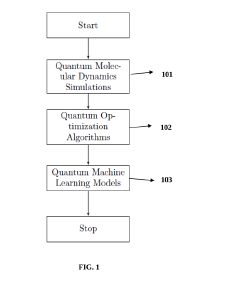
- The integration of quantum computing algorithms, including quantum molecular dynamics simulations, optimization algorithms, and machine learning models, utilizes qubits to simulate molecule interactions, search chemical spaces, and predict pharmacokinetic and pharmacodynamic properties, enabling faster and more accurate identification of drug candidates with desired characteristics.
Regulatory Considerations for Quantum-Driven Drug Development
The integration of quantum computing in pharmaceutical development processes introduces novel regulatory challenges that require careful consideration. Regulatory bodies, such as the FDA and EMA, must adapt their frameworks to accommodate the unique aspects of quantum-driven drug discovery and development.
One primary concern is the validation of quantum algorithms used in drug discovery. Regulatory agencies will need to establish guidelines for verifying the accuracy and reliability of quantum computations, ensuring that the results are reproducible and scientifically sound. This may involve developing new standards for quantum algorithm validation and benchmarking against classical computational methods.
Data integrity and security present another critical regulatory consideration. Quantum computing's potential to process vast amounts of sensitive data raises concerns about data protection and privacy. Regulatory bodies must develop robust protocols for securing quantum-processed data, including encryption methods that can withstand potential quantum attacks.
The interpretability of quantum-derived results is also a significant regulatory challenge. As quantum algorithms become more complex, ensuring transparency and explainability in decision-making processes becomes crucial. Regulators may require pharmaceutical companies to provide detailed documentation on how quantum computations contribute to drug candidate selection and optimization.
Regulatory agencies will need to address the potential impact of quantum computing on clinical trial design and analysis. The ability to process and analyze large datasets more efficiently may lead to new approaches in patient stratification and personalized medicine. Guidelines for incorporating quantum-derived insights into clinical trial protocols will be necessary to ensure patient safety and scientific validity.
The accelerated pace of drug discovery enabled by quantum computing may necessitate adjustments to regulatory timelines and review processes. Agencies may need to develop expedited review pathways for quantum-driven drug candidates while maintaining rigorous safety and efficacy standards.
Lastly, regulatory bodies must consider the global implications of quantum computing in pharmaceutical development. International harmonization of regulatory approaches will be crucial to facilitate the adoption of quantum technologies across borders and ensure consistent standards for drug approval and patient safety.
One primary concern is the validation of quantum algorithms used in drug discovery. Regulatory agencies will need to establish guidelines for verifying the accuracy and reliability of quantum computations, ensuring that the results are reproducible and scientifically sound. This may involve developing new standards for quantum algorithm validation and benchmarking against classical computational methods.
Data integrity and security present another critical regulatory consideration. Quantum computing's potential to process vast amounts of sensitive data raises concerns about data protection and privacy. Regulatory bodies must develop robust protocols for securing quantum-processed data, including encryption methods that can withstand potential quantum attacks.
The interpretability of quantum-derived results is also a significant regulatory challenge. As quantum algorithms become more complex, ensuring transparency and explainability in decision-making processes becomes crucial. Regulators may require pharmaceutical companies to provide detailed documentation on how quantum computations contribute to drug candidate selection and optimization.
Regulatory agencies will need to address the potential impact of quantum computing on clinical trial design and analysis. The ability to process and analyze large datasets more efficiently may lead to new approaches in patient stratification and personalized medicine. Guidelines for incorporating quantum-derived insights into clinical trial protocols will be necessary to ensure patient safety and scientific validity.
The accelerated pace of drug discovery enabled by quantum computing may necessitate adjustments to regulatory timelines and review processes. Agencies may need to develop expedited review pathways for quantum-driven drug candidates while maintaining rigorous safety and efficacy standards.
Lastly, regulatory bodies must consider the global implications of quantum computing in pharmaceutical development. International harmonization of regulatory approaches will be crucial to facilitate the adoption of quantum technologies across borders and ensure consistent standards for drug approval and patient safety.
Ethical Implications of Quantum Computing in Healthcare
The integration of quantum computing in healthcare, particularly in pharmaceutical development processes, raises significant ethical considerations that must be carefully addressed. One primary concern is the potential for quantum computing to exacerbate existing healthcare disparities. As this technology accelerates drug discovery and development, there is a risk that it may primarily benefit affluent populations, widening the gap in access to cutting-edge treatments between socioeconomic groups.
Privacy and data security present another critical ethical challenge. Quantum computing's ability to process vast amounts of sensitive medical data at unprecedented speeds could lead to breakthroughs in personalized medicine. However, this also increases the risk of data breaches and unauthorized access to highly personal health information. Striking a balance between leveraging data for medical advancements and protecting individual privacy rights is paramount.
The rapid acceleration of drug development through quantum computing also raises questions about the thoroughness of safety testing. While faster development cycles could bring life-saving treatments to market more quickly, there is a risk of overlooking long-term side effects or rare adverse reactions. Ethical frameworks must be established to ensure that speed does not compromise patient safety.
Quantum computing's potential to revolutionize drug discovery may also lead to ethical dilemmas in resource allocation. Pharmaceutical companies and research institutions may face difficult decisions in prioritizing which diseases or conditions to focus on, potentially neglecting rare diseases or those primarily affecting disadvantaged populations in favor of more profitable ventures.
Furthermore, the use of quantum computing in healthcare could lead to issues of algorithmic bias. If the data used to train quantum algorithms is not sufficiently diverse or representative, it could lead to biased outcomes in drug development, clinical trial design, or treatment recommendations, potentially exacerbating health inequities.
Lastly, the transformative power of quantum computing in healthcare raises questions about human agency and the role of medical professionals. As decision-making processes become increasingly automated and data-driven, there is a need to carefully consider how to maintain the human element in healthcare, ensuring that ethical considerations and individual patient needs are not overshadowed by algorithmic recommendations.
Privacy and data security present another critical ethical challenge. Quantum computing's ability to process vast amounts of sensitive medical data at unprecedented speeds could lead to breakthroughs in personalized medicine. However, this also increases the risk of data breaches and unauthorized access to highly personal health information. Striking a balance between leveraging data for medical advancements and protecting individual privacy rights is paramount.
The rapid acceleration of drug development through quantum computing also raises questions about the thoroughness of safety testing. While faster development cycles could bring life-saving treatments to market more quickly, there is a risk of overlooking long-term side effects or rare adverse reactions. Ethical frameworks must be established to ensure that speed does not compromise patient safety.
Quantum computing's potential to revolutionize drug discovery may also lead to ethical dilemmas in resource allocation. Pharmaceutical companies and research institutions may face difficult decisions in prioritizing which diseases or conditions to focus on, potentially neglecting rare diseases or those primarily affecting disadvantaged populations in favor of more profitable ventures.
Furthermore, the use of quantum computing in healthcare could lead to issues of algorithmic bias. If the data used to train quantum algorithms is not sufficiently diverse or representative, it could lead to biased outcomes in drug development, clinical trial design, or treatment recommendations, potentially exacerbating health inequities.
Lastly, the transformative power of quantum computing in healthcare raises questions about human agency and the role of medical professionals. As decision-making processes become increasingly automated and data-driven, there is a need to carefully consider how to maintain the human element in healthcare, ensuring that ethical considerations and individual patient needs are not overshadowed by algorithmic recommendations.
Unlock deeper insights with PatSnap Eureka Quick Research — get a full tech report to explore trends and direct your research. Try now!
Generate Your Research Report Instantly with AI Agent
Supercharge your innovation with PatSnap Eureka AI Agent Platform!