Quantum Computing's Effect on Modern Journalism Strategies
JUL 17, 20259 MIN READ
Generate Your Research Report Instantly with AI Agent
PatSnap Eureka helps you evaluate technical feasibility & market potential.
Quantum Computing in Journalism: Background and Objectives
Quantum computing represents a paradigm shift in computational power, leveraging the principles of quantum mechanics to perform complex calculations at unprecedented speeds. In the context of modern journalism, this emerging technology holds the potential to revolutionize information processing, data analysis, and content creation strategies. The evolution of quantum computing has been marked by significant milestones, from theoretical concepts in the 1980s to the development of practical quantum processors in recent years.
The primary objective of exploring quantum computing's impact on journalism is to identify and harness its transformative capabilities to enhance the quality, efficiency, and reach of news production and dissemination. As the media landscape continues to evolve rapidly, quantum computing offers promising solutions to address the challenges faced by contemporary newsrooms, such as information overload, fake news detection, and personalized content delivery.
The technological trajectory of quantum computing in journalism is characterized by a convergence of quantum algorithms, machine learning, and natural language processing. This synergy aims to create more sophisticated tools for data mining, sentiment analysis, and predictive modeling of news trends. By leveraging quantum computing's ability to process vast amounts of data simultaneously, journalists and media organizations can gain deeper insights into complex societal issues and emerging global patterns.
One of the key goals in applying quantum computing to journalism is to develop quantum-enhanced algorithms for rapid fact-checking and verification of information sources. This capability could significantly improve the accuracy and credibility of news reporting, particularly in an era of widespread misinformation. Additionally, quantum computing may enable more advanced encryption methods for protecting sensitive sources and safeguarding journalistic integrity in the digital age.
Another critical objective is to explore how quantum computing can optimize content distribution and audience engagement. By analyzing reader behavior and preferences at a quantum scale, news organizations could potentially create hyper-personalized content experiences, tailoring stories and formats to individual users with unprecedented precision. This level of customization could revolutionize how news is consumed and interacted with, potentially increasing reader engagement and loyalty.
As we delve into the intersection of quantum computing and journalism, it is essential to consider the ethical implications and potential societal impacts of these advanced technologies. The goal is not only to enhance journalistic practices but also to ensure that the implementation of quantum computing in media aligns with principles of transparency, fairness, and public interest. This exploration aims to pave the way for a new era of journalism that is more accurate, efficient, and responsive to the needs of an increasingly complex and interconnected world.
The primary objective of exploring quantum computing's impact on journalism is to identify and harness its transformative capabilities to enhance the quality, efficiency, and reach of news production and dissemination. As the media landscape continues to evolve rapidly, quantum computing offers promising solutions to address the challenges faced by contemporary newsrooms, such as information overload, fake news detection, and personalized content delivery.
The technological trajectory of quantum computing in journalism is characterized by a convergence of quantum algorithms, machine learning, and natural language processing. This synergy aims to create more sophisticated tools for data mining, sentiment analysis, and predictive modeling of news trends. By leveraging quantum computing's ability to process vast amounts of data simultaneously, journalists and media organizations can gain deeper insights into complex societal issues and emerging global patterns.
One of the key goals in applying quantum computing to journalism is to develop quantum-enhanced algorithms for rapid fact-checking and verification of information sources. This capability could significantly improve the accuracy and credibility of news reporting, particularly in an era of widespread misinformation. Additionally, quantum computing may enable more advanced encryption methods for protecting sensitive sources and safeguarding journalistic integrity in the digital age.
Another critical objective is to explore how quantum computing can optimize content distribution and audience engagement. By analyzing reader behavior and preferences at a quantum scale, news organizations could potentially create hyper-personalized content experiences, tailoring stories and formats to individual users with unprecedented precision. This level of customization could revolutionize how news is consumed and interacted with, potentially increasing reader engagement and loyalty.
As we delve into the intersection of quantum computing and journalism, it is essential to consider the ethical implications and potential societal impacts of these advanced technologies. The goal is not only to enhance journalistic practices but also to ensure that the implementation of quantum computing in media aligns with principles of transparency, fairness, and public interest. This exploration aims to pave the way for a new era of journalism that is more accurate, efficient, and responsive to the needs of an increasingly complex and interconnected world.
Market Demand for Quantum-Enhanced Journalism
The market demand for quantum-enhanced journalism is rapidly evolving as the potential applications of quantum computing in the media industry become more apparent. Traditional journalism strategies are facing unprecedented challenges in the digital age, and quantum computing offers promising solutions to address these issues while creating new opportunities for content creation, distribution, and audience engagement.
One of the primary drivers of market demand is the need for enhanced data processing and analysis capabilities. News organizations are inundated with vast amounts of information from various sources, including social media, IoT devices, and traditional channels. Quantum computing's ability to process complex datasets at unprecedented speeds could revolutionize how journalists sift through and interpret information, leading to more accurate and timely reporting.
Personalization and targeted content delivery represent another significant area of market demand. Quantum algorithms could enable news outlets to analyze reader preferences and behaviors with greater precision, allowing for highly customized news experiences. This level of personalization could significantly increase reader engagement and loyalty, addressing the ongoing challenge of audience retention in the digital news landscape.
Cybersecurity is a growing concern for media organizations, and quantum-enhanced encryption methods could provide a robust solution. As cyber threats become more sophisticated, the demand for quantum-secure communication channels and data storage systems in journalism is expected to rise sharply.
The potential for quantum computing to enhance fact-checking and verification processes is also driving market interest. In an era of misinformation and fake news, quantum algorithms could help journalists quickly cross-reference and verify information across multiple sources, maintaining the integrity of reporting.
Predictive analytics powered by quantum computing could transform investigative journalism and trend forecasting. News organizations could gain deeper insights into emerging stories and societal shifts, allowing them to stay ahead of breaking news and provide more comprehensive coverage.
Market demand is further fueled by the potential for quantum-enhanced natural language processing and translation services. These advancements could break down language barriers in global news dissemination and improve the accuracy of automated content generation.
While the market for quantum-enhanced journalism is still in its early stages, industry experts project significant growth in the coming years. As quantum technologies mature and become more accessible, media organizations are expected to invest heavily in quantum-enhanced tools and platforms to maintain competitive advantage and meet evolving consumer expectations.
One of the primary drivers of market demand is the need for enhanced data processing and analysis capabilities. News organizations are inundated with vast amounts of information from various sources, including social media, IoT devices, and traditional channels. Quantum computing's ability to process complex datasets at unprecedented speeds could revolutionize how journalists sift through and interpret information, leading to more accurate and timely reporting.
Personalization and targeted content delivery represent another significant area of market demand. Quantum algorithms could enable news outlets to analyze reader preferences and behaviors with greater precision, allowing for highly customized news experiences. This level of personalization could significantly increase reader engagement and loyalty, addressing the ongoing challenge of audience retention in the digital news landscape.
Cybersecurity is a growing concern for media organizations, and quantum-enhanced encryption methods could provide a robust solution. As cyber threats become more sophisticated, the demand for quantum-secure communication channels and data storage systems in journalism is expected to rise sharply.
The potential for quantum computing to enhance fact-checking and verification processes is also driving market interest. In an era of misinformation and fake news, quantum algorithms could help journalists quickly cross-reference and verify information across multiple sources, maintaining the integrity of reporting.
Predictive analytics powered by quantum computing could transform investigative journalism and trend forecasting. News organizations could gain deeper insights into emerging stories and societal shifts, allowing them to stay ahead of breaking news and provide more comprehensive coverage.
Market demand is further fueled by the potential for quantum-enhanced natural language processing and translation services. These advancements could break down language barriers in global news dissemination and improve the accuracy of automated content generation.
While the market for quantum-enhanced journalism is still in its early stages, industry experts project significant growth in the coming years. As quantum technologies mature and become more accessible, media organizations are expected to invest heavily in quantum-enhanced tools and platforms to maintain competitive advantage and meet evolving consumer expectations.
Current State and Challenges in Quantum Journalism
The current state of quantum journalism is characterized by a nascent integration of quantum computing principles into traditional journalistic practices. While quantum computing itself is still in its early stages of development, its potential impact on journalism is beginning to emerge. Currently, quantum journalism primarily focuses on exploring how quantum technologies might revolutionize data processing, analysis, and security in news gathering and dissemination.
One of the main challenges in quantum journalism is the limited availability of practical quantum computing systems. Most quantum computers are still experimental and not readily accessible to news organizations. This scarcity hampers the widespread adoption and experimentation of quantum techniques in journalism. Additionally, the complexity of quantum computing concepts poses a significant barrier for journalists and media professionals who may lack the specialized knowledge required to leverage these technologies effectively.
Another critical challenge is the ethical implications of quantum-enhanced data analysis. Quantum computing's potential to process vast amounts of data at unprecedented speeds raises concerns about privacy and data security. Journalists must grapple with the ethical considerations of using such powerful tools while maintaining the integrity of their sources and protecting sensitive information.
The integration of quantum computing into existing journalistic workflows presents another hurdle. Current newsroom systems and software are not designed to interface with quantum systems, requiring substantial investment in new infrastructure and training. This technological gap slows down the adoption of quantum techniques in day-to-day journalistic operations.
Furthermore, the reliability and accuracy of quantum-based algorithms for news analysis and fact-checking are still under scrutiny. While quantum computing promises enhanced capabilities in pattern recognition and data correlation, the field lacks standardized benchmarks to evaluate the performance and trustworthiness of quantum-powered journalistic tools.
The financial aspect also poses a significant challenge. The high costs associated with quantum computing research and implementation may be prohibitive for many news organizations, especially smaller outlets and independent journalists. This economic barrier could potentially lead to a digital divide in the journalism industry, where only well-funded media conglomerates can harness the power of quantum technologies.
Lastly, there is a notable shortage of professionals who possess both journalistic expertise and quantum computing knowledge. This skills gap hinders the development of specialized quantum journalism applications and limits the industry's ability to fully explore the potential of this emerging field. Bridging this gap will require collaborative efforts between academic institutions, technology companies, and news organizations to foster a new generation of quantum-savvy journalists.
One of the main challenges in quantum journalism is the limited availability of practical quantum computing systems. Most quantum computers are still experimental and not readily accessible to news organizations. This scarcity hampers the widespread adoption and experimentation of quantum techniques in journalism. Additionally, the complexity of quantum computing concepts poses a significant barrier for journalists and media professionals who may lack the specialized knowledge required to leverage these technologies effectively.
Another critical challenge is the ethical implications of quantum-enhanced data analysis. Quantum computing's potential to process vast amounts of data at unprecedented speeds raises concerns about privacy and data security. Journalists must grapple with the ethical considerations of using such powerful tools while maintaining the integrity of their sources and protecting sensitive information.
The integration of quantum computing into existing journalistic workflows presents another hurdle. Current newsroom systems and software are not designed to interface with quantum systems, requiring substantial investment in new infrastructure and training. This technological gap slows down the adoption of quantum techniques in day-to-day journalistic operations.
Furthermore, the reliability and accuracy of quantum-based algorithms for news analysis and fact-checking are still under scrutiny. While quantum computing promises enhanced capabilities in pattern recognition and data correlation, the field lacks standardized benchmarks to evaluate the performance and trustworthiness of quantum-powered journalistic tools.
The financial aspect also poses a significant challenge. The high costs associated with quantum computing research and implementation may be prohibitive for many news organizations, especially smaller outlets and independent journalists. This economic barrier could potentially lead to a digital divide in the journalism industry, where only well-funded media conglomerates can harness the power of quantum technologies.
Lastly, there is a notable shortage of professionals who possess both journalistic expertise and quantum computing knowledge. This skills gap hinders the development of specialized quantum journalism applications and limits the industry's ability to fully explore the potential of this emerging field. Bridging this gap will require collaborative efforts between academic institutions, technology companies, and news organizations to foster a new generation of quantum-savvy journalists.
Existing Quantum Solutions for Journalism
01 Quantum Computing Architectures
This category focuses on the design and implementation of quantum computing systems. It includes innovations in qubit arrangements, circuit layouts, and overall system architectures to improve quantum computation efficiency and scalability.- Quantum Circuit Design and Optimization: This area focuses on developing and optimizing quantum circuits for various applications. It involves designing efficient quantum gates, reducing circuit depth, and improving qubit connectivity to enhance the performance of quantum algorithms.
- Error Correction and Fault Tolerance: Error correction and fault tolerance are crucial for building reliable quantum computers. This field involves developing techniques to detect and correct quantum errors, as well as designing fault-tolerant quantum architectures to mitigate the effects of noise and decoherence.
- Quantum-Classical Hybrid Algorithms: Hybrid algorithms combine classical and quantum computing to leverage the strengths of both paradigms. This approach aims to solve complex problems by utilizing quantum processors for specific tasks while relying on classical computers for other parts of the computation.
- Quantum Machine Learning: Quantum machine learning explores the intersection of quantum computing and machine learning. It involves developing quantum algorithms for tasks such as classification, clustering, and optimization, potentially offering speedups over classical machine learning methods.
- Quantum Hardware Implementation: This area focuses on the physical realization of quantum computing hardware. It includes research on various qubit technologies, such as superconducting circuits, trapped ions, and topological qubits, as well as the development of control systems and readout mechanisms for quantum processors.
02 Error Correction and Fault Tolerance
This area addresses the challenges of maintaining quantum coherence and mitigating errors in quantum systems. It involves techniques for error detection, correction, and fault-tolerant quantum computation to enhance the reliability of quantum operations.Expand Specific Solutions03 Quantum Algorithms and Applications
This category encompasses the development of quantum algorithms for various computational problems and their practical applications. It includes innovations in quantum simulation, optimization, machine learning, and cryptography using quantum systems.Expand Specific Solutions04 Quantum-Classical Hybrid Systems
This area focuses on integrating quantum and classical computing technologies. It involves developing interfaces, control systems, and algorithms that leverage both quantum and classical resources for enhanced computational capabilities.Expand Specific Solutions05 Quantum Hardware and Qubit Technologies
This category covers advancements in physical implementations of quantum bits (qubits) and associated hardware. It includes innovations in superconducting circuits, trapped ions, photonics, and other qubit technologies to improve coherence times and gate fidelities.Expand Specific Solutions
Key Players in Quantum Computing and Journalism
The quantum computing landscape in modern journalism strategies is in its early stages, with a growing market and evolving technological maturity. Major players like Google, IBM, and D-Wave Systems are leading research and development efforts, while universities such as MIT, University of Chicago, and Duke University contribute to academic advancements. The market size is expanding as media organizations explore quantum computing's potential in data analysis, content personalization, and cybersecurity. However, the technology's practical applications in journalism are still emerging, with varying levels of maturity across different use cases. As quantum computing continues to develop, its impact on journalism strategies is expected to grow, potentially revolutionizing data-driven decision-making and content creation processes in the media industry.
Google LLC
Technical Solution: Google's approach to quantum computing's impact on journalism involves developing quantum algorithms for advanced natural language processing and data analysis. Their Sycamore quantum processor has demonstrated quantum supremacy[1], potentially revolutionizing how news content is generated, analyzed, and distributed. Google is exploring quantum machine learning techniques to enhance personalized news recommendations and improve content curation algorithms. They are also investigating quantum-enhanced encryption methods to secure sensitive journalistic sources and communications[2]. Additionally, Google is working on quantum-inspired algorithms that can run on classical computers, bridging the gap between current technology and future quantum systems for immediate applications in journalism[3].
Strengths: Vast computational resources, cutting-edge quantum hardware, and expertise in AI and machine learning. Weaknesses: Quantum technology is still in early stages, and practical applications for journalism may take time to materialize.
D-Wave Systems, Inc.
Technical Solution: D-Wave's quantum annealing technology is being applied to optimize complex journalistic workflows and decision-making processes. Their quantum computers are particularly suited for solving optimization problems, which can be leveraged in news distribution strategies and audience engagement analysis[4]. D-Wave is developing quantum-hybrid solutions that combine classical and quantum computing to address real-world journalism challenges. They are exploring applications in predictive analytics for news trends, optimizing ad placement in digital media, and enhancing recommendation systems for personalized content delivery. D-Wave's Leap quantum cloud service allows journalists and media organizations to experiment with quantum computing applications without significant hardware investments[5].
Strengths: Specialized in quantum annealing, which is well-suited for certain optimization problems in journalism. Weaknesses: Limited to specific types of quantum computations, may not be as versatile as gate-based quantum computers for all journalism applications.
Core Innovations in Quantum-Assisted Reporting
System and method of in-queue optimizations for quantum cloud computing
PatentWO2022231846A1
Innovation
- A quantum computing system with a queueing and optimizations (QaO) server that performs in-queue optimizations, including prediction models for execution times and machine calibration, to improve the quality of quantum circuit execution, reduce wait times, and balance performance characteristics, utilizing both intra-job and inter-job optimizations to enhance fidelity and throughput.
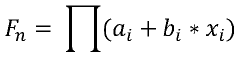
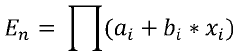
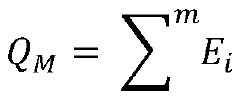
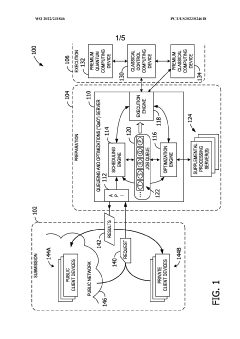
Signal distribution for a quantum computing system
PatentWO2020027779A1
Innovation
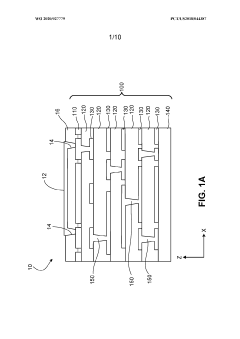
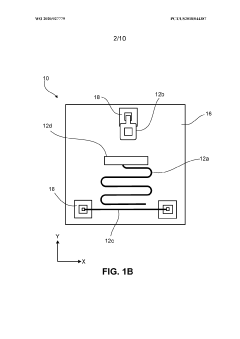
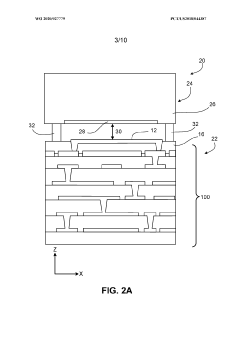
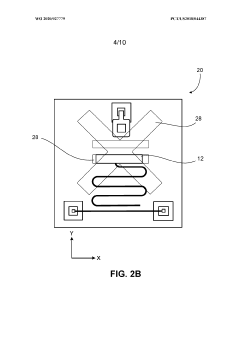
- A multilayer wiring stack with a low-loss capping layer, formed from materials like single crystal silicon, is used to house qubit control and readout elements, allowing these elements to be electrically connected through conductive vias, thereby reducing the need for deep via etches and minimizing interference, while maintaining high coherence and scalability.
Ethical Implications of Quantum Journalism
The advent of quantum computing in journalism raises significant ethical concerns that demand careful consideration. As this technology becomes more prevalent, it has the potential to revolutionize data analysis, encryption, and information processing in ways that could fundamentally alter journalistic practices.
One of the primary ethical implications is the potential for quantum computing to break current encryption methods, potentially compromising source protection and confidentiality. This could have a chilling effect on whistleblowers and investigative journalism, as sources may become hesitant to share sensitive information if they believe their identities could be easily uncovered.
Furthermore, the enhanced data processing capabilities of quantum computers could lead to unprecedented levels of surveillance and data mining. This raises questions about privacy and the ethical use of personal information in journalistic pursuits. News organizations may need to establish new ethical guidelines to ensure responsible use of these powerful tools.
The speed and complexity of quantum computing also present challenges in terms of fact-checking and verification. As information processing becomes near-instantaneous, there is a risk that inaccurate or manipulated information could spread more rapidly than ever before. Journalists will need to develop new strategies to maintain accuracy and integrity in their reporting.
Quantum computing's potential to simulate complex systems could also impact the way journalists approach predictive reporting and scenario analysis. While this could lead to more informed and nuanced coverage of future events, it also raises ethical questions about the responsibility of journalists in shaping public perception of potential outcomes.
Additionally, the digital divide between organizations with access to quantum computing resources and those without could create significant disparities in journalistic capabilities. This may lead to ethical dilemmas regarding fairness and equal access to information.
As quantum journalism evolves, it will be crucial for media organizations, ethicists, and policymakers to work together to establish robust ethical frameworks. These frameworks should address issues of privacy, source protection, data handling, and the responsible use of predictive capabilities. Journalists will need to be trained not only in the technical aspects of quantum computing but also in the ethical implications of its use in their profession.
One of the primary ethical implications is the potential for quantum computing to break current encryption methods, potentially compromising source protection and confidentiality. This could have a chilling effect on whistleblowers and investigative journalism, as sources may become hesitant to share sensitive information if they believe their identities could be easily uncovered.
Furthermore, the enhanced data processing capabilities of quantum computers could lead to unprecedented levels of surveillance and data mining. This raises questions about privacy and the ethical use of personal information in journalistic pursuits. News organizations may need to establish new ethical guidelines to ensure responsible use of these powerful tools.
The speed and complexity of quantum computing also present challenges in terms of fact-checking and verification. As information processing becomes near-instantaneous, there is a risk that inaccurate or manipulated information could spread more rapidly than ever before. Journalists will need to develop new strategies to maintain accuracy and integrity in their reporting.
Quantum computing's potential to simulate complex systems could also impact the way journalists approach predictive reporting and scenario analysis. While this could lead to more informed and nuanced coverage of future events, it also raises ethical questions about the responsibility of journalists in shaping public perception of potential outcomes.
Additionally, the digital divide between organizations with access to quantum computing resources and those without could create significant disparities in journalistic capabilities. This may lead to ethical dilemmas regarding fairness and equal access to information.
As quantum journalism evolves, it will be crucial for media organizations, ethicists, and policymakers to work together to establish robust ethical frameworks. These frameworks should address issues of privacy, source protection, data handling, and the responsible use of predictive capabilities. Journalists will need to be trained not only in the technical aspects of quantum computing but also in the ethical implications of its use in their profession.
Quantum Computing's Impact on Media Business Models
Quantum computing's potential impact on media business models is profound and multifaceted. As this revolutionary technology advances, it promises to reshape the landscape of content creation, distribution, and monetization in the journalism industry.
One of the most significant impacts of quantum computing on media business models is the enhancement of data analytics capabilities. Quantum algorithms can process vast amounts of data at unprecedented speeds, allowing media companies to gain deeper insights into audience behavior, preferences, and trends. This enhanced understanding enables more targeted content creation and personalized advertising, potentially increasing engagement and revenue.
The ability of quantum computers to optimize complex systems could revolutionize content distribution strategies. Media organizations could leverage quantum algorithms to determine the most effective channels, timing, and formats for content delivery, maximizing reach and impact. This optimization could lead to more efficient resource allocation and improved return on investment for content producers.
Quantum computing may also transform the advertising landscape within media business models. By processing complex datasets and variables, quantum algorithms could enable real-time, hyper-personalized ad targeting. This level of precision could significantly increase the value of advertising inventory, potentially leading to new revenue streams for media companies.
In the realm of content creation, quantum computing could enable more sophisticated predictive models for trend forecasting. Media organizations could anticipate emerging topics and audience interests with greater accuracy, allowing them to stay ahead of the curve in content production and maintain a competitive edge.
The technology's potential in enhancing cybersecurity could also impact media business models. Quantum encryption methods could provide unparalleled protection for sensitive information and intellectual property, potentially changing how media companies manage and monetize their content assets.
Furthermore, quantum computing could facilitate the development of new immersive media experiences. By enabling more complex simulations and rendering processes, it could pave the way for advanced virtual and augmented reality content, opening up new avenues for storytelling and audience engagement.
As quantum computing evolves, it may also disrupt traditional subscription and paywall models. The technology's ability to process and analyze vast amounts of user data could lead to more nuanced and dynamic pricing strategies, potentially increasing revenue while optimizing accessibility for diverse audience segments.
One of the most significant impacts of quantum computing on media business models is the enhancement of data analytics capabilities. Quantum algorithms can process vast amounts of data at unprecedented speeds, allowing media companies to gain deeper insights into audience behavior, preferences, and trends. This enhanced understanding enables more targeted content creation and personalized advertising, potentially increasing engagement and revenue.
The ability of quantum computers to optimize complex systems could revolutionize content distribution strategies. Media organizations could leverage quantum algorithms to determine the most effective channels, timing, and formats for content delivery, maximizing reach and impact. This optimization could lead to more efficient resource allocation and improved return on investment for content producers.
Quantum computing may also transform the advertising landscape within media business models. By processing complex datasets and variables, quantum algorithms could enable real-time, hyper-personalized ad targeting. This level of precision could significantly increase the value of advertising inventory, potentially leading to new revenue streams for media companies.
In the realm of content creation, quantum computing could enable more sophisticated predictive models for trend forecasting. Media organizations could anticipate emerging topics and audience interests with greater accuracy, allowing them to stay ahead of the curve in content production and maintain a competitive edge.
The technology's potential in enhancing cybersecurity could also impact media business models. Quantum encryption methods could provide unparalleled protection for sensitive information and intellectual property, potentially changing how media companies manage and monetize their content assets.
Furthermore, quantum computing could facilitate the development of new immersive media experiences. By enabling more complex simulations and rendering processes, it could pave the way for advanced virtual and augmented reality content, opening up new avenues for storytelling and audience engagement.
As quantum computing evolves, it may also disrupt traditional subscription and paywall models. The technology's ability to process and analyze vast amounts of user data could lead to more nuanced and dynamic pricing strategies, potentially increasing revenue while optimizing accessibility for diverse audience segments.
Unlock deeper insights with PatSnap Eureka Quick Research — get a full tech report to explore trends and direct your research. Try now!
Generate Your Research Report Instantly with AI Agent
Supercharge your innovation with PatSnap Eureka AI Agent Platform!