Quantum Computing's Effect on Water Quality Assessment Systems
JUL 17, 20259 MIN READ
Generate Your Research Report Instantly with AI Agent
PatSnap Eureka helps you evaluate technical feasibility & market potential.
Quantum Computing in Water Quality Assessment: Background and Objectives
Quantum computing represents a paradigm shift in computational capabilities, with potential far-reaching implications for various fields, including water quality assessment systems. This emerging technology harnesses the principles of quantum mechanics to perform complex calculations at unprecedented speeds, offering new possibilities for analyzing and predicting water quality parameters.
The development of quantum computing can be traced back to the early 1980s when physicist Richard Feynman proposed the idea of using quantum mechanical effects to perform computations. Since then, significant progress has been made in both theoretical foundations and practical implementations. The field has seen rapid advancements in recent years, with major tech companies and research institutions investing heavily in quantum hardware and software development.
In the context of water quality assessment, traditional systems rely on classical computing methods to process and analyze data from various sensors and monitoring devices. These systems face limitations in handling large volumes of data, performing real-time analysis, and modeling complex environmental interactions. Quantum computing has the potential to overcome these challenges by enabling more sophisticated data processing, pattern recognition, and predictive modeling.
The primary objective of integrating quantum computing into water quality assessment systems is to enhance the accuracy, speed, and comprehensiveness of water quality analysis. This integration aims to improve our ability to detect and predict water contamination, assess the impact of environmental factors on water quality, and optimize water treatment processes. By leveraging quantum algorithms, we can potentially uncover hidden patterns and correlations in water quality data that are beyond the reach of classical computing methods.
Another key goal is to develop quantum-enhanced sensors and measurement techniques that can detect pollutants and contaminants at much lower concentrations than current technologies allow. This increased sensitivity could lead to earlier detection of water quality issues, enabling more proactive and effective interventions.
Furthermore, quantum computing could revolutionize the simulation of complex environmental systems, allowing for more accurate modeling of water ecosystems, pollutant dispersion, and the long-term effects of climate change on water resources. These advanced simulations could inform better policy decisions and resource management strategies.
As we explore the potential of quantum computing in water quality assessment, it is crucial to consider the technical challenges and practical limitations that need to be overcome. These include the development of stable and scalable quantum hardware, the creation of quantum algorithms specifically tailored for water quality analysis, and the integration of quantum systems with existing classical infrastructure.
The development of quantum computing can be traced back to the early 1980s when physicist Richard Feynman proposed the idea of using quantum mechanical effects to perform computations. Since then, significant progress has been made in both theoretical foundations and practical implementations. The field has seen rapid advancements in recent years, with major tech companies and research institutions investing heavily in quantum hardware and software development.
In the context of water quality assessment, traditional systems rely on classical computing methods to process and analyze data from various sensors and monitoring devices. These systems face limitations in handling large volumes of data, performing real-time analysis, and modeling complex environmental interactions. Quantum computing has the potential to overcome these challenges by enabling more sophisticated data processing, pattern recognition, and predictive modeling.
The primary objective of integrating quantum computing into water quality assessment systems is to enhance the accuracy, speed, and comprehensiveness of water quality analysis. This integration aims to improve our ability to detect and predict water contamination, assess the impact of environmental factors on water quality, and optimize water treatment processes. By leveraging quantum algorithms, we can potentially uncover hidden patterns and correlations in water quality data that are beyond the reach of classical computing methods.
Another key goal is to develop quantum-enhanced sensors and measurement techniques that can detect pollutants and contaminants at much lower concentrations than current technologies allow. This increased sensitivity could lead to earlier detection of water quality issues, enabling more proactive and effective interventions.
Furthermore, quantum computing could revolutionize the simulation of complex environmental systems, allowing for more accurate modeling of water ecosystems, pollutant dispersion, and the long-term effects of climate change on water resources. These advanced simulations could inform better policy decisions and resource management strategies.
As we explore the potential of quantum computing in water quality assessment, it is crucial to consider the technical challenges and practical limitations that need to be overcome. These include the development of stable and scalable quantum hardware, the creation of quantum algorithms specifically tailored for water quality analysis, and the integration of quantum systems with existing classical infrastructure.
Market Demand for Advanced Water Quality Monitoring
The market demand for advanced water quality monitoring systems has been steadily increasing in recent years, driven by growing environmental concerns, stricter regulations, and the need for more efficient and accurate water management practices. As water resources become increasingly scarce and polluted, there is a pressing need for sophisticated monitoring technologies that can provide real-time, comprehensive data on water quality parameters.
The global water quality monitoring market is expected to experience significant growth in the coming years. This growth is fueled by factors such as increasing industrialization, urbanization, and agricultural activities, which contribute to water pollution and necessitate more robust monitoring systems. Additionally, the rising awareness of waterborne diseases and their impact on public health has led to a greater emphasis on water quality assessment.
In developed countries, the demand for advanced water quality monitoring systems is primarily driven by the need to upgrade aging water infrastructure and comply with stringent environmental regulations. Municipalities and water utilities are investing in smart water management solutions that incorporate real-time monitoring and data analytics to optimize water treatment processes and reduce operational costs.
Emerging economies are also witnessing a surge in demand for water quality monitoring systems. Rapid industrialization and population growth in these regions have put immense pressure on water resources, leading to increased pollution and water scarcity. Governments and private sector entities are recognizing the importance of implementing comprehensive water quality monitoring programs to address these challenges.
The integration of quantum computing in water quality assessment systems represents a potential game-changer in the market. Quantum computing's ability to process vast amounts of data and perform complex calculations at unprecedented speeds could revolutionize water quality monitoring and analysis. This technology could enable more accurate predictions of water quality trends, faster detection of contaminants, and more efficient optimization of water treatment processes.
As the demand for real-time, high-precision water quality data grows, there is an increasing interest in sensor technologies and data analytics platforms that can provide continuous monitoring of multiple water quality parameters. The market is seeing a shift towards integrated systems that combine advanced sensors, IoT connectivity, and cloud-based data management to offer comprehensive water quality insights.
The COVID-19 pandemic has further highlighted the importance of water quality monitoring, particularly in wastewater surveillance for early detection of disease outbreaks. This has created new opportunities for advanced monitoring technologies and has accelerated the adoption of remote monitoring solutions.
In conclusion, the market demand for advanced water quality monitoring systems is robust and expected to continue growing. The potential integration of quantum computing in this field could significantly enhance the capabilities of these systems, meeting the increasing need for more sophisticated, accurate, and efficient water quality assessment tools.
The global water quality monitoring market is expected to experience significant growth in the coming years. This growth is fueled by factors such as increasing industrialization, urbanization, and agricultural activities, which contribute to water pollution and necessitate more robust monitoring systems. Additionally, the rising awareness of waterborne diseases and their impact on public health has led to a greater emphasis on water quality assessment.
In developed countries, the demand for advanced water quality monitoring systems is primarily driven by the need to upgrade aging water infrastructure and comply with stringent environmental regulations. Municipalities and water utilities are investing in smart water management solutions that incorporate real-time monitoring and data analytics to optimize water treatment processes and reduce operational costs.
Emerging economies are also witnessing a surge in demand for water quality monitoring systems. Rapid industrialization and population growth in these regions have put immense pressure on water resources, leading to increased pollution and water scarcity. Governments and private sector entities are recognizing the importance of implementing comprehensive water quality monitoring programs to address these challenges.
The integration of quantum computing in water quality assessment systems represents a potential game-changer in the market. Quantum computing's ability to process vast amounts of data and perform complex calculations at unprecedented speeds could revolutionize water quality monitoring and analysis. This technology could enable more accurate predictions of water quality trends, faster detection of contaminants, and more efficient optimization of water treatment processes.
As the demand for real-time, high-precision water quality data grows, there is an increasing interest in sensor technologies and data analytics platforms that can provide continuous monitoring of multiple water quality parameters. The market is seeing a shift towards integrated systems that combine advanced sensors, IoT connectivity, and cloud-based data management to offer comprehensive water quality insights.
The COVID-19 pandemic has further highlighted the importance of water quality monitoring, particularly in wastewater surveillance for early detection of disease outbreaks. This has created new opportunities for advanced monitoring technologies and has accelerated the adoption of remote monitoring solutions.
In conclusion, the market demand for advanced water quality monitoring systems is robust and expected to continue growing. The potential integration of quantum computing in this field could significantly enhance the capabilities of these systems, meeting the increasing need for more sophisticated, accurate, and efficient water quality assessment tools.
Current Challenges in Quantum-Enhanced Water Analysis
The integration of quantum computing into water quality assessment systems presents several significant challenges that researchers and engineers are currently grappling with. One of the primary obstacles is the complexity of quantum algorithms required for water analysis. While quantum computing offers the potential for exponential speedups in certain computational tasks, developing algorithms that can effectively leverage quantum advantages for water quality assessment is a non-trivial task.
The quantum noise and decoherence issues inherent in current quantum systems pose another major challenge. Water quality assessment often requires precise measurements and calculations, but the fragility of quantum states can lead to errors and inaccuracies in results. Overcoming these limitations requires advanced error correction techniques and the development of more stable quantum hardware.
Data integration and interpretation present additional hurdles in quantum-enhanced water analysis. Quantum systems excel at processing certain types of data, but translating classical water quality data into quantum-compatible formats and then interpreting the results back into actionable insights remains a complex process. This challenge is compounded by the need to integrate quantum-derived data with existing classical water quality assessment systems.
The scalability of quantum solutions for water quality assessment is another area of concern. While small-scale quantum systems have shown promise in laboratory settings, scaling these solutions to handle the vast amounts of data involved in real-world water quality monitoring networks is a significant challenge. This includes issues related to quantum memory capacity, qubit coherence times, and the ability to perform complex quantum operations on large datasets.
Furthermore, the high cost and specialized infrastructure requirements of quantum computing systems present barriers to widespread adoption in the water quality assessment field. Many water management organizations may lack the resources or expertise to implement and maintain quantum-enhanced systems, limiting the potential impact of this technology.
Lastly, there is a notable skills gap in the intersection of quantum computing and water quality assessment. Developing a workforce that understands both the intricacies of quantum algorithms and the specific requirements of water quality analysis is crucial for advancing this field. This challenge extends to the need for interdisciplinary collaboration between quantum physicists, computer scientists, environmental scientists, and water management professionals.
The quantum noise and decoherence issues inherent in current quantum systems pose another major challenge. Water quality assessment often requires precise measurements and calculations, but the fragility of quantum states can lead to errors and inaccuracies in results. Overcoming these limitations requires advanced error correction techniques and the development of more stable quantum hardware.
Data integration and interpretation present additional hurdles in quantum-enhanced water analysis. Quantum systems excel at processing certain types of data, but translating classical water quality data into quantum-compatible formats and then interpreting the results back into actionable insights remains a complex process. This challenge is compounded by the need to integrate quantum-derived data with existing classical water quality assessment systems.
The scalability of quantum solutions for water quality assessment is another area of concern. While small-scale quantum systems have shown promise in laboratory settings, scaling these solutions to handle the vast amounts of data involved in real-world water quality monitoring networks is a significant challenge. This includes issues related to quantum memory capacity, qubit coherence times, and the ability to perform complex quantum operations on large datasets.
Furthermore, the high cost and specialized infrastructure requirements of quantum computing systems present barriers to widespread adoption in the water quality assessment field. Many water management organizations may lack the resources or expertise to implement and maintain quantum-enhanced systems, limiting the potential impact of this technology.
Lastly, there is a notable skills gap in the intersection of quantum computing and water quality assessment. Developing a workforce that understands both the intricacies of quantum algorithms and the specific requirements of water quality analysis is crucial for advancing this field. This challenge extends to the need for interdisciplinary collaboration between quantum physicists, computer scientists, environmental scientists, and water management professionals.
Existing Quantum Solutions for Water Quality Assessment
01 Quantum-enhanced water quality sensors
Quantum computing techniques are applied to enhance the sensitivity and accuracy of water quality sensors. These sensors utilize quantum effects to detect and measure various contaminants and parameters in water with unprecedented precision. The quantum-enhanced sensors can detect minute changes in water composition, enabling early detection of pollutants and more effective water quality monitoring.- Quantum-enhanced water quality sensors: Quantum computing techniques are applied to enhance the sensitivity and accuracy of water quality sensors. These sensors utilize quantum effects to detect and measure various pollutants and contaminants in water at extremely low concentrations, providing more precise and reliable data for water quality assessment.
- Quantum algorithms for data analysis in water quality assessment: Specialized quantum algorithms are developed to process and analyze large volumes of water quality data. These algorithms leverage the power of quantum computing to perform complex calculations and pattern recognition tasks, enabling faster and more comprehensive analysis of water quality parameters.
- Quantum-based predictive modeling for water systems: Quantum computing is used to create advanced predictive models for water quality and distribution systems. These models can simulate complex water ecosystems, predict potential contamination events, and optimize water treatment processes, leading to more efficient and proactive water quality management.
- Quantum-secured water quality data management: Quantum cryptography and secure communication protocols are implemented to protect water quality data from cyber threats. This ensures the integrity and confidentiality of sensitive water quality information, crucial for public health and environmental monitoring systems.
- Quantum-assisted real-time monitoring and alert systems: Quantum computing technologies are integrated into real-time water quality monitoring and alert systems. These systems can process vast amounts of data from multiple sources simultaneously, enabling rapid detection of water quality issues and immediate response to potential hazards.
02 Quantum algorithms for data analysis in water quality assessment
Specialized quantum algorithms are developed to process and analyze large volumes of water quality data. These algorithms leverage quantum computing's ability to handle complex calculations and pattern recognition tasks more efficiently than classical computers. This enables faster and more accurate analysis of water quality trends, prediction of potential issues, and optimization of treatment processes.Expand Specific Solutions03 Quantum-classical hybrid systems for real-time monitoring
Hybrid systems combining quantum and classical computing elements are developed for real-time water quality monitoring. These systems use quantum processors for specific computationally intensive tasks while classical components handle data collection and user interface. This approach allows for continuous, high-performance monitoring of water quality parameters across large water distribution networks.Expand Specific Solutions04 Quantum machine learning for predictive water quality modeling
Quantum machine learning techniques are applied to develop predictive models for water quality. These models can process complex environmental data sets and predict future water quality conditions with higher accuracy than classical methods. This enables proactive management of water resources and early intervention in potential water quality issues.Expand Specific Solutions05 Quantum-secured communication for water quality data
Quantum cryptography techniques are implemented to secure the transmission of sensitive water quality data. This ensures that data collected from various sensors and monitoring stations is protected from interception or tampering. The quantum-secured communication system enhances the reliability and integrity of water quality assessment systems, particularly in critical infrastructure applications.Expand Specific Solutions
Key Players in Quantum Computing and Water Quality Sectors
The quantum computing market for water quality assessment systems is in its early stages of development, with significant potential for growth. The market size is currently limited but expected to expand rapidly as quantum technologies mature. Major players like Google, IBM, and Microsoft are investing heavily in quantum computing research, while specialized companies such as Zapata Computing and Universal Quantum are focusing on quantum applications for environmental monitoring. The technology's maturity varies, with some basic quantum algorithms for water quality analysis emerging, but large-scale practical implementations are still in development. Collaboration between tech giants, startups, and research institutions is driving innovation in this nascent field.
Google LLC
Technical Solution: Google's approach to quantum computing's effect on water quality assessment systems leverages their Sycamore quantum processor. They are developing quantum algorithms for simulating complex molecular interactions in water, potentially revolutionizing contaminant detection and treatment processes. Google's quantum machine learning models are being adapted to analyze vast datasets from water quality sensors, enabling more accurate predictions of water quality changes[1]. Their quantum-enhanced optimization algorithms are also being applied to improve the efficiency of water treatment plant operations, potentially reducing energy consumption and chemical usage[3].
Strengths: Cutting-edge quantum hardware, extensive data processing capabilities, and advanced AI integration. Weaknesses: Limited real-world testing in water quality applications, potential scalability issues for widespread implementation.
Zapata Computing, Inc.
Technical Solution: Zapata Computing is focusing on developing quantum-ready algorithms for water quality assessment systems. Their approach involves creating hybrid quantum-classical algorithms that can run on both current and future quantum hardware. Zapata's quantum machine learning techniques are being applied to analyze complex patterns in water quality data, potentially identifying previously undetectable contaminants[2]. They are also working on quantum-inspired optimization methods to enhance the design and operation of water treatment facilities, aiming to improve energy efficiency and treatment effectiveness[4]. Zapata's Enterprise Solution for Chemistry is being adapted for water quality applications, enabling more accurate molecular simulations of water contaminants and treatment chemicals[5].
Strengths: Versatile quantum software solutions, expertise in algorithm development, and focus on near-term quantum applications. Weaknesses: Dependence on hardware advancements, potential challenges in integrating with existing water quality infrastructure.
Breakthrough Quantum Algorithms for Water Analysis
Reducing parasitic capacitance in a qubit system
PatentWO2019190460A1
Innovation
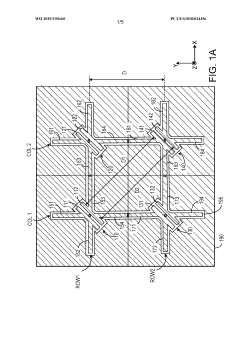
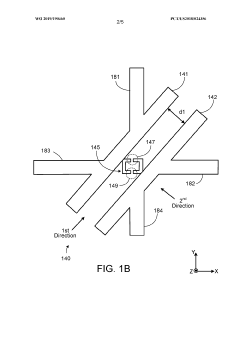
- The qubits are arranged in a symmetric configuration where each qubit is positioned relative to its next nearest neighbor such that a charge on one qubit induces the same charge on both nodes of the other qubit, effectively nulling parasitic capacitive coupling, without altering coupling strengths between desired neighboring qubits.


Simulating errors of a quantum device using variational quantum channels
PatentWO2020214910A1
Innovation
- A hybrid quantum-classical computer system simulates a near-term quantum device using a virtual quantum machine with a variational quantum channel to reproduce the probability distribution of error syndromes, allowing for indirect benchmarking and error correction, thereby addressing the limitations of existing methods.


Environmental Regulations and Quantum Water Quality Assessment
The integration of quantum computing into water quality assessment systems has significant implications for environmental regulations. As quantum technologies advance, they offer unprecedented capabilities in data processing and analysis, potentially revolutionizing how water quality is monitored and regulated.
Quantum computing's ability to process vast amounts of data simultaneously allows for more comprehensive and real-time analysis of water quality parameters. This enhanced computational power enables regulatory bodies to establish more nuanced and adaptive environmental standards. For instance, quantum algorithms can quickly analyze complex interactions between multiple pollutants, leading to more accurate predictions of their combined effects on ecosystems.
The increased precision and speed of quantum-enhanced water quality assessments may necessitate updates to existing environmental regulations. Regulatory frameworks may need to evolve to accommodate the higher resolution of data and the ability to detect contaminants at previously undetectable levels. This could lead to the establishment of more stringent water quality standards and the introduction of new parameters for monitoring.
Quantum computing also has the potential to improve the enforcement of environmental regulations. By enabling more accurate and rapid detection of pollutants, regulatory agencies can respond more swiftly to potential violations. This enhanced monitoring capability may serve as a deterrent to non-compliance and encourage industries to adopt more environmentally friendly practices.
Furthermore, quantum-enhanced water quality assessment systems could facilitate the development of predictive models for environmental impact. These models could inform policy decisions and help shape future regulations by providing more accurate forecasts of long-term environmental trends and the effects of proposed regulatory changes.
The integration of quantum computing in this field may also necessitate new regulations governing the use and security of quantum technologies themselves. As these systems become critical to environmental monitoring and regulation enforcement, ensuring their reliability, accuracy, and protection against potential quantum-based attacks will be crucial.
In conclusion, the advent of quantum computing in water quality assessment systems is likely to drive significant changes in environmental regulations. These changes may include more sophisticated standards, improved enforcement mechanisms, and new policies to govern the use of quantum technologies in environmental monitoring.
Quantum computing's ability to process vast amounts of data simultaneously allows for more comprehensive and real-time analysis of water quality parameters. This enhanced computational power enables regulatory bodies to establish more nuanced and adaptive environmental standards. For instance, quantum algorithms can quickly analyze complex interactions between multiple pollutants, leading to more accurate predictions of their combined effects on ecosystems.
The increased precision and speed of quantum-enhanced water quality assessments may necessitate updates to existing environmental regulations. Regulatory frameworks may need to evolve to accommodate the higher resolution of data and the ability to detect contaminants at previously undetectable levels. This could lead to the establishment of more stringent water quality standards and the introduction of new parameters for monitoring.
Quantum computing also has the potential to improve the enforcement of environmental regulations. By enabling more accurate and rapid detection of pollutants, regulatory agencies can respond more swiftly to potential violations. This enhanced monitoring capability may serve as a deterrent to non-compliance and encourage industries to adopt more environmentally friendly practices.
Furthermore, quantum-enhanced water quality assessment systems could facilitate the development of predictive models for environmental impact. These models could inform policy decisions and help shape future regulations by providing more accurate forecasts of long-term environmental trends and the effects of proposed regulatory changes.
The integration of quantum computing in this field may also necessitate new regulations governing the use and security of quantum technologies themselves. As these systems become critical to environmental monitoring and regulation enforcement, ensuring their reliability, accuracy, and protection against potential quantum-based attacks will be crucial.
In conclusion, the advent of quantum computing in water quality assessment systems is likely to drive significant changes in environmental regulations. These changes may include more sophisticated standards, improved enforcement mechanisms, and new policies to govern the use of quantum technologies in environmental monitoring.
Quantum Computing's Impact on Global Water Management Strategies
Quantum computing's potential impact on global water management strategies is profound and far-reaching. As this revolutionary technology continues to advance, it offers unprecedented computational power that can transform how we approach water-related challenges worldwide.
One of the most significant applications of quantum computing in water management is in the realm of complex hydrological modeling. Traditional computers struggle with the vast number of variables involved in simulating water systems on a global scale. Quantum computers, with their ability to process multiple states simultaneously, can handle these complex calculations with greater speed and accuracy. This enhanced modeling capability allows for more precise predictions of water availability, quality, and distribution patterns across different regions and time scales.
Climate change modeling, a critical component of long-term water management strategies, stands to benefit greatly from quantum computing. By processing vast amounts of climate data and running sophisticated simulations, quantum computers can provide more accurate forecasts of how climate change will affect water resources globally. This improved predictive power enables policymakers and water managers to develop more effective adaptation strategies and allocate resources more efficiently.
In the field of water quality assessment, quantum computing offers the potential for real-time analysis of complex chemical and biological interactions. This capability could revolutionize how we monitor and maintain water quality in various ecosystems, from freshwater sources to marine environments. By rapidly processing data from multiple sensors and sources, quantum computers can detect pollutants, predict algal blooms, and identify emerging water quality threats with unprecedented speed and accuracy.
Optimization of water distribution networks is another area where quantum computing can make a significant impact. By solving complex optimization problems that are beyond the capabilities of classical computers, quantum algorithms can help design more efficient water supply systems, reduce water loss through leakage, and optimize the use of energy in water treatment and distribution processes.
Furthermore, quantum computing can enhance our ability to manage transboundary water resources. By providing more accurate and comprehensive data analysis, it can facilitate better cooperation between nations sharing water resources, potentially reducing conflicts and promoting more equitable water use agreements.
As quantum computing technology matures, its integration into global water management strategies will likely lead to more sustainable, efficient, and equitable water use practices worldwide. This technological leap promises to be a game-changer in addressing one of the most pressing challenges of our time: ensuring access to clean water for all in the face of growing population demands and climate change impacts.
One of the most significant applications of quantum computing in water management is in the realm of complex hydrological modeling. Traditional computers struggle with the vast number of variables involved in simulating water systems on a global scale. Quantum computers, with their ability to process multiple states simultaneously, can handle these complex calculations with greater speed and accuracy. This enhanced modeling capability allows for more precise predictions of water availability, quality, and distribution patterns across different regions and time scales.
Climate change modeling, a critical component of long-term water management strategies, stands to benefit greatly from quantum computing. By processing vast amounts of climate data and running sophisticated simulations, quantum computers can provide more accurate forecasts of how climate change will affect water resources globally. This improved predictive power enables policymakers and water managers to develop more effective adaptation strategies and allocate resources more efficiently.
In the field of water quality assessment, quantum computing offers the potential for real-time analysis of complex chemical and biological interactions. This capability could revolutionize how we monitor and maintain water quality in various ecosystems, from freshwater sources to marine environments. By rapidly processing data from multiple sensors and sources, quantum computers can detect pollutants, predict algal blooms, and identify emerging water quality threats with unprecedented speed and accuracy.
Optimization of water distribution networks is another area where quantum computing can make a significant impact. By solving complex optimization problems that are beyond the capabilities of classical computers, quantum algorithms can help design more efficient water supply systems, reduce water loss through leakage, and optimize the use of energy in water treatment and distribution processes.
Furthermore, quantum computing can enhance our ability to manage transboundary water resources. By providing more accurate and comprehensive data analysis, it can facilitate better cooperation between nations sharing water resources, potentially reducing conflicts and promoting more equitable water use agreements.
As quantum computing technology matures, its integration into global water management strategies will likely lead to more sustainable, efficient, and equitable water use practices worldwide. This technological leap promises to be a game-changer in addressing one of the most pressing challenges of our time: ensuring access to clean water for all in the face of growing population demands and climate change impacts.
Unlock deeper insights with PatSnap Eureka Quick Research — get a full tech report to explore trends and direct your research. Try now!
Generate Your Research Report Instantly with AI Agent
Supercharge your innovation with PatSnap Eureka AI Agent Platform!