

Quantum Computing's Impact on Quantum Field Theory Applications
JUL 17, 20259 MIN READ
Generate Your Research Report Instantly with AI Agent
PatSnap Eureka helps you evaluate technical feasibility & market potential.
Quantum Computing and QFT: Background and Objectives
Quantum computing and quantum field theory (QFT) represent two of the most groundbreaking developments in modern physics. Their intersection holds immense potential for advancing our understanding of fundamental physical processes and revolutionizing computational capabilities. This technological convergence aims to leverage the power of quantum computing to solve complex problems in quantum field theory that are currently intractable using classical computing methods.
The evolution of quantum computing has been marked by significant milestones since its theoretical conception in the 1980s. From the development of the first rudimentary quantum gates to the recent achievements in quantum supremacy, the field has progressed rapidly. Concurrently, quantum field theory has been instrumental in describing the behavior of fundamental particles and forces, forming the backbone of the Standard Model of particle physics.
The primary objective of integrating quantum computing with QFT applications is to overcome the computational limitations faced in simulating quantum systems. Classical computers struggle to model quantum systems efficiently due to the exponential growth in complexity as the system size increases. Quantum computers, with their ability to harness quantum superposition and entanglement, offer a promising solution to this challenge.
One of the key goals is to develop quantum algorithms that can simulate QFT processes more efficiently than classical methods. This includes improving calculations in areas such as lattice gauge theories, quantum chromodynamics, and high-energy particle physics simulations. By doing so, researchers aim to gain deeper insights into fundamental particle interactions and potentially uncover new physics beyond the Standard Model.
Another critical objective is to enhance the precision and scale of QFT calculations. Quantum computers have the potential to perform high-precision simulations of quantum fields, which could lead to more accurate predictions of particle behavior in extreme conditions, such as those found in the early universe or inside neutron stars.
The technological trend in this field is moving towards creating more stable and scalable quantum computing systems that can handle the complex calculations required for QFT applications. This includes advancements in error correction techniques, qubit coherence times, and the development of quantum algorithms specifically tailored for QFT problems.
As the field progresses, the ultimate aim is to achieve a symbiotic relationship between quantum computing and QFT, where advancements in one area drive progress in the other. This could lead to breakthroughs in our understanding of fundamental physics and potentially open up new avenues for technological applications in fields ranging from materials science to cosmology.
The evolution of quantum computing has been marked by significant milestones since its theoretical conception in the 1980s. From the development of the first rudimentary quantum gates to the recent achievements in quantum supremacy, the field has progressed rapidly. Concurrently, quantum field theory has been instrumental in describing the behavior of fundamental particles and forces, forming the backbone of the Standard Model of particle physics.
The primary objective of integrating quantum computing with QFT applications is to overcome the computational limitations faced in simulating quantum systems. Classical computers struggle to model quantum systems efficiently due to the exponential growth in complexity as the system size increases. Quantum computers, with their ability to harness quantum superposition and entanglement, offer a promising solution to this challenge.
One of the key goals is to develop quantum algorithms that can simulate QFT processes more efficiently than classical methods. This includes improving calculations in areas such as lattice gauge theories, quantum chromodynamics, and high-energy particle physics simulations. By doing so, researchers aim to gain deeper insights into fundamental particle interactions and potentially uncover new physics beyond the Standard Model.
Another critical objective is to enhance the precision and scale of QFT calculations. Quantum computers have the potential to perform high-precision simulations of quantum fields, which could lead to more accurate predictions of particle behavior in extreme conditions, such as those found in the early universe or inside neutron stars.
The technological trend in this field is moving towards creating more stable and scalable quantum computing systems that can handle the complex calculations required for QFT applications. This includes advancements in error correction techniques, qubit coherence times, and the development of quantum algorithms specifically tailored for QFT problems.
As the field progresses, the ultimate aim is to achieve a symbiotic relationship between quantum computing and QFT, where advancements in one area drive progress in the other. This could lead to breakthroughs in our understanding of fundamental physics and potentially open up new avenues for technological applications in fields ranging from materials science to cosmology.
Market Analysis for Quantum Computing in Physics
The quantum computing market within the physics sector is experiencing rapid growth and transformation, driven by the potential of quantum technologies to revolutionize computational approaches in quantum field theory and related disciplines. This market segment is characterized by a unique blend of academic research institutions, government laboratories, and private sector companies collaborating to advance quantum computing capabilities for physics applications.
The demand for quantum computing solutions in physics is primarily fueled by the need to solve complex problems in quantum field theory, particle physics, and cosmology that are intractable for classical computers. Research institutions and universities are increasingly investing in quantum computing resources to accelerate their theoretical and experimental work. This trend is complemented by growing interest from national laboratories and government agencies seeking to maintain technological leadership in fundamental physics research.
Industry analysts project substantial growth in the quantum computing market for physics applications over the next decade. While precise market size estimates vary due to the emerging nature of the technology, consensus indicates a compound annual growth rate (CAGR) exceeding 20% for quantum computing in physics-related fields. This growth is expected to be driven by increased adoption of quantum simulators and annealers for specific physics problems, as well as the development of more general-purpose quantum computers capable of addressing a wider range of quantum field theory calculations.
Key market drivers include the potential for quantum computers to simulate quantum systems more efficiently than classical computers, enabling breakthroughs in understanding fundamental particle interactions and the early universe. Additionally, the promise of quantum-enhanced optimization algorithms for data analysis in high-energy physics experiments is attracting significant investment from both public and private sectors.
However, the market faces challenges, including the current limitations of quantum hardware, the need for error correction and fault-tolerant quantum computing, and the high costs associated with developing and maintaining quantum systems. These factors are influencing market dynamics, with a trend towards cloud-based quantum computing services emerging as a solution for broader access to quantum resources in the physics community.
Geographically, North America and Europe are leading in quantum computing research and development for physics applications, with significant investments from countries like the United States, Canada, Germany, and the United Kingdom. However, China is rapidly closing the gap, with substantial government backing for quantum technologies in physics research.
As the market matures, we anticipate increased collaboration between hardware manufacturers, software developers, and physics research institutions. This ecosystem approach is likely to accelerate the development of specialized quantum algorithms and applications tailored to quantum field theory and related physics domains, further driving market growth and innovation in this sector.
The demand for quantum computing solutions in physics is primarily fueled by the need to solve complex problems in quantum field theory, particle physics, and cosmology that are intractable for classical computers. Research institutions and universities are increasingly investing in quantum computing resources to accelerate their theoretical and experimental work. This trend is complemented by growing interest from national laboratories and government agencies seeking to maintain technological leadership in fundamental physics research.
Industry analysts project substantial growth in the quantum computing market for physics applications over the next decade. While precise market size estimates vary due to the emerging nature of the technology, consensus indicates a compound annual growth rate (CAGR) exceeding 20% for quantum computing in physics-related fields. This growth is expected to be driven by increased adoption of quantum simulators and annealers for specific physics problems, as well as the development of more general-purpose quantum computers capable of addressing a wider range of quantum field theory calculations.
Key market drivers include the potential for quantum computers to simulate quantum systems more efficiently than classical computers, enabling breakthroughs in understanding fundamental particle interactions and the early universe. Additionally, the promise of quantum-enhanced optimization algorithms for data analysis in high-energy physics experiments is attracting significant investment from both public and private sectors.
However, the market faces challenges, including the current limitations of quantum hardware, the need for error correction and fault-tolerant quantum computing, and the high costs associated with developing and maintaining quantum systems. These factors are influencing market dynamics, with a trend towards cloud-based quantum computing services emerging as a solution for broader access to quantum resources in the physics community.
Geographically, North America and Europe are leading in quantum computing research and development for physics applications, with significant investments from countries like the United States, Canada, Germany, and the United Kingdom. However, China is rapidly closing the gap, with substantial government backing for quantum technologies in physics research.
As the market matures, we anticipate increased collaboration between hardware manufacturers, software developers, and physics research institutions. This ecosystem approach is likely to accelerate the development of specialized quantum algorithms and applications tailored to quantum field theory and related physics domains, further driving market growth and innovation in this sector.
Current Challenges in Quantum Computing for QFT
Quantum computing's application to quantum field theory (QFT) faces several significant challenges that hinder its full potential. One of the primary obstacles is the issue of quantum decoherence, which occurs when quantum systems interact with their environment, leading to the loss of quantum information. This phenomenon is particularly problematic for QFT applications, as they often require maintaining complex quantum states for extended periods.
Another major challenge is the limited number of qubits available in current quantum computers. QFT simulations typically require a large number of qubits to represent the complex quantum fields and their interactions accurately. The current state-of-the-art quantum computers, with their relatively small qubit counts, struggle to handle the computational demands of sophisticated QFT calculations.
Error correction remains a critical issue in quantum computing for QFT applications. The inherent noise and instability in quantum systems can lead to computational errors, which can propagate and amplify throughout the calculation process. While error correction techniques exist, implementing them effectively for QFT simulations without significantly increasing the required resources is an ongoing challenge.
The problem of quantum gate fidelity also poses a significant hurdle. QFT calculations often require a large number of quantum operations, and even small imperfections in gate operations can accumulate, leading to unreliable results. Improving gate fidelity while maintaining the ability to perform complex quantum operations is crucial for advancing QFT applications in quantum computing.
Scalability remains a persistent challenge in quantum computing for QFT. As the complexity of QFT problems increases, so does the need for more qubits and quantum operations. Developing quantum hardware and algorithms that can scale efficiently to handle larger and more complex QFT simulations is essential for realizing the full potential of quantum computing in this field.
Additionally, the development of efficient quantum algorithms specifically tailored for QFT applications is an ongoing challenge. While general-purpose quantum algorithms exist, creating optimized algorithms that can leverage the unique properties of quantum systems for QFT calculations is crucial for achieving a quantum advantage over classical methods.
Lastly, the integration of quantum and classical computing resources for QFT applications presents its own set of challenges. Developing hybrid quantum-classical algorithms and efficient interfaces between quantum and classical systems is necessary to leverage the strengths of both computing paradigms and address the limitations of current quantum hardware.
Another major challenge is the limited number of qubits available in current quantum computers. QFT simulations typically require a large number of qubits to represent the complex quantum fields and their interactions accurately. The current state-of-the-art quantum computers, with their relatively small qubit counts, struggle to handle the computational demands of sophisticated QFT calculations.
Error correction remains a critical issue in quantum computing for QFT applications. The inherent noise and instability in quantum systems can lead to computational errors, which can propagate and amplify throughout the calculation process. While error correction techniques exist, implementing them effectively for QFT simulations without significantly increasing the required resources is an ongoing challenge.
The problem of quantum gate fidelity also poses a significant hurdle. QFT calculations often require a large number of quantum operations, and even small imperfections in gate operations can accumulate, leading to unreliable results. Improving gate fidelity while maintaining the ability to perform complex quantum operations is crucial for advancing QFT applications in quantum computing.
Scalability remains a persistent challenge in quantum computing for QFT. As the complexity of QFT problems increases, so does the need for more qubits and quantum operations. Developing quantum hardware and algorithms that can scale efficiently to handle larger and more complex QFT simulations is essential for realizing the full potential of quantum computing in this field.
Additionally, the development of efficient quantum algorithms specifically tailored for QFT applications is an ongoing challenge. While general-purpose quantum algorithms exist, creating optimized algorithms that can leverage the unique properties of quantum systems for QFT calculations is crucial for achieving a quantum advantage over classical methods.
Lastly, the integration of quantum and classical computing resources for QFT applications presents its own set of challenges. Developing hybrid quantum-classical algorithms and efficient interfaces between quantum and classical systems is necessary to leverage the strengths of both computing paradigms and address the limitations of current quantum hardware.
Existing Quantum Algorithms for QFT Applications
01 Quantum circuit design and optimization
This area focuses on developing and optimizing quantum circuits for various applications. It involves creating efficient quantum gate sequences, reducing circuit depth, and improving overall performance of quantum algorithms. Techniques may include circuit compression, gate decomposition, and noise mitigation strategies.- Quantum computing architectures: Various quantum computing architectures are being developed to improve qubit stability, scalability, and error correction. These include superconducting circuits, trapped ions, topological qubits, and photonic systems. Each architecture has its own advantages and challenges in terms of coherence time, gate fidelity, and integration with classical computing systems.
- Quantum error correction and fault tolerance: Quantum error correction techniques are crucial for maintaining the integrity of quantum information in the presence of noise and decoherence. Fault-tolerant quantum computing schemes are being developed to enable large-scale quantum computations. These methods involve encoding logical qubits using multiple physical qubits and implementing error detection and correction protocols.
- Quantum algorithms and applications: Researchers are developing quantum algorithms that can outperform classical algorithms for specific problems. These include algorithms for optimization, machine learning, cryptography, and simulation of quantum systems. Potential applications span fields such as drug discovery, financial modeling, and materials science.
- Quantum-classical hybrid systems: Hybrid quantum-classical computing systems are being explored to leverage the strengths of both paradigms. These systems combine quantum processors with classical computers to solve complex problems more efficiently. Techniques for optimizing the interaction between quantum and classical components are being developed to maximize overall system performance.
- Quantum communication and networking: Quantum communication technologies are being developed to enable secure data transmission and distributed quantum computing. This includes quantum key distribution protocols, quantum repeaters, and quantum internet architectures. These advancements aim to create a global quantum network for secure communication and distributed quantum information processing.
02 Error correction and fault tolerance in quantum systems
Error correction is crucial for maintaining the integrity of quantum information. This field involves developing techniques to detect and correct errors in quantum states, as well as designing fault-tolerant quantum architectures. Approaches may include surface codes, topological quantum computing, and hardware-efficient error correction schemes.Expand Specific Solutions03 Quantum-classical hybrid algorithms and systems
This area explores the integration of quantum and classical computing resources to solve complex problems. It involves developing algorithms that leverage the strengths of both quantum and classical processors, as well as creating interfaces and control systems for hybrid quantum-classical architectures.Expand Specific Solutions04 Quantum machine learning and artificial intelligence
This field focuses on applying quantum computing principles to enhance machine learning and AI algorithms. It involves developing quantum versions of classical machine learning techniques, as well as creating entirely new quantum-inspired learning paradigms. Applications may include pattern recognition, data classification, and optimization problems.Expand Specific Solutions05 Quantum cryptography and secure communication
Quantum cryptography leverages the principles of quantum mechanics to provide secure communication channels. This area involves developing quantum key distribution protocols, quantum random number generators, and post-quantum cryptographic algorithms to protect against potential threats from quantum computers.Expand Specific Solutions
Key Players in Quantum Computing and QFT Research
The quantum computing landscape for Quantum Field Theory applications is in an early developmental stage, characterized by rapid technological advancements and growing market potential. While the market size remains relatively small, it's expanding as companies like IBM, Google, and Intel invest heavily in quantum research. The technology is still maturing, with companies such as Zapata Computing and D-Wave Systems focusing on developing quantum software and hardware solutions. Academic institutions like the University of Chicago are also contributing significantly to theoretical advancements. As the field progresses, we're seeing increased collaboration between industry leaders and research institutions, driving innovation and pushing the boundaries of quantum capabilities in complex scientific applications.
Intel Corp.
Technical Solution: Intel's approach to quantum computing for quantum field theory applications focuses on developing scalable quantum hardware and software solutions. Their Horse Ridge cryogenic control chip aims to simplify the control electronics for large-scale quantum systems, which is crucial for simulating complex quantum field theories[10]. Intel is also working on spin qubit technology, which could potentially offer longer coherence times and higher fidelity operations necessary for accurate field theory simulations[11]. In collaboration with QuTech, Intel is exploring quantum error correction techniques and scalable qubit architectures that could enable more robust quantum simulations of field theories in the future[12].
Strengths: Strong focus on scalable hardware solutions, potential for long-coherence spin qubits. Weaknesses: Relatively new entrant in quantum computing compared to some competitors, still developing full-stack quantum solutions.
Google LLC
Technical Solution: Google's approach to quantum computing for quantum field theory applications leverages their Sycamore processor and quantum supremacy achievements. They focus on developing quantum algorithms for simulating quantum many-body systems and quantum field theories[4]. Google has demonstrated the ability to simulate a simple quantum field theory on their quantum processor, paving the way for more complex simulations[5]. Their research includes exploring variational quantum algorithms for studying ground states of quantum field theories and developing quantum error mitigation techniques specific to field theory simulations. Google also collaborates with academic institutions to advance the theoretical framework for quantum simulations of field theories[6].
Strengths: Advanced quantum hardware with demonstrated quantum supremacy, strong theoretical research team. Weaknesses: Challenges in scaling up to simulate realistic field theories due to hardware limitations.
Breakthrough Quantum Technologies for QFT Simulations
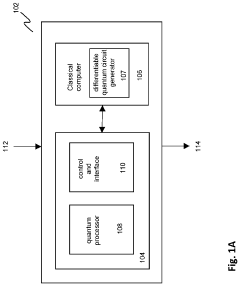
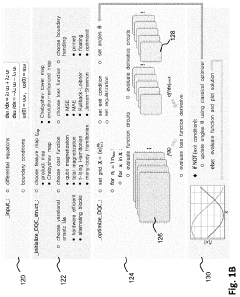
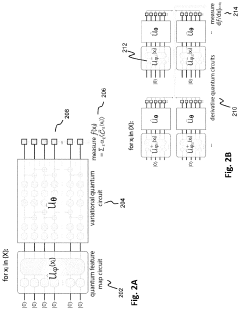
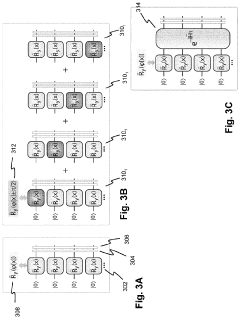
Solving a set of (NON)linear differential equations using a hybrid data processing system comprising a classical computer system and a quantum computer system
PatentPendingUS20230418896A1
Innovation
- A quantum-classical hybrid system that uses differentiable quantum circuits to encode and solve differential equations, allowing for analytical derivatives and efficient encoding of solutions, compatible with near-term quantum hardware, and extensible to fault-tolerant systems, by employing quantum feature maps and variational circuits for optimization.
Quantum computer with improved quantum optimization by exploiting marginal data
PatentWO2020037253A1
Innovation
- A quantum optimization method that estimates and transforms Hamiltonian and quantum states on a classical computer to reduce expectation values, using techniques such as marginal optimization and fermionic transformations, effectively increasing circuit depth without adding actual quantum gates, thereby improving the expressibility and coherence of quantum states.


Quantum Error Correction in QFT Computations
Quantum Error Correction (QEC) plays a crucial role in the application of Quantum Field Theory (QFT) computations within quantum computing systems. As quantum systems are inherently susceptible to noise and decoherence, implementing effective error correction techniques is essential for maintaining the integrity and reliability of QFT calculations.
One of the primary challenges in QFT computations is the preservation of quantum coherence over extended periods. Traditional QEC methods, such as the surface code, have been adapted to address the specific requirements of QFT simulations. These adaptations focus on protecting the quantum states that represent field configurations and their associated observables.
Recent advancements in QEC for QFT computations include the development of topological quantum codes tailored for lattice gauge theories. These codes exploit the inherent symmetries of gauge theories to provide more efficient error correction, reducing the overhead typically associated with QEC protocols. This approach has shown promising results in maintaining the accuracy of QFT simulations for longer durations.
Another significant development is the integration of continuous-variable QEC techniques into QFT computations. This approach is particularly relevant for simulating bosonic field theories, where the quantum states are represented in infinite-dimensional Hilbert spaces. Continuous-variable QEC allows for the protection of these states against both discrete and continuous errors, enhancing the fidelity of QFT simulations.
The implementation of fault-tolerant logical operations specific to QFT algorithms has also been a focus of recent research. These operations are designed to maintain the error-corrected state throughout the entire computation, ensuring that errors do not propagate and accumulate during complex QFT calculations. This approach has led to improved stability in simulations of high-energy physics phenomena and quantum many-body systems.
Researchers have also explored the use of machine learning techniques to optimize QEC protocols for QFT computations. By employing neural networks to predict and correct errors in real-time, these adaptive QEC schemes can significantly reduce the computational overhead associated with traditional error correction methods. This approach shows promise in enabling more complex and longer-duration QFT simulations on quantum hardware.
As quantum computing hardware continues to advance, the integration of QEC into QFT computations is expected to become more seamless and efficient. This progress will likely lead to more accurate simulations of quantum field theories, potentially unlocking new insights into fundamental physics and enabling the exploration of previously inaccessible regimes in high-energy physics and cosmology.
One of the primary challenges in QFT computations is the preservation of quantum coherence over extended periods. Traditional QEC methods, such as the surface code, have been adapted to address the specific requirements of QFT simulations. These adaptations focus on protecting the quantum states that represent field configurations and their associated observables.
Recent advancements in QEC for QFT computations include the development of topological quantum codes tailored for lattice gauge theories. These codes exploit the inherent symmetries of gauge theories to provide more efficient error correction, reducing the overhead typically associated with QEC protocols. This approach has shown promising results in maintaining the accuracy of QFT simulations for longer durations.
Another significant development is the integration of continuous-variable QEC techniques into QFT computations. This approach is particularly relevant for simulating bosonic field theories, where the quantum states are represented in infinite-dimensional Hilbert spaces. Continuous-variable QEC allows for the protection of these states against both discrete and continuous errors, enhancing the fidelity of QFT simulations.
The implementation of fault-tolerant logical operations specific to QFT algorithms has also been a focus of recent research. These operations are designed to maintain the error-corrected state throughout the entire computation, ensuring that errors do not propagate and accumulate during complex QFT calculations. This approach has led to improved stability in simulations of high-energy physics phenomena and quantum many-body systems.
Researchers have also explored the use of machine learning techniques to optimize QEC protocols for QFT computations. By employing neural networks to predict and correct errors in real-time, these adaptive QEC schemes can significantly reduce the computational overhead associated with traditional error correction methods. This approach shows promise in enabling more complex and longer-duration QFT simulations on quantum hardware.
As quantum computing hardware continues to advance, the integration of QEC into QFT computations is expected to become more seamless and efficient. This progress will likely lead to more accurate simulations of quantum field theories, potentially unlocking new insights into fundamental physics and enabling the exploration of previously inaccessible regimes in high-energy physics and cosmology.
Ethical Implications of Advanced Quantum Simulations
The rapid advancement of quantum computing technology and its potential applications in quantum field theory simulations raise significant ethical concerns that demand careful consideration. As quantum simulations become increasingly sophisticated, they may enable unprecedented insights into fundamental physical processes, potentially altering our understanding of the universe and our place within it. This newfound knowledge could have far-reaching implications for society, philosophy, and human identity.
One primary ethical concern is the potential misuse of advanced quantum simulations for destructive purposes. The ability to model complex quantum systems with high precision could lead to the development of more powerful weapons or other technologies that pose existential risks to humanity. Ensuring that such capabilities are used responsibly and for the benefit of society will require robust international cooperation and governance frameworks.
Privacy and security issues also come to the forefront as quantum simulations become more powerful. The ability to simulate and predict complex quantum systems may have implications for cryptography and data protection, potentially compromising existing security measures. Balancing the benefits of advanced simulations with the need to protect individual privacy and national security will be a critical challenge for policymakers and technologists alike.
The potential for quantum simulations to revolutionize drug discovery and materials science raises questions about equitable access to these technologies. If advanced quantum simulations lead to breakthrough treatments or materials, ensuring fair distribution and preventing the exacerbation of global health and economic disparities will be crucial ethical considerations.
Furthermore, as quantum simulations push the boundaries of our understanding of reality, they may challenge long-held philosophical and religious beliefs. The ability to simulate the early universe or complex biological systems could spark debates about the nature of consciousness, free will, and the origins of life. Navigating these profound questions while respecting diverse cultural and religious perspectives will require thoughtful dialogue and interdisciplinary collaboration.
The environmental impact of large-scale quantum computing infrastructure needed for advanced simulations is another ethical concern. As these systems become more powerful and energy-intensive, balancing scientific progress with environmental sustainability will be essential. Developing energy-efficient quantum technologies and considering their long-term ecological footprint should be prioritized in research and development efforts.
One primary ethical concern is the potential misuse of advanced quantum simulations for destructive purposes. The ability to model complex quantum systems with high precision could lead to the development of more powerful weapons or other technologies that pose existential risks to humanity. Ensuring that such capabilities are used responsibly and for the benefit of society will require robust international cooperation and governance frameworks.
Privacy and security issues also come to the forefront as quantum simulations become more powerful. The ability to simulate and predict complex quantum systems may have implications for cryptography and data protection, potentially compromising existing security measures. Balancing the benefits of advanced simulations with the need to protect individual privacy and national security will be a critical challenge for policymakers and technologists alike.
The potential for quantum simulations to revolutionize drug discovery and materials science raises questions about equitable access to these technologies. If advanced quantum simulations lead to breakthrough treatments or materials, ensuring fair distribution and preventing the exacerbation of global health and economic disparities will be crucial ethical considerations.
Furthermore, as quantum simulations push the boundaries of our understanding of reality, they may challenge long-held philosophical and religious beliefs. The ability to simulate the early universe or complex biological systems could spark debates about the nature of consciousness, free will, and the origins of life. Navigating these profound questions while respecting diverse cultural and religious perspectives will require thoughtful dialogue and interdisciplinary collaboration.
The environmental impact of large-scale quantum computing infrastructure needed for advanced simulations is another ethical concern. As these systems become more powerful and energy-intensive, balancing scientific progress with environmental sustainability will be essential. Developing energy-efficient quantum technologies and considering their long-term ecological footprint should be prioritized in research and development efforts.
Unlock deeper insights with PatSnap Eureka Quick Research — get a full tech report to explore trends and direct your research. Try now!
Generate Your Research Report Instantly with AI Agent
Supercharge your innovation with PatSnap Eureka AI Agent Platform!