Quantum Computing's Role in Geophysical Data Analysis
JUL 17, 20259 MIN READ
Generate Your Research Report Instantly with AI Agent
Patsnap Eureka helps you evaluate technical feasibility & market potential.
Quantum Computing in Geophysics: Background and Objectives
Quantum computing has emerged as a revolutionary technology with the potential to transform various scientific fields, including geophysics. The intersection of quantum computing and geophysical data analysis represents a frontier of innovation, promising to address complex challenges in Earth sciences that have long eluded classical computing methods.
The development of quantum computing in geophysics is rooted in the need for more powerful computational tools to process and analyze the vast amounts of data generated by modern geophysical instruments. Traditional computing methods often struggle with the scale and complexity of geophysical problems, such as seismic imaging, electromagnetic modeling, and climate simulations. Quantum computing offers a paradigm shift in computational capabilities, leveraging quantum mechanical phenomena like superposition and entanglement to perform calculations that are intractable for classical computers.
The primary objective of integrating quantum computing into geophysical data analysis is to enhance our understanding of Earth's systems and processes. This includes improving the accuracy and resolution of subsurface imaging, optimizing resource exploration techniques, and advancing climate modeling and prediction. By harnessing the power of quantum algorithms, geophysicists aim to unlock new insights from existing data sets and tackle previously unsolvable problems.
One of the key areas where quantum computing shows promise is in seismic data processing. The oil and gas industry, in particular, generates enormous volumes of seismic data that require intensive computational resources to analyze. Quantum algorithms have the potential to accelerate seismic inversion processes, leading to more accurate subsurface models and improved hydrocarbon reservoir characterization.
Another significant application lies in the field of climate science. Quantum computing could enable more sophisticated climate models that incorporate a wider range of variables and interactions, potentially leading to more accurate long-term climate predictions. This has profound implications for understanding and mitigating the impacts of climate change.
The evolution of quantum computing in geophysics is closely tied to advancements in quantum hardware and algorithm development. As quantum systems become more stable and scalable, their applicability to real-world geophysical problems will expand. The goal is to reach a point where quantum computers can reliably outperform classical supercomputers in solving specific geophysical tasks, a milestone known as quantum advantage.
Looking ahead, the integration of quantum computing into geophysical research is expected to drive innovation in both fields. It will likely lead to the development of new quantum algorithms tailored to geophysical problems, as well as novel geophysical sensing technologies that leverage quantum principles. This synergy between quantum physics and Earth sciences holds the promise of deepening our understanding of our planet and revolutionizing how we study and interact with the Earth system.
The development of quantum computing in geophysics is rooted in the need for more powerful computational tools to process and analyze the vast amounts of data generated by modern geophysical instruments. Traditional computing methods often struggle with the scale and complexity of geophysical problems, such as seismic imaging, electromagnetic modeling, and climate simulations. Quantum computing offers a paradigm shift in computational capabilities, leveraging quantum mechanical phenomena like superposition and entanglement to perform calculations that are intractable for classical computers.
The primary objective of integrating quantum computing into geophysical data analysis is to enhance our understanding of Earth's systems and processes. This includes improving the accuracy and resolution of subsurface imaging, optimizing resource exploration techniques, and advancing climate modeling and prediction. By harnessing the power of quantum algorithms, geophysicists aim to unlock new insights from existing data sets and tackle previously unsolvable problems.
One of the key areas where quantum computing shows promise is in seismic data processing. The oil and gas industry, in particular, generates enormous volumes of seismic data that require intensive computational resources to analyze. Quantum algorithms have the potential to accelerate seismic inversion processes, leading to more accurate subsurface models and improved hydrocarbon reservoir characterization.
Another significant application lies in the field of climate science. Quantum computing could enable more sophisticated climate models that incorporate a wider range of variables and interactions, potentially leading to more accurate long-term climate predictions. This has profound implications for understanding and mitigating the impacts of climate change.
The evolution of quantum computing in geophysics is closely tied to advancements in quantum hardware and algorithm development. As quantum systems become more stable and scalable, their applicability to real-world geophysical problems will expand. The goal is to reach a point where quantum computers can reliably outperform classical supercomputers in solving specific geophysical tasks, a milestone known as quantum advantage.
Looking ahead, the integration of quantum computing into geophysical research is expected to drive innovation in both fields. It will likely lead to the development of new quantum algorithms tailored to geophysical problems, as well as novel geophysical sensing technologies that leverage quantum principles. This synergy between quantum physics and Earth sciences holds the promise of deepening our understanding of our planet and revolutionizing how we study and interact with the Earth system.
Market Demand for Advanced Geophysical Data Analysis
The geophysical data analysis market is experiencing a significant surge in demand for advanced solutions, driven by the increasing complexity and volume of data in the oil and gas, mining, and environmental sectors. As exploration activities expand into more challenging terrains and deeper subsurface regions, traditional data analysis methods are struggling to keep pace with the intricate datasets generated by modern sensing technologies.
The oil and gas industry, in particular, is a major driver of this demand. With the depletion of easily accessible reserves, companies are investing heavily in advanced geophysical data analysis to identify and characterize new prospects in complex geological settings. This has led to a growing need for high-performance computing solutions capable of processing and interpreting massive seismic datasets, which often exceed petabytes in size.
Similarly, the mining sector is increasingly relying on sophisticated geophysical data analysis to improve exploration success rates and optimize resource extraction. As mineral deposits become more difficult to locate and assess, companies are turning to advanced analytical tools to interpret complex geological structures and identify potential ore bodies with greater accuracy.
Environmental monitoring and natural hazard assessment represent another significant market segment driving demand for advanced geophysical data analysis. Climate change-related challenges, such as predicting and mitigating the impacts of extreme weather events, require the processing of vast amounts of Earth observation data. This has created a need for more powerful analytical capabilities to model and forecast environmental phenomena with higher precision.
The emergence of quantum computing as a potential game-changer in geophysical data analysis has sparked considerable interest across these industries. Quantum algorithms offer the promise of exponentially faster processing times for certain types of problems, such as optimization and simulation, which are central to many geophysical applications. This has led to increased investment in quantum computing research and development by major energy and resource companies, as well as government agencies responsible for environmental monitoring and disaster preparedness.
Market analysts project substantial growth in the advanced geophysical data analysis sector over the next decade. The global market for geophysical services, which includes data acquisition and analysis, is expected to grow significantly, with a considerable portion attributed to advanced analytical solutions. This growth is fueled not only by traditional sectors but also by emerging applications in renewable energy development, such as geothermal exploration and offshore wind farm site assessment.
As the demand for more sophisticated geophysical data analysis tools continues to rise, there is a parallel increase in the need for skilled professionals capable of developing and operating these advanced systems. This has led to a growing emphasis on interdisciplinary education and training programs that combine geosciences with data science and quantum computing, further underscoring the market's recognition of the transformative potential of quantum technologies in geophysical applications.
The oil and gas industry, in particular, is a major driver of this demand. With the depletion of easily accessible reserves, companies are investing heavily in advanced geophysical data analysis to identify and characterize new prospects in complex geological settings. This has led to a growing need for high-performance computing solutions capable of processing and interpreting massive seismic datasets, which often exceed petabytes in size.
Similarly, the mining sector is increasingly relying on sophisticated geophysical data analysis to improve exploration success rates and optimize resource extraction. As mineral deposits become more difficult to locate and assess, companies are turning to advanced analytical tools to interpret complex geological structures and identify potential ore bodies with greater accuracy.
Environmental monitoring and natural hazard assessment represent another significant market segment driving demand for advanced geophysical data analysis. Climate change-related challenges, such as predicting and mitigating the impacts of extreme weather events, require the processing of vast amounts of Earth observation data. This has created a need for more powerful analytical capabilities to model and forecast environmental phenomena with higher precision.
The emergence of quantum computing as a potential game-changer in geophysical data analysis has sparked considerable interest across these industries. Quantum algorithms offer the promise of exponentially faster processing times for certain types of problems, such as optimization and simulation, which are central to many geophysical applications. This has led to increased investment in quantum computing research and development by major energy and resource companies, as well as government agencies responsible for environmental monitoring and disaster preparedness.
Market analysts project substantial growth in the advanced geophysical data analysis sector over the next decade. The global market for geophysical services, which includes data acquisition and analysis, is expected to grow significantly, with a considerable portion attributed to advanced analytical solutions. This growth is fueled not only by traditional sectors but also by emerging applications in renewable energy development, such as geothermal exploration and offshore wind farm site assessment.
As the demand for more sophisticated geophysical data analysis tools continues to rise, there is a parallel increase in the need for skilled professionals capable of developing and operating these advanced systems. This has led to a growing emphasis on interdisciplinary education and training programs that combine geosciences with data science and quantum computing, further underscoring the market's recognition of the transformative potential of quantum technologies in geophysical applications.
Current Challenges in Quantum-Enhanced Geophysical Analysis
The integration of quantum computing into geophysical data analysis presents several significant challenges that researchers and industry professionals are currently grappling with. One of the primary obstacles is the limited availability of quantum hardware with sufficient qubit capacity to handle complex geophysical datasets. Current quantum systems often lack the stability and coherence time required for processing large-scale geological information, limiting their practical applications in the field.
Another major challenge lies in developing quantum algorithms specifically tailored for geophysical problems. While quantum algorithms have shown promise in certain computational tasks, adapting them to the unique requirements of geophysical data analysis remains a complex undertaking. This includes addressing issues such as noise reduction, error correction, and the efficient mapping of geophysical problems onto quantum circuits.
The interpretation of quantum-enhanced results in a geophysical context also poses significant difficulties. Geoscientists and data analysts must bridge the gap between quantum computations and classical geological interpretations, requiring new frameworks for data visualization and analysis. This challenge is compounded by the probabilistic nature of quantum measurements, which introduces additional complexity in result interpretation and validation.
Data preparation and input/output operations present another hurdle in quantum-enhanced geophysical analysis. Converting classical geophysical data into quantum states and vice versa is a non-trivial process that can introduce errors and inefficiencies. Developing robust methods for data encoding and decoding that preserve the integrity of geophysical information throughout the quantum computation process is crucial.
The integration of quantum computing with existing classical geophysical workflows and software systems is also a significant challenge. Many organizations have invested heavily in classical computing infrastructure and expertise, making the transition to quantum-enhanced methods a complex and potentially disruptive process. Developing hybrid classical-quantum approaches that can leverage the strengths of both paradigms is an active area of research and development.
Lastly, the shortage of skilled professionals with expertise in both quantum computing and geophysics presents a human resource challenge. Training and educating a new generation of geophysicists with quantum computing skills, as well as helping quantum physicists understand geophysical applications, is essential for advancing the field. This interdisciplinary gap must be bridged to fully realize the potential of quantum computing in geophysical data analysis.
Another major challenge lies in developing quantum algorithms specifically tailored for geophysical problems. While quantum algorithms have shown promise in certain computational tasks, adapting them to the unique requirements of geophysical data analysis remains a complex undertaking. This includes addressing issues such as noise reduction, error correction, and the efficient mapping of geophysical problems onto quantum circuits.
The interpretation of quantum-enhanced results in a geophysical context also poses significant difficulties. Geoscientists and data analysts must bridge the gap between quantum computations and classical geological interpretations, requiring new frameworks for data visualization and analysis. This challenge is compounded by the probabilistic nature of quantum measurements, which introduces additional complexity in result interpretation and validation.
Data preparation and input/output operations present another hurdle in quantum-enhanced geophysical analysis. Converting classical geophysical data into quantum states and vice versa is a non-trivial process that can introduce errors and inefficiencies. Developing robust methods for data encoding and decoding that preserve the integrity of geophysical information throughout the quantum computation process is crucial.
The integration of quantum computing with existing classical geophysical workflows and software systems is also a significant challenge. Many organizations have invested heavily in classical computing infrastructure and expertise, making the transition to quantum-enhanced methods a complex and potentially disruptive process. Developing hybrid classical-quantum approaches that can leverage the strengths of both paradigms is an active area of research and development.
Lastly, the shortage of skilled professionals with expertise in both quantum computing and geophysics presents a human resource challenge. Training and educating a new generation of geophysicists with quantum computing skills, as well as helping quantum physicists understand geophysical applications, is essential for advancing the field. This interdisciplinary gap must be bridged to fully realize the potential of quantum computing in geophysical data analysis.
Existing Quantum Solutions for Geophysical Data Processing
01 Quantum Circuit Design and Optimization
This area focuses on developing and optimizing quantum circuits for various applications. It involves creating efficient quantum gate sequences, reducing circuit depth, and improving qubit connectivity. Techniques include circuit compilation, gate decomposition, and noise mitigation strategies to enhance the performance of quantum algorithms on real quantum hardware.- Quantum Computing Architectures: This category focuses on the design and implementation of quantum computing systems. It includes innovations in qubit arrangements, circuit layouts, and overall system architectures to improve quantum computation efficiency and scalability.
- Error Correction and Fault Tolerance: This area addresses the challenges of maintaining quantum coherence and mitigating errors in quantum systems. It encompasses techniques for error detection, correction, and fault-tolerant quantum computation to enhance the reliability of quantum operations.
- Quantum Algorithms and Applications: This category covers the development of quantum algorithms for various applications, including optimization, machine learning, cryptography, and simulation. It focuses on leveraging quantum properties to solve complex problems more efficiently than classical computers.
- Quantum-Classical Hybrid Systems: This area explores the integration of quantum and classical computing systems. It includes research on interfaces between quantum and classical components, hybrid algorithms, and optimizing the allocation of tasks between quantum and classical processors.
- Quantum Hardware and Control Systems: This category focuses on the physical implementation of quantum computing hardware, including qubit technologies, control systems, and readout mechanisms. It encompasses advancements in superconducting circuits, trapped ions, photonics, and other quantum hardware platforms.
02 Error Correction and Fault Tolerance
Error correction and fault tolerance are crucial for building reliable quantum computers. This field involves developing quantum error correction codes, implementing fault-tolerant quantum gates, and designing architectures that can withstand noise and decoherence. Techniques include surface codes, topological quantum computing, and magic state distillation.Expand Specific Solutions03 Quantum-Classical Hybrid Algorithms
Hybrid algorithms combine classical and quantum computing to solve complex problems. This approach leverages the strengths of both paradigms, using quantum processors for specific subroutines while classical computers handle the overall algorithm control and data processing. Examples include variational quantum eigensolvers and quantum approximate optimization algorithms.Expand Specific Solutions04 Quantum Machine Learning
Quantum machine learning explores the intersection of quantum computing and machine learning. It involves developing quantum algorithms for tasks such as classification, clustering, and dimensionality reduction. This field aims to achieve quantum speedups for machine learning problems and create new quantum-inspired classical algorithms.Expand Specific Solutions05 Quantum Hardware Architectures
This area focuses on designing and implementing quantum computing hardware. It includes research on various qubit technologies such as superconducting qubits, trapped ions, and topological qubits. The field also covers quantum memory, quantum interconnects, and scalable control systems for large-scale quantum processors.Expand Specific Solutions
Key Players in Quantum Computing and Geophysical Research
The quantum computing landscape for geophysical data analysis is in its early stages, with significant potential for growth. The market is characterized by a mix of established tech giants, specialized quantum computing startups, and academic institutions. Companies like IBM, Google, and Intel are leveraging their resources to develop quantum hardware and software solutions. Startups such as Zapata Computing and 1QB Information Technologies are focusing on quantum algorithms and applications for geophysical data processing. Academic institutions like the University of Chicago and Caltech are contributing fundamental research. The technology is still evolving, with varying levels of qubit performance and scalability among different approaches. As quantum systems become more powerful and accessible, their impact on geophysical data analysis is expected to grow substantially in the coming years.
Amazon Technologies, Inc.
Technical Solution: Amazon's quantum computing efforts for geophysical data analysis are primarily channeled through Amazon Braket, their quantum computing service that provides access to various quantum hardware and simulators[10]. For geophysical applications, Amazon is focusing on developing hybrid quantum-classical algorithms that can leverage both quantum and classical resources for efficient data processing. Their approach includes exploring variational quantum algorithms for optimizing seismic data inversion problems and quantum machine learning techniques for improved geological feature recognition[11]. Amazon's quantum random circuit sampling benchmark demonstrates their progress in quantum hardware capabilities, which is crucial for handling complex geophysical computations[12].
Strengths: Cloud-based quantum computing access, integration with classical computing resources, diverse quantum hardware options. Weaknesses: Reliance on third-party quantum hardware, less control over hardware development, limited public demonstrations of geophysical-specific applications.
Google LLC
Technical Solution: Google's approach to quantum computing in geophysical data analysis leverages their Sycamore quantum processor, which achieved quantum supremacy in 2019[4]. For geophysical applications, Google is developing quantum algorithms that can potentially revolutionize seismic data processing and interpretation. Their focus includes quantum machine learning techniques for enhanced feature extraction from complex geological datasets and quantum optimization algorithms for improved reservoir modeling[5]. Google's quantum approximate optimization algorithm (QAOA) shows promise in solving combinatorial optimization problems relevant to geophysical exploration[6]. Additionally, Google is exploring quantum error correction techniques to improve the reliability of quantum computations in noisy environments, which is crucial for real-world geophysical applications.
Strengths: Cutting-edge quantum hardware, strong focus on quantum supremacy, extensive AI and machine learning expertise. Weaknesses: Limited commercial availability of quantum systems, ongoing challenges in error correction and qubit stability.
Breakthrough Quantum Techniques in Geophysical Analysis
Techniques for bidirectional transduction of quantum level signals between optical and microwave frequencies using a common acoustic intermediary
PatentPendingUS20240317575A1
Innovation
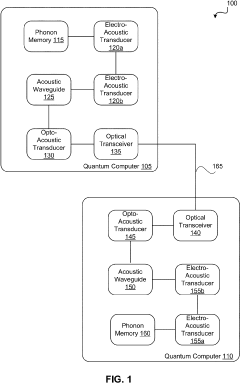
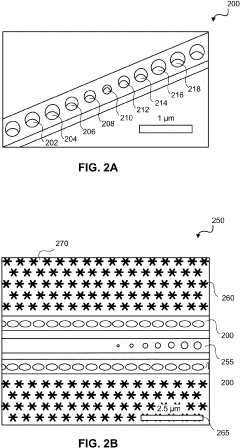
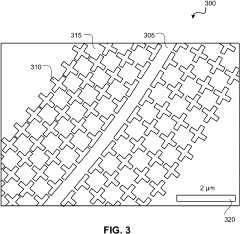
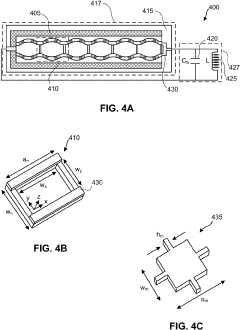
- The use of suspended crystalline structures at the nanometer scale for transducing quantum signals between optical, microwave, and acoustic forms, employing opto-acoustic and electro-acoustic transducers to convert signals using a common acoustic intermediary, and storing qubits in phonon memory with extended coherence time.


Techniques for transduction and storage of quantum level signals
PatentPendingUS20230227305A1
Innovation
- The development of systems utilizing suspended crystalline structures and transducers that convert quantum signals between electrical, acoustic, and optical forms using acoustic bandgap resonators, allowing for the storage of qubit signals in phonon memory with extended coherence time.
Environmental Impact of Quantum-Enhanced Geophysical Surveys
The integration of quantum computing in geophysical data analysis has the potential to significantly enhance the efficiency and accuracy of environmental surveys. However, this technological advancement also raises important questions about its environmental impact. Quantum-enhanced geophysical surveys could lead to more precise mapping of subsurface resources, potentially reducing the need for exploratory drilling and minimizing habitat disruption. This increased accuracy may result in fewer false positives, thereby decreasing unnecessary excavation and associated environmental damage.
Moreover, quantum computing's ability to process vast amounts of data quickly could enable real-time environmental monitoring during geophysical surveys. This capability may allow for immediate adjustments to survey parameters, reducing the overall environmental footprint of exploration activities. The improved data resolution could also contribute to more effective environmental impact assessments, leading to better-informed decision-making in resource extraction and land use planning.
However, the environmental benefits of quantum-enhanced surveys must be weighed against potential drawbacks. The increased efficiency and accuracy of these surveys could potentially accelerate resource extraction activities, leading to more rapid exploitation of natural resources. This acceleration might exacerbate environmental pressures in sensitive ecosystems if not carefully managed.
Additionally, the energy requirements of quantum computers themselves must be considered. While quantum computing promises greater efficiency in data processing, the current generation of quantum computers requires significant energy for operation and cooling. As these systems scale up to handle larger geophysical datasets, their energy consumption could become a notable environmental concern.
The development of quantum-enhanced geophysical survey technologies may also lead to the obsolescence of current equipment, potentially resulting in electronic waste. This issue underscores the importance of sustainable design and recycling practices in the quantum computing industry to mitigate environmental impacts.
In conclusion, while quantum-enhanced geophysical surveys offer promising environmental benefits through increased precision and efficiency, careful consideration must be given to their potential negative impacts. Balancing the advantages of this technology with responsible environmental stewardship will be crucial as quantum computing continues to evolve and find applications in geophysical exploration and environmental monitoring.
Moreover, quantum computing's ability to process vast amounts of data quickly could enable real-time environmental monitoring during geophysical surveys. This capability may allow for immediate adjustments to survey parameters, reducing the overall environmental footprint of exploration activities. The improved data resolution could also contribute to more effective environmental impact assessments, leading to better-informed decision-making in resource extraction and land use planning.
However, the environmental benefits of quantum-enhanced surveys must be weighed against potential drawbacks. The increased efficiency and accuracy of these surveys could potentially accelerate resource extraction activities, leading to more rapid exploitation of natural resources. This acceleration might exacerbate environmental pressures in sensitive ecosystems if not carefully managed.
Additionally, the energy requirements of quantum computers themselves must be considered. While quantum computing promises greater efficiency in data processing, the current generation of quantum computers requires significant energy for operation and cooling. As these systems scale up to handle larger geophysical datasets, their energy consumption could become a notable environmental concern.
The development of quantum-enhanced geophysical survey technologies may also lead to the obsolescence of current equipment, potentially resulting in electronic waste. This issue underscores the importance of sustainable design and recycling practices in the quantum computing industry to mitigate environmental impacts.
In conclusion, while quantum-enhanced geophysical surveys offer promising environmental benefits through increased precision and efficiency, careful consideration must be given to their potential negative impacts. Balancing the advantages of this technology with responsible environmental stewardship will be crucial as quantum computing continues to evolve and find applications in geophysical exploration and environmental monitoring.
Quantum Computing's Potential in Climate Modeling and Prediction
Quantum computing's potential in climate modeling and prediction represents a significant leap forward in our ability to understand and forecast complex environmental systems. The immense computational power of quantum computers offers the possibility of processing vast amounts of climate data with unprecedented speed and accuracy. This technology could revolutionize our approach to simulating Earth's climate systems, enabling more detailed and comprehensive models that account for a wider range of variables and interactions.
One of the primary advantages of quantum computing in climate modeling is its ability to handle the inherent complexity and uncertainty of climate systems. Traditional computing methods often struggle with the multitude of variables and non-linear interactions present in climate models. Quantum algorithms, however, can potentially process these complex relationships more efficiently, leading to more accurate predictions of climate patterns and extreme weather events.
The application of quantum computing to climate prediction could significantly improve our ability to forecast long-term climate trends. By processing larger datasets and incorporating more variables, quantum-powered models could provide more reliable projections of future climate scenarios. This enhanced predictive capability would be invaluable for policymakers and researchers working to mitigate the impacts of climate change and develop effective adaptation strategies.
Furthermore, quantum computing could enable the development of more sophisticated Earth system models that integrate atmospheric, oceanic, and terrestrial processes. These comprehensive models could offer a more holistic view of the Earth's climate, improving our understanding of feedback loops and tipping points within the global climate system. Such advancements could lead to breakthroughs in identifying early warning signs of significant climate shifts and informing targeted interventions.
The potential of quantum computing in climate modeling extends beyond mere improvements in processing power. Quantum algorithms could potentially uncover new patterns and relationships within climate data that are not easily detectable using classical computing methods. This could lead to novel insights into climate dynamics and the discovery of previously unknown factors influencing global climate patterns.
However, it is important to note that the application of quantum computing to climate modeling is still in its early stages. Significant challenges remain in developing quantum algorithms specifically tailored for climate science and in scaling quantum systems to handle the enormous datasets involved in global climate models. Despite these challenges, the potential benefits of quantum computing in this field make it an area of intense research and development, with the promise of transforming our ability to understand and predict Earth's complex climate systems.
One of the primary advantages of quantum computing in climate modeling is its ability to handle the inherent complexity and uncertainty of climate systems. Traditional computing methods often struggle with the multitude of variables and non-linear interactions present in climate models. Quantum algorithms, however, can potentially process these complex relationships more efficiently, leading to more accurate predictions of climate patterns and extreme weather events.
The application of quantum computing to climate prediction could significantly improve our ability to forecast long-term climate trends. By processing larger datasets and incorporating more variables, quantum-powered models could provide more reliable projections of future climate scenarios. This enhanced predictive capability would be invaluable for policymakers and researchers working to mitigate the impacts of climate change and develop effective adaptation strategies.
Furthermore, quantum computing could enable the development of more sophisticated Earth system models that integrate atmospheric, oceanic, and terrestrial processes. These comprehensive models could offer a more holistic view of the Earth's climate, improving our understanding of feedback loops and tipping points within the global climate system. Such advancements could lead to breakthroughs in identifying early warning signs of significant climate shifts and informing targeted interventions.
The potential of quantum computing in climate modeling extends beyond mere improvements in processing power. Quantum algorithms could potentially uncover new patterns and relationships within climate data that are not easily detectable using classical computing methods. This could lead to novel insights into climate dynamics and the discovery of previously unknown factors influencing global climate patterns.
However, it is important to note that the application of quantum computing to climate modeling is still in its early stages. Significant challenges remain in developing quantum algorithms specifically tailored for climate science and in scaling quantum systems to handle the enormous datasets involved in global climate models. Despite these challenges, the potential benefits of quantum computing in this field make it an area of intense research and development, with the promise of transforming our ability to understand and predict Earth's complex climate systems.
Unlock deeper insights with Patsnap Eureka Quick Research — get a full tech report to explore trends and direct your research. Try now!
Generate Your Research Report Instantly with AI Agent
Supercharge your innovation with Patsnap Eureka AI Agent Platform!