Quantum Computing's Role in Innovative Sensor Networks
JUL 17, 20259 MIN READ
Generate Your Research Report Instantly with AI Agent
Patsnap Eureka helps you evaluate technical feasibility & market potential.
Quantum Computing and Sensor Networks: Background and Objectives
Quantum computing and sensor networks represent two cutting-edge technological domains that are increasingly converging to create innovative solutions for complex sensing and data processing challenges. The evolution of quantum computing has its roots in the early 20th century with the development of quantum mechanics, while sensor networks have emerged from advancements in miniaturization, wireless communication, and data analytics.
The field of quantum computing has progressed significantly since Richard Feynman's initial proposal in the 1980s. Over the past four decades, researchers have made substantial strides in developing quantum hardware, algorithms, and error correction techniques. Concurrently, sensor networks have evolved from simple data collection systems to sophisticated, interconnected platforms capable of real-time monitoring and decision-making across various applications.
The integration of quantum computing with sensor networks aims to address several key objectives. Firstly, it seeks to enhance the sensitivity and precision of sensor measurements by leveraging quantum phenomena such as superposition and entanglement. This could lead to unprecedented levels of accuracy in applications ranging from environmental monitoring to medical diagnostics.
Secondly, the combination aims to improve the efficiency of data processing and analysis within sensor networks. Quantum algorithms have the potential to dramatically accelerate complex computations, enabling real-time analysis of vast amounts of sensor data. This could revolutionize fields such as climate modeling, traffic management, and industrial process optimization.
Another critical objective is to bolster the security of sensor networks. Quantum key distribution and other quantum cryptographic techniques offer the promise of unbreakable encryption for sensor data transmission, addressing growing concerns about data privacy and security in interconnected systems.
Furthermore, the integration of quantum computing and sensor networks aims to enable new sensing modalities that were previously impossible or impractical. For instance, quantum sensors could detect minute changes in gravitational fields or magnetic fluctuations, opening up new avenues for geological exploration, navigation, and fundamental physics research.
As these technologies continue to advance, researchers and industry leaders are exploring ways to overcome current limitations, such as the need for extreme cooling in quantum systems and the challenges of scaling quantum processors. The ultimate goal is to develop practical, scalable quantum-enhanced sensor networks that can operate in real-world conditions, providing unprecedented capabilities across a wide range of applications.
The field of quantum computing has progressed significantly since Richard Feynman's initial proposal in the 1980s. Over the past four decades, researchers have made substantial strides in developing quantum hardware, algorithms, and error correction techniques. Concurrently, sensor networks have evolved from simple data collection systems to sophisticated, interconnected platforms capable of real-time monitoring and decision-making across various applications.
The integration of quantum computing with sensor networks aims to address several key objectives. Firstly, it seeks to enhance the sensitivity and precision of sensor measurements by leveraging quantum phenomena such as superposition and entanglement. This could lead to unprecedented levels of accuracy in applications ranging from environmental monitoring to medical diagnostics.
Secondly, the combination aims to improve the efficiency of data processing and analysis within sensor networks. Quantum algorithms have the potential to dramatically accelerate complex computations, enabling real-time analysis of vast amounts of sensor data. This could revolutionize fields such as climate modeling, traffic management, and industrial process optimization.
Another critical objective is to bolster the security of sensor networks. Quantum key distribution and other quantum cryptographic techniques offer the promise of unbreakable encryption for sensor data transmission, addressing growing concerns about data privacy and security in interconnected systems.
Furthermore, the integration of quantum computing and sensor networks aims to enable new sensing modalities that were previously impossible or impractical. For instance, quantum sensors could detect minute changes in gravitational fields or magnetic fluctuations, opening up new avenues for geological exploration, navigation, and fundamental physics research.
As these technologies continue to advance, researchers and industry leaders are exploring ways to overcome current limitations, such as the need for extreme cooling in quantum systems and the challenges of scaling quantum processors. The ultimate goal is to develop practical, scalable quantum-enhanced sensor networks that can operate in real-world conditions, providing unprecedented capabilities across a wide range of applications.
Market Demand Analysis for Quantum-Enhanced Sensor Networks
The market demand for quantum-enhanced sensor networks is experiencing significant growth, driven by the increasing need for high-precision sensing and measurement capabilities across various industries. As traditional sensor technologies approach their physical limits, quantum-based solutions offer unprecedented levels of sensitivity, accuracy, and efficiency, opening up new possibilities for data acquisition and analysis.
In the healthcare sector, quantum sensors are poised to revolutionize medical imaging and diagnostics. The enhanced sensitivity of quantum-based magnetic resonance imaging (MRI) systems allows for more detailed scans at lower magnetic field strengths, reducing costs and improving patient comfort. Additionally, quantum sensors enable the detection of minute changes in biological systems, potentially leading to earlier disease detection and more personalized treatment strategies.
The defense and security industry is another key driver of market demand for quantum-enhanced sensor networks. Quantum-based gravimeters and magnetometers offer superior capabilities in detecting underground structures, hidden objects, and submarine activities. These advancements have significant implications for border security, counter-terrorism efforts, and military operations, prompting increased investment from government agencies and defense contractors.
Environmental monitoring and climate research represent another growing market for quantum sensor networks. Quantum-enhanced gravity sensors can provide more accurate measurements of groundwater levels, ice sheet thickness, and geological structures, contributing to better climate models and natural resource management. The improved sensitivity of quantum sensors also enables more precise atmospheric gas detection, supporting efforts to monitor and mitigate greenhouse gas emissions.
In the telecommunications industry, quantum sensor networks are gaining traction for their potential to enhance the security and efficiency of communication systems. Quantum key distribution (QKD) systems, which rely on quantum sensors to detect individual photons, offer unparalleled security for data transmission. As cyber threats continue to evolve, the demand for quantum-secure communication solutions is expected to rise significantly.
The financial sector is exploring quantum sensing technologies for ultra-precise timekeeping and synchronization in high-frequency trading systems. Quantum clocks can provide more accurate timestamps for financial transactions, potentially reducing discrepancies and improving market fairness. This application, while still in its early stages, represents a promising niche market with substantial growth potential.
As quantum technologies mature and become more accessible, the market for quantum-enhanced sensor networks is expected to expand into new industries and applications. The convergence of quantum sensing with other emerging technologies, such as artificial intelligence and the Internet of Things, is likely to create novel use cases and drive further market growth. However, challenges such as high costs, technical complexity, and the need for specialized expertise may initially limit widespread adoption, particularly among smaller organizations.
In the healthcare sector, quantum sensors are poised to revolutionize medical imaging and diagnostics. The enhanced sensitivity of quantum-based magnetic resonance imaging (MRI) systems allows for more detailed scans at lower magnetic field strengths, reducing costs and improving patient comfort. Additionally, quantum sensors enable the detection of minute changes in biological systems, potentially leading to earlier disease detection and more personalized treatment strategies.
The defense and security industry is another key driver of market demand for quantum-enhanced sensor networks. Quantum-based gravimeters and magnetometers offer superior capabilities in detecting underground structures, hidden objects, and submarine activities. These advancements have significant implications for border security, counter-terrorism efforts, and military operations, prompting increased investment from government agencies and defense contractors.
Environmental monitoring and climate research represent another growing market for quantum sensor networks. Quantum-enhanced gravity sensors can provide more accurate measurements of groundwater levels, ice sheet thickness, and geological structures, contributing to better climate models and natural resource management. The improved sensitivity of quantum sensors also enables more precise atmospheric gas detection, supporting efforts to monitor and mitigate greenhouse gas emissions.
In the telecommunications industry, quantum sensor networks are gaining traction for their potential to enhance the security and efficiency of communication systems. Quantum key distribution (QKD) systems, which rely on quantum sensors to detect individual photons, offer unparalleled security for data transmission. As cyber threats continue to evolve, the demand for quantum-secure communication solutions is expected to rise significantly.
The financial sector is exploring quantum sensing technologies for ultra-precise timekeeping and synchronization in high-frequency trading systems. Quantum clocks can provide more accurate timestamps for financial transactions, potentially reducing discrepancies and improving market fairness. This application, while still in its early stages, represents a promising niche market with substantial growth potential.
As quantum technologies mature and become more accessible, the market for quantum-enhanced sensor networks is expected to expand into new industries and applications. The convergence of quantum sensing with other emerging technologies, such as artificial intelligence and the Internet of Things, is likely to create novel use cases and drive further market growth. However, challenges such as high costs, technical complexity, and the need for specialized expertise may initially limit widespread adoption, particularly among smaller organizations.
Current Challenges in Quantum Computing for Sensor Applications
Despite the promising potential of quantum computing in sensor networks, several significant challenges currently hinder its widespread application in this domain. One of the primary obstacles is the inherent fragility of quantum states. Quantum systems are extremely sensitive to environmental disturbances, such as electromagnetic interference, temperature fluctuations, and mechanical vibrations. This sensitivity, while beneficial for sensing applications, also makes it difficult to maintain quantum coherence for extended periods, limiting the operational time and reliability of quantum sensors.
Another major challenge lies in the scalability of quantum systems. While small-scale quantum sensors have shown remarkable precision, scaling these systems to create large, interconnected sensor networks presents significant technical hurdles. Issues such as entanglement distribution over long distances and maintaining quantum coherence across multiple nodes in a network remain formidable challenges that require innovative solutions.
The integration of quantum sensors with classical computing infrastructure also poses substantial difficulties. Developing efficient interfaces between quantum and classical systems is crucial for data processing and communication in sensor networks. However, the fundamental differences in how quantum and classical information is processed and transmitted make this integration a complex task, requiring novel approaches in both hardware and software design.
Furthermore, the current state of quantum error correction techniques is not yet sufficiently advanced to fully mitigate the effects of decoherence and noise in practical sensor applications. While progress has been made in developing quantum error correction codes, implementing these in real-world sensor networks remains a significant challenge, particularly in terms of the overhead required and the impact on system performance.
The development of robust and reliable quantum memory is another critical challenge. Quantum sensors often require the ability to store quantum states for extended periods, which is essential for many sensing applications. However, current quantum memory technologies are limited in their storage times and fidelity, restricting the types of sensing tasks that can be effectively performed.
Lastly, the high cost and complexity of quantum systems present a significant barrier to their widespread adoption in sensor networks. Many quantum computing technologies require extremely low temperatures and highly controlled environments, making them impractical for deployment in diverse real-world settings. Developing more cost-effective and user-friendly quantum sensing technologies that can operate under less stringent conditions is crucial for their integration into practical sensor network applications.
Another major challenge lies in the scalability of quantum systems. While small-scale quantum sensors have shown remarkable precision, scaling these systems to create large, interconnected sensor networks presents significant technical hurdles. Issues such as entanglement distribution over long distances and maintaining quantum coherence across multiple nodes in a network remain formidable challenges that require innovative solutions.
The integration of quantum sensors with classical computing infrastructure also poses substantial difficulties. Developing efficient interfaces between quantum and classical systems is crucial for data processing and communication in sensor networks. However, the fundamental differences in how quantum and classical information is processed and transmitted make this integration a complex task, requiring novel approaches in both hardware and software design.
Furthermore, the current state of quantum error correction techniques is not yet sufficiently advanced to fully mitigate the effects of decoherence and noise in practical sensor applications. While progress has been made in developing quantum error correction codes, implementing these in real-world sensor networks remains a significant challenge, particularly in terms of the overhead required and the impact on system performance.
The development of robust and reliable quantum memory is another critical challenge. Quantum sensors often require the ability to store quantum states for extended periods, which is essential for many sensing applications. However, current quantum memory technologies are limited in their storage times and fidelity, restricting the types of sensing tasks that can be effectively performed.
Lastly, the high cost and complexity of quantum systems present a significant barrier to their widespread adoption in sensor networks. Many quantum computing technologies require extremely low temperatures and highly controlled environments, making them impractical for deployment in diverse real-world settings. Developing more cost-effective and user-friendly quantum sensing technologies that can operate under less stringent conditions is crucial for their integration into practical sensor network applications.
Existing Quantum Solutions for Sensor Network Enhancement
01 Quantum computing architectures
Various quantum computing architectures are being developed to improve qubit stability, scalability, and error correction. These include superconducting circuits, trapped ions, topological qubits, and photonic systems. Each architecture has its own advantages and challenges in terms of coherence time, gate fidelity, and integration with classical computing systems.- Quantum Computing Architectures: This category focuses on the design and implementation of quantum computing architectures. It includes innovations in qubit arrangements, circuit layouts, and system-level designs that aim to improve the scalability and performance of quantum computers. These architectures address challenges such as error correction, qubit connectivity, and integration with classical computing systems.
- Quantum Error Correction and Fault Tolerance: This area deals with techniques to mitigate errors in quantum computations. It encompasses methods for detecting and correcting quantum errors, as well as designing fault-tolerant quantum circuits. These advancements are crucial for maintaining the coherence of quantum states and improving the reliability of quantum computations, especially as the size and complexity of quantum systems increase.
- Quantum Algorithms and Applications: This category covers the development of quantum algorithms and their applications in various fields. It includes novel quantum algorithms for optimization, simulation, cryptography, and machine learning. These algorithms leverage the unique properties of quantum systems to potentially outperform classical algorithms in specific tasks, offering solutions to complex problems in areas such as finance, chemistry, and artificial intelligence.
- Quantum-Classical Hybrid Systems: This area focuses on integrating quantum and classical computing systems. It includes techniques for interfacing quantum processors with classical hardware, developing hybrid algorithms that leverage both quantum and classical resources, and creating software frameworks that can seamlessly incorporate quantum subroutines into classical programs. These hybrid approaches aim to harness the strengths of both paradigms for practical applications.
- Quantum Hardware and Control Systems: This category encompasses advancements in quantum hardware components and control systems. It includes innovations in qubit technologies, such as superconducting circuits, trapped ions, and topological qubits, as well as improvements in quantum gates, readout mechanisms, and control electronics. These developments aim to enhance the fidelity, coherence times, and scalability of quantum hardware platforms.
02 Quantum error correction and fault tolerance
Quantum error correction techniques are crucial for maintaining the integrity of quantum information in the presence of noise and decoherence. This includes the development of quantum error-correcting codes, fault-tolerant quantum gates, and surface code implementations. These methods aim to extend the coherence time of quantum systems and enable large-scale quantum computations.Expand Specific Solutions03 Quantum algorithms and applications
Quantum algorithms are being developed to solve complex problems more efficiently than classical computers. This includes algorithms for optimization, machine learning, cryptography, and simulation of quantum systems. Researchers are exploring applications in fields such as finance, drug discovery, materials science, and artificial intelligence.Expand Specific Solutions04 Quantum-classical hybrid systems
Hybrid quantum-classical computing systems combine the strengths of both paradigms. This approach involves using classical computers to control and optimize quantum processors, as well as developing algorithms that leverage both quantum and classical resources. Such hybrid systems are seen as a practical path towards near-term quantum advantage in various applications.Expand Specific Solutions05 Quantum communication and networking
Quantum communication technologies aim to create secure, long-distance quantum networks. This includes quantum key distribution, quantum repeaters, and entanglement distribution protocols. These advancements are crucial for building a quantum internet and enabling distributed quantum computing across multiple quantum processors.Expand Specific Solutions
Key Players in Quantum Computing and Sensor Network Industries
The quantum computing landscape in innovative sensor networks is evolving rapidly, with the market still in its early stages but showing significant growth potential. The technology is progressing from experimental to practical applications, with major players like Google, IBM, and Origin Quantum leading the charge. These companies are investing heavily in quantum hardware and software development, aiming to leverage quantum advantages in sensor network optimization and data processing. Startups like Zapata Computing and Equal1 Labs are also making strides, focusing on specialized quantum algorithms and scalable qubit technologies. While quantum computing for sensor networks is not yet fully mature, the increasing involvement of tech giants and research institutions signals a promising future for this field.
Google LLC
Technical Solution: Google's approach to quantum computing in sensor networks leverages their Sycamore quantum processor and TensorFlow Quantum framework. They are developing quantum algorithms for sensor data processing and network optimization. Google's quantum supremacy experiment[4] demonstrated the potential for quantum computers to solve complex problems faster than classical computers, which could be applied to sensor network challenges. They are also working on quantum error mitigation techniques to improve the reliability of quantum sensors in noisy environments. Google's focus on quantum machine learning[5] is particularly relevant for processing and analyzing large amounts of sensor data in real-time.
Strengths: Strong quantum hardware capabilities, advanced quantum software frameworks, and expertise in machine learning integration. Weaknesses: Quantum systems are still in early stages of development, with limited practical applications in sensor networks.
International Business Machines Corp.
Technical Solution: IBM's approach to quantum computing in sensor networks focuses on developing hybrid quantum-classical systems. They are working on integrating quantum sensors with traditional sensor networks to enhance sensitivity and precision. IBM's quantum computers, such as the 127-qubit Eagle processor[1], are being used to simulate complex quantum systems, which can be applied to optimize sensor network configurations. They are also exploring quantum error correction techniques to improve the reliability of quantum sensors in real-world environments[2]. IBM's Qiskit Pulse allows researchers to control quantum hardware at the pulse level, enabling precise manipulation of quantum states for sensing applications[3].
Strengths: Extensive experience in quantum computing, large-scale quantum processors, and advanced quantum software tools. Weaknesses: Quantum systems still require extreme operating conditions, limiting widespread deployment in sensor networks.
Core Quantum Innovations for Advanced Sensing
Advanced quantum sensors for ultra-precise measurement and quantum metrology
PatentPendingIN202441010912A
Innovation
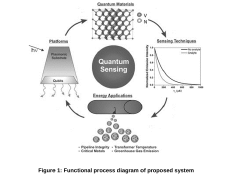
- Advanced quantum sensors leveraging quantum mechanics principles, such as superposition and entanglement, for ultra-precise measurements, including atomic clocks, magnetometers, gravimeters, and gyroscopes, offering unprecedented sensitivity and accuracy.
Fast quantum gates with first-order transitions via frequency-modulated tunable coupling element
PatentWO2019179740A1
Innovation
- The method involves modulating the frequency of a tunable coupler at multiple frequencies to drive first-order energy transitions, enabling fast entanglement of multiple qubits within a single operation, thereby reducing state preparation time and increasing gate rates to match those of single qubit gates.


Quantum Cryptography for Secure Sensor Communications
Quantum cryptography represents a revolutionary approach to securing sensor communications in innovative sensor networks. This technology leverages the principles of quantum mechanics to provide unbreakable encryption, addressing the growing concerns of data security in interconnected sensor systems.
At the core of quantum cryptography is the use of quantum key distribution (QKD), which allows two parties to produce a shared random secret key known only to them. This key can then be used to encrypt and decrypt messages. The fundamental principle behind QKD is the no-cloning theorem of quantum mechanics, which states that it is impossible to create an identical copy of an unknown quantum state.
In the context of sensor networks, quantum cryptography offers several significant advantages. Firstly, it provides perfect forward secrecy, meaning that even if a key is compromised in the future, it cannot be used to decrypt past communications. This is particularly crucial for long-term data storage and transmission in sensor networks.
Secondly, quantum cryptography enables the detection of any eavesdropping attempts. Any attempt to intercept or measure the quantum states used in key distribution will inevitably disturb the system, alerting the communicating parties to the presence of an intruder. This feature is invaluable in maintaining the integrity of sensor data in critical applications.
The implementation of quantum cryptography in sensor networks, however, faces several challenges. One major obstacle is the limited range of quantum key distribution, which is currently restricted to distances of a few hundred kilometers due to the fragility of quantum states. This limitation necessitates the development of quantum repeaters to extend the range of secure communication.
Another challenge lies in integrating quantum cryptography with existing sensor network infrastructures. This requires the development of quantum-compatible hardware and software, as well as protocols that can seamlessly interface with classical communication systems.
Despite these challenges, the potential of quantum cryptography in securing sensor communications is immense. As sensor networks become increasingly prevalent in critical infrastructure, healthcare, and industrial applications, the need for unbreakable security becomes paramount. Quantum cryptography offers a promising solution to this need, providing a level of security that is theoretically impervious to computational attacks, even in the face of future quantum computers.
At the core of quantum cryptography is the use of quantum key distribution (QKD), which allows two parties to produce a shared random secret key known only to them. This key can then be used to encrypt and decrypt messages. The fundamental principle behind QKD is the no-cloning theorem of quantum mechanics, which states that it is impossible to create an identical copy of an unknown quantum state.
In the context of sensor networks, quantum cryptography offers several significant advantages. Firstly, it provides perfect forward secrecy, meaning that even if a key is compromised in the future, it cannot be used to decrypt past communications. This is particularly crucial for long-term data storage and transmission in sensor networks.
Secondly, quantum cryptography enables the detection of any eavesdropping attempts. Any attempt to intercept or measure the quantum states used in key distribution will inevitably disturb the system, alerting the communicating parties to the presence of an intruder. This feature is invaluable in maintaining the integrity of sensor data in critical applications.
The implementation of quantum cryptography in sensor networks, however, faces several challenges. One major obstacle is the limited range of quantum key distribution, which is currently restricted to distances of a few hundred kilometers due to the fragility of quantum states. This limitation necessitates the development of quantum repeaters to extend the range of secure communication.
Another challenge lies in integrating quantum cryptography with existing sensor network infrastructures. This requires the development of quantum-compatible hardware and software, as well as protocols that can seamlessly interface with classical communication systems.
Despite these challenges, the potential of quantum cryptography in securing sensor communications is immense. As sensor networks become increasingly prevalent in critical infrastructure, healthcare, and industrial applications, the need for unbreakable security becomes paramount. Quantum cryptography offers a promising solution to this need, providing a level of security that is theoretically impervious to computational attacks, even in the face of future quantum computers.
Standardization Efforts in Quantum Sensor Networks
Standardization efforts in quantum sensor networks are gaining momentum as the field of quantum computing and sensing continues to advance. These efforts are crucial for ensuring interoperability, reliability, and widespread adoption of quantum sensor technologies across various industries and applications.
Several international organizations and consortia are leading the charge in developing standards for quantum sensor networks. The International Organization for Standardization (ISO) has established a working group specifically focused on quantum technologies, including quantum sensing and metrology. This group is working on creating a common language and framework for quantum sensor networks, which will facilitate collaboration and integration across different platforms and systems.
In parallel, the Institute of Electrical and Electronics Engineers (IEEE) has launched initiatives to standardize quantum sensor network protocols and interfaces. These efforts aim to define common data formats, communication protocols, and performance metrics for quantum sensors, enabling seamless integration with existing classical sensor networks and data processing systems.
The European Telecommunications Standards Institute (ETSI) has also formed a Industry Specification Group on Quantum Key Distribution (ISG-QKD), which is extending its scope to include quantum sensing and networking standards. This group is working on developing specifications for quantum-enhanced sensing applications, particularly in the context of secure communication networks.
Standardization efforts are also addressing the unique challenges posed by quantum sensor networks, such as quantum state preservation, entanglement distribution, and quantum error correction. The National Institute of Standards and Technology (NIST) in the United States is spearheading research and development of quantum-based measurement standards, which will be crucial for calibrating and validating quantum sensors in networked environments.
Industry consortia, such as the Quantum Economic Development Consortium (QED-C), are bringing together stakeholders from academia, industry, and government to collaborate on standardization efforts. These partnerships are essential for ensuring that standards reflect the needs of both technology developers and end-users across various sectors, including healthcare, defense, and environmental monitoring.
As quantum sensor networks move closer to practical implementation, standardization efforts are also focusing on security and privacy considerations. The development of quantum-safe cryptography standards is progressing in tandem with sensor network standards to ensure that the increased sensitivity and capabilities of quantum sensors do not compromise data integrity or user privacy.
Several international organizations and consortia are leading the charge in developing standards for quantum sensor networks. The International Organization for Standardization (ISO) has established a working group specifically focused on quantum technologies, including quantum sensing and metrology. This group is working on creating a common language and framework for quantum sensor networks, which will facilitate collaboration and integration across different platforms and systems.
In parallel, the Institute of Electrical and Electronics Engineers (IEEE) has launched initiatives to standardize quantum sensor network protocols and interfaces. These efforts aim to define common data formats, communication protocols, and performance metrics for quantum sensors, enabling seamless integration with existing classical sensor networks and data processing systems.
The European Telecommunications Standards Institute (ETSI) has also formed a Industry Specification Group on Quantum Key Distribution (ISG-QKD), which is extending its scope to include quantum sensing and networking standards. This group is working on developing specifications for quantum-enhanced sensing applications, particularly in the context of secure communication networks.
Standardization efforts are also addressing the unique challenges posed by quantum sensor networks, such as quantum state preservation, entanglement distribution, and quantum error correction. The National Institute of Standards and Technology (NIST) in the United States is spearheading research and development of quantum-based measurement standards, which will be crucial for calibrating and validating quantum sensors in networked environments.
Industry consortia, such as the Quantum Economic Development Consortium (QED-C), are bringing together stakeholders from academia, industry, and government to collaborate on standardization efforts. These partnerships are essential for ensuring that standards reflect the needs of both technology developers and end-users across various sectors, including healthcare, defense, and environmental monitoring.
As quantum sensor networks move closer to practical implementation, standardization efforts are also focusing on security and privacy considerations. The development of quantum-safe cryptography standards is progressing in tandem with sensor network standards to ensure that the increased sensitivity and capabilities of quantum sensors do not compromise data integrity or user privacy.
Unlock deeper insights with Patsnap Eureka Quick Research — get a full tech report to explore trends and direct your research. Try now!
Generate Your Research Report Instantly with AI Agent
Supercharge your innovation with Patsnap Eureka AI Agent Platform!