Quantum Computing Techniques for Better Content Recommendation Models
JUL 17, 20259 MIN READ
Generate Your Research Report Instantly with AI Agent
PatSnap Eureka helps you evaluate technical feasibility & market potential.
Quantum Computing in Recommendation Systems: Background and Objectives
Quantum computing has emerged as a revolutionary technology with the potential to transform various fields, including content recommendation systems. The evolution of quantum computing techniques in this domain represents a significant leap forward in addressing the challenges faced by traditional recommendation models.
The primary objective of integrating quantum computing into content recommendation systems is to enhance the accuracy, efficiency, and scalability of these models. By leveraging the unique properties of quantum systems, such as superposition and entanglement, researchers aim to overcome the limitations of classical computing approaches in handling complex, high-dimensional data sets typical in recommendation scenarios.
The development of quantum computing in recommendation systems can be traced back to the early 2000s when theoretical frameworks for quantum information processing began to emerge. However, it wasn't until the last decade that practical applications in recommendation systems started to gain traction. This progress has been driven by advancements in quantum hardware, algorithms, and the increasing demand for more sophisticated recommendation engines in various industries.
One of the key goals in this field is to develop quantum algorithms that can process and analyze vast amounts of user data more efficiently than classical methods. This includes improving the speed and accuracy of collaborative filtering, content-based filtering, and hybrid recommendation techniques. Additionally, researchers are exploring ways to leverage quantum machine learning algorithms to enhance the learning capabilities of recommendation models, potentially leading to more personalized and context-aware suggestions.
Another important objective is to address the scalability issues inherent in classical recommendation systems. As the volume of data and the number of users continue to grow exponentially, traditional systems struggle to maintain real-time performance. Quantum computing techniques offer the promise of handling these large-scale problems more effectively, potentially revolutionizing the way recommendations are generated and delivered.
Furthermore, the integration of quantum computing in recommendation systems aims to tackle the "cold start" problem, where systems struggle to make accurate recommendations for new users or items with limited historical data. Quantum algorithms may provide novel approaches to extract meaningful patterns from sparse data, improving the system's ability to make relevant recommendations in such scenarios.
As the field progresses, researchers are also focusing on developing hybrid quantum-classical systems that can leverage the strengths of both paradigms. This approach aims to create practical, near-term solutions that can benefit from quantum advantages while still being implementable on current and near-future quantum hardware.
The primary objective of integrating quantum computing into content recommendation systems is to enhance the accuracy, efficiency, and scalability of these models. By leveraging the unique properties of quantum systems, such as superposition and entanglement, researchers aim to overcome the limitations of classical computing approaches in handling complex, high-dimensional data sets typical in recommendation scenarios.
The development of quantum computing in recommendation systems can be traced back to the early 2000s when theoretical frameworks for quantum information processing began to emerge. However, it wasn't until the last decade that practical applications in recommendation systems started to gain traction. This progress has been driven by advancements in quantum hardware, algorithms, and the increasing demand for more sophisticated recommendation engines in various industries.
One of the key goals in this field is to develop quantum algorithms that can process and analyze vast amounts of user data more efficiently than classical methods. This includes improving the speed and accuracy of collaborative filtering, content-based filtering, and hybrid recommendation techniques. Additionally, researchers are exploring ways to leverage quantum machine learning algorithms to enhance the learning capabilities of recommendation models, potentially leading to more personalized and context-aware suggestions.
Another important objective is to address the scalability issues inherent in classical recommendation systems. As the volume of data and the number of users continue to grow exponentially, traditional systems struggle to maintain real-time performance. Quantum computing techniques offer the promise of handling these large-scale problems more effectively, potentially revolutionizing the way recommendations are generated and delivered.
Furthermore, the integration of quantum computing in recommendation systems aims to tackle the "cold start" problem, where systems struggle to make accurate recommendations for new users or items with limited historical data. Quantum algorithms may provide novel approaches to extract meaningful patterns from sparse data, improving the system's ability to make relevant recommendations in such scenarios.
As the field progresses, researchers are also focusing on developing hybrid quantum-classical systems that can leverage the strengths of both paradigms. This approach aims to create practical, near-term solutions that can benefit from quantum advantages while still being implementable on current and near-future quantum hardware.
Market Analysis for Quantum-Enhanced Recommendation Engines
The market for quantum-enhanced recommendation engines is poised for significant growth as businesses seek more sophisticated and efficient ways to deliver personalized content to their users. The global recommendation engine market, currently valued at $3.8 billion, is expected to reach $12.03 billion by 2025, with a compound annual growth rate (CAGR) of 40.7%. Quantum computing techniques are emerging as a potential game-changer in this space, offering the promise of more accurate and faster recommendations.
The demand for quantum-enhanced recommendation models is driven by several factors. First, the exponential growth of data generated by users across various platforms has created a need for more powerful computational methods to process and analyze this information. Traditional recommendation algorithms often struggle with the sheer volume and complexity of data, leading to suboptimal suggestions and user experiences. Quantum computing techniques can potentially overcome these limitations by leveraging quantum superposition and entanglement to process vast amounts of data simultaneously.
Another key driver is the increasing competition among content providers and e-commerce platforms to deliver highly personalized experiences. As user expectations for tailored recommendations continue to rise, companies are exploring advanced technologies to gain a competitive edge. Quantum-enhanced recommendation engines could provide more nuanced and context-aware suggestions, potentially increasing user engagement, satisfaction, and ultimately, revenue.
The financial services sector is showing particular interest in quantum-enhanced recommendation systems for portfolio optimization and fraud detection. Retail and e-commerce giants are also exploring these technologies to improve product recommendations and enhance cross-selling opportunities. The entertainment industry, including streaming services, is another potential early adopter, seeking to refine content suggestions and increase viewer retention.
However, the market for quantum-enhanced recommendation engines faces several challenges. The high cost and complexity of quantum computing infrastructure remain significant barriers to widespread adoption. Additionally, the shortage of skilled professionals with expertise in both quantum computing and machine learning poses a constraint on market growth. Concerns about data privacy and security in quantum systems also need to be addressed to gain consumer trust and comply with evolving regulations.
Despite these challenges, investments in quantum computing for recommendation systems are on the rise. Major tech companies and startups alike are allocating resources to research and development in this field. As quantum hardware continues to advance and become more accessible, the market for quantum-enhanced recommendation engines is expected to expand rapidly, potentially revolutionizing how businesses understand and cater to user preferences across various industries.
The demand for quantum-enhanced recommendation models is driven by several factors. First, the exponential growth of data generated by users across various platforms has created a need for more powerful computational methods to process and analyze this information. Traditional recommendation algorithms often struggle with the sheer volume and complexity of data, leading to suboptimal suggestions and user experiences. Quantum computing techniques can potentially overcome these limitations by leveraging quantum superposition and entanglement to process vast amounts of data simultaneously.
Another key driver is the increasing competition among content providers and e-commerce platforms to deliver highly personalized experiences. As user expectations for tailored recommendations continue to rise, companies are exploring advanced technologies to gain a competitive edge. Quantum-enhanced recommendation engines could provide more nuanced and context-aware suggestions, potentially increasing user engagement, satisfaction, and ultimately, revenue.
The financial services sector is showing particular interest in quantum-enhanced recommendation systems for portfolio optimization and fraud detection. Retail and e-commerce giants are also exploring these technologies to improve product recommendations and enhance cross-selling opportunities. The entertainment industry, including streaming services, is another potential early adopter, seeking to refine content suggestions and increase viewer retention.
However, the market for quantum-enhanced recommendation engines faces several challenges. The high cost and complexity of quantum computing infrastructure remain significant barriers to widespread adoption. Additionally, the shortage of skilled professionals with expertise in both quantum computing and machine learning poses a constraint on market growth. Concerns about data privacy and security in quantum systems also need to be addressed to gain consumer trust and comply with evolving regulations.
Despite these challenges, investments in quantum computing for recommendation systems are on the rise. Major tech companies and startups alike are allocating resources to research and development in this field. As quantum hardware continues to advance and become more accessible, the market for quantum-enhanced recommendation engines is expected to expand rapidly, potentially revolutionizing how businesses understand and cater to user preferences across various industries.
Current Challenges in Quantum Computing for Recommendations
Quantum computing techniques for content recommendation models face several significant challenges that hinder their widespread adoption and practical implementation. One of the primary obstacles is the limited availability of quantum hardware with sufficient qubit capacity and coherence times to handle complex recommendation algorithms. Current quantum processors struggle to maintain quantum states for extended periods, limiting the scale and complexity of computations that can be performed.
Another major challenge lies in the development of quantum algorithms specifically tailored for recommendation systems. While quantum algorithms have shown promise in certain areas, such as optimization and machine learning, their application to content recommendation models is still in its infancy. Researchers are grappling with the task of translating classical recommendation algorithms into quantum circuits that can effectively leverage quantum superposition and entanglement.
The noise and error rates in quantum systems pose a significant hurdle for accurate recommendations. Quantum bits (qubits) are highly sensitive to environmental disturbances, leading to decoherence and errors in computations. This sensitivity makes it challenging to achieve reliable and consistent results in recommendation models, which require precise calculations and predictions.
Data encoding and preparation for quantum systems present another set of challenges. Classical data must be efficiently transformed into quantum states, a process known as quantum state preparation. This transformation needs to preserve the relevant features and relationships within the data while being compatible with quantum operations. Developing efficient methods for encoding large-scale user preference data and item features into quantum states remains an active area of research.
The interpretability of quantum recommendation models is also a significant concern. The inherent probabilistic nature of quantum systems and the complexity of quantum algorithms make it difficult to explain and interpret the recommendations generated by these models. This lack of transparency can be a barrier to adoption in industries where explainable AI is crucial, such as finance or healthcare.
Scalability remains a critical challenge for quantum computing in recommendation systems. As the number of users and items in a recommendation system grows, the computational requirements increase exponentially. Current quantum hardware struggles to handle the large-scale data sets typical in real-world recommendation scenarios, limiting the practical applicability of quantum techniques to smaller, more manageable problem sizes.
Lastly, the integration of quantum and classical computing systems poses technical and architectural challenges. Hybrid quantum-classical approaches are being explored to leverage the strengths of both paradigms, but designing efficient interfaces and workflows between quantum and classical components of recommendation systems requires further research and development.
Another major challenge lies in the development of quantum algorithms specifically tailored for recommendation systems. While quantum algorithms have shown promise in certain areas, such as optimization and machine learning, their application to content recommendation models is still in its infancy. Researchers are grappling with the task of translating classical recommendation algorithms into quantum circuits that can effectively leverage quantum superposition and entanglement.
The noise and error rates in quantum systems pose a significant hurdle for accurate recommendations. Quantum bits (qubits) are highly sensitive to environmental disturbances, leading to decoherence and errors in computations. This sensitivity makes it challenging to achieve reliable and consistent results in recommendation models, which require precise calculations and predictions.
Data encoding and preparation for quantum systems present another set of challenges. Classical data must be efficiently transformed into quantum states, a process known as quantum state preparation. This transformation needs to preserve the relevant features and relationships within the data while being compatible with quantum operations. Developing efficient methods for encoding large-scale user preference data and item features into quantum states remains an active area of research.
The interpretability of quantum recommendation models is also a significant concern. The inherent probabilistic nature of quantum systems and the complexity of quantum algorithms make it difficult to explain and interpret the recommendations generated by these models. This lack of transparency can be a barrier to adoption in industries where explainable AI is crucial, such as finance or healthcare.
Scalability remains a critical challenge for quantum computing in recommendation systems. As the number of users and items in a recommendation system grows, the computational requirements increase exponentially. Current quantum hardware struggles to handle the large-scale data sets typical in real-world recommendation scenarios, limiting the practical applicability of quantum techniques to smaller, more manageable problem sizes.
Lastly, the integration of quantum and classical computing systems poses technical and architectural challenges. Hybrid quantum-classical approaches are being explored to leverage the strengths of both paradigms, but designing efficient interfaces and workflows between quantum and classical components of recommendation systems requires further research and development.
Existing Quantum Approaches for Content Recommendation
01 Quantum-enhanced recommendation algorithms
Quantum computing techniques are applied to enhance recommendation algorithms, leveraging quantum superposition and entanglement to process complex user-item interactions more efficiently. These quantum-inspired models can handle high-dimensional data and provide more accurate personalized recommendations by exploring a larger solution space simultaneously.- Quantum-enhanced recommendation algorithms: Quantum computing techniques are applied to enhance recommendation algorithms, leveraging quantum superposition and entanglement to process complex user-item interactions more efficiently. These quantum-inspired models can handle large-scale data and provide more accurate personalized recommendations by exploring a vast solution space simultaneously.
- Hybrid quantum-classical content recommendation systems: These systems combine classical machine learning techniques with quantum algorithms to create more powerful recommendation models. The hybrid approach allows for the integration of quantum computing's advantages in specific computational tasks while maintaining the robustness of classical methods for other parts of the recommendation process.
- Quantum-inspired feature extraction for content recommendation: This approach uses quantum-inspired algorithms to perform dimensionality reduction and feature extraction on large datasets. By mapping high-dimensional data to quantum states, these techniques can uncover latent features and patterns that improve the quality of content recommendations.
- Quantum annealing for optimization in recommendation systems: Quantum annealing techniques are employed to solve complex optimization problems in recommendation systems. This approach can efficiently find optimal or near-optimal solutions for user-item matching, collaborative filtering, and content ranking, potentially outperforming classical optimization methods in terms of speed and solution quality.
- Quantum-enhanced collaborative filtering: Quantum computing techniques are applied to improve collaborative filtering algorithms, which are fundamental to many recommendation systems. By leveraging quantum parallelism, these methods can process user-item matrices more efficiently and uncover hidden correlations, leading to more accurate and diverse recommendations.
02 Hybrid quantum-classical recommendation systems
Hybrid approaches combine quantum and classical computing techniques to optimize content recommendation models. These systems utilize quantum circuits for specific computationally intensive tasks while leveraging classical algorithms for other parts of the recommendation process, resulting in improved performance and scalability.Expand Specific Solutions03 Quantum-inspired feature extraction and dimensionality reduction
Quantum-inspired techniques are used for feature extraction and dimensionality reduction in recommendation models. These methods can efficiently process high-dimensional user and item data, identifying relevant features and reducing noise to improve the quality of recommendations while decreasing computational complexity.Expand Specific Solutions04 Quantum annealing for optimization in recommendation systems
Quantum annealing techniques are applied to solve optimization problems in content recommendation models. This approach can efficiently explore complex solution spaces, potentially finding global optima for user-item matching problems and improving the overall quality of recommendations.Expand Specific Solutions05 Quantum machine learning for collaborative filtering
Quantum machine learning algorithms are developed for collaborative filtering in recommendation systems. These techniques leverage quantum computing principles to process user-item interaction data more efficiently, potentially uncovering hidden patterns and improving the accuracy of recommendations, especially for sparse datasets.Expand Specific Solutions
Key Players in Quantum Computing and Recommendation Systems
The quantum computing techniques for content recommendation models are in an early development stage, with a growing market potential as companies seek to leverage quantum advantages. The technology is still emerging, with varying levels of maturity across different players. Key companies like IBM, Google, and Microsoft are investing heavily in quantum research and development, while tech giants such as Tencent, Baidu, and Amazon are exploring quantum applications for their recommendation systems. Startups like Origin Quantum are also entering the field, focusing on specialized quantum solutions. As the technology progresses, we can expect increased competition and collaboration between established tech firms and quantum-focused companies to advance practical applications in content recommendation.
Beijing Baidu Netcom Science & Technology Co., Ltd.
Technical Solution: Baidu is investing in quantum computing research to enhance its content recommendation capabilities. The company is exploring quantum-inspired algorithms that can run on classical hardware to improve the efficiency and accuracy of its recommendation systems[7]. Baidu's approach includes developing quantum neural network models for user behavior prediction and quantum-enhanced collaborative filtering techniques. They are also investigating the potential of quantum annealing for solving large-scale optimization problems in recommendation systems, aiming to provide more personalized and diverse content suggestions to users[8].
Strengths: Large user base in China, extensive experience in AI and machine learning, and growing quantum research capabilities. Weaknesses: Limited access to advanced quantum hardware and potential regulatory challenges in quantum technology development.
Microsoft Technology Licensing LLC
Technical Solution: Microsoft is developing quantum-inspired algorithms for content recommendation, leveraging its Azure Quantum platform. Their approach focuses on using quantum-inspired optimization techniques to solve large-scale recommendation problems more efficiently than traditional methods[5]. Microsoft's research includes exploring variational quantum algorithms for collaborative filtering and quantum-enhanced feature mapping for improved recommendation accuracy. The company is also investigating quantum machine learning models that could potentially capture complex user preferences and item relationships in high-dimensional spaces[6].
Strengths: Strong quantum computing research team, Azure cloud infrastructure, and partnerships with quantum hardware providers. Weaknesses: Balancing quantum research with practical implementation in existing recommendation systems.
Breakthrough Quantum Techniques for Recommendation Models
Techniques of quantum computing model
PatentPendingUS20240005189A1
Innovation
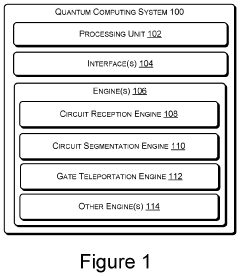
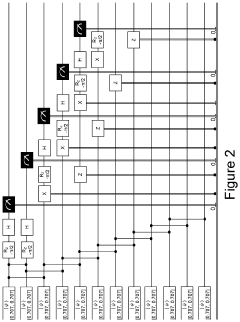
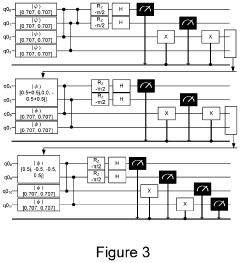
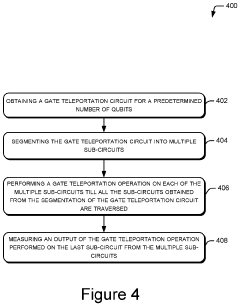
- Segmenting the gate teleportation circuit into multiple sub-circuits allows for sequential processing, reducing the complexity of entangled state preparation and minimizing the duration qubits need to be maintained in specific states, thereby enhancing operational efficiency and enabling reusability of qubits.
Content recommendation using artificial intelligence
PatentPendingUS20240070749A1
Innovation
- The system bifurcates users into high-data and low-data users, using different recommendation engines for each group. For high-data users, a collaborative filtering engine directly selects digital artifacts, while for low-data users, it first selects digital artifact property criteria and then recommends based on those criteria, with zero-data users receiving input on areas of interest to derive criteria.


Quantum Hardware Requirements for Recommendation Systems
Quantum computing's potential to revolutionize content recommendation models necessitates a thorough examination of the quantum hardware requirements for such systems. The implementation of quantum algorithms for recommendation tasks demands specific hardware capabilities that differ significantly from classical computing architectures.
At the core of quantum hardware for recommendation systems is the quantum processing unit (QPU), which must possess a sufficient number of qubits to handle the complex calculations involved in recommendation algorithms. Current estimates suggest that practical quantum advantage for recommendation systems may require QPUs with hundreds to thousands of high-quality qubits. These qubits must maintain coherence for extended periods to allow for the completion of quantum circuits relevant to recommendation tasks.
Quantum error correction is another critical hardware requirement. As quantum states are inherently fragile and susceptible to environmental noise, robust error correction mechanisms are essential to ensure the reliability of quantum computations. This may involve the use of additional physical qubits to create logical qubits with improved stability, potentially increasing the overall qubit count requirements by orders of magnitude.
The connectivity between qubits is also a crucial factor. Recommendation algorithms often require operations between non-adjacent qubits, necessitating hardware architectures that support efficient qubit-to-qubit interactions. This could be achieved through direct connections or quantum gate operations that enable long-range entanglement.
Quantum memory and quantum-classical interfaces are additional hardware components vital for recommendation systems. Quantum memory allows for the storage and retrieval of quantum states, which is essential for processing large datasets typical in recommendation scenarios. The quantum-classical interface facilitates the seamless transfer of data between quantum and classical components of the system, enabling hybrid algorithms that leverage the strengths of both paradigms.
Control systems for quantum hardware must be highly precise and responsive. They need to generate and manipulate quantum gates with minimal error rates and maintain precise timing to execute quantum circuits effectively. This requires advanced classical control electronics and software capable of real-time feedback and calibration.
Lastly, the physical environment housing the quantum hardware is crucial. Quantum systems often require extreme cooling to near absolute zero temperatures to maintain qubit coherence. This necessitates sophisticated cryogenic systems and shielding from electromagnetic interference, adding to the complexity and cost of quantum hardware for recommendation systems.
At the core of quantum hardware for recommendation systems is the quantum processing unit (QPU), which must possess a sufficient number of qubits to handle the complex calculations involved in recommendation algorithms. Current estimates suggest that practical quantum advantage for recommendation systems may require QPUs with hundreds to thousands of high-quality qubits. These qubits must maintain coherence for extended periods to allow for the completion of quantum circuits relevant to recommendation tasks.
Quantum error correction is another critical hardware requirement. As quantum states are inherently fragile and susceptible to environmental noise, robust error correction mechanisms are essential to ensure the reliability of quantum computations. This may involve the use of additional physical qubits to create logical qubits with improved stability, potentially increasing the overall qubit count requirements by orders of magnitude.
The connectivity between qubits is also a crucial factor. Recommendation algorithms often require operations between non-adjacent qubits, necessitating hardware architectures that support efficient qubit-to-qubit interactions. This could be achieved through direct connections or quantum gate operations that enable long-range entanglement.
Quantum memory and quantum-classical interfaces are additional hardware components vital for recommendation systems. Quantum memory allows for the storage and retrieval of quantum states, which is essential for processing large datasets typical in recommendation scenarios. The quantum-classical interface facilitates the seamless transfer of data between quantum and classical components of the system, enabling hybrid algorithms that leverage the strengths of both paradigms.
Control systems for quantum hardware must be highly precise and responsive. They need to generate and manipulate quantum gates with minimal error rates and maintain precise timing to execute quantum circuits effectively. This requires advanced classical control electronics and software capable of real-time feedback and calibration.
Lastly, the physical environment housing the quantum hardware is crucial. Quantum systems often require extreme cooling to near absolute zero temperatures to maintain qubit coherence. This necessitates sophisticated cryogenic systems and shielding from electromagnetic interference, adding to the complexity and cost of quantum hardware for recommendation systems.
Ethical Implications of Quantum-Enhanced Recommendations
The integration of quantum computing techniques into content recommendation models raises significant ethical concerns that warrant careful consideration. As these advanced systems become more powerful and pervasive, they have the potential to profoundly impact individual autonomy, privacy, and societal dynamics.
One primary ethical implication is the unprecedented level of personalization that quantum-enhanced recommendations could achieve. While this may lead to more relevant content suggestions, it also risks creating highly individualized information bubbles. These bubbles could reinforce existing beliefs and biases, potentially limiting exposure to diverse perspectives and hindering critical thinking. The ethical challenge lies in balancing personalization with the need for a well-informed and open-minded society.
Privacy concerns are another crucial ethical consideration. Quantum computing's ability to process vast amounts of data more efficiently could enable recommendation systems to draw insights from a broader range of personal information. This raises questions about data ownership, consent, and the potential for misuse of sensitive information. Striking a balance between improved recommendations and protecting individual privacy rights becomes increasingly complex in this context.
The potential for quantum-enhanced recommendation systems to influence human behavior on a large scale also presents ethical challenges. These systems could have unprecedented power to shape consumer choices, political opinions, and social interactions. The ethical responsibility of companies and developers in wielding such influence becomes a critical issue, particularly in terms of transparency and accountability.
Furthermore, the advanced capabilities of quantum-enhanced recommendation models may exacerbate existing digital divides. Those with access to these cutting-edge technologies could gain significant advantages in information access and decision-making, potentially leading to increased inequality. Ensuring equitable access to the benefits of quantum-enhanced recommendations while mitigating potential harm is an important ethical consideration.
Lastly, the potential for quantum computing to break current encryption methods raises concerns about the security and privacy of data used in recommendation systems. As these systems rely heavily on user data, ensuring robust protection against quantum-enabled breaches becomes an ethical imperative. Balancing the benefits of quantum-enhanced recommendations with the need for data security will be a ongoing challenge for developers and policymakers alike.
One primary ethical implication is the unprecedented level of personalization that quantum-enhanced recommendations could achieve. While this may lead to more relevant content suggestions, it also risks creating highly individualized information bubbles. These bubbles could reinforce existing beliefs and biases, potentially limiting exposure to diverse perspectives and hindering critical thinking. The ethical challenge lies in balancing personalization with the need for a well-informed and open-minded society.
Privacy concerns are another crucial ethical consideration. Quantum computing's ability to process vast amounts of data more efficiently could enable recommendation systems to draw insights from a broader range of personal information. This raises questions about data ownership, consent, and the potential for misuse of sensitive information. Striking a balance between improved recommendations and protecting individual privacy rights becomes increasingly complex in this context.
The potential for quantum-enhanced recommendation systems to influence human behavior on a large scale also presents ethical challenges. These systems could have unprecedented power to shape consumer choices, political opinions, and social interactions. The ethical responsibility of companies and developers in wielding such influence becomes a critical issue, particularly in terms of transparency and accountability.
Furthermore, the advanced capabilities of quantum-enhanced recommendation models may exacerbate existing digital divides. Those with access to these cutting-edge technologies could gain significant advantages in information access and decision-making, potentially leading to increased inequality. Ensuring equitable access to the benefits of quantum-enhanced recommendations while mitigating potential harm is an important ethical consideration.
Lastly, the potential for quantum computing to break current encryption methods raises concerns about the security and privacy of data used in recommendation systems. As these systems rely heavily on user data, ensuring robust protection against quantum-enabled breaches becomes an ethical imperative. Balancing the benefits of quantum-enhanced recommendations with the need for data security will be a ongoing challenge for developers and policymakers alike.
Unlock deeper insights with PatSnap Eureka Quick Research — get a full tech report to explore trends and direct your research. Try now!
Generate Your Research Report Instantly with AI Agent
Supercharge your innovation with PatSnap Eureka AI Agent Platform!