

Quantum Computing Techniques for Improved Traffic Congestion Solutions
JUL 17, 20259 MIN READ
Generate Your Research Report Instantly with AI Agent
PatSnap Eureka helps you evaluate technical feasibility & market potential.
Quantum Computing for Traffic Management: Background and Objectives
Quantum computing represents a revolutionary paradigm in computational technology, leveraging the principles of quantum mechanics to perform complex calculations at unprecedented speeds. In the context of traffic management, this emerging field holds immense potential to address one of the most pressing urban challenges: traffic congestion. The evolution of quantum computing techniques for traffic management stems from the increasing complexity of urban transportation networks and the limitations of classical computing methods in handling large-scale, dynamic systems.
The primary objective of applying quantum computing to traffic congestion solutions is to optimize traffic flow and reduce congestion through more efficient route planning, real-time traffic prediction, and adaptive signal control. This approach aims to harness the power of quantum algorithms to process vast amounts of data from various sources, including traffic sensors, GPS devices, and historical traffic patterns, to make rapid and accurate decisions that can significantly improve urban mobility.
The development of quantum computing in traffic management can be traced back to the early 2000s when researchers began exploring theoretical applications of quantum algorithms in optimization problems. However, it wasn't until the last decade that practical implementations became feasible due to advancements in quantum hardware and software. The field has since witnessed a convergence of quantum information science, machine learning, and transportation engineering, leading to novel approaches in traffic modeling and control.
Key milestones in this technological journey include the development of quantum-inspired algorithms for traffic signal optimization, quantum machine learning models for traffic prediction, and quantum annealing techniques for solving large-scale vehicle routing problems. These advancements have paved the way for more sophisticated quantum-based traffic management systems that can potentially revolutionize urban transportation.
The current technological landscape is characterized by a growing interest from both academic institutions and tech giants in developing quantum solutions for traffic management. This has led to increased funding and research initiatives aimed at bridging the gap between theoretical quantum algorithms and practical, real-world applications in traffic control and optimization.
As we look towards the future, the integration of quantum computing techniques in traffic management systems promises to deliver more responsive, efficient, and sustainable urban transportation networks. The ultimate goal is to create smart cities where traffic flows seamlessly, reducing travel times, fuel consumption, and environmental impact. This vision aligns with broader urban development strategies and sustainability goals, making quantum computing a critical component in the evolution of intelligent transportation systems.
The primary objective of applying quantum computing to traffic congestion solutions is to optimize traffic flow and reduce congestion through more efficient route planning, real-time traffic prediction, and adaptive signal control. This approach aims to harness the power of quantum algorithms to process vast amounts of data from various sources, including traffic sensors, GPS devices, and historical traffic patterns, to make rapid and accurate decisions that can significantly improve urban mobility.
The development of quantum computing in traffic management can be traced back to the early 2000s when researchers began exploring theoretical applications of quantum algorithms in optimization problems. However, it wasn't until the last decade that practical implementations became feasible due to advancements in quantum hardware and software. The field has since witnessed a convergence of quantum information science, machine learning, and transportation engineering, leading to novel approaches in traffic modeling and control.
Key milestones in this technological journey include the development of quantum-inspired algorithms for traffic signal optimization, quantum machine learning models for traffic prediction, and quantum annealing techniques for solving large-scale vehicle routing problems. These advancements have paved the way for more sophisticated quantum-based traffic management systems that can potentially revolutionize urban transportation.
The current technological landscape is characterized by a growing interest from both academic institutions and tech giants in developing quantum solutions for traffic management. This has led to increased funding and research initiatives aimed at bridging the gap between theoretical quantum algorithms and practical, real-world applications in traffic control and optimization.
As we look towards the future, the integration of quantum computing techniques in traffic management systems promises to deliver more responsive, efficient, and sustainable urban transportation networks. The ultimate goal is to create smart cities where traffic flows seamlessly, reducing travel times, fuel consumption, and environmental impact. This vision aligns with broader urban development strategies and sustainability goals, making quantum computing a critical component in the evolution of intelligent transportation systems.
Market Analysis for Quantum-Enhanced Traffic Solutions
The market for quantum-enhanced traffic solutions is experiencing rapid growth as urban centers worldwide grapple with increasing congestion issues. This emerging sector combines the power of quantum computing with traditional traffic management systems to create more efficient and responsive solutions. The global smart transportation market, which encompasses quantum-enhanced traffic solutions, is projected to reach $262.4 billion by 2025, growing at a CAGR of 19.5% from 2020 to 2025.
Quantum computing's ability to process complex algorithms and optimize large-scale systems makes it particularly suited for addressing traffic congestion. The potential applications range from real-time traffic flow optimization to predictive maintenance of transportation infrastructure. Major metropolitan areas, particularly in North America, Europe, and Asia-Pacific regions, are showing keen interest in adopting these advanced technologies to alleviate their traffic woes.
The demand for quantum-enhanced traffic solutions is driven by several factors. Urbanization trends continue to put pressure on existing transportation networks, with 68% of the world's population expected to live in urban areas by 2050. This demographic shift necessitates smarter, more efficient traffic management systems. Additionally, the increasing focus on reducing carbon emissions and improving air quality in cities is pushing governments to invest in innovative traffic solutions that can minimize idle times and optimize vehicle routing.
Key market segments for quantum-enhanced traffic solutions include smart traffic lights, adaptive signal control systems, and intelligent transportation systems (ITS). The smart traffic light market alone is expected to grow from $8.2 billion in 2020 to $11.5 billion by 2025, with quantum computing playing a crucial role in enhancing their capabilities.
Several challenges exist in the market adoption of quantum-enhanced traffic solutions. The high initial investment required for quantum computing infrastructure and the need for specialized expertise pose barriers to entry for many cities and transportation authorities. Moreover, concerns about data privacy and security in quantum systems need to be addressed to gain public trust and regulatory approval.
Despite these challenges, the market outlook remains positive. As quantum computing technology matures and becomes more accessible, its integration with traffic management systems is expected to accelerate. Early adopters of quantum-enhanced traffic solutions are likely to gain a significant competitive advantage in urban development and smart city initiatives, driving further market growth and innovation in this sector.
Quantum computing's ability to process complex algorithms and optimize large-scale systems makes it particularly suited for addressing traffic congestion. The potential applications range from real-time traffic flow optimization to predictive maintenance of transportation infrastructure. Major metropolitan areas, particularly in North America, Europe, and Asia-Pacific regions, are showing keen interest in adopting these advanced technologies to alleviate their traffic woes.
The demand for quantum-enhanced traffic solutions is driven by several factors. Urbanization trends continue to put pressure on existing transportation networks, with 68% of the world's population expected to live in urban areas by 2050. This demographic shift necessitates smarter, more efficient traffic management systems. Additionally, the increasing focus on reducing carbon emissions and improving air quality in cities is pushing governments to invest in innovative traffic solutions that can minimize idle times and optimize vehicle routing.
Key market segments for quantum-enhanced traffic solutions include smart traffic lights, adaptive signal control systems, and intelligent transportation systems (ITS). The smart traffic light market alone is expected to grow from $8.2 billion in 2020 to $11.5 billion by 2025, with quantum computing playing a crucial role in enhancing their capabilities.
Several challenges exist in the market adoption of quantum-enhanced traffic solutions. The high initial investment required for quantum computing infrastructure and the need for specialized expertise pose barriers to entry for many cities and transportation authorities. Moreover, concerns about data privacy and security in quantum systems need to be addressed to gain public trust and regulatory approval.
Despite these challenges, the market outlook remains positive. As quantum computing technology matures and becomes more accessible, its integration with traffic management systems is expected to accelerate. Early adopters of quantum-enhanced traffic solutions are likely to gain a significant competitive advantage in urban development and smart city initiatives, driving further market growth and innovation in this sector.
Current Challenges in Quantum Computing for Traffic Optimization
Quantum computing for traffic optimization faces several significant challenges that hinder its widespread implementation and effectiveness. One of the primary obstacles is the current limitation in qubit coherence time and stability. Traffic optimization algorithms require complex calculations involving numerous variables, which demand longer coherence times than currently achievable in most quantum systems. This limitation restricts the scale and complexity of traffic problems that can be effectively addressed using quantum computing techniques.
Another major challenge lies in the error rates of quantum gates and operations. Traffic optimization problems often require high precision calculations to generate accurate and reliable solutions. However, the inherent noise and errors in quantum systems can lead to inaccurate results, potentially causing suboptimal or even counterproductive traffic management decisions. Developing more robust error correction techniques and improving the fidelity of quantum operations are crucial steps towards overcoming this challenge.
The scalability of quantum systems also presents a significant hurdle. While small-scale quantum computers have shown promise in solving simplified traffic optimization problems, scaling up these systems to handle real-world, city-wide traffic scenarios remains a formidable task. The number of qubits required for such large-scale optimizations far exceeds the capabilities of current quantum hardware, limiting the practical applicability of quantum computing in comprehensive traffic management solutions.
Furthermore, the integration of quantum computing solutions with classical traffic management systems poses a considerable challenge. Existing traffic infrastructure relies heavily on classical computing and communication technologies. Developing efficient interfaces and protocols for seamless interaction between quantum and classical systems is essential for the practical implementation of quantum-enhanced traffic optimization techniques.
The lack of standardized quantum programming languages and development tools specifically tailored for traffic optimization applications also impedes progress in this field. While general-purpose quantum programming frameworks exist, creating specialized tools and libraries for traffic-related quantum algorithms could significantly accelerate research and development in this domain.
Lastly, the high cost and complexity of quantum computing hardware present barriers to widespread adoption in traffic management. Many traffic authorities and municipalities may find it challenging to justify the substantial investment required for quantum infrastructure, especially given the current limitations and uncertainties surrounding the technology's practical benefits in traffic optimization.
Another major challenge lies in the error rates of quantum gates and operations. Traffic optimization problems often require high precision calculations to generate accurate and reliable solutions. However, the inherent noise and errors in quantum systems can lead to inaccurate results, potentially causing suboptimal or even counterproductive traffic management decisions. Developing more robust error correction techniques and improving the fidelity of quantum operations are crucial steps towards overcoming this challenge.
The scalability of quantum systems also presents a significant hurdle. While small-scale quantum computers have shown promise in solving simplified traffic optimization problems, scaling up these systems to handle real-world, city-wide traffic scenarios remains a formidable task. The number of qubits required for such large-scale optimizations far exceeds the capabilities of current quantum hardware, limiting the practical applicability of quantum computing in comprehensive traffic management solutions.
Furthermore, the integration of quantum computing solutions with classical traffic management systems poses a considerable challenge. Existing traffic infrastructure relies heavily on classical computing and communication technologies. Developing efficient interfaces and protocols for seamless interaction between quantum and classical systems is essential for the practical implementation of quantum-enhanced traffic optimization techniques.
The lack of standardized quantum programming languages and development tools specifically tailored for traffic optimization applications also impedes progress in this field. While general-purpose quantum programming frameworks exist, creating specialized tools and libraries for traffic-related quantum algorithms could significantly accelerate research and development in this domain.
Lastly, the high cost and complexity of quantum computing hardware present barriers to widespread adoption in traffic management. Many traffic authorities and municipalities may find it challenging to justify the substantial investment required for quantum infrastructure, especially given the current limitations and uncertainties surrounding the technology's practical benefits in traffic optimization.
Existing Quantum Approaches to Traffic Congestion
01 Quantum algorithms for traffic optimization
Quantum computing techniques can be applied to develop advanced algorithms for optimizing traffic flow and reducing congestion. These algorithms can process complex traffic data more efficiently than classical computers, allowing for real-time adjustments to traffic signals and routing recommendations.- Quantum algorithms for traffic optimization: Quantum computing techniques can be applied to develop advanced algorithms for optimizing traffic flow and reducing congestion. These algorithms can process complex traffic data more efficiently than classical computers, enabling real-time adjustments to traffic signals and routing.
- Quantum-enhanced traffic prediction models: Quantum machine learning models can be used to analyze historical and real-time traffic data, providing more accurate predictions of traffic patterns and potential congestion points. This allows for proactive traffic management and route optimization.
- Quantum-assisted vehicle routing: Quantum computing can be utilized to solve complex vehicle routing problems more efficiently, considering multiple factors such as traffic conditions, road capacity, and individual vehicle preferences. This approach can help reduce overall congestion by optimizing the distribution of vehicles across the road network.
- Quantum-based traffic signal control systems: Quantum algorithms can be implemented in traffic signal control systems to dynamically adjust signal timings based on real-time traffic conditions. This adaptive approach can help minimize wait times at intersections and improve overall traffic flow.
- Quantum-enhanced traffic simulation and modeling: Quantum computing techniques can be used to create more sophisticated and accurate traffic simulation models. These models can account for a wider range of variables and scenarios, allowing for better planning and decision-making in urban traffic management.
02 Quantum-enhanced traffic prediction models
Quantum machine learning models can be used to improve traffic prediction accuracy. By leveraging quantum computing's ability to process multiple states simultaneously, these models can analyze vast amounts of historical and real-time traffic data to forecast congestion patterns with greater precision.Expand Specific Solutions03 Quantum-assisted route optimization
Quantum computing can be utilized to solve complex route optimization problems more efficiently. This approach can help in finding the most optimal routes for multiple vehicles simultaneously, considering various factors such as traffic conditions, road capacity, and travel time to reduce overall congestion.Expand Specific Solutions04 Quantum sensor networks for traffic monitoring
Quantum sensors can be deployed in traffic monitoring networks to provide more accurate and real-time data on vehicle movements and road conditions. These sensors, combined with quantum communication techniques, can create a highly efficient and secure traffic monitoring system to better manage congestion.Expand Specific Solutions05 Quantum-secure traffic management systems
Quantum cryptography techniques can be applied to enhance the security of traffic management systems. This ensures that sensitive traffic data and control signals are protected from potential cyber threats, maintaining the integrity and reliability of congestion mitigation efforts.Expand Specific Solutions
Key Players in Quantum Computing and Traffic Management
The quantum computing techniques for improved traffic congestion solutions market is in its early stages, with significant potential for growth. The technology's application in traffic management is still emerging, with a market size expected to expand rapidly as more cities seek innovative solutions. Major players like IBM, Volkswagen AG, and AUDI AG are investing heavily in quantum computing research for transportation applications. While the technology is not yet fully mature, collaborations between tech giants, automotive manufacturers, and academic institutions like Southeast University and Nanjing University of Information Science & Technology are accelerating development. The competitive landscape is diverse, with traditional IT companies, automakers, and specialized traffic management firms like INRIX and ITC Intelligent Traffic Control vying for market share.
Volkswagen AG
Technical Solution: Volkswagen AG has been pioneering the application of quantum computing in traffic management. Their approach focuses on optimizing traffic flow and reducing congestion through quantum algorithms. Volkswagen has partnered with D-Wave Systems to use quantum annealing for traffic optimization[4]. They have successfully demonstrated a traffic flow optimization project in Lisbon, Portugal, using quantum computers to calculate the fastest routes for buses and taxis in real-time[5]. The company's quantum-based traffic management system can process vast amounts of data, including information from individual vehicles, traffic control systems, and public transportation, to create optimized traffic flow patterns[6].
Strengths: Practical implementation experience, partnerships with quantum technology providers, and integration with existing automotive systems. Weaknesses: Reliance on third-party quantum hardware and potential scalability challenges in larger urban environments.
International Business Machines Corp.
Technical Solution: IBM's quantum computing approach for traffic congestion solutions leverages their advanced quantum hardware and software stack. They utilize Qiskit, an open-source quantum computing framework, to develop quantum algorithms specifically tailored for traffic optimization[1]. Their solution employs quantum annealing techniques to solve complex optimization problems related to traffic flow. IBM's quantum computers, such as the 127-qubit Eagle processor, provide the computational power needed to handle large-scale traffic simulations[2]. The company has also developed quantum-inspired algorithms that can run on classical systems, offering a hybrid approach to tackle traffic congestion issues in real-time[3].
Strengths: Industry-leading quantum hardware and software expertise, extensive research capabilities, and a hybrid quantum-classical approach. Weaknesses: High implementation costs and the need for specialized quantum expertise in traffic management systems.
Core Quantum Techniques for Traffic Flow Optimization
Traffic flow optimization for a multi-class vehicle network using quantum computing
PatentPendingUS20250104559A1
Innovation
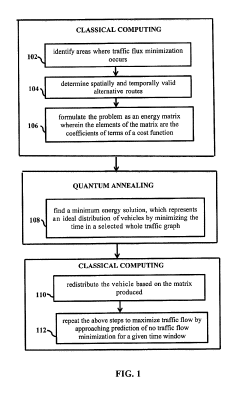
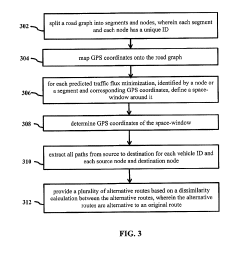
- A method that uses a combination of classical computing for predicting traffic congestion and quantum computing to optimize routes, by determining segments of traffic congestion, identifying vehicles occupying those segments, selecting alternative routes, and providing quantum optimization data to minimize congestion, utilizing a quantum unconstrained binary optimization (QUBO) problem to update vehicle routes.
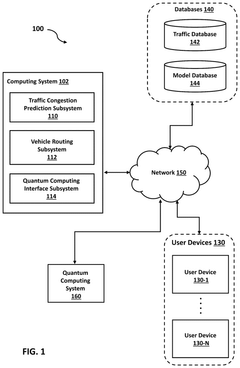
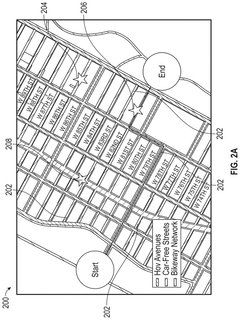
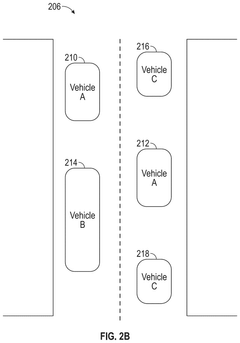
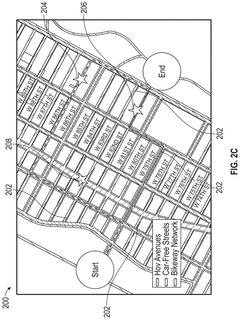
System and method for predicting and maximizing traffic flow
PatentActiveUS20190164418A1
Innovation
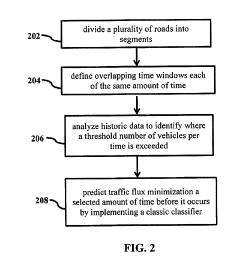
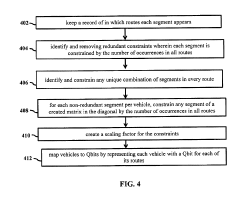
- Combining classical machine learning with quantum annealing to predict traffic flux minimization and optimize vehicle positions, reformulating the problem as a quadratic unconstrained binary optimization (QUBO) to achieve efficient traffic flow maximization by redistributing vehicles across the road network.
Quantum Computing Infrastructure Requirements
Quantum computing infrastructure requirements for traffic congestion solutions demand significant advancements in both hardware and software components. The foundation of this infrastructure lies in the development of stable and scalable quantum processors capable of handling complex traffic optimization algorithms. These processors must maintain quantum coherence for extended periods to perform the necessary calculations effectively.
A critical component of the quantum computing infrastructure is the quantum memory system. This system needs to store and retrieve quantum states with high fidelity, allowing for seamless integration with classical computing systems that manage real-time traffic data. The development of error-correcting codes and fault-tolerant quantum circuits is essential to mitigate the effects of decoherence and maintain the integrity of quantum computations.
Quantum-classical hybrid systems play a crucial role in bridging the gap between quantum algorithms and classical traffic management systems. These hybrid architectures require sophisticated interfaces that can translate classical traffic data into quantum states and vice versa. The development of efficient quantum-classical algorithms is necessary to leverage the strengths of both computing paradigms in solving traffic congestion problems.
Quantum networking infrastructure is another vital component, enabling the distribution of quantum information across different traffic management nodes. This infrastructure includes quantum repeaters and quantum routers capable of maintaining quantum coherence over long distances. Secure quantum communication protocols are essential to protect sensitive traffic data and ensure the integrity of the quantum-enhanced traffic management system.
The software infrastructure for quantum computing in traffic congestion solutions encompasses quantum algorithm development platforms, simulation tools, and optimization frameworks. These tools must be tailored to address specific traffic flow models and incorporate real-world constraints. Additionally, the infrastructure requires robust quantum compilers that can efficiently translate high-level quantum algorithms into executable quantum circuits, taking into account the specific characteristics of the underlying quantum hardware.
To support the deployment and maintenance of quantum computing infrastructure for traffic management, specialized cooling systems and shielding technologies are necessary. These systems must maintain the quantum processors at ultra-low temperatures and protect them from environmental interference. Furthermore, the infrastructure demands advanced control and measurement systems capable of precise manipulation and readout of quantum states.
A critical component of the quantum computing infrastructure is the quantum memory system. This system needs to store and retrieve quantum states with high fidelity, allowing for seamless integration with classical computing systems that manage real-time traffic data. The development of error-correcting codes and fault-tolerant quantum circuits is essential to mitigate the effects of decoherence and maintain the integrity of quantum computations.
Quantum-classical hybrid systems play a crucial role in bridging the gap between quantum algorithms and classical traffic management systems. These hybrid architectures require sophisticated interfaces that can translate classical traffic data into quantum states and vice versa. The development of efficient quantum-classical algorithms is necessary to leverage the strengths of both computing paradigms in solving traffic congestion problems.
Quantum networking infrastructure is another vital component, enabling the distribution of quantum information across different traffic management nodes. This infrastructure includes quantum repeaters and quantum routers capable of maintaining quantum coherence over long distances. Secure quantum communication protocols are essential to protect sensitive traffic data and ensure the integrity of the quantum-enhanced traffic management system.
The software infrastructure for quantum computing in traffic congestion solutions encompasses quantum algorithm development platforms, simulation tools, and optimization frameworks. These tools must be tailored to address specific traffic flow models and incorporate real-world constraints. Additionally, the infrastructure requires robust quantum compilers that can efficiently translate high-level quantum algorithms into executable quantum circuits, taking into account the specific characteristics of the underlying quantum hardware.
To support the deployment and maintenance of quantum computing infrastructure for traffic management, specialized cooling systems and shielding technologies are necessary. These systems must maintain the quantum processors at ultra-low temperatures and protect them from environmental interference. Furthermore, the infrastructure demands advanced control and measurement systems capable of precise manipulation and readout of quantum states.
Ethical Implications of Quantum-Powered Traffic Systems
The integration of quantum computing techniques into traffic management systems raises significant ethical considerations that must be carefully addressed. As these advanced technologies become more prevalent in urban planning and transportation infrastructure, it is crucial to examine their potential impacts on privacy, fairness, and societal well-being.
One of the primary ethical concerns is the collection and processing of vast amounts of personal data. Quantum-powered traffic systems may require access to real-time location data, travel patterns, and other sensitive information from individuals. This level of surveillance raises questions about privacy rights and the potential for misuse of data. Striking a balance between system efficiency and personal privacy will be a key challenge for policymakers and system designers.
Another important ethical consideration is the potential for bias and discrimination in quantum-powered traffic systems. If not carefully designed and implemented, these systems could inadvertently prioritize certain groups or areas over others, leading to unequal access to transportation resources. For example, algorithms optimizing traffic flow might favor affluent neighborhoods or commercial districts at the expense of underserved communities. Ensuring fairness and equitable distribution of benefits across all segments of society must be a priority in the development of these systems.
The environmental impact of quantum-powered traffic systems also presents ethical challenges. While these systems aim to reduce congestion and improve efficiency, they may inadvertently encourage increased reliance on personal vehicles. This could conflict with broader sustainability goals and efforts to promote public transportation or alternative modes of travel. Balancing the benefits of improved traffic flow with long-term environmental considerations will require careful planning and policy decisions.
There are also concerns about the potential for quantum-powered traffic systems to be vulnerable to hacking or manipulation. Given the critical nature of transportation infrastructure, any security breaches could have severe consequences for public safety and urban functionality. Ensuring robust cybersecurity measures and establishing protocols for system resilience will be essential to maintain public trust and prevent potential misuse.
Furthermore, the implementation of quantum-powered traffic systems may exacerbate existing digital divides. Cities or regions with access to this advanced technology could gain significant advantages in terms of economic development and quality of life. This could lead to increased inequality between urban areas and potentially accelerate rural-urban migration. Addressing these disparities and ensuring equitable access to the benefits of quantum-powered traffic solutions will be crucial for ethical deployment.
One of the primary ethical concerns is the collection and processing of vast amounts of personal data. Quantum-powered traffic systems may require access to real-time location data, travel patterns, and other sensitive information from individuals. This level of surveillance raises questions about privacy rights and the potential for misuse of data. Striking a balance between system efficiency and personal privacy will be a key challenge for policymakers and system designers.
Another important ethical consideration is the potential for bias and discrimination in quantum-powered traffic systems. If not carefully designed and implemented, these systems could inadvertently prioritize certain groups or areas over others, leading to unequal access to transportation resources. For example, algorithms optimizing traffic flow might favor affluent neighborhoods or commercial districts at the expense of underserved communities. Ensuring fairness and equitable distribution of benefits across all segments of society must be a priority in the development of these systems.
The environmental impact of quantum-powered traffic systems also presents ethical challenges. While these systems aim to reduce congestion and improve efficiency, they may inadvertently encourage increased reliance on personal vehicles. This could conflict with broader sustainability goals and efforts to promote public transportation or alternative modes of travel. Balancing the benefits of improved traffic flow with long-term environmental considerations will require careful planning and policy decisions.
There are also concerns about the potential for quantum-powered traffic systems to be vulnerable to hacking or manipulation. Given the critical nature of transportation infrastructure, any security breaches could have severe consequences for public safety and urban functionality. Ensuring robust cybersecurity measures and establishing protocols for system resilience will be essential to maintain public trust and prevent potential misuse.
Furthermore, the implementation of quantum-powered traffic systems may exacerbate existing digital divides. Cities or regions with access to this advanced technology could gain significant advantages in terms of economic development and quality of life. This could lead to increased inequality between urban areas and potentially accelerate rural-urban migration. Addressing these disparities and ensuring equitable access to the benefits of quantum-powered traffic solutions will be crucial for ethical deployment.
Unlock deeper insights with PatSnap Eureka Quick Research — get a full tech report to explore trends and direct your research. Try now!
Generate Your Research Report Instantly with AI Agent
Supercharge your innovation with PatSnap Eureka AI Agent Platform!