

Quantum Computing Techniques for Improving Social Media Algorithms
JUL 17, 20259 MIN READ
Generate Your Research Report Instantly with AI Agent
PatSnap Eureka helps you evaluate technical feasibility & market potential.
Quantum Computing in Social Media: Background and Objectives
Quantum computing has emerged as a revolutionary technology with the potential to transform various industries, including social media. The evolution of quantum computing techniques in the context of social media algorithms represents a significant leap forward in computational capabilities and data processing. This convergence aims to address the growing complexity and scale of social media platforms, which handle vast amounts of user data and interactions daily.
The primary objective of integrating quantum computing techniques into social media algorithms is to enhance the efficiency, accuracy, and sophistication of data analysis and decision-making processes. By leveraging the principles of quantum mechanics, such as superposition and entanglement, quantum computers can potentially perform complex calculations exponentially faster than classical computers. This capability is particularly relevant for social media platforms that require real-time processing of massive datasets to deliver personalized content, targeted advertisements, and improved user experiences.
The development of quantum computing in social media has been driven by several key factors. First, the exponential growth of social media users and the corresponding increase in data generation have pushed traditional computing systems to their limits. Quantum computing offers a promising solution to handle this data deluge more effectively. Second, the need for more accurate predictive models and recommendation systems has spurred interest in quantum machine learning algorithms, which could potentially outperform classical algorithms in certain tasks.
As quantum computing technology progresses, its application in social media is expected to evolve through several stages. Initially, hybrid classical-quantum systems may be employed to tackle specific computational bottlenecks within existing social media algorithms. As quantum hardware becomes more advanced and accessible, we may see a gradual shift towards fully quantum-powered social media platforms, capable of processing and analyzing user data with unprecedented speed and accuracy.
The integration of quantum computing into social media algorithms also raises important considerations regarding privacy, security, and ethical use of data. While quantum computing offers enhanced computational power, it also presents new challenges in data protection and encryption. As such, the development of quantum-safe cryptography and secure quantum communication protocols is crucial to ensure the responsible implementation of these technologies in social media platforms.
In conclusion, the exploration of quantum computing techniques for improving social media algorithms represents a cutting-edge intersection of two rapidly evolving fields. This technological convergence holds the promise of revolutionizing how social media platforms operate, interact with users, and process vast amounts of data. As research and development in this area continue, we can anticipate significant advancements that will shape the future of social media and digital communication.
The primary objective of integrating quantum computing techniques into social media algorithms is to enhance the efficiency, accuracy, and sophistication of data analysis and decision-making processes. By leveraging the principles of quantum mechanics, such as superposition and entanglement, quantum computers can potentially perform complex calculations exponentially faster than classical computers. This capability is particularly relevant for social media platforms that require real-time processing of massive datasets to deliver personalized content, targeted advertisements, and improved user experiences.
The development of quantum computing in social media has been driven by several key factors. First, the exponential growth of social media users and the corresponding increase in data generation have pushed traditional computing systems to their limits. Quantum computing offers a promising solution to handle this data deluge more effectively. Second, the need for more accurate predictive models and recommendation systems has spurred interest in quantum machine learning algorithms, which could potentially outperform classical algorithms in certain tasks.
As quantum computing technology progresses, its application in social media is expected to evolve through several stages. Initially, hybrid classical-quantum systems may be employed to tackle specific computational bottlenecks within existing social media algorithms. As quantum hardware becomes more advanced and accessible, we may see a gradual shift towards fully quantum-powered social media platforms, capable of processing and analyzing user data with unprecedented speed and accuracy.
The integration of quantum computing into social media algorithms also raises important considerations regarding privacy, security, and ethical use of data. While quantum computing offers enhanced computational power, it also presents new challenges in data protection and encryption. As such, the development of quantum-safe cryptography and secure quantum communication protocols is crucial to ensure the responsible implementation of these technologies in social media platforms.
In conclusion, the exploration of quantum computing techniques for improving social media algorithms represents a cutting-edge intersection of two rapidly evolving fields. This technological convergence holds the promise of revolutionizing how social media platforms operate, interact with users, and process vast amounts of data. As research and development in this area continue, we can anticipate significant advancements that will shape the future of social media and digital communication.
Market Analysis of Quantum-Enhanced Social Platforms
The market for quantum-enhanced social platforms is rapidly evolving, driven by the increasing demand for more efficient and personalized social media experiences. As quantum computing techniques are applied to improve social media algorithms, a new landscape of opportunities and challenges is emerging for both established tech giants and innovative startups.
The global social media market, valued at $159.68 billion in 2021, is projected to grow at a CAGR of 25.7% from 2022 to 2030. This growth is expected to be further accelerated by the integration of quantum computing technologies. Early adopters of quantum-enhanced algorithms are likely to gain a significant competitive advantage, potentially reshaping market dynamics.
Major social media platforms are investing heavily in quantum research and development. Facebook (Meta), Google, and Twitter have all announced initiatives to explore quantum computing applications for their algorithms. These investments signal a strong belief in the transformative potential of quantum technologies for social media optimization.
The market for quantum-enhanced social platforms is not limited to existing social media giants. A new wave of startups is emerging, focusing on developing quantum-native social media solutions. These companies aim to leverage quantum algorithms from the ground up, potentially offering unprecedented levels of personalization and engagement.
Geographically, North America currently leads in quantum computing research and its application to social media. However, significant investments and advancements are also being made in Europe and Asia, particularly in China, Japan, and South Korea. This global distribution of innovation hubs is likely to shape the future market landscape for quantum-enhanced social platforms.
Consumer demand for improved privacy and data security is driving interest in quantum-enhanced encryption for social media communications. This presents a unique market opportunity for platforms that can offer quantum-secure messaging and data protection features.
The integration of quantum computing with AI and machine learning for social media analytics is creating a new market segment. Companies offering quantum-enhanced analytics tools for social media marketing and user behavior prediction are experiencing growing demand from businesses seeking to optimize their social media strategies.
As quantum technologies mature, we anticipate a shift in user expectations regarding social media performance and capabilities. This evolving consumer demand is likely to drive further innovation and market growth in quantum-enhanced social platforms over the next decade.
The global social media market, valued at $159.68 billion in 2021, is projected to grow at a CAGR of 25.7% from 2022 to 2030. This growth is expected to be further accelerated by the integration of quantum computing technologies. Early adopters of quantum-enhanced algorithms are likely to gain a significant competitive advantage, potentially reshaping market dynamics.
Major social media platforms are investing heavily in quantum research and development. Facebook (Meta), Google, and Twitter have all announced initiatives to explore quantum computing applications for their algorithms. These investments signal a strong belief in the transformative potential of quantum technologies for social media optimization.
The market for quantum-enhanced social platforms is not limited to existing social media giants. A new wave of startups is emerging, focusing on developing quantum-native social media solutions. These companies aim to leverage quantum algorithms from the ground up, potentially offering unprecedented levels of personalization and engagement.
Geographically, North America currently leads in quantum computing research and its application to social media. However, significant investments and advancements are also being made in Europe and Asia, particularly in China, Japan, and South Korea. This global distribution of innovation hubs is likely to shape the future market landscape for quantum-enhanced social platforms.
Consumer demand for improved privacy and data security is driving interest in quantum-enhanced encryption for social media communications. This presents a unique market opportunity for platforms that can offer quantum-secure messaging and data protection features.
The integration of quantum computing with AI and machine learning for social media analytics is creating a new market segment. Companies offering quantum-enhanced analytics tools for social media marketing and user behavior prediction are experiencing growing demand from businesses seeking to optimize their social media strategies.
As quantum technologies mature, we anticipate a shift in user expectations regarding social media performance and capabilities. This evolving consumer demand is likely to drive further innovation and market growth in quantum-enhanced social platforms over the next decade.
Current Challenges in Quantum-Social Media Integration
The integration of quantum computing techniques with social media algorithms presents several significant challenges that researchers and developers are currently grappling with. One of the primary obstacles is the scalability of quantum systems. While quantum computers have shown promise in solving complex problems, their current capabilities are limited in terms of the number of qubits and coherence time. This limitation makes it difficult to process the vast amounts of data generated by social media platforms in real-time.
Another major challenge lies in the development of quantum algorithms specifically tailored for social media applications. Traditional classical algorithms used in social media analytics and recommendation systems need to be adapted or completely reimagined to leverage the unique properties of quantum computing. This requires a deep understanding of both quantum mechanics and social network dynamics, a combination of expertise that is currently scarce in the industry.
Data encoding and error correction pose additional hurdles in the quantum-social media integration process. Quantum states are inherently fragile and susceptible to environmental noise, which can lead to errors in computation. Developing robust error correction techniques that can maintain the integrity of social media data throughout quantum processing is crucial for the practical implementation of quantum-enhanced social media algorithms.
The issue of quantum-classical interfacing also presents a significant challenge. Social media platforms operate on classical computing infrastructure, and seamlessly integrating quantum processors into this existing framework requires the development of efficient quantum-classical hybrid systems. This includes creating protocols for data transfer between classical and quantum systems, as well as optimizing the allocation of computational tasks between the two paradigms.
Furthermore, the probabilistic nature of quantum measurements introduces challenges in interpreting and utilizing the results of quantum computations in the context of social media algorithms. Developing methods to extract meaningful and actionable insights from quantum outputs that can be reliably applied to social media analytics and decision-making processes is an ongoing area of research.
Lastly, the ethical implications of applying quantum computing to social media algorithms raise important questions. The potential for quantum computers to process and analyze user data at unprecedented scales and speeds heightens concerns about privacy and data security. Addressing these ethical considerations and developing appropriate safeguards will be crucial for the responsible integration of quantum techniques in social media platforms.
Another major challenge lies in the development of quantum algorithms specifically tailored for social media applications. Traditional classical algorithms used in social media analytics and recommendation systems need to be adapted or completely reimagined to leverage the unique properties of quantum computing. This requires a deep understanding of both quantum mechanics and social network dynamics, a combination of expertise that is currently scarce in the industry.
Data encoding and error correction pose additional hurdles in the quantum-social media integration process. Quantum states are inherently fragile and susceptible to environmental noise, which can lead to errors in computation. Developing robust error correction techniques that can maintain the integrity of social media data throughout quantum processing is crucial for the practical implementation of quantum-enhanced social media algorithms.
The issue of quantum-classical interfacing also presents a significant challenge. Social media platforms operate on classical computing infrastructure, and seamlessly integrating quantum processors into this existing framework requires the development of efficient quantum-classical hybrid systems. This includes creating protocols for data transfer between classical and quantum systems, as well as optimizing the allocation of computational tasks between the two paradigms.
Furthermore, the probabilistic nature of quantum measurements introduces challenges in interpreting and utilizing the results of quantum computations in the context of social media algorithms. Developing methods to extract meaningful and actionable insights from quantum outputs that can be reliably applied to social media analytics and decision-making processes is an ongoing area of research.
Lastly, the ethical implications of applying quantum computing to social media algorithms raise important questions. The potential for quantum computers to process and analyze user data at unprecedented scales and speeds heightens concerns about privacy and data security. Addressing these ethical considerations and developing appropriate safeguards will be crucial for the responsible integration of quantum techniques in social media platforms.
Existing Quantum Techniques for Social Algorithms
01 Quantum-enhanced recommendation algorithms
Quantum computing techniques are applied to enhance recommendation algorithms used in social media platforms. These quantum algorithms can process vast amounts of user data more efficiently, leading to more accurate and personalized content recommendations. This approach leverages quantum superposition and entanglement to explore multiple recommendation possibilities simultaneously, potentially improving user engagement and experience on social media platforms.- Quantum-enhanced recommendation algorithms: Quantum computing techniques are applied to enhance recommendation algorithms used in social media platforms. These quantum algorithms can process vast amounts of user data more efficiently, leading to more accurate and personalized content recommendations. This approach leverages quantum superposition and entanglement to analyze complex user behavior patterns and preferences.
- Quantum machine learning for sentiment analysis: Quantum machine learning algorithms are utilized to improve sentiment analysis in social media content. These quantum-based models can process and classify large volumes of text data more efficiently than classical algorithms, enabling real-time sentiment tracking and trend analysis across social media platforms.
- Quantum-secure encryption for social media data: Quantum computing techniques are employed to develop advanced encryption methods for securing social media data. These quantum-resistant cryptographic algorithms aim to protect user information and communications from potential threats posed by future quantum computers, ensuring long-term data privacy and security on social media platforms.
- Quantum-inspired optimization for content distribution: Quantum-inspired algorithms are applied to optimize content distribution and network traffic management in social media platforms. These techniques draw inspiration from quantum principles to solve complex optimization problems, improving the efficiency of content delivery and reducing latency in social media applications.
- Quantum computing for user behavior prediction: Quantum computing techniques are used to enhance user behavior prediction models in social media algorithms. These quantum-based predictive models can process multidimensional user data more effectively, leading to improved accuracy in forecasting user actions, preferences, and engagement patterns on social media platforms.
02 Quantum machine learning for sentiment analysis
Quantum machine learning algorithms are utilized to improve sentiment analysis in social media content. These quantum-based techniques can process and analyze text data more efficiently, enabling more accurate detection of user emotions and opinions. This can lead to better understanding of user behavior, improved content moderation, and more targeted advertising on social media platforms.Expand Specific Solutions03 Quantum-secure encryption for social media data
Quantum computing techniques are employed to develop advanced encryption methods for securing social media data. These quantum-resistant cryptographic algorithms aim to protect user information and communications from potential threats posed by future quantum computers. This approach ensures long-term data security and privacy for social media users in the post-quantum era.Expand Specific Solutions04 Quantum-inspired optimization for network analysis
Quantum-inspired algorithms are used to optimize network analysis in social media platforms. These techniques can efficiently process complex network structures, enabling better understanding of user connections, information flow, and community detection. This approach can lead to improved targeted advertising, content distribution, and overall user experience on social media platforms.Expand Specific Solutions05 Quantum computing for real-time data processing
Quantum computing techniques are applied to enhance real-time data processing capabilities in social media algorithms. This approach allows for faster analysis of streaming data, enabling more responsive and adaptive content delivery, trend detection, and user interaction analysis. The improved processing speed can lead to more dynamic and engaging social media experiences for users.Expand Specific Solutions
Key Players in Quantum Computing and Social Media
The quantum computing techniques for improving social media algorithms are in an early developmental stage, with the market still emerging and relatively small. The technology's maturity is low, but rapidly advancing. Key players like Google, Microsoft, and IBM are investing heavily in quantum research, while startups such as Zapata Computing and 1QB Information Technologies are focusing on quantum software applications. Traditional tech giants and social media companies are exploring potential integrations, but practical implementations remain limited. The field is characterized by intense competition and collaboration between academia, industry, and government research institutions, with universities like MIT and Caltech playing crucial roles in advancing fundamental quantum science.
Google LLC
Technical Solution: Google's approach to quantum computing for social media algorithms involves the development of quantum machine learning techniques. They are exploring the use of quantum neural networks and quantum approximate optimization algorithms (QAOA) to enhance recommendation systems and content filtering. Google's Sycamore quantum processor has demonstrated quantum supremacy[1], which could potentially be applied to process complex social media data structures more efficiently. Their research also focuses on quantum-inspired algorithms that can run on classical hardware, providing near-term benefits to social media platforms[2]. Google is investigating quantum annealing techniques for optimizing ad placement and user engagement metrics, which could revolutionize social media monetization strategies.
Strengths: Advanced quantum hardware, extensive classical computing infrastructure, and deep expertise in AI and machine learning. Weaknesses: Quantum technologies are still in early stages, and practical applications for social media may be years away.
Zapata Computing, Inc.
Technical Solution: Zapata Computing specializes in quantum-enabled machine learning solutions that could be applied to social media algorithms. Their Orquestra platform integrates quantum and classical computing resources, allowing for hybrid quantum-classical approaches to data analysis and prediction[3]. For social media applications, Zapata is developing quantum algorithms for graph analysis, which could significantly improve the efficiency of social network analysis and influence mapping. They are also working on quantum-enhanced natural language processing techniques that could revolutionize content understanding and recommendation systems on social platforms. Zapata's research includes quantum approaches to privacy-preserving machine learning, which is crucial for handling sensitive user data in social media contexts[4].
Strengths: Specialized in quantum software and algorithms, with a focus on near-term quantum applications. Weaknesses: Reliance on hardware developments from other companies, limited direct experience with social media platforms.
Breakthrough Quantum Methods for Social Optimization
Quantum Computer with Improved Quantum Optimization by Exploiting Marginal Data
PatentPendingUS20230289636A1
Innovation
- A quantum optimization method that estimates the expectation value of a Hamiltonian on a classical computer and transforms either the Hamiltonian or the quantum state to reduce the expectation value, using techniques such as unitary transformations, fermionic rotations, and semidefinite programming, effectively increasing circuit depth without adding actual quantum gates, thereby improving the expressibility and coherence of quantum states.
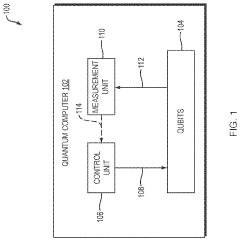

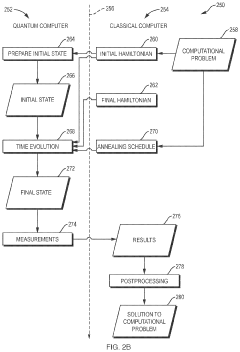
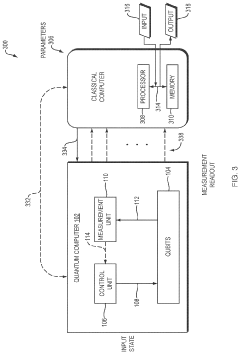
Systems and methods for estimating and/or improving user engagement in social media content
PatentActiveUS10990883B2
Innovation
- A system that processes social media content records, user reaction records, and engagement metrics to derive a relationship between emotion categories and engagement metrics, using emotion tokens and categories to determine the effectiveness of social media content and improve user engagement.


Quantum-Social Ethical and Privacy Considerations
The integration of quantum computing techniques with social media algorithms raises significant ethical and privacy concerns that must be carefully addressed. As quantum computing enhances the capabilities of social media platforms to process and analyze vast amounts of user data, it becomes crucial to establish robust safeguards to protect individual privacy and ensure ethical use of this powerful technology.
One primary concern is the potential for quantum-enhanced algorithms to extract more sensitive information from user data than traditional methods. This increased data mining capability could lead to more invasive profiling and targeted advertising, potentially infringing on users' privacy rights. To mitigate this risk, social media companies must implement stringent data protection measures and provide users with greater control over their personal information.
Another ethical consideration is the potential for quantum-powered algorithms to manipulate user behavior more effectively. The enhanced predictive capabilities of quantum computing could enable more sophisticated recommendation systems that may unduly influence users' opinions, choices, and actions. This raises questions about user autonomy and the responsibility of social media platforms to maintain a balanced and unbiased information ecosystem.
The use of quantum computing in social media algorithms also introduces concerns about data security. While quantum encryption promises enhanced security, the development of quantum computers also threatens to break current encryption methods. This dual nature of quantum technology necessitates a proactive approach to developing quantum-resistant encryption protocols to protect user data from future security breaches.
Furthermore, the implementation of quantum computing in social media algorithms may exacerbate existing issues of algorithmic bias and fairness. As these algorithms become more complex and opaque, ensuring transparency and accountability in their decision-making processes becomes increasingly challenging. Social media companies must invest in developing explainable AI techniques that can be applied to quantum-enhanced algorithms to maintain public trust and comply with evolving regulatory frameworks.
Addressing these ethical and privacy concerns requires a multifaceted approach involving collaboration between technology companies, policymakers, and ethicists. This includes developing new regulatory frameworks that account for the unique challenges posed by quantum-enhanced social media algorithms, implementing robust privacy-preserving techniques such as differential privacy, and fostering a culture of ethical innovation within the tech industry.
One primary concern is the potential for quantum-enhanced algorithms to extract more sensitive information from user data than traditional methods. This increased data mining capability could lead to more invasive profiling and targeted advertising, potentially infringing on users' privacy rights. To mitigate this risk, social media companies must implement stringent data protection measures and provide users with greater control over their personal information.
Another ethical consideration is the potential for quantum-powered algorithms to manipulate user behavior more effectively. The enhanced predictive capabilities of quantum computing could enable more sophisticated recommendation systems that may unduly influence users' opinions, choices, and actions. This raises questions about user autonomy and the responsibility of social media platforms to maintain a balanced and unbiased information ecosystem.
The use of quantum computing in social media algorithms also introduces concerns about data security. While quantum encryption promises enhanced security, the development of quantum computers also threatens to break current encryption methods. This dual nature of quantum technology necessitates a proactive approach to developing quantum-resistant encryption protocols to protect user data from future security breaches.
Furthermore, the implementation of quantum computing in social media algorithms may exacerbate existing issues of algorithmic bias and fairness. As these algorithms become more complex and opaque, ensuring transparency and accountability in their decision-making processes becomes increasingly challenging. Social media companies must invest in developing explainable AI techniques that can be applied to quantum-enhanced algorithms to maintain public trust and comply with evolving regulatory frameworks.
Addressing these ethical and privacy concerns requires a multifaceted approach involving collaboration between technology companies, policymakers, and ethicists. This includes developing new regulatory frameworks that account for the unique challenges posed by quantum-enhanced social media algorithms, implementing robust privacy-preserving techniques such as differential privacy, and fostering a culture of ethical innovation within the tech industry.
Regulatory Framework for Quantum Social Platforms
As quantum computing technologies continue to advance, the potential for their application in social media algorithms raises significant regulatory concerns. The development of a comprehensive regulatory framework for quantum social platforms is crucial to ensure responsible innovation, protect user privacy, and maintain fair competition in the digital landscape.
The regulatory framework for quantum social platforms must address several key areas. Firstly, data protection and privacy regulations need to be adapted to account for the unique capabilities of quantum computing. Quantum algorithms may be able to process and analyze vast amounts of user data at unprecedented speeds, potentially leading to more invasive profiling and targeted advertising. Regulators must establish strict guidelines for data collection, storage, and usage in quantum-enhanced social media platforms.
Secondly, the framework should address the potential for quantum algorithms to manipulate user behavior and influence public opinion on a scale far beyond current capabilities. This may require the implementation of transparency measures, such as mandatory disclosure of quantum-enhanced content curation algorithms and their potential impacts on user experiences.
Antitrust considerations are another critical aspect of the regulatory framework. As quantum computing technologies may create significant barriers to entry for smaller companies, regulators must ensure that the market remains competitive and prevents the formation of quantum-powered monopolies in the social media space.
The framework should also include provisions for algorithmic accountability and auditing. Given the complexity of quantum algorithms, traditional methods of algorithmic oversight may prove insufficient. Regulators may need to develop new tools and methodologies to assess the fairness, bias, and societal impact of quantum-enhanced social media algorithms.
Cybersecurity regulations must be updated to address the unique challenges posed by quantum computing. While quantum technologies offer enhanced encryption capabilities, they also have the potential to break existing cryptographic systems. The regulatory framework should mandate the implementation of quantum-resistant security measures to protect user data and platform integrity.
International cooperation will be essential in developing a cohesive regulatory approach to quantum social platforms. As these technologies transcend national boundaries, a global consensus on regulatory standards and enforcement mechanisms will be necessary to ensure consistent protection for users worldwide.
Lastly, the regulatory framework should include provisions for ongoing research and assessment of the societal impacts of quantum-enhanced social media. This may involve establishing dedicated research bodies or funding initiatives to study the long-term effects of these technologies on individual and collective behavior, mental health, and social cohesion.
The regulatory framework for quantum social platforms must address several key areas. Firstly, data protection and privacy regulations need to be adapted to account for the unique capabilities of quantum computing. Quantum algorithms may be able to process and analyze vast amounts of user data at unprecedented speeds, potentially leading to more invasive profiling and targeted advertising. Regulators must establish strict guidelines for data collection, storage, and usage in quantum-enhanced social media platforms.
Secondly, the framework should address the potential for quantum algorithms to manipulate user behavior and influence public opinion on a scale far beyond current capabilities. This may require the implementation of transparency measures, such as mandatory disclosure of quantum-enhanced content curation algorithms and their potential impacts on user experiences.
Antitrust considerations are another critical aspect of the regulatory framework. As quantum computing technologies may create significant barriers to entry for smaller companies, regulators must ensure that the market remains competitive and prevents the formation of quantum-powered monopolies in the social media space.
The framework should also include provisions for algorithmic accountability and auditing. Given the complexity of quantum algorithms, traditional methods of algorithmic oversight may prove insufficient. Regulators may need to develop new tools and methodologies to assess the fairness, bias, and societal impact of quantum-enhanced social media algorithms.
Cybersecurity regulations must be updated to address the unique challenges posed by quantum computing. While quantum technologies offer enhanced encryption capabilities, they also have the potential to break existing cryptographic systems. The regulatory framework should mandate the implementation of quantum-resistant security measures to protect user data and platform integrity.
International cooperation will be essential in developing a cohesive regulatory approach to quantum social platforms. As these technologies transcend national boundaries, a global consensus on regulatory standards and enforcement mechanisms will be necessary to ensure consistent protection for users worldwide.
Lastly, the regulatory framework should include provisions for ongoing research and assessment of the societal impacts of quantum-enhanced social media. This may involve establishing dedicated research bodies or funding initiatives to study the long-term effects of these technologies on individual and collective behavior, mental health, and social cohesion.
Unlock deeper insights with PatSnap Eureka Quick Research — get a full tech report to explore trends and direct your research. Try now!
Generate Your Research Report Instantly with AI Agent
Supercharge your innovation with PatSnap Eureka AI Agent Platform!