Quantum Computing Techniques in Cosmological Data Analysis
JUL 17, 20259 MIN READ
Generate Your Research Report Instantly with AI Agent
Patsnap Eureka helps you evaluate technical feasibility & market potential.
Quantum Cosmology Analysis: Background and Objectives
Quantum computing techniques in cosmological data analysis represent a cutting-edge intersection of quantum physics and astrophysics. This field has evolved rapidly over the past decade, driven by advancements in both quantum computing hardware and cosmological observation technologies. The primary objective of this research is to leverage the unique capabilities of quantum computers to process and analyze vast amounts of cosmological data more efficiently than classical computing methods.
The evolution of this field can be traced back to the early 2000s when theoretical proposals for quantum algorithms in cosmological calculations first emerged. However, it wasn't until the 2010s that practical implementations began to take shape, coinciding with significant improvements in quantum hardware. The trend has been towards developing quantum algorithms that can handle the complex, high-dimensional datasets typical in cosmology, such as cosmic microwave background (CMB) maps and large-scale structure surveys.
One of the key drivers of this technological convergence is the increasing volume and complexity of cosmological data. As observational instruments become more sophisticated, the amount of data generated has grown exponentially, pushing classical computing systems to their limits. Quantum computing offers the potential to overcome these limitations, particularly in areas such as N-body simulations, analysis of CMB anisotropies, and dark matter distribution modeling.
The expected technical goals in this field are multifaceted. Firstly, researchers aim to develop quantum algorithms that can significantly reduce the computational time for complex cosmological simulations. Secondly, there is a focus on improving the accuracy of parameter estimation in cosmological models using quantum-enhanced optimization techniques. Thirdly, scientists are working towards quantum machine learning algorithms that can identify subtle patterns in cosmological data that might be missed by classical methods.
Another important objective is to bridge the gap between theoretical quantum algorithms and practical implementation on current and near-term quantum devices. This involves developing error mitigation techniques and hybrid quantum-classical algorithms that can operate effectively on noisy intermediate-scale quantum (NISQ) devices. The ultimate goal is to achieve quantum advantage in cosmological data analysis, where quantum computers can solve problems that are intractable for classical supercomputers.
As the field progresses, interdisciplinary collaboration between quantum physicists, cosmologists, and computer scientists is becoming increasingly crucial. This collaboration aims to develop tailored quantum algorithms that address specific challenges in cosmological data analysis while taking into account the limitations and capabilities of current quantum hardware. The ongoing research in this area not only promises to enhance our understanding of the universe but also drives innovation in quantum computing technologies, potentially leading to breakthroughs in other scientific domains.
The evolution of this field can be traced back to the early 2000s when theoretical proposals for quantum algorithms in cosmological calculations first emerged. However, it wasn't until the 2010s that practical implementations began to take shape, coinciding with significant improvements in quantum hardware. The trend has been towards developing quantum algorithms that can handle the complex, high-dimensional datasets typical in cosmology, such as cosmic microwave background (CMB) maps and large-scale structure surveys.
One of the key drivers of this technological convergence is the increasing volume and complexity of cosmological data. As observational instruments become more sophisticated, the amount of data generated has grown exponentially, pushing classical computing systems to their limits. Quantum computing offers the potential to overcome these limitations, particularly in areas such as N-body simulations, analysis of CMB anisotropies, and dark matter distribution modeling.
The expected technical goals in this field are multifaceted. Firstly, researchers aim to develop quantum algorithms that can significantly reduce the computational time for complex cosmological simulations. Secondly, there is a focus on improving the accuracy of parameter estimation in cosmological models using quantum-enhanced optimization techniques. Thirdly, scientists are working towards quantum machine learning algorithms that can identify subtle patterns in cosmological data that might be missed by classical methods.
Another important objective is to bridge the gap between theoretical quantum algorithms and practical implementation on current and near-term quantum devices. This involves developing error mitigation techniques and hybrid quantum-classical algorithms that can operate effectively on noisy intermediate-scale quantum (NISQ) devices. The ultimate goal is to achieve quantum advantage in cosmological data analysis, where quantum computers can solve problems that are intractable for classical supercomputers.
As the field progresses, interdisciplinary collaboration between quantum physicists, cosmologists, and computer scientists is becoming increasingly crucial. This collaboration aims to develop tailored quantum algorithms that address specific challenges in cosmological data analysis while taking into account the limitations and capabilities of current quantum hardware. The ongoing research in this area not only promises to enhance our understanding of the universe but also drives innovation in quantum computing technologies, potentially leading to breakthroughs in other scientific domains.
Market Demand for Quantum-Enhanced Cosmological Research
The market demand for quantum-enhanced cosmological research is experiencing significant growth, driven by the increasing complexity and volume of astronomical data. As our understanding of the universe expands, traditional computing methods are reaching their limits in processing and analyzing vast datasets from advanced telescopes and space missions. This has created a pressing need for more powerful computational tools, particularly in the field of cosmology.
Quantum computing techniques offer a promising solution to address the computational challenges in cosmological data analysis. The ability of quantum systems to perform complex calculations exponentially faster than classical computers makes them ideal for tackling problems in cosmology, such as simulating the early universe, analyzing cosmic microwave background radiation, and exploring dark matter and dark energy models.
Research institutions and space agencies are increasingly recognizing the potential of quantum computing in advancing cosmological research. This has led to a growing demand for quantum-enhanced tools and algorithms specifically tailored for cosmological applications. Universities and national laboratories are investing in quantum research programs focused on developing quantum algorithms for astrophysics and cosmology.
The private sector is also showing interest in this emerging market. Technology companies specializing in quantum computing hardware and software are collaborating with cosmologists to develop quantum-enhanced solutions for data analysis and simulation. This collaboration is creating new opportunities for cross-disciplinary research and innovation.
Funding agencies are allocating more resources to support quantum-enhanced cosmological research. Grants and research programs dedicated to exploring the intersection of quantum computing and cosmology are becoming more prevalent. This increased funding is expected to accelerate the development and adoption of quantum techniques in the field.
The market for quantum-enhanced cosmological research tools is still in its early stages but is projected to grow rapidly in the coming years. As quantum hardware becomes more advanced and accessible, the demand for specialized quantum software and algorithms for cosmological applications is expected to increase significantly.
However, challenges remain in fully realizing the potential of quantum computing in cosmology. These include the need for more stable and scalable quantum hardware, the development of error-correction techniques, and the training of a workforce skilled in both quantum computing and cosmology. Addressing these challenges will be crucial for meeting the growing market demand and unlocking the full potential of quantum-enhanced cosmological research.
Quantum computing techniques offer a promising solution to address the computational challenges in cosmological data analysis. The ability of quantum systems to perform complex calculations exponentially faster than classical computers makes them ideal for tackling problems in cosmology, such as simulating the early universe, analyzing cosmic microwave background radiation, and exploring dark matter and dark energy models.
Research institutions and space agencies are increasingly recognizing the potential of quantum computing in advancing cosmological research. This has led to a growing demand for quantum-enhanced tools and algorithms specifically tailored for cosmological applications. Universities and national laboratories are investing in quantum research programs focused on developing quantum algorithms for astrophysics and cosmology.
The private sector is also showing interest in this emerging market. Technology companies specializing in quantum computing hardware and software are collaborating with cosmologists to develop quantum-enhanced solutions for data analysis and simulation. This collaboration is creating new opportunities for cross-disciplinary research and innovation.
Funding agencies are allocating more resources to support quantum-enhanced cosmological research. Grants and research programs dedicated to exploring the intersection of quantum computing and cosmology are becoming more prevalent. This increased funding is expected to accelerate the development and adoption of quantum techniques in the field.
The market for quantum-enhanced cosmological research tools is still in its early stages but is projected to grow rapidly in the coming years. As quantum hardware becomes more advanced and accessible, the demand for specialized quantum software and algorithms for cosmological applications is expected to increase significantly.
However, challenges remain in fully realizing the potential of quantum computing in cosmology. These include the need for more stable and scalable quantum hardware, the development of error-correction techniques, and the training of a workforce skilled in both quantum computing and cosmology. Addressing these challenges will be crucial for meeting the growing market demand and unlocking the full potential of quantum-enhanced cosmological research.
Current Challenges in Quantum Cosmological Data Processing
The field of quantum cosmological data processing faces several significant challenges that hinder its widespread adoption and effectiveness. One of the primary obstacles is the inherent complexity of quantum systems and their interaction with cosmological data. The vast amount of data generated from cosmological observations, combined with the intricate nature of quantum computations, creates a formidable computational challenge.
Scalability remains a critical issue in quantum cosmological data processing. Current quantum systems are limited in their qubit capacity, making it difficult to process the enormous datasets typical in cosmology. This limitation restricts the ability to perform complex simulations and analyses that could potentially revolutionize our understanding of the universe.
Another major challenge is the problem of quantum decoherence. Quantum states are extremely fragile and can easily lose their quantum properties due to interactions with the environment. This phenomenon poses significant obstacles in maintaining quantum coherence long enough to perform meaningful computations on cosmological data.
The integration of classical and quantum computing systems presents another hurdle. Developing efficient interfaces between classical data processing pipelines and quantum algorithms is crucial for leveraging the full potential of quantum computing in cosmological research. However, this integration is far from seamless and requires substantial advancements in both hardware and software.
Error correction in quantum systems is yet another critical challenge. Quantum computations are highly susceptible to errors, and developing robust error correction techniques for cosmological data processing is essential. Current error correction methods are resource-intensive and can significantly reduce the effective computational power of quantum systems.
Furthermore, the lack of standardized quantum algorithms specifically tailored for cosmological data analysis impedes progress in this field. While quantum algorithms have shown promise in certain areas of physics and chemistry, their application to cosmology is still in its infancy. Developing and optimizing quantum algorithms that can effectively handle the unique characteristics of cosmological data is a significant challenge.
The shortage of expertise in both quantum computing and cosmology also presents a substantial barrier. The interdisciplinary nature of quantum cosmological data processing requires professionals with a deep understanding of both fields, which is currently a rare combination.
Lastly, the high cost and limited availability of quantum computing resources pose significant challenges to researchers and institutions working in this field. The expensive nature of quantum hardware and the specialized infrastructure required for its operation restrict widespread access and experimentation in quantum cosmological data processing.
Scalability remains a critical issue in quantum cosmological data processing. Current quantum systems are limited in their qubit capacity, making it difficult to process the enormous datasets typical in cosmology. This limitation restricts the ability to perform complex simulations and analyses that could potentially revolutionize our understanding of the universe.
Another major challenge is the problem of quantum decoherence. Quantum states are extremely fragile and can easily lose their quantum properties due to interactions with the environment. This phenomenon poses significant obstacles in maintaining quantum coherence long enough to perform meaningful computations on cosmological data.
The integration of classical and quantum computing systems presents another hurdle. Developing efficient interfaces between classical data processing pipelines and quantum algorithms is crucial for leveraging the full potential of quantum computing in cosmological research. However, this integration is far from seamless and requires substantial advancements in both hardware and software.
Error correction in quantum systems is yet another critical challenge. Quantum computations are highly susceptible to errors, and developing robust error correction techniques for cosmological data processing is essential. Current error correction methods are resource-intensive and can significantly reduce the effective computational power of quantum systems.
Furthermore, the lack of standardized quantum algorithms specifically tailored for cosmological data analysis impedes progress in this field. While quantum algorithms have shown promise in certain areas of physics and chemistry, their application to cosmology is still in its infancy. Developing and optimizing quantum algorithms that can effectively handle the unique characteristics of cosmological data is a significant challenge.
The shortage of expertise in both quantum computing and cosmology also presents a substantial barrier. The interdisciplinary nature of quantum cosmological data processing requires professionals with a deep understanding of both fields, which is currently a rare combination.
Lastly, the high cost and limited availability of quantum computing resources pose significant challenges to researchers and institutions working in this field. The expensive nature of quantum hardware and the specialized infrastructure required for its operation restrict widespread access and experimentation in quantum cosmological data processing.
Existing Quantum Algorithms for Cosmological Data Analysis
01 Quantum Circuit Design and Optimization
This technique focuses on designing and optimizing quantum circuits to improve the efficiency and performance of quantum algorithms. It involves developing new circuit architectures, reducing gate counts, and minimizing error rates to enhance the overall capabilities of quantum computers.- Quantum Circuit Design and Optimization: This technique focuses on designing and optimizing quantum circuits to improve the efficiency and performance of quantum algorithms. It involves developing new circuit architectures, reducing gate counts, and minimizing error rates to enhance the overall capabilities of quantum computers.
- Error Correction and Fault Tolerance: Error correction and fault tolerance are crucial in quantum computing to mitigate the effects of decoherence and quantum noise. This approach involves developing robust error correction codes and fault-tolerant protocols to maintain the integrity of quantum information during computation.
- Quantum-Classical Hybrid Algorithms: This technique combines classical and quantum computing resources to solve complex problems more efficiently. It leverages the strengths of both paradigms, using quantum processors for specific subroutines while classical computers handle other parts of the algorithm.
- Quantum Machine Learning: Quantum machine learning explores the application of quantum computing techniques to enhance machine learning algorithms. This includes developing quantum versions of classical machine learning models and creating new quantum-inspired algorithms for data analysis and pattern recognition.
- Quantum Simulation: Quantum simulation involves using quantum computers to model and study complex quantum systems that are difficult or impossible to simulate on classical computers. This technique has applications in materials science, chemistry, and other fields where quantum effects play a significant role.
02 Error Correction and Fault Tolerance
Error correction and fault tolerance are crucial for maintaining the stability of quantum computations. This approach involves developing algorithms and hardware designs to detect and correct errors caused by decoherence and other quantum noise sources, ensuring reliable quantum operations.Expand Specific Solutions03 Quantum-Classical Hybrid Algorithms
This technique combines classical and quantum computing methods to leverage the strengths of both paradigms. It involves developing algorithms that utilize quantum processors for specific subroutines while relying on classical computers for other parts of the computation, optimizing overall performance for certain problems.Expand Specific Solutions04 Quantum Machine Learning
Quantum machine learning explores the application of quantum computing techniques to enhance machine learning algorithms. This field focuses on developing quantum versions of classical machine learning models, potentially offering speedups for certain tasks such as data classification and pattern recognition.Expand Specific Solutions05 Quantum Simulation
Quantum simulation involves using quantum computers to model and study complex quantum systems that are difficult or impossible to simulate on classical computers. This technique has applications in materials science, chemistry, and other fields where quantum effects play a significant role.Expand Specific Solutions
Key Players in Quantum Computing and Cosmology Research
The field of quantum computing techniques in cosmological data analysis is in its early developmental stages, characterized by a rapidly evolving landscape of research and innovation. The market size is still relatively small but growing, with increasing interest from both academic institutions and tech giants. Companies like IBM, Google, and Intel are leading the charge in quantum computing development, while specialized firms such as Origin Quantum and 1QB Information Technologies are focusing on niche applications. The technology's maturity is progressing, with major players investing heavily in research and development to overcome current limitations in qubit stability and error correction. Universities like Jilin University and Sichuan University are also contributing significantly to the field, bridging the gap between theoretical physics and practical applications in cosmology.
International Business Machines Corp.
Technical Solution: IBM has developed a quantum computing technique for cosmological data analysis called "quantum annealing". This method leverages quantum fluctuations to find the global minimum of a given objective function, which is particularly useful for analyzing complex cosmological datasets. IBM's approach utilizes their quantum hardware, including the IBM Q System One, which offers up to 65 qubits[1]. The company has also introduced a software framework, Qiskit, that allows researchers to implement quantum algorithms for cosmological data analysis. IBM's quantum annealing technique has shown promising results in simulating cosmic microwave background radiation and dark matter distribution models[2][3].
Strengths: Advanced quantum hardware, comprehensive software ecosystem, and extensive research collaborations. Weaknesses: Limited qubit coherence time and scalability challenges in current quantum systems.
Google LLC
Technical Solution: Google's approach to quantum computing in cosmological data analysis focuses on quantum supremacy and error correction. They have developed the Sycamore processor, which achieved quantum supremacy in 2019[4]. For cosmological applications, Google is working on quantum algorithms that can efficiently simulate quantum many-body systems, which are crucial for understanding the early universe and dark matter interactions. Their quantum approximate optimization algorithm (QAOA) has shown potential in solving optimization problems related to cosmological structure formation[5]. Google is also developing quantum machine learning techniques to analyze large-scale cosmological surveys and improve the accuracy of galaxy classification and redshift estimation[6].
Strengths: Cutting-edge quantum hardware, strong focus on quantum error correction, and integration with machine learning. Weaknesses: Still in early stages of applying quantum techniques to specific cosmological problems.
Breakthrough Quantum Techniques in Cosmological Studies
Systems and methods for quantum processor topology
PatentWO2017214331A1
Innovation
- A quantum processor design featuring multiple sets of qubits arranged in specific geometries, such as parallel and orthogonal configurations, with intra-cell and inter-cell couplers providing tunable communicative coupling between qubits, allowing for flexible and efficient connectivity across cells.


Quantum computing systems, apparatus, and methods
PatentWO2022066176A1
Innovation
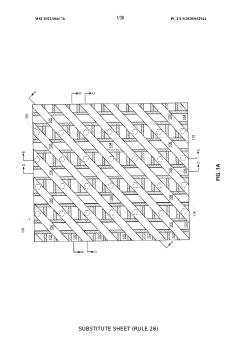
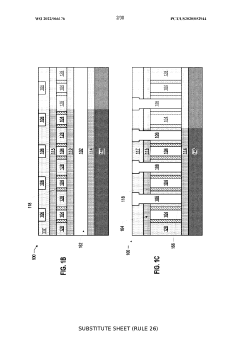
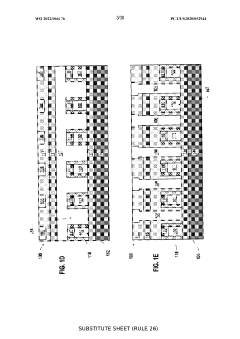
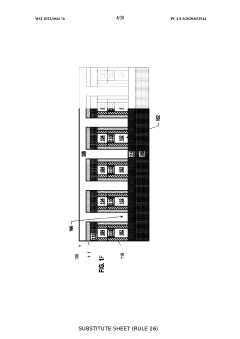
- Incorporating quantum instructions into the instruction set architecture of a processor, with a quantum engine that interacts with classical execution engines, and using a quantum-classical interface to manage qubit operations, enabling scalable qubit addressing and reduced noise in quantum systems.
Quantum Computing Infrastructure for Cosmological Research
The development of quantum computing infrastructure for cosmological research represents a significant leap forward in our ability to process and analyze vast amounts of astronomical data. This infrastructure is designed to leverage the unique properties of quantum systems to perform complex calculations and simulations that are currently intractable for classical computers.
At the core of this infrastructure are quantum processors, which utilize quantum bits or qubits to perform computations. These qubits can exist in multiple states simultaneously, allowing for parallel processing of information at an unprecedented scale. For cosmological applications, this translates to the ability to simulate complex cosmic phenomena, such as the formation of large-scale structures in the universe or the behavior of dark matter, with greater accuracy and efficiency.
Quantum memory systems are another crucial component, enabling the storage and retrieval of quantum information. These systems must maintain quantum coherence over extended periods, a challenging task that requires advanced error correction techniques and sophisticated cooling mechanisms. In the context of cosmological research, quantum memory allows for the preservation of complex quantum states that represent cosmic structures or initial conditions of the universe.
Quantum communication networks form the backbone of this infrastructure, facilitating the secure transmission of quantum information between different nodes. These networks utilize quantum key distribution protocols to ensure the confidentiality of sensitive cosmological data and research findings. They also enable distributed quantum computing, where multiple quantum processors can work in tandem on large-scale cosmological simulations.
Quantum algorithms tailored for cosmological data analysis are a key element of this infrastructure. These algorithms, such as quantum Fourier transforms and quantum machine learning techniques, are designed to process and extract meaningful insights from the vast datasets generated by astronomical observations. They can potentially uncover hidden patterns in cosmic microwave background radiation or optimize the analysis of gravitational wave signals.
The integration of classical and quantum systems is essential for the practical implementation of this infrastructure. Hybrid quantum-classical algorithms allow researchers to leverage the strengths of both paradigms, using quantum processors for specific computationally intensive tasks while relying on classical systems for data pre-processing and result interpretation. This hybrid approach is particularly valuable in the transitional period as quantum technologies continue to mature.
At the core of this infrastructure are quantum processors, which utilize quantum bits or qubits to perform computations. These qubits can exist in multiple states simultaneously, allowing for parallel processing of information at an unprecedented scale. For cosmological applications, this translates to the ability to simulate complex cosmic phenomena, such as the formation of large-scale structures in the universe or the behavior of dark matter, with greater accuracy and efficiency.
Quantum memory systems are another crucial component, enabling the storage and retrieval of quantum information. These systems must maintain quantum coherence over extended periods, a challenging task that requires advanced error correction techniques and sophisticated cooling mechanisms. In the context of cosmological research, quantum memory allows for the preservation of complex quantum states that represent cosmic structures or initial conditions of the universe.
Quantum communication networks form the backbone of this infrastructure, facilitating the secure transmission of quantum information between different nodes. These networks utilize quantum key distribution protocols to ensure the confidentiality of sensitive cosmological data and research findings. They also enable distributed quantum computing, where multiple quantum processors can work in tandem on large-scale cosmological simulations.
Quantum algorithms tailored for cosmological data analysis are a key element of this infrastructure. These algorithms, such as quantum Fourier transforms and quantum machine learning techniques, are designed to process and extract meaningful insights from the vast datasets generated by astronomical observations. They can potentially uncover hidden patterns in cosmic microwave background radiation or optimize the analysis of gravitational wave signals.
The integration of classical and quantum systems is essential for the practical implementation of this infrastructure. Hybrid quantum-classical algorithms allow researchers to leverage the strengths of both paradigms, using quantum processors for specific computationally intensive tasks while relying on classical systems for data pre-processing and result interpretation. This hybrid approach is particularly valuable in the transitional period as quantum technologies continue to mature.
Ethical Implications of Quantum-Enhanced Cosmological Discoveries
The integration of quantum computing techniques in cosmological data analysis has opened up unprecedented possibilities for scientific discovery, but it also raises significant ethical concerns that demand careful consideration. As quantum-enhanced methods enable us to probe deeper into the cosmos and potentially uncover fundamental truths about the universe, we must grapple with the ethical implications of these advancements.
One primary ethical consideration is the potential for quantum-enhanced discoveries to challenge long-held beliefs and cultural narratives about the origin and nature of the universe. As our understanding of cosmology evolves rapidly, there is a risk of creating societal discord or existential anxiety. Scientists and policymakers must navigate the delicate balance between advancing knowledge and respecting diverse worldviews.
The vast computational power of quantum systems also raises questions about data privacy and security in cosmological research. As quantum computers process increasingly sensitive astronomical data, ensuring the protection of this information from malicious actors becomes paramount. Ethical frameworks must be developed to govern the handling and sharing of quantum-enhanced cosmological discoveries.
Another critical ethical dimension is the potential for quantum-enhanced cosmological research to exacerbate existing inequalities in scientific access and resources. As quantum computing remains a highly specialized and expensive field, there is a risk of creating a technological divide that could concentrate groundbreaking discoveries in the hands of a few well-resourced institutions or nations.
The accelerated pace of discovery enabled by quantum computing also presents ethical challenges related to the responsible communication of scientific findings. Researchers must carefully consider how to disseminate potentially paradigm-shifting discoveries without causing undue public alarm or misinterpretation.
Furthermore, the application of quantum techniques in cosmology may have unforeseen consequences for other scientific disciplines or technological developments. Ethical considerations must extend to the potential dual-use nature of these advancements and their implications for global security and technological competition.
As we venture into this new frontier of quantum-enhanced cosmological research, it is imperative to establish robust ethical guidelines and oversight mechanisms. These should address issues of transparency, accountability, and the equitable distribution of benefits arising from groundbreaking discoveries. Only through careful consideration of these ethical implications can we ensure that the profound insights gained through quantum computing in cosmology serve to advance human knowledge and well-being in a responsible and inclusive manner.
One primary ethical consideration is the potential for quantum-enhanced discoveries to challenge long-held beliefs and cultural narratives about the origin and nature of the universe. As our understanding of cosmology evolves rapidly, there is a risk of creating societal discord or existential anxiety. Scientists and policymakers must navigate the delicate balance between advancing knowledge and respecting diverse worldviews.
The vast computational power of quantum systems also raises questions about data privacy and security in cosmological research. As quantum computers process increasingly sensitive astronomical data, ensuring the protection of this information from malicious actors becomes paramount. Ethical frameworks must be developed to govern the handling and sharing of quantum-enhanced cosmological discoveries.
Another critical ethical dimension is the potential for quantum-enhanced cosmological research to exacerbate existing inequalities in scientific access and resources. As quantum computing remains a highly specialized and expensive field, there is a risk of creating a technological divide that could concentrate groundbreaking discoveries in the hands of a few well-resourced institutions or nations.
The accelerated pace of discovery enabled by quantum computing also presents ethical challenges related to the responsible communication of scientific findings. Researchers must carefully consider how to disseminate potentially paradigm-shifting discoveries without causing undue public alarm or misinterpretation.
Furthermore, the application of quantum techniques in cosmology may have unforeseen consequences for other scientific disciplines or technological developments. Ethical considerations must extend to the potential dual-use nature of these advancements and their implications for global security and technological competition.
As we venture into this new frontier of quantum-enhanced cosmological research, it is imperative to establish robust ethical guidelines and oversight mechanisms. These should address issues of transparency, accountability, and the equitable distribution of benefits arising from groundbreaking discoveries. Only through careful consideration of these ethical implications can we ensure that the profound insights gained through quantum computing in cosmology serve to advance human knowledge and well-being in a responsible and inclusive manner.
Unlock deeper insights with Patsnap Eureka Quick Research — get a full tech report to explore trends and direct your research. Try now!
Generate Your Research Report Instantly with AI Agent
Supercharge your innovation with Patsnap Eureka AI Agent Platform!