Regulatory Challenges in Implementing Self-Powered Sensors
OCT 21, 20259 MIN READ
Generate Your Research Report Instantly with AI Agent
PatSnap Eureka helps you evaluate technical feasibility & market potential.
Self-Powered Sensors Regulatory Landscape and Objectives
Self-powered sensors represent a transformative technology that has evolved significantly over the past decade. These autonomous devices generate their own operational energy from ambient sources such as light, vibration, temperature gradients, or electromagnetic fields, eliminating the need for external power supplies or battery replacements. The evolution of this technology can be traced back to early energy harvesting concepts in the 1990s, with significant acceleration occurring after 2010 when advances in low-power electronics and nanomaterials enabled practical implementations.
The regulatory landscape for self-powered sensors presents a complex matrix of challenges across multiple jurisdictions. Currently, these devices operate in a regulatory gray area, as many existing frameworks were designed for conventional powered devices and fail to adequately address the unique characteristics of self-sustaining systems. In the United States, the Federal Communications Commission (FCC) regulates wireless transmission aspects, while the Food and Drug Administration (FDA) oversees medical applications, creating potential regulatory overlap for healthcare-oriented self-powered sensors.
The European Union has implemented the Radio Equipment Directive (RED) and Electromagnetic Compatibility Directive (EMC) which impact self-powered sensor deployment, particularly regarding transmission frequencies and power levels. Additionally, the EU's REACH and RoHS regulations impose strict material restrictions that can limit design options for energy harvesting components. In Asia, particularly China and Japan, separate certification processes create further complexity for global deployment strategies.
The primary regulatory objectives for self-powered sensors include establishing clear classification frameworks that recognize their unique operational characteristics, harmonizing international standards to facilitate global market access, and developing specific safety protocols for various application domains. Particular attention must be directed toward medical, industrial, and consumer applications, each presenting distinct regulatory considerations.
Data privacy and security regulations present another critical dimension, as many self-powered sensors collect and transmit potentially sensitive information. The intersection with frameworks such as GDPR in Europe and CCPA in California creates compliance challenges that must be addressed during early design phases rather than as afterthoughts.
Looking forward, regulatory evolution must balance innovation enablement with appropriate safeguards. The technical goal is to establish internationally recognized standards specifically addressing self-powered sensing technologies, creating a predictable regulatory environment that supports continued advancement while ensuring public safety, electromagnetic compatibility, and data protection. Industry consortia and standards bodies including IEEE and IEC have initiated working groups focused on this emerging technology domain, signaling progress toward more coherent regulatory frameworks.
The regulatory landscape for self-powered sensors presents a complex matrix of challenges across multiple jurisdictions. Currently, these devices operate in a regulatory gray area, as many existing frameworks were designed for conventional powered devices and fail to adequately address the unique characteristics of self-sustaining systems. In the United States, the Federal Communications Commission (FCC) regulates wireless transmission aspects, while the Food and Drug Administration (FDA) oversees medical applications, creating potential regulatory overlap for healthcare-oriented self-powered sensors.
The European Union has implemented the Radio Equipment Directive (RED) and Electromagnetic Compatibility Directive (EMC) which impact self-powered sensor deployment, particularly regarding transmission frequencies and power levels. Additionally, the EU's REACH and RoHS regulations impose strict material restrictions that can limit design options for energy harvesting components. In Asia, particularly China and Japan, separate certification processes create further complexity for global deployment strategies.
The primary regulatory objectives for self-powered sensors include establishing clear classification frameworks that recognize their unique operational characteristics, harmonizing international standards to facilitate global market access, and developing specific safety protocols for various application domains. Particular attention must be directed toward medical, industrial, and consumer applications, each presenting distinct regulatory considerations.
Data privacy and security regulations present another critical dimension, as many self-powered sensors collect and transmit potentially sensitive information. The intersection with frameworks such as GDPR in Europe and CCPA in California creates compliance challenges that must be addressed during early design phases rather than as afterthoughts.
Looking forward, regulatory evolution must balance innovation enablement with appropriate safeguards. The technical goal is to establish internationally recognized standards specifically addressing self-powered sensing technologies, creating a predictable regulatory environment that supports continued advancement while ensuring public safety, electromagnetic compatibility, and data protection. Industry consortia and standards bodies including IEEE and IEC have initiated working groups focused on this emerging technology domain, signaling progress toward more coherent regulatory frameworks.
Market Demand Analysis for Self-Powered Sensing Solutions
The global market for self-powered sensing solutions has witnessed substantial growth in recent years, driven primarily by increasing demands for autonomous monitoring systems across various industries. The compound annual growth rate (CAGR) for self-powered sensors is projected to exceed 12% between 2023 and 2028, reflecting strong market confidence in this technology despite regulatory hurdles.
Industrial automation represents the largest market segment, accounting for approximately 35% of the total demand. Manufacturing facilities are increasingly adopting self-powered sensors to monitor equipment performance, environmental conditions, and production processes without the constraints of wired power sources or frequent battery replacements. This adoption is particularly pronounced in remote or hazardous environments where traditional power infrastructure is impractical.
Healthcare applications constitute the fastest-growing segment, with demand increasing at nearly 18% annually. Medical device manufacturers are integrating self-powered sensors into wearable health monitors, implantable devices, and remote patient monitoring systems. The ability to harvest energy from body heat, movement, or ambient sources addresses critical limitations in battery life and replacement challenges for medical devices.
Smart infrastructure and building management systems represent another significant market opportunity. Energy harvesting sensors for occupancy detection, environmental monitoring, and structural health assessment are gaining traction as cities and corporations pursue sustainability goals and operational efficiency improvements. The reduction in maintenance costs associated with battery replacement has proven to be a compelling value proposition in large-scale deployments.
Consumer electronics manufacturers are also exploring self-powered sensing technologies for next-generation devices. The elimination of charging requirements and extension of operational lifetimes align with consumer preferences for convenience and sustainability. This market segment is expected to grow substantially as energy harvesting efficiencies improve and component costs decrease.
Geographic analysis reveals that North America currently leads in market share, followed closely by Europe and Asia-Pacific. However, the Asia-Pacific region is expected to demonstrate the highest growth rate over the next five years, driven by rapid industrial automation in China, India, and Southeast Asian countries.
Market research indicates that regulatory uncertainty remains a significant barrier to wider adoption, with 68% of surveyed industry stakeholders citing compliance challenges as a major concern. Particularly in healthcare and critical infrastructure applications, the lack of standardized regulatory frameworks for self-powered sensing technologies has slowed market penetration despite strong interest from end-users.
Industrial automation represents the largest market segment, accounting for approximately 35% of the total demand. Manufacturing facilities are increasingly adopting self-powered sensors to monitor equipment performance, environmental conditions, and production processes without the constraints of wired power sources or frequent battery replacements. This adoption is particularly pronounced in remote or hazardous environments where traditional power infrastructure is impractical.
Healthcare applications constitute the fastest-growing segment, with demand increasing at nearly 18% annually. Medical device manufacturers are integrating self-powered sensors into wearable health monitors, implantable devices, and remote patient monitoring systems. The ability to harvest energy from body heat, movement, or ambient sources addresses critical limitations in battery life and replacement challenges for medical devices.
Smart infrastructure and building management systems represent another significant market opportunity. Energy harvesting sensors for occupancy detection, environmental monitoring, and structural health assessment are gaining traction as cities and corporations pursue sustainability goals and operational efficiency improvements. The reduction in maintenance costs associated with battery replacement has proven to be a compelling value proposition in large-scale deployments.
Consumer electronics manufacturers are also exploring self-powered sensing technologies for next-generation devices. The elimination of charging requirements and extension of operational lifetimes align with consumer preferences for convenience and sustainability. This market segment is expected to grow substantially as energy harvesting efficiencies improve and component costs decrease.
Geographic analysis reveals that North America currently leads in market share, followed closely by Europe and Asia-Pacific. However, the Asia-Pacific region is expected to demonstrate the highest growth rate over the next five years, driven by rapid industrial automation in China, India, and Southeast Asian countries.
Market research indicates that regulatory uncertainty remains a significant barrier to wider adoption, with 68% of surveyed industry stakeholders citing compliance challenges as a major concern. Particularly in healthcare and critical infrastructure applications, the lack of standardized regulatory frameworks for self-powered sensing technologies has slowed market penetration despite strong interest from end-users.
Regulatory Barriers and Technical Challenges
The implementation of self-powered sensors faces a complex regulatory landscape that varies significantly across different regions and industries. In the United States, the Federal Communications Commission (FCC) imposes strict regulations on wireless transmission frequencies used by these sensors, requiring extensive certification processes that can delay market entry by 6-18 months. Similarly, the European Union's Radio Equipment Directive (RED) and Electromagnetic Compatibility Directive (EMC) establish comprehensive frameworks that self-powered sensor manufacturers must navigate, with compliance documentation requirements that can be particularly burdensome for small enterprises.
Medical applications of self-powered sensors encounter additional regulatory hurdles through the FDA's medical device approval process in the US and the EU's Medical Device Regulation (MDR), which demand rigorous clinical validation and safety assessments. These processes typically extend development timelines by 2-3 years and increase costs by 30-40%, creating significant barriers to innovation in healthcare applications.
Energy harvesting mechanisms in self-powered sensors also face regulatory scrutiny. Piezoelectric materials may be subject to restrictions under RoHS (Restriction of Hazardous Substances) directives, while thermoelectric generators must comply with thermal safety standards. The lack of standardized regulatory frameworks specifically designed for energy harvesting technologies creates uncertainty and inconsistency in compliance requirements across different markets.
Data privacy regulations present another significant challenge, particularly for sensors deployed in consumer environments or those collecting potentially sensitive information. GDPR in Europe, CCPA in California, and similar regulations worldwide impose strict requirements on data collection, storage, and transmission, necessitating sophisticated encryption and data management protocols that may strain the limited computational resources of self-powered devices.
Technical challenges compound these regulatory barriers. Power constraints fundamentally limit the computational capabilities and transmission ranges of self-powered sensors, restricting their ability to implement complex security protocols or encryption algorithms required by regulations. This creates a paradoxical situation where regulatory compliance may demand features that exceed the energy budget available to self-powered devices.
Interoperability standards remain fragmented across different industries and regions, with competing protocols like Bluetooth LE, Zigbee, and proprietary low-power communication standards. This fragmentation complicates regulatory compliance as manufacturers must potentially certify their devices against multiple standards to ensure market access across different regions, significantly increasing development costs and time-to-market.
Medical applications of self-powered sensors encounter additional regulatory hurdles through the FDA's medical device approval process in the US and the EU's Medical Device Regulation (MDR), which demand rigorous clinical validation and safety assessments. These processes typically extend development timelines by 2-3 years and increase costs by 30-40%, creating significant barriers to innovation in healthcare applications.
Energy harvesting mechanisms in self-powered sensors also face regulatory scrutiny. Piezoelectric materials may be subject to restrictions under RoHS (Restriction of Hazardous Substances) directives, while thermoelectric generators must comply with thermal safety standards. The lack of standardized regulatory frameworks specifically designed for energy harvesting technologies creates uncertainty and inconsistency in compliance requirements across different markets.
Data privacy regulations present another significant challenge, particularly for sensors deployed in consumer environments or those collecting potentially sensitive information. GDPR in Europe, CCPA in California, and similar regulations worldwide impose strict requirements on data collection, storage, and transmission, necessitating sophisticated encryption and data management protocols that may strain the limited computational resources of self-powered devices.
Technical challenges compound these regulatory barriers. Power constraints fundamentally limit the computational capabilities and transmission ranges of self-powered sensors, restricting their ability to implement complex security protocols or encryption algorithms required by regulations. This creates a paradoxical situation where regulatory compliance may demand features that exceed the energy budget available to self-powered devices.
Interoperability standards remain fragmented across different industries and regions, with competing protocols like Bluetooth LE, Zigbee, and proprietary low-power communication standards. This fragmentation complicates regulatory compliance as manufacturers must potentially certify their devices against multiple standards to ensure market access across different regions, significantly increasing development costs and time-to-market.
Current Compliance Frameworks and Solutions
01 Energy harvesting mechanisms for self-powered sensors
Various energy harvesting mechanisms can be employed to power sensors autonomously. These include piezoelectric elements that convert mechanical vibrations into electrical energy, thermoelectric generators that utilize temperature differentials, and photovoltaic cells that convert light into electricity. These energy harvesting technologies enable sensors to operate without external power sources, making them suitable for remote or inaccessible locations.- Energy harvesting mechanisms for self-powered sensors: Various energy harvesting mechanisms can be employed to power sensors autonomously. These include piezoelectric generators that convert mechanical vibrations into electrical energy, thermoelectric generators that utilize temperature differentials, and photovoltaic cells that convert light into electricity. These energy harvesting technologies enable sensors to operate without external power sources, making them suitable for remote or inaccessible locations.
- Wireless self-powered sensor networks: Self-powered sensors can be integrated into wireless sensor networks for various applications. These networks utilize energy-efficient communication protocols to transmit data while minimizing power consumption. The sensors harvest ambient energy to power both the sensing elements and wireless communication modules, enabling long-term deployment without battery replacement or maintenance.
- Triboelectric and mechanical energy harvesting for sensors: Triboelectric nanogenerators and mechanical energy harvesting systems can power sensors by converting motion, friction, or vibration into electrical energy. These systems can utilize everyday movements or environmental vibrations to generate sufficient power for sensor operation. Applications include wearable devices, structural health monitoring, and automotive sensors that leverage motion or vibration as an energy source.
- Power management circuits for self-powered sensors: Specialized power management circuits are essential for optimizing the performance of self-powered sensors. These circuits regulate the harvested energy, store excess power in capacitors or small batteries, and efficiently distribute it to sensor components as needed. Advanced power management techniques include adaptive duty cycling, sleep modes, and prioritized power allocation to extend operational lifetimes of self-powered sensing systems.
- Application-specific self-powered sensor designs: Self-powered sensors are designed for specific applications with unique power requirements and environmental conditions. These include environmental monitoring sensors that operate in remote locations, biomedical sensors that harvest energy from body heat or movement, industrial monitoring sensors that utilize machinery vibrations, and smart infrastructure sensors that can detect and report conditions without external power sources.
02 Wireless self-powered sensor networks
Self-powered sensors can be integrated into wireless sensor networks for various applications. These networks utilize energy-efficient communication protocols to transmit data while minimizing power consumption. The sensors harvest ambient energy from the environment, store it in capacitors or small batteries, and use it for sensing and data transmission operations, enabling long-term deployment without maintenance.Expand Specific Solutions03 Triboelectric and mechanical energy harvesting for sensors
Triboelectric nanogenerators and mechanical energy harvesting systems can power sensors by converting motion, friction, or vibration into electrical energy. These systems can be designed to capture energy from human movement, machine vibrations, or environmental forces. The harvested energy is then used to power sensing elements and associated electronics, enabling continuous operation without external power sources.Expand Specific Solutions04 Self-powered sensors for structural health monitoring
Self-powered sensors can be used for continuous monitoring of structural health in buildings, bridges, and other infrastructure. These sensors harvest energy from ambient vibrations, temperature gradients, or light to power their operation. They can detect structural changes, stress, strain, or damage and transmit this information to monitoring systems, enabling preventive maintenance and early warning of potential failures.Expand Specific Solutions05 Power management systems for self-powered sensors
Advanced power management systems are crucial for optimizing the operation of self-powered sensors. These systems include energy storage elements, power conditioning circuits, and intelligent control algorithms that manage energy harvesting, storage, and consumption. They ensure efficient use of harvested energy by implementing sleep modes, duty cycling, and adaptive sampling rates based on available energy and application requirements.Expand Specific Solutions
Key Industry Players and Regulatory Bodies
The regulatory landscape for self-powered sensors is evolving within a market that shows promising growth yet faces complex implementation challenges. Currently in an early growth phase, this technology sector is expanding as industries seek sustainable IoT solutions, with market projections indicating significant scaling potential. From a technical maturity perspective, companies like EnOcean, Infineon, and Robert Bosch lead with established energy harvesting technologies, while Medtronic, Intel, and Murata Manufacturing are advancing integration capabilities. Academic institutions including Chongqing University and University of Electronic Science & Technology of China contribute valuable research. However, regulatory frameworks remain fragmented across jurisdictions, creating compliance challenges particularly in safety-critical applications, medical implementations, and cross-border deployments.
Robert Bosch GmbH
Technical Solution: Bosch has developed a comprehensive approach to self-powered sensor implementation that addresses regulatory challenges through their Cross-Domain Computing Solutions division. Their technology focuses on ultra-low-power MEMS sensors that can operate on harvested energy from vibration, thermal gradients, and light. Bosch's regulatory compliance strategy includes modular sensor designs with configurable firmware that can be adapted to meet different regional requirements without hardware modifications. Their self-powered sensors incorporate Bosch Sensortec's BMA400 accelerometer which consumes only 4μA in active mode, enabling operation from harvested energy sources. For industrial applications, Bosch has implemented their MEMS sensors with integrated energy harvesting in their Connected Industry solutions, addressing regulatory requirements for hazardous environments (ATEX/IECEx) where battery replacement presents safety concerns. Bosch's approach includes comprehensive documentation and certification processes that streamline regulatory approval across different markets, with particular attention to safety-critical applications in automotive and industrial sectors where self-powered sensors must meet stringent reliability and functional safety requirements.
Strengths: Extensive experience navigating complex regulatory environments across multiple industries; strong vertical integration from sensor manufacturing to system implementation; established relationships with regulatory bodies worldwide. Weaknesses: Complex organizational structure may slow adaptation to rapidly changing regulations; higher cost structure compared to specialized competitors; conservative approach may limit innovation in emerging regulatory frameworks.
Infineon Technologies AG
Technical Solution: Infineon has developed a comprehensive approach to addressing regulatory challenges in self-powered sensor implementations through their XENSIV™ sensor portfolio and energy harvesting solutions. Their technology combines ultra-low-power sensors with specialized power management ICs designed specifically for energy harvesting applications. Infineon's regulatory compliance strategy includes their OPTIGA™ Trust security solutions that enable authenticated and encrypted sensor data transmission while consuming minimal power, addressing data privacy regulations such as GDPR. Their self-powered sensor platforms utilize their TLI4970 current sensors and TLE4964 Hall effect sensors that operate with current consumption as low as 1.6mA, enabling operation from harvested energy sources. For industrial IoT applications, Infineon has implemented their XMC™ microcontrollers with integrated energy harvesting management in their XENSIV™ sensor nodes, addressing regulatory requirements for industrial environments including electromagnetic compatibility and functional safety certifications. Infineon's approach includes comprehensive reference designs and certification support that streamline regulatory approval across different markets, with particular attention to automotive and industrial applications where self-powered sensors must meet stringent reliability and safety requirements.
Strengths: Extensive semiconductor manufacturing expertise enables highly optimized energy-efficient designs; comprehensive product portfolio covering all aspects of self-powered sensor implementation; established relationships with regulatory bodies in key markets. Weaknesses: Complex ecosystem may require significant integration expertise; primarily focused on component-level solutions rather than complete systems; higher cost structure for specialized low-power components compared to general-purpose alternatives.
Critical Patents and Standards for Regulatory Approval
Self-powered sensor
PatentActiveUS8056420B2
Innovation
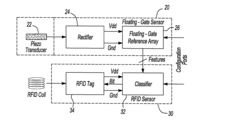
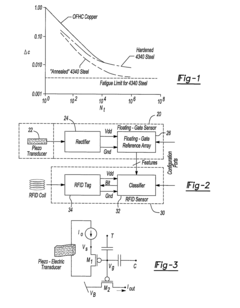
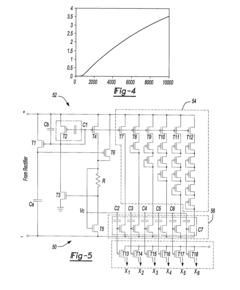
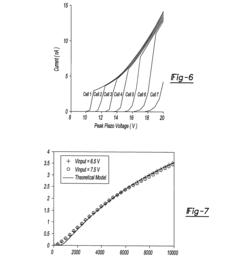
- A self-powered sensor system utilizing a piezoelectric transducer, a non-volatile memory with floating gate transistors, and a current reference circuit that operates in weak-inversion mode, allowing for energy harvesting and efficient storage and computation, while maintaining low power dissipation.
Intervention of independent self-regulation of power consumption devices
PatentInactiveUS7884499B2
Innovation
- A power consumption management system that monitors and adjusts the self-regulating power consumption of multiple components, intervening when the aggregate power or thermal production exceeds a threshold by reducing power consumption or heat dissipation to prevent overheating, while allowing self-regulation within safe limits when conditions are met.


Cross-Border Regulatory Harmonization Strategies
The harmonization of regulatory frameworks across international borders represents a critical pathway for addressing the complex challenges in implementing self-powered sensor technologies globally. Currently, manufacturers face a fragmented regulatory landscape where requirements for certification, safety standards, and compliance documentation vary significantly between regions such as North America, the European Union, and Asia-Pacific markets.
A strategic approach to cross-border regulatory harmonization begins with the identification of common technical standards that can serve as the foundation for mutual recognition agreements. Organizations such as the International Electrotechnical Commission (IEC) and the Institute of Electrical and Electronics Engineers (IEEE) have established working groups specifically focused on developing unified standards for energy harvesting technologies and autonomous sensing systems.
Regulatory sandboxes present another promising mechanism for harmonization, allowing companies to test self-powered sensor implementations in controlled environments across multiple jurisdictions simultaneously. These collaborative testing frameworks enable regulators from different countries to observe technology performance under various conditions and jointly develop appropriate oversight mechanisms without impeding innovation.
Industry consortia have emerged as effective advocates for regulatory alignment, with groups like the Self-Powered Sensor Alliance and the Global IoT Standards Initiative actively engaging with policymakers across borders. These organizations facilitate dialogue between technology developers and regulatory bodies, helping to establish common terminology, testing protocols, and compliance pathways that can be recognized across multiple markets.
The implementation of mutual recognition agreements (MRAs) between major economic regions offers perhaps the most immediate path to reducing regulatory friction. Under these agreements, conformity assessments conducted in one jurisdiction can be accepted by regulatory authorities in partner regions, significantly reducing the need for redundant testing and certification processes that currently delay market entry for self-powered sensor technologies.
Data sharing frameworks between regulatory agencies represent another critical component of harmonization efforts. By establishing secure channels for exchanging information about product performance, safety incidents, and compliance verification, regulators can build trust in each other's oversight processes while maintaining appropriate levels of consumer protection and environmental safeguards across borders.
A strategic approach to cross-border regulatory harmonization begins with the identification of common technical standards that can serve as the foundation for mutual recognition agreements. Organizations such as the International Electrotechnical Commission (IEC) and the Institute of Electrical and Electronics Engineers (IEEE) have established working groups specifically focused on developing unified standards for energy harvesting technologies and autonomous sensing systems.
Regulatory sandboxes present another promising mechanism for harmonization, allowing companies to test self-powered sensor implementations in controlled environments across multiple jurisdictions simultaneously. These collaborative testing frameworks enable regulators from different countries to observe technology performance under various conditions and jointly develop appropriate oversight mechanisms without impeding innovation.
Industry consortia have emerged as effective advocates for regulatory alignment, with groups like the Self-Powered Sensor Alliance and the Global IoT Standards Initiative actively engaging with policymakers across borders. These organizations facilitate dialogue between technology developers and regulatory bodies, helping to establish common terminology, testing protocols, and compliance pathways that can be recognized across multiple markets.
The implementation of mutual recognition agreements (MRAs) between major economic regions offers perhaps the most immediate path to reducing regulatory friction. Under these agreements, conformity assessments conducted in one jurisdiction can be accepted by regulatory authorities in partner regions, significantly reducing the need for redundant testing and certification processes that currently delay market entry for self-powered sensor technologies.
Data sharing frameworks between regulatory agencies represent another critical component of harmonization efforts. By establishing secure channels for exchanging information about product performance, safety incidents, and compliance verification, regulators can build trust in each other's oversight processes while maintaining appropriate levels of consumer protection and environmental safeguards across borders.
Environmental Impact and Sustainability Compliance
The implementation of self-powered sensors presents significant environmental considerations that must be addressed to ensure compliance with increasingly stringent sustainability regulations worldwide. These autonomous sensing devices, while offering reduced energy consumption compared to traditional powered sensors, still face scrutiny regarding their full lifecycle environmental impact. Materials used in energy harvesting components—particularly piezoelectric elements, photovoltaic cells, and thermoelectric generators—often contain rare earth elements and potentially hazardous substances that fall under various regulatory frameworks including RoHS (Restriction of Hazardous Substances), REACH (Registration, Evaluation, Authorization and Restriction of Chemicals), and WEEE (Waste Electrical and Electronic Equipment) directives.
The manufacturing processes for these specialized components typically require energy-intensive procedures and specialized materials, creating a complex sustainability equation that must be balanced against operational benefits. Recent life cycle assessments indicate that while self-powered sensors reduce operational carbon footprint by up to 70% compared to battery-powered alternatives, their production phase environmental impact can be 30-45% higher due to specialized materials and manufacturing requirements.
End-of-life considerations present another regulatory challenge, as current electronic waste frameworks may not adequately address the unique composition of energy harvesting components. The miniaturization trend in self-powered sensors further complicates recycling efforts, as smaller components with integrated functionality become increasingly difficult to disassemble and process through conventional e-waste channels. Several jurisdictions, including the European Union and California, have begun developing specific guidelines for energy harvesting technologies within their broader circular economy initiatives.
Water and soil contamination risks must also be evaluated, particularly for outdoor deployed self-powered sensors that may leach materials over their operational lifetime. Environmental monitoring agencies in multiple countries now require comprehensive leachate testing for sensors deployed in sensitive ecosystems, agricultural settings, or water management systems. Manufacturers must demonstrate compliance with local environmental protection standards, which vary significantly across global markets.
Carbon footprint reporting requirements are increasingly affecting self-powered sensor deployment, with several major corporations and government agencies now mandating carbon accounting for all technological implementations. While self-powered sensors generally offer favorable operational emissions profiles, manufacturers must now provide transparent environmental impact data throughout the product lifecycle to satisfy both regulatory requirements and corporate sustainability goals.
The manufacturing processes for these specialized components typically require energy-intensive procedures and specialized materials, creating a complex sustainability equation that must be balanced against operational benefits. Recent life cycle assessments indicate that while self-powered sensors reduce operational carbon footprint by up to 70% compared to battery-powered alternatives, their production phase environmental impact can be 30-45% higher due to specialized materials and manufacturing requirements.
End-of-life considerations present another regulatory challenge, as current electronic waste frameworks may not adequately address the unique composition of energy harvesting components. The miniaturization trend in self-powered sensors further complicates recycling efforts, as smaller components with integrated functionality become increasingly difficult to disassemble and process through conventional e-waste channels. Several jurisdictions, including the European Union and California, have begun developing specific guidelines for energy harvesting technologies within their broader circular economy initiatives.
Water and soil contamination risks must also be evaluated, particularly for outdoor deployed self-powered sensors that may leach materials over their operational lifetime. Environmental monitoring agencies in multiple countries now require comprehensive leachate testing for sensors deployed in sensitive ecosystems, agricultural settings, or water management systems. Manufacturers must demonstrate compliance with local environmental protection standards, which vary significantly across global markets.
Carbon footprint reporting requirements are increasingly affecting self-powered sensor deployment, with several major corporations and government agencies now mandating carbon accounting for all technological implementations. While self-powered sensors generally offer favorable operational emissions profiles, manufacturers must now provide transparent environmental impact data throughout the product lifecycle to satisfy both regulatory requirements and corporate sustainability goals.
Unlock deeper insights with PatSnap Eureka Quick Research — get a full tech report to explore trends and direct your research. Try now!
Generate Your Research Report Instantly with AI Agent
Supercharge your innovation with PatSnap Eureka AI Agent Platform!