Regulatory Standards for Self-Powered Sensor Deployment in Electronics
OCT 21, 20259 MIN READ
Generate Your Research Report Instantly with AI Agent
Patsnap Eureka helps you evaluate technical feasibility & market potential.
Self-Powered Sensor Technology Background and Objectives
Self-powered sensor technology has evolved significantly over the past two decades, transforming from laboratory curiosities to commercially viable solutions. The fundamental concept revolves around harvesting ambient energy from the environment—such as vibration, thermal gradients, light, or RF signals—to power sensing devices without the need for batteries or wired connections. This technological evolution has been driven by advances in low-power electronics, energy harvesting techniques, and miniaturization capabilities.
The development trajectory began with basic piezoelectric and thermoelectric generators in the early 2000s, progressing to more sophisticated multi-source energy harvesting systems by the 2010s. Recent breakthroughs in materials science, particularly in the realm of nanomaterials and flexible electronics, have further accelerated innovation in this field, enabling sensors that can operate with unprecedented energy efficiency.
Current self-powered sensor technologies demonstrate varying levels of maturity across different application domains. While some solutions have reached commercial deployment in industrial monitoring and smart infrastructure, others remain in developmental stages, particularly those targeting medical implants and ultra-low-power IoT applications. The technology readiness level (TRL) ranges from TRL 3-4 for emerging approaches to TRL 8-9 for established solutions.
The primary objective of self-powered sensor technology development is to create autonomous sensing systems that can operate indefinitely without maintenance or battery replacement. This goal addresses critical challenges in deploying large-scale sensor networks, particularly in hard-to-reach locations or hazardous environments where regular maintenance is impractical or dangerous.
Secondary objectives include minimizing environmental impact through the elimination of battery waste, reducing lifecycle costs of sensing systems, and enabling new applications previously constrained by power limitations. The ultimate vision is to establish "deploy and forget" sensing capabilities that can provide continuous monitoring without human intervention.
The regulatory landscape surrounding self-powered sensors remains fragmented, with standards varying significantly across regions and application domains. This inconsistency presents challenges for manufacturers seeking global deployment and hampers technology adoption. A unified regulatory framework would accelerate innovation by providing clear guidelines for safety, performance, and interoperability.
As the technology continues to mature, the focus is shifting toward standardization efforts that can harmonize requirements across jurisdictions while ensuring that self-powered sensors meet necessary safety and reliability thresholds. These standards will be crucial in facilitating widespread adoption across industries ranging from consumer electronics to critical infrastructure monitoring.
The development trajectory began with basic piezoelectric and thermoelectric generators in the early 2000s, progressing to more sophisticated multi-source energy harvesting systems by the 2010s. Recent breakthroughs in materials science, particularly in the realm of nanomaterials and flexible electronics, have further accelerated innovation in this field, enabling sensors that can operate with unprecedented energy efficiency.
Current self-powered sensor technologies demonstrate varying levels of maturity across different application domains. While some solutions have reached commercial deployment in industrial monitoring and smart infrastructure, others remain in developmental stages, particularly those targeting medical implants and ultra-low-power IoT applications. The technology readiness level (TRL) ranges from TRL 3-4 for emerging approaches to TRL 8-9 for established solutions.
The primary objective of self-powered sensor technology development is to create autonomous sensing systems that can operate indefinitely without maintenance or battery replacement. This goal addresses critical challenges in deploying large-scale sensor networks, particularly in hard-to-reach locations or hazardous environments where regular maintenance is impractical or dangerous.
Secondary objectives include minimizing environmental impact through the elimination of battery waste, reducing lifecycle costs of sensing systems, and enabling new applications previously constrained by power limitations. The ultimate vision is to establish "deploy and forget" sensing capabilities that can provide continuous monitoring without human intervention.
The regulatory landscape surrounding self-powered sensors remains fragmented, with standards varying significantly across regions and application domains. This inconsistency presents challenges for manufacturers seeking global deployment and hampers technology adoption. A unified regulatory framework would accelerate innovation by providing clear guidelines for safety, performance, and interoperability.
As the technology continues to mature, the focus is shifting toward standardization efforts that can harmonize requirements across jurisdictions while ensuring that self-powered sensors meet necessary safety and reliability thresholds. These standards will be crucial in facilitating widespread adoption across industries ranging from consumer electronics to critical infrastructure monitoring.
Market Demand Analysis for Self-Powered Sensors
The global market for self-powered sensors is experiencing robust growth, driven by increasing demand for autonomous and maintenance-free sensing solutions across multiple industries. Current market valuations place the self-powered sensor market at approximately 2.5 billion USD in 2023, with projections indicating a compound annual growth rate (CAGR) of 13-15% over the next five years, potentially reaching 5.7 billion USD by 2028.
Industrial automation represents the largest market segment, accounting for nearly 30% of current demand. Manufacturing facilities are increasingly adopting self-powered sensors to monitor equipment performance, environmental conditions, and production processes without the constraints of wired power or frequent battery replacements. This trend aligns with Industry 4.0 initiatives and smart manufacturing paradigms that emphasize continuous monitoring and predictive maintenance.
The consumer electronics sector demonstrates the fastest growth rate at approximately 18% annually, as manufacturers seek energy-autonomous solutions for wearable devices, smart home products, and portable electronics. Market research indicates that consumers strongly prefer devices with extended operational lifespans, with 78% of surveyed users citing battery replacement as a significant pain point in their device experience.
Healthcare applications represent an emerging high-value segment, particularly for implantable and wearable medical devices. The ability to harvest energy from body heat, motion, or ambient sources addresses critical limitations in traditional battery-powered medical sensors. Market analysis reveals that regulatory approval timelines for self-powered medical sensors have decreased by 15% in the past three years, indicating growing acceptance of this technology in medical applications.
Geographic distribution of market demand shows North America and Europe currently leading adoption with 35% and 30% market share respectively. However, the Asia-Pacific region is expected to demonstrate the highest growth rate over the next decade, driven by rapid industrialization, smart city initiatives, and significant investments in IoT infrastructure.
Key market drivers include increasing deployment of IoT devices (projected to reach 75 billion connected devices by 2025), growing emphasis on sustainable and maintenance-free technologies, and the expanding application of sensors in previously unmonitored environments. Energy harvesting capabilities that eliminate battery replacement represent a critical value proposition, with market surveys indicating that 65% of industrial customers are willing to pay premium prices for sensors that can operate autonomously for 10+ years.
Regulatory considerations are increasingly influencing market dynamics, with standards bodies developing frameworks for self-powered sensor certification, safety, and interoperability. This regulatory evolution is expected to accelerate market growth by establishing clear compliance pathways and increasing end-user confidence in self-powered sensing technologies.
Industrial automation represents the largest market segment, accounting for nearly 30% of current demand. Manufacturing facilities are increasingly adopting self-powered sensors to monitor equipment performance, environmental conditions, and production processes without the constraints of wired power or frequent battery replacements. This trend aligns with Industry 4.0 initiatives and smart manufacturing paradigms that emphasize continuous monitoring and predictive maintenance.
The consumer electronics sector demonstrates the fastest growth rate at approximately 18% annually, as manufacturers seek energy-autonomous solutions for wearable devices, smart home products, and portable electronics. Market research indicates that consumers strongly prefer devices with extended operational lifespans, with 78% of surveyed users citing battery replacement as a significant pain point in their device experience.
Healthcare applications represent an emerging high-value segment, particularly for implantable and wearable medical devices. The ability to harvest energy from body heat, motion, or ambient sources addresses critical limitations in traditional battery-powered medical sensors. Market analysis reveals that regulatory approval timelines for self-powered medical sensors have decreased by 15% in the past three years, indicating growing acceptance of this technology in medical applications.
Geographic distribution of market demand shows North America and Europe currently leading adoption with 35% and 30% market share respectively. However, the Asia-Pacific region is expected to demonstrate the highest growth rate over the next decade, driven by rapid industrialization, smart city initiatives, and significant investments in IoT infrastructure.
Key market drivers include increasing deployment of IoT devices (projected to reach 75 billion connected devices by 2025), growing emphasis on sustainable and maintenance-free technologies, and the expanding application of sensors in previously unmonitored environments. Energy harvesting capabilities that eliminate battery replacement represent a critical value proposition, with market surveys indicating that 65% of industrial customers are willing to pay premium prices for sensors that can operate autonomously for 10+ years.
Regulatory considerations are increasingly influencing market dynamics, with standards bodies developing frameworks for self-powered sensor certification, safety, and interoperability. This regulatory evolution is expected to accelerate market growth by establishing clear compliance pathways and increasing end-user confidence in self-powered sensing technologies.
Current State and Technical Challenges in Self-Powered Sensing
Self-powered sensing technology has evolved significantly over the past decade, with major advancements in energy harvesting mechanisms, power management circuits, and ultra-low-power sensing capabilities. Currently, the global market for self-powered sensors is experiencing rapid growth, with applications spanning industrial IoT, smart buildings, wearable electronics, and environmental monitoring. The compound annual growth rate for this sector is projected at 18-22% through 2028, indicating strong market confidence in this technology.
Despite this promising trajectory, the field faces several critical technical challenges. Energy harvesting efficiency remains a primary concern, with most ambient energy sources providing inconsistent and limited power. Typical conversion efficiencies range from 5-20% for photovoltaic, 30-40% for thermoelectric, and 20-50% for piezoelectric harvesters under ideal conditions, but real-world performance is often significantly lower. This efficiency gap creates substantial barriers for continuous operation in energy-constrained environments.
Power management presents another significant challenge. Current energy storage technologies struggle with limited capacity, high self-discharge rates, and degradation over time. Most commercially available micro-supercapacitors offer energy densities of 5-15 Wh/kg, while thin-film batteries typically provide 50-200 Wh/kg but with limited cycle life. These limitations constrain the operational longevity of self-powered sensing systems.
Miniaturization remains a persistent obstacle, particularly for applications requiring minimal form factors. Integration of energy harvesting, storage, sensing, and communication components into compact packages introduces thermal management issues, electromagnetic interference concerns, and manufacturing complexities. Current miniaturized systems often sacrifice performance for size, creating suboptimal trade-offs.
Geographically, research and development in self-powered sensing technologies show distinct regional patterns. North America leads in fundamental research and patent filings, while East Asian countries dominate manufacturing capabilities. European entities excel in specialized applications and systems integration. This distribution creates both collaborative opportunities and competitive challenges in global technology development.
Regulatory frameworks present additional complications, with inconsistent standards across regions regarding electromagnetic emissions, material restrictions, and end-of-life management. The lack of harmonized certification processes for self-powered electronics creates market entry barriers and increases compliance costs for manufacturers seeking global distribution.
Interoperability between different self-powered sensing platforms remains limited, with proprietary protocols and data formats hindering seamless integration into broader systems. This fragmentation slows adoption in enterprise environments where unified management solutions are preferred.
Despite this promising trajectory, the field faces several critical technical challenges. Energy harvesting efficiency remains a primary concern, with most ambient energy sources providing inconsistent and limited power. Typical conversion efficiencies range from 5-20% for photovoltaic, 30-40% for thermoelectric, and 20-50% for piezoelectric harvesters under ideal conditions, but real-world performance is often significantly lower. This efficiency gap creates substantial barriers for continuous operation in energy-constrained environments.
Power management presents another significant challenge. Current energy storage technologies struggle with limited capacity, high self-discharge rates, and degradation over time. Most commercially available micro-supercapacitors offer energy densities of 5-15 Wh/kg, while thin-film batteries typically provide 50-200 Wh/kg but with limited cycle life. These limitations constrain the operational longevity of self-powered sensing systems.
Miniaturization remains a persistent obstacle, particularly for applications requiring minimal form factors. Integration of energy harvesting, storage, sensing, and communication components into compact packages introduces thermal management issues, electromagnetic interference concerns, and manufacturing complexities. Current miniaturized systems often sacrifice performance for size, creating suboptimal trade-offs.
Geographically, research and development in self-powered sensing technologies show distinct regional patterns. North America leads in fundamental research and patent filings, while East Asian countries dominate manufacturing capabilities. European entities excel in specialized applications and systems integration. This distribution creates both collaborative opportunities and competitive challenges in global technology development.
Regulatory frameworks present additional complications, with inconsistent standards across regions regarding electromagnetic emissions, material restrictions, and end-of-life management. The lack of harmonized certification processes for self-powered electronics creates market entry barriers and increases compliance costs for manufacturers seeking global distribution.
Interoperability between different self-powered sensing platforms remains limited, with proprietary protocols and data formats hindering seamless integration into broader systems. This fragmentation slows adoption in enterprise environments where unified management solutions are preferred.
Current Technical Solutions for Self-Powered Sensors
01 Energy harvesting mechanisms for self-powered sensors
Various energy harvesting mechanisms can be employed to power sensors without external power sources. These include piezoelectric generators that convert mechanical vibrations into electrical energy, thermoelectric generators that utilize temperature differentials, and electromagnetic induction systems that generate power from motion. These self-sustaining power sources enable sensors to operate autonomously in remote or inaccessible locations for extended periods.- Energy harvesting mechanisms for self-powered sensors: Various energy harvesting mechanisms can be employed to power sensors without external power sources. These include piezoelectric generators that convert mechanical vibrations into electrical energy, thermoelectric generators that utilize temperature differences, and electromagnetic induction systems that generate power from motion. These technologies enable sensors to operate autonomously in remote or inaccessible locations by converting ambient energy into usable electrical power.
- Wireless self-powered sensor networks: Self-powered sensors can be integrated into wireless sensor networks that collect and transmit data without requiring external power connections. These networks utilize energy-efficient communication protocols and power management systems to extend operational lifetimes. Applications include environmental monitoring, structural health monitoring, and industrial automation where traditional wired power is impractical or costly to implement.
- Triboelectric self-powered sensing systems: Triboelectric nanogenerators (TENGs) represent an emerging technology for self-powered sensors that generate electricity through contact electrification and electrostatic induction. These systems can detect pressure, motion, and vibration while simultaneously powering themselves. The technology is particularly suitable for wearable electronics, touch sensors, and human-machine interfaces due to its flexibility, sensitivity, and ability to operate without batteries.
- Solar-powered sensing devices: Solar energy can be harnessed to power sensors through photovoltaic cells that convert light into electricity. These systems often incorporate energy storage components like supercapacitors or small batteries to ensure continuous operation during periods without light. Solar-powered sensors are particularly effective for outdoor applications such as agricultural monitoring, weather stations, and infrastructure surveillance where sunlight is readily available.
- Miniaturized power management circuits for sensor applications: Advanced power management integrated circuits (PMICs) are essential for optimizing the performance of self-powered sensors. These specialized circuits regulate voltage, manage power distribution, and implement sleep modes to minimize energy consumption. Ultra-low-power designs enable sensors to operate with minimal energy input from harvesting sources, extending operational lifetimes and enabling deployment in energy-constrained environments.
02 Wireless self-powered sensor networks
Self-powered sensors can be integrated into wireless networks to create autonomous monitoring systems. These networks utilize energy-efficient communication protocols and power management strategies to transmit data while minimizing energy consumption. The sensors can form mesh networks that enable distributed sensing and data collection across large areas without the need for wired power infrastructure, making them ideal for environmental monitoring, structural health assessment, and industrial applications.Expand Specific Solutions03 Triboelectric and piezoelectric self-powered sensing
Triboelectric and piezoelectric materials can simultaneously generate power and serve as sensing elements. These dual-function devices convert mechanical stimuli such as pressure, vibration, or deformation into electrical signals that can be used both for powering the sensor circuitry and as the sensing mechanism itself. This integration reduces component count and enables highly compact self-powered sensing solutions for wearable electronics, structural monitoring, and biomedical applications.Expand Specific Solutions04 Solar and light-powered sensor systems
Photovoltaic technology enables the development of light-powered sensors that can operate indefinitely in environments with sufficient ambient light. These systems incorporate energy storage elements like supercapacitors or small rechargeable batteries to maintain operation during periods of darkness. Advanced power management circuits optimize energy harvesting efficiency and consumption, allowing for continuous sensing and periodic data transmission even under variable lighting conditions.Expand Specific Solutions05 Thermal and RF energy harvesting for sensors
Thermal gradients and ambient radio frequency (RF) energy can be harvested to power sensor systems. Thermoelectric generators convert temperature differences between the environment and the device into electrical power, while RF energy harvesters capture electromagnetic waves from ambient sources like Wi-Fi, cellular networks, or dedicated transmitters. These approaches are particularly valuable in industrial settings where heat sources are abundant or in urban environments with high RF energy density.Expand Specific Solutions
Key Industry Players in Self-Powered Sensor Development
The regulatory landscape for self-powered sensor deployment in electronics is currently in an early growth phase, with the market expected to expand significantly as IoT and smart grid applications proliferate. The competitive environment features three distinct player categories: established power infrastructure companies (State Grid Corp. of China, ABB Group), specialized electronics manufacturers (Bosch, DENSO, Avago Technologies), and emerging technology innovators (Shinry Technologies, Northern Altair Nanotechnologies). Technical maturity varies considerably, with major research institutions like Tsinghua University, Fudan University, and Chongqing University collaborating with industry to address challenges in energy harvesting efficiency, miniaturization, and standardization. The regulatory framework remains fragmented globally, creating both market entry barriers and innovation opportunities as companies navigate compliance requirements across different regions.
State Grid Corp. of China
Technical Solution: State Grid has developed a comprehensive regulatory framework for self-powered sensor deployment in their electrical infrastructure, focusing on grid monitoring applications. Their approach integrates energy harvesting technologies with power line monitoring sensors that comply with both international standards (IEC 61850, IEEE 2030) and China-specific regulations (GB/T 26790.1). State Grid's self-powered sensors primarily utilize electromagnetic induction from power lines themselves, with backup capacitive storage systems designed to meet safety standards GB/T 19001. Their deployment methodology includes rigorous electromagnetic compatibility testing per GB/T 17626 series (equivalent to IEC 61000) to ensure sensors function reliably in high-voltage environments. State Grid has also pioneered standardized interfaces for these sensors that comply with IEC 62056 for data exchange, enabling interoperability across their vast network. Their regulatory compliance framework addresses both technical performance and cybersecurity aspects, implementing encryption standards that align with China's Critical Information Infrastructure Protection regulations while maintaining compatibility with international standards like IEC 62351 for power systems management.
Strengths: Extensive real-world deployment experience across China's massive power grid provides proven reliability in diverse environmental conditions. Their solutions are specifically optimized for power system applications with excellent electromagnetic immunity. Weaknesses: Heavy focus on power grid applications may limit applicability in other domains. Solutions may be overly tailored to China's regulatory environment, requiring adaptation for global markets.
ABB Group
Technical Solution: ABB has pioneered regulatory-compliant self-powered sensor technologies for industrial electronics and power systems. Their approach centers on wireless sensor networks (WSNs) that harvest energy from ambient sources while adhering to IEC 61850 standards for power utility automation. ABB's self-powered sensors incorporate energy harvesting from electromagnetic fields in substations and industrial environments, with power management circuits designed to meet IEC 60068-2 environmental testing standards. Their sensors feature built-in redundancy and self-diagnostic capabilities to ensure compliance with functional safety requirements of IEC 61508 SIL2/3. ABB has also developed proprietary communication protocols optimized for ultra-low power consumption that still maintain compliance with IEC 62591 (WirelessHART) and other industrial wireless standards. Their sensor deployment methodology includes comprehensive documentation for regulatory approval processes, addressing both installation guidelines and maintenance procedures to ensure continued compliance throughout the product lifecycle.
Strengths: Extensive experience in industrial environments provides robust solutions for harsh operating conditions. Their sensors feature excellent electromagnetic compatibility essential for power system applications. Weaknesses: Solutions are primarily optimized for industrial and utility applications, potentially limiting their applicability in consumer electronics or medical devices where different regulatory frameworks apply.
Core Patents and Innovations in Self-Powered Sensing
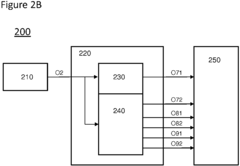
Self-powered sensor system
PatentInactiveEP2685220A3
Innovation
- A self-powered sensor system is designed with an autonomous sensor unit that combines vibration energy harvesting and analogue signal processing circuitry to generate both digital output signals and electrical power signals, reducing the need for separate units and components like ADCs and microprocessors, thereby minimizing energy consumption and implementation area.
Self-powered sensor
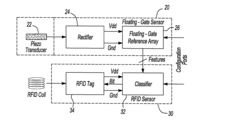
PatentActiveUS8056420B2
Innovation
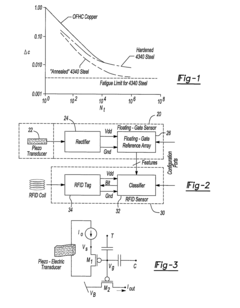
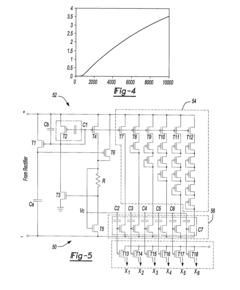
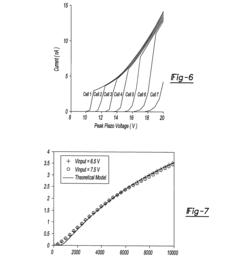
- A self-powered sensor system utilizing a piezoelectric transducer, a non-volatile memory with floating gate transistors, and a current reference circuit that operates in weak-inversion mode, allowing for energy harvesting and efficient storage and computation, while maintaining low power dissipation.
Regulatory Framework and Compliance Requirements
The regulatory landscape for self-powered sensors in electronics is characterized by a complex interplay of international standards, regional directives, and industry-specific requirements. At the global level, the International Electrotechnical Commission (IEC) has established several standards that directly impact self-powered sensor technologies, including IEC 62830 series specifically addressing energy harvesting devices and IEC 60086-4 covering safety requirements for batteries used in electronic systems.
In the United States, the Federal Communications Commission (FCC) regulates wireless self-powered sensors through Part 15 rules for unlicensed radio frequency devices, while the Food and Drug Administration (FDA) imposes additional requirements for sensors used in medical applications. The European Union implements the Radio Equipment Directive (RED 2014/53/EU) and Electromagnetic Compatibility Directive (EMC 2014/30/EU), which establish essential requirements for wireless self-powered sensors marketed within EU member states.
Environmental compliance represents another critical regulatory dimension, with the Restriction of Hazardous Substances (RoHS) directive limiting the use of specific hazardous materials in electronic equipment. Similarly, the Registration, Evaluation, Authorization and Restriction of Chemicals (REACH) regulation impacts material selection for energy harvesting components and sensor housings.
Product safety certification pathways vary by market and application domain. For consumer electronics applications, certifications such as UL (Underwriters Laboratories) in North America and CE marking in Europe are typically required. Industrial deployments may necessitate compliance with IEC 61010 for measurement equipment or IEC 60079 for potentially explosive atmospheres.
Emerging regulatory trends include increased scrutiny of data privacy and security aspects of sensor networks, particularly evident in regulations like the General Data Protection Regulation (GDPR) in Europe and the California Consumer Privacy Act (CCPA) in the United States. These frameworks impose requirements regarding data collection, processing, and storage that directly impact self-powered sensor system design.
Compliance strategies for manufacturers typically involve early-stage regulatory assessment, design for compliance methodologies, and comprehensive testing protocols. Documentation requirements include technical files demonstrating conformity assessment, declaration of conformity statements, and in some cases, third-party certification reports. Many organizations are adopting integrated compliance management systems that address regulatory requirements throughout the product development lifecycle.
In the United States, the Federal Communications Commission (FCC) regulates wireless self-powered sensors through Part 15 rules for unlicensed radio frequency devices, while the Food and Drug Administration (FDA) imposes additional requirements for sensors used in medical applications. The European Union implements the Radio Equipment Directive (RED 2014/53/EU) and Electromagnetic Compatibility Directive (EMC 2014/30/EU), which establish essential requirements for wireless self-powered sensors marketed within EU member states.
Environmental compliance represents another critical regulatory dimension, with the Restriction of Hazardous Substances (RoHS) directive limiting the use of specific hazardous materials in electronic equipment. Similarly, the Registration, Evaluation, Authorization and Restriction of Chemicals (REACH) regulation impacts material selection for energy harvesting components and sensor housings.
Product safety certification pathways vary by market and application domain. For consumer electronics applications, certifications such as UL (Underwriters Laboratories) in North America and CE marking in Europe are typically required. Industrial deployments may necessitate compliance with IEC 61010 for measurement equipment or IEC 60079 for potentially explosive atmospheres.
Emerging regulatory trends include increased scrutiny of data privacy and security aspects of sensor networks, particularly evident in regulations like the General Data Protection Regulation (GDPR) in Europe and the California Consumer Privacy Act (CCPA) in the United States. These frameworks impose requirements regarding data collection, processing, and storage that directly impact self-powered sensor system design.
Compliance strategies for manufacturers typically involve early-stage regulatory assessment, design for compliance methodologies, and comprehensive testing protocols. Documentation requirements include technical files demonstrating conformity assessment, declaration of conformity statements, and in some cases, third-party certification reports. Many organizations are adopting integrated compliance management systems that address regulatory requirements throughout the product development lifecycle.
Environmental Impact and Sustainability Considerations
The deployment of self-powered sensors in electronics presents significant environmental implications that must be carefully considered within regulatory frameworks. These autonomous sensing devices, while offering reduced energy consumption through energy harvesting technologies, introduce complex sustainability considerations throughout their lifecycle. Materials used in manufacturing self-powered sensors often include rare earth elements and specialized compounds that require responsible sourcing and extraction practices to minimize ecological damage and resource depletion.
The environmental footprint of self-powered sensors extends beyond manufacturing to include operational impacts. While these devices eliminate the need for battery replacements and reduce electronic waste, their cumulative electromagnetic emissions when deployed at scale require assessment. Current regulatory standards increasingly emphasize the importance of electromagnetic compatibility testing to ensure these sensors do not interfere with other systems or create environmental electromagnetic pollution.
End-of-life management represents another critical environmental consideration. The integration of energy harvesting components with traditional electronic elements creates composite materials that present recycling challenges. Progressive regulatory frameworks are beginning to incorporate extended producer responsibility principles, requiring manufacturers to establish collection and recycling programs specifically designed for these hybrid electronic devices.
The sustainability benefits of self-powered sensors are substantial when properly implemented. These devices can significantly reduce maintenance-related carbon footprints by eliminating the need for frequent battery replacements and associated service visits. In industrial applications, this translates to fewer transportation emissions and reduced resource consumption over the operational lifetime of monitoring systems.
Emerging regulatory standards are increasingly adopting lifecycle assessment methodologies to evaluate the environmental impact of self-powered sensors. These assessments consider energy and material inputs during manufacturing, operational efficiency, and end-of-life recoverability. Forward-thinking regulatory approaches are establishing thresholds for embodied carbon and requiring manufacturers to provide environmental product declarations that quantify these impacts.
Water and soil contamination risks associated with sensor deployment in outdoor environments are gaining regulatory attention. Standards are evolving to address the potential leaching of electronic components and energy harvesting materials into ecosystems. Weatherproofing requirements must balance durability with environmental safety, particularly for sensors deployed in sensitive ecological zones or water-adjacent installations.
The environmental footprint of self-powered sensors extends beyond manufacturing to include operational impacts. While these devices eliminate the need for battery replacements and reduce electronic waste, their cumulative electromagnetic emissions when deployed at scale require assessment. Current regulatory standards increasingly emphasize the importance of electromagnetic compatibility testing to ensure these sensors do not interfere with other systems or create environmental electromagnetic pollution.
End-of-life management represents another critical environmental consideration. The integration of energy harvesting components with traditional electronic elements creates composite materials that present recycling challenges. Progressive regulatory frameworks are beginning to incorporate extended producer responsibility principles, requiring manufacturers to establish collection and recycling programs specifically designed for these hybrid electronic devices.
The sustainability benefits of self-powered sensors are substantial when properly implemented. These devices can significantly reduce maintenance-related carbon footprints by eliminating the need for frequent battery replacements and associated service visits. In industrial applications, this translates to fewer transportation emissions and reduced resource consumption over the operational lifetime of monitoring systems.
Emerging regulatory standards are increasingly adopting lifecycle assessment methodologies to evaluate the environmental impact of self-powered sensors. These assessments consider energy and material inputs during manufacturing, operational efficiency, and end-of-life recoverability. Forward-thinking regulatory approaches are establishing thresholds for embodied carbon and requiring manufacturers to provide environmental product declarations that quantify these impacts.
Water and soil contamination risks associated with sensor deployment in outdoor environments are gaining regulatory attention. Standards are evolving to address the potential leaching of electronic components and energy harvesting materials into ecosystems. Weatherproofing requirements must balance durability with environmental safety, particularly for sensors deployed in sensitive ecological zones or water-adjacent installations.
Unlock deeper insights with Patsnap Eureka Quick Research — get a full tech report to explore trends and direct your research. Try now!
Generate Your Research Report Instantly with AI Agent
Supercharge your innovation with Patsnap Eureka AI Agent Platform!