

Self-Powered Sensor Application in IoT Device Connectivity
OCT 21, 20259 MIN READ
Generate Your Research Report Instantly with AI Agent
PatSnap Eureka helps you evaluate technical feasibility & market potential.
Self-Powered Sensor Technology Background and Objectives
Self-powered sensor technology has evolved significantly over the past decade, transforming from experimental concepts into practical applications that address critical challenges in IoT device connectivity. The fundamental principle behind self-powered sensors lies in their ability to harvest energy from ambient sources such as light, vibration, thermal gradients, and radio frequency signals, eliminating the need for traditional battery power. This technological approach emerged from the convergence of energy harvesting techniques, ultra-low-power electronics, and advanced sensing methodologies.
The evolution of self-powered sensors can be traced back to early energy harvesting research in the 1990s, but significant breakthroughs occurred in the 2010s with the development of nanogenerators, particularly piezoelectric and triboelectric systems capable of converting mechanical energy into electrical power. These innovations enabled the creation of sensors that could operate perpetually in environments where battery replacement would be impractical or impossible.
Current technological trends indicate a shift toward hybrid energy harvesting systems that combine multiple energy sources to ensure reliable operation across varying environmental conditions. Additionally, advancements in materials science, particularly in the realm of nanomaterials and flexible electronics, have enabled the development of more efficient and versatile self-powered sensing platforms.
The primary objective of self-powered sensor technology in IoT connectivity is to overcome the "battery bottleneck" that has traditionally limited the scalability and deployment of IoT networks. By eliminating batteries, these sensors can be deployed in greater numbers, in more remote or inaccessible locations, and with significantly reduced maintenance requirements.
Secondary objectives include enhancing sustainability by reducing electronic waste associated with battery disposal, enabling new applications in extreme environments where conventional power sources fail, and facilitating the true realization of "deploy and forget" sensing nodes that can operate autonomously for years or even decades.
From a technical perspective, research aims to improve energy conversion efficiency, reduce power consumption of sensing and communication components, and develop more robust energy storage solutions for periods when ambient energy is unavailable. There is also significant focus on developing intelligent power management systems that can dynamically adjust sensor operation based on available energy.
The convergence of these technological advancements and objectives positions self-powered sensors as a critical enabling technology for the next generation of IoT connectivity, particularly in applications such as environmental monitoring, structural health assessment, agricultural sensing, and industrial condition monitoring where traditional powered devices face significant limitations.
The evolution of self-powered sensors can be traced back to early energy harvesting research in the 1990s, but significant breakthroughs occurred in the 2010s with the development of nanogenerators, particularly piezoelectric and triboelectric systems capable of converting mechanical energy into electrical power. These innovations enabled the creation of sensors that could operate perpetually in environments where battery replacement would be impractical or impossible.
Current technological trends indicate a shift toward hybrid energy harvesting systems that combine multiple energy sources to ensure reliable operation across varying environmental conditions. Additionally, advancements in materials science, particularly in the realm of nanomaterials and flexible electronics, have enabled the development of more efficient and versatile self-powered sensing platforms.
The primary objective of self-powered sensor technology in IoT connectivity is to overcome the "battery bottleneck" that has traditionally limited the scalability and deployment of IoT networks. By eliminating batteries, these sensors can be deployed in greater numbers, in more remote or inaccessible locations, and with significantly reduced maintenance requirements.
Secondary objectives include enhancing sustainability by reducing electronic waste associated with battery disposal, enabling new applications in extreme environments where conventional power sources fail, and facilitating the true realization of "deploy and forget" sensing nodes that can operate autonomously for years or even decades.
From a technical perspective, research aims to improve energy conversion efficiency, reduce power consumption of sensing and communication components, and develop more robust energy storage solutions for periods when ambient energy is unavailable. There is also significant focus on developing intelligent power management systems that can dynamically adjust sensor operation based on available energy.
The convergence of these technological advancements and objectives positions self-powered sensors as a critical enabling technology for the next generation of IoT connectivity, particularly in applications such as environmental monitoring, structural health assessment, agricultural sensing, and industrial condition monitoring where traditional powered devices face significant limitations.
IoT Connectivity Market Demand Analysis
The Internet of Things (IoT) connectivity market is experiencing unprecedented growth, driven by the increasing adoption of smart devices across various sectors. Current market analysis indicates that the global IoT connectivity market is projected to reach $27.2 billion by 2026, with a compound annual growth rate of 15.3% from 2021. This robust growth is primarily fueled by the escalating demand for seamless connectivity solutions that can support the expanding ecosystem of IoT devices.
Self-powered sensor technology represents a critical innovation addressing one of the most significant pain points in IoT deployment: power management. Market research reveals that approximately 68% of IoT project managers identify battery life and power constraints as major obstacles to widespread IoT implementation. This concern is particularly acute in remote monitoring applications, industrial settings, and large-scale sensor networks where frequent battery replacement is impractical or cost-prohibitive.
The demand for self-powered sensors is especially strong in industrial IoT applications, where the market size is expected to reach $12.3 billion by 2025. Manufacturing facilities are increasingly seeking energy-harvesting sensor solutions that can operate continuously in harsh environments without maintenance interruptions. Similarly, smart city initiatives worldwide are driving demand for self-sustaining environmental monitoring systems, with market projections indicating a 22.7% growth rate in this segment over the next five years.
Healthcare represents another rapidly expanding market for self-powered IoT connectivity, valued at $4.5 billion in 2021 and expected to double by 2026. The need for reliable, long-term patient monitoring devices that don't require frequent charging or battery replacement is creating significant opportunities for self-powered sensor technologies. Wearable health monitors utilizing energy harvesting from body heat or motion are seeing particularly strong demand growth at 28.4% annually.
Consumer applications are also emerging as a substantial market segment, with smart home devices incorporating self-powered sensors projected to grow at 19.8% annually. This growth is driven by consumer preference for maintenance-free devices and the expanding ecosystem of home automation products requiring reliable connectivity without frequent battery changes.
Geographically, North America currently leads the market with a 34.6% share, followed closely by Europe at 28.9% and Asia-Pacific at 27.2%. However, the Asia-Pacific region is expected to demonstrate the highest growth rate at 17.8% annually, driven by rapid industrial automation in China, Japan, and South Korea, along with expanding smart city initiatives across the region.
Self-powered sensor technology represents a critical innovation addressing one of the most significant pain points in IoT deployment: power management. Market research reveals that approximately 68% of IoT project managers identify battery life and power constraints as major obstacles to widespread IoT implementation. This concern is particularly acute in remote monitoring applications, industrial settings, and large-scale sensor networks where frequent battery replacement is impractical or cost-prohibitive.
The demand for self-powered sensors is especially strong in industrial IoT applications, where the market size is expected to reach $12.3 billion by 2025. Manufacturing facilities are increasingly seeking energy-harvesting sensor solutions that can operate continuously in harsh environments without maintenance interruptions. Similarly, smart city initiatives worldwide are driving demand for self-sustaining environmental monitoring systems, with market projections indicating a 22.7% growth rate in this segment over the next five years.
Healthcare represents another rapidly expanding market for self-powered IoT connectivity, valued at $4.5 billion in 2021 and expected to double by 2026. The need for reliable, long-term patient monitoring devices that don't require frequent charging or battery replacement is creating significant opportunities for self-powered sensor technologies. Wearable health monitors utilizing energy harvesting from body heat or motion are seeing particularly strong demand growth at 28.4% annually.
Consumer applications are also emerging as a substantial market segment, with smart home devices incorporating self-powered sensors projected to grow at 19.8% annually. This growth is driven by consumer preference for maintenance-free devices and the expanding ecosystem of home automation products requiring reliable connectivity without frequent battery changes.
Geographically, North America currently leads the market with a 34.6% share, followed closely by Europe at 28.9% and Asia-Pacific at 27.2%. However, the Asia-Pacific region is expected to demonstrate the highest growth rate at 17.8% annually, driven by rapid industrial automation in China, Japan, and South Korea, along with expanding smart city initiatives across the region.
Current State and Challenges in Self-Powered Sensing
Self-powered sensing technology has witnessed significant advancements globally, with research institutions and companies across North America, Europe, and Asia making substantial contributions. Currently, the technology demonstrates varying levels of maturity across different application domains. Energy harvesting mechanisms such as piezoelectric, triboelectric, thermoelectric, and photovoltaic systems have reached commercial viability in specific contexts, while emerging technologies like RF energy harvesting and biofuel cells remain predominantly in research phases.
The integration of self-powered sensors into IoT connectivity frameworks presents several technical challenges. Power management remains the foremost obstacle, as harvested energy is typically intermittent and low-yield, often insufficient for continuous operation of conventional wireless communication protocols. Most current self-powered sensors generate power in the microwatt to milliwatt range, creating a significant gap between energy availability and the requirements of standard IoT communication technologies.
Data transmission reliability constitutes another major challenge. Self-powered sensors frequently operate in energy-constrained environments, leading to unpredictable transmission schedules and potential data loss. This unpredictability complicates network management and reduces overall system reliability, particularly in applications requiring consistent data streams or time-sensitive information.
Miniaturization presents additional technical hurdles. As IoT applications demand increasingly compact form factors, integrating both sensing and energy harvesting components within space-constrained devices becomes problematic. Current energy harvesters often require dedicated physical space that conflicts with miniaturization goals, especially in wearable or implantable applications.
Environmental adaptability represents a significant limitation for widespread deployment. Many existing self-powered sensing solutions are optimized for specific environmental conditions, with performance degrading substantially when operating outside these parameters. For instance, photovoltaic-based systems perform poorly in low-light conditions, while thermal harvesters require consistent temperature differentials.
Standardization remains underdeveloped in the self-powered sensing ecosystem. The lack of unified protocols and interfaces for self-powered sensor integration into IoT networks impedes interoperability and scalability. This fragmentation has resulted in proprietary solutions that operate in isolation rather than contributing to cohesive IoT ecosystems.
Cost factors continue to constrain commercial adoption. Despite decreasing component costs, specialized materials and manufacturing processes for energy harvesters maintain higher price points compared to battery-powered alternatives. This cost differential slows market penetration, particularly in price-sensitive consumer applications and large-scale industrial deployments requiring numerous sensor nodes.
The integration of self-powered sensors into IoT connectivity frameworks presents several technical challenges. Power management remains the foremost obstacle, as harvested energy is typically intermittent and low-yield, often insufficient for continuous operation of conventional wireless communication protocols. Most current self-powered sensors generate power in the microwatt to milliwatt range, creating a significant gap between energy availability and the requirements of standard IoT communication technologies.
Data transmission reliability constitutes another major challenge. Self-powered sensors frequently operate in energy-constrained environments, leading to unpredictable transmission schedules and potential data loss. This unpredictability complicates network management and reduces overall system reliability, particularly in applications requiring consistent data streams or time-sensitive information.
Miniaturization presents additional technical hurdles. As IoT applications demand increasingly compact form factors, integrating both sensing and energy harvesting components within space-constrained devices becomes problematic. Current energy harvesters often require dedicated physical space that conflicts with miniaturization goals, especially in wearable or implantable applications.
Environmental adaptability represents a significant limitation for widespread deployment. Many existing self-powered sensing solutions are optimized for specific environmental conditions, with performance degrading substantially when operating outside these parameters. For instance, photovoltaic-based systems perform poorly in low-light conditions, while thermal harvesters require consistent temperature differentials.
Standardization remains underdeveloped in the self-powered sensing ecosystem. The lack of unified protocols and interfaces for self-powered sensor integration into IoT networks impedes interoperability and scalability. This fragmentation has resulted in proprietary solutions that operate in isolation rather than contributing to cohesive IoT ecosystems.
Cost factors continue to constrain commercial adoption. Despite decreasing component costs, specialized materials and manufacturing processes for energy harvesters maintain higher price points compared to battery-powered alternatives. This cost differential slows market penetration, particularly in price-sensitive consumer applications and large-scale industrial deployments requiring numerous sensor nodes.
Current Self-Powered Sensor Solutions for IoT
01 Energy harvesting mechanisms for self-powered sensors
Various energy harvesting mechanisms can be employed to power sensors autonomously. These include piezoelectric elements that convert mechanical vibrations into electrical energy, thermoelectric generators that utilize temperature differentials, and photovoltaic cells that convert light into electricity. These energy harvesting technologies enable sensors to operate without external power sources, making them suitable for remote or inaccessible locations.- Energy harvesting mechanisms for self-powered sensors: Various energy harvesting mechanisms can be employed to power sensors autonomously. These include piezoelectric elements that convert mechanical vibrations into electrical energy, thermoelectric generators that utilize temperature differentials, and photovoltaic cells that convert light into electricity. These harvesting technologies enable sensors to operate without external power sources, making them suitable for remote or inaccessible locations.
- Wireless self-powered sensor networks: Self-powered sensors can be integrated into wireless sensor networks for distributed monitoring applications. These networks utilize energy-efficient communication protocols to transmit data while minimizing power consumption. The sensors harvest ambient energy to power both the sensing elements and wireless communication modules, enabling long-term deployment without battery replacement or maintenance.
- Triboelectric self-powered sensing systems: Triboelectric nanogenerators (TENGs) can be used to develop self-powered sensors that generate electricity from friction between different materials. These systems convert mechanical energy from human motion, vibration, or fluid flow into electrical signals that can both power the sensor and serve as the sensing mechanism itself. This dual functionality makes triboelectric sensors particularly efficient for wearable applications and environmental monitoring.
- Power management circuits for self-powered sensors: Specialized power management circuits are essential for optimizing the performance of self-powered sensors. These circuits include energy storage elements, voltage regulators, and power conditioning systems that efficiently capture, store, and distribute the harvested energy. Advanced power management strategies such as adaptive duty cycling and sleep modes help maximize sensor operational lifetime under varying energy harvesting conditions.
- Application-specific self-powered sensor designs: Self-powered sensors can be tailored for specific applications such as structural health monitoring, environmental sensing, medical implants, and industrial monitoring. These specialized designs integrate appropriate energy harvesting mechanisms with sensing elements optimized for the target application. For example, implantable medical sensors may utilize bioenergy harvesting, while industrial sensors might leverage vibration or thermal energy sources available in their operating environment.
02 Wireless self-powered sensor networks
Self-powered sensors can be integrated into wireless sensor networks for various applications. These networks utilize energy-efficient communication protocols and power management techniques to extend operational lifetime. The sensors can collect and transmit data without requiring wired power connections, enabling deployment in challenging environments and reducing installation costs.Expand Specific Solutions03 Triboelectric self-powered sensing systems
Triboelectric nanogenerators (TENGs) can be used to create self-powered sensing systems. These devices generate electricity through contact electrification and electrostatic induction when two different materials come into contact and separate. The generated energy can power sensors directly, creating truly autonomous sensing systems that can detect pressure, motion, or other physical parameters while simultaneously generating their own power.Expand Specific Solutions04 Power management circuits for self-powered sensors
Specialized power management circuits are essential for optimizing the performance of self-powered sensors. These circuits include energy storage elements, voltage regulators, and low-power control systems that efficiently collect, store, and distribute harvested energy. Advanced power management techniques ensure that sensors can operate reliably even when energy harvesting conditions are intermittent or variable.Expand Specific Solutions05 Application-specific self-powered sensor designs
Self-powered sensors can be designed for specific applications such as environmental monitoring, structural health monitoring, wearable devices, and industrial automation. These application-specific designs optimize the energy harvesting mechanism, sensing capabilities, and power requirements based on the intended use case. For example, wearable self-powered sensors might utilize body heat or motion, while industrial sensors might harvest energy from machinery vibrations.Expand Specific Solutions
Key Industry Players in Self-Powered IoT Ecosystem
The self-powered sensor market for IoT connectivity is currently in a growth phase, with increasing adoption across various industries. The market size is expanding rapidly, projected to reach significant valuation as IoT deployments accelerate globally. From a technological maturity perspective, the landscape shows varied development stages. Industry leaders like Samsung Electronics and TE Connectivity have established robust commercial solutions, while Philips and State Grid Corporation of China are advancing industrial applications. Research institutions including Rutgers University and Zhejiang University are driving fundamental innovations. Companies like Gentle Energy Corp. and DrKumo are emerging with specialized energy harvesting technologies, while traditional electronics manufacturers such as Kyocera and CommScope are integrating self-powered capabilities into their existing product ecosystems.
Samsung Electronics Co., Ltd.
Technical Solution: Samsung has developed an advanced self-powered sensor ecosystem for IoT connectivity leveraging energy harvesting technologies. Their solution combines triboelectric nanogenerators (TENG) and piezoelectric materials to capture ambient energy from various sources including motion, vibration, and temperature differentials. Samsung's approach integrates these harvesting mechanisms directly into their IoT sensors, creating truly autonomous devices that can operate indefinitely without battery replacement. Their technology incorporates ultra-low-power microcontrollers and optimized wireless protocols (including BLE and their proprietary SmartThings protocol) to maximize energy efficiency. Samsung has also implemented adaptive power management systems that dynamically adjust sensor sampling rates and transmission frequencies based on available harvested energy, ensuring continuous operation even under variable energy harvesting conditions[1][3].
Strengths: Comprehensive ecosystem integration with existing SmartThings platform; advanced material science expertise in energy harvesting; global manufacturing scale. Weaknesses: Proprietary protocols may limit interoperability with other IoT systems; higher initial implementation costs compared to traditional battery-powered solutions.
State Grid Corp. of China
Technical Solution: State Grid has pioneered self-powered sensor networks for smart grid monitoring and IoT connectivity. Their technology utilizes electromagnetic induction from power lines to harvest energy, enabling autonomous sensors throughout the electrical distribution network. These self-powered sensors monitor critical parameters including current flow, temperature, and equipment status without requiring external power sources. State Grid's solution incorporates specialized low-power wireless mesh networking protocols optimized for the challenging RF environments of electrical infrastructure. Their sensors feature adaptive sampling rates that respond to detected anomalies, increasing monitoring frequency when potential issues are detected while conserving energy during normal operation. The system includes edge computing capabilities that process data locally before transmission, reducing bandwidth requirements and enabling real-time response to critical conditions[2][5].
Strengths: Unparalleled expertise in power grid applications; massive deployment scale across China's infrastructure; robust design for harsh electrical environments. Weaknesses: Solutions highly specialized for electrical grid applications; potential security concerns with critical infrastructure connectivity; limited application outside utility sector.
Core Patents and Literature in Energy Harvesting Sensors
Self-powered internet-of-things sensor device
PatentWO2019052911A1
Innovation
- A self-powered IoT sensor device that utilizes an energy converting unit to convert physical quantities into energy, an energy harvesting unit to collect this energy, and a wireless network unit for communication, allowing messages to be sent when a predetermined amount of energy is harvested, eliminating the need for batteries and enabling low-power operation within LPWAN or other wireless networks.


Self-powered sensor, and monitoring system including same
PatentWO2021060906A1
Innovation
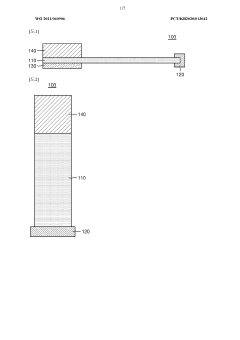
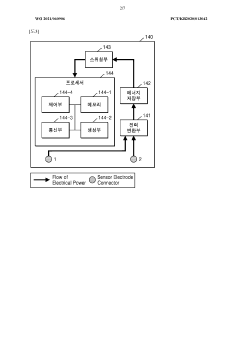
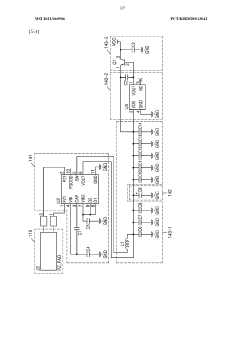
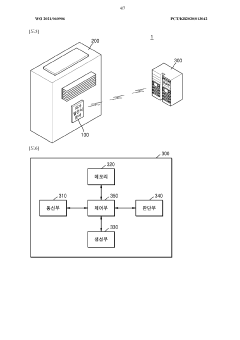
- A self-powered sensor that converts external physical stimulation into electrical energy, integrating power generation and sensing units to transmit signals wirelessly without a battery or wiring, using a power management unit to switch between energized and power-saving states based on energy storage levels.
Power Consumption Optimization Strategies
Power consumption remains a critical challenge for IoT device connectivity, especially in self-powered sensor applications. Optimizing energy usage requires a multi-faceted approach that addresses hardware, software, and system-level considerations. At the hardware level, ultra-low-power microcontrollers and transceivers have emerged as fundamental components, with recent advancements reducing idle power consumption to nano-watt levels. These components incorporate sophisticated power management units that can dynamically adjust voltage and frequency based on operational requirements.
Communication protocols represent another significant area for optimization. Traditional protocols like Bluetooth and WiFi consume substantial energy, prompting the development of specialized low-power alternatives such as BLE, Zigbee, and LoRaWAN. These protocols implement techniques like reduced duty cycling and minimized transmission power while maintaining adequate signal integrity. The selection of appropriate protocols depends on specific application requirements including range, data rate, and network topology.
Data management strategies also play a crucial role in power conservation. Edge computing approaches that process data locally before transmission can significantly reduce communication overhead. Implementing intelligent data compression algorithms and adaptive sampling rates based on environmental conditions or event triggers helps minimize unnecessary data collection and transmission. Some advanced systems employ machine learning algorithms to predict optimal sampling intervals, further reducing power requirements.
Sleep mode optimization represents one of the most effective power-saving techniques. Modern IoT devices can transition between multiple power states, from deep sleep (consuming microamps) to full operational mode. Sophisticated wake-up mechanisms, including timer-based, interrupt-driven, and context-aware approaches, ensure devices remain dormant until absolutely necessary. The implementation of efficient state transition management minimizes the energy costs associated with frequent mode switching.
Energy harvesting integration strategies complement these optimization techniques by ensuring efficient utilization of captured energy. This includes implementing adaptive power management systems that can dynamically adjust device behavior based on available energy. Buffer management techniques using supercapacitors or small rechargeable batteries help smooth energy availability, while predictive algorithms can anticipate energy availability patterns to optimize device operations accordingly.
Cross-layer optimization approaches that coordinate power management across hardware, communication, and application layers show particular promise. These holistic strategies ensure that power-saving decisions at one layer don't negatively impact overall system efficiency. Recent research demonstrates that such integrated approaches can achieve power reductions of 30-60% compared to conventional single-layer optimization techniques.
Communication protocols represent another significant area for optimization. Traditional protocols like Bluetooth and WiFi consume substantial energy, prompting the development of specialized low-power alternatives such as BLE, Zigbee, and LoRaWAN. These protocols implement techniques like reduced duty cycling and minimized transmission power while maintaining adequate signal integrity. The selection of appropriate protocols depends on specific application requirements including range, data rate, and network topology.
Data management strategies also play a crucial role in power conservation. Edge computing approaches that process data locally before transmission can significantly reduce communication overhead. Implementing intelligent data compression algorithms and adaptive sampling rates based on environmental conditions or event triggers helps minimize unnecessary data collection and transmission. Some advanced systems employ machine learning algorithms to predict optimal sampling intervals, further reducing power requirements.
Sleep mode optimization represents one of the most effective power-saving techniques. Modern IoT devices can transition between multiple power states, from deep sleep (consuming microamps) to full operational mode. Sophisticated wake-up mechanisms, including timer-based, interrupt-driven, and context-aware approaches, ensure devices remain dormant until absolutely necessary. The implementation of efficient state transition management minimizes the energy costs associated with frequent mode switching.
Energy harvesting integration strategies complement these optimization techniques by ensuring efficient utilization of captured energy. This includes implementing adaptive power management systems that can dynamically adjust device behavior based on available energy. Buffer management techniques using supercapacitors or small rechargeable batteries help smooth energy availability, while predictive algorithms can anticipate energy availability patterns to optimize device operations accordingly.
Cross-layer optimization approaches that coordinate power management across hardware, communication, and application layers show particular promise. These holistic strategies ensure that power-saving decisions at one layer don't negatively impact overall system efficiency. Recent research demonstrates that such integrated approaches can achieve power reductions of 30-60% compared to conventional single-layer optimization techniques.
Environmental Impact and Sustainability Assessment
The integration of self-powered sensors in IoT connectivity presents significant environmental benefits that align with global sustainability goals. These energy-autonomous devices substantially reduce the environmental footprint associated with traditional battery-powered IoT systems. By harvesting ambient energy from sources such as vibration, thermal gradients, light, and RF signals, self-powered sensors eliminate the need for billions of disposable batteries that would otherwise contribute to electronic waste streams. This waste reduction is particularly critical as IoT deployments scale to trillions of devices in the coming decades.
Energy harvesting technologies enable a circular economy approach to IoT implementation, where devices can operate indefinitely without resource-intensive maintenance cycles. Quantitative assessments indicate that widespread adoption of self-powered sensors could prevent thousands of tons of battery waste annually, including toxic materials like cadmium, lead, and mercury that pose serious environmental hazards when improperly disposed of.
The carbon footprint reduction potential is equally compelling. Traditional battery-powered sensor networks require regular maintenance visits for battery replacement, often involving transportation to remote locations. Self-powered alternatives eliminate these emissions-intensive activities. Life cycle assessments demonstrate that the embodied carbon in manufacturing self-powered sensors is typically offset within 1-2 years of operation compared to battery-dependent alternatives, with subsequent years representing net carbon savings.
Material efficiency represents another sustainability advantage. Advanced energy harvesting technologies increasingly utilize abundant, non-toxic materials with reduced reliance on rare earth elements. Recent innovations in organic photovoltaics, bio-based piezoelectric materials, and recycled thermoelectric compounds demonstrate the potential for environmentally benign sensor components.
In smart agriculture and environmental monitoring applications, self-powered sensors enable low-impact deployment in sensitive ecosystems. These systems can monitor environmental parameters without introducing pollution risks associated with battery leakage or frequent human intervention. This non-invasive quality makes them particularly valuable for wildlife habitat monitoring and conservation efforts.
The sustainability benefits extend to urban environments as well. Self-powered infrastructure monitoring sensors can be embedded in buildings and transportation systems with minimal maintenance requirements, supporting longer-term sustainable urban development. Their ability to operate independently of the grid also enhances community resilience during power outages and natural disasters, contributing to climate adaptation strategies.
Energy harvesting technologies enable a circular economy approach to IoT implementation, where devices can operate indefinitely without resource-intensive maintenance cycles. Quantitative assessments indicate that widespread adoption of self-powered sensors could prevent thousands of tons of battery waste annually, including toxic materials like cadmium, lead, and mercury that pose serious environmental hazards when improperly disposed of.
The carbon footprint reduction potential is equally compelling. Traditional battery-powered sensor networks require regular maintenance visits for battery replacement, often involving transportation to remote locations. Self-powered alternatives eliminate these emissions-intensive activities. Life cycle assessments demonstrate that the embodied carbon in manufacturing self-powered sensors is typically offset within 1-2 years of operation compared to battery-dependent alternatives, with subsequent years representing net carbon savings.
Material efficiency represents another sustainability advantage. Advanced energy harvesting technologies increasingly utilize abundant, non-toxic materials with reduced reliance on rare earth elements. Recent innovations in organic photovoltaics, bio-based piezoelectric materials, and recycled thermoelectric compounds demonstrate the potential for environmentally benign sensor components.
In smart agriculture and environmental monitoring applications, self-powered sensors enable low-impact deployment in sensitive ecosystems. These systems can monitor environmental parameters without introducing pollution risks associated with battery leakage or frequent human intervention. This non-invasive quality makes them particularly valuable for wildlife habitat monitoring and conservation efforts.
The sustainability benefits extend to urban environments as well. Self-powered infrastructure monitoring sensors can be embedded in buildings and transportation systems with minimal maintenance requirements, supporting longer-term sustainable urban development. Their ability to operate independently of the grid also enhances community resilience during power outages and natural disasters, contributing to climate adaptation strategies.
Unlock deeper insights with PatSnap Eureka Quick Research — get a full tech report to explore trends and direct your research. Try now!
Generate Your Research Report Instantly with AI Agent
Supercharge your innovation with PatSnap Eureka AI Agent Platform!