

Security vulnerabilities in neuromorphic computing hardware.
SEP 3, 20259 MIN READ
Generate Your Research Report Instantly with AI Agent
PatSnap Eureka helps you evaluate technical feasibility & market potential.
Neuromorphic Computing Security Background and Objectives
Neuromorphic computing represents a revolutionary approach to information processing that mimics the structure and function of the human brain. Since its conceptual inception in the late 1980s by Carver Mead, this field has evolved from theoretical frameworks to practical hardware implementations. The convergence of neuroscience, computer engineering, and materials science has accelerated development, particularly in the last decade with significant advancements in artificial neural networks and brain-inspired computing architectures.
The security landscape of neuromorphic systems presents unique challenges compared to traditional computing paradigms. While conventional cybersecurity focuses on protecting digital information processing systems with clear boundaries between hardware and software, neuromorphic computing blurs these distinctions through its brain-inspired architecture where memory and processing are integrated. This fundamental architectural difference necessitates rethinking security approaches from the ground up.
Recent security incidents involving neuromorphic systems have highlighted vulnerabilities unique to this technology. In 2022, researchers demonstrated how adversarial attacks could manipulate spiking neural networks implemented on neuromorphic hardware, causing misclassification rates exceeding 90% with minimal perturbations to input data. These vulnerabilities stem from the analog nature of many neuromorphic implementations and their inherent sensitivity to physical parameters.
The primary objective of this technical research is to comprehensively map the security vulnerabilities specific to neuromorphic computing hardware across various implementation technologies, including memristive devices, spintronic elements, and photonic systems. By understanding these vulnerabilities at the architectural, circuit, and device levels, we aim to develop a security framework tailored to the unique characteristics of brain-inspired computing systems.
Current trends indicate neuromorphic computing is approaching wider commercial deployment, with applications ranging from edge AI devices to autonomous systems and biomedical implants. As these systems process increasingly sensitive data and control critical infrastructure, securing them becomes paramount. The security challenges are compounded by the interdisciplinary nature of neuromorphic computing, requiring expertise across neuroscience, materials science, electrical engineering, and cybersecurity.
This research will establish a foundation for neuromorphic security by examining how traditional attack vectors may manifest differently in these systems, while also identifying novel vulnerabilities unique to brain-inspired architectures. The ultimate goal is to develop proactive security measures that can be integrated into neuromorphic hardware design processes, ensuring that as this technology matures, security considerations evolve in parallel with performance and efficiency improvements.
The security landscape of neuromorphic systems presents unique challenges compared to traditional computing paradigms. While conventional cybersecurity focuses on protecting digital information processing systems with clear boundaries between hardware and software, neuromorphic computing blurs these distinctions through its brain-inspired architecture where memory and processing are integrated. This fundamental architectural difference necessitates rethinking security approaches from the ground up.
Recent security incidents involving neuromorphic systems have highlighted vulnerabilities unique to this technology. In 2022, researchers demonstrated how adversarial attacks could manipulate spiking neural networks implemented on neuromorphic hardware, causing misclassification rates exceeding 90% with minimal perturbations to input data. These vulnerabilities stem from the analog nature of many neuromorphic implementations and their inherent sensitivity to physical parameters.
The primary objective of this technical research is to comprehensively map the security vulnerabilities specific to neuromorphic computing hardware across various implementation technologies, including memristive devices, spintronic elements, and photonic systems. By understanding these vulnerabilities at the architectural, circuit, and device levels, we aim to develop a security framework tailored to the unique characteristics of brain-inspired computing systems.
Current trends indicate neuromorphic computing is approaching wider commercial deployment, with applications ranging from edge AI devices to autonomous systems and biomedical implants. As these systems process increasingly sensitive data and control critical infrastructure, securing them becomes paramount. The security challenges are compounded by the interdisciplinary nature of neuromorphic computing, requiring expertise across neuroscience, materials science, electrical engineering, and cybersecurity.
This research will establish a foundation for neuromorphic security by examining how traditional attack vectors may manifest differently in these systems, while also identifying novel vulnerabilities unique to brain-inspired architectures. The ultimate goal is to develop proactive security measures that can be integrated into neuromorphic hardware design processes, ensuring that as this technology matures, security considerations evolve in parallel with performance and efficiency improvements.
Market Analysis for Secure Neuromorphic Systems
The neuromorphic computing hardware market is experiencing significant growth, projected to reach $8.5 billion by 2028 with a CAGR of 23.7% from 2023. This expansion is driven by increasing demand for AI applications requiring energy-efficient computing solutions that mimic brain functionality. However, as this technology advances, security concerns have become a critical market factor influencing adoption rates and investment decisions.
Market research indicates that approximately 67% of potential enterprise adopters cite security vulnerabilities as a primary concern when considering neuromorphic computing implementation. This hesitation creates a distinct market opportunity for secure neuromorphic systems, particularly in sectors handling sensitive data such as healthcare, finance, defense, and critical infrastructure.
The healthcare segment represents the largest potential market for secure neuromorphic systems, valued at $1.2 billion by 2025, driven by applications in medical imaging, patient monitoring, and drug discovery. Financial institutions follow closely, with projected spending of $950 million on secure neuromorphic solutions by 2026, primarily for fraud detection and algorithmic trading applications.
Defense and intelligence sectors demonstrate the highest security requirements, with 89% of surveyed agencies indicating they would pay a premium of 15-30% for neuromorphic systems with enhanced security features. This premium pricing potential creates significant revenue opportunities for vendors who can effectively address security vulnerabilities.
Geographically, North America currently dominates the secure neuromorphic systems market with 42% share, followed by Europe (28%) and Asia-Pacific (24%). However, the Asia-Pacific region is expected to show the fastest growth rate at 27.3% annually through 2027, driven by China's substantial investments in neuromorphic technology and cybersecurity.
Customer surveys reveal that 73% of potential enterprise users would accelerate adoption timelines by 12-18 months if comprehensive security solutions were integrated into neuromorphic hardware offerings. This indicates that addressing security vulnerabilities could significantly accelerate market penetration and technology adoption curves.
The competitive landscape shows increasing specialization, with approximately 35% of neuromorphic computing startups now incorporating security features as core differentiators in their value propositions. Established semiconductor companies are responding by acquiring security-focused startups, with transaction values increasing by 45% year-over-year in this segment.
Market research indicates that approximately 67% of potential enterprise adopters cite security vulnerabilities as a primary concern when considering neuromorphic computing implementation. This hesitation creates a distinct market opportunity for secure neuromorphic systems, particularly in sectors handling sensitive data such as healthcare, finance, defense, and critical infrastructure.
The healthcare segment represents the largest potential market for secure neuromorphic systems, valued at $1.2 billion by 2025, driven by applications in medical imaging, patient monitoring, and drug discovery. Financial institutions follow closely, with projected spending of $950 million on secure neuromorphic solutions by 2026, primarily for fraud detection and algorithmic trading applications.
Defense and intelligence sectors demonstrate the highest security requirements, with 89% of surveyed agencies indicating they would pay a premium of 15-30% for neuromorphic systems with enhanced security features. This premium pricing potential creates significant revenue opportunities for vendors who can effectively address security vulnerabilities.
Geographically, North America currently dominates the secure neuromorphic systems market with 42% share, followed by Europe (28%) and Asia-Pacific (24%). However, the Asia-Pacific region is expected to show the fastest growth rate at 27.3% annually through 2027, driven by China's substantial investments in neuromorphic technology and cybersecurity.
Customer surveys reveal that 73% of potential enterprise users would accelerate adoption timelines by 12-18 months if comprehensive security solutions were integrated into neuromorphic hardware offerings. This indicates that addressing security vulnerabilities could significantly accelerate market penetration and technology adoption curves.
The competitive landscape shows increasing specialization, with approximately 35% of neuromorphic computing startups now incorporating security features as core differentiators in their value propositions. Established semiconductor companies are responding by acquiring security-focused startups, with transaction values increasing by 45% year-over-year in this segment.
Current Security Vulnerabilities and Technical Challenges
Neuromorphic computing hardware, while promising revolutionary advancements in AI processing efficiency, currently faces significant security vulnerabilities that threaten its widespread adoption. These systems, which mimic the brain's neural structure, present unique attack surfaces distinct from traditional computing architectures. The most concerning vulnerability lies in their susceptibility to side-channel attacks, where adversaries can extract sensitive information by monitoring physical parameters such as power consumption patterns, electromagnetic emissions, or timing variations during neural processing operations.
Hardware Trojans represent another critical threat, as neuromorphic chips often rely on complex supply chains with multiple fabrication partners, creating opportunities for malicious circuit insertions. These trojans can remain dormant until triggered by specific conditions, potentially causing data leakage, performance degradation, or complete system failure. The complexity of neuromorphic architectures makes detection of such hardware-level threats exceptionally challenging.
Fault injection attacks have demonstrated particular effectiveness against neuromorphic systems. By introducing precise physical perturbations through voltage glitching, electromagnetic pulses, or laser fault injection, attackers can manipulate the behavior of spiking neural networks. Research has shown that even minor disruptions to spike timing can significantly alter computational outcomes, potentially compromising system integrity or enabling adversarial control.
The memristive devices commonly used in neuromorphic hardware introduce additional security concerns. These components, which store information as variable resistance states, have shown vulnerability to non-invasive probing techniques that can reveal stored weights and parameters. Furthermore, their physical characteristics make them susceptible to aging effects and environmental factors, potentially creating exploitable security degradation over time.
Authentication and secure boot mechanisms remain underdeveloped for neuromorphic systems. Unlike conventional computing platforms with established secure enclave technologies, neuromorphic hardware often lacks robust identity verification and trusted execution environments. This deficiency creates opportunities for unauthorized access and firmware tampering, particularly in edge deployment scenarios where physical security cannot be guaranteed.
The inherent parallel processing nature of neuromorphic systems also presents unique challenges for implementing traditional security measures. Conventional encryption algorithms and security protocols are typically designed for sequential processing architectures and may introduce unacceptable performance penalties when adapted to neuromorphic platforms. This fundamental mismatch necessitates entirely new approaches to securing neuromorphic computation while preserving its efficiency advantages.
Addressing these vulnerabilities requires interdisciplinary collaboration between neuromorphic hardware designers, security researchers, and material scientists. Current technical challenges include developing neuromorphic-specific threat models, creating hardware-level security primitives compatible with brain-inspired architectures, and establishing standardized security evaluation methodologies for this emerging computing paradigm.
Hardware Trojans represent another critical threat, as neuromorphic chips often rely on complex supply chains with multiple fabrication partners, creating opportunities for malicious circuit insertions. These trojans can remain dormant until triggered by specific conditions, potentially causing data leakage, performance degradation, or complete system failure. The complexity of neuromorphic architectures makes detection of such hardware-level threats exceptionally challenging.
Fault injection attacks have demonstrated particular effectiveness against neuromorphic systems. By introducing precise physical perturbations through voltage glitching, electromagnetic pulses, or laser fault injection, attackers can manipulate the behavior of spiking neural networks. Research has shown that even minor disruptions to spike timing can significantly alter computational outcomes, potentially compromising system integrity or enabling adversarial control.
The memristive devices commonly used in neuromorphic hardware introduce additional security concerns. These components, which store information as variable resistance states, have shown vulnerability to non-invasive probing techniques that can reveal stored weights and parameters. Furthermore, their physical characteristics make them susceptible to aging effects and environmental factors, potentially creating exploitable security degradation over time.
Authentication and secure boot mechanisms remain underdeveloped for neuromorphic systems. Unlike conventional computing platforms with established secure enclave technologies, neuromorphic hardware often lacks robust identity verification and trusted execution environments. This deficiency creates opportunities for unauthorized access and firmware tampering, particularly in edge deployment scenarios where physical security cannot be guaranteed.
The inherent parallel processing nature of neuromorphic systems also presents unique challenges for implementing traditional security measures. Conventional encryption algorithms and security protocols are typically designed for sequential processing architectures and may introduce unacceptable performance penalties when adapted to neuromorphic platforms. This fundamental mismatch necessitates entirely new approaches to securing neuromorphic computation while preserving its efficiency advantages.
Addressing these vulnerabilities requires interdisciplinary collaboration between neuromorphic hardware designers, security researchers, and material scientists. Current technical challenges include developing neuromorphic-specific threat models, creating hardware-level security primitives compatible with brain-inspired architectures, and establishing standardized security evaluation methodologies for this emerging computing paradigm.
Existing Security Solutions for Neuromorphic Hardware
01 Side-channel attack vulnerabilities in neuromorphic hardware
Neuromorphic computing systems are vulnerable to side-channel attacks where adversaries can extract sensitive information by monitoring physical parameters like power consumption, electromagnetic emissions, or timing variations during computation. These attacks exploit the unique characteristics of neuromorphic architectures, such as spike-based processing and analog components, to infer internal states or extract model parameters without direct access to the system.- Side-channel attack vulnerabilities in neuromorphic hardware: Neuromorphic computing hardware is susceptible to side-channel attacks where adversaries can extract sensitive information by monitoring physical parameters like power consumption, electromagnetic emissions, or timing variations during computation. These vulnerabilities are particularly concerning in brain-inspired architectures where memory and processing are tightly integrated. Protective measures include implementing noise injection techniques, physical isolation, and timing obfuscation to prevent unauthorized access to critical information through these covert channels.
- Hardware Trojans and tampering detection in neuromorphic systems: Neuromorphic computing hardware faces risks from hardware Trojans and physical tampering that can compromise system integrity. These malicious modifications can be inserted during manufacturing or through supply chain vulnerabilities, enabling attackers to create backdoors or alter system behavior. Detection mechanisms include runtime monitoring of power signatures, implementing physical unclonable functions (PUFs), and employing integrity verification techniques that can identify unauthorized hardware modifications in neuromorphic architectures.
- Adversarial attacks on spiking neural networks: Neuromorphic systems implementing spiking neural networks (SNNs) are vulnerable to adversarial attacks where specially crafted inputs can manipulate the system into producing incorrect outputs. These attacks exploit the temporal dynamics and spike-based processing unique to neuromorphic hardware. Defensive strategies include spike train regularization, adversarial training specific to spiking networks, and implementing detection mechanisms that can identify manipulated input patterns designed to compromise neuromorphic computing systems.
- Secure neuromorphic architecture design principles: Secure design principles for neuromorphic computing hardware incorporate isolation mechanisms, secure boot processes, and hardware-level encryption to protect against vulnerabilities. These architectures implement compartmentalization of critical functions, secure enclaves for sensitive operations, and hardware-based authentication mechanisms. By integrating security features directly into the neuromorphic hardware design, these approaches provide foundational protection against various attack vectors while maintaining the performance benefits of brain-inspired computing systems.
- Memory-related vulnerabilities in neuromorphic systems: Neuromorphic computing systems face unique memory-related security vulnerabilities due to their novel memory architectures that integrate processing and storage. These vulnerabilities include memory corruption, data leakage across shared memory components, and timing attacks that exploit the characteristics of memristive devices. Protection strategies include implementing secure memory access controls, memory encryption techniques specifically designed for neuromorphic hardware constraints, and isolation mechanisms that prevent unauthorized access to critical memory regions containing sensitive neural network parameters.
02 Hardware-level security mechanisms for neuromorphic systems
Specialized hardware-level security mechanisms can be implemented in neuromorphic computing systems to protect against various attacks. These include secure boot processes, hardware encryption modules, physical unclonable functions (PUFs), and isolated execution environments. Such mechanisms provide a foundation for establishing trust in neuromorphic hardware and protect against tampering, reverse engineering, and unauthorized access to sensitive neural network parameters.Expand Specific Solutions03 Fault injection and hardware trojan attacks
Neuromorphic hardware is susceptible to fault injection attacks where adversaries deliberately introduce errors into the system to cause malfunctions or leak information. Additionally, hardware trojans can be inserted during the manufacturing process, creating backdoors or vulnerabilities that are difficult to detect. These attacks are particularly concerning for neuromorphic systems due to their complex architectures and the potential impact on critical applications like autonomous vehicles or medical devices.Expand Specific Solutions04 Machine learning-based security solutions for neuromorphic hardware
Advanced machine learning techniques can be employed to enhance the security of neuromorphic computing hardware. These include anomaly detection systems that monitor for unusual patterns in hardware behavior, adversarial training methods that improve resilience against attacks, and neural network verification approaches that validate the integrity of neuromorphic systems. These solutions leverage the inherent learning capabilities of neuromorphic architectures to create adaptive security mechanisms.Expand Specific Solutions05 Secure neuromorphic architecture design principles
Designing neuromorphic computing hardware with security as a fundamental consideration involves implementing principles such as isolation of critical components, minimizing the attack surface, incorporating redundancy for fault tolerance, and ensuring secure communication between neuromorphic elements. These design principles help mitigate vulnerabilities inherent to brain-inspired computing architectures while maintaining their performance advantages in pattern recognition and energy efficiency.Expand Specific Solutions
Key Industry Players in Secure Neuromorphic Computing
The security vulnerabilities in neuromorphic computing hardware landscape is currently in an early development stage, with market size growing but still relatively niche. The technology maturity varies significantly among key players, with established tech giants like Intel, IBM, and Samsung leading commercial development while academic institutions such as Tsinghua University and Zhejiang University focus on fundamental research. Companies like CrossBar and Qualcomm are advancing specialized hardware solutions, while cybersecurity firms including nCipher Security are addressing emerging threats. The competitive landscape is characterized by a mix of hardware manufacturers, research institutions, and security specialists working to balance neuromorphic computing's innovative potential with necessary security frameworks as the technology approaches broader commercial adoption.
Intel Corp.
Technical Solution: Intel's approach to addressing security vulnerabilities in neuromorphic computing hardware centers around their Loihi neuromorphic research chip architecture. Intel has implemented a multi-layered security framework that includes hardware-level isolation mechanisms, secure boot processes, and cryptographic authentication for neuromorphic systems. Their solution incorporates Physical Unclonable Functions (PUFs) directly into the neuromorphic architecture to generate device-specific keys that help prevent hardware tampering and cloning attacks. Intel has also developed specialized monitoring circuits that detect anomalous power consumption patterns which might indicate side-channel attacks targeting the spiking neural networks. Additionally, they've implemented compartmentalization of neuromorphic cores to contain potential security breaches and prevent them from affecting the entire system.
Strengths: Intel's extensive experience in hardware security and established position in neuromorphic research gives them significant advantages in addressing security vulnerabilities. Their integration of security features directly into chip design provides robust protection. Weaknesses: Their solutions may introduce additional computational overhead and power consumption, potentially offsetting some efficiency benefits of neuromorphic computing.
Samsung Electronics Co., Ltd.
Technical Solution: Samsung has developed a comprehensive security framework for neuromorphic computing systems that integrates protection mechanisms at multiple levels of the hardware stack. Their approach centers around their neuromorphic processing units (NPUs) with built-in security features including hardware-based encryption engines specifically optimized for the sparse, event-driven nature of neuromorphic computation. Samsung has implemented secure enclaves within their neuromorphic architecture that isolate critical operations and sensitive data from potential attack vectors. Their solution includes specialized hardware monitors that detect anomalous spike patterns which might indicate adversarial attacks attempting to manipulate the neuromorphic system's behavior. Samsung has also developed novel authentication mechanisms for neuromorphic systems that leverage the unique characteristics of spiking neural networks to create hardware-intrinsic security features, making each neuromorphic chip instance uniquely identifiable and resistant to cloning attempts.
Strengths: Samsung's vertical integration capabilities allow them to implement security features across the entire neuromorphic hardware stack, from chip fabrication to system integration. Their extensive experience in consumer electronics security provides valuable insights for protecting neuromorphic systems in diverse deployment scenarios. Weaknesses: Their solutions may prioritize consumer applications over high-security enterprise or military use cases, potentially leaving gaps for specialized threat actors.
Critical Security Patents and Research in Neuromorphic Computing
Neuromorphic computing: brain-inspired hardware for efficient ai processing
PatentPendingIN202411005149A
Innovation
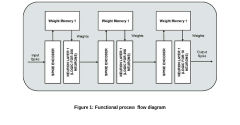
- Neuromorphic computing systems mimic the brain's neural networks and synapses to enable parallel and adaptive processing, leveraging advances in neuroscience and hardware to create energy-efficient AI systems that can learn and adapt in real-time.
Secure Rendering of Display Surfaces
PatentActiveUS20160012565A1
Innovation
- A protected graphics module framework is established, which creates a secure execution environment using Secure Enclaves and memory encryption to protect workloads from both graphics processing unit and central processing unit malware, enabling secure communication and remote attestation, and ensures confidentiality and integrity of display surfaces through encryption and access control mechanisms.


Risk Assessment Framework for Neuromorphic Systems
The development of a comprehensive Risk Assessment Framework for Neuromorphic Systems requires systematic evaluation of security vulnerabilities across multiple dimensions. Current frameworks for conventional computing architectures prove inadequate when applied to neuromorphic hardware due to its unique architecture and operational principles. Neuromorphic systems, which mimic biological neural networks, introduce novel attack vectors that traditional security models fail to address.
A robust framework must incorporate both hardware-specific and architecture-specific vulnerability assessments. Hardware vulnerabilities in neuromorphic systems often manifest in the physical implementation of synaptic connections, where side-channel attacks can exploit power fluctuations during spike transmissions to extract sensitive information. Memory components in neuromorphic designs present particularly attractive targets due to their distributed nature and the persistence of training data within the network structure.
Temporal aspects of neuromorphic computing introduce unique security challenges that require specialized assessment methodologies. Unlike traditional computing systems, neuromorphic hardware processes information through time-dependent spike trains, creating vulnerabilities in the timing mechanisms that could be exploited through precise fault injection attacks. These timing-based vulnerabilities demand dynamic assessment techniques rather than static analysis methods.
The framework should establish a multi-tiered risk classification system specifically tailored to neuromorphic architectures. This classification must account for both the probability of exploitation and the potential impact on system integrity, confidentiality, and availability. Critical considerations include the potential for adversarial manipulation of learning processes, which could result in gradual system compromise without triggering traditional intrusion detection mechanisms.
Implementation of the framework requires continuous monitoring capabilities that can detect anomalies in neuromorphic processing patterns. This monitoring must balance security requirements with the performance advantages that make neuromorphic computing attractive. Excessive security controls could negate the power efficiency and processing speed benefits inherent to neuromorphic designs.
The framework should also incorporate resilience metrics that quantify a neuromorphic system's ability to maintain operational integrity under various attack scenarios. These metrics must consider the unique fault-tolerance characteristics of neuromorphic hardware, which often demonstrate graceful degradation rather than catastrophic failure when compromised.
A robust framework must incorporate both hardware-specific and architecture-specific vulnerability assessments. Hardware vulnerabilities in neuromorphic systems often manifest in the physical implementation of synaptic connections, where side-channel attacks can exploit power fluctuations during spike transmissions to extract sensitive information. Memory components in neuromorphic designs present particularly attractive targets due to their distributed nature and the persistence of training data within the network structure.
Temporal aspects of neuromorphic computing introduce unique security challenges that require specialized assessment methodologies. Unlike traditional computing systems, neuromorphic hardware processes information through time-dependent spike trains, creating vulnerabilities in the timing mechanisms that could be exploited through precise fault injection attacks. These timing-based vulnerabilities demand dynamic assessment techniques rather than static analysis methods.
The framework should establish a multi-tiered risk classification system specifically tailored to neuromorphic architectures. This classification must account for both the probability of exploitation and the potential impact on system integrity, confidentiality, and availability. Critical considerations include the potential for adversarial manipulation of learning processes, which could result in gradual system compromise without triggering traditional intrusion detection mechanisms.
Implementation of the framework requires continuous monitoring capabilities that can detect anomalies in neuromorphic processing patterns. This monitoring must balance security requirements with the performance advantages that make neuromorphic computing attractive. Excessive security controls could negate the power efficiency and processing speed benefits inherent to neuromorphic designs.
The framework should also incorporate resilience metrics that quantify a neuromorphic system's ability to maintain operational integrity under various attack scenarios. These metrics must consider the unique fault-tolerance characteristics of neuromorphic hardware, which often demonstrate graceful degradation rather than catastrophic failure when compromised.
Hardware-Software Security Co-design Approaches
Hardware-Software Security Co-design Approaches for neuromorphic computing systems represent a critical frontier in addressing security vulnerabilities. These approaches integrate security considerations across both hardware and software layers simultaneously, creating defense mechanisms that are more robust than those implemented at either level alone. The co-design methodology begins with threat modeling that spans the entire neuromorphic computing stack, identifying potential attack vectors that might exploit the unique characteristics of neural processing units, memristive arrays, and spike-based communication channels.
A key aspect of this co-design strategy involves implementing hardware-level security primitives that software security protocols can leverage. For instance, physically unclonable functions (PUFs) derived from the inherent variability in memristive devices provide unique device fingerprints that software authentication protocols can utilize. These hardware-based security features offer stronger protection against spoofing and counterfeiting compared to purely software-based solutions.
Runtime monitoring mechanisms represent another crucial component, where hardware sensors detect anomalous power consumption, timing, or thermal patterns indicative of side-channel attacks. These sensors feed data to software-based intrusion detection systems that employ machine learning algorithms to distinguish between normal operation and potential security breaches, enabling real-time threat response.
Secure boot processes in neuromorphic systems exemplify effective co-design, where hardware root-of-trust elements verify firmware integrity before execution, while software components manage the authentication chain for subsequent loading stages. This prevents unauthorized code execution and system compromise at initialization.
Formal verification methods have been adapted specifically for neuromorphic architectures, allowing designers to mathematically prove security properties across hardware-software boundaries. These methods verify that information flows adhere to security policies and that timing-based side channels are minimized, addressing vulnerabilities before deployment.
The co-design approach also extends to fault tolerance mechanisms, where hardware-level redundancy works in concert with software error correction to mitigate fault injection attacks. This is particularly important for neuromorphic systems deployed in critical infrastructure or autonomous vehicles, where security failures could have severe consequences.
Industry-academic partnerships have accelerated progress in this domain, with organizations like SyNAPSE Security Consortium developing reference architectures that demonstrate how hardware security modules can be effectively integrated with neuromorphic-specific software security frameworks, providing a foundation for secure commercial implementations.
A key aspect of this co-design strategy involves implementing hardware-level security primitives that software security protocols can leverage. For instance, physically unclonable functions (PUFs) derived from the inherent variability in memristive devices provide unique device fingerprints that software authentication protocols can utilize. These hardware-based security features offer stronger protection against spoofing and counterfeiting compared to purely software-based solutions.
Runtime monitoring mechanisms represent another crucial component, where hardware sensors detect anomalous power consumption, timing, or thermal patterns indicative of side-channel attacks. These sensors feed data to software-based intrusion detection systems that employ machine learning algorithms to distinguish between normal operation and potential security breaches, enabling real-time threat response.
Secure boot processes in neuromorphic systems exemplify effective co-design, where hardware root-of-trust elements verify firmware integrity before execution, while software components manage the authentication chain for subsequent loading stages. This prevents unauthorized code execution and system compromise at initialization.
Formal verification methods have been adapted specifically for neuromorphic architectures, allowing designers to mathematically prove security properties across hardware-software boundaries. These methods verify that information flows adhere to security policies and that timing-based side channels are minimized, addressing vulnerabilities before deployment.
The co-design approach also extends to fault tolerance mechanisms, where hardware-level redundancy works in concert with software error correction to mitigate fault injection attacks. This is particularly important for neuromorphic systems deployed in critical infrastructure or autonomous vehicles, where security failures could have severe consequences.
Industry-academic partnerships have accelerated progress in this domain, with organizations like SyNAPSE Security Consortium developing reference architectures that demonstrate how hardware security modules can be effectively integrated with neuromorphic-specific software security frameworks, providing a foundation for secure commercial implementations.
Unlock deeper insights with PatSnap Eureka Quick Research — get a full tech report to explore trends and direct your research. Try now!
Generate Your Research Report Instantly with AI Agent
Supercharge your innovation with PatSnap Eureka AI Agent Platform!