Standards Guiding 2D Semiconductor Assurance
OCT 14, 20259 MIN READ
Generate Your Research Report Instantly with AI Agent
Patsnap Eureka helps you evaluate technical feasibility & market potential.
2D Semiconductor Standards Evolution and Objectives
Two-dimensional (2D) semiconductors have emerged as a revolutionary class of materials with exceptional electronic, optical, and mechanical properties. Since the isolation of graphene in 2004, the field has expanded to include transition metal dichalcogenides (TMDs), hexagonal boron nitride (h-BN), and other atomically thin materials. The evolution of standards in this domain reflects the maturation of 2D semiconductor technology from laboratory curiosity to industrial application.
The initial standardization efforts focused primarily on material characterization methods, with organizations like the International Organization for Standardization (ISO) and the International Electrotechnical Commission (IEC) establishing protocols for measuring key properties such as layer thickness, crystal quality, and electrical characteristics. These early standards were essential for ensuring reproducibility in research and enabling meaningful comparison of results across different laboratories.
As the field progressed, standardization expanded to address manufacturing processes. The American Society for Testing and Materials (ASTM) and the Semiconductor Equipment and Materials International (SEMI) developed guidelines for growth techniques including chemical vapor deposition (CVD), molecular beam epitaxy (MBE), and mechanical exfoliation. These standards aimed to improve yield, consistency, and scalability—critical factors for industrial adoption.
The current phase of standardization is increasingly focused on integration and reliability. The Institute of Electrical and Electronics Engineers (IEEE) has established working groups dedicated to 2D semiconductor device integration standards, addressing challenges in contact formation, encapsulation, and heterogeneous integration with conventional semiconductor technologies. These standards are vital for ensuring device performance and longevity in commercial applications.
Looking forward, standardization objectives are evolving to address emerging challenges. Quality assurance standards for mass production are being developed to facilitate the transition from laboratory to fab. Metrology standards for in-line monitoring during manufacturing are being formulated to ensure consistent quality. Environmental and safety standards specific to 2D materials processing are being established to address potential health and environmental concerns.
International collaboration has become a cornerstone of standardization efforts, with initiatives like the Graphene Flagship in Europe and the 2D Crystal Consortium in the United States working to harmonize standards globally. The objective is to create a unified framework that facilitates technology transfer, reduces market barriers, and accelerates commercialization.
The ultimate goal of these standardization efforts is to establish a comprehensive ecosystem that supports the entire value chain of 2D semiconductor technology—from material synthesis to device fabrication and system integration—ensuring reliability, interoperability, and performance consistency across the industry.
The initial standardization efforts focused primarily on material characterization methods, with organizations like the International Organization for Standardization (ISO) and the International Electrotechnical Commission (IEC) establishing protocols for measuring key properties such as layer thickness, crystal quality, and electrical characteristics. These early standards were essential for ensuring reproducibility in research and enabling meaningful comparison of results across different laboratories.
As the field progressed, standardization expanded to address manufacturing processes. The American Society for Testing and Materials (ASTM) and the Semiconductor Equipment and Materials International (SEMI) developed guidelines for growth techniques including chemical vapor deposition (CVD), molecular beam epitaxy (MBE), and mechanical exfoliation. These standards aimed to improve yield, consistency, and scalability—critical factors for industrial adoption.
The current phase of standardization is increasingly focused on integration and reliability. The Institute of Electrical and Electronics Engineers (IEEE) has established working groups dedicated to 2D semiconductor device integration standards, addressing challenges in contact formation, encapsulation, and heterogeneous integration with conventional semiconductor technologies. These standards are vital for ensuring device performance and longevity in commercial applications.
Looking forward, standardization objectives are evolving to address emerging challenges. Quality assurance standards for mass production are being developed to facilitate the transition from laboratory to fab. Metrology standards for in-line monitoring during manufacturing are being formulated to ensure consistent quality. Environmental and safety standards specific to 2D materials processing are being established to address potential health and environmental concerns.
International collaboration has become a cornerstone of standardization efforts, with initiatives like the Graphene Flagship in Europe and the 2D Crystal Consortium in the United States working to harmonize standards globally. The objective is to create a unified framework that facilitates technology transfer, reduces market barriers, and accelerates commercialization.
The ultimate goal of these standardization efforts is to establish a comprehensive ecosystem that supports the entire value chain of 2D semiconductor technology—from material synthesis to device fabrication and system integration—ensuring reliability, interoperability, and performance consistency across the industry.
Market Demand Analysis for 2D Semiconductor Standardization
The global market for 2D semiconductor standardization is experiencing significant growth driven by the increasing adoption of 2D materials in next-generation electronic devices. Current market analysis indicates that the demand for standardization frameworks is primarily coming from three sectors: semiconductor manufacturing, electronics design, and research institutions. These stakeholders require consistent quality assurance protocols to enable reliable integration of 2D materials into commercial applications.
Industry surveys reveal that over 85% of semiconductor manufacturers consider the lack of unified standards as a major barrier to widespread 2D semiconductor adoption. This standardization gap creates market inefficiencies, increases production costs, and extends development cycles for new technologies. The economic impact of this standardization deficit is particularly evident in the quality control processes, where manufacturers report spending substantial resources on developing proprietary testing methodologies.
From a geographical perspective, the demand for 2D semiconductor standards shows regional variations. North America and East Asia currently lead in market demand, with Europe following closely. This distribution aligns with the concentration of semiconductor research and manufacturing facilities in these regions. Emerging markets in South Asia, particularly India, are showing accelerated growth in demand for these standards as their semiconductor industries expand.
Market forecasts suggest that the standardization of 2D semiconductors could potentially unlock new application markets worth billions in sectors including flexible electronics, quantum computing, and advanced sensing technologies. The compound annual growth rate for products incorporating standardized 2D semiconductors is projected to exceed that of traditional semiconductor technologies over the next decade.
Consumer electronics manufacturers represent another significant market segment demanding standardization. These companies require reliable performance metrics and quality assurance protocols to incorporate 2D materials into mass-produced devices. The absence of industry-wide standards currently forces each manufacturer to develop internal specifications, creating market fragmentation and hindering economies of scale.
Venture capital investment patterns further validate the market demand for standardization. Funding for startups focused on 2D semiconductor applications has increased substantially, with investors specifically citing standardization capabilities as a key factor in investment decisions. This trend indicates that the market perceives standardization not merely as a technical necessity but as a value-creating business opportunity.
Government and regulatory bodies worldwide are also driving demand for standardization through initiatives aimed at securing supply chains and ensuring technological sovereignty in critical semiconductor technologies. This regulatory push creates additional market pressure for comprehensive standards that address not only technical performance but also environmental sustainability and ethical sourcing of materials used in 2D semiconductor production.
Industry surveys reveal that over 85% of semiconductor manufacturers consider the lack of unified standards as a major barrier to widespread 2D semiconductor adoption. This standardization gap creates market inefficiencies, increases production costs, and extends development cycles for new technologies. The economic impact of this standardization deficit is particularly evident in the quality control processes, where manufacturers report spending substantial resources on developing proprietary testing methodologies.
From a geographical perspective, the demand for 2D semiconductor standards shows regional variations. North America and East Asia currently lead in market demand, with Europe following closely. This distribution aligns with the concentration of semiconductor research and manufacturing facilities in these regions. Emerging markets in South Asia, particularly India, are showing accelerated growth in demand for these standards as their semiconductor industries expand.
Market forecasts suggest that the standardization of 2D semiconductors could potentially unlock new application markets worth billions in sectors including flexible electronics, quantum computing, and advanced sensing technologies. The compound annual growth rate for products incorporating standardized 2D semiconductors is projected to exceed that of traditional semiconductor technologies over the next decade.
Consumer electronics manufacturers represent another significant market segment demanding standardization. These companies require reliable performance metrics and quality assurance protocols to incorporate 2D materials into mass-produced devices. The absence of industry-wide standards currently forces each manufacturer to develop internal specifications, creating market fragmentation and hindering economies of scale.
Venture capital investment patterns further validate the market demand for standardization. Funding for startups focused on 2D semiconductor applications has increased substantially, with investors specifically citing standardization capabilities as a key factor in investment decisions. This trend indicates that the market perceives standardization not merely as a technical necessity but as a value-creating business opportunity.
Government and regulatory bodies worldwide are also driving demand for standardization through initiatives aimed at securing supply chains and ensuring technological sovereignty in critical semiconductor technologies. This regulatory push creates additional market pressure for comprehensive standards that address not only technical performance but also environmental sustainability and ethical sourcing of materials used in 2D semiconductor production.
Current Standards Landscape and Implementation Challenges
The current landscape of standards for 2D semiconductor assurance is characterized by fragmentation and evolving frameworks. Traditional semiconductor standards from organizations like IEEE, JEDEC, and SEMI provide foundational guidelines but lack specific provisions for the unique properties of 2D materials. This gap creates significant challenges for quality control, reliability testing, and performance benchmarking across the industry.
International standardization bodies have begun addressing this need through working groups focused on nanomaterials. ISO/TC 229 for nanotechnologies has developed several technical specifications relevant to 2D semiconductors, including characterization methods for graphene and other 2D materials. However, these standards often focus on material properties rather than device-level performance or integration requirements.
Implementation challenges are particularly acute in manufacturing environments where process variability significantly impacts 2D semiconductor performance. The absence of standardized fabrication protocols leads to inconsistent material quality, hampering commercialization efforts. Current metrology standards struggle to address the atomic-scale precision required for 2D material characterization, creating uncertainty in quality assurance processes.
Regulatory compliance presents another layer of complexity. Different regions maintain varying requirements for electronic components, creating a complex web of standards that manufacturers must navigate. The lack of harmonized global standards specifically for 2D semiconductors forces companies to develop proprietary testing methodologies, impeding industry-wide adoption and collaboration.
Supply chain verification represents a critical implementation challenge. Without established standards for material sourcing and processing, ensuring consistency across the supply chain becomes problematic. This issue is compounded by the limited number of suppliers capable of producing high-quality 2D materials at scale, creating bottlenecks in the production pipeline.
Interoperability standards remain underdeveloped, creating integration challenges when incorporating 2D semiconductors into existing electronic systems. The interface between conventional 3D semiconductors and emerging 2D materials lacks standardized specifications, requiring custom engineering solutions that increase development costs and time-to-market.
Recent industry consortia have begun collaborative efforts to address these gaps. Organizations like the 2D Materials Manufacturers Association are working to establish voluntary industry standards for material quality and characterization. Similarly, academic-industry partnerships are developing reference materials and measurement protocols that could eventually form the foundation for formal standards. These initiatives represent important steps toward a more cohesive standards framework, though significant work remains to achieve comprehensive standardization across the 2D semiconductor ecosystem.
International standardization bodies have begun addressing this need through working groups focused on nanomaterials. ISO/TC 229 for nanotechnologies has developed several technical specifications relevant to 2D semiconductors, including characterization methods for graphene and other 2D materials. However, these standards often focus on material properties rather than device-level performance or integration requirements.
Implementation challenges are particularly acute in manufacturing environments where process variability significantly impacts 2D semiconductor performance. The absence of standardized fabrication protocols leads to inconsistent material quality, hampering commercialization efforts. Current metrology standards struggle to address the atomic-scale precision required for 2D material characterization, creating uncertainty in quality assurance processes.
Regulatory compliance presents another layer of complexity. Different regions maintain varying requirements for electronic components, creating a complex web of standards that manufacturers must navigate. The lack of harmonized global standards specifically for 2D semiconductors forces companies to develop proprietary testing methodologies, impeding industry-wide adoption and collaboration.
Supply chain verification represents a critical implementation challenge. Without established standards for material sourcing and processing, ensuring consistency across the supply chain becomes problematic. This issue is compounded by the limited number of suppliers capable of producing high-quality 2D materials at scale, creating bottlenecks in the production pipeline.
Interoperability standards remain underdeveloped, creating integration challenges when incorporating 2D semiconductors into existing electronic systems. The interface between conventional 3D semiconductors and emerging 2D materials lacks standardized specifications, requiring custom engineering solutions that increase development costs and time-to-market.
Recent industry consortia have begun collaborative efforts to address these gaps. Organizations like the 2D Materials Manufacturers Association are working to establish voluntary industry standards for material quality and characterization. Similarly, academic-industry partnerships are developing reference materials and measurement protocols that could eventually form the foundation for formal standards. These initiatives represent important steps toward a more cohesive standards framework, though significant work remains to achieve comprehensive standardization across the 2D semiconductor ecosystem.
Existing Standardization Frameworks and Methodologies
01 Quality assurance methods for 2D semiconductor materials
Various methods and systems are employed to ensure the quality and reliability of 2D semiconductor materials. These include advanced testing protocols, characterization techniques, and quality control processes specifically designed for the unique properties of 2D materials. These methods help in identifying defects, ensuring consistency in material properties, and validating the performance characteristics essential for semiconductor applications.- Quality assurance methods for 2D semiconductor materials: Various quality assurance methods are employed to ensure the reliability and performance of 2D semiconductor materials. These methods include advanced testing protocols, defect detection systems, and quality control processes specifically designed for the unique properties of 2D materials. The techniques help identify structural imperfections, compositional variations, and other defects that could affect device performance, ensuring consistent quality in manufacturing processes.
- Security and authentication systems for 2D semiconductor devices: Security mechanisms are implemented to protect 2D semiconductor devices from unauthorized access and tampering. These include cryptographic protocols, hardware-based security features, and authentication systems specifically designed for 2D semiconductor applications. Such security measures are crucial for maintaining data integrity and preventing intellectual property theft in sensitive applications where 2D semiconductors are deployed.
- Manufacturing process validation for 2D semiconductor production: Validation techniques ensure that manufacturing processes for 2D semiconductors meet specified requirements and produce consistent results. These include in-line monitoring systems, statistical process control, and automated inspection technologies that verify the quality of 2D semiconductor materials during production. Process validation helps identify and correct manufacturing issues before they affect final product quality.
- Reliability testing frameworks for 2D semiconductor applications: Comprehensive testing frameworks are developed to evaluate the long-term reliability of 2D semiconductor materials and devices under various operating conditions. These frameworks include accelerated aging tests, environmental stress testing, and performance degradation analysis specifically tailored for the unique characteristics of 2D materials. Such testing ensures that 2D semiconductor devices maintain their functionality throughout their intended lifecycle.
- Supply chain verification for 2D semiconductor materials: Supply chain verification systems track and authenticate 2D semiconductor materials from source to final application. These systems employ blockchain technology, digital certification, and material fingerprinting to ensure the provenance and authenticity of 2D semiconductor components. Such verification is essential for preventing counterfeit materials from entering the supply chain and compromising the integrity of final products.
02 Security and authentication systems for 2D semiconductor devices
Security mechanisms are implemented to protect 2D semiconductor devices from unauthorized access, tampering, and counterfeiting. These include cryptographic protocols, hardware-based security features, and authentication systems that leverage the unique properties of 2D semiconductors. Such security measures are crucial for applications in sensitive areas like telecommunications, defense, and financial systems.Expand Specific Solutions03 Manufacturing process validation for 2D semiconductor production
Specialized techniques are developed to validate and optimize the manufacturing processes for 2D semiconductors. These include in-line monitoring systems, statistical process control methods, and automated inspection technologies that ensure consistency and reliability in production. Process validation is essential for scaling up production while maintaining the exceptional properties of 2D semiconductor materials.Expand Specific Solutions04 Reliability testing frameworks for 2D semiconductor applications
Comprehensive reliability testing frameworks are established to evaluate the long-term performance and durability of 2D semiconductor devices under various operating conditions. These frameworks include accelerated aging tests, environmental stress testing, and performance degradation analysis. Such testing is critical for applications requiring high reliability, such as automotive electronics, medical devices, and aerospace systems.Expand Specific Solutions05 Supply chain integrity and traceability for 2D semiconductors
Systems and methods are implemented to ensure the integrity and traceability of 2D semiconductors throughout the supply chain. These include blockchain-based tracking, digital fingerprinting of materials, and secure logistics protocols. Such measures help prevent counterfeiting, ensure compliance with regulations, and maintain quality assurance from raw material sourcing to final product delivery.Expand Specific Solutions
Key Organizations and Industry Leaders in Standards Development
The 2D semiconductor standards landscape is evolving rapidly as the industry transitions from research to early commercialization. The market is projected to grow significantly, driven by applications in electronics, sensing, and quantum computing. In terms of technical maturity, leading semiconductor manufacturers like Samsung Electronics, TSMC, and Qualcomm are investing heavily in standardization efforts, while research institutions such as North Carolina State University and Peking University contribute fundamental knowledge. Asian companies, particularly from South Korea, Taiwan, and China (Huawei, Nanya Technology), are establishing strong positions. Established players like Micron Technology, NXP, and STMicroelectronics are leveraging their manufacturing expertise to develop standards-compliant 2D semiconductor technologies, while research collaborations between industry and academia (IMEC, Korea University Research Foundation) are accelerating standardization processes.
Samsung Electronics Co., Ltd.
Technical Solution: Samsung has established the "2D Material Quality Assurance Protocol" (2D-MQAP) focusing on standardizing the production and integration of 2D semiconductors into commercial electronics. Their approach emphasizes reproducibility and scalability, with detailed specifications for material synthesis, transfer processes, and device fabrication. Samsung's standards include quantitative metrics for layer uniformity (<±5% thickness variation), crystal domain size (>50μm for high-performance applications), and electrical mobility thresholds (>100 cm²/V·s for MoS2-based devices). Their protocol incorporates automated optical inspection techniques with machine learning algorithms to detect nanoscale defects and ensure consistency across production batches. Samsung has also developed standardized reliability testing procedures specifically designed for 2D semiconductor-based devices, including accelerated aging tests under various environmental conditions.
Strengths: Extensive manufacturing infrastructure enables practical implementation of standards, strong focus on scalability and mass production compatibility, and comprehensive quality control systems. Weaknesses: Standards may prioritize manufacturability over exploring cutting-edge properties of novel 2D materials, potentially limiting innovation in certain applications.
Taiwan Semiconductor Manufacturing Co., Ltd.
Technical Solution: TSMC has developed comprehensive standards for 2D semiconductor assurance through their Advanced 2D Material Integration Program. Their approach focuses on establishing rigorous quality control protocols for atomically thin materials like graphene, MoS2, and h-BN. TSMC implements a three-tier verification system that includes atomic-level defect detection, interface quality assessment, and electrical performance validation. Their standards emphasize uniform material deposition across 300mm wafers with thickness variation control below 0.3nm and defect density requirements under 1 defect/cm². TSMC's framework includes specialized metrology techniques such as Raman spectroscopy mapping and AFM characterization with standardized measurement protocols to ensure consistency across global manufacturing sites.
Strengths: Industry-leading metrology capabilities, established quality control infrastructure, and extensive manufacturing experience provide TSMC with superior standardization capabilities. Weaknesses: Their standards are primarily optimized for high-volume manufacturing and may be less adaptable for research-oriented or specialized applications requiring customization.
Critical Standards and Certification Protocols Analysis
Two-dimensional semiconductor device, optoelectronic unit and method for making the two-dimensional semiconductor device
PatentActiveUS20200312965A1
Innovation
- A two-dimensional semiconductor device comprising a TMDC layer with a superacid action layer formed using an oxide material, where a superacid solution is applied to diffuse and enhance the luminosity, ensuring stability even when exposed to water and organic solvents, and is compatible with conventional semiconductor processing.


Semiconductor device including two dimensional material
PatentPendingUS20240113211A1
Innovation
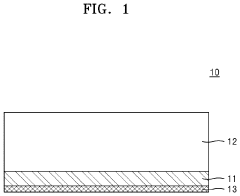
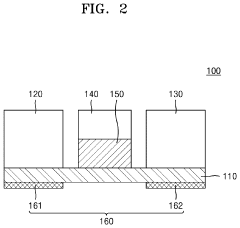
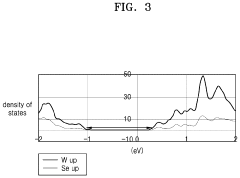
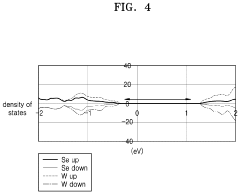
- A semiconductor device structure is introduced that includes a two-dimensional material layer with a conductive layer and an alignment adjusting layer, which adjusts the energy-band alignment between the two-dimensional material layer and the conductive layer, using materials like RuCl3, NbS2, and WO3 to provide holes or electrons, thereby reducing contact resistance.
International Harmonization of 2D Semiconductor Standards
The global nature of semiconductor supply chains necessitates coordinated international standards for 2D semiconductor materials. Currently, fragmentation exists across regional standards bodies including IEEE in North America, SEMI Global, IEC, and regional entities in Asia and Europe. This disjointed approach creates compliance challenges for manufacturers operating across multiple markets and impedes technology adoption.
Efforts toward harmonization have gained momentum through international working groups focused on establishing unified testing protocols, material characterization methods, and quality assurance frameworks. The International Electrotechnical Commission (IEC) has established Technical Committee 113, which collaborates with ISO to develop joint standards specifically addressing nanomaterials including 2D semiconductors.
Recent progress includes the 2022 International Standards Roadmap for 2D Materials, a collaborative initiative involving standards organizations from the US, EU, Japan, and South Korea. This roadmap identifies critical gaps in existing standards and proposes a unified framework for material specifications, testing methodologies, and performance metrics across international boundaries.
Challenges to harmonization include differing regulatory philosophies, varying industrial priorities, and competing national interests in semiconductor technology leadership. The strategic importance of semiconductor technology has led some nations to develop standards that favor domestic industries, creating potential barriers to truly global standards adoption.
The semiconductor industry has responded by forming cross-border industry consortia that advocate for aligned standards. Organizations like the 2D Semiconductor Alliance bring together stakeholders from multiple regions to develop consensus-based approaches to standardization that can be proposed to formal standards bodies.
Looking forward, successful harmonization will require multilateral agreements on intellectual property protection, technology transfer protocols, and mutual recognition of certification processes. The establishment of international reference materials and round-robin testing programs between national metrology institutes represents a promising pathway toward achieving measurement consistency across borders.
Ultimately, the development of internationally harmonized standards for 2D semiconductors will accelerate market adoption by reducing compliance costs, enhancing supply chain reliability, and creating a level playing field for innovation across global markets.
Efforts toward harmonization have gained momentum through international working groups focused on establishing unified testing protocols, material characterization methods, and quality assurance frameworks. The International Electrotechnical Commission (IEC) has established Technical Committee 113, which collaborates with ISO to develop joint standards specifically addressing nanomaterials including 2D semiconductors.
Recent progress includes the 2022 International Standards Roadmap for 2D Materials, a collaborative initiative involving standards organizations from the US, EU, Japan, and South Korea. This roadmap identifies critical gaps in existing standards and proposes a unified framework for material specifications, testing methodologies, and performance metrics across international boundaries.
Challenges to harmonization include differing regulatory philosophies, varying industrial priorities, and competing national interests in semiconductor technology leadership. The strategic importance of semiconductor technology has led some nations to develop standards that favor domestic industries, creating potential barriers to truly global standards adoption.
The semiconductor industry has responded by forming cross-border industry consortia that advocate for aligned standards. Organizations like the 2D Semiconductor Alliance bring together stakeholders from multiple regions to develop consensus-based approaches to standardization that can be proposed to formal standards bodies.
Looking forward, successful harmonization will require multilateral agreements on intellectual property protection, technology transfer protocols, and mutual recognition of certification processes. The establishment of international reference materials and round-robin testing programs between national metrology institutes represents a promising pathway toward achieving measurement consistency across borders.
Ultimately, the development of internationally harmonized standards for 2D semiconductors will accelerate market adoption by reducing compliance costs, enhancing supply chain reliability, and creating a level playing field for innovation across global markets.
Supply Chain Security and Traceability Requirements
The secure and transparent management of 2D semiconductor supply chains requires robust standards and frameworks to ensure integrity throughout the lifecycle. Current industry requirements emphasize end-to-end traceability from raw material sourcing to final product delivery. Organizations such as NIST, ISO, and the Trusted Computing Group have established guidelines that mandate cryptographic verification of component authenticity and origin.
Key supply chain security requirements include material provenance documentation, which necessitates maintaining verifiable records of source materials used in 2D semiconductor production. This includes geographical origin certification and extraction methodologies, particularly important for critical materials like graphene, hexagonal boron nitride, and transition metal dichalcogenides.
Manufacturing process validation represents another critical requirement, with standards calling for comprehensive documentation of fabrication techniques, quality control measures, and environmental parameters during production. This documentation must be tamper-evident and accessible to authorized stakeholders throughout the supply chain.
Chain-of-custody protocols have emerged as fundamental requirements, with standards specifying secure transfer procedures between supply chain entities. These protocols typically mandate digital signatures, secure handover documentation, and real-time location tracking for high-value 2D semiconductor components and materials.
The implementation of anti-counterfeiting measures has become increasingly standardized, with requirements for physical security features such as nanoscale watermarking, quantum dots, and specialized packaging with tamper-evident seals. These physical measures are complemented by digital authentication mechanisms including blockchain-based verification systems and secure element integration.
Vulnerability assessment and risk management frameworks constitute another layer of requirements, with standards mandating regular security audits, penetration testing, and risk modeling specific to 2D semiconductor supply chains. These assessments must address both physical and cyber vulnerabilities unique to these advanced materials.
Data protection requirements have also evolved specifically for 2D semiconductor supply chains, with standards specifying encryption protocols for intellectual property, manufacturing parameters, and customer information. These requirements typically align with broader frameworks like GDPR and industry-specific regulations while addressing the unique characteristics of 2D semiconductor technology.
Emergency response and continuity planning requirements complete the security framework, with standards mandating documented procedures for supply chain disruptions, security breaches, and quality incidents. These plans must include notification protocols, containment strategies, and recovery procedures specific to 2D semiconductor manufacturing and distribution.
Key supply chain security requirements include material provenance documentation, which necessitates maintaining verifiable records of source materials used in 2D semiconductor production. This includes geographical origin certification and extraction methodologies, particularly important for critical materials like graphene, hexagonal boron nitride, and transition metal dichalcogenides.
Manufacturing process validation represents another critical requirement, with standards calling for comprehensive documentation of fabrication techniques, quality control measures, and environmental parameters during production. This documentation must be tamper-evident and accessible to authorized stakeholders throughout the supply chain.
Chain-of-custody protocols have emerged as fundamental requirements, with standards specifying secure transfer procedures between supply chain entities. These protocols typically mandate digital signatures, secure handover documentation, and real-time location tracking for high-value 2D semiconductor components and materials.
The implementation of anti-counterfeiting measures has become increasingly standardized, with requirements for physical security features such as nanoscale watermarking, quantum dots, and specialized packaging with tamper-evident seals. These physical measures are complemented by digital authentication mechanisms including blockchain-based verification systems and secure element integration.
Vulnerability assessment and risk management frameworks constitute another layer of requirements, with standards mandating regular security audits, penetration testing, and risk modeling specific to 2D semiconductor supply chains. These assessments must address both physical and cyber vulnerabilities unique to these advanced materials.
Data protection requirements have also evolved specifically for 2D semiconductor supply chains, with standards specifying encryption protocols for intellectual property, manufacturing parameters, and customer information. These requirements typically align with broader frameworks like GDPR and industry-specific regulations while addressing the unique characteristics of 2D semiconductor technology.
Emergency response and continuity planning requirements complete the security framework, with standards mandating documented procedures for supply chain disruptions, security breaches, and quality incidents. These plans must include notification protocols, containment strategies, and recovery procedures specific to 2D semiconductor manufacturing and distribution.
Unlock deeper insights with Patsnap Eureka Quick Research — get a full tech report to explore trends and direct your research. Try now!
Generate Your Research Report Instantly with AI Agent
Supercharge your innovation with Patsnap Eureka AI Agent Platform!