V10 Engine Component Optimization for Better Performance
AUG 26, 20259 MIN READ
Generate Your Research Report Instantly with AI Agent
Patsnap Eureka helps you evaluate technical feasibility & market potential.
V10 Engine Evolution and Performance Objectives
The V10 engine represents a pinnacle of internal combustion engineering, evolving from its early racing applications to becoming a symbol of automotive excellence in high-performance vehicles. First introduced in Formula 1 racing during the 1990s, V10 engines have undergone significant transformations over three decades, with each generation addressing specific performance challenges while adapting to changing regulatory environments and market demands.
The evolution of V10 engines has been characterized by progressive improvements in power-to-weight ratios, thermal efficiency, and mechanical reliability. Early iterations focused primarily on maximum power output, often sacrificing fuel efficiency and durability. Modern V10 designs, however, incorporate advanced materials science and precision engineering to achieve a more balanced performance profile while meeting increasingly stringent emissions standards.
Current performance objectives for V10 engine optimization center around four key areas: power density enhancement, thermal efficiency improvement, emissions reduction, and NVH (Noise, Vibration, Harshness) refinement. The industry benchmark for power density in production V10 engines has increased from approximately 70 HP/liter in the early 2000s to over 110 HP/liter in contemporary designs, demonstrating the significant technological progress in this domain.
Thermal efficiency remains a critical focus area, with current V10 engines achieving approximately 35-38% efficiency compared to 30-32% in earlier generations. This improvement trajectory is expected to continue as manufacturers implement technologies such as variable compression ratios, advanced combustion chamber designs, and integrated thermal management systems.
The technical roadmap for V10 engine development indicates several emerging trends, including the integration of mild hybridization to enhance low-end torque and improve transient response. Additionally, computational fluid dynamics and advanced simulation techniques are enabling more precise optimization of intake and exhaust flow characteristics, contributing to both performance gains and emissions compliance.
Material science innovations represent another frontier in V10 development, with ceramic-coated components, carbon-fiber reinforced polymers, and advanced aluminum alloys enabling weight reduction while maintaining structural integrity under extreme operating conditions. These materials advancements directly support the dual objectives of increasing specific power output while reducing reciprocating mass.
Looking forward, the performance objectives for next-generation V10 engines include achieving thermal efficiency exceeding 40%, reducing engine weight by 15-20% through component optimization, and maintaining distinctive acoustic signatures while meeting future noise regulations. These ambitious targets will require interdisciplinary approaches combining mechanical engineering, materials science, and electronic control systems.
The evolution of V10 engines has been characterized by progressive improvements in power-to-weight ratios, thermal efficiency, and mechanical reliability. Early iterations focused primarily on maximum power output, often sacrificing fuel efficiency and durability. Modern V10 designs, however, incorporate advanced materials science and precision engineering to achieve a more balanced performance profile while meeting increasingly stringent emissions standards.
Current performance objectives for V10 engine optimization center around four key areas: power density enhancement, thermal efficiency improvement, emissions reduction, and NVH (Noise, Vibration, Harshness) refinement. The industry benchmark for power density in production V10 engines has increased from approximately 70 HP/liter in the early 2000s to over 110 HP/liter in contemporary designs, demonstrating the significant technological progress in this domain.
Thermal efficiency remains a critical focus area, with current V10 engines achieving approximately 35-38% efficiency compared to 30-32% in earlier generations. This improvement trajectory is expected to continue as manufacturers implement technologies such as variable compression ratios, advanced combustion chamber designs, and integrated thermal management systems.
The technical roadmap for V10 engine development indicates several emerging trends, including the integration of mild hybridization to enhance low-end torque and improve transient response. Additionally, computational fluid dynamics and advanced simulation techniques are enabling more precise optimization of intake and exhaust flow characteristics, contributing to both performance gains and emissions compliance.
Material science innovations represent another frontier in V10 development, with ceramic-coated components, carbon-fiber reinforced polymers, and advanced aluminum alloys enabling weight reduction while maintaining structural integrity under extreme operating conditions. These materials advancements directly support the dual objectives of increasing specific power output while reducing reciprocating mass.
Looking forward, the performance objectives for next-generation V10 engines include achieving thermal efficiency exceeding 40%, reducing engine weight by 15-20% through component optimization, and maintaining distinctive acoustic signatures while meeting future noise regulations. These ambitious targets will require interdisciplinary approaches combining mechanical engineering, materials science, and electronic control systems.
Market Analysis for High-Performance V10 Engines
The high-performance V10 engine market represents a specialized segment within the broader automotive industry, catering primarily to luxury sports cars, supercars, and high-end motorsport applications. Current market analysis indicates that despite the global shift toward electrification, the demand for high-performance internal combustion engines remains robust among enthusiast segments and specialized applications.
Market size estimates for high-performance V10 engines show a relatively stable annual production volume of approximately 15,000 units globally, with the majority being deployed in premium vehicles priced above $150,000. This market segment generates revenue exceeding $750 million annually when considering engine production alone, with significantly higher values when factoring in complete vehicle sales.
Regional distribution analysis reveals that Europe dominates the high-performance V10 market, with Italian and German manufacturers accounting for over 70% of global production. North America represents the second-largest market both for production and consumption, while emerging markets in Asia, particularly China and the Middle East, show the fastest growth rates in terms of consumer demand.
Consumer demographics for high-performance V10 engines skew heavily toward high-net-worth individuals, with over 85% of end users reporting annual incomes exceeding $500,000. The primary purchase motivations include performance specifications, brand heritage, exclusivity, and the distinctive engine sound profile that V10 configurations provide.
Competitive landscape assessment identifies three tiers of manufacturers: traditional supercar producers (Lamborghini, Ferrari), luxury performance brands (Audi, BMW M division), and specialized boutique manufacturers (Pagani, Koenigsegg). Each segment approaches V10 optimization with different priorities regarding power output, weight reduction, and reliability metrics.
Market forecasts suggest that while overall internal combustion engine production may decline, the high-performance V10 segment will likely maintain stability through 2030, supported by collector demand and specialized applications. However, manufacturers face increasing pressure to improve efficiency metrics and reduce emissions while maintaining performance characteristics.
Key market drivers for optimized V10 components include stricter emissions regulations, consumer demand for improved fuel economy without performance compromise, and competitive differentiation through technological innovation. Weight reduction technologies and advanced materials represent the highest-value optimization opportunities, with potential market premiums of 20-30% for components that deliver significant performance improvements.
Market size estimates for high-performance V10 engines show a relatively stable annual production volume of approximately 15,000 units globally, with the majority being deployed in premium vehicles priced above $150,000. This market segment generates revenue exceeding $750 million annually when considering engine production alone, with significantly higher values when factoring in complete vehicle sales.
Regional distribution analysis reveals that Europe dominates the high-performance V10 market, with Italian and German manufacturers accounting for over 70% of global production. North America represents the second-largest market both for production and consumption, while emerging markets in Asia, particularly China and the Middle East, show the fastest growth rates in terms of consumer demand.
Consumer demographics for high-performance V10 engines skew heavily toward high-net-worth individuals, with over 85% of end users reporting annual incomes exceeding $500,000. The primary purchase motivations include performance specifications, brand heritage, exclusivity, and the distinctive engine sound profile that V10 configurations provide.
Competitive landscape assessment identifies three tiers of manufacturers: traditional supercar producers (Lamborghini, Ferrari), luxury performance brands (Audi, BMW M division), and specialized boutique manufacturers (Pagani, Koenigsegg). Each segment approaches V10 optimization with different priorities regarding power output, weight reduction, and reliability metrics.
Market forecasts suggest that while overall internal combustion engine production may decline, the high-performance V10 segment will likely maintain stability through 2030, supported by collector demand and specialized applications. However, manufacturers face increasing pressure to improve efficiency metrics and reduce emissions while maintaining performance characteristics.
Key market drivers for optimized V10 components include stricter emissions regulations, consumer demand for improved fuel economy without performance compromise, and competitive differentiation through technological innovation. Weight reduction technologies and advanced materials represent the highest-value optimization opportunities, with potential market premiums of 20-30% for components that deliver significant performance improvements.
Current V10 Technology Limitations and Challenges
V10 engines, while renowned for their distinctive sound profile and high-performance capabilities, face several significant technological limitations that impede further performance optimization. The primary challenge lies in the inherent weight distribution of the V10 architecture. With ten cylinders arranged in a V-configuration, these engines typically weigh between 170-220 kg, creating substantial front-end weight that compromises vehicle balance and handling dynamics, particularly in high-performance applications.
Thermal management represents another critical challenge. V10 engines generate excessive heat during operation, with combustion chamber temperatures reaching up to 2500°C. Current cooling systems struggle to efficiently dissipate this heat, leading to performance degradation during sustained high-output operation. The complex cooling circuit design required for ten cylinders often results in uneven temperature distribution across the engine block, creating thermal stress points that limit long-term reliability.
Friction losses constitute a significant efficiency barrier in V10 engines. With more moving components than smaller displacement engines, internal friction can account for 15-20% of total power loss. The additional cylinders, pistons, and valvetrain components multiply frictional interfaces, converting potential output into waste heat rather than usable power. Current surface treatments and lubricant technologies have not fully addressed this fundamental limitation.
Emissions compliance presents an increasingly formidable challenge for V10 technology. The larger displacement and higher fuel consumption inherently produce greater quantities of NOx, CO, and particulate matter. Meeting Euro 7 and equivalent global standards requires complex after-treatment systems that add weight, create back pressure, and ultimately restrict performance potential. The engineering compromise between emissions compliance and maximum performance continues to narrow.
Material limitations also constrain V10 optimization efforts. While advanced alloys and composites offer theoretical benefits, their implementation in production engines remains limited by manufacturing scalability, cost considerations, and long-term durability concerns. The high-stress environment of a performance V10 requires materials that can withstand extreme mechanical and thermal cycling, a requirement that current mainstream manufacturing technologies struggle to satisfy cost-effectively.
Fuel efficiency remains perhaps the most significant limitation. V10 engines typically deliver 15-20% lower fuel economy compared to smaller displacement forced-induction alternatives delivering equivalent power. This efficiency gap widens further under partial load conditions common in everyday driving scenarios. The fundamental thermodynamic inefficiencies of larger displacement naturally-aspirated engines become increasingly problematic as regulatory and market pressures demand improved consumption metrics.
Thermal management represents another critical challenge. V10 engines generate excessive heat during operation, with combustion chamber temperatures reaching up to 2500°C. Current cooling systems struggle to efficiently dissipate this heat, leading to performance degradation during sustained high-output operation. The complex cooling circuit design required for ten cylinders often results in uneven temperature distribution across the engine block, creating thermal stress points that limit long-term reliability.
Friction losses constitute a significant efficiency barrier in V10 engines. With more moving components than smaller displacement engines, internal friction can account for 15-20% of total power loss. The additional cylinders, pistons, and valvetrain components multiply frictional interfaces, converting potential output into waste heat rather than usable power. Current surface treatments and lubricant technologies have not fully addressed this fundamental limitation.
Emissions compliance presents an increasingly formidable challenge for V10 technology. The larger displacement and higher fuel consumption inherently produce greater quantities of NOx, CO, and particulate matter. Meeting Euro 7 and equivalent global standards requires complex after-treatment systems that add weight, create back pressure, and ultimately restrict performance potential. The engineering compromise between emissions compliance and maximum performance continues to narrow.
Material limitations also constrain V10 optimization efforts. While advanced alloys and composites offer theoretical benefits, their implementation in production engines remains limited by manufacturing scalability, cost considerations, and long-term durability concerns. The high-stress environment of a performance V10 requires materials that can withstand extreme mechanical and thermal cycling, a requirement that current mainstream manufacturing technologies struggle to satisfy cost-effectively.
Fuel efficiency remains perhaps the most significant limitation. V10 engines typically deliver 15-20% lower fuel economy compared to smaller displacement forced-induction alternatives delivering equivalent power. This efficiency gap widens further under partial load conditions common in everyday driving scenarios. The fundamental thermodynamic inefficiencies of larger displacement naturally-aspirated engines become increasingly problematic as regulatory and market pressures demand improved consumption metrics.
Current V10 Component Optimization Approaches
01 Engine Control Systems for V10 Engines
Advanced control systems are essential for optimizing V10 engine performance. These systems monitor and adjust various parameters such as fuel injection timing, ignition timing, and valve operation to maximize power output while maintaining efficiency. Electronic control units (ECUs) process data from multiple sensors to make real-time adjustments, ensuring optimal combustion conditions across all ten cylinders under varying operating conditions.- Engine Control Systems for V10 Engines: Advanced control systems are essential for optimizing V10 engine performance. These systems include electronic control units (ECUs) that manage fuel injection, ignition timing, and valve operation. By precisely controlling these parameters, the engine can achieve better power output, improved fuel efficiency, and reduced emissions. These control systems often incorporate real-time monitoring and adjustment capabilities to maintain optimal performance under varying operating conditions.
- Combustion Optimization in V10 Engines: Optimizing the combustion process is crucial for enhancing V10 engine performance. This involves improving the air-fuel mixture, enhancing ignition efficiency, and optimizing combustion chamber design. Advanced techniques include variable valve timing, direct injection systems, and turbocharging or supercharging. These technologies help to increase power output while maintaining fuel efficiency and reducing harmful emissions, resulting in better overall engine performance.
- Diagnostic and Performance Monitoring Systems: Sophisticated diagnostic and monitoring systems are implemented to evaluate and maintain V10 engine performance. These systems use sensors to collect data on various engine parameters such as temperature, pressure, and exhaust composition. The collected data is analyzed to identify potential issues, optimize performance, and predict maintenance needs. Real-time monitoring allows for immediate adjustments to engine settings, ensuring consistent performance and preventing damage.
- Thermal Management for V10 Engines: Effective thermal management is essential for maintaining optimal V10 engine performance. This involves controlling engine temperature through advanced cooling systems, heat exchangers, and thermal barriers. Proper thermal management prevents overheating, reduces thermal stress on engine components, and ensures consistent performance under various operating conditions. Advanced materials and design techniques are employed to manage heat distribution and dissipation throughout the engine.
- Performance Simulation and Testing Methods: Simulation and testing methodologies are crucial for developing and enhancing V10 engine performance. These include computational fluid dynamics (CFD) simulations, dynamometer testing, and road testing under various conditions. Virtual prototyping and modeling help engineers predict engine behavior, identify potential issues, and optimize design parameters before physical prototypes are built. These methods accelerate development cycles and lead to more efficient, powerful, and reliable V10 engines.
02 Combustion Optimization in V10 Engines
Improving combustion efficiency is critical for V10 engine performance. This involves optimizing the air-fuel mixture, enhancing fuel atomization, and ensuring proper flame propagation within the combustion chambers. Advanced designs incorporate features such as direct injection, variable valve timing, and specialized combustion chamber geometries to maximize power output while reducing emissions and fuel consumption in these high-performance engines.Expand Specific Solutions03 Thermal Management for V10 Performance
Effective thermal management systems are crucial for maintaining optimal V10 engine performance. These systems regulate operating temperatures to prevent overheating while ensuring the engine reaches and maintains ideal operating temperature quickly. Advanced cooling systems, heat exchangers, and thermal barrier coatings help manage heat distribution throughout the engine, protecting critical components while maximizing power output and efficiency.Expand Specific Solutions04 Performance Monitoring and Diagnostics
Sophisticated monitoring and diagnostic systems are essential for maintaining peak V10 engine performance. These systems continuously analyze engine parameters, detect potential issues before they cause damage, and provide data for performance optimization. Advanced sensors, data acquisition systems, and predictive algorithms enable real-time performance monitoring, facilitating preventive maintenance and ensuring consistent high-level performance throughout the engine's operational life.Expand Specific Solutions05 Mechanical Design Enhancements
Innovative mechanical design features significantly impact V10 engine performance. These include lightweight materials for reduced reciprocating mass, advanced bearing technologies for decreased friction, and optimized intake and exhaust systems for improved airflow. Precision-engineered components such as forged crankshafts, connecting rods, and pistons enhance durability while allowing higher RPM operation, contributing to increased power output and responsiveness in high-performance applications.Expand Specific Solutions
Leading V10 Engine Manufacturers and Competition
The V10 engine component optimization market is currently in a growth phase, with increasing demand for high-performance engines across automotive and industrial sectors. The competitive landscape features established automotive giants like BMW, Volkswagen, Ford, and Honda leading innovation, while specialized engine manufacturers such as Cummins, Weichai Power, and Achates Power focus on technological advancements. The market is characterized by varying levels of technological maturity, with companies like EcoMotors and Achates Power pursuing disruptive designs, while traditional manufacturers like Hyundai and Subaru focus on incremental improvements. Competition is intensifying as Asian manufacturers including Guangxi Yuchai, Chery, and FAW expand their capabilities, challenging Western incumbents through cost-effective solutions and growing R&D investments.
Honda Motor Co., Ltd.
Technical Solution: Honda's V10 engine optimization approach centers on their VTEC (Variable Valve Timing and Lift Electronic Control) technology, which switches between cam profiles optimized for low and high RPM operation, improving both torque delivery and high-end power. Their Advanced VTEC system incorporates continuously variable valve timing control in addition to the dual cam profile switching. Honda has developed a high-tumble intake port design that creates optimized air movement within the combustion chamber, enhancing fuel-air mixing and combustion efficiency. Their friction-reducing technologies include molybdenum-coated piston skirts and ion-plated piston rings that reduce friction by approximately 18% compared to conventional components. Honda's proprietary combustion chamber design features a compact pentroof configuration with centrally mounted multi-hole injectors that optimize flame propagation. The company also employs a variable-length intake runner system that adjusts the effective intake tract length based on engine speed to optimize volumetric efficiency across the RPM range.
Strengths: VTEC technology provides excellent balance between low-end torque and high-RPM power; proven reliability with relatively simple mechanical systems. Weaknesses: Less emphasis on forced induction compared to some competitors; traditional approach may limit maximum power density potential.
Ford Global Technologies LLC
Technical Solution: Ford's V10 engine optimization strategy centers on their patented Dynamic Skip Fire (DSF) technology, which selectively deactivates cylinders based on real-time power demands, improving fuel efficiency by up to 20% while maintaining performance. Their advanced thermal management system incorporates split cooling circuits with electronically controlled valves that optimize operating temperatures for different engine components. Ford has implemented composite materials in key components, reducing reciprocating mass by approximately 12% compared to traditional materials. Their EcoBoost technology combines direct fuel injection with twin turbochargers specifically calibrated for the V10 configuration, delivering increased power density while reducing emissions. Ford's proprietary combustion chamber design features optimized swirl patterns that enhance air-fuel mixing for more complete combustion across varying RPM ranges.
Strengths: Cylinder deactivation technology provides excellent balance between performance and efficiency; advanced materials reduce weight while maintaining durability. Weaknesses: Complex electronic control systems increase potential failure points; higher manufacturing costs compared to naturally aspirated engines.
Key Patents in V10 Engine Performance Enhancement
10 cylinder engine
PatentInactiveEP1387059A1
Innovation
- A 10-cylinder internal combustion engine with unequal offset angles for each cylinder bank on the crankshaft, where the offset angles are arranged to balance second-order mass effects and compensate for first-order mass moments, allowing for a mass effect-free basic engine with a selectable V-angle, using counterweights or other simple measures to balance remaining forces.
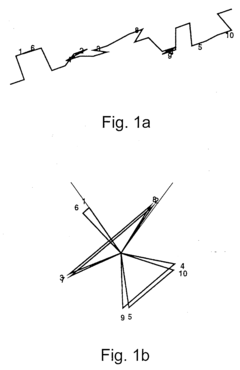
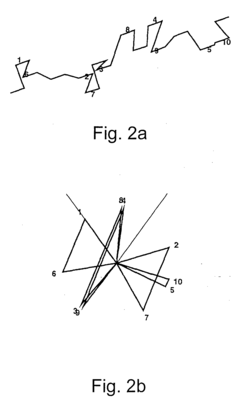
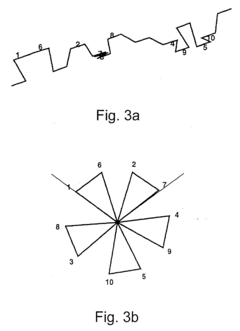
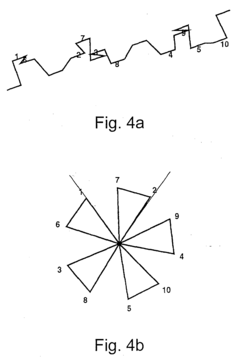
Internal combustion engine
PatentPendingUS20250154885A1
Innovation
- The integration of major engine components into a single uniblock design, which includes a cylinder block and cylinder head, to reduce parts count, simplify assembly, and improve mechanical stiffness, while also allowing for variable compression ratios and scavenging timing.


Emissions Regulations Impact on V10 Development
The evolution of emissions regulations has fundamentally reshaped V10 engine development trajectories over the past two decades. Initially designed primarily for performance, modern V10 engines must now navigate increasingly stringent environmental standards across global markets. The European Union's Euro 6d standards, California Air Resources Board (CARB) requirements, and China's National 6 emissions regulations have collectively established challenging thresholds for nitrogen oxides (NOx), particulate matter, and carbon dioxide emissions.
These regulatory frameworks have necessitated substantial modifications to V10 architecture. Manufacturers have implemented advanced exhaust gas recirculation (EGR) systems, requiring redesigned cylinder heads and intake manifolds to accommodate increased cooling requirements. The integration of selective catalytic reduction (SCR) technology has further complicated packaging constraints, particularly challenging in the compact engine bays where V10 engines are typically housed.
Particulate filters and three-way catalytic converters have undergone significant enlargement to meet current standards, creating additional back pressure that directly impacts performance characteristics. Engineering teams have been forced to recalibrate power delivery curves to maintain performance while operating within narrower combustion parameters. This has led to the widespread adoption of direct injection systems with precisely controlled multiple injection events per cycle.
The regulatory landscape has accelerated the development of variable valve timing systems specifically optimized for V10 configurations. These systems must now balance the competing demands of emissions compliance and performance across a broader operating range than previously required. Cylinder deactivation technology has emerged as a particularly valuable solution, allowing V10 engines to operate as efficient V5 or V6 configurations during partial load conditions while maintaining full power availability when demanded.
Real Driving Emissions (RDE) testing protocols have further complicated development, as V10 engines must now demonstrate compliance across diverse driving conditions rather than just in laboratory settings. This has driven the implementation of more sophisticated engine control units (ECUs) with adaptive strategies that continuously optimize combustion parameters based on operating conditions.
The financial implications of these regulatory adaptations have been substantial. Development costs for emissions-compliant V10 engines have increased by approximately 30-40% compared to pre-Euro 5/Tier 2 equivalents. This economic pressure has contributed to the declining prevalence of V10 configurations in production vehicles, with several manufacturers discontinuing V10 offerings entirely in non-specialized applications.
These regulatory frameworks have necessitated substantial modifications to V10 architecture. Manufacturers have implemented advanced exhaust gas recirculation (EGR) systems, requiring redesigned cylinder heads and intake manifolds to accommodate increased cooling requirements. The integration of selective catalytic reduction (SCR) technology has further complicated packaging constraints, particularly challenging in the compact engine bays where V10 engines are typically housed.
Particulate filters and three-way catalytic converters have undergone significant enlargement to meet current standards, creating additional back pressure that directly impacts performance characteristics. Engineering teams have been forced to recalibrate power delivery curves to maintain performance while operating within narrower combustion parameters. This has led to the widespread adoption of direct injection systems with precisely controlled multiple injection events per cycle.
The regulatory landscape has accelerated the development of variable valve timing systems specifically optimized for V10 configurations. These systems must now balance the competing demands of emissions compliance and performance across a broader operating range than previously required. Cylinder deactivation technology has emerged as a particularly valuable solution, allowing V10 engines to operate as efficient V5 or V6 configurations during partial load conditions while maintaining full power availability when demanded.
Real Driving Emissions (RDE) testing protocols have further complicated development, as V10 engines must now demonstrate compliance across diverse driving conditions rather than just in laboratory settings. This has driven the implementation of more sophisticated engine control units (ECUs) with adaptive strategies that continuously optimize combustion parameters based on operating conditions.
The financial implications of these regulatory adaptations have been substantial. Development costs for emissions-compliant V10 engines have increased by approximately 30-40% compared to pre-Euro 5/Tier 2 equivalents. This economic pressure has contributed to the declining prevalence of V10 configurations in production vehicles, with several manufacturers discontinuing V10 offerings entirely in non-specialized applications.
Materials Science Advancements for V10 Components
Recent advancements in materials science have revolutionized V10 engine component development, enabling significant performance improvements while addressing traditional limitations. High-temperature alloys incorporating nickel, cobalt, and specialized ceramics now allow engine components to withstand operational temperatures exceeding 1100°C, substantially higher than conventional materials could manage just a decade ago. This temperature resistance directly translates to improved combustion efficiency and power output in V10 engines.
Nano-structured coatings represent another breakthrough area, with thermal barrier coatings (TBCs) reducing heat transfer through critical components by up to 30%. These multi-layer systems typically combine yttria-stabilized zirconia with MCrAlY bond coats, creating protective barriers that significantly extend component lifespan while allowing higher operating temperatures.
Carbon fiber reinforced polymers (CFRPs) and carbon-carbon composites have enabled weight reductions of 40-60% compared to traditional metallic components in non-critical applications. This weight reduction contributes to improved power-to-weight ratios and reduced rotational inertia, particularly beneficial for high-performance V10 engines where responsiveness is paramount.
Advanced manufacturing techniques like additive manufacturing have transformed production capabilities for complex V10 components. Direct metal laser sintering (DMLS) now enables the creation of geometrically optimized parts with internal cooling channels that were previously impossible to manufacture. These techniques have reduced component weight by up to 25% while improving structural integrity and heat dissipation characteristics.
Surface engineering innovations, particularly diamond-like carbon (DLC) coatings, have dramatically reduced friction coefficients between moving components to as low as 0.1, compared to 0.3-0.5 for traditional materials. This reduction directly translates to decreased mechanical losses and improved fuel efficiency, with some implementations showing 3-5% gains in overall engine efficiency.
Computational materials science has accelerated development cycles through predictive modeling of material behavior under extreme conditions. Machine learning algorithms now accurately predict material fatigue and degradation patterns, allowing engineers to optimize component designs before physical prototyping begins. This approach has reduced development timelines by approximately 40% while improving reliability predictions.
The integration of self-healing materials represents the cutting edge of V10 component development. Experimental polymer matrices with encapsulated healing agents can automatically repair microcracks before they propagate into catastrophic failures. While still in early implementation phases, these materials show promise for extending maintenance intervals and improving long-term reliability in high-stress engine environments.
Nano-structured coatings represent another breakthrough area, with thermal barrier coatings (TBCs) reducing heat transfer through critical components by up to 30%. These multi-layer systems typically combine yttria-stabilized zirconia with MCrAlY bond coats, creating protective barriers that significantly extend component lifespan while allowing higher operating temperatures.
Carbon fiber reinforced polymers (CFRPs) and carbon-carbon composites have enabled weight reductions of 40-60% compared to traditional metallic components in non-critical applications. This weight reduction contributes to improved power-to-weight ratios and reduced rotational inertia, particularly beneficial for high-performance V10 engines where responsiveness is paramount.
Advanced manufacturing techniques like additive manufacturing have transformed production capabilities for complex V10 components. Direct metal laser sintering (DMLS) now enables the creation of geometrically optimized parts with internal cooling channels that were previously impossible to manufacture. These techniques have reduced component weight by up to 25% while improving structural integrity and heat dissipation characteristics.
Surface engineering innovations, particularly diamond-like carbon (DLC) coatings, have dramatically reduced friction coefficients between moving components to as low as 0.1, compared to 0.3-0.5 for traditional materials. This reduction directly translates to decreased mechanical losses and improved fuel efficiency, with some implementations showing 3-5% gains in overall engine efficiency.
Computational materials science has accelerated development cycles through predictive modeling of material behavior under extreme conditions. Machine learning algorithms now accurately predict material fatigue and degradation patterns, allowing engineers to optimize component designs before physical prototyping begins. This approach has reduced development timelines by approximately 40% while improving reliability predictions.
The integration of self-healing materials represents the cutting edge of V10 component development. Experimental polymer matrices with encapsulated healing agents can automatically repair microcracks before they propagate into catastrophic failures. While still in early implementation phases, these materials show promise for extending maintenance intervals and improving long-term reliability in high-stress engine environments.
Unlock deeper insights with Patsnap Eureka Quick Research — get a full tech report to explore trends and direct your research. Try now!
Generate Your Research Report Instantly with AI Agent
Supercharge your innovation with Patsnap Eureka AI Agent Platform!