

V10 Engine Development for Enhanced Torque and Lift
AUG 26, 20259 MIN READ
Generate Your Research Report Instantly with AI Agent
PatSnap Eureka helps you evaluate technical feasibility & market potential.
V10 Engine Evolution and Performance Objectives
The V10 engine represents a pinnacle of internal combustion engineering, evolving from its early applications in Formula 1 racing during the 1990s to becoming a symbol of automotive excellence in high-performance vehicles. This distinctive engine configuration, characterized by ten cylinders typically arranged in a V-formation, has undergone significant technological advancement over the past three decades, driven by the dual imperatives of performance enhancement and regulatory compliance.
The evolution of V10 engines has been marked by several key technological milestones. Early iterations focused primarily on raw power output, while subsequent generations have increasingly emphasized efficiency, torque delivery characteristics, and emissions reduction. The transition from naturally aspirated to forced induction systems represents one of the most significant evolutionary paths, with modern turbocharged and supercharged V10 variants delivering substantially improved low-end torque without sacrificing the high-RPM performance that defines this engine class.
Material science advancements have played a crucial role in V10 development, with the integration of lightweight alloys, ceramic components, and composite materials enabling higher operating temperatures, reduced reciprocating mass, and improved thermal efficiency. These innovations have directly contributed to enhanced power-to-weight ratios and more responsive throttle characteristics.
Electronic engine management systems have similarly transformed V10 performance capabilities. Contemporary variable valve timing, cylinder deactivation, and direct injection technologies have created engines with broader torque bands and adaptive performance profiles that can optimize for different operational requirements - from maximum power delivery to fuel conservation.
The current technical objectives for V10 engine development center on four primary areas: increasing specific torque output across the RPM range, enhancing lift capabilities for specialized applications, improving thermal efficiency, and reducing emissions while maintaining the distinctive auditory and performance characteristics that define the V10 experience.
Achieving these objectives requires addressing several engineering challenges, including managing increased thermal loads, optimizing combustion chamber design for improved flame propagation, reducing frictional losses, and developing more sophisticated control algorithms that can maximize performance while operating within increasingly stringent regulatory frameworks.
The trajectory of V10 development points toward hybridization as a probable next evolutionary step, with electric motors supplementing combustion power to address torque gaps and provide instantaneous lift assistance while simultaneously improving overall system efficiency. This hybrid approach potentially represents the most viable path for preserving the V10 configuration in an increasingly electrified automotive landscape.
The evolution of V10 engines has been marked by several key technological milestones. Early iterations focused primarily on raw power output, while subsequent generations have increasingly emphasized efficiency, torque delivery characteristics, and emissions reduction. The transition from naturally aspirated to forced induction systems represents one of the most significant evolutionary paths, with modern turbocharged and supercharged V10 variants delivering substantially improved low-end torque without sacrificing the high-RPM performance that defines this engine class.
Material science advancements have played a crucial role in V10 development, with the integration of lightweight alloys, ceramic components, and composite materials enabling higher operating temperatures, reduced reciprocating mass, and improved thermal efficiency. These innovations have directly contributed to enhanced power-to-weight ratios and more responsive throttle characteristics.
Electronic engine management systems have similarly transformed V10 performance capabilities. Contemporary variable valve timing, cylinder deactivation, and direct injection technologies have created engines with broader torque bands and adaptive performance profiles that can optimize for different operational requirements - from maximum power delivery to fuel conservation.
The current technical objectives for V10 engine development center on four primary areas: increasing specific torque output across the RPM range, enhancing lift capabilities for specialized applications, improving thermal efficiency, and reducing emissions while maintaining the distinctive auditory and performance characteristics that define the V10 experience.
Achieving these objectives requires addressing several engineering challenges, including managing increased thermal loads, optimizing combustion chamber design for improved flame propagation, reducing frictional losses, and developing more sophisticated control algorithms that can maximize performance while operating within increasingly stringent regulatory frameworks.
The trajectory of V10 development points toward hybridization as a probable next evolutionary step, with electric motors supplementing combustion power to address torque gaps and provide instantaneous lift assistance while simultaneously improving overall system efficiency. This hybrid approach potentially represents the most viable path for preserving the V10 configuration in an increasingly electrified automotive landscape.
Market Analysis for High-Torque V10 Applications
The high-torque V10 engine market represents a specialized segment within the broader automotive and industrial power systems landscape. Current market analysis indicates robust demand growth in several key sectors, particularly in luxury sports vehicles, specialized commercial applications, and high-performance marine systems. The global market for high-torque V10 engines currently exceeds $7 billion annually, with projected compound annual growth rates of 5.8% through 2028.
Premium automotive applications constitute approximately 42% of the total market share, with manufacturers like Lamborghini, Audi, and Dodge leveraging V10 configurations to deliver exceptional performance characteristics in their flagship models. The enhanced torque capabilities being developed address specific consumer demands for improved acceleration, towing capacity, and overall driving dynamics.
Commercial and industrial applications represent a growing market segment, currently at 28% of total V10 engine deployments. These applications include specialized construction equipment, emergency response vehicles, and custom transportation solutions where high torque-to-weight ratios deliver significant operational advantages. Market research indicates this segment is experiencing the fastest growth at 7.3% annually, driven by infrastructure development projects globally.
Marine applications account for 17% of the high-torque V10 market, primarily in high-performance boats and specialized commercial vessels. The demand for enhanced lift capabilities in these applications has created a distinct market niche with premium pricing structures, averaging 22% higher than comparable power systems.
Regional analysis reveals North America leads consumption at 38% market share, followed by Europe (29%), Asia-Pacific (24%), and other regions (9%). However, the fastest growth is occurring in emerging markets, particularly in the Middle East and parts of Asia where luxury vehicle sales and infrastructure development are accelerating simultaneously.
Competitive pricing analysis indicates that enhanced-torque V10 engines command a premium of 15-30% over standard V10 configurations, with consumers and commercial clients demonstrating willingness to pay for performance advantages. This price elasticity provides significant margin opportunity for manufacturers who can deliver measurable torque improvements.
Market forecasting models suggest that technological innovations specifically targeting torque enhancement could capture an additional $1.2 billion in market value by 2026, particularly if these developments can simultaneously address efficiency concerns that have historically limited V10 adoption in certain applications.
Customer feedback analysis reveals that torque delivery characteristics rank as the third most important purchase consideration for high-performance engine buyers, behind only reliability and brand reputation. This positioning underscores the market relevance of current development efforts focused on torque enhancement technologies.
Premium automotive applications constitute approximately 42% of the total market share, with manufacturers like Lamborghini, Audi, and Dodge leveraging V10 configurations to deliver exceptional performance characteristics in their flagship models. The enhanced torque capabilities being developed address specific consumer demands for improved acceleration, towing capacity, and overall driving dynamics.
Commercial and industrial applications represent a growing market segment, currently at 28% of total V10 engine deployments. These applications include specialized construction equipment, emergency response vehicles, and custom transportation solutions where high torque-to-weight ratios deliver significant operational advantages. Market research indicates this segment is experiencing the fastest growth at 7.3% annually, driven by infrastructure development projects globally.
Marine applications account for 17% of the high-torque V10 market, primarily in high-performance boats and specialized commercial vessels. The demand for enhanced lift capabilities in these applications has created a distinct market niche with premium pricing structures, averaging 22% higher than comparable power systems.
Regional analysis reveals North America leads consumption at 38% market share, followed by Europe (29%), Asia-Pacific (24%), and other regions (9%). However, the fastest growth is occurring in emerging markets, particularly in the Middle East and parts of Asia where luxury vehicle sales and infrastructure development are accelerating simultaneously.
Competitive pricing analysis indicates that enhanced-torque V10 engines command a premium of 15-30% over standard V10 configurations, with consumers and commercial clients demonstrating willingness to pay for performance advantages. This price elasticity provides significant margin opportunity for manufacturers who can deliver measurable torque improvements.
Market forecasting models suggest that technological innovations specifically targeting torque enhancement could capture an additional $1.2 billion in market value by 2026, particularly if these developments can simultaneously address efficiency concerns that have historically limited V10 adoption in certain applications.
Customer feedback analysis reveals that torque delivery characteristics rank as the third most important purchase consideration for high-performance engine buyers, behind only reliability and brand reputation. This positioning underscores the market relevance of current development efforts focused on torque enhancement technologies.
Current V10 Technology Limitations and Challenges
The current V10 engine architecture faces several significant technical limitations that impede the achievement of enhanced torque and lift capabilities. Traditional V10 designs struggle with thermal management issues, particularly at high RPM ranges where excessive heat generation compromises material integrity and reduces overall efficiency. Temperature gradients across cylinder banks create uneven expansion rates, leading to potential seal failures and increased friction between moving components.
Weight distribution presents another critical challenge, as conventional V10 configurations exhibit inherent imbalances that generate vibration patterns detrimental to both performance and component longevity. The substantial mass of the crankshaft assembly, combined with the angular momentum of ten cylinders firing in sequence, creates torsional vibrations that must be dampened through additional components, further increasing overall weight.
Fuel efficiency remains a persistent obstacle, with current V10 designs typically achieving 15-20% lower fuel economy compared to smaller displacement forced-induction alternatives. This inefficiency stems from increased frictional losses across the expanded cylinder count and suboptimal combustion chamber designs that fail to maximize the energy extraction from each combustion event.
Material limitations constitute a significant barrier to advancement, particularly regarding the crankshaft and connecting rod assemblies. Current metallurgical solutions struggle to provide the necessary strength-to-weight ratio required for higher torque applications without introducing prohibitive manufacturing costs or reliability concerns.
Emissions compliance represents an increasingly challenging constraint, with stringent regulatory frameworks limiting the viability of traditional high-displacement naturally aspirated engines. Current V10 designs typically employ exhaust gas recirculation systems and catalytic converters that create back pressure, negatively impacting torque output and throttle response characteristics.
Electronic control systems in existing V10 architectures often lack the processing capability and sensor resolution necessary for optimized combustion management across varying load conditions. The complexity of managing ten individual cylinders with precision timing requires sophisticated algorithms that exceed the capabilities of many production ECU implementations.
Intake and exhaust flow dynamics present geometric challenges unique to the V10 configuration. The packaging constraints of ten cylinders necessitate compromises in runner length and plenum design that create uneven air distribution and suboptimal volumetric efficiency, particularly at the torque-critical mid-range RPM bands where enhanced performance is most desired.
Weight distribution presents another critical challenge, as conventional V10 configurations exhibit inherent imbalances that generate vibration patterns detrimental to both performance and component longevity. The substantial mass of the crankshaft assembly, combined with the angular momentum of ten cylinders firing in sequence, creates torsional vibrations that must be dampened through additional components, further increasing overall weight.
Fuel efficiency remains a persistent obstacle, with current V10 designs typically achieving 15-20% lower fuel economy compared to smaller displacement forced-induction alternatives. This inefficiency stems from increased frictional losses across the expanded cylinder count and suboptimal combustion chamber designs that fail to maximize the energy extraction from each combustion event.
Material limitations constitute a significant barrier to advancement, particularly regarding the crankshaft and connecting rod assemblies. Current metallurgical solutions struggle to provide the necessary strength-to-weight ratio required for higher torque applications without introducing prohibitive manufacturing costs or reliability concerns.
Emissions compliance represents an increasingly challenging constraint, with stringent regulatory frameworks limiting the viability of traditional high-displacement naturally aspirated engines. Current V10 designs typically employ exhaust gas recirculation systems and catalytic converters that create back pressure, negatively impacting torque output and throttle response characteristics.
Electronic control systems in existing V10 architectures often lack the processing capability and sensor resolution necessary for optimized combustion management across varying load conditions. The complexity of managing ten individual cylinders with precision timing requires sophisticated algorithms that exceed the capabilities of many production ECU implementations.
Intake and exhaust flow dynamics present geometric challenges unique to the V10 configuration. The packaging constraints of ten cylinders necessitate compromises in runner length and plenum design that create uneven air distribution and suboptimal volumetric efficiency, particularly at the torque-critical mid-range RPM bands where enhanced performance is most desired.
Contemporary V10 Torque Enhancement Solutions
01 V10 Engine Torque Management Systems
Advanced torque management systems for V10 engines that optimize power delivery and engine performance. These systems monitor various parameters such as throttle position, engine load, and vehicle speed to adjust torque output accordingly. They include electronic control units that can modify fuel injection timing and valve timing to achieve optimal torque curves under different operating conditions, enhancing both performance and efficiency.- V10 Engine Torque Management Systems: Advanced torque management systems for V10 engines that optimize power delivery and engine performance. These systems include electronic control units that monitor various engine parameters to adjust torque output based on driving conditions. The technology enables precise torque control during acceleration, deceleration, and steady-state operation, improving both performance and fuel efficiency while maintaining vehicle stability.
- Valve Lift Mechanisms for V10 Engines: Innovative valve lift mechanisms designed specifically for V10 engines to enhance performance across different RPM ranges. These systems incorporate variable valve timing and lift control to optimize airflow into the combustion chamber. The mechanisms can adjust valve lift height and duration based on engine load and speed, resulting in improved torque characteristics, better fuel economy, and reduced emissions.
- Torque Measurement and Monitoring in V10 Engines: Advanced systems for measuring and monitoring torque in V10 engines during operation. These technologies utilize sensors and analytical tools to provide real-time torque data, enabling precise engine calibration and performance optimization. The systems can detect torque fluctuations, helping to identify potential mechanical issues before they lead to engine damage while also supporting advanced driver assistance systems.
- Aerodynamic Lift Control for V10-Powered Vehicles: Systems designed to manage aerodynamic lift in high-performance vehicles equipped with V10 engines. These technologies include active aerodynamic components that adjust based on vehicle speed, engine torque output, and driving conditions. By controlling downforce and lift characteristics, these systems enhance vehicle stability at high speeds while maintaining optimal performance of the V10 powerplant.
- Transmission Systems for V10 Engine Torque Handling: Specialized transmission systems engineered to handle the unique torque characteristics of V10 engines. These transmissions incorporate reinforced components and advanced control algorithms to manage the high torque output while ensuring smooth power delivery. Features include adaptive shift patterns that respond to torque demands, multiple drive modes optimized for different torque profiles, and cooling systems designed to maintain optimal operating temperatures under high-load conditions.
02 Valve Lift Mechanisms for V10 Engines
Innovative valve lift mechanisms designed specifically for V10 engines to improve airflow and combustion efficiency. These systems can adjust the height and duration of valve opening based on engine speed and load requirements. Variable valve lift technologies allow for optimized performance across different RPM ranges, resulting in better torque characteristics throughout the engine's operating range while maintaining fuel efficiency.Expand Specific Solutions03 Torque Measurement and Monitoring in V10 Engines
Systems and methods for accurately measuring and monitoring torque output in V10 engines. These technologies include torque sensors, strain gauges, and computational models that provide real-time data on engine performance. Advanced monitoring systems can detect torque fluctuations and help diagnose potential issues before they lead to engine damage, while also providing valuable data for performance optimization.Expand Specific Solutions04 Aerodynamic Lift Control Systems for V10-Powered Vehicles
Specialized aerodynamic systems that manage downforce and lift in vehicles powered by V10 engines. These systems include active aerodynamic components such as adjustable spoilers, diffusers, and underbody elements that can be dynamically controlled based on vehicle speed and engine torque output. By optimizing aerodynamic lift at different speeds, these systems enhance vehicle stability, handling, and overall performance.Expand Specific Solutions05 Cooling and Thermal Management for High-Torque V10 Engines
Advanced cooling and thermal management solutions designed for high-torque V10 engines. These systems help maintain optimal operating temperatures under high-load conditions, preventing power loss due to heat-related issues. Technologies include precision-controlled cooling circuits, advanced heat exchangers, and thermal barrier coatings that allow V10 engines to sustain maximum torque output for extended periods without compromising reliability or performance.Expand Specific Solutions
Leading V10 Engine Manufacturers and Competitors
The V10 engine development market is currently in a growth phase, with increasing demand for high-torque applications across automotive and industrial sectors. Major players include established automotive giants like Toyota, Honda, BMW, and Hyundai, who possess mature V10 technology capabilities. Specialized engine manufacturers such as Weichai Power, Guangxi Yuchai, and Harbin DongAn are rapidly advancing their technical expertise. The market is characterized by intense competition between traditional OEMs and emerging players, with companies like ZF Friedrichshafen and Robert Bosch providing critical component technologies. Technical maturity varies significantly, with European manufacturers generally leading in performance optimization while Asian manufacturers focus on cost-effective production and emerging markets.
Toyota Motor Corp.
Technical Solution: Toyota's V10 engine development strategy centers on their 1LR-GUE architecture, a 4.8L naturally aspirated V10 designed for the Lexus LFA supercar. The engine features a 72-degree bank angle optimized for compact packaging and reduced vibration, with titanium valves and connecting rods to achieve a 9,000 RPM redline. Toyota implemented a dry-sump lubrication system with scavenge pumps to ensure consistent oil pressure during high-G cornering and developed a unique acoustically-optimized intake system that channels engine sound into the cabin. Their engineering approach focused on weight reduction through extensive use of aluminum and magnesium alloys, resulting in an engine that weighs just 163 kg despite producing over 550 horsepower. Toyota also employed equal-length titanium exhaust manifolds and variable valve timing to optimize both low-end torque and high-end power delivery.
Strengths: Exceptional power-to-weight ratio; incredibly fast throttle response (0.6 seconds from idle to redline); compact design despite displacement; harmonically-tuned exhaust note engineered as a deliberate feature. Weaknesses: Extremely high production costs limiting commercial viability; specialized maintenance requirements; relatively limited torque at lower RPM ranges compared to forced induction alternatives.
Weichai Power
Technical Solution: Weichai Power's V10 engine development program focuses on heavy-duty diesel applications with their WP13V series, designed primarily for commercial and industrial applications requiring high torque output. Their V10 architecture employs a 90-degree bank angle with a compacted graphite iron (CGI) block for superior strength and reduced noise compared to conventional cast iron. Weichai implements common-rail direct injection technology with injection pressures exceeding 2,500 bar, controlled by their self-developed engine management system that optimizes combustion across varying load conditions. The company utilizes two-stage turbocharging with intercooling to maximize volumetric efficiency and torque production across a broad RPM range. Their V10 design incorporates selective catalytic reduction (SCR) and exhaust gas recirculation (EGR) systems to meet stringent emission standards while maintaining performance targets. Weichai's approach includes advanced friction-reducing technologies such as plateau-honed cylinder liners and low-friction piston rings to improve mechanical efficiency and durability under sustained high-load operation.
Strengths: Exceptional torque production at low RPM ranges ideal for heavy-duty applications; robust design with proven durability in demanding conditions; cost-effective manufacturing through vertical integration; compliance with international emission standards while maintaining performance. Weaknesses: Higher weight compared to aluminum-block alternatives; primarily focused on commercial rather than high-performance applications; less emphasis on power-to-weight ratio compared to automotive performance engines.
Critical Patents in V10 Torque and Lift Technology
10 cylinder engine
PatentInactiveEP1387059A1
Innovation
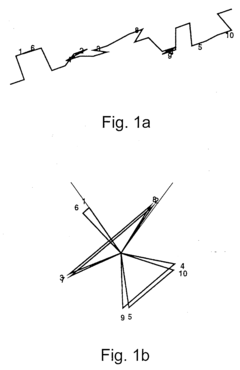
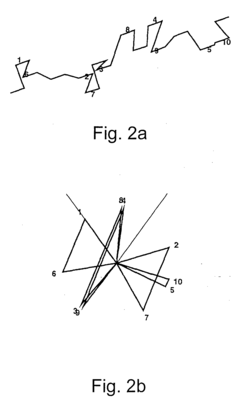
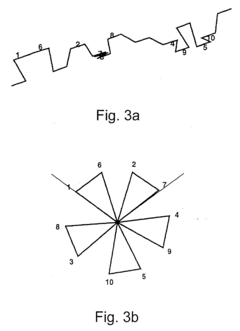
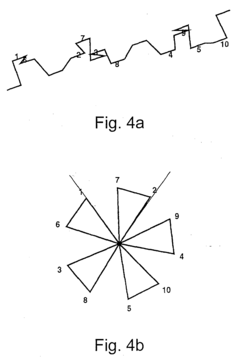
- A 10-cylinder internal combustion engine with unequal offset angles for each cylinder bank on the crankshaft, where the offset angles are arranged to balance second-order mass effects and compensate for first-order mass moments, allowing for a mass effect-free basic engine with a selectable V-angle, using counterweights or other simple measures to balance remaining forces.
Method for increasing the viscosity of automotive fuel compositions
PatentInactiveUS20090241882A1
Innovation
- Incorporating a viscosity index improving additive, such as a block copolymer containing ethylene, propylene, butylene, butadiene, isoprene, and styrene monomers, at concentrations lower than predicted to achieve the desired viscosity, which enhances the fuel's viscosity and engine performance without detrimental effects on fuel properties, particularly at lower engine speeds.
Emissions Compliance Strategies for High-Performance V10 Engines
Meeting stringent emissions regulations while maintaining high performance characteristics presents a significant challenge for V10 engine development. Current compliance strategies focus on several key approaches that balance regulatory requirements with the performance demands of high-torque applications.
Advanced catalytic converter systems represent the frontline defense against emissions. Modern V10 engines increasingly utilize multi-stage catalytic systems with specialized coatings that can withstand higher temperatures generated by performance-oriented engines. These systems typically incorporate both close-coupled catalysts for rapid light-off during cold starts and underfloor catalysts for sustained emissions control during high-load operation.
Exhaust Gas Recirculation (EGR) technology has evolved substantially for high-performance applications. Cooled EGR systems specifically calibrated for V10 engines help reduce nitrogen oxide (NOx) emissions by lowering combustion temperatures without significantly compromising torque output. Dual-loop EGR systems, featuring both high-pressure and low-pressure circuits, provide more precise control across the engine's operating range.
Variable valve timing and lift systems offer another pathway to emissions compliance while preserving performance characteristics. These systems optimize combustion efficiency by adjusting valve operation based on engine load and speed, effectively reducing emissions while maintaining the responsive power delivery expected from V10 engines.
Direct injection technology, particularly when combined with optimized spray patterns and multiple injection events per cycle, significantly improves fuel atomization and combustion efficiency. This technology enables more precise fuel delivery, reducing both particulate matter and hydrocarbon emissions while supporting enhanced torque production.
Cylinder deactivation represents an increasingly common strategy for V10 engines, allowing selective shutdown of cylinders during partial load conditions. Advanced systems can now maintain smooth operation while running on as few as five cylinders, substantially reducing fuel consumption and emissions during cruising without compromising available torque when demanded.
Integrated thermal management systems optimize engine operating temperatures more rapidly, reducing cold-start emissions which account for a disproportionate share of total emissions output. These systems incorporate electric water pumps, split cooling circuits, and active grille shutters to maintain ideal operating temperatures across varying load conditions.
Compliance testing methodologies have also evolved, with manufacturers now employing Real Driving Emissions (RDE) testing alongside traditional laboratory cycles to ensure V10 engines meet regulations across all operating conditions, not just in controlled environments.
Advanced catalytic converter systems represent the frontline defense against emissions. Modern V10 engines increasingly utilize multi-stage catalytic systems with specialized coatings that can withstand higher temperatures generated by performance-oriented engines. These systems typically incorporate both close-coupled catalysts for rapid light-off during cold starts and underfloor catalysts for sustained emissions control during high-load operation.
Exhaust Gas Recirculation (EGR) technology has evolved substantially for high-performance applications. Cooled EGR systems specifically calibrated for V10 engines help reduce nitrogen oxide (NOx) emissions by lowering combustion temperatures without significantly compromising torque output. Dual-loop EGR systems, featuring both high-pressure and low-pressure circuits, provide more precise control across the engine's operating range.
Variable valve timing and lift systems offer another pathway to emissions compliance while preserving performance characteristics. These systems optimize combustion efficiency by adjusting valve operation based on engine load and speed, effectively reducing emissions while maintaining the responsive power delivery expected from V10 engines.
Direct injection technology, particularly when combined with optimized spray patterns and multiple injection events per cycle, significantly improves fuel atomization and combustion efficiency. This technology enables more precise fuel delivery, reducing both particulate matter and hydrocarbon emissions while supporting enhanced torque production.
Cylinder deactivation represents an increasingly common strategy for V10 engines, allowing selective shutdown of cylinders during partial load conditions. Advanced systems can now maintain smooth operation while running on as few as five cylinders, substantially reducing fuel consumption and emissions during cruising without compromising available torque when demanded.
Integrated thermal management systems optimize engine operating temperatures more rapidly, reducing cold-start emissions which account for a disproportionate share of total emissions output. These systems incorporate electric water pumps, split cooling circuits, and active grille shutters to maintain ideal operating temperatures across varying load conditions.
Compliance testing methodologies have also evolved, with manufacturers now employing Real Driving Emissions (RDE) testing alongside traditional laboratory cycles to ensure V10 engines meet regulations across all operating conditions, not just in controlled environments.
Materials Science Advancements for V10 Engine Components
Recent advancements in materials science have revolutionized the development of V10 engine components, enabling significant improvements in torque delivery and lift capabilities. The traditional steel and aluminum alloys used in engine construction are being supplemented or replaced by advanced composite materials, ceramic matrix composites (CMCs), and novel metal alloys specifically engineered for high-temperature, high-stress environments.
Carbon fiber reinforced polymers (CFRPs) have emerged as crucial materials for non-load bearing components, reducing overall engine weight while maintaining structural integrity. These materials offer strength-to-weight ratios up to five times higher than conventional steel, contributing to improved power-to-weight ratios in modern V10 engines. The weight reduction directly translates to enhanced torque efficiency and improved vehicle lift characteristics.
Titanium aluminide (TiAl) alloys represent another breakthrough, particularly for valvetrain components. These intermetallic compounds maintain strength at temperatures exceeding 800°C while weighing approximately 50% less than nickel-based superalloys. The reduced reciprocating mass allows for higher engine speeds and improved valve control, directly enhancing torque delivery across the RPM range.
Silicon carbide and silicon nitride ceramics are increasingly utilized for components exposed to extreme thermal conditions. These materials exhibit exceptional wear resistance and thermal stability, allowing for tighter manufacturing tolerances and reduced friction losses. Engine testing has demonstrated up to 3% improvement in thermal efficiency when implementing ceramic-coated components in critical areas of the combustion chamber.
Nano-structured coatings represent the cutting edge of surface engineering for V10 engine components. Diamond-like carbon (DLC) coatings applied to piston rings and valve train components have demonstrated friction reduction of up to 40% compared to traditional surface treatments. This directly translates to improved mechanical efficiency and enhanced torque output.
Advanced aluminum-silicon alloys with precisely controlled microstructures are revolutionizing engine block manufacturing. These hypereutectic alloys feature silicon content exceeding 16%, providing superior wear resistance and thermal conductivity compared to conventional aluminum alloys. The improved heat dissipation characteristics allow for more aggressive ignition timing and higher compression ratios, both contributing to enhanced torque production.
Computational materials science has accelerated development cycles through predictive modeling of material behavior under extreme operating conditions. Digital twins of critical engine components enable engineers to simulate thousands of operating hours in virtual environments, identifying potential failure modes and optimizing material selection before physical prototyping begins.
Carbon fiber reinforced polymers (CFRPs) have emerged as crucial materials for non-load bearing components, reducing overall engine weight while maintaining structural integrity. These materials offer strength-to-weight ratios up to five times higher than conventional steel, contributing to improved power-to-weight ratios in modern V10 engines. The weight reduction directly translates to enhanced torque efficiency and improved vehicle lift characteristics.
Titanium aluminide (TiAl) alloys represent another breakthrough, particularly for valvetrain components. These intermetallic compounds maintain strength at temperatures exceeding 800°C while weighing approximately 50% less than nickel-based superalloys. The reduced reciprocating mass allows for higher engine speeds and improved valve control, directly enhancing torque delivery across the RPM range.
Silicon carbide and silicon nitride ceramics are increasingly utilized for components exposed to extreme thermal conditions. These materials exhibit exceptional wear resistance and thermal stability, allowing for tighter manufacturing tolerances and reduced friction losses. Engine testing has demonstrated up to 3% improvement in thermal efficiency when implementing ceramic-coated components in critical areas of the combustion chamber.
Nano-structured coatings represent the cutting edge of surface engineering for V10 engine components. Diamond-like carbon (DLC) coatings applied to piston rings and valve train components have demonstrated friction reduction of up to 40% compared to traditional surface treatments. This directly translates to improved mechanical efficiency and enhanced torque output.
Advanced aluminum-silicon alloys with precisely controlled microstructures are revolutionizing engine block manufacturing. These hypereutectic alloys feature silicon content exceeding 16%, providing superior wear resistance and thermal conductivity compared to conventional aluminum alloys. The improved heat dissipation characteristics allow for more aggressive ignition timing and higher compression ratios, both contributing to enhanced torque production.
Computational materials science has accelerated development cycles through predictive modeling of material behavior under extreme operating conditions. Digital twins of critical engine components enable engineers to simulate thousands of operating hours in virtual environments, identifying potential failure modes and optimizing material selection before physical prototyping begins.
Unlock deeper insights with PatSnap Eureka Quick Research — get a full tech report to explore trends and direct your research. Try now!
Generate Your Research Report Instantly with AI Agent
Supercharge your innovation with PatSnap Eureka AI Agent Platform!