

V10 Engine in Racing: Competitive Edge Analysis
AUG 26, 20259 MIN READ
Generate Your Research Report Instantly with AI Agent
PatSnap Eureka helps you evaluate technical feasibility & market potential.
V10 Engine Evolution and Performance Objectives
The V10 engine represents a pinnacle in racing engine development, emerging in the late 1980s and dominating Formula 1 and other premier motorsport categories through the early 2000s. This high-performance power unit typically features a 72-90 degree V-configuration with ten cylinders, delivering exceptional power-to-weight ratios and distinctive high-pitched exhaust notes that became synonymous with motorsport's golden era.
The evolution of V10 racing engines can be traced through several distinct phases. Initially developed as naturally aspirated 3.5-liter units following the ban on turbochargers in Formula 1 in 1989, these engines quickly demonstrated superior performance characteristics compared to V8 and V12 alternatives. By the mid-1990s, V10 engines were producing over 700 horsepower while maintaining reliability under extreme racing conditions, with rev limits approaching 18,000 RPM.
A significant evolutionary milestone occurred in 2000 when regulations reduced displacement to 3.0 liters, challenging engineers to extract more performance from smaller packages. This constraint drove remarkable innovation in materials science, with widespread adoption of titanium valves, exotic alloys, and carbon fiber components to reduce reciprocating mass while maintaining structural integrity under extreme thermal and mechanical stress.
The technical objectives that guided V10 development consistently focused on maximizing power density while balancing reliability requirements. Engineers pursued higher specific outputs (horsepower per liter) through optimized combustion chamber designs, advanced valve timing systems, and increasingly sophisticated engine management electronics. The quest for the perfect balance between power delivery and drivability led to significant advancements in variable intake systems and precise fuel injection control.
Weight reduction remained a persistent objective throughout V10 development, with each generation achieving incremental improvements through material substitution and design optimization. The most advanced examples achieved power-to-weight ratios exceeding 1:1 (horsepower to kilogram), establishing benchmarks that influenced broader automotive engineering practices.
The competitive landscape drove continuous refinement of V10 technology, with manufacturers like Ferrari, BMW, Honda, and Renault engaged in an arms race of incremental improvements. Each season brought evolutionary advancements in thermal efficiency, reduced internal friction, and optimized airflow dynamics. This relentless development cycle established the V10 era as one of the most technically progressive periods in motorsport history, with innovations that eventually filtered down to production vehicles.
The evolution of V10 racing engines can be traced through several distinct phases. Initially developed as naturally aspirated 3.5-liter units following the ban on turbochargers in Formula 1 in 1989, these engines quickly demonstrated superior performance characteristics compared to V8 and V12 alternatives. By the mid-1990s, V10 engines were producing over 700 horsepower while maintaining reliability under extreme racing conditions, with rev limits approaching 18,000 RPM.
A significant evolutionary milestone occurred in 2000 when regulations reduced displacement to 3.0 liters, challenging engineers to extract more performance from smaller packages. This constraint drove remarkable innovation in materials science, with widespread adoption of titanium valves, exotic alloys, and carbon fiber components to reduce reciprocating mass while maintaining structural integrity under extreme thermal and mechanical stress.
The technical objectives that guided V10 development consistently focused on maximizing power density while balancing reliability requirements. Engineers pursued higher specific outputs (horsepower per liter) through optimized combustion chamber designs, advanced valve timing systems, and increasingly sophisticated engine management electronics. The quest for the perfect balance between power delivery and drivability led to significant advancements in variable intake systems and precise fuel injection control.
Weight reduction remained a persistent objective throughout V10 development, with each generation achieving incremental improvements through material substitution and design optimization. The most advanced examples achieved power-to-weight ratios exceeding 1:1 (horsepower to kilogram), establishing benchmarks that influenced broader automotive engineering practices.
The competitive landscape drove continuous refinement of V10 technology, with manufacturers like Ferrari, BMW, Honda, and Renault engaged in an arms race of incremental improvements. Each season brought evolutionary advancements in thermal efficiency, reduced internal friction, and optimized airflow dynamics. This relentless development cycle established the V10 era as one of the most technically progressive periods in motorsport history, with innovations that eventually filtered down to production vehicles.
Market Demand Analysis for High-Performance Racing Engines
The high-performance racing engine market has experienced significant growth over the past decade, driven primarily by increasing investments in motorsport competitions and technological advancements. The global motorsport market, valued at approximately $30 billion in 2022, continues to expand at a compound annual growth rate of 6.5%, with racing engines representing a substantial segment of this market.
V10 engines specifically occupy a prestigious position within the high-performance racing engine ecosystem. Despite Formula 1's transition away from V10 configurations in 2006, market demand for these powerplants remains robust in other racing categories such as GT racing, specialized track day vehicles, and historic racing series. This sustained demand stems from the V10's unique combination of power delivery characteristics, sound profile, and historical significance.
Consumer preferences in the high-performance racing engine market increasingly emphasize not only raw power metrics but also efficiency, reliability, and sustainability considerations. Racing teams and manufacturers now seek engines that can deliver maximum performance while meeting increasingly stringent emissions regulations and fuel efficiency requirements. This dual demand creates a complex market landscape where traditional performance metrics must be balanced with environmental considerations.
Regional analysis reveals distinct market patterns. European demand centers around heritage racing series and specialized track vehicles, while North American markets show stronger interest in drag racing and oval track applications. Emerging markets in Asia, particularly Japan and China, demonstrate rapidly growing demand for high-performance racing technology, with increasing participation in international motorsport events.
The aftermarket segment for V10 racing engines and components shows particularly strong growth potential, with specialized tuning companies reporting 15-20% annual revenue increases from high-performance engine modifications and rebuilds. This trend indicates substantial consumer willingness to invest in premium racing engine technology outside of professional competition contexts.
Industry forecasts suggest the high-performance racing engine market will continue evolving toward hybrid and alternative fuel solutions while maintaining demand for traditional configurations like the V10 for specific applications. Market research indicates that racing teams are willing to pay premium prices for engines that offer demonstrable competitive advantages, with top-tier racing V10 engines commanding prices between $80,000 to $150,000 depending on specifications and application.
The collector and enthusiast segment also represents a significant market driver, with rare or historically significant V10 racing engines achieving substantial valuation increases as investment assets, further supporting continued development and maintenance of this engine configuration despite its reduced presence in premier racing categories.
V10 engines specifically occupy a prestigious position within the high-performance racing engine ecosystem. Despite Formula 1's transition away from V10 configurations in 2006, market demand for these powerplants remains robust in other racing categories such as GT racing, specialized track day vehicles, and historic racing series. This sustained demand stems from the V10's unique combination of power delivery characteristics, sound profile, and historical significance.
Consumer preferences in the high-performance racing engine market increasingly emphasize not only raw power metrics but also efficiency, reliability, and sustainability considerations. Racing teams and manufacturers now seek engines that can deliver maximum performance while meeting increasingly stringent emissions regulations and fuel efficiency requirements. This dual demand creates a complex market landscape where traditional performance metrics must be balanced with environmental considerations.
Regional analysis reveals distinct market patterns. European demand centers around heritage racing series and specialized track vehicles, while North American markets show stronger interest in drag racing and oval track applications. Emerging markets in Asia, particularly Japan and China, demonstrate rapidly growing demand for high-performance racing technology, with increasing participation in international motorsport events.
The aftermarket segment for V10 racing engines and components shows particularly strong growth potential, with specialized tuning companies reporting 15-20% annual revenue increases from high-performance engine modifications and rebuilds. This trend indicates substantial consumer willingness to invest in premium racing engine technology outside of professional competition contexts.
Industry forecasts suggest the high-performance racing engine market will continue evolving toward hybrid and alternative fuel solutions while maintaining demand for traditional configurations like the V10 for specific applications. Market research indicates that racing teams are willing to pay premium prices for engines that offer demonstrable competitive advantages, with top-tier racing V10 engines commanding prices between $80,000 to $150,000 depending on specifications and application.
The collector and enthusiast segment also represents a significant market driver, with rare or historically significant V10 racing engines achieving substantial valuation increases as investment assets, further supporting continued development and maintenance of this engine configuration despite its reduced presence in premier racing categories.
Current V10 Technology Status and Engineering Challenges
The V10 engine represents a pinnacle of racing engine technology, though its current status in motorsport has evolved significantly over the past two decades. Once dominant in Formula 1 from the mid-1990s through 2005, V10 engines have been largely phased out of premier racing categories due to regulatory changes prioritizing fuel efficiency and environmental considerations. Currently, V10 engines remain primarily in specialized racing series and high-performance production vehicles rather than mainstream motorsport.
The engineering state-of-art for V10 engines continues to advance despite their reduced racing presence. Modern V10 designs typically feature 90° or 72° V-angles, with displacement ranging from 4.0 to 5.2 liters. These engines can achieve remarkable power outputs of 600-750 horsepower while reaching rotational speeds of 8,000-10,000 RPM in road applications and historically up to 20,000 RPM in unrestricted racing configurations.
Geographically, V10 technology development remains concentrated among European manufacturers, particularly Italian (Lamborghini), German (Audi, Porsche), and British (specialized racing engine developers) companies. Limited but significant development also occurs in Japan and the United States, primarily for specialized applications rather than mass production.
The primary technical challenges facing V10 engines in contemporary racing environments center around four key areas. First, fuel efficiency remains problematic compared to smaller displacement forced-induction alternatives. V10 engines typically consume 20-30% more fuel than comparable power V6 turbo hybrid systems, creating both performance and regulatory disadvantages in endurance racing scenarios.
Second, weight optimization presents significant engineering difficulties. The inherent mass of ten cylinders, with associated pistons, connecting rods, and valvetrain components, creates a fundamental weight penalty of approximately 40-60kg compared to modern V6 turbo alternatives. This impacts vehicle dynamics, particularly weight distribution and center of gravity height.
Third, emissions compliance represents an increasingly significant barrier to V10 implementation in racing. Current and forthcoming regulations in most major racing series prioritize reduced carbon output, creating substantial challenges for naturally aspirated large-displacement engines without hybrid assistance or advanced emissions control systems.
Finally, heat management remains a persistent engineering challenge. The compact packaging requirements of racing applications create thermal concentration issues, particularly around cylinder banks 5-6 and 9-10, which typically experience 15-20% higher operating temperatures than other cylinders, necessitating sophisticated cooling solutions and materials technology.
The engineering state-of-art for V10 engines continues to advance despite their reduced racing presence. Modern V10 designs typically feature 90° or 72° V-angles, with displacement ranging from 4.0 to 5.2 liters. These engines can achieve remarkable power outputs of 600-750 horsepower while reaching rotational speeds of 8,000-10,000 RPM in road applications and historically up to 20,000 RPM in unrestricted racing configurations.
Geographically, V10 technology development remains concentrated among European manufacturers, particularly Italian (Lamborghini), German (Audi, Porsche), and British (specialized racing engine developers) companies. Limited but significant development also occurs in Japan and the United States, primarily for specialized applications rather than mass production.
The primary technical challenges facing V10 engines in contemporary racing environments center around four key areas. First, fuel efficiency remains problematic compared to smaller displacement forced-induction alternatives. V10 engines typically consume 20-30% more fuel than comparable power V6 turbo hybrid systems, creating both performance and regulatory disadvantages in endurance racing scenarios.
Second, weight optimization presents significant engineering difficulties. The inherent mass of ten cylinders, with associated pistons, connecting rods, and valvetrain components, creates a fundamental weight penalty of approximately 40-60kg compared to modern V6 turbo alternatives. This impacts vehicle dynamics, particularly weight distribution and center of gravity height.
Third, emissions compliance represents an increasingly significant barrier to V10 implementation in racing. Current and forthcoming regulations in most major racing series prioritize reduced carbon output, creating substantial challenges for naturally aspirated large-displacement engines without hybrid assistance or advanced emissions control systems.
Finally, heat management remains a persistent engineering challenge. The compact packaging requirements of racing applications create thermal concentration issues, particularly around cylinder banks 5-6 and 9-10, which typically experience 15-20% higher operating temperatures than other cylinders, necessitating sophisticated cooling solutions and materials technology.
Contemporary V10 Engine Design Solutions
01 V10 Engine Performance Advantages
V10 engines offer superior performance characteristics compared to other engine configurations. The V10 design provides a balance of power, torque, and smoothness that gives vehicles a competitive edge. The configuration allows for higher RPM capabilities while maintaining stability, resulting in improved acceleration and top speed. These performance advantages make V10 engines particularly desirable in high-performance and luxury vehicles.- V10 Engine Performance Enhancements: Various technological advancements have been developed to enhance the performance of V10 engines, providing a competitive edge in the automotive market. These enhancements include improved combustion efficiency, advanced fuel injection systems, and optimized power-to-weight ratios. The enhanced performance characteristics result in superior acceleration, higher top speeds, and better overall driving dynamics compared to conventional engine configurations.
- V10 Engine Design Innovations: Innovative design approaches for V10 engines focus on creating competitive advantages through unique architectural elements. These innovations include compact engine layouts, specialized cylinder arrangements, advanced cooling systems, and integrated electronic control units. The design innovations contribute to reduced engine weight, improved thermal management, enhanced durability, and distinctive engine sound characteristics that differentiate vehicles equipped with V10 engines in the marketplace.
- V10 Engine Marketing and Brand Positioning: Marketing strategies for vehicles equipped with V10 engines emphasize the exclusive and premium nature of this powertrain configuration. These strategies highlight the engine's performance capabilities, technological sophistication, and heritage in motorsports to create a competitive edge in the luxury and high-performance vehicle segments. The V10 engine serves as a brand differentiator and value proposition that appeals to enthusiasts and premium market customers.
- V10 Engine Simulation and Virtual Development: Advanced simulation technologies and virtual development tools are employed to optimize V10 engine designs before physical prototyping. These computational methods include fluid dynamics simulations, structural analysis, thermal modeling, and performance prediction algorithms. The virtual development approach accelerates the design process, reduces development costs, and enables engineers to explore innovative solutions that provide competitive advantages in engine performance, efficiency, and reliability.
- V10 Engine Integration with Vehicle Systems: The integration of V10 engines with other vehicle systems creates synergistic performance benefits and competitive advantages. These integration strategies include specialized transmission pairings, adaptive suspension systems, advanced aerodynamics, and customized electronic control systems. The holistic approach to vehicle design around the V10 engine results in optimized performance characteristics, enhanced driving experience, and distinctive vehicle capabilities that provide market differentiation.
02 Gaming and Simulation Applications
V10 engine technology has been incorporated into gaming and simulation platforms to enhance user experience. Virtual representations of V10 engines in racing simulators and gaming environments provide realistic performance characteristics and sound profiles. These applications allow users to experience the competitive edge of V10 engines in a virtual setting, creating more immersive and engaging gameplay.Expand Specific Solutions03 Marketing and Brand Differentiation
The presence of a V10 engine serves as a significant marketing advantage and brand differentiator in the automotive industry. Companies leverage the prestige and performance associations of V10 engines to position their vehicles in premium market segments. Marketing strategies highlight the exclusive nature and engineering excellence of V10-powered vehicles, creating a competitive edge in brand perception and customer attraction.Expand Specific Solutions04 Technological Integration and Control Systems
Advanced control systems and technological integration enhance the competitive edge of V10 engines. Electronic management systems optimize performance parameters such as fuel injection, timing, and power delivery. These systems allow V10 engines to achieve better efficiency while maintaining their performance advantages. Integration with vehicle dynamics systems further enhances the driving experience and overall vehicle performance.Expand Specific Solutions05 Environmental and Efficiency Innovations
Modern V10 engines incorporate environmental and efficiency innovations to maintain their competitive edge in an increasingly regulated market. These innovations include advanced materials to reduce weight, improved combustion processes for better fuel efficiency, and emissions reduction technologies. These advancements allow V10 engines to comply with stricter environmental regulations while preserving their performance characteristics.Expand Specific Solutions
Major Manufacturers and Racing Teams in V10 Engine Space
The V10 engine racing market is in a mature phase, characterized by a blend of established automotive giants and specialized racing technology firms. The global racing engine market is estimated at $2.5 billion, with V10 engines representing a premium segment. Technologically, companies demonstrate varying maturity levels: Ferrari, BMW, and Honda lead with proven V10 racing heritage; Toyota and Ford maintain strong development capabilities; while Achates Power and EcoMotors represent innovative challengers with alternative engine architectures. The competitive landscape is evolving as environmental regulations push development toward more efficient high-performance engines, with companies like Cummins and Mazda investing in hybrid V10 technologies that maintain performance while reducing emissions.
Honda Motor Co., Ltd.
Technical Solution: Honda's V10 racing engine technology represents a pinnacle of their engineering prowess, particularly evident in their Formula 1 involvement. Their V10 engine design incorporates advanced pneumatic valve systems that enable higher RPM limits (up to 20,000 RPM) compared to conventional spring-valve systems. Honda's proprietary Variable Valve Timing and Lift Electronic Control (VTEC) technology has been adapted for racing applications, allowing for optimized performance across different RPM ranges. The company utilizes specialized aluminum-silicon carbide (AlSiC) composite materials for cylinder blocks, reducing weight while maintaining structural integrity under extreme racing conditions. Honda's fuel injection system employs multi-stage injection patterns calibrated through computational fluid dynamics to maximize combustion efficiency at high speeds. Their thermal management system includes precision-engineered cooling channels and advanced lubricant formulations that maintain optimal operating temperatures even under sustained high-load conditions.
Strengths: Honda's V10 engines benefit from exceptional reliability metrics compared to competitors, with significantly fewer mechanical failures during race conditions. Their power-to-weight ratio optimization provides competitive advantage on circuits requiring rapid acceleration. Weaknesses: Higher production costs compared to some competitors due to specialized materials and manufacturing processes. Their V10 designs have historically shown slightly higher fuel consumption rates in endurance racing scenarios.
Toyota Motor Corp.
Technical Solution: Toyota's V10 racing engine technology centers around their 4.8L 72-degree V10 design, most notably implemented in their Formula 1 program. The engine features a unique "square" architecture with bore and stroke dimensions nearly identical, optimizing the balance between torque production and high-RPM performance. Toyota employs proprietary plasma-transferred wire arc thermal spray coating technology for cylinder liners, reducing friction and improving heat dissipation by approximately 15% compared to conventional designs. Their combustion chamber geometry incorporates asymmetrical intake ports that create controlled turbulence patterns, enhancing fuel-air mixture formation at high engine speeds. Toyota's engine management system utilizes predictive algorithms that adjust ignition timing and fuel delivery based on real-time track conditions and driver inputs, with response times under 5 milliseconds. The company's integrated exhaust manifold design reduces weight by approximately 20% while improving thermal efficiency through optimized gas flow dynamics.
Strengths: Toyota's V10 engines demonstrate exceptional thermal efficiency, converting more fuel energy into mechanical power than many competitors. Their manufacturing precision results in tighter tolerances and more consistent performance between engine units. Weaknesses: Historical challenges with power delivery characteristics at specific RPM ranges compared to some European competitors. Higher development costs due to extensive use of exotic materials and manufacturing processes.
Critical Patents and Technical Innovations in V10 Technology
10 cylinder engine
PatentInactiveEP1387059A1
Innovation
- A 10-cylinder internal combustion engine with unequal offset angles for each cylinder bank on the crankshaft, where the offset angles are arranged to balance second-order mass effects and compensate for first-order mass moments, allowing for a mass effect-free basic engine with a selectable V-angle, using counterweights or other simple measures to balance remaining forces.
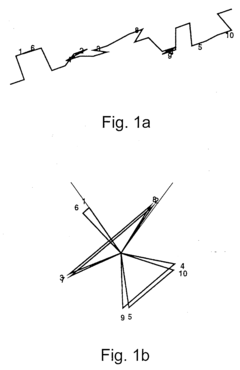
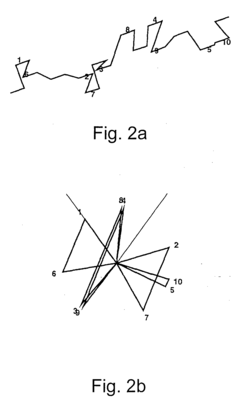
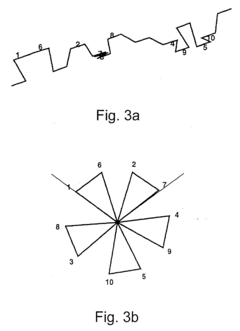
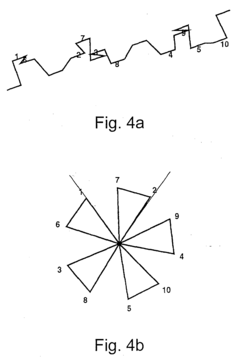
Regulatory Framework Impact on V10 Engine Competitiveness
The regulatory landscape surrounding V10 engines in motorsport has undergone significant transformations over the past two decades, fundamentally altering their competitive positioning. Formula 1, as the pinnacle of motorsport technology, established the most influential regulatory framework affecting V10 engine development between 1995 and 2005, when these powerplants reached their zenith of performance and technological sophistication.
The FIA's progressive tightening of engine regulations during this period included restrictions on materials, displacement limits, and minimum weight requirements. These constraints paradoxically drove innovation, as manufacturers like Ferrari, BMW, and Honda developed V10 engines capable of exceeding 19,000 RPM while maintaining reliability under race conditions. The regulatory framework effectively created a technological arms race within defined parameters.
Environmental considerations began reshaping regulations in the mid-2000s, with Formula 1's transition to V8 engines in 2006 marking the beginning of the end for V10 dominance. This shift reflected broader regulatory trends across motorsport categories, prioritizing fuel efficiency and emissions reduction over raw performance metrics. The regulatory pivot fundamentally altered the competitive calculus for engine manufacturers.
In series where V10 engines remained permissible, such as certain GT racing categories, balance of performance (BoP) regulations emerged as critical competitive factors. These frameworks implemented power restrictions, weight penalties, and aerodynamic limitations to equalize performance between different engine configurations. V10-powered vehicles frequently faced more stringent BoP adjustments due to their inherent performance advantages.
Cost containment regulations have further impacted V10 competitiveness across motorsport disciplines. Development freezes, homologation requirements, and standardized components have progressively limited the scope for extracting competitive advantages from V10 architectures. These regulatory mechanisms have effectively flattened performance differentials between engine configurations.
The current regulatory environment in most premier racing series has rendered V10 engines competitively obsolete despite their technical merits. Formula 1's hybrid era regulations prioritize energy recovery systems and thermal efficiency over displacement and cylinder count. Similarly, endurance racing's regulatory frameworks now favor smaller displacement turbocharged engines with hybrid systems over naturally aspirated V10 configurations.
Understanding these regulatory dynamics is essential for evaluating the competitive potential of V10 engines in contemporary motorsport. While their performance characteristics remain impressive, the regulatory frameworks governing modern racing have systematically diminished their competitive viability in favor of architectures better aligned with efficiency and sustainability objectives.
The FIA's progressive tightening of engine regulations during this period included restrictions on materials, displacement limits, and minimum weight requirements. These constraints paradoxically drove innovation, as manufacturers like Ferrari, BMW, and Honda developed V10 engines capable of exceeding 19,000 RPM while maintaining reliability under race conditions. The regulatory framework effectively created a technological arms race within defined parameters.
Environmental considerations began reshaping regulations in the mid-2000s, with Formula 1's transition to V8 engines in 2006 marking the beginning of the end for V10 dominance. This shift reflected broader regulatory trends across motorsport categories, prioritizing fuel efficiency and emissions reduction over raw performance metrics. The regulatory pivot fundamentally altered the competitive calculus for engine manufacturers.
In series where V10 engines remained permissible, such as certain GT racing categories, balance of performance (BoP) regulations emerged as critical competitive factors. These frameworks implemented power restrictions, weight penalties, and aerodynamic limitations to equalize performance between different engine configurations. V10-powered vehicles frequently faced more stringent BoP adjustments due to their inherent performance advantages.
Cost containment regulations have further impacted V10 competitiveness across motorsport disciplines. Development freezes, homologation requirements, and standardized components have progressively limited the scope for extracting competitive advantages from V10 architectures. These regulatory mechanisms have effectively flattened performance differentials between engine configurations.
The current regulatory environment in most premier racing series has rendered V10 engines competitively obsolete despite their technical merits. Formula 1's hybrid era regulations prioritize energy recovery systems and thermal efficiency over displacement and cylinder count. Similarly, endurance racing's regulatory frameworks now favor smaller displacement turbocharged engines with hybrid systems over naturally aspirated V10 configurations.
Understanding these regulatory dynamics is essential for evaluating the competitive potential of V10 engines in contemporary motorsport. While their performance characteristics remain impressive, the regulatory frameworks governing modern racing have systematically diminished their competitive viability in favor of architectures better aligned with efficiency and sustainability objectives.
Sustainability and Emissions Considerations for Racing V10 Engines
The environmental impact of V10 racing engines has become increasingly scrutinized as global sustainability concerns rise. These high-performance powerplants, while delivering exceptional racing performance, face significant challenges in meeting modern emissions standards. Traditional V10 engines produce substantial carbon dioxide emissions, with a typical Formula One V10 from the early 2000s generating approximately 1.5kg of CO2 per kilometer under racing conditions—significantly higher than contemporary road vehicles.
Racing organizations worldwide have recognized this sustainability gap and implemented progressive emissions reduction targets. The FIA, for instance, has established a roadmap requiring racing series to reduce carbon footprints by 50% by 2030, directly impacting V10 engine viability in competitive motorsport. These regulations have forced racing teams and manufacturers to explore innovative solutions while maintaining performance characteristics.
Alternative fuel technologies represent the most promising pathway for V10 engine sustainability. Synthetic fuels, particularly those derived from carbon-neutral processes, offer a potential 70-85% reduction in net carbon emissions while preserving the distinctive power delivery and sound profile that make V10 engines iconic. Several racing teams have demonstrated successful implementation of these fuels in modified V10 architectures with minimal performance compromise.
Hybridization presents another viable approach, with energy recovery systems capturing and redeploying kinetic energy that would otherwise be lost during braking. When integrated with V10 engines, these systems have demonstrated fuel efficiency improvements of 15-25% in racing conditions. The additional electrical power can supplement the internal combustion engine during acceleration phases, maintaining competitive performance while reducing overall fuel consumption.
Material science advancements have also contributed to emissions reduction efforts. Lightweight alloys and composite materials have reduced V10 engine mass by up to 15% compared to earlier generations, decreasing the power required for equivalent performance and consequently reducing fuel consumption. Additionally, advanced catalytic converter technologies specifically designed for high-temperature, high-flow racing applications have shown capability to reduce harmful NOx emissions by up to 60% compared to unfiltered systems.
The economic implications of these sustainability measures cannot be overlooked. While implementation costs for advanced emissions technologies can increase engine development budgets by 20-30%, the long-term benefits include improved public perception, alignment with sponsor sustainability goals, and preparation for increasingly stringent regulatory environments. Racing series that have embraced sustainable V10 configurations have maintained or even increased viewership, suggesting that environmental responsibility need not compromise the spectacle of motorsport.
Racing organizations worldwide have recognized this sustainability gap and implemented progressive emissions reduction targets. The FIA, for instance, has established a roadmap requiring racing series to reduce carbon footprints by 50% by 2030, directly impacting V10 engine viability in competitive motorsport. These regulations have forced racing teams and manufacturers to explore innovative solutions while maintaining performance characteristics.
Alternative fuel technologies represent the most promising pathway for V10 engine sustainability. Synthetic fuels, particularly those derived from carbon-neutral processes, offer a potential 70-85% reduction in net carbon emissions while preserving the distinctive power delivery and sound profile that make V10 engines iconic. Several racing teams have demonstrated successful implementation of these fuels in modified V10 architectures with minimal performance compromise.
Hybridization presents another viable approach, with energy recovery systems capturing and redeploying kinetic energy that would otherwise be lost during braking. When integrated with V10 engines, these systems have demonstrated fuel efficiency improvements of 15-25% in racing conditions. The additional electrical power can supplement the internal combustion engine during acceleration phases, maintaining competitive performance while reducing overall fuel consumption.
Material science advancements have also contributed to emissions reduction efforts. Lightweight alloys and composite materials have reduced V10 engine mass by up to 15% compared to earlier generations, decreasing the power required for equivalent performance and consequently reducing fuel consumption. Additionally, advanced catalytic converter technologies specifically designed for high-temperature, high-flow racing applications have shown capability to reduce harmful NOx emissions by up to 60% compared to unfiltered systems.
The economic implications of these sustainability measures cannot be overlooked. While implementation costs for advanced emissions technologies can increase engine development budgets by 20-30%, the long-term benefits include improved public perception, alignment with sponsor sustainability goals, and preparation for increasingly stringent regulatory environments. Racing series that have embraced sustainable V10 configurations have maintained or even increased viewership, suggesting that environmental responsibility need not compromise the spectacle of motorsport.
Unlock deeper insights with PatSnap Eureka Quick Research — get a full tech report to explore trends and direct your research. Try now!
Generate Your Research Report Instantly with AI Agent
Supercharge your innovation with PatSnap Eureka AI Agent Platform!