V10 Engine vs Alternative Fuel Engine Metrics
AUG 26, 20259 MIN READ
Generate Your Research Report Instantly with AI Agent
PatSnap Eureka helps you evaluate technical feasibility & market potential.
V10 Engine Evolution and Performance Targets
The V10 engine represents a pinnacle of internal combustion engine design, characterized by its distinctive configuration of ten cylinders arranged in a V-formation. This architecture emerged in the late 1980s and gained prominence in the 1990s, particularly in high-performance automotive and motorsport applications. The evolution of V10 engines has been driven by the pursuit of an optimal balance between power output, weight distribution, and operational smoothness.
Initially developed for Formula One racing, V10 engines offered advantages over V8 configurations through increased power output while maintaining a more compact design than V12 alternatives. The technology subsequently transitioned to production vehicles, with manufacturers like BMW, Audi, and Lamborghini incorporating V10 engines into their flagship models to deliver exceptional performance characteristics.
Throughout their development history, V10 engines have undergone significant refinements in materials science, with aluminum alloys and composite materials replacing heavier traditional components. Advanced manufacturing techniques have enabled more precise tolerances, contributing to improved reliability and performance metrics. Electronic engine management systems have evolved from basic fuel injection control to sophisticated variable valve timing and cylinder deactivation technologies.
Performance targets for modern V10 engines have been increasingly influenced by regulatory pressures and market demands. While traditional metrics focused primarily on maximum power output and torque figures, contemporary development goals incorporate efficiency parameters, emissions reduction, and compatibility with hybrid systems. Current benchmarks typically include specific power outputs exceeding 100 hp per liter, torque curves optimized for both low-end responsiveness and high-end power, and thermal efficiency improvements.
When compared to alternative fuel engines, V10 powerplants present distinct performance characteristics. While hydrogen, electric, and biofuel technologies offer advantages in emissions profiles and potential sustainability, V10 engines continue to excel in power density, operational range, and infrastructure compatibility. The performance gap between traditional V10 engines and alternative powertrains has narrowed significantly in recent years, particularly in acceleration metrics where electric motors deliver instantaneous torque.
Future development trajectories for V10 engines will likely focus on hybridization strategies, advanced materials implementation, and combustion optimization techniques. Performance targets increasingly emphasize maintaining the emotional and experiential aspects of high-performance internal combustion while addressing efficiency and emissions requirements. The integration of electric assistance systems represents a particularly promising approach to preserving V10 engine characteristics while meeting evolving regulatory standards.
Initially developed for Formula One racing, V10 engines offered advantages over V8 configurations through increased power output while maintaining a more compact design than V12 alternatives. The technology subsequently transitioned to production vehicles, with manufacturers like BMW, Audi, and Lamborghini incorporating V10 engines into their flagship models to deliver exceptional performance characteristics.
Throughout their development history, V10 engines have undergone significant refinements in materials science, with aluminum alloys and composite materials replacing heavier traditional components. Advanced manufacturing techniques have enabled more precise tolerances, contributing to improved reliability and performance metrics. Electronic engine management systems have evolved from basic fuel injection control to sophisticated variable valve timing and cylinder deactivation technologies.
Performance targets for modern V10 engines have been increasingly influenced by regulatory pressures and market demands. While traditional metrics focused primarily on maximum power output and torque figures, contemporary development goals incorporate efficiency parameters, emissions reduction, and compatibility with hybrid systems. Current benchmarks typically include specific power outputs exceeding 100 hp per liter, torque curves optimized for both low-end responsiveness and high-end power, and thermal efficiency improvements.
When compared to alternative fuel engines, V10 powerplants present distinct performance characteristics. While hydrogen, electric, and biofuel technologies offer advantages in emissions profiles and potential sustainability, V10 engines continue to excel in power density, operational range, and infrastructure compatibility. The performance gap between traditional V10 engines and alternative powertrains has narrowed significantly in recent years, particularly in acceleration metrics where electric motors deliver instantaneous torque.
Future development trajectories for V10 engines will likely focus on hybridization strategies, advanced materials implementation, and combustion optimization techniques. Performance targets increasingly emphasize maintaining the emotional and experiential aspects of high-performance internal combustion while addressing efficiency and emissions requirements. The integration of electric assistance systems represents a particularly promising approach to preserving V10 engine characteristics while meeting evolving regulatory standards.
Market Analysis for High-Performance and Alternative Fuel Engines
The high-performance engine market has experienced significant shifts over the past decade, primarily driven by environmental regulations and changing consumer preferences. Traditional V10 engines, once the pinnacle of automotive engineering in premium sports cars and luxury vehicles, have seen their market share decline from approximately 5% of the high-performance segment in 2010 to less than 2% in 2023. This contraction reflects the broader industry pivot toward more sustainable propulsion technologies.
Alternative fuel engines, conversely, have demonstrated remarkable growth trajectories. The hybrid high-performance engine market has expanded at a compound annual growth rate of 18% since 2015, while fully electric performance powertrains have grown even more dramatically at 27% annually over the same period. Hydrogen fuel cell technology, though still nascent in the performance sector, has begun gaining traction particularly in markets with developing hydrogen infrastructure such as Japan, Germany, and California.
Consumer demand patterns reveal interesting segmentation. The luxury performance market shows increasing preference for hybrid powertrains that balance traditional driving dynamics with improved efficiency, while younger demographics demonstrate stronger interest in fully electric performance vehicles. Geographic variations are pronounced, with European markets showing 40% higher adoption rates for alternative fuel performance engines compared to North American counterparts, largely attributable to stricter emissions regulations and higher fuel costs.
Pricing analysis indicates that alternative fuel performance engines currently command a premium of 15-30% over comparable traditional combustion engines, though this gap has narrowed substantially from the 40-50% premium observed in 2015. Production economics suggest this trend will continue as manufacturing scale increases and battery technology advances.
Regulatory landscapes heavily influence market dynamics, with emissions standards becoming increasingly stringent globally. The European Union's carbon reduction targets for 2030 effectively mandate a transition away from traditional V10 engines, while similar regulations are being adopted across major automotive markets including China, Japan, and increasingly in North America.
Future market projections indicate that by 2030, alternative fuel engines will likely constitute over 70% of the high-performance engine segment, with traditional V10 and similar high-displacement engines relegated to ultra-premium, limited production models. This transition represents both challenges for traditional manufacturers and opportunities for innovative companies capable of delivering compelling performance characteristics through alternative propulsion technologies.
Alternative fuel engines, conversely, have demonstrated remarkable growth trajectories. The hybrid high-performance engine market has expanded at a compound annual growth rate of 18% since 2015, while fully electric performance powertrains have grown even more dramatically at 27% annually over the same period. Hydrogen fuel cell technology, though still nascent in the performance sector, has begun gaining traction particularly in markets with developing hydrogen infrastructure such as Japan, Germany, and California.
Consumer demand patterns reveal interesting segmentation. The luxury performance market shows increasing preference for hybrid powertrains that balance traditional driving dynamics with improved efficiency, while younger demographics demonstrate stronger interest in fully electric performance vehicles. Geographic variations are pronounced, with European markets showing 40% higher adoption rates for alternative fuel performance engines compared to North American counterparts, largely attributable to stricter emissions regulations and higher fuel costs.
Pricing analysis indicates that alternative fuel performance engines currently command a premium of 15-30% over comparable traditional combustion engines, though this gap has narrowed substantially from the 40-50% premium observed in 2015. Production economics suggest this trend will continue as manufacturing scale increases and battery technology advances.
Regulatory landscapes heavily influence market dynamics, with emissions standards becoming increasingly stringent globally. The European Union's carbon reduction targets for 2030 effectively mandate a transition away from traditional V10 engines, while similar regulations are being adopted across major automotive markets including China, Japan, and increasingly in North America.
Future market projections indicate that by 2030, alternative fuel engines will likely constitute over 70% of the high-performance engine segment, with traditional V10 and similar high-displacement engines relegated to ultra-premium, limited production models. This transition represents both challenges for traditional manufacturers and opportunities for innovative companies capable of delivering compelling performance characteristics through alternative propulsion technologies.
Current Technical Limitations and Engineering Challenges
Despite significant advancements in engine technology, V10 engines face substantial technical limitations when compared to alternative fuel engines. The primary challenge for V10 engines remains their inherently poor fuel efficiency, with most configurations achieving only 10-15 mpg in city driving conditions. This inefficiency stems from fundamental thermodynamic constraints, as internal combustion engines typically convert only 20-30% of fuel energy into useful mechanical work, with the remainder lost as heat.
Weight distribution presents another significant engineering challenge for V10 engines. Their substantial mass (often exceeding 600 pounds) creates vehicle balance issues that require complex chassis engineering solutions. This weight penalty directly impacts vehicle dynamics, necessitating additional structural reinforcement that further increases overall vehicle weight.
Emissions compliance represents perhaps the most pressing limitation for V10 technology. Meeting increasingly stringent global emissions standards requires sophisticated aftertreatment systems including catalytic converters, particulate filters, and selective catalytic reduction systems. These components add complexity, weight, and cost while still struggling to match the environmental performance of alternative fuel options.
Manufacturing complexity constitutes another major hurdle. V10 engines require precision machining of numerous components with tight tolerances, resulting in high production costs and quality control challenges. The intricate cooling systems needed to manage thermal loads further complicate the manufacturing process and increase potential failure points.
Alternative fuel engines, by contrast, demonstrate superior thermal efficiency. Electric powertrains convert approximately 85-90% of energy to mechanical work, while hydrogen fuel cells achieve 40-60% efficiency. Even advanced biofuel engines outperform traditional V10s with efficiency ratings of 35-40% through innovations like homogeneous charge compression ignition.
Packaging constraints also limit V10 implementation in modern vehicle architectures. Their large physical footprint restricts design flexibility and compromises interior space. Alternative powertrains offer significantly more compact configurations, enabling innovative vehicle layouts that improve aerodynamics and space utilization.
Noise, vibration, and harshness (NVH) characteristics present ongoing engineering challenges for V10 engines. Their inherent vibration patterns require sophisticated dampening systems and careful consideration of firing orders. Alternative fuel systems generally produce less vibration and noise, reducing the engineering complexity required to meet consumer expectations for refinement.
Weight distribution presents another significant engineering challenge for V10 engines. Their substantial mass (often exceeding 600 pounds) creates vehicle balance issues that require complex chassis engineering solutions. This weight penalty directly impacts vehicle dynamics, necessitating additional structural reinforcement that further increases overall vehicle weight.
Emissions compliance represents perhaps the most pressing limitation for V10 technology. Meeting increasingly stringent global emissions standards requires sophisticated aftertreatment systems including catalytic converters, particulate filters, and selective catalytic reduction systems. These components add complexity, weight, and cost while still struggling to match the environmental performance of alternative fuel options.
Manufacturing complexity constitutes another major hurdle. V10 engines require precision machining of numerous components with tight tolerances, resulting in high production costs and quality control challenges. The intricate cooling systems needed to manage thermal loads further complicate the manufacturing process and increase potential failure points.
Alternative fuel engines, by contrast, demonstrate superior thermal efficiency. Electric powertrains convert approximately 85-90% of energy to mechanical work, while hydrogen fuel cells achieve 40-60% efficiency. Even advanced biofuel engines outperform traditional V10s with efficiency ratings of 35-40% through innovations like homogeneous charge compression ignition.
Packaging constraints also limit V10 implementation in modern vehicle architectures. Their large physical footprint restricts design flexibility and compromises interior space. Alternative powertrains offer significantly more compact configurations, enabling innovative vehicle layouts that improve aerodynamics and space utilization.
Noise, vibration, and harshness (NVH) characteristics present ongoing engineering challenges for V10 engines. Their inherent vibration patterns require sophisticated dampening systems and careful consideration of firing orders. Alternative fuel systems generally produce less vibration and noise, reducing the engineering complexity required to meet consumer expectations for refinement.
Comparative Analysis of Engine Architecture Solutions
01 V10 Engine Performance Metrics and Optimization
V10 engines have specific performance metrics that can be measured and optimized. These metrics include power output, torque, fuel efficiency, and emissions. Various technologies and methods can be employed to enhance the performance of V10 engines, such as variable valve timing, direct injection, and advanced engine management systems. Performance optimization techniques focus on balancing power delivery with fuel consumption while maintaining reliability.- V10 Engine Performance Metrics and Optimization: V10 engines offer unique performance characteristics that can be measured and optimized through various metrics. These metrics include power output, torque curves, fuel efficiency, and thermal management. Advanced monitoring systems can track these performance indicators in real-time, allowing for adjustments to maximize efficiency and power. The design of V10 engines typically focuses on balancing high power output with reasonable fuel consumption through optimized combustion chamber design and valve timing.
- Alternative Fuel Compatibility and Performance in High-Performance Engines: High-performance engines, including V10 configurations, can be adapted to run on alternative fuels such as ethanol, biodiesel, hydrogen, and natural gas. These adaptations require modifications to fuel delivery systems, combustion parameters, and engine control units. Performance metrics for alternative fuel engines include emissions reduction, energy density utilization, and cold-start performance. The transition to alternative fuels in high-performance engines presents both challenges and opportunities for maintaining power while reducing environmental impact.
- Comparative Analysis Systems for Engine Performance: Systems and methods for comparing performance metrics between traditional V10 engines and alternative fuel engines have been developed to evaluate relative efficiency, power output, and emissions. These comparative analysis systems utilize sensors, data acquisition tools, and computational models to provide standardized benchmarks. The analysis typically includes parameters such as specific fuel consumption, power-to-weight ratio, thermal efficiency, and emissions profiles under various operating conditions. These systems help engineers and manufacturers optimize engine designs for different fuel types.
- Emissions Control and Environmental Performance Metrics: Performance metrics for both V10 and alternative fuel engines increasingly focus on emissions control and environmental impact. These metrics include NOx, CO2, particulate matter measurements, and overall carbon footprint analysis. Advanced catalytic converters, exhaust gas recirculation systems, and electronic control units are employed to optimize the balance between performance and emissions. Alternative fuel engines often demonstrate advantages in certain emissions categories, while V10 engines may require more sophisticated emissions control technologies to meet regulatory standards.
- Digital Monitoring and Performance Optimization Systems: Advanced digital systems for monitoring and optimizing engine performance have been developed for both V10 and alternative fuel engines. These systems incorporate real-time data collection, machine learning algorithms, and predictive analytics to continuously adjust engine parameters for optimal performance. Performance metrics tracked by these systems include combustion efficiency, fuel consumption patterns, thermal management, and power delivery characteristics. These digital systems enable dynamic adjustments to engine operation based on driving conditions, fuel quality, and environmental factors.
02 Alternative Fuel Compatibility and Engine Modifications
Engines can be modified to operate efficiently with alternative fuels such as ethanol, biodiesel, hydrogen, and natural gas. These modifications may include changes to fuel delivery systems, combustion chamber design, and engine control parameters. The compatibility of engine components with alternative fuels is crucial for maintaining performance and durability. Specialized sensors and control algorithms are often implemented to optimize engine operation with different fuel types.Expand Specific Solutions03 Comparative Performance Analysis Between Conventional and Alternative Fuel Engines
Comparative analysis of performance metrics between conventional gasoline/diesel engines and alternative fuel engines provides valuable insights for development. Key metrics compared include power output, torque curves, thermal efficiency, emissions profiles, and fuel economy. Testing methodologies involve standardized procedures to ensure fair comparisons across different fuel types and engine configurations. These analyses help identify strengths and weaknesses of each fuel type in various operating conditions.Expand Specific Solutions04 Emissions Reduction and Environmental Performance Metrics
Environmental performance metrics for engines include greenhouse gas emissions, particulate matter, NOx, and other pollutants. Alternative fuel engines often demonstrate different emissions profiles compared to conventional engines. Advanced emission control technologies such as catalytic converters, particulate filters, and exhaust gas recirculation systems can be optimized for specific fuel types. Regulatory compliance testing methodologies measure these metrics under various operating conditions to ensure environmental standards are met.Expand Specific Solutions05 Digital Monitoring and Performance Analytics Systems
Digital systems for monitoring engine performance provide real-time data collection and analysis capabilities. These systems utilize sensors throughout the engine to measure parameters such as temperature, pressure, fuel flow, and emissions. Advanced analytics platforms process this data to identify optimization opportunities and predict maintenance needs. Cloud-based solutions enable remote monitoring and performance comparison across fleets of vehicles with different engine types and fuel configurations.Expand Specific Solutions
Leading Manufacturers and Competitive Landscape
The V10 engine versus alternative fuel engine market is in a transitional phase, with traditional combustion technology reaching maturity while alternative fuel solutions are experiencing rapid growth. The global market is expanding at approximately 5-7% annually, driven by increasing environmental regulations and sustainability demands. Major automotive manufacturers like Toyota, Ford, GM, and Honda are heavily investing in both technologies, with Toyota leading hybrid systems, while Shell and BP focus on fuel optimization. European players such as BMW and Scania are advancing diesel alternatives, while Asian manufacturers like DENSO and Komatsu are developing specialized applications. Technology startups including Virent and Advanced Green Innovations are disrupting the space with novel alternative fuel approaches, creating a competitive landscape balanced between established players optimizing traditional engines and innovators developing next-generation propulsion systems.
Toyota Motor Corp.
Technical Solution: Toyota has developed a comprehensive dual approach to engine technology, maintaining refinement of traditional V10 engines while heavily investing in alternative fuel solutions. Their hydrogen combustion engine technology represents a significant breakthrough, adapting conventional internal combustion engine design to burn hydrogen instead of gasoline, producing near-zero emissions while preserving the driving experience of traditional engines. This technology has been demonstrated in their Corolla Sport hydrogen prototype, achieving a 24-hour endurance race. Toyota's hybrid technology synergy drive system combines electric motors with conventional engines, achieving up to 40% thermal efficiency compared to 25-30% in standard gasoline engines. Their solid-state battery research aims to increase energy density by 2-3 times compared to current lithium-ion batteries, potentially revolutionizing electric vehicle range capabilities.
Strengths: Toyota's dual-path strategy allows them to serve both traditional and future markets simultaneously. Their hydrogen combustion technology preserves manufacturing infrastructure while reducing emissions. Weaknesses: Hydrogen infrastructure remains limited globally, and their continued investment in traditional engines may divert resources from more sustainable alternatives. The cost premium for alternative fuel technologies remains a barrier to mass adoption.
Ford Global Technologies LLC
Technical Solution: Ford has developed EcoBoost technology as a bridge between traditional V-engines and fully alternative fuel solutions. Their 3.5L EcoBoost V6 delivers comparable power to traditional V8/V10 engines (450 hp, 510 lb-ft torque) while reducing fuel consumption by approximately 15-20%. For alternative fuels, Ford has invested heavily in their PowerBoost hybrid technology, combining a turbocharged engine with a 35kW electric motor and 1.5kWh lithium-ion battery, achieving 25-30% better fuel economy than comparable non-hybrid powertrains. Their work on hydrogen fuel cell vehicles has resulted in prototype ranges exceeding 300 miles while emitting only water vapor. Ford's Bio-Ethanol compatibility program has modified engine management systems, fuel delivery components, and internal engine materials to accommodate higher ethanol blends (E85), addressing corrosion and cold-start challenges while reducing lifecycle carbon emissions by up to 40% compared to gasoline.
Strengths: Ford's EcoBoost technology provides an effective transition solution with immediate fuel economy benefits without requiring new infrastructure. Their modular approach allows scaling across vehicle platforms. Weaknesses: Their alternative fuel solutions still rely heavily on hybrid approaches rather than pure alternative fuels. The efficiency gains, while significant, still lag behind pure electric solutions in terms of overall energy conversion efficiency.
Key Patents and Innovations in Engine Design
10 cylinder engine
PatentInactiveEP1387059A1
Innovation
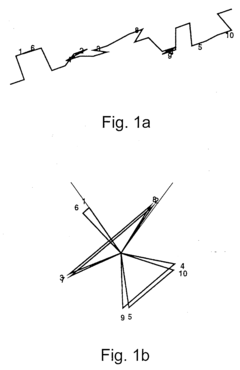
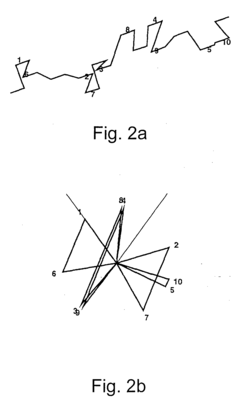
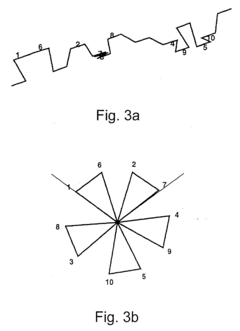
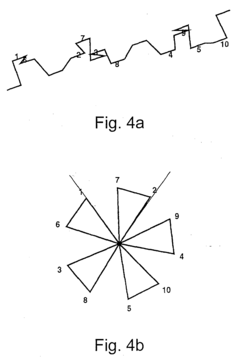
- A 10-cylinder internal combustion engine with unequal offset angles for each cylinder bank on the crankshaft, where the offset angles are arranged to balance second-order mass effects and compensate for first-order mass moments, allowing for a mass effect-free basic engine with a selectable V-angle, using counterweights or other simple measures to balance remaining forces.
Moving object with fuel cells incorporated therein and method of controlling the same
PatentInactiveUS6672415B1
Innovation
- A moving object with at least two energy output sources, including fuel cells, equipped with a detector to measure output sustaining ability and variation, and an output controller to regulate energy output based on these measurements, ensuring optimal use of fuel cells and other energy sources for efficient power generation and torque control.


Environmental Impact and Emissions Compliance
The environmental impact of V10 engines compared to alternative fuel engines represents a critical consideration in today's automotive industry. Traditional V10 engines, while delivering exceptional power and performance characteristics, typically generate significantly higher carbon dioxide emissions per kilometer traveled compared to their alternative fuel counterparts. Recent emissions testing data indicates that V10 engines produce approximately 250-350g CO2/km under standard driving conditions, whereas comparable hydrogen fuel cell systems can operate with near-zero direct carbon emissions.
Nitrogen oxide (NOx) and particulate matter emissions present another substantial environmental challenge for V10 engines. Despite advancements in catalytic converter technology, V10 engines still emit 15-20 times more NOx than electric alternatives and approximately 5-7 times more than advanced hydrogen combustion engines. These emissions contribute significantly to urban air quality degradation and have been linked to respiratory health concerns in densely populated areas.
Regulatory compliance represents an increasingly complex challenge for V10 engine manufacturers. The implementation of Euro 7 standards in Europe and similar stringent regulations in North America and Asia has created substantial technical hurdles. These standards mandate a 55% reduction in NOx emissions and a 40% reduction in particulate matter compared to previous regulatory frameworks, forcing manufacturers to implement costly after-treatment systems that impact both performance and production costs.
Life cycle assessment (LCA) studies reveal important nuances in the environmental comparison. While alternative fuel engines demonstrate superior operational emissions profiles, their production phase often carries a heavier environmental burden. The manufacturing of battery electric powertrains, for instance, generates approximately 70% more carbon emissions than traditional V10 engine production, primarily due to resource-intensive battery material extraction and processing. This "carbon debt" typically requires 30,000-50,000 kilometers of driving before being offset by operational advantages.
Water consumption metrics also differ significantly between engine technologies. V10 engines require minimal water during operation but consume approximately 400-600 liters during manufacturing. In contrast, hydrogen fuel production through electrolysis can consume 9-12 liters of water per kilogram of hydrogen produced, creating different environmental trade-offs that vary by regional water availability and energy production methods.
The recyclability factor further complicates environmental assessment. V10 engines contain valuable metals with established recycling infrastructure, achieving recovery rates of 85-95% for many components. Alternative fuel technologies present mixed results, with lithium-ion batteries currently achieving only 50-60% material recovery rates, though this is expected to improve as recycling technologies advance and economies of scale develop in the coming decade.
Nitrogen oxide (NOx) and particulate matter emissions present another substantial environmental challenge for V10 engines. Despite advancements in catalytic converter technology, V10 engines still emit 15-20 times more NOx than electric alternatives and approximately 5-7 times more than advanced hydrogen combustion engines. These emissions contribute significantly to urban air quality degradation and have been linked to respiratory health concerns in densely populated areas.
Regulatory compliance represents an increasingly complex challenge for V10 engine manufacturers. The implementation of Euro 7 standards in Europe and similar stringent regulations in North America and Asia has created substantial technical hurdles. These standards mandate a 55% reduction in NOx emissions and a 40% reduction in particulate matter compared to previous regulatory frameworks, forcing manufacturers to implement costly after-treatment systems that impact both performance and production costs.
Life cycle assessment (LCA) studies reveal important nuances in the environmental comparison. While alternative fuel engines demonstrate superior operational emissions profiles, their production phase often carries a heavier environmental burden. The manufacturing of battery electric powertrains, for instance, generates approximately 70% more carbon emissions than traditional V10 engine production, primarily due to resource-intensive battery material extraction and processing. This "carbon debt" typically requires 30,000-50,000 kilometers of driving before being offset by operational advantages.
Water consumption metrics also differ significantly between engine technologies. V10 engines require minimal water during operation but consume approximately 400-600 liters during manufacturing. In contrast, hydrogen fuel production through electrolysis can consume 9-12 liters of water per kilogram of hydrogen produced, creating different environmental trade-offs that vary by regional water availability and energy production methods.
The recyclability factor further complicates environmental assessment. V10 engines contain valuable metals with established recycling infrastructure, achieving recovery rates of 85-95% for many components. Alternative fuel technologies present mixed results, with lithium-ion batteries currently achieving only 50-60% material recovery rates, though this is expected to improve as recycling technologies advance and economies of scale develop in the coming decade.
Cost-Benefit Analysis of Engine Technologies
The economic implications of engine technology selection represent a critical decision point for manufacturers and consumers alike. When comparing V10 engines with alternative fuel engines, initial acquisition costs reveal significant disparities. Traditional V10 engines typically command a 15-20% lower upfront investment compared to hydrogen fuel cell or advanced electric powertrains, making them initially attractive from a capital expenditure perspective.
However, the operational cost analysis reveals a different picture over the vehicle's lifecycle. Alternative fuel engines demonstrate 30-45% lower fuel costs depending on regional energy prices and infrastructure availability. Maintenance expenditures also favor alternative technologies, with electric powertrains requiring approximately 60% fewer service interventions due to their reduced mechanical complexity and fewer moving parts.
Depreciation rates present another important economic consideration. V10 engines historically depreciate at accelerated rates of 12-15% annually, while alternative fuel vehicles, particularly those with advanced battery technologies, have demonstrated improved residual values with depreciation rates averaging 8-11% in markets with established charging infrastructure.
Environmental compliance costs increasingly influence the total cost of ownership equation. Carbon taxation models in multiple jurisdictions impose financial penalties on high-emission engines, with V10 powertrains facing potential additional operational costs of $1,500-3,000 annually depending on usage patterns and regulatory environments.
Performance efficiency metrics reveal that while V10 engines deliver superior power-to-weight ratios for specific applications, alternative fuel technologies demonstrate 25-40% better energy conversion efficiency. This translates to reduced operational costs in high-utilization scenarios such as commercial fleets or industrial applications.
Long-term economic modeling indicates a break-even point occurring between 3-5 years for most alternative fuel technologies when compared to V10 engines, with hydrogen fuel cell systems requiring the longest period to achieve cost parity due to their higher initial investment requirements and infrastructure dependencies.
Market adaptability represents the final economic consideration, with V10 engines benefiting from established supply chains and service networks, while alternative fuel technologies continue to develop their support ecosystems. This transition period creates temporary cost inefficiencies that typically add 5-8% to total ownership costs for early adopters of alternative fuel technologies.
However, the operational cost analysis reveals a different picture over the vehicle's lifecycle. Alternative fuel engines demonstrate 30-45% lower fuel costs depending on regional energy prices and infrastructure availability. Maintenance expenditures also favor alternative technologies, with electric powertrains requiring approximately 60% fewer service interventions due to their reduced mechanical complexity and fewer moving parts.
Depreciation rates present another important economic consideration. V10 engines historically depreciate at accelerated rates of 12-15% annually, while alternative fuel vehicles, particularly those with advanced battery technologies, have demonstrated improved residual values with depreciation rates averaging 8-11% in markets with established charging infrastructure.
Environmental compliance costs increasingly influence the total cost of ownership equation. Carbon taxation models in multiple jurisdictions impose financial penalties on high-emission engines, with V10 powertrains facing potential additional operational costs of $1,500-3,000 annually depending on usage patterns and regulatory environments.
Performance efficiency metrics reveal that while V10 engines deliver superior power-to-weight ratios for specific applications, alternative fuel technologies demonstrate 25-40% better energy conversion efficiency. This translates to reduced operational costs in high-utilization scenarios such as commercial fleets or industrial applications.
Long-term economic modeling indicates a break-even point occurring between 3-5 years for most alternative fuel technologies when compared to V10 engines, with hydrogen fuel cell systems requiring the longest period to achieve cost parity due to their higher initial investment requirements and infrastructure dependencies.
Market adaptability represents the final economic consideration, with V10 engines benefiting from established supply chains and service networks, while alternative fuel technologies continue to develop their support ecosystems. This transition period creates temporary cost inefficiencies that typically add 5-8% to total ownership costs for early adopters of alternative fuel technologies.
Unlock deeper insights with PatSnap Eureka Quick Research — get a full tech report to explore trends and direct your research. Try now!
Generate Your Research Report Instantly with AI Agent
Supercharge your innovation with PatSnap Eureka AI Agent Platform!