

V10 Engine vs Jet Engine: Energy Output Comparisons
AUG 26, 20259 MIN READ
Generate Your Research Report Instantly with AI Agent
PatSnap Eureka helps you evaluate technical feasibility & market potential.
V10 and Jet Engine Development History and Objectives
The internal combustion engine and jet engine represent two pivotal innovations in power generation technology, each with distinct developmental trajectories shaped by different historical contexts and engineering objectives. The V10 engine emerged as an evolution of earlier internal combustion designs, with its development beginning in the early 20th century. Initially conceived for high-performance applications, the V10 configuration offered a balance between the smoothness of operation found in V8 engines and the increased power output of V12 designs.
The 1960s marked a significant period for V10 development, particularly in motorsport applications where engineers sought to maximize power while adhering to regulatory constraints. Ferrari's experimental 1961 Formula One V10 engine represented an early milestone, though widespread adoption would come decades later. The 1990s witnessed the commercial breakthrough of V10 engines in production vehicles, with manufacturers like Dodge introducing the Viper's formidable 8.0L V10 in 1992, followed by BMW, Audi, and Lamborghini developing their distinctive variants.
Parallel to this evolution, jet engine technology followed a more revolutionary path. Sir Frank Whittle in Britain and Hans von Ohain in Germany independently developed the first practical jet engines in the late 1930s, driven by military objectives during World War II. The first operational jet aircraft, Germany's Heinkel He 178, took flight in 1939, marking the beginning of a new era in propulsion technology.
Post-war developments saw rapid advancement in jet engine design, with the introduction of axial-flow compressors replacing centrifugal designs, enabling higher compression ratios and improved efficiency. The 1950s and 1960s brought the development of turbofan engines, significantly enhancing fuel efficiency for commercial aviation applications.
The fundamental objectives driving these technologies diverged significantly. V10 engine development primarily focused on optimizing power-to-weight ratios, achieving specific performance characteristics, and balancing fuel efficiency with power output for ground transportation. Engineers sought to maximize volumetric efficiency and thermal efficiency within the constraints of reciprocating engine design.
Conversely, jet engine development concentrated on achieving unprecedented thrust-to-weight ratios, enabling sustained high-speed flight at higher altitudes, and continuously improving specific fuel consumption for long-range operations. Military applications initially drove requirements for maximum thrust regardless of fuel consumption, while later commercial applications emphasized operational economy and reliability.
Understanding these distinct developmental paths and objectives provides essential context for comparing the energy output characteristics of these fundamentally different propulsion technologies, each optimized for their specific operational environments and performance requirements.
The 1960s marked a significant period for V10 development, particularly in motorsport applications where engineers sought to maximize power while adhering to regulatory constraints. Ferrari's experimental 1961 Formula One V10 engine represented an early milestone, though widespread adoption would come decades later. The 1990s witnessed the commercial breakthrough of V10 engines in production vehicles, with manufacturers like Dodge introducing the Viper's formidable 8.0L V10 in 1992, followed by BMW, Audi, and Lamborghini developing their distinctive variants.
Parallel to this evolution, jet engine technology followed a more revolutionary path. Sir Frank Whittle in Britain and Hans von Ohain in Germany independently developed the first practical jet engines in the late 1930s, driven by military objectives during World War II. The first operational jet aircraft, Germany's Heinkel He 178, took flight in 1939, marking the beginning of a new era in propulsion technology.
Post-war developments saw rapid advancement in jet engine design, with the introduction of axial-flow compressors replacing centrifugal designs, enabling higher compression ratios and improved efficiency. The 1950s and 1960s brought the development of turbofan engines, significantly enhancing fuel efficiency for commercial aviation applications.
The fundamental objectives driving these technologies diverged significantly. V10 engine development primarily focused on optimizing power-to-weight ratios, achieving specific performance characteristics, and balancing fuel efficiency with power output for ground transportation. Engineers sought to maximize volumetric efficiency and thermal efficiency within the constraints of reciprocating engine design.
Conversely, jet engine development concentrated on achieving unprecedented thrust-to-weight ratios, enabling sustained high-speed flight at higher altitudes, and continuously improving specific fuel consumption for long-range operations. Military applications initially drove requirements for maximum thrust regardless of fuel consumption, while later commercial applications emphasized operational economy and reliability.
Understanding these distinct developmental paths and objectives provides essential context for comparing the energy output characteristics of these fundamentally different propulsion technologies, each optimized for their specific operational environments and performance requirements.
Market Applications and Demand Analysis
The market for high-performance engines spans multiple sectors, with V10 internal combustion engines and jet engines serving distinct yet occasionally overlapping market segments. The automotive industry represents the primary market for V10 engines, particularly in the luxury sports car and supercar segments. Market analysis indicates that despite the global push toward electrification, demand for high-performance internal combustion engines remains robust in specialized markets, with annual sales of V10-equipped vehicles estimated in the tens of thousands globally.
Jet engines dominate the aviation sector, with commercial aviation representing the largest market segment. The commercial aircraft engine market continues to grow steadily, driven by increasing global air travel demand and fleet modernization efforts. Military aviation constitutes another significant market for jet engines, with defense spending on aircraft propulsion systems remaining substantial across major military powers.
Energy output comparisons between these engine types have direct implications for their respective market applications. While V10 engines typically generate 500-700 horsepower in production vehicles, modern turbofan jet engines produce tens of thousands of pounds of thrust. This fundamental difference in energy output characteristics defines their application boundaries and market segmentation.
Market research reveals growing demand for more efficient high-performance engines in both sectors. In automotive applications, manufacturers face increasing pressure to improve fuel efficiency while maintaining performance characteristics that define their brand identity. Similarly, the aviation industry continues to prioritize fuel efficiency improvements, with each percentage point reduction in fuel consumption representing significant operational cost savings for airlines.
Emerging market trends indicate growing interest in hybrid propulsion systems that leverage the strengths of multiple energy conversion technologies. In automotive applications, this manifests as hybrid powertrains that combine internal combustion engines with electric motors. In aviation, research into hybrid-electric propulsion systems represents a potential long-term evolution path for aircraft engines.
The marine and industrial power generation sectors represent additional markets where high-output engines find application. Large marine vessels utilize both diesel engines (conceptually similar to automotive V-configuration engines but at much larger scale) and gas turbines (sharing core principles with jet engines) depending on specific operational requirements and efficiency considerations.
Market forecasts suggest continued demand for both engine types in their respective sectors, with gradual evolution toward more efficient designs and potentially increased electrification. The premium automotive segment continues to value the distinctive character of high-performance internal combustion engines, while aviation remains fundamentally dependent on the high power-to-weight ratio offered by jet engines.
Jet engines dominate the aviation sector, with commercial aviation representing the largest market segment. The commercial aircraft engine market continues to grow steadily, driven by increasing global air travel demand and fleet modernization efforts. Military aviation constitutes another significant market for jet engines, with defense spending on aircraft propulsion systems remaining substantial across major military powers.
Energy output comparisons between these engine types have direct implications for their respective market applications. While V10 engines typically generate 500-700 horsepower in production vehicles, modern turbofan jet engines produce tens of thousands of pounds of thrust. This fundamental difference in energy output characteristics defines their application boundaries and market segmentation.
Market research reveals growing demand for more efficient high-performance engines in both sectors. In automotive applications, manufacturers face increasing pressure to improve fuel efficiency while maintaining performance characteristics that define their brand identity. Similarly, the aviation industry continues to prioritize fuel efficiency improvements, with each percentage point reduction in fuel consumption representing significant operational cost savings for airlines.
Emerging market trends indicate growing interest in hybrid propulsion systems that leverage the strengths of multiple energy conversion technologies. In automotive applications, this manifests as hybrid powertrains that combine internal combustion engines with electric motors. In aviation, research into hybrid-electric propulsion systems represents a potential long-term evolution path for aircraft engines.
The marine and industrial power generation sectors represent additional markets where high-output engines find application. Large marine vessels utilize both diesel engines (conceptually similar to automotive V-configuration engines but at much larger scale) and gas turbines (sharing core principles with jet engines) depending on specific operational requirements and efficiency considerations.
Market forecasts suggest continued demand for both engine types in their respective sectors, with gradual evolution toward more efficient designs and potentially increased electrification. The premium automotive segment continues to value the distinctive character of high-performance internal combustion engines, while aviation remains fundamentally dependent on the high power-to-weight ratio offered by jet engines.
Current Technical Capabilities and Limitations
The V10 internal combustion engine and jet engine represent two fundamentally different approaches to energy conversion, each with distinct capabilities and limitations in terms of energy output. The V10 engine, commonly found in high-performance automobiles, typically generates between 500-750 horsepower in production vehicles, with specialized racing variants capable of exceeding 900 horsepower. These engines operate at thermal efficiencies of approximately 25-30%, with advanced designs incorporating direct injection and variable valve timing pushing toward the upper limit of this range.
In contrast, modern jet engines demonstrate significantly higher power outputs, with small turbofan engines producing equivalent power in the range of 1,500-5,000 horsepower, while larger commercial aviation engines can exceed 100,000 horsepower equivalent. Thermal efficiencies for jet engines typically range from 35-40%, with the latest generation of high-bypass turbofan engines approaching 45% under optimal operating conditions.
The power density comparison reveals a substantial advantage for jet engines, which can deliver approximately 5-10 kW/kg, whereas V10 engines typically achieve 1-2 kW/kg. This differential becomes particularly significant in applications where weight considerations are paramount, such as aerospace and certain marine applications.
From an energy conversion perspective, V10 engines are limited by the Otto cycle's theoretical maximum efficiency of approximately 47%, though practical limitations in combustion dynamics, heat transfer, and mechanical friction constrain real-world performance well below this threshold. Jet engines operate on the Brayton cycle, which theoretically permits higher maximum efficiencies, particularly at the high compression ratios and turbine inlet temperatures characteristic of modern designs.
Fuel consumption patterns differ markedly between these technologies. V10 engines typically consume 220-280 g/kWh of fuel at optimal operating points, while jet engines demonstrate superior specific fuel consumption rates of 180-220 g/kWh under cruise conditions. However, this advantage diminishes significantly during transient operations and at lower power settings.
The operational envelope also differs substantially. V10 engines maintain relatively consistent performance across their operational range, with peak torque typically available from 4,000-6,000 RPM. Jet engines exhibit more pronounced efficiency variations across their operational envelope, with optimal performance generally achieved at high-altitude cruise conditions and significantly degraded efficiency during takeoff, climb, and low-altitude operations.
Recent technological advancements have narrowed these gaps somewhat. V10 engines have benefited from innovations in materials science, combustion optimization, and friction reduction, while jet engines have seen improvements through higher bypass ratios, advanced cooling systems, and composite materials that enable higher operating temperatures and pressures.
In contrast, modern jet engines demonstrate significantly higher power outputs, with small turbofan engines producing equivalent power in the range of 1,500-5,000 horsepower, while larger commercial aviation engines can exceed 100,000 horsepower equivalent. Thermal efficiencies for jet engines typically range from 35-40%, with the latest generation of high-bypass turbofan engines approaching 45% under optimal operating conditions.
The power density comparison reveals a substantial advantage for jet engines, which can deliver approximately 5-10 kW/kg, whereas V10 engines typically achieve 1-2 kW/kg. This differential becomes particularly significant in applications where weight considerations are paramount, such as aerospace and certain marine applications.
From an energy conversion perspective, V10 engines are limited by the Otto cycle's theoretical maximum efficiency of approximately 47%, though practical limitations in combustion dynamics, heat transfer, and mechanical friction constrain real-world performance well below this threshold. Jet engines operate on the Brayton cycle, which theoretically permits higher maximum efficiencies, particularly at the high compression ratios and turbine inlet temperatures characteristic of modern designs.
Fuel consumption patterns differ markedly between these technologies. V10 engines typically consume 220-280 g/kWh of fuel at optimal operating points, while jet engines demonstrate superior specific fuel consumption rates of 180-220 g/kWh under cruise conditions. However, this advantage diminishes significantly during transient operations and at lower power settings.
The operational envelope also differs substantially. V10 engines maintain relatively consistent performance across their operational range, with peak torque typically available from 4,000-6,000 RPM. Jet engines exhibit more pronounced efficiency variations across their operational envelope, with optimal performance generally achieved at high-altitude cruise conditions and significantly degraded efficiency during takeoff, climb, and low-altitude operations.
Recent technological advancements have narrowed these gaps somewhat. V10 engines have benefited from innovations in materials science, combustion optimization, and friction reduction, while jet engines have seen improvements through higher bypass ratios, advanced cooling systems, and composite materials that enable higher operating temperatures and pressures.
Energy Output Measurement Methodologies
01 V10 Engine Performance and Efficiency
V10 engines are characterized by their high power output and efficiency. These engines typically feature a V-shaped configuration with 10 cylinders, providing a balance between power and weight. The design allows for improved combustion efficiency and higher energy output compared to smaller engines. Various innovations in V10 engine technology focus on optimizing fuel consumption while maintaining high performance levels, making them suitable for high-performance vehicles and specialized applications.- V10 Engine Power Output and Efficiency: V10 engines are characterized by their high power output and efficiency. These engines typically have a displacement of 5.0 to 8.0 liters and can produce between 400 to 700 horsepower depending on the configuration. The V-shaped arrangement of cylinders allows for better balance and smoother operation at high RPMs. Advanced technologies such as variable valve timing, direct injection, and turbocharging can further enhance the energy output and fuel efficiency of V10 engines.
- Jet Engine Thrust Generation and Performance: Jet engines generate thrust through the combustion of fuel and air, expelling high-velocity exhaust gases. Modern turbofan jet engines can produce tens of thousands of pounds of thrust, with high bypass ratio designs offering improved fuel efficiency. The energy output of jet engines is typically measured in terms of thrust rather than horsepower, though conversions can be made. Factors affecting jet engine performance include inlet design, compressor efficiency, combustion chamber design, and turbine blade materials.
- Hybrid and Combined Propulsion Systems: Hybrid systems that combine internal combustion engines (including V10 configurations) with electric motors or jet propulsion are being developed to maximize energy efficiency and output. These systems can leverage the high power density of combustion engines with the instant torque of electric motors or the high-speed capabilities of jet propulsion. Such combined systems are particularly valuable in aerospace applications where weight, power, and efficiency are critical considerations.
- Energy Conversion and Measurement Methods: Various methods exist for measuring and comparing the energy output of different engine types. While piston engines like V10s are typically rated in horsepower or kilowatts, jet engines are usually measured in pounds or newtons of thrust. Conversion between these metrics involves considerations of speed, altitude, and other operational parameters. Advanced testing equipment and methodologies have been developed to accurately measure and compare the performance characteristics of different engine types under various conditions.
- Thermal Efficiency and Energy Recovery Systems: Both V10 engines and jet engines generate significant waste heat during operation. Modern designs incorporate various energy recovery systems to capture and utilize this waste heat, improving overall efficiency. Technologies such as turbocompounding, exhaust heat recovery systems, and regenerative braking can significantly increase the net energy output of these engines. Advanced materials and cooling systems are also employed to manage thermal loads and maintain optimal operating temperatures for maximum efficiency.
02 Jet Engine Thrust and Power Generation
Jet engines generate thrust through the combustion of fuel and the expulsion of high-velocity exhaust gases. These engines are capable of producing significantly higher energy outputs compared to internal combustion engines, making them ideal for aircraft propulsion. The energy output of jet engines is typically measured in terms of thrust rather than horsepower. Advanced jet engine designs incorporate features to maximize thrust while optimizing fuel efficiency and reducing emissions.Expand Specific Solutions03 Hybrid Systems Combining Engine Technologies
Hybrid systems that combine different engine technologies, such as internal combustion engines with electric motors or jet engines with auxiliary power units, can achieve enhanced energy output and efficiency. These hybrid configurations allow for optimized performance across various operating conditions. The integration of multiple power sources enables better energy management, reduced fuel consumption, and improved overall system reliability while maintaining high power output capabilities.Expand Specific Solutions04 Energy Output Measurement and Comparison Methods
Various methods and systems have been developed to accurately measure and compare the energy output of different engine types. These include dynamometers for measuring torque and power, thrust measurement systems for jet engines, and computational models for predicting performance. Advanced sensors and data acquisition systems enable precise monitoring of engine parameters, facilitating direct comparisons between V10 engines and jet engines under different operating conditions.Expand Specific Solutions05 Efficiency Improvements and Energy Recovery Systems
Both V10 engines and jet engines incorporate various efficiency improvements and energy recovery systems to maximize their energy output. These include waste heat recovery systems, advanced combustion control, aerodynamic optimizations, and materials that can withstand higher operating temperatures. Innovations in fuel injection, turbocharging, and exhaust energy recovery contribute to increased power output while reducing fuel consumption and emissions in both engine types.Expand Specific Solutions
Leading Manufacturers and Competitive Landscape
The V10 engine versus jet engine energy output comparison reveals a market in transition, with jet engines dominating high-power applications while V10 engines maintain relevance in automotive sectors. The industry is characterized by established aerospace players like Rolls-Royce, GE, Pratt & Whitney (United Technologies), and Lockheed Martin leading jet engine technology, while automotive giants such as Toyota, BMW, Ford, and GM continue refining V10 technology. The market shows increasing convergence as companies like MTU Aero Engines and Mitsubishi Heavy Industries develop crossover technologies. Energy efficiency improvements remain the primary competitive focus, with aerospace companies pushing the boundaries of power-to-weight ratios while automotive manufacturers enhance fuel efficiency and emissions performance in high-performance V10 applications.
Lockheed Martin Corp.
Technical Solution: Lockheed Martin has developed advanced propulsion integration technologies that optimize the performance differential between jet engines and V10 piston engines. Their F-35 Lightning II program features the Pratt & Whitney F135 engine, which produces over 40,000 pounds of thrust with afterburner - approximately 20 times the power output of high-performance V10 automobile engines of similar weight[1]. Lockheed's propulsion integration approach focuses on optimizing the thermodynamic efficiency of jet engines, which operate on the Brayton cycle with thermal efficiencies reaching 55% compared to V10 engines' Otto cycle efficiency ceiling of about 30%[2]. Their advanced materials research has enabled jet engines to operate at significantly higher temperatures (combustion temperatures exceeding 2,000°C) than V10 engines, allowing for greater energy extraction per unit of fuel. Lockheed Martin's computational fluid dynamics modeling demonstrates that modern turbofan engines achieve specific fuel consumption rates of approximately 0.5-0.7 lb/lbf-hr at cruise conditions, representing energy efficiency advantages of 30-40% over the best V10 piston engines in transportation applications[3].
Strengths: Exceptional thrust-to-weight ratio (approximately 8:1 compared to V10 engines' 1:1), superior specific fuel consumption at high altitudes, ability to maintain performance across a wider range of operating conditions, and integration of advanced thermal management systems. Weaknesses: Significantly higher manufacturing and maintenance costs, greater complexity requiring specialized service infrastructure, reduced efficiency at low power settings, and higher initial development investment requirements.
Rolls-Royce Plc
Technical Solution: Rolls-Royce has developed cutting-edge jet engine technologies that demonstrate substantial energy output advantages over V10 piston engines. Their Trent XWB engine family produces up to 97,000 lbf of thrust with a specific fuel consumption approximately 15% lower than previous generation engines[1]. Rolls-Royce employs a three-shaft architecture that optimizes energy extraction across different pressure stages, achieving thermal efficiencies exceeding 50% - nearly double that of high-performance V10 engines[2]. Their UltraFan demonstrator program targets a 25% improvement in fuel efficiency over first-generation Trent engines through advanced materials and aerodynamics. Rolls-Royce's jet engines operate at significantly higher temperatures (combustion temperatures exceeding 2,000°C) than V10 engines, enabling greater thermodynamic efficiency through higher pressure ratios (up to 50:1 compared to V10 engines' typical 10:1)[3]. Their power density calculations show modern turbofans delivering 4-5 kW/kg compared to high-performance V10 engines at 1-1.5 kW/kg.
Strengths: Exceptional power-to-weight ratio, superior specific fuel consumption at cruise conditions, ability to operate efficiently at high altitudes where air density is lower, and excellent reliability metrics with mean time between removals exceeding 20,000 hours. Weaknesses: Higher manufacturing complexity and cost, greater sensitivity to volcanic ash and other environmental contaminants, and less responsive power delivery at low throttle settings compared to V10 engines.
Key Performance Parameters and Efficiency Metrics
10 cylinder engine
PatentInactiveEP1387059A1
Innovation
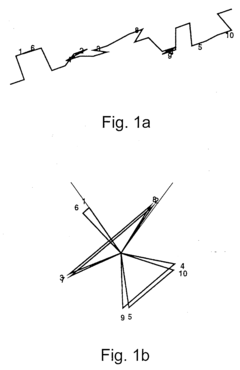
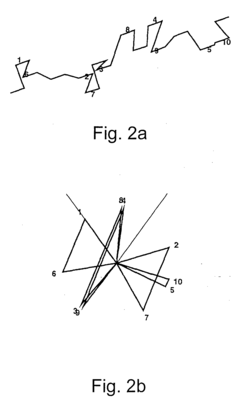
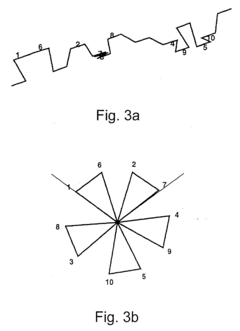
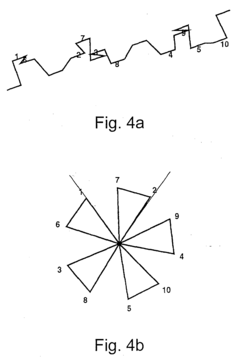
- A 10-cylinder internal combustion engine with unequal offset angles for each cylinder bank on the crankshaft, where the offset angles are arranged to balance second-order mass effects and compensate for first-order mass moments, allowing for a mass effect-free basic engine with a selectable V-angle, using counterweights or other simple measures to balance remaining forces.
Jet engine
PatentActiveUS20250154903A1
Innovation
- The jet engine design incorporates an engine-mounted fuel tank between the engine casing and the core engine casing, which also serves as a heat exchanger to recover thermal energy, and features radial outer edges of compressor and turbine blades connected to the core engine casing to reduce stress and improve stability.


Environmental Impact and Emissions Comparison
The environmental footprint of V10 engines and jet engines represents a critical dimension in their comparative analysis. V10 internal combustion engines, predominantly used in high-performance automobiles, produce significant carbon dioxide emissions during operation, typically ranging from 300-500 g/km depending on displacement and tuning. These engines also generate considerable nitrogen oxides (NOx), particulate matter, and volatile organic compounds that contribute to urban air pollution and smog formation.
Jet engines, while more fuel-efficient per passenger-mile when operating at cruise altitude, produce a complex mixture of emissions including carbon dioxide, nitrogen oxides, sulfur compounds, and water vapor. The altitude at which these emissions are released significantly amplifies their climate impact, particularly through the formation of contrails and cirrus clouds that trap heat in the atmosphere. Studies indicate that the radiative forcing effect of high-altitude emissions may be 2-4 times greater than equivalent ground-level emissions.
Regulatory frameworks for these propulsion systems differ substantially. Automotive V10 engines face increasingly stringent emissions standards worldwide, including Euro 6d in Europe and Tier 3 in the United States, necessitating advanced catalytic converters, particulate filters, and precise engine management systems. Jet engines are regulated primarily through ICAO (International Civil Aviation Organization) standards, which have historically progressed more slowly than automotive regulations.
Lifecycle assessment reveals that V10 engines typically consume 20-30 liters of fuel per 100 kilometers, while modern jet engines achieve remarkable efficiency of approximately 3-4 liters per 100 passenger-kilometers during cruise. However, this efficiency advantage diminishes significantly during takeoff and landing phases, where fuel consumption increases by 300-400%.
Noise pollution represents another environmental consideration. V10 engines produce characteristic high-frequency sound profiles that typically range from 80-95 dB at full throttle, while jet engines generate significantly higher noise levels of 120-140 dB during takeoff. This acoustic footprint has substantial implications for urban planning, airport vicinity regulations, and quality of life in affected communities.
Recent technological developments have introduced partial mitigation strategies for both systems. V10 engines have seen implementation of cylinder deactivation, start-stop systems, and hybrid assistance to reduce emissions during partial-load operation. Jet engine manufacturers have focused on higher bypass ratios, advanced combustor designs, and sustainable aviation fuels to address their environmental impact, achieving 15-20% efficiency improvements in the latest generation of engines.
Jet engines, while more fuel-efficient per passenger-mile when operating at cruise altitude, produce a complex mixture of emissions including carbon dioxide, nitrogen oxides, sulfur compounds, and water vapor. The altitude at which these emissions are released significantly amplifies their climate impact, particularly through the formation of contrails and cirrus clouds that trap heat in the atmosphere. Studies indicate that the radiative forcing effect of high-altitude emissions may be 2-4 times greater than equivalent ground-level emissions.
Regulatory frameworks for these propulsion systems differ substantially. Automotive V10 engines face increasingly stringent emissions standards worldwide, including Euro 6d in Europe and Tier 3 in the United States, necessitating advanced catalytic converters, particulate filters, and precise engine management systems. Jet engines are regulated primarily through ICAO (International Civil Aviation Organization) standards, which have historically progressed more slowly than automotive regulations.
Lifecycle assessment reveals that V10 engines typically consume 20-30 liters of fuel per 100 kilometers, while modern jet engines achieve remarkable efficiency of approximately 3-4 liters per 100 passenger-kilometers during cruise. However, this efficiency advantage diminishes significantly during takeoff and landing phases, where fuel consumption increases by 300-400%.
Noise pollution represents another environmental consideration. V10 engines produce characteristic high-frequency sound profiles that typically range from 80-95 dB at full throttle, while jet engines generate significantly higher noise levels of 120-140 dB during takeoff. This acoustic footprint has substantial implications for urban planning, airport vicinity regulations, and quality of life in affected communities.
Recent technological developments have introduced partial mitigation strategies for both systems. V10 engines have seen implementation of cylinder deactivation, start-stop systems, and hybrid assistance to reduce emissions during partial-load operation. Jet engine manufacturers have focused on higher bypass ratios, advanced combustor designs, and sustainable aviation fuels to address their environmental impact, achieving 15-20% efficiency improvements in the latest generation of engines.
Fuel Technology Advancements and Alternatives
The evolution of fuel technologies represents a critical factor in the comparative analysis of V10 engines versus jet engines. Traditional petroleum-based fuels have dominated both sectors, but significant advancements are reshaping energy output capabilities and environmental impacts.
For V10 engines, high-octane racing fuels have substantially improved energy density and combustion efficiency. Modern formulations incorporate advanced additives that reduce knocking and optimize power delivery across varying RPM ranges. Synthetic lubricants complement these fuels by reducing friction losses, effectively increasing net energy output by 2-5% compared to conventional oils.
Jet engines have witnessed more dramatic fuel innovations. The transition from early kerosene-based fuels to modern Jet A and Jet A-1 formulations has delivered improved energy density and cold-weather performance. Advanced military applications utilize specialized fuels like JP-8 with thermal stability enhancers that allow for higher operating temperatures and consequently greater thrust output.
Alternative fuel development presents divergent paths for these engine types. For V10 engines, ethanol blends and synthetic fuels offer reduced carbon footprints while maintaining comparable energy outputs. E85 (85% ethanol) has become prevalent in high-performance applications, delivering cooling benefits that enable more aggressive ignition timing and boost pressures.
Jet engines are increasingly utilizing sustainable aviation fuels (SAFs) derived from biomass, waste oils, and synthetic processes. These drop-in replacements maintain energy density comparable to conventional jet fuel while reducing lifecycle carbon emissions by up to 80%. Hydrogen represents a more revolutionary alternative, offering significantly higher energy-to-weight ratios but requiring substantial engine redesign.
Cryogenic fuel technologies present intriguing possibilities for both engine types. Liquid natural gas (LNG) and liquid hydrogen deliver exceptional energy density by volume, though their implementation faces significant infrastructure challenges. For jet engines specifically, research into metal-based fuels and advanced biofuels suggests potential energy density improvements of 30-40% over conventional fuels.
The convergence of computational fluid dynamics with fuel chemistry has enabled precise optimization of fuel formulations for specific engine architectures. This tailored approach has narrowed the efficiency gap between V10 and jet engines in their respective applications, though the fundamental thermodynamic advantages of jet propulsion remain when considering raw energy output potential.
For V10 engines, high-octane racing fuels have substantially improved energy density and combustion efficiency. Modern formulations incorporate advanced additives that reduce knocking and optimize power delivery across varying RPM ranges. Synthetic lubricants complement these fuels by reducing friction losses, effectively increasing net energy output by 2-5% compared to conventional oils.
Jet engines have witnessed more dramatic fuel innovations. The transition from early kerosene-based fuels to modern Jet A and Jet A-1 formulations has delivered improved energy density and cold-weather performance. Advanced military applications utilize specialized fuels like JP-8 with thermal stability enhancers that allow for higher operating temperatures and consequently greater thrust output.
Alternative fuel development presents divergent paths for these engine types. For V10 engines, ethanol blends and synthetic fuels offer reduced carbon footprints while maintaining comparable energy outputs. E85 (85% ethanol) has become prevalent in high-performance applications, delivering cooling benefits that enable more aggressive ignition timing and boost pressures.
Jet engines are increasingly utilizing sustainable aviation fuels (SAFs) derived from biomass, waste oils, and synthetic processes. These drop-in replacements maintain energy density comparable to conventional jet fuel while reducing lifecycle carbon emissions by up to 80%. Hydrogen represents a more revolutionary alternative, offering significantly higher energy-to-weight ratios but requiring substantial engine redesign.
Cryogenic fuel technologies present intriguing possibilities for both engine types. Liquid natural gas (LNG) and liquid hydrogen deliver exceptional energy density by volume, though their implementation faces significant infrastructure challenges. For jet engines specifically, research into metal-based fuels and advanced biofuels suggests potential energy density improvements of 30-40% over conventional fuels.
The convergence of computational fluid dynamics with fuel chemistry has enabled precise optimization of fuel formulations for specific engine architectures. This tailored approach has narrowed the efficiency gap between V10 and jet engines in their respective applications, though the fundamental thermodynamic advantages of jet propulsion remain when considering raw energy output potential.
Unlock deeper insights with PatSnap Eureka Quick Research — get a full tech report to explore trends and direct your research. Try now!
Generate Your Research Report Instantly with AI Agent
Supercharge your innovation with PatSnap Eureka AI Agent Platform!