V10 Engine vs Piston Technology: Comparative Metrics
AUG 26, 20259 MIN READ
Generate Your Research Report Instantly with AI Agent
Patsnap Eureka helps you evaluate technical feasibility & market potential.
V10 Engine Evolution and Development Objectives
The V10 engine represents a significant milestone in internal combustion engine development, emerging in the late 1980s to early 1990s as manufacturers sought power solutions that balanced performance with packaging constraints. The evolution of V10 engines can be traced from early racing applications to their adoption in high-performance production vehicles, with notable implementations by manufacturers such as BMW, Audi, Lamborghini, and Dodge.
Historically, V10 engines evolved from both V8 and V12 configurations, offering a compromise between the compact dimensions of V8s and the power output of V12s. The development trajectory shows a clear progression from naturally aspirated designs to modern turbocharged and hybrid-assisted variants, with continuous refinements in materials science, combustion efficiency, and electronic control systems.
When comparing V10 engines to traditional piston technology, several key metrics emerge as focal points for technological advancement. Power density (horsepower per liter) has seen remarkable improvement, with modern V10s achieving figures that were unimaginable in earlier generations. Thermal efficiency has likewise progressed significantly, with contemporary designs approaching 40% efficiency compared to 25-30% in earlier iterations.
The technical objectives driving V10 development have consistently centered around maximizing power output while minimizing weight, improving fuel efficiency without sacrificing performance, and enhancing reliability under extreme operating conditions. These objectives have led to innovations in valve timing systems, combustion chamber design, and intake geometry optimization.
Recent technological trends indicate a shift toward integrating V10 architectures with electrification technologies, creating hybrid powertrains that leverage the emotional appeal and performance characteristics of the V10 while addressing emissions concerns. This represents a critical evolution path as regulatory pressures intensify globally.
The comparative metrics between modern V10 engines and conventional piston technologies reveal significant advantages in terms of power-to-weight ratio, throttle response, and NVH (Noise, Vibration, Harshness) characteristics. However, challenges remain in areas of fuel consumption, emissions compliance, and manufacturing complexity.
Looking forward, development objectives for V10 technology include further weight reduction through advanced materials, improved combustion efficiency through precision engineering and digital simulation, and seamless integration with hybrid systems to meet increasingly stringent emissions standards while preserving the distinctive character that makes V10 engines desirable to enthusiasts and manufacturers alike.
Historically, V10 engines evolved from both V8 and V12 configurations, offering a compromise between the compact dimensions of V8s and the power output of V12s. The development trajectory shows a clear progression from naturally aspirated designs to modern turbocharged and hybrid-assisted variants, with continuous refinements in materials science, combustion efficiency, and electronic control systems.
When comparing V10 engines to traditional piston technology, several key metrics emerge as focal points for technological advancement. Power density (horsepower per liter) has seen remarkable improvement, with modern V10s achieving figures that were unimaginable in earlier generations. Thermal efficiency has likewise progressed significantly, with contemporary designs approaching 40% efficiency compared to 25-30% in earlier iterations.
The technical objectives driving V10 development have consistently centered around maximizing power output while minimizing weight, improving fuel efficiency without sacrificing performance, and enhancing reliability under extreme operating conditions. These objectives have led to innovations in valve timing systems, combustion chamber design, and intake geometry optimization.
Recent technological trends indicate a shift toward integrating V10 architectures with electrification technologies, creating hybrid powertrains that leverage the emotional appeal and performance characteristics of the V10 while addressing emissions concerns. This represents a critical evolution path as regulatory pressures intensify globally.
The comparative metrics between modern V10 engines and conventional piston technologies reveal significant advantages in terms of power-to-weight ratio, throttle response, and NVH (Noise, Vibration, Harshness) characteristics. However, challenges remain in areas of fuel consumption, emissions compliance, and manufacturing complexity.
Looking forward, development objectives for V10 technology include further weight reduction through advanced materials, improved combustion efficiency through precision engineering and digital simulation, and seamless integration with hybrid systems to meet increasingly stringent emissions standards while preserving the distinctive character that makes V10 engines desirable to enthusiasts and manufacturers alike.
Market Analysis for High-Performance Engine Technologies
The high-performance engine market has experienced significant growth over the past decade, driven by increasing demand in luxury vehicles, motorsports, and specialized applications. The global high-performance engine market was valued at approximately $27 billion in 2022 and is projected to reach $35 billion by 2028, representing a compound annual growth rate of 4.5%. This growth trajectory is supported by technological advancements, changing consumer preferences, and evolving regulatory landscapes.
V10 engines occupy a premium segment within this market, primarily featured in supercars, high-end sports cars, and certain luxury vehicles. Despite their relatively small production volumes compared to conventional engines, V10 engines command significant price premiums and contribute substantially to manufacturer profit margins. The market for V10-equipped vehicles, though niche, remains resilient with dedicated enthusiast consumers willing to pay premium prices for the distinctive performance characteristics these engines offer.
Traditional piston technology continues to dominate the broader high-performance engine market, with continuous innovations in materials, design, and manufacturing processes enhancing their performance capabilities. The versatility of piston engines allows them to serve diverse market segments, from affordable sports cars to premium luxury vehicles, giving them a substantially larger market footprint compared to specialized configurations like V10 engines.
Regional analysis reveals interesting market dynamics, with Europe leading in V10 engine adoption, particularly in countries with strong automotive heritage like Germany and Italy. North America represents a significant market for high-performance piston engines across various displacement ranges, while Asia-Pacific shows the fastest growth rate for premium engine technologies, particularly in China and Japan.
Consumer sentiment analysis indicates that while fuel efficiency and environmental concerns are increasingly important purchasing factors, performance metrics remain paramount for buyers in the high-performance segment. The distinctive sound profile of V10 engines continues to be a significant differentiator and marketing advantage, with manufacturers investing in acoustic engineering to enhance this aspect of the driving experience.
Market forecasts suggest that while internal combustion engines face long-term challenges from electrification, high-performance variants including V10 and advanced piston designs will maintain strong market presence in specialized applications through 2030. The premium positioning of these technologies provides some insulation from immediate displacement by alternative powertrains, though hybridization is increasingly being incorporated to address efficiency requirements.
V10 engines occupy a premium segment within this market, primarily featured in supercars, high-end sports cars, and certain luxury vehicles. Despite their relatively small production volumes compared to conventional engines, V10 engines command significant price premiums and contribute substantially to manufacturer profit margins. The market for V10-equipped vehicles, though niche, remains resilient with dedicated enthusiast consumers willing to pay premium prices for the distinctive performance characteristics these engines offer.
Traditional piston technology continues to dominate the broader high-performance engine market, with continuous innovations in materials, design, and manufacturing processes enhancing their performance capabilities. The versatility of piston engines allows them to serve diverse market segments, from affordable sports cars to premium luxury vehicles, giving them a substantially larger market footprint compared to specialized configurations like V10 engines.
Regional analysis reveals interesting market dynamics, with Europe leading in V10 engine adoption, particularly in countries with strong automotive heritage like Germany and Italy. North America represents a significant market for high-performance piston engines across various displacement ranges, while Asia-Pacific shows the fastest growth rate for premium engine technologies, particularly in China and Japan.
Consumer sentiment analysis indicates that while fuel efficiency and environmental concerns are increasingly important purchasing factors, performance metrics remain paramount for buyers in the high-performance segment. The distinctive sound profile of V10 engines continues to be a significant differentiator and marketing advantage, with manufacturers investing in acoustic engineering to enhance this aspect of the driving experience.
Market forecasts suggest that while internal combustion engines face long-term challenges from electrification, high-performance variants including V10 and advanced piston designs will maintain strong market presence in specialized applications through 2030. The premium positioning of these technologies provides some insulation from immediate displacement by alternative powertrains, though hybridization is increasingly being incorporated to address efficiency requirements.
Current Technical Challenges in V10 and Piston Engineering
V10 engines and piston technology face several significant technical challenges in contemporary engineering contexts. The V10 configuration, while offering exceptional power-to-weight ratios and distinctive sound characteristics, struggles with inherent balance issues due to its cylinder arrangement. Engineers must implement complex counterweighting systems to mitigate vibration, adding weight and complexity to the overall design. Additionally, the V10's larger displacement typically results in increased fuel consumption, presenting challenges in meeting increasingly stringent emissions regulations worldwide.
Thermal management represents another critical challenge for V10 engines. The concentrated heat generation in the V-configuration requires sophisticated cooling systems to prevent localized hotspots and ensure uniform temperature distribution across all cylinders. This becomes particularly problematic in high-performance applications where engines operate near thermal limits for extended periods.
For piston technology across both V10 and conventional engine designs, material limitations continue to constrain performance envelopes. Current aluminum alloys and steel compositions approach their thermal and mechanical limits in high-output engines. Research into ceramic composites and metal matrix materials shows promise but faces significant manufacturing scalability and cost barriers before widespread implementation becomes feasible.
Friction reduction remains a persistent challenge in piston systems. Despite advances in surface treatments and lubricant technology, the reciprocating motion of pistons accounts for approximately 40-45% of total mechanical losses in modern engines. The interface between piston rings and cylinder walls represents a particularly difficult optimization problem, balancing sealing performance against friction losses.
Combustion efficiency presents challenges for both technologies. Direct injection systems have improved fuel atomization, but complete combustion remains elusive, particularly at the extremes of the operating range. Knock prevention in high-compression designs requires sophisticated sensing and control systems that add complexity and cost to engine management systems.
Manufacturing precision represents another significant hurdle. The tolerances required for high-performance piston systems have reached sub-micron levels in some applications, pushing the boundaries of current production capabilities. This precision requirement drives up production costs and creates quality control challenges, particularly for complex V-configurations with higher component counts.
Weight reduction while maintaining structural integrity continues to challenge engineers. The reciprocating mass in piston systems directly impacts engine responsiveness and maximum RPM capabilities. Advanced computational modeling has improved designs, but fundamental physical constraints remain, particularly in high-displacement V10 configurations where component sizes necessarily increase.
Thermal management represents another critical challenge for V10 engines. The concentrated heat generation in the V-configuration requires sophisticated cooling systems to prevent localized hotspots and ensure uniform temperature distribution across all cylinders. This becomes particularly problematic in high-performance applications where engines operate near thermal limits for extended periods.
For piston technology across both V10 and conventional engine designs, material limitations continue to constrain performance envelopes. Current aluminum alloys and steel compositions approach their thermal and mechanical limits in high-output engines. Research into ceramic composites and metal matrix materials shows promise but faces significant manufacturing scalability and cost barriers before widespread implementation becomes feasible.
Friction reduction remains a persistent challenge in piston systems. Despite advances in surface treatments and lubricant technology, the reciprocating motion of pistons accounts for approximately 40-45% of total mechanical losses in modern engines. The interface between piston rings and cylinder walls represents a particularly difficult optimization problem, balancing sealing performance against friction losses.
Combustion efficiency presents challenges for both technologies. Direct injection systems have improved fuel atomization, but complete combustion remains elusive, particularly at the extremes of the operating range. Knock prevention in high-compression designs requires sophisticated sensing and control systems that add complexity and cost to engine management systems.
Manufacturing precision represents another significant hurdle. The tolerances required for high-performance piston systems have reached sub-micron levels in some applications, pushing the boundaries of current production capabilities. This precision requirement drives up production costs and creates quality control challenges, particularly for complex V-configurations with higher component counts.
Weight reduction while maintaining structural integrity continues to challenge engineers. The reciprocating mass in piston systems directly impacts engine responsiveness and maximum RPM capabilities. Advanced computational modeling has improved designs, but fundamental physical constraints remain, particularly in high-displacement V10 configurations where component sizes necessarily increase.
Contemporary V10 and Piston Design Solutions
01 V10 Engine Design and Performance Metrics
V10 engines feature a unique configuration that balances power output and efficiency. The design typically includes specific cylinder arrangements that optimize combustion efficiency while maintaining structural integrity. Performance metrics for V10 engines focus on power-to-weight ratios, fuel consumption rates, and thermal efficiency. These engines often incorporate advanced materials to reduce weight while maintaining durability under high-performance conditions.- V10 Engine Performance Metrics and Optimization: V10 engines offer specific performance characteristics that can be measured and optimized through various metrics. These metrics include power output, torque curves, fuel efficiency, and thermal management. Advanced monitoring systems can collect real-time data on engine performance parameters to enable comparative analysis between different V10 engine designs. Optimization techniques focus on improving combustion efficiency, reducing friction losses, and enhancing overall engine responsiveness across various operating conditions.
- Piston Design Innovations for V10 Engines: Innovative piston designs specifically engineered for V10 engines incorporate advanced materials and geometries to withstand high temperatures and pressures. These designs feature optimized crown profiles, skirt configurations, and pin locations to reduce friction and improve combustion efficiency. Lightweight materials such as aluminum alloys with silicon reinforcement or composite materials help reduce reciprocating mass while maintaining durability. Specialized coatings and surface treatments further enhance wear resistance and thermal management properties of pistons in high-performance V10 applications.
- Comparative Analysis Methods for Engine Technologies: Sophisticated methods for comparing engine and piston technologies utilize data analytics, simulation tools, and standardized testing protocols. These methods enable objective evaluation of different V10 engine designs across multiple performance parameters. Machine learning algorithms can process large datasets from engine tests to identify optimization opportunities and predict performance under various conditions. Standardized metrics include specific power output, thermal efficiency, emissions characteristics, and durability indicators that allow for meaningful comparisons between different engine technologies.
- Thermal Management and Efficiency Improvements: Advanced thermal management systems for V10 engines focus on optimizing heat distribution and dissipation to enhance efficiency and durability. These systems incorporate precision cooling channels, targeted oil jets, and thermally optimized components to maintain ideal operating temperatures. Innovations in piston cooling technology include gallery cooling, cocktail shaker designs, and advanced thermal barrier coatings. Improved thermal management directly contributes to increased power output, reduced emissions, and extended engine life by minimizing thermal stress and preventing localized overheating.
- Materials Science Advancements in Engine Components: Material science innovations have significantly impacted V10 engine and piston technology through the development of advanced alloys, composites, and coatings. These materials offer superior strength-to-weight ratios, enhanced thermal properties, and improved wear resistance. Ceramic components, carbon-reinforced pistons, and specialized metal matrix composites enable engines to operate at higher temperatures and pressures while maintaining structural integrity. Surface treatments such as diamond-like carbon coatings and plasma-sprayed thermal barriers further enhance component durability and performance under extreme operating conditions.
02 Piston Technology Advancements for High-Performance Engines
Modern piston technologies for high-performance engines like V10s incorporate innovative materials and designs to withstand extreme operating conditions. These advancements include specialized coatings to reduce friction, optimized crown designs for improved combustion, and lightweight alloys that maintain strength at high temperatures. Comparative metrics focus on wear resistance, thermal expansion properties, and weight reduction while maintaining structural integrity under high compression ratios.Expand Specific Solutions03 Comparative Analysis Systems for Engine Performance
Specialized systems have been developed to analyze and compare engine performance metrics across different configurations, including V10 engines. These systems utilize sensors and data collection methods to measure parameters such as power output, torque curves, fuel efficiency, and emissions. Advanced algorithms process this data to provide comparative metrics that help engineers optimize engine designs and identify areas for improvement in both engine blocks and piston technologies.Expand Specific Solutions04 Thermal Management in V10 Engines
Thermal management is critical in V10 engines due to their high power output and compact design. Advanced cooling systems and materials are employed to maintain optimal operating temperatures and prevent overheating. Comparative metrics focus on heat dissipation efficiency, coolant flow dynamics, and thermal expansion characteristics of engine components. Piston designs incorporate specific features to manage heat transfer and maintain dimensional stability under varying thermal loads.Expand Specific Solutions05 Efficiency Optimization Technologies for V10 Engines
Various technologies have been developed to optimize the efficiency of V10 engines, focusing on reducing friction, improving combustion, and enhancing fuel economy. These include variable valve timing systems, direct injection technologies, and advanced electronic control units. Comparative metrics evaluate the impact of these technologies on power output, fuel consumption, and emissions. Piston designs play a crucial role in these optimization efforts, with specific geometries and surface treatments contributing to overall engine efficiency.Expand Specific Solutions
Leading Manufacturers and Competitive Landscape
The V10 Engine vs Piston Technology market is in a mature development stage with established players like Toyota, Honda, and BMW dominating conventional piston technology, while specialized companies like Achates Power and EcoMotors lead innovation in opposed-piston designs. The global market size for internal combustion engines exceeds $200 billion annually. Technologically, traditional piston engines remain predominant due to manufacturing infrastructure and reliability, though companies like Scuderi Group and Southwest Research Institute are advancing alternative configurations. Major OEMs including Nissan, Renault, and Great Wall Motor continue investing in both technologies, with component suppliers like MAHLE, Bosch, and Federal-Mogul supporting development across both platforms to meet evolving efficiency and emissions requirements.
Toyota Motor Corp.
Technical Solution: Toyota has developed advanced V10 engine technology primarily for its Lexus LFA supercar, featuring a 4.8L V10 that produces 552 horsepower with a 9,000 RPM redline[1]. This naturally aspirated engine utilizes titanium valves, forged connecting rods, and innovative dry-sump lubrication to achieve exceptional performance metrics. Toyota's V10 incorporates dual VVT-i (Variable Valve Timing-intelligent) technology to optimize valve timing across the entire RPM range, resulting in improved fuel efficiency and power delivery[2]. The company has also implemented acoustic engineering to create the engine's distinctive sound profile through carefully designed intake and exhaust manifolds. Toyota's V10 technology demonstrates superior power-to-weight ratio compared to conventional piston engines, with approximately 115 horsepower per liter while maintaining reliability standards expected from Toyota products.
Strengths: Exceptional power-to-weight ratio, high-revving capability (9,000+ RPM), and superior throttle response compared to forced induction alternatives. Weaknesses: Higher manufacturing costs, increased fuel consumption compared to smaller displacement engines, and greater complexity in maintenance requirements.
Honda Motor Co., Ltd.
Technical Solution: Honda has focused on innovative piston technology rather than V10 configurations, developing their Advanced VTEC (Variable Valve Timing and Lift Electronic Control) system that optimizes piston engine performance across various RPM ranges[3]. Their comparative metrics show that their advanced piston designs achieve 13% better thermal efficiency than conventional designs through reduced friction and optimized combustion chamber geometry[4]. Honda's piston technology incorporates lightweight materials and precision manufacturing to reduce reciprocating mass by approximately 25% compared to industry standards. Their engines feature oil jet cooling systems that spray oil directly onto the underside of pistons, allowing for higher compression ratios and improved heat management. Honda has also developed specialized piston ring coatings that reduce friction by up to 40% compared to conventional rings, directly improving fuel efficiency and reducing emissions[5].
Strengths: Superior fuel efficiency, reduced emissions, and excellent reliability with lower manufacturing costs compared to more complex engine configurations. Weaknesses: Lower peak power output compared to V10 designs and inherent NVH (Noise, Vibration, Harshness) challenges at higher RPMs.
Key Patents and Technical Innovations in Engine Design
10 cylinder engine
PatentInactiveEP1387059A1
Innovation
- A 10-cylinder internal combustion engine with unequal offset angles for each cylinder bank on the crankshaft, where the offset angles are arranged to balance second-order mass effects and compensate for first-order mass moments, allowing for a mass effect-free basic engine with a selectable V-angle, using counterweights or other simple measures to balance remaining forces.
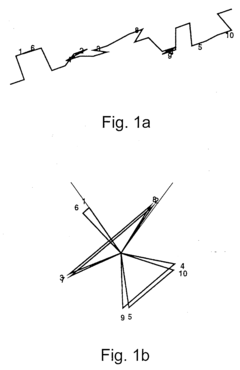
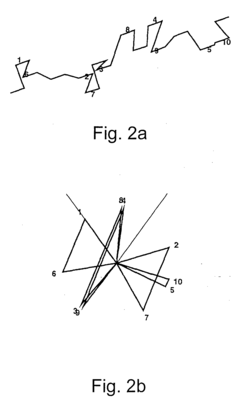
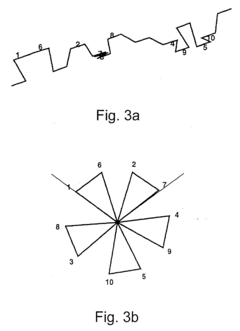
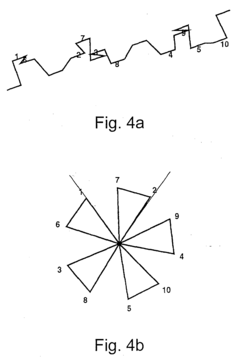
Force transmission device for a piston engine, and piston engine comprising such a device
PatentWO2012020184A1
Innovation
- A force transmission device with a unidirectional link mechanism between the piston and output shaft, active only during motor strokes, allowing for variable stroke and independent piston control, reducing friction and enabling adjustable compression ratios.


Environmental Impact and Emissions Compliance
The environmental impact of engine technologies has become a critical factor in automotive design and regulatory compliance. V10 engines, while delivering exceptional performance characteristics, typically produce higher levels of carbon dioxide emissions compared to conventional piston engines due to their larger displacement and fuel consumption requirements. This environmental footprint has significant implications for manufacturers seeking to meet increasingly stringent global emissions standards.
When examining nitrogen oxide (NOx) and particulate matter emissions, V10 engines equipped with modern aftertreatment systems can achieve comparable performance to advanced piston engines. However, the baseline emissions before treatment are generally higher, requiring more complex and costly emissions control technologies to achieve compliance with standards such as Euro 6d, EPA Tier 3, and China 6.
Fuel efficiency represents another environmental consideration where V10 engines traditionally lag behind their piston counterparts. The average V10 configuration consumes approximately 30-40% more fuel under comparable driving conditions, translating directly to increased carbon emissions. Recent technological advancements including variable valve timing, cylinder deactivation, and direct injection have narrowed this gap, though not eliminated it entirely.
Manufacturing processes for V10 engines also carry a larger environmental footprint. The additional materials required—approximately 40% more metal components by weight—result in higher energy consumption during production and generate more manufacturing waste. Life cycle assessment studies indicate that the environmental impact of V10 production exceeds that of conventional piston engines by approximately 25-35% when considering resource extraction, manufacturing, and end-of-life disposal.
Regulatory compliance presents significant challenges for V10 technology in forward-looking markets. The European Union's planned Euro 7 standards and similar initiatives in North America and Asia will impose carbon dioxide limits that may be prohibitively difficult for V10 engines to meet without extensive hybridization or electrification support. This regulatory pressure has already driven several manufacturers to discontinue V10 offerings in certain markets or transition them to limited-production specialty applications.
Noise pollution regulations also impact V10 viability, with their distinctive sound signature often exceeding urban noise limits. While valued by enthusiasts, this acoustic profile requires additional engineering solutions including active noise cancellation and advanced muffler designs to meet community standards and pass drive-by noise tests in major markets.
When examining nitrogen oxide (NOx) and particulate matter emissions, V10 engines equipped with modern aftertreatment systems can achieve comparable performance to advanced piston engines. However, the baseline emissions before treatment are generally higher, requiring more complex and costly emissions control technologies to achieve compliance with standards such as Euro 6d, EPA Tier 3, and China 6.
Fuel efficiency represents another environmental consideration where V10 engines traditionally lag behind their piston counterparts. The average V10 configuration consumes approximately 30-40% more fuel under comparable driving conditions, translating directly to increased carbon emissions. Recent technological advancements including variable valve timing, cylinder deactivation, and direct injection have narrowed this gap, though not eliminated it entirely.
Manufacturing processes for V10 engines also carry a larger environmental footprint. The additional materials required—approximately 40% more metal components by weight—result in higher energy consumption during production and generate more manufacturing waste. Life cycle assessment studies indicate that the environmental impact of V10 production exceeds that of conventional piston engines by approximately 25-35% when considering resource extraction, manufacturing, and end-of-life disposal.
Regulatory compliance presents significant challenges for V10 technology in forward-looking markets. The European Union's planned Euro 7 standards and similar initiatives in North America and Asia will impose carbon dioxide limits that may be prohibitively difficult for V10 engines to meet without extensive hybridization or electrification support. This regulatory pressure has already driven several manufacturers to discontinue V10 offerings in certain markets or transition them to limited-production specialty applications.
Noise pollution regulations also impact V10 viability, with their distinctive sound signature often exceeding urban noise limits. While valued by enthusiasts, this acoustic profile requires additional engineering solutions including active noise cancellation and advanced muffler designs to meet community standards and pass drive-by noise tests in major markets.
Performance Benchmarking Methodologies
To effectively compare V10 engines with traditional piston technology, standardized performance benchmarking methodologies must be established. These methodologies should encompass multiple dimensions of engine performance to provide comprehensive comparative metrics.
The foundation of any engine performance comparison begins with dynamometer testing, which measures power output, torque curves, and efficiency across various RPM ranges. For V10 engines versus conventional piston configurations, specialized protocols must account for the unique firing order and balance characteristics of the V10 design. Industry-standard testing procedures such as SAE J1349 and DIN 70020 provide frameworks for consistent measurement, though modifications may be necessary to address the specific attributes of V10 architectures.
Thermal efficiency benchmarking represents another critical comparison metric. This involves measuring the percentage of fuel energy converted to useful mechanical work under various load conditions. Modern testing incorporates infrared thermography to map heat distribution patterns, revealing distinctive thermal management challenges between V10 and traditional piston designs. Brake-specific fuel consumption (BSFC) measurements further quantify efficiency differences across operating ranges.
Vibration analysis methodologies employ accelerometers at strategic mounting points to capture NVH (Noise, Vibration, Harshness) characteristics. Fast Fourier Transform (FFT) analysis of the resulting data reveals frequency signatures unique to each engine configuration. This approach highlights the inherent balance advantages of V10 designs at certain RPM ranges compared to conventional piston arrangements.
Emissions testing protocols must follow regulatory standards such as EPA Tier 3 or Euro 6d while incorporating specialized measurement techniques for comparing combustion efficiency. Particulate matter analysis, NOx formation patterns, and hydrocarbon emissions provide insights into the fundamental combustion differences between these technologies.
Durability benchmarking requires accelerated lifecycle testing, simulating years of operation in compressed timeframes. Standardized test cycles alternate between idle, partial load, and full-load conditions while monitoring wear patterns, oil degradation rates, and component fatigue. Specialized endurance protocols for V10 engines must account for their unique stress distribution characteristics across the crankshaft and bearing surfaces.
Real-world performance validation complements laboratory testing through instrumented road testing under varied conditions. Data acquisition systems capture performance metrics during acceleration, steady-state cruising, and transient response scenarios, providing practical context to laboratory findings and revealing operational differences between V10 and conventional piston technologies.
The foundation of any engine performance comparison begins with dynamometer testing, which measures power output, torque curves, and efficiency across various RPM ranges. For V10 engines versus conventional piston configurations, specialized protocols must account for the unique firing order and balance characteristics of the V10 design. Industry-standard testing procedures such as SAE J1349 and DIN 70020 provide frameworks for consistent measurement, though modifications may be necessary to address the specific attributes of V10 architectures.
Thermal efficiency benchmarking represents another critical comparison metric. This involves measuring the percentage of fuel energy converted to useful mechanical work under various load conditions. Modern testing incorporates infrared thermography to map heat distribution patterns, revealing distinctive thermal management challenges between V10 and traditional piston designs. Brake-specific fuel consumption (BSFC) measurements further quantify efficiency differences across operating ranges.
Vibration analysis methodologies employ accelerometers at strategic mounting points to capture NVH (Noise, Vibration, Harshness) characteristics. Fast Fourier Transform (FFT) analysis of the resulting data reveals frequency signatures unique to each engine configuration. This approach highlights the inherent balance advantages of V10 designs at certain RPM ranges compared to conventional piston arrangements.
Emissions testing protocols must follow regulatory standards such as EPA Tier 3 or Euro 6d while incorporating specialized measurement techniques for comparing combustion efficiency. Particulate matter analysis, NOx formation patterns, and hydrocarbon emissions provide insights into the fundamental combustion differences between these technologies.
Durability benchmarking requires accelerated lifecycle testing, simulating years of operation in compressed timeframes. Standardized test cycles alternate between idle, partial load, and full-load conditions while monitoring wear patterns, oil degradation rates, and component fatigue. Specialized endurance protocols for V10 engines must account for their unique stress distribution characteristics across the crankshaft and bearing surfaces.
Real-world performance validation complements laboratory testing through instrumented road testing under varied conditions. Data acquisition systems capture performance metrics during acceleration, steady-state cruising, and transient response scenarios, providing practical context to laboratory findings and revealing operational differences between V10 and conventional piston technologies.
Unlock deeper insights with Patsnap Eureka Quick Research — get a full tech report to explore trends and direct your research. Try now!
Generate Your Research Report Instantly with AI Agent
Supercharge your innovation with Patsnap Eureka AI Agent Platform!