

What Influences Plasma Surface Treatment Effectiveness
OCT 14, 20259 MIN READ
Generate Your Research Report Instantly with AI Agent
PatSnap Eureka helps you evaluate technical feasibility & market potential.
Plasma Treatment Technology Background and Objectives
Plasma surface treatment technology has evolved significantly since its inception in the early 20th century. Initially developed for semiconductor manufacturing in the 1970s, plasma treatment has expanded into diverse industries including automotive, medical devices, packaging, and textiles. This evolution has been driven by the increasing demand for enhanced surface properties without altering bulk material characteristics, offering advantages over traditional chemical treatments through environmentally friendly processes.
The fundamental principle of plasma treatment involves ionizing gas molecules to create reactive species that interact with material surfaces. This interaction modifies surface properties including wettability, adhesion, biocompatibility, and chemical reactivity without affecting the bulk material properties. The technology has progressed from simple corona discharge systems to sophisticated atmospheric and low-pressure plasma systems with precise control parameters.
Recent technological advancements have focused on developing more energy-efficient plasma systems, expanding the range of treatable materials, and enhancing process control for consistent results. The integration of computational modeling and real-time monitoring systems has significantly improved process optimization and predictability, addressing previous limitations in treatment uniformity and stability.
The global market for plasma surface treatment equipment has been growing steadily, with projections indicating a compound annual growth rate of approximately 5-7% through 2027. This growth is particularly pronounced in emerging economies where manufacturing sectors are rapidly expanding and adopting advanced surface modification technologies.
The primary objective of current plasma treatment research is to identify and quantify the key factors influencing treatment effectiveness across different material substrates. This includes understanding the complex relationships between plasma parameters (power, gas composition, pressure), material properties, and resulting surface modifications. Researchers aim to develop predictive models that can optimize treatment protocols for specific applications, reducing the empirical trial-and-error approach currently prevalent in industry.
Additional goals include developing more versatile plasma systems capable of treating complex three-dimensional objects, reducing energy consumption, and extending the longevity of surface modifications. There is also significant interest in combining plasma treatment with other surface modification techniques to achieve synergistic effects and novel surface properties that cannot be attained through single-method approaches.
The convergence of plasma physics, materials science, and computational modeling is expected to drive the next generation of plasma treatment technologies, enabling more precise, efficient, and tailored surface modifications for increasingly demanding industrial applications.
The fundamental principle of plasma treatment involves ionizing gas molecules to create reactive species that interact with material surfaces. This interaction modifies surface properties including wettability, adhesion, biocompatibility, and chemical reactivity without affecting the bulk material properties. The technology has progressed from simple corona discharge systems to sophisticated atmospheric and low-pressure plasma systems with precise control parameters.
Recent technological advancements have focused on developing more energy-efficient plasma systems, expanding the range of treatable materials, and enhancing process control for consistent results. The integration of computational modeling and real-time monitoring systems has significantly improved process optimization and predictability, addressing previous limitations in treatment uniformity and stability.
The global market for plasma surface treatment equipment has been growing steadily, with projections indicating a compound annual growth rate of approximately 5-7% through 2027. This growth is particularly pronounced in emerging economies where manufacturing sectors are rapidly expanding and adopting advanced surface modification technologies.
The primary objective of current plasma treatment research is to identify and quantify the key factors influencing treatment effectiveness across different material substrates. This includes understanding the complex relationships between plasma parameters (power, gas composition, pressure), material properties, and resulting surface modifications. Researchers aim to develop predictive models that can optimize treatment protocols for specific applications, reducing the empirical trial-and-error approach currently prevalent in industry.
Additional goals include developing more versatile plasma systems capable of treating complex three-dimensional objects, reducing energy consumption, and extending the longevity of surface modifications. There is also significant interest in combining plasma treatment with other surface modification techniques to achieve synergistic effects and novel surface properties that cannot be attained through single-method approaches.
The convergence of plasma physics, materials science, and computational modeling is expected to drive the next generation of plasma treatment technologies, enabling more precise, efficient, and tailored surface modifications for increasingly demanding industrial applications.
Market Applications and Industry Demand Analysis
Plasma surface treatment technology has witnessed significant market growth across multiple industries due to its ability to enhance surface properties without altering bulk material characteristics. The global market for plasma surface treatment equipment was valued at approximately 2.1 billion USD in 2022 and is projected to reach 3.5 billion USD by 2028, representing a compound annual growth rate of 8.7%. This growth is primarily driven by increasing demand for high-performance materials in automotive, electronics, medical, and packaging industries.
In the automotive sector, plasma treatment enables improved adhesion for painting, coating, and bonding applications, contributing to lightweight vehicle construction and enhanced durability. The industry's push toward electric vehicles has further accelerated demand for plasma technologies that can treat composite materials and improve battery component manufacturing.
The electronics industry represents the largest market segment for plasma surface treatment, accounting for nearly 35% of the total market share. Applications include cleaning semiconductor surfaces, improving adhesion for printed circuit boards, and enhancing display panel manufacturing processes. The miniaturization trend in electronics continues to drive demand for more precise and effective surface modification techniques.
Medical device manufacturing has emerged as one of the fastest-growing application areas, with a market growth rate exceeding 10% annually. Plasma treatment enables improved biocompatibility, sterilization, and functionalization of medical implants, catheters, and diagnostic equipment. The increasing prevalence of minimally invasive procedures and personalized medicine has created new opportunities for specialized plasma treatment solutions.
The packaging industry utilizes plasma technology to enhance printability, sealability, and barrier properties of polymeric materials. Sustainable packaging initiatives have further boosted interest in plasma treatments as environmentally friendly alternatives to chemical primers and adhesion promoters.
Regional analysis reveals that Asia-Pacific dominates the market with approximately 40% share, followed by North America and Europe. China and South Korea have shown particularly strong growth rates due to their expanding electronics manufacturing sectors. However, adoption in emerging economies remains limited by high initial investment costs and technical expertise requirements.
Customer demand increasingly focuses on integrated solutions that combine plasma treatment with in-line quality control systems, process automation, and data analytics capabilities. Industry surveys indicate that 78% of end-users prioritize process reliability and consistency as the most critical factors when selecting plasma treatment equipment, followed by operating costs and technical support availability.
In the automotive sector, plasma treatment enables improved adhesion for painting, coating, and bonding applications, contributing to lightweight vehicle construction and enhanced durability. The industry's push toward electric vehicles has further accelerated demand for plasma technologies that can treat composite materials and improve battery component manufacturing.
The electronics industry represents the largest market segment for plasma surface treatment, accounting for nearly 35% of the total market share. Applications include cleaning semiconductor surfaces, improving adhesion for printed circuit boards, and enhancing display panel manufacturing processes. The miniaturization trend in electronics continues to drive demand for more precise and effective surface modification techniques.
Medical device manufacturing has emerged as one of the fastest-growing application areas, with a market growth rate exceeding 10% annually. Plasma treatment enables improved biocompatibility, sterilization, and functionalization of medical implants, catheters, and diagnostic equipment. The increasing prevalence of minimally invasive procedures and personalized medicine has created new opportunities for specialized plasma treatment solutions.
The packaging industry utilizes plasma technology to enhance printability, sealability, and barrier properties of polymeric materials. Sustainable packaging initiatives have further boosted interest in plasma treatments as environmentally friendly alternatives to chemical primers and adhesion promoters.
Regional analysis reveals that Asia-Pacific dominates the market with approximately 40% share, followed by North America and Europe. China and South Korea have shown particularly strong growth rates due to their expanding electronics manufacturing sectors. However, adoption in emerging economies remains limited by high initial investment costs and technical expertise requirements.
Customer demand increasingly focuses on integrated solutions that combine plasma treatment with in-line quality control systems, process automation, and data analytics capabilities. Industry surveys indicate that 78% of end-users prioritize process reliability and consistency as the most critical factors when selecting plasma treatment equipment, followed by operating costs and technical support availability.
Current Plasma Surface Treatment Challenges
Plasma surface treatment technology, despite its widespread industrial adoption, continues to face significant challenges that limit its effectiveness and broader application. One of the primary obstacles is the inconsistency in treatment results across different substrate materials. Polymers, metals, ceramics, and composites each respond differently to plasma exposure, making standardization difficult and requiring material-specific process optimization.
Process parameter control presents another substantial challenge. The effectiveness of plasma treatment is highly dependent on numerous variables including power input, gas composition, pressure, treatment duration, and electrode configuration. These parameters interact in complex ways, creating a multidimensional optimization problem that often requires extensive experimentation to solve for each specific application.
Surface aging effects significantly impact long-term treatment effectiveness. Treated surfaces frequently experience hydrophobic recovery over time, where the beneficial effects of plasma treatment gradually diminish as the surface reverts to its original properties. This phenomenon, particularly pronounced in polymeric materials, necessitates either immediate post-treatment processing or the development of more durable treatment methods.
Equipment scalability remains problematic for many applications. While laboratory-scale plasma systems demonstrate excellent results, scaling these processes to accommodate large components or high-throughput industrial production lines introduces uniformity issues and economic challenges. The plasma discharge characteristics can change dramatically with scale, requiring complete reoptimization of process parameters.
Environmental factors during treatment, such as ambient humidity, temperature fluctuations, and atmospheric contaminants, can significantly influence treatment outcomes. These variables are difficult to control in production environments, leading to batch-to-batch variations that undermine process reliability.
Energy efficiency concerns persist across plasma technologies. Many plasma systems operate at relatively low energy efficiency, with significant power being dissipated as heat rather than contributing to the surface modification process. This inefficiency increases operational costs and limits the economic viability of plasma treatment for certain applications.
Safety considerations also present ongoing challenges. Plasma processes often utilize hazardous gases, generate ozone, UV radiation, and electromagnetic interference, requiring sophisticated containment and monitoring systems. These safety requirements add complexity and cost to industrial implementations.
The fundamental understanding of plasma-surface interactions remains incomplete despite decades of research. The complex physical and chemical mechanisms occurring at the plasma-solid interface are not fully characterized, making predictive modeling difficult and limiting the ability to develop optimized processes through simulation rather than empirical methods.
Process parameter control presents another substantial challenge. The effectiveness of plasma treatment is highly dependent on numerous variables including power input, gas composition, pressure, treatment duration, and electrode configuration. These parameters interact in complex ways, creating a multidimensional optimization problem that often requires extensive experimentation to solve for each specific application.
Surface aging effects significantly impact long-term treatment effectiveness. Treated surfaces frequently experience hydrophobic recovery over time, where the beneficial effects of plasma treatment gradually diminish as the surface reverts to its original properties. This phenomenon, particularly pronounced in polymeric materials, necessitates either immediate post-treatment processing or the development of more durable treatment methods.
Equipment scalability remains problematic for many applications. While laboratory-scale plasma systems demonstrate excellent results, scaling these processes to accommodate large components or high-throughput industrial production lines introduces uniformity issues and economic challenges. The plasma discharge characteristics can change dramatically with scale, requiring complete reoptimization of process parameters.
Environmental factors during treatment, such as ambient humidity, temperature fluctuations, and atmospheric contaminants, can significantly influence treatment outcomes. These variables are difficult to control in production environments, leading to batch-to-batch variations that undermine process reliability.
Energy efficiency concerns persist across plasma technologies. Many plasma systems operate at relatively low energy efficiency, with significant power being dissipated as heat rather than contributing to the surface modification process. This inefficiency increases operational costs and limits the economic viability of plasma treatment for certain applications.
Safety considerations also present ongoing challenges. Plasma processes often utilize hazardous gases, generate ozone, UV radiation, and electromagnetic interference, requiring sophisticated containment and monitoring systems. These safety requirements add complexity and cost to industrial implementations.
The fundamental understanding of plasma-surface interactions remains incomplete despite decades of research. The complex physical and chemical mechanisms occurring at the plasma-solid interface are not fully characterized, making predictive modeling difficult and limiting the ability to develop optimized processes through simulation rather than empirical methods.
Contemporary Plasma Surface Treatment Methodologies
01 Plasma treatment for surface modification and adhesion improvement
Plasma surface treatment is effective for modifying surface properties of materials to enhance adhesion. The treatment alters the surface energy and creates functional groups that improve bonding with other materials. This process is particularly useful for polymers and other materials that are typically difficult to bond, resulting in stronger and more durable adhesive joints without changing the bulk properties of the material.- Surface modification for improved adhesion: Plasma treatment can significantly enhance surface adhesion properties by modifying the surface energy and creating functional groups. This process removes contaminants and increases surface roughness at the micro level, providing more bonding sites. The treatment is particularly effective for polymers and composites where conventional adhesion methods may fail, resulting in stronger and more durable bonds between different materials.
- Plasma treatment for semiconductor manufacturing: In semiconductor fabrication, plasma surface treatments are used to clean, etch, and modify wafer surfaces with high precision. The process enables effective removal of organic contaminants and native oxides while creating uniform surface properties. These treatments improve device performance by enhancing electrical contacts and interfaces, and can be precisely controlled to achieve specific surface characteristics required for advanced semiconductor devices.
- Biomedical applications of plasma treatment: Plasma surface treatments are increasingly used in biomedical applications to enhance biocompatibility and functionality of medical devices. The treatment can modify surface properties to improve cell adhesion, reduce bacterial colonization, and increase hydrophilicity. This technology is particularly valuable for implantable devices, tissue engineering scaffolds, and diagnostic tools where surface interactions with biological systems are critical for performance.
- Plasma equipment design and optimization: The effectiveness of plasma surface treatment depends significantly on equipment design and process parameters. Advanced plasma systems incorporate precise control of gas composition, pressure, power, and treatment time. Innovations in electrode configurations, plasma generation methods, and chamber designs have improved treatment uniformity and efficiency. These technological advancements enable more effective surface modification while reducing processing time and energy consumption.
- Environmental and industrial applications: Plasma surface treatments offer environmentally friendly alternatives to conventional chemical processes in various industrial applications. The technology can be used for corrosion protection, water repellency, and improving printability on various substrates. It provides dry processing without generating significant chemical waste and can be integrated into continuous manufacturing lines. These treatments are particularly valuable in textile, automotive, and packaging industries where surface properties significantly impact product performance.
02 Plasma treatment parameters optimization
The effectiveness of plasma surface treatment depends on various parameters including power level, treatment time, gas composition, and pressure. Optimizing these parameters is crucial for achieving desired surface properties while minimizing damage to the substrate. Different materials require specific parameter combinations to achieve optimal results, and the treatment effectiveness can be measured through contact angle measurements, surface energy analysis, and adhesion testing.Expand Specific Solutions03 Plasma treatment for semiconductor and electronics applications
Plasma treatment is highly effective in semiconductor manufacturing and electronics applications. It enables precise cleaning, etching, and activation of surfaces at the micro and nano scale. The treatment removes contaminants, modifies surface structures, and creates specific patterns necessary for advanced electronic components. This process improves device performance, reliability, and yield in semiconductor fabrication.Expand Specific Solutions04 Atmospheric plasma treatment technologies
Atmospheric plasma treatment offers advantages over vacuum plasma systems by enabling continuous processing without vacuum chambers. This technology is effective for treating large or irregularly shaped objects and can be integrated into production lines for high-throughput manufacturing. Atmospheric plasma systems provide uniform surface modification with lower operating costs while maintaining treatment effectiveness for various applications including textiles, films, and 3D objects.Expand Specific Solutions05 Plasma treatment for biomedical and biological applications
Plasma treatment is effective for modifying surfaces of biomedical devices and materials to improve biocompatibility, sterilization, and functionality. The treatment can create specific surface properties that enhance cell adhesion, protein binding, or prevent bacterial colonization. Cold plasma technologies are particularly valuable in this field as they can modify temperature-sensitive biomaterials without thermal damage while achieving the desired surface characteristics for medical implants, diagnostic devices, and tissue engineering scaffolds.Expand Specific Solutions
Leading Plasma Equipment Manufacturers and Research Institutions
Plasma surface treatment effectiveness is currently in a growth phase, with the market expanding due to increasing applications across medical, automotive, and electronics industries. The global market size is projected to reach significant value by 2030, driven by demand for enhanced material properties and adhesion capabilities. Technologically, the field shows varying maturity levels, with companies like Nordson Corp. and Tokyo Electron leading with advanced industrial solutions, while Plasmapp and Haydale Graphene Industries focus on innovative applications in specialized sectors. Established manufacturers such as Panasonic, Canon, and Honda are integrating plasma technologies into production processes, while research institutions like University of Sydney and Xi'an Jiaotong University are advancing fundamental understanding of plasma-surface interactions, creating a competitive landscape balanced between established players and emerging specialists.
Nordson Corp.
Technical Solution: Nordson has developed the Plasma-Treat VIA series that utilizes atmospheric plasma technology for surface activation and cleaning. Their system employs a rotary nozzle design that creates a high-density plasma field capable of treating three-dimensional parts with complex geometries. The technology incorporates proprietary PlasmaSafe monitoring that continuously measures plasma intensity and automatically adjusts power levels to maintain consistent treatment quality. Nordson's plasma systems operate with a range of process gases including air, nitrogen, oxygen, and specialized gas mixtures to optimize treatment for specific materials. Their research has demonstrated that controlling the distance between plasma nozzle and substrate (typically 6-20mm) significantly impacts treatment effectiveness, with optimal distances varying by material type. The company's data shows that their plasma treatment can increase surface energy by up to 72 mN/m on polymer surfaces, with treatment speeds reaching 300 m/min for high-volume manufacturing applications. Nordson has also developed specialized plasma chemistries that can deposit functional coatings with thicknesses ranging from 5-100nm.
Strengths: Highly adaptable to various substrate materials including polymers, metals, and composites; integrates easily into existing production lines; provides consistent treatment quality through automated parameter control. Weaknesses: Higher initial capital investment compared to chemical treatment methods; requires technical expertise for optimal parameter selection; treatment effectiveness can diminish over time requiring process revalidation.
Plasmapp Co. Ltd.
Technical Solution: Plasmapp has developed proprietary Atmospheric Pressure Plasma (APP) technology that operates at room temperature and atmospheric pressure, eliminating the need for vacuum chambers. Their system utilizes a dielectric barrier discharge mechanism that generates uniform plasma across treatment surfaces. The technology incorporates precise gas flow control systems that maintain optimal plasma chemistry by regulating the mixture of process gases (typically including oxygen, nitrogen, argon, and hydrogen). Plasmapp's systems feature real-time monitoring of plasma parameters including electron temperature, ion density, and reactive species concentration to ensure consistent treatment effectiveness. Their technology enables surface modification at the nanoscale level, achieving contact angle modifications from hydrophobic to hydrophilic surfaces with changes of up to 80° in a single treatment cycle. The company has demonstrated that their plasma treatment can increase surface energy by 20-40 mJ/m² depending on substrate material.
Strengths: Operates at atmospheric pressure eliminating expensive vacuum equipment; provides uniform treatment for complex geometries; offers precise control of plasma chemistry for targeted surface modifications. Weaknesses: May require higher gas consumption than vacuum-based systems; treatment depth is typically limited to nanometer scale; effectiveness can be sensitive to ambient humidity and temperature fluctuations.
Key Parameters Affecting Plasma Treatment Efficacy
Silicone polymer substrates having improved biological response from hkdcs
PatentInactiveUS20120156433A1
Innovation
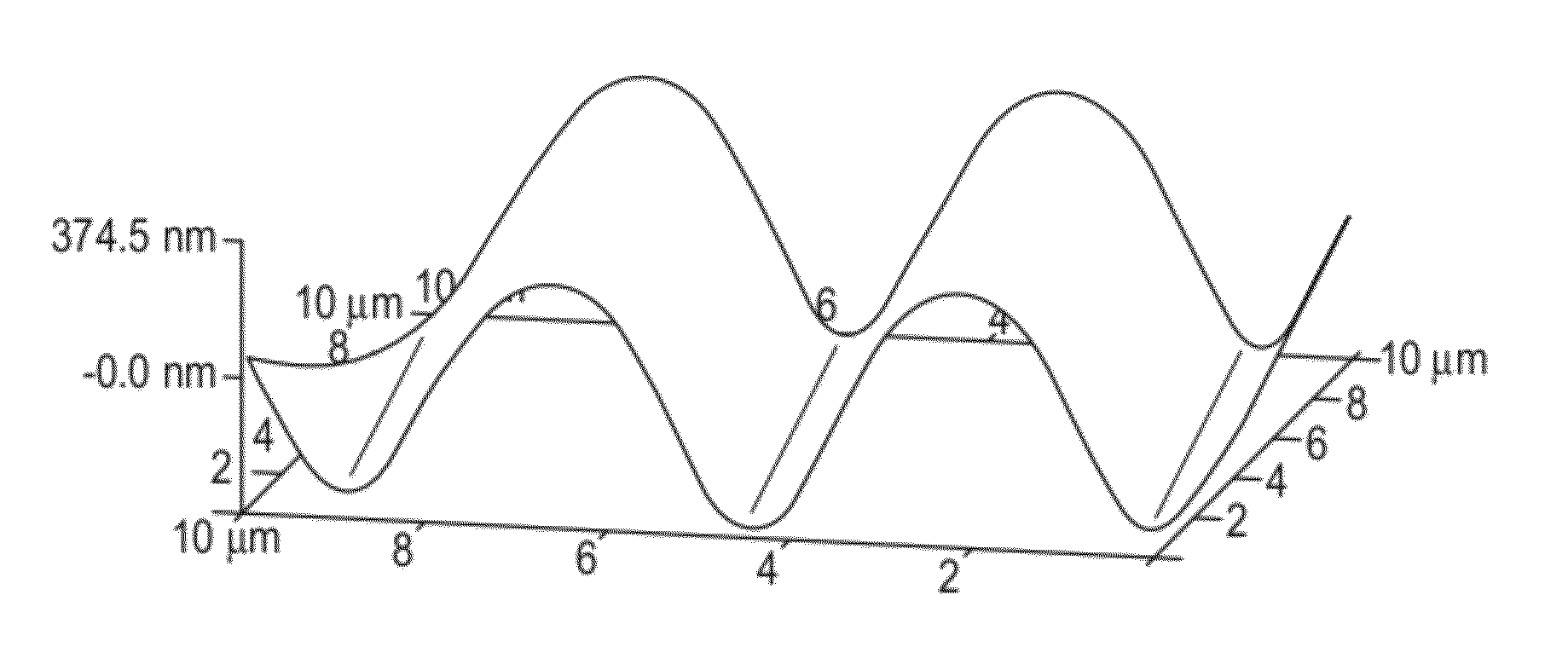
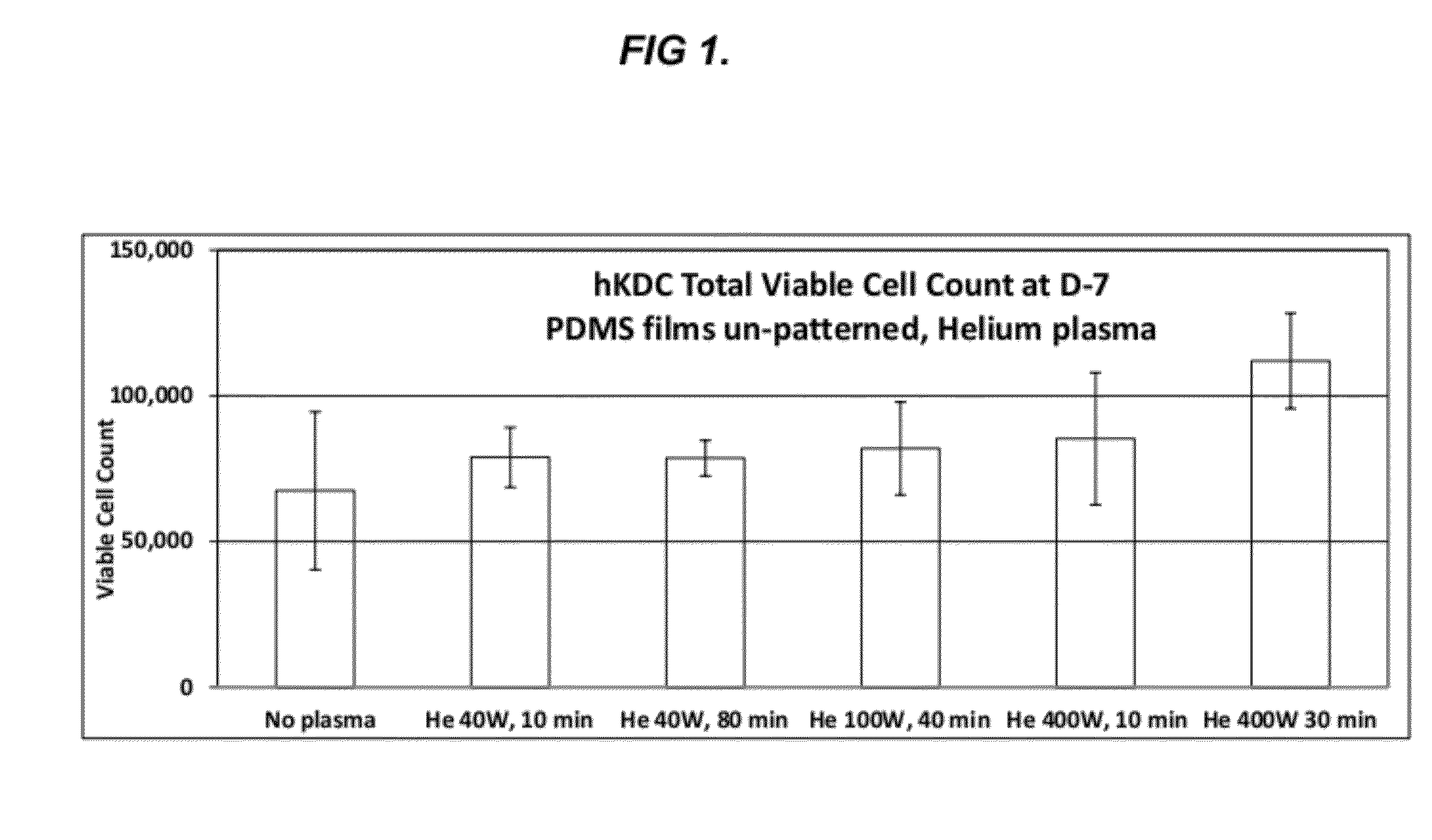
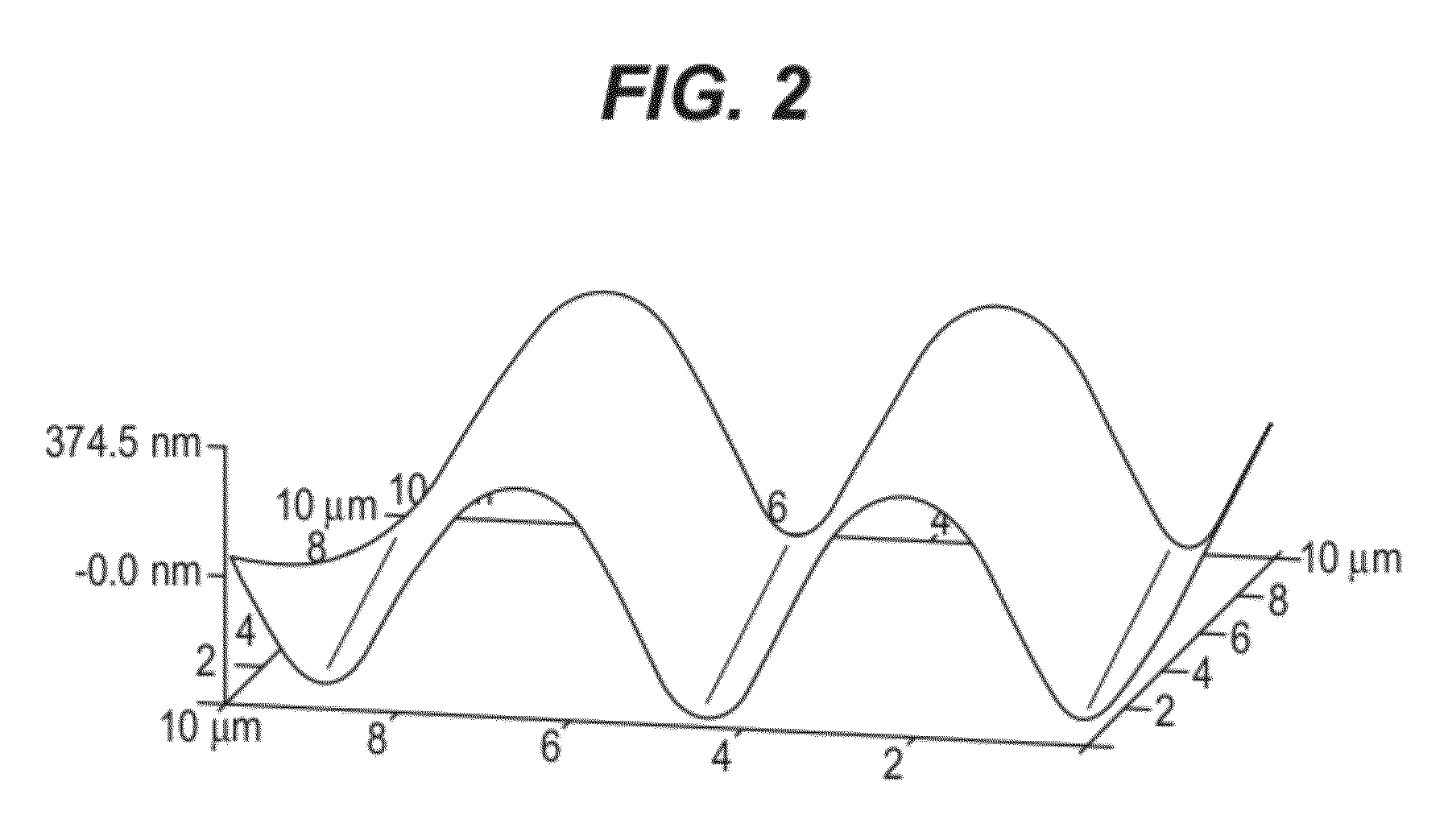
- Applying an RF plasma treatment under an inert atmosphere to create wave-like features on the surface of biocompatible, non-absorbable elastomeric polymer substrates, such as silicone, without altering the bulk properties, which enhances cell attachment and growth by modifying the surface topography and roughness.
Polymer Substrates Having Improved Biological Response From HKDCS
PatentInactiveUS20120156780A1
Innovation
- A method involving RF plasma treatment in an inert gas atmosphere is used to modify the surface crystallinity and roughness of biodegradable, semi-crystalline polymer substrates, specifically increasing surface crystallinity to 30-50% and roughness to 20-200 nm, without altering the bulk properties, to enhance cell attachment and growth.


Environmental Impact and Sustainability Considerations
Plasma surface treatment technologies, while offering significant advantages in material modification, present important environmental and sustainability considerations that must be addressed in industrial applications. The environmental footprint of plasma processes is generally favorable compared to conventional chemical treatments, as they typically operate without solvents and generate minimal waste streams. Most plasma systems utilize non-toxic process gases such as oxygen, nitrogen, or argon, substantially reducing hazardous chemical usage and associated disposal challenges.
Energy consumption represents a critical sustainability factor in plasma treatment operations. Low-pressure plasma systems require vacuum equipment that can be energy-intensive, while atmospheric plasma technologies offer more energy-efficient alternatives by eliminating vacuum requirements. Recent technological innovations have focused on optimizing power delivery systems and process parameters to minimize energy consumption while maintaining treatment effectiveness, with some modern systems achieving energy reductions of 30-40% compared to earlier generations.
Emissions from plasma processes warrant careful consideration despite their relatively clean profile. RF and microwave plasma systems may generate electromagnetic radiation requiring appropriate shielding, while certain process gases can produce ozone or NOx compounds that necessitate proper ventilation or abatement systems. The environmental impact varies significantly based on the specific plasma technology, process gases, and operating parameters selected.
Life cycle assessment (LCA) studies indicate that plasma treatments can contribute to overall product sustainability by extending material lifespans, enabling the use of environmentally preferable materials, and facilitating recycling processes. For instance, plasma-treated polymers often demonstrate enhanced durability, potentially reducing replacement frequency and associated resource consumption. Additionally, plasma surface modification can enable the substitution of bio-based materials for petroleum-derived alternatives in certain applications.
Industry adoption of sustainable plasma practices continues to evolve, with leading manufacturers implementing closed-loop gas recycling systems, energy recovery mechanisms, and process optimization algorithms to minimize environmental impact. Regulatory frameworks increasingly influence technology selection, with stricter emissions standards and chemical use restrictions favoring plasma treatments over conventional alternatives in many jurisdictions.
Future sustainability improvements in plasma surface treatment will likely emerge from interdisciplinary collaboration between plasma physics, materials science, and environmental engineering. Research priorities include developing room-temperature plasma processes, utilizing renewable energy sources for plasma generation, and creating predictive models that optimize treatment parameters for minimal environmental impact while maintaining functional performance requirements.
Energy consumption represents a critical sustainability factor in plasma treatment operations. Low-pressure plasma systems require vacuum equipment that can be energy-intensive, while atmospheric plasma technologies offer more energy-efficient alternatives by eliminating vacuum requirements. Recent technological innovations have focused on optimizing power delivery systems and process parameters to minimize energy consumption while maintaining treatment effectiveness, with some modern systems achieving energy reductions of 30-40% compared to earlier generations.
Emissions from plasma processes warrant careful consideration despite their relatively clean profile. RF and microwave plasma systems may generate electromagnetic radiation requiring appropriate shielding, while certain process gases can produce ozone or NOx compounds that necessitate proper ventilation or abatement systems. The environmental impact varies significantly based on the specific plasma technology, process gases, and operating parameters selected.
Life cycle assessment (LCA) studies indicate that plasma treatments can contribute to overall product sustainability by extending material lifespans, enabling the use of environmentally preferable materials, and facilitating recycling processes. For instance, plasma-treated polymers often demonstrate enhanced durability, potentially reducing replacement frequency and associated resource consumption. Additionally, plasma surface modification can enable the substitution of bio-based materials for petroleum-derived alternatives in certain applications.
Industry adoption of sustainable plasma practices continues to evolve, with leading manufacturers implementing closed-loop gas recycling systems, energy recovery mechanisms, and process optimization algorithms to minimize environmental impact. Regulatory frameworks increasingly influence technology selection, with stricter emissions standards and chemical use restrictions favoring plasma treatments over conventional alternatives in many jurisdictions.
Future sustainability improvements in plasma surface treatment will likely emerge from interdisciplinary collaboration between plasma physics, materials science, and environmental engineering. Research priorities include developing room-temperature plasma processes, utilizing renewable energy sources for plasma generation, and creating predictive models that optimize treatment parameters for minimal environmental impact while maintaining functional performance requirements.
Quality Control and Process Optimization Strategies
Effective quality control and process optimization are critical components for ensuring consistent and reliable plasma surface treatment outcomes. Implementing a comprehensive monitoring system that tracks key process parameters in real-time provides the foundation for quality assurance. These parameters typically include power input, gas flow rates, chamber pressure, treatment duration, and substrate temperature—all of which significantly influence treatment effectiveness.
Statistical process control (SPC) methodologies offer valuable frameworks for maintaining process stability. By establishing control charts for critical parameters, operators can quickly identify deviations from optimal conditions and implement corrective actions before product quality is compromised. The implementation of Design of Experiments (DOE) approaches enables systematic optimization of process parameters, allowing for the identification of optimal operating windows that maximize treatment effectiveness while minimizing variability.
Advanced spectroscopic techniques provide deeper insights into plasma characteristics during operation. Optical emission spectroscopy (OES) can monitor plasma species composition in real-time, while Langmuir probe measurements offer data on electron temperature and density—both crucial factors affecting treatment outcomes. These diagnostic tools enable process engineers to correlate plasma properties with surface modification results, facilitating more precise process control.
Automated feedback control systems represent the next evolution in plasma treatment optimization. These systems can dynamically adjust process parameters based on real-time measurements, compensating for drift and environmental variations. Machine learning algorithms are increasingly being integrated into these control systems, enabling predictive maintenance and adaptive process optimization that accounts for complex parameter interactions.
Surface characterization techniques form an essential component of quality verification. Contact angle measurements, XPS analysis, and AFM imaging provide quantitative data on treatment effectiveness. Establishing clear acceptance criteria based on these measurements ensures consistent product quality. Regular calibration of all measurement equipment and plasma generation systems is necessary to maintain process reliability over time.
Documentation and traceability systems complete the quality control framework. Detailed process records that link specific plasma treatment parameters to measured surface properties enable continuous improvement initiatives. Implementing a closed-loop quality system that incorporates customer feedback with process data analysis drives ongoing optimization efforts and ensures treatments consistently meet application requirements.
Statistical process control (SPC) methodologies offer valuable frameworks for maintaining process stability. By establishing control charts for critical parameters, operators can quickly identify deviations from optimal conditions and implement corrective actions before product quality is compromised. The implementation of Design of Experiments (DOE) approaches enables systematic optimization of process parameters, allowing for the identification of optimal operating windows that maximize treatment effectiveness while minimizing variability.
Advanced spectroscopic techniques provide deeper insights into plasma characteristics during operation. Optical emission spectroscopy (OES) can monitor plasma species composition in real-time, while Langmuir probe measurements offer data on electron temperature and density—both crucial factors affecting treatment outcomes. These diagnostic tools enable process engineers to correlate plasma properties with surface modification results, facilitating more precise process control.
Automated feedback control systems represent the next evolution in plasma treatment optimization. These systems can dynamically adjust process parameters based on real-time measurements, compensating for drift and environmental variations. Machine learning algorithms are increasingly being integrated into these control systems, enabling predictive maintenance and adaptive process optimization that accounts for complex parameter interactions.
Surface characterization techniques form an essential component of quality verification. Contact angle measurements, XPS analysis, and AFM imaging provide quantitative data on treatment effectiveness. Establishing clear acceptance criteria based on these measurements ensures consistent product quality. Regular calibration of all measurement equipment and plasma generation systems is necessary to maintain process reliability over time.
Documentation and traceability systems complete the quality control framework. Detailed process records that link specific plasma treatment parameters to measured surface properties enable continuous improvement initiatives. Implementing a closed-loop quality system that incorporates customer feedback with process data analysis drives ongoing optimization efforts and ensures treatments consistently meet application requirements.
Unlock deeper insights with PatSnap Eureka Quick Research — get a full tech report to explore trends and direct your research. Try now!
Generate Your Research Report Instantly with AI Agent
Supercharge your innovation with PatSnap Eureka AI Agent Platform!