Mouse-derived anti-human CD36 monoclonal antibodies 131-G1 (G2a) and 176-B8 (G1)

A 176-B8, 131-G1 technology, applied in the field of preparation of two monoclonal antibodies, can solve the problem of lack of detection of CD36 antigen

CN109627335AInactive Publication Date: 2019-04-16广州血液中心
2 Cites 1 Cited by

Patent Information

Authority / Receiving Office
CN · China
Patent Type
Applications(China)
Current Assignee / Owner
Publication Date
2019-04-16
Estimated Expiration
Not applicable · inactive patent

Smart Images

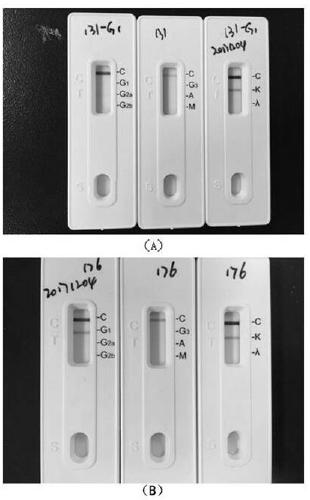
  • Figure 1
    Figure 1
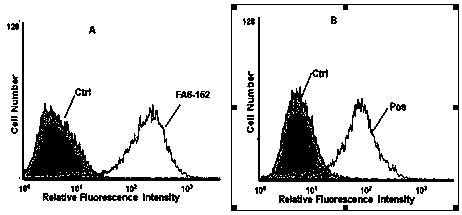
  • Figure 2
    Figure 2
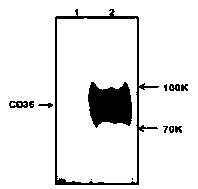
  • Figure 3
    Figure 3
Patent Text Reader

Abstract

The invention relates to a preparation method of mouse-derived anti-human CD36 monoclonal antibodies 131-G1 (G2a) and 176-B8 (G1), and belongs to the technical field of genetic engineering. The specific preparation process of the monoclonal antibodies comprises ten steps: identification of a CD36 gene knockout mice genotype, PCR amplification of human platelet cDNA, TA cloning and blue-white spotscreening, cell transfection and G418 screening, flow identification, Western Blot identification, CD36 gene knockout mice immunization, cell fusion and antibody preparation, identification of anti-human CD36 monoclonal antibodies and purification of the monoclonal antibodies. The method can obtain hybridoma cell lines stably secreting mouse-derived anti-human CD36 mAb, wherein the mAb can specifically bind to a human platelet CD36 antigen and can be used for detecting the expression of CD36 antigens in humans.
Need to check novelty before this filing date? Find Prior Art

Description

technical field

[0001] The invention relates to a preparation method of two monoclonal antibodies, in particular to a preparation method of a mouse-derived anti-human CD36 monoclonal antibody, and belongs to the field of gene technology. Background technique

[0002] Since the first case of platelet transfusion refractory (PTR) patient caused by CD36 antibody was reported in 1989, it has gradually been recognized that CD36-deficient persons (type I) have the risk of inducing CD36 antibody production during blood transfusion or pregnancy, which can cause a series of immune responses. Clinical conditions of acute thrombocytopenia, including fetal / neonatal alloimmune thrombocytopenia (FNAIT), platelet refractory transfusion (PTR) and post-transfusion purpura (PTP), and TRALI.

[0003] CD36 is a transmembrane glycoprotein with a molecular weight of 88kD. At present, the expression types of CD36 loss are mainly divided into Type Ⅰ (defective expression of both platelets and monoc...

Examples

Embodiment

[0026] (1) Genotype identification of CD36 knockout mice: According to the information provided by The Jackson Laboratory, synthesize primers for identification of CD36 knockout mice. The upstream primer is: 5'- TTGAAGTGCTGATCCTTTCAGA-3', and the downstream primer is 5'- TGTTTGTTTCACCACACTGGA-3', the downstream mutation primer is 5'-CGCCTTCTTGACGAGTTC-3', denatured at 94°C for 1min, annealed at 60°C for 1min, extended at 72°C for 1min, a total of 30 cycles, and finally extended at 72°C for 5min to obtain a 435bp wild-type And / or mutant mouse CD36 gene sequence of 750bp length;

[0027] (2) PCR amplification of human platelet cDNA: Design specific primers according to the cDNA sequence (NM_000072.3) encoding human CD36 in GenBank, the upstream primer is: 5'-GGTGCTTAACACTAATTCACCTCC-3', the downstream primer is: 5'-TTTTATTGTTTTCGATCTGCATGC -3', denatured at 95°C for 30 s, annealed at 54°C for 50 s, and extended at 72°C for 2 min, a total of 35 cycles, and finally extended at 72°...