
Protection device and methods
a protection device and a technology of a protective device, applied in the direction of knuckleheads, thrusting weapons, white arms/cold weapons, etc., can solve the problems of non-lethal devices, which are generally not permitted as carry-on items, and achieve the effect of discouraging further advances
- Summary
- Abstract
- Description
- Claims
- Application Information
AI Technical Summary
Benefits of technology
Problems solved by technology
Method used
Image

Examples
Embodiment Construction
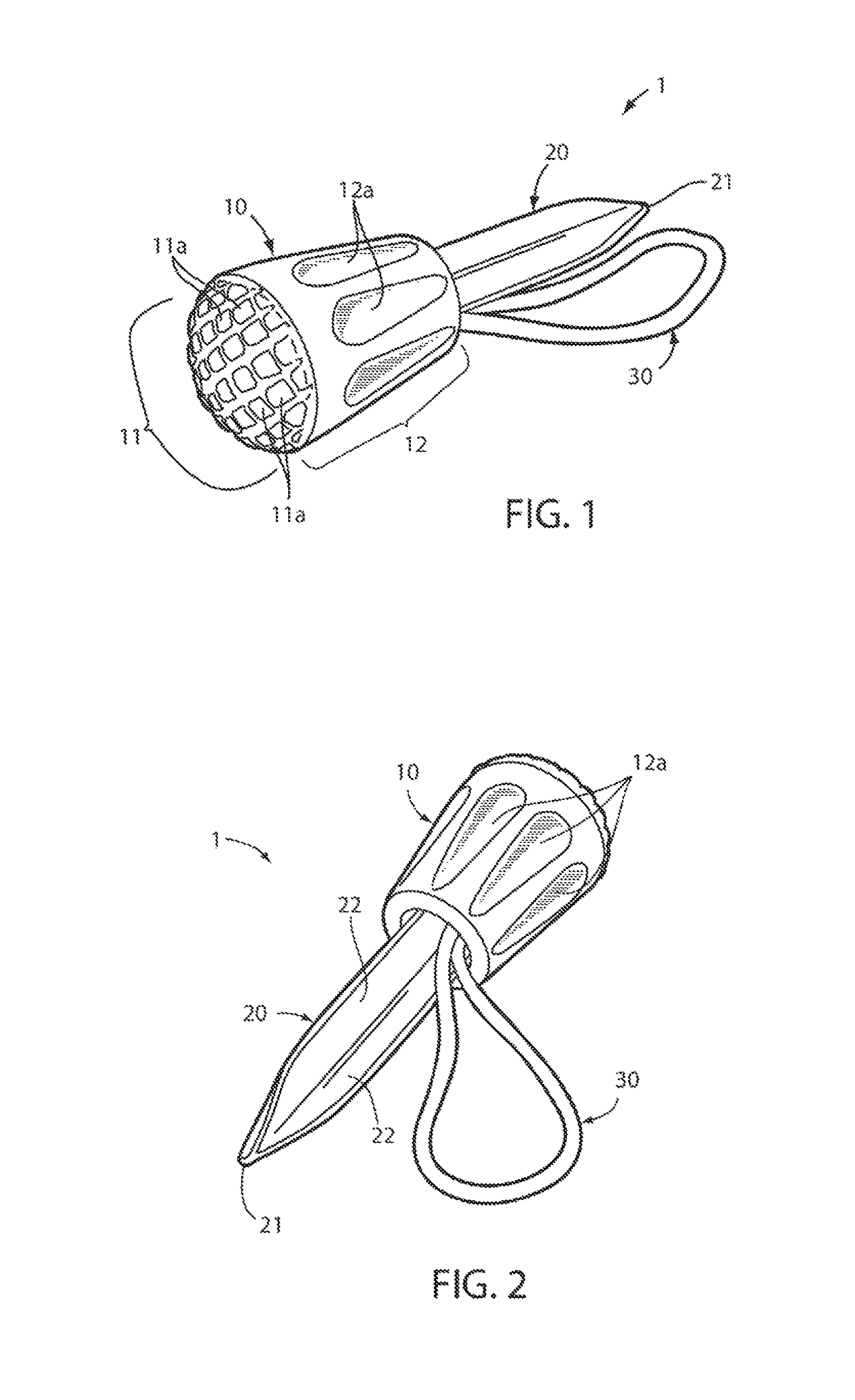
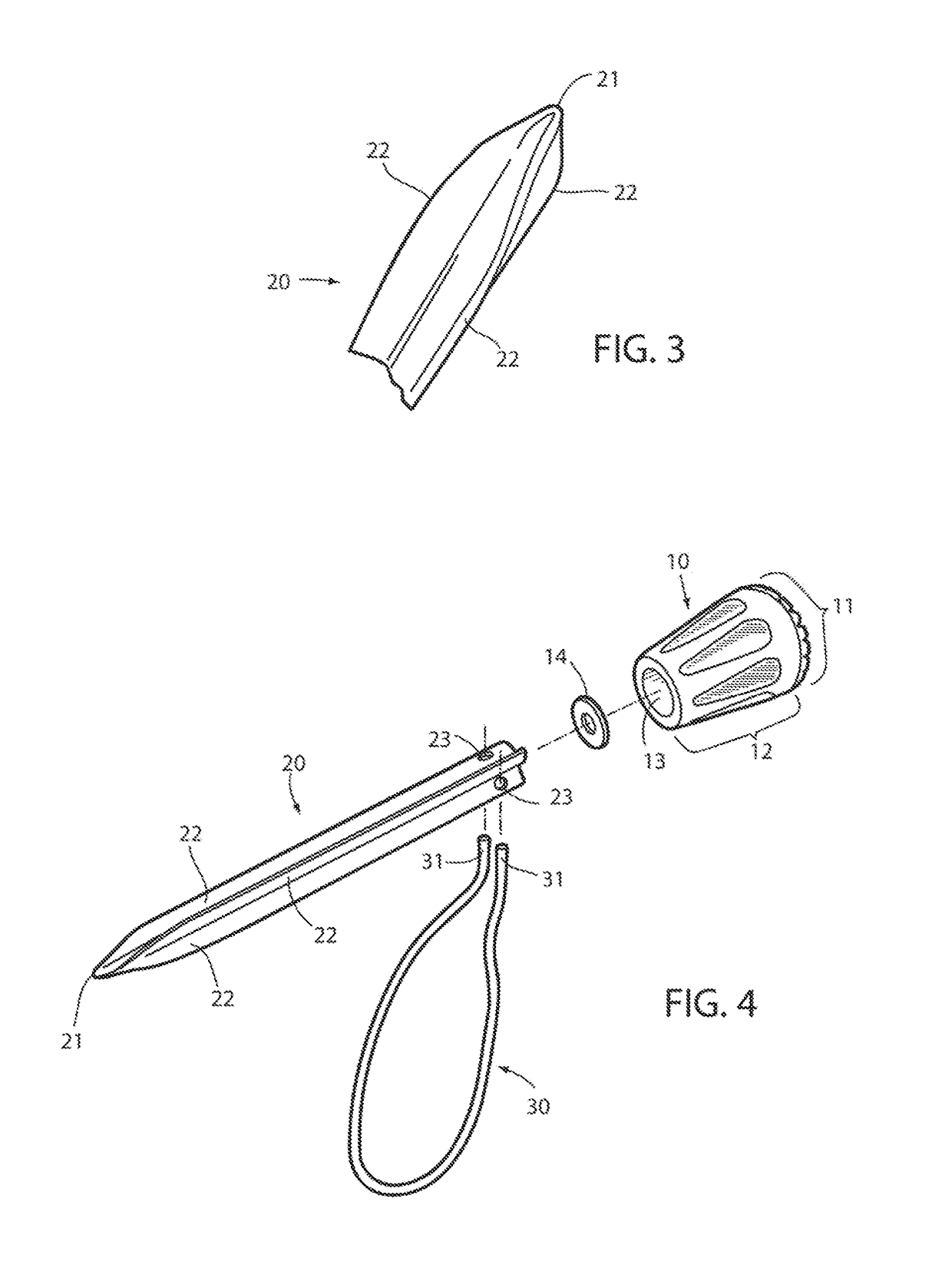
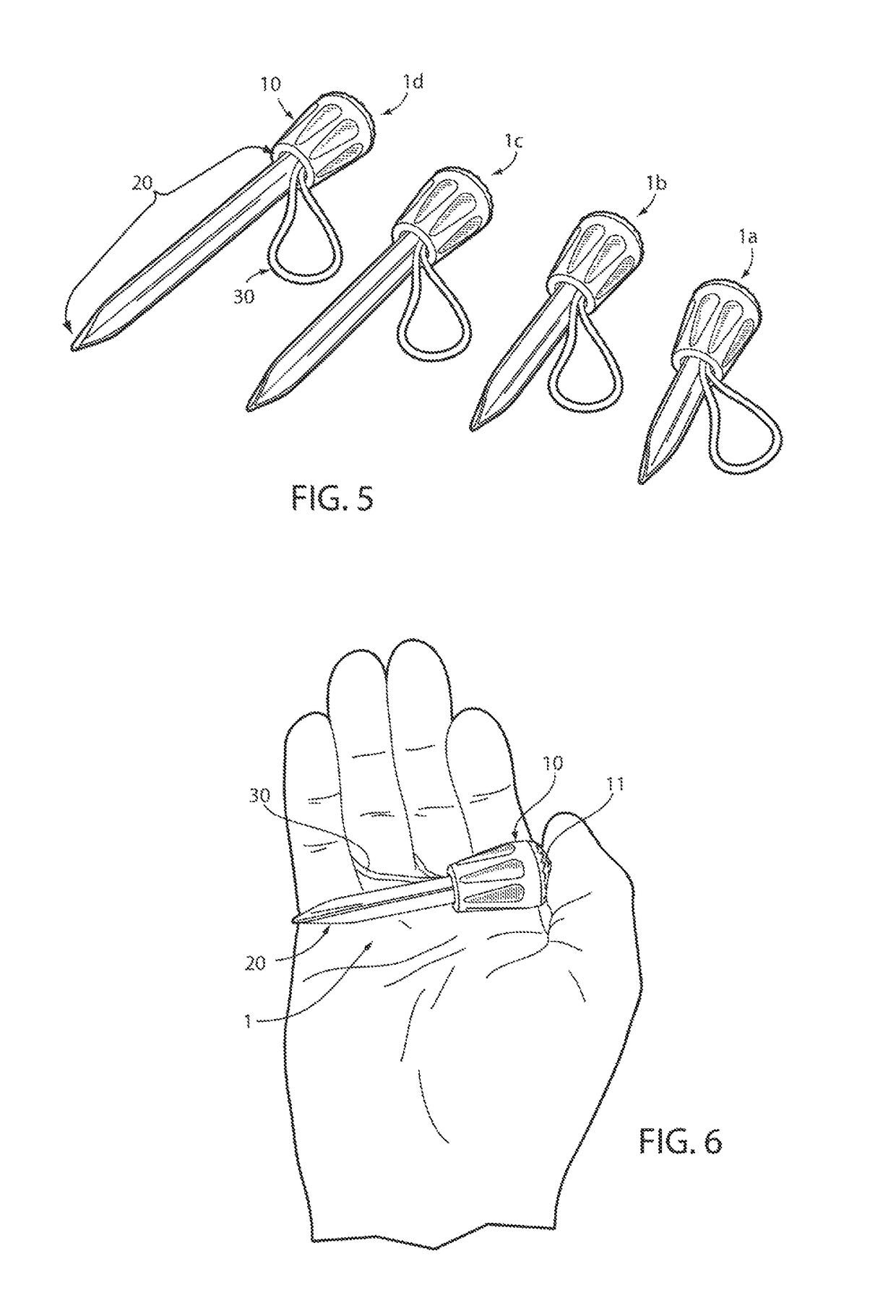
[0018]In the preferred embodiments, protective device 1 comprises a grip 10, a stake 20 projecting from grip 10, and a loop 30 extending from grip 10 (FIGS. 1, 2). Protective device 1 can be located laterally across a user's palm (FIG. 6), with loop 30 looped around one of the user's fingers and the user's thumb resting against the top 11 of grip 10 (FIG. 6). Preferably, protective device 1 has an overall length such that it extends laterally across a portion of the width of a user's hand at the palm and fingers (6), but can be completely concealed within the user's closed fist (FIG. 7). By pressing his or her thumb against top 11 of grip 10, the user can push the pointed end 21 of stake 20 beyond the width of his or her grip (FIG. 8), and jab point 21 into an attacker.
[0019]Alternatively, protective device 1 can be oriented with the top 11 of grip 10 resting against that portion of the palm at the base of the thumb, with stake 20 projecting from between the user's fingers (FIG. 9)....
PUM
 Login to View More
 Abstract
Description
Claims
Application Information
 Login to View More